
Inactive· since Jul 7, 2026
- 23
- days it ran
- 1
- relaunches
Ad copy
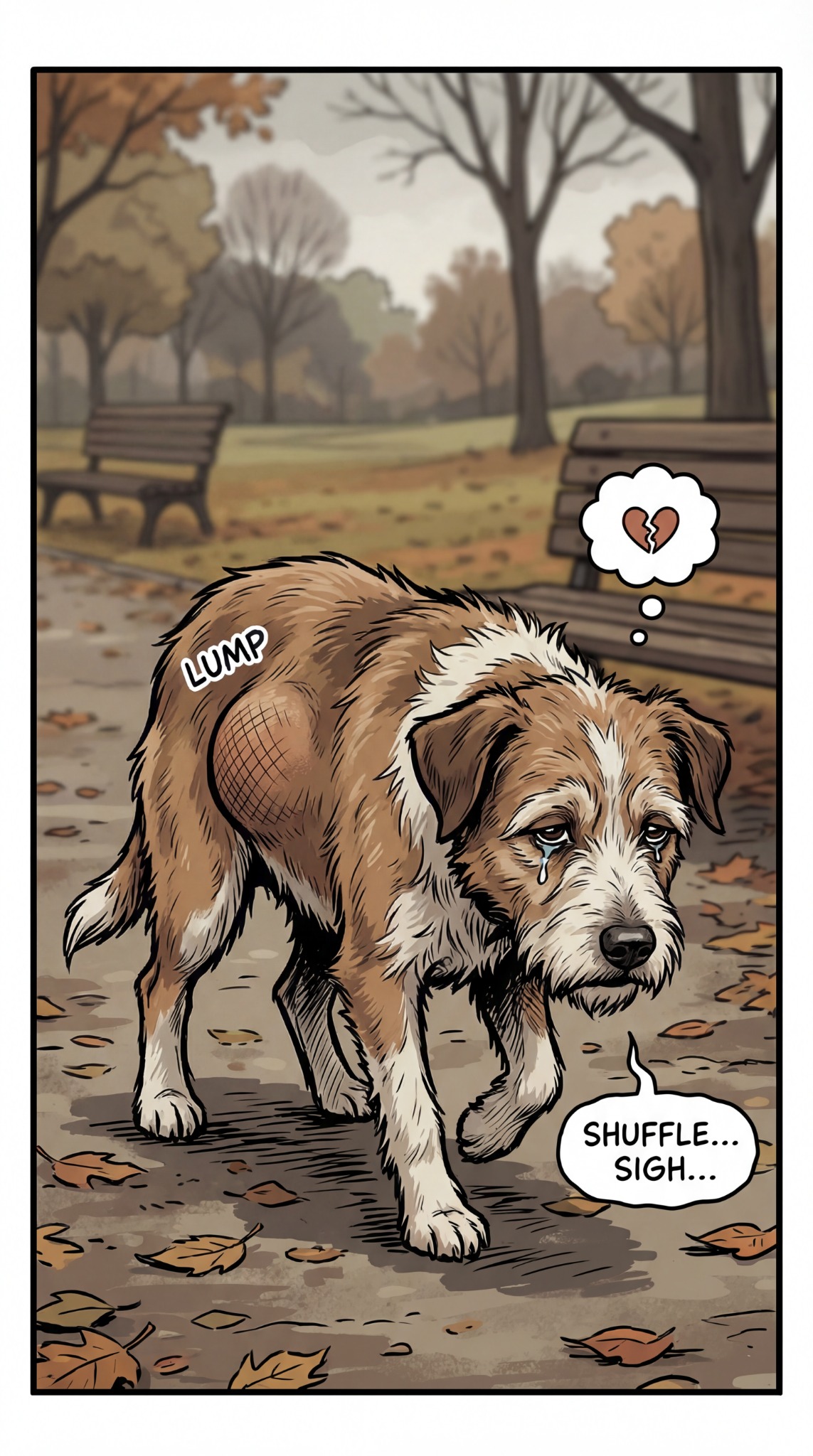
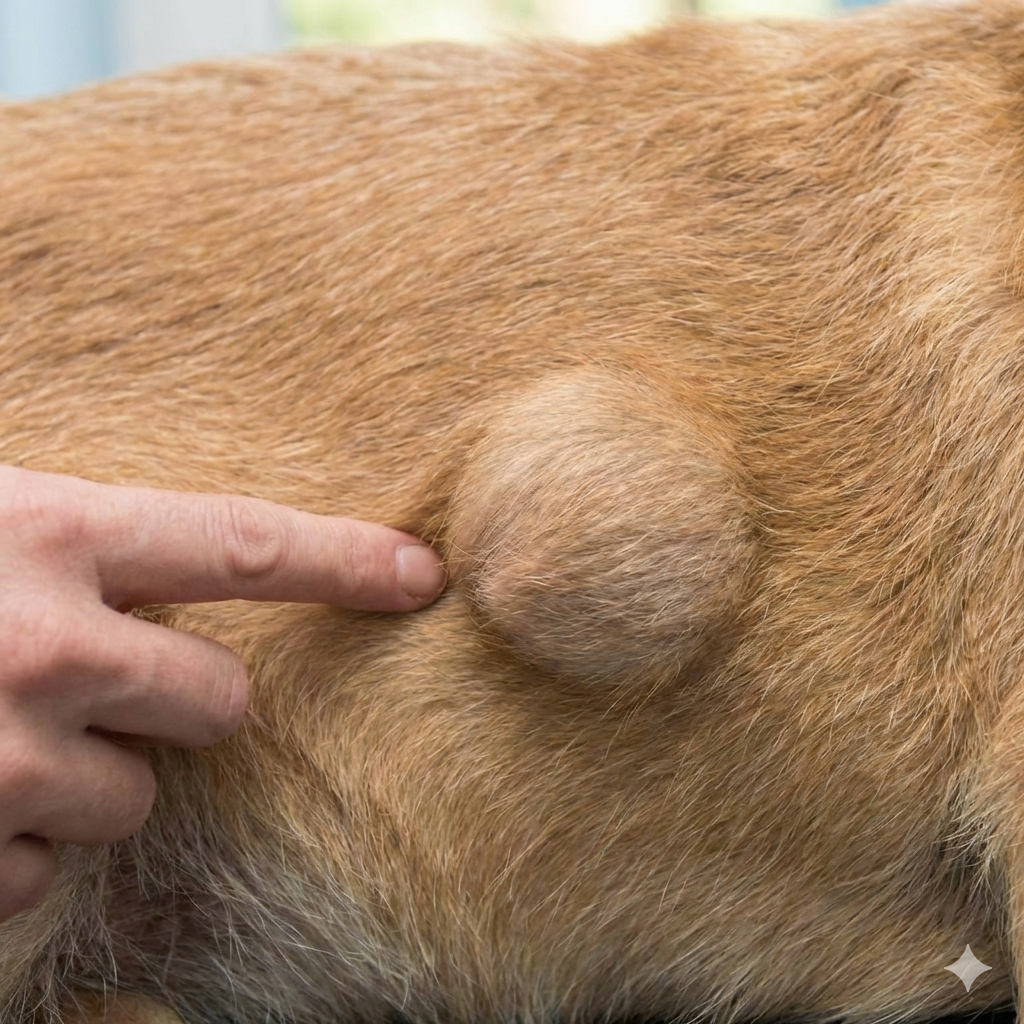
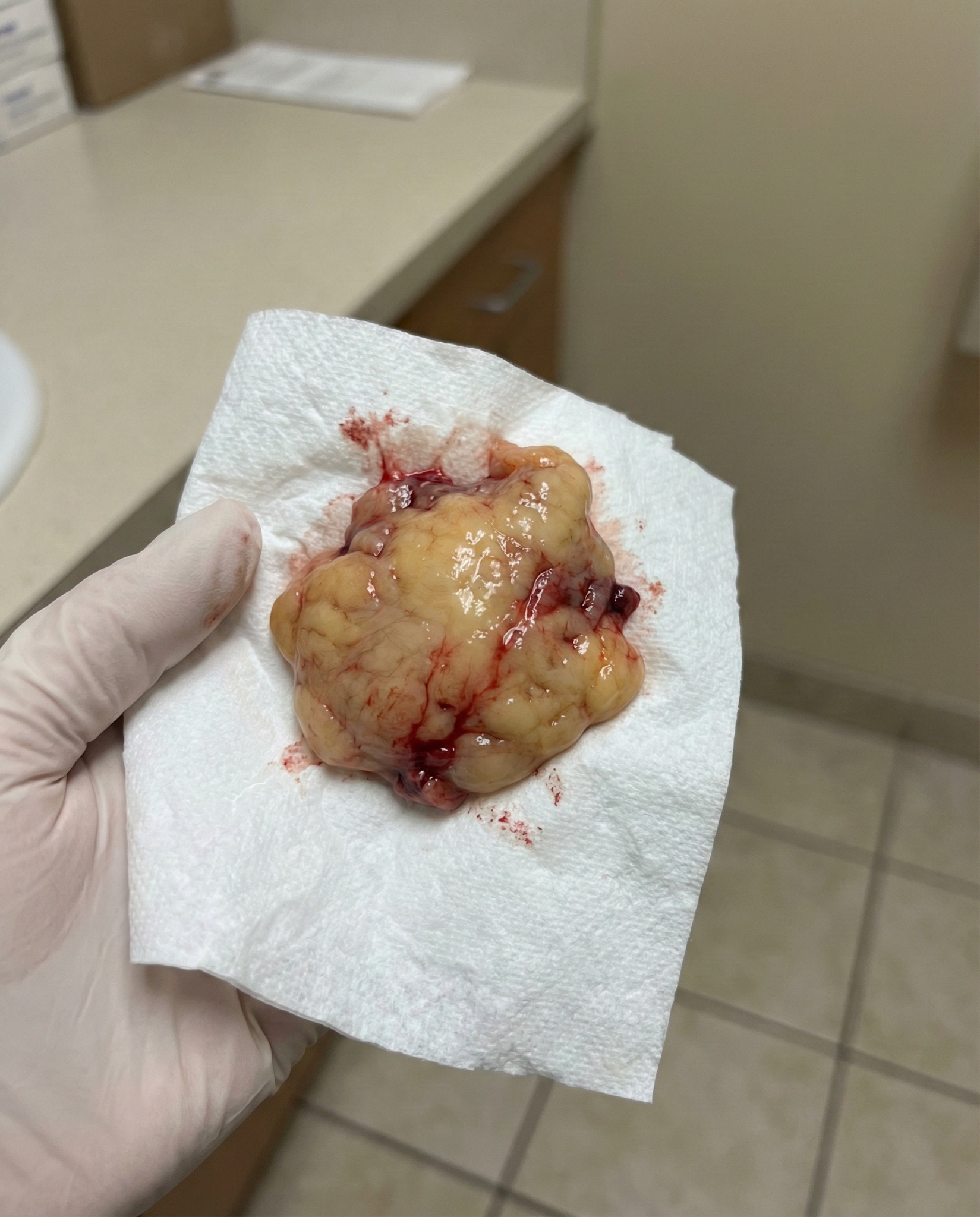
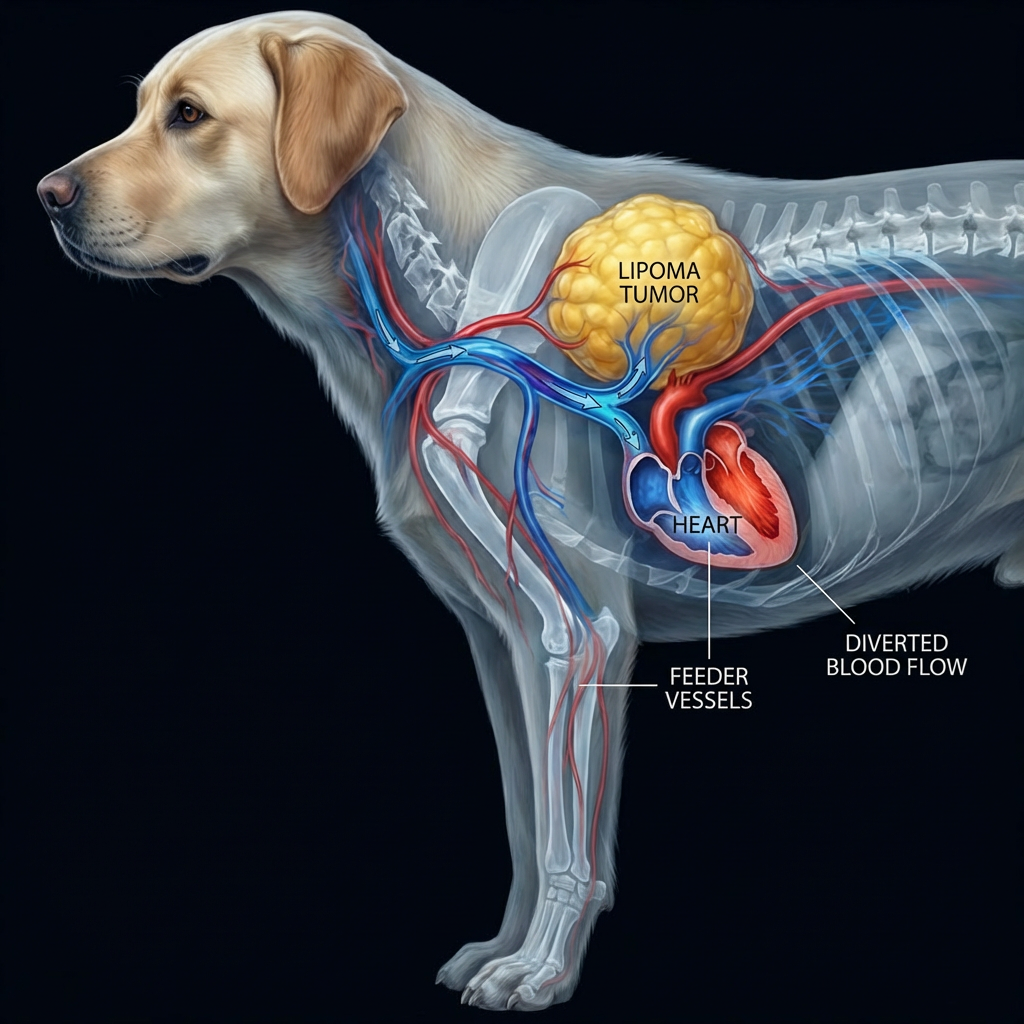
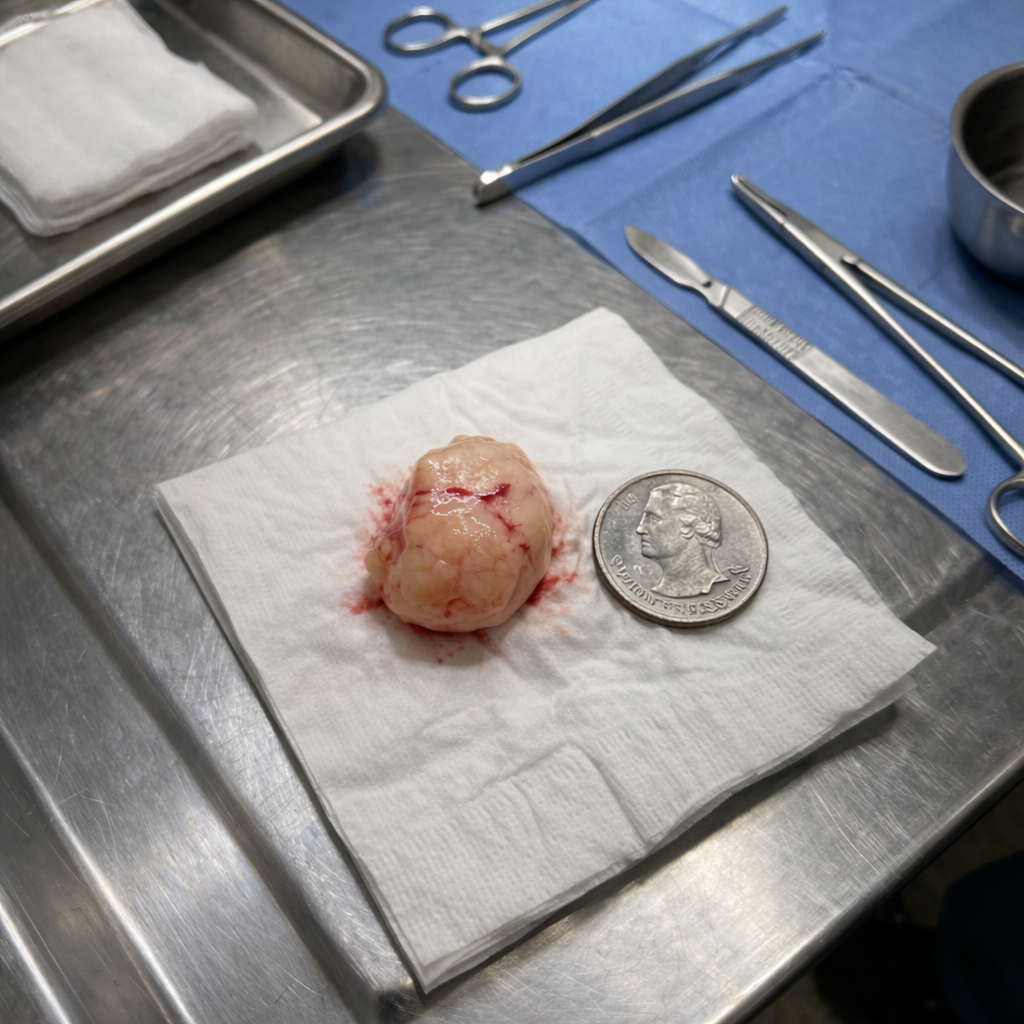
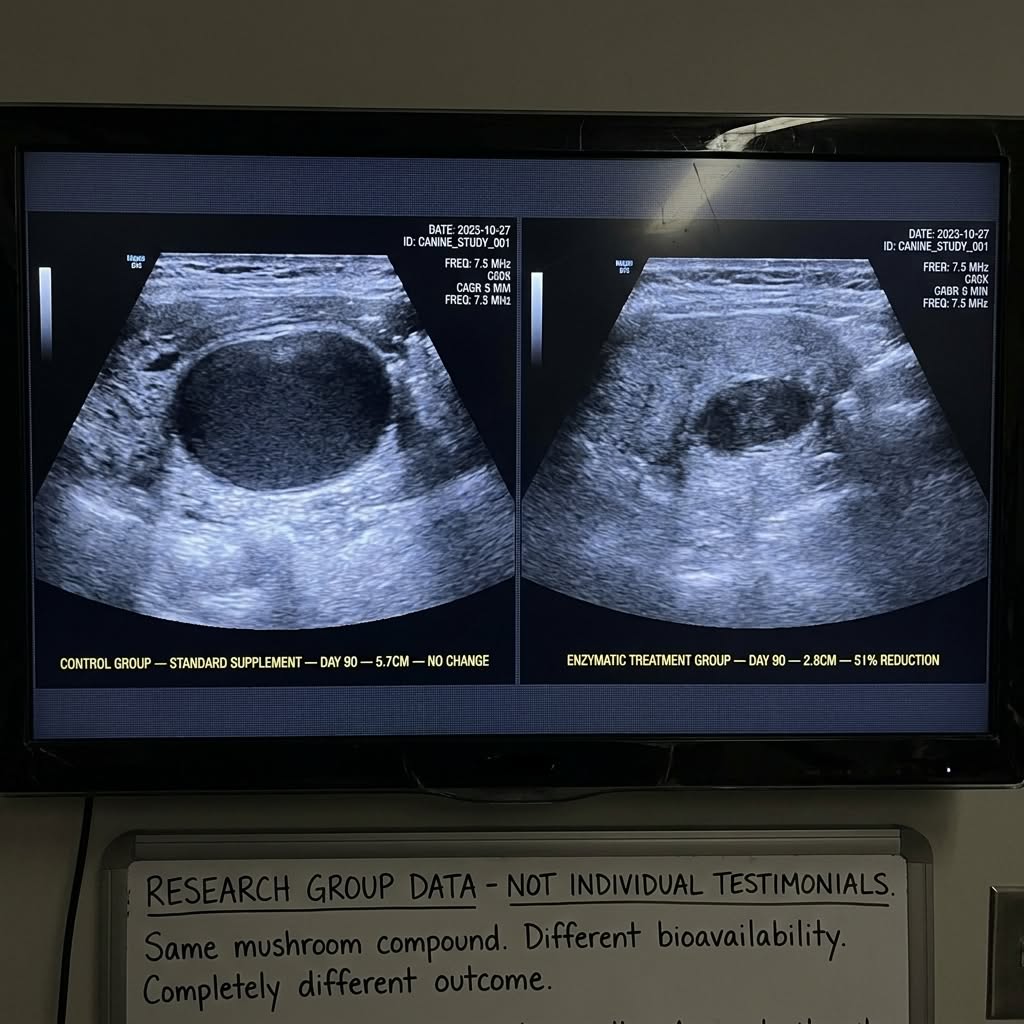
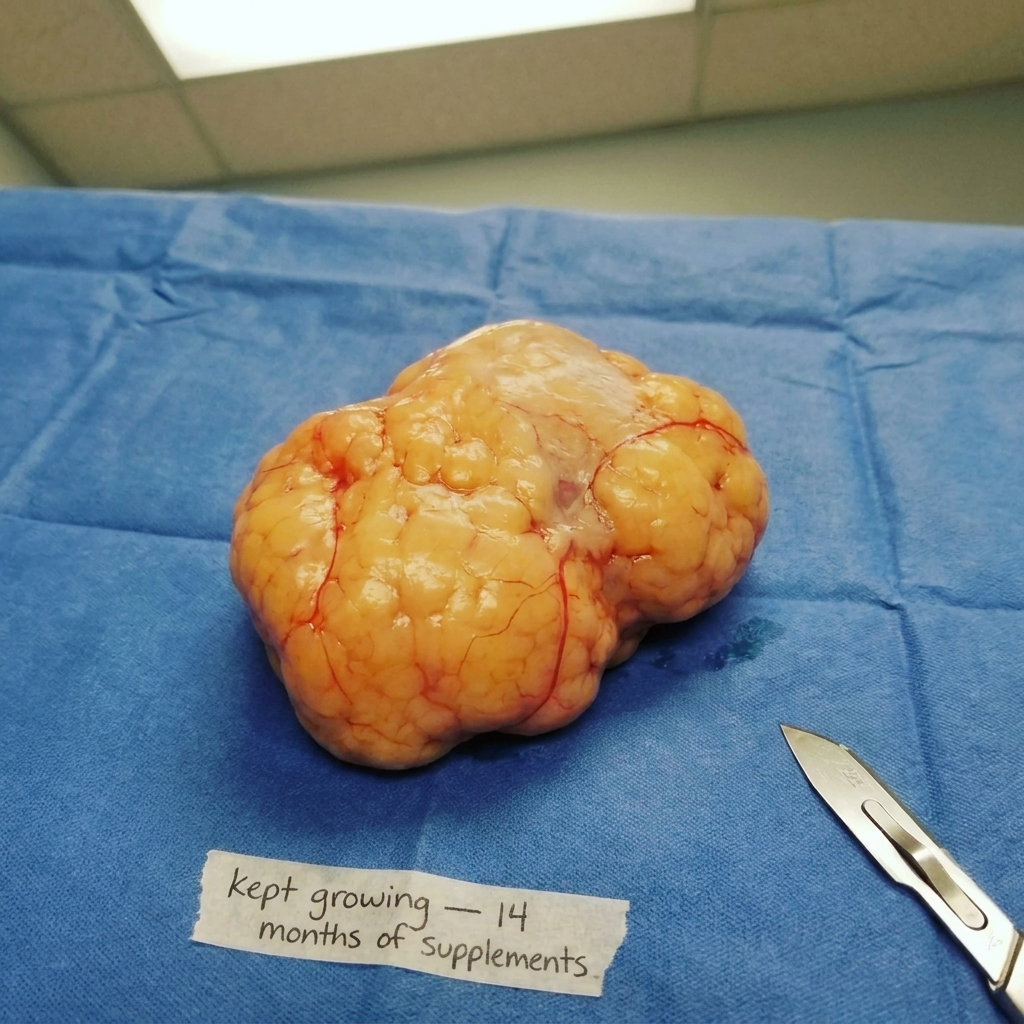
I got Bear's chest imaging results last year. My vet looked at the report from the radiologist and said the mass had concerning cellular features. Borderline. Worth keeping a close eye on at six week intervals. Then she said something I will never forgive her for. "Not much we can do about it right now. We will monitor him every six weeks. Most of the time these stay stable." Most of the time. Monitor him. Doing what. Watching it happen. I walked out of that exam room and sat in my car in her parking lot for forty minutes. Not crying. Thinking. Because I had already watched this movie once. I watched it destroy my last Lab Murphy across eleven months. And I was not going to sit in a waiting room every six weeks being told most of the time these stay stable while the exact same thing happened to Bear in slow motion. But I need to tell you what I watched with Murphy first. Because the story matters. And so does what is true and what is not. So let me be honest with you up front. What happened to Murphy was rare. Most senior dog lipomas stay benign for the dog's entire life. They sit there, slowly multiplying, looking ugly, making owners worry on Saturday mornings, and they never become anything more dangerous than what they were on day one. The veterinary literature is clear on that. The conversion to soft tissue sarcoma or another malignancy is the exception, not the rule. If you are reading this with a senior dog who has lumps, the odds are mostly with you. But the odds being mostly with you is not the same as being safe. And it is not a reason to sit still. Because the rare conversion is the one nobody comes back from, and the cleanup failure that drove the original lumps is the same mechanism that quietly compounds every year you let it run unaddressed. The dog whose tank stays empty for three more years is the dog whose odds shift. Slowly. Quietly. Without any announcement on the bloodwork. That is the part I needed to understand the hard way. And that is the part I want to give you tonight so you do not have to learn it the way I did. Murphy was the easiest dog I have ever known in my life. He met me at the back door every single night for twelve years. He never destroyed a single shoe. He remembered the exact spot under the cottonwood tree at the lake where we set up our chairs every summer. He could find his tennis ball in any pile of toys at the dog park, no matter how deep it was buried. The first lump was so small I am ashamed I dismissed it. I felt it during a Saturday brush in March. A soft little mass on his left shoulder, about the size of a marble. I asked my regular vet about it at his next routine visit two weeks later. She palpated it for about ten seconds. She said "just a lipoma, Carol. Very common in Labs his age, just keep an eye on it." She did not measure it. She did not write the size in his chart. She moved on to his vaccines. We called it his age spot. My husband and I joked about it at dinner that night. I told my sister Murphy was developing his senior dog accessories. She laughed. Nobody was laughing eight months later. The lumps started multiplying across his body like dates filling up a calendar. Four. Then seven. Then nine. Then a chest mass that grew faster than the rest, that I could feel changing under my hand from one Saturday to the next. He would walk slower on our morning route and just stop on the sidewalk. Mid-walk. You could see him gathering himself. The energy used to be right there and he could not reach it. He would look back at me with this small apologetic expression. We would turn around and go home like it was nothing. It was not nothing. None of it was nothing. Then the covering started. He stopped jumping onto the couch in the evenings. He started lying down further from us, where the lamp did not catch the shine he had lost. He started arriving at the kitchen later in the morning, timing his slow walk so I would not watch him take eight minutes to make a fifteen second trip down the hallway. My Murphy. The dog who used to leap up the trail ahead of me at the state park. Hiding from me in his own home because he was afraid of being seen as broken. The vet said it was normal aging. Said to add fish oil. Said most senior Labs go through some version of this. I added fish oil every morning for six months. The expensive kind. His lumps got worse. Faster. They ran tests. Fine needle aspirations. The kind that come back with reassuring notes like "no malignant cells detected at this site." His chart said "stable progressive lipoma profile." They prescribed prednisone. Two hundred dollars a month. It made his coat dull in three weeks and did absolutely nothing to slow the new formation. He stopped meeting me at the back door. My daughter Sarah came over for Thanksgiving and found him in the laundry room because he had not been able to get up to greet her at the door. He had been lying there alone for almost three hours while I was at the store. He got lost in our own backyard the following spring. He stood at the back fence whining at the wrong corner because he could not figure out which direction the door was. And then a Tuesday morning in March. I came into the kitchen at 6 AM. His tail did not move. He looked up at me from his bed and I saw the moment he registered who I was. That small delay that had not used to be there. He did not recognize me right away. My own dog. I went into the downstairs bathroom and shut the door and did not come out for a long time. I was late for work. Four weeks after that morning, the biopsy on the chest mass came back. The mass that everyone had been calling "just a lipoma" for eleven months. Soft tissue sarcoma. Stage III. The veterinary oncologist explained to me that this kind of conversion was rare. Most of the time the original aspirations were correct. Most of the time these lumps stayed exactly what they had been called from the start. She said this carefully, in the way oncologists say careful things, because she could see I needed her to be honest. But Murphy was the exception. And the aspirations had missed it. The aspirations sometimes miss it, she said, because the cancer cells live in a layer the needle does not reliably hit. He died on a Wednesday morning at her office at 9:15 AM. The staff said he was peaceful. He was twelve. I was 58 when Murphy died. And I carried two things out of that experience that I am still carrying today. The first was a grief so heavy I could not look at the back door of my house for three months because I kept expecting to see his face there. The second was the math. The math the oncologist had laid out for me in her office. Most senior dog lipomas stay benign. Most. The exception is rare. But the exception is permanent. And the exception happens more often in dogs whose underlying cleanup has been failing for years without anybody addressing it. Not because the cleanup failure causes the conversion directly, but because the same accumulated inflammation that drives the lumps in the first place is the same environment that gives the rare conversion its opening. The dogs whose tanks stay empty for the longest are the dogs whose odds shift fastest. Slowly. Across years. Without any announcement. That is when I adopted Bear two years later from a Lab rescue. Another black Lab. Ten months old. Eyes like Murphy's. And by the time he turned nine years old he had his first lump under my hand on a Saturday morning during the brush. That is exactly why I pushed for the deeper imaging when my new vet wanted to just monitor it. Not because I was convinced Bear was the next Murphy. The odds said he probably was not. But the odds being mostly with me was not the same as being safe. And I was not going to add three more years of unaddressed cleanup failure to a dog who already had nine years of it behind him just because the standard playbook said monitoring was sufficient. My new vet's response was "we will monitor him at six week intervals." Let me tell you exactly what monitoring looked like for Murphy. It looked like eleven months of watching his cleanup fade while my vet wrote the word "stable" on his chart every visit, until the visit when stable became something else. I was not going to be monitored. Not again. Not with Bear. I was going to do something. So I did what they told me. I switched Bear to a fresh prepared diet at $400 a month. I did the joint chews. I added fish oil. I added a senior wellness multivitamin. I added milk thistle. I added Cordyceps. Seven bottles on my counter. Three hundred dollars a month not counting the fresh diet. Three months of doing absolutely everything right. And he was still forming new lumps every six weeks. Still slowing down. Still lying down further from the door. I was doing exactly what I did with Murphy. And I was getting exactly the same results. That is when I got angry. The kind of angry I am still angry now, writing this letter. Because nobody — not one vet in eleven months of Murphy's decline and not one vet in two years of Bear's progression — ever said to me "maybe we should look at WHY his cleanup is failing instead of telling you to add fish oil." So I went looking. And what I found is so simple it makes me sick. Your dog's body has a daily cleanup signal called macrophage activation. Every single day, this signal tells the cleanup cells inside him to consume the microscopic fatty deposits that show up under his skin from normal cellular activity. They consume them before any of those deposits ever become a lump you can feel on Saturday morning. After age six, that signal goes quiet in most senior dogs. The cleanup turns off. It does not announce itself on any standard bloodwork panel. But here is what nobody told me. The cleanup cells were never able to fully activate in the first place. Not even when Murphy was three. Not even when Bear was a puppy. Because dogs are born without the enzyme that opens the cell wall around the compound that fuels the cleanup. The compound is called PSK. The enzyme is called chitinase. Dogs as a species have never produced chitinase. They were born unable to access their own immune system's full cleanup potential. So the cleanup runs at partial capacity through their entire life. By the time they hit age seven or eight, the partial cleanup runs out. The first lump appears on a Saturday morning. The owner hears "just a lipoma." Most of those lumps will stay benign their entire life. But the cleanup keeps failing in the background regardless. And every year of unaddressed failure is a year of accumulated cellular damage in the tissue around every site. The standard veterinary response is to monitor. To wait. To check at six week intervals. To call it stable until the day it is not. I am not interested in monitoring Bear into that day, however rare it might be. Because the support that addresses the cleanup costs less than a month of the fresh diet I was already buying him. In 2012, three years after I lost Murphy, the University of Pennsylvania School of Veterinary Medicine published a study giving Turkey Tail extract to senior dogs at 1,000mg daily. Significantly extended survival times. Improved immune function. The compound activated dormant cleanup cells when it was paired with the right delivery method. Published. Peer-reviewed. 2012. Three years too late for Murphy but eight years before Bear's chest imaging. Nobody told me. But Turkey Tail alone was not the whole answer, because the standard mushroom powder in pet stores is locked behind the chitin cell wall that dogs cannot break down. The compound passes through them unused. The pretty bottle on the front shelf of the pet store at $45 a month is biochemically useless for the dog it was sold for. The protocol that worked in the Penn Vet research pairs the Turkey Tail with Lactobacillus acidophilus, the only probiotic strain on earth that produces chitinase enzyme inside the dog's gut in real time. The probiotic opens the cell wall before the compound passes through. The PSK reaches the cleanup cells already unlocked. I found a product that paired them correctly. Third party tested at the 94 percent verified breakdown threshold the research used. Bacon flavored so Bear would eat it. The clinical dose at 1,000mg per scoop matched to the Penn Vet study exactly. Turkey Tail+ from Lumiqour. One scoop. Every morning. I almost did not try it. Seven bottles of nothing were already on my kitchen counter. But Lumiqour offers a 90-day money back guarantee. Full refund on the empty jars. So I thought sitting at my kitchen table — what do I have to lose except another year of doing nothing. Here is what happened. Week 1. Nothing I noticed. I did not expect to. Week 2. Bear slept through the night without circling. Not perfectly. But he did not pace the hallway at 2 AM for the first time in over a year. Week 3. I ran my hand across his chest during the Saturday check. The chest mass felt softer under my fingers than the Saturday before. Not gone. Softer. I checked three more times because I did not trust my hands. Week 4. The frantic grass eating on our morning walks stopped completely. He walked past the patch on the corner of our street without even looking down. Week 6. He met me at the back door when I came home from the grocery store. Standing in the entryway. Tail moving slowly. The first time in over a year. I dropped my grocery bags on the floor and cried into his fur for ten minutes while the freezer items melted on the linoleum. My daughter visited that weekend and said "Mom, what did you change. Bear seems like himself again." I almost broke down right there. Week 8. My son David called me on a Tuesday evening and said something that stopped me cold. He said, "Mom, do you remember the phone call we had about Bear last fall? Aunt Linda and Sarah and me?" I did not know about that phone call. My three children had a phone call about Bear without me. The same kind of phone call we had about Murphy in his last month. David said, very quietly, "I want you to know — we are not having that conversation anymore." Week 12. Bear's chest mass measured 1.4 centimeters smaller on calipers than the morning I started. Two of the smaller lumps on his hind legs were completely gone. The deeper mass under his ribs was measurably smaller on the follow up ultrasound. Going in the right direction for the first time since Bear was eight. He still has lumps. He probably always will have some. Most of them will stay exactly what they have always been. The odds are mostly with us. They are mostly with you too if you are reading this. But mostly with us is not the same as safe. And the cleanup failure that drove the original lumps is the same mechanism that quietly compounds every year. The dog whose tank stays empty for three more years is the dog whose odds shift. The dog whose tank gets refilled is the dog whose cleanup keeps doing the work it was designed to do. For eleven months, nobody told me what to do about Murphy. They told me to add fish oil. They told me to come back in six weeks. They charged me $200 a month for prednisone that did nothing. And they monitored him all the way into the rare outcome the oncologist later told me was rare. Bear is not going to have the same ending. And your senior dog does not have to be your last one's either, however likely or unlikely his ending might be. Right now — today — if your dog is forming new lumps every six weeks, slowing down, losing his greeting at the door, covering — you can support the cleanup that has been failing inside him quietly for years. The odds say his lumps will probably stay benign. The math also says the support is cheap, the downside is nothing, and the cleanup that gets restored does its work regardless of whether any individual lump was ever going to convert. It is the cheapest insurance you will ever buy for a senior dog. And it is also the thing that actually softens the lumps you can feel under your hand on Saturday morning. I waited eleven months with Murphy because nobody told me there was another option to consider beyond monitoring. I am telling you now. You have an option that did not exist for Murphy when he was alive. Lumiqour.com One bacon-flavored scoop. Every morning. 90-day money back guarantee — full refund on the empty jars if you see nothing change. Because the veterinary system is not coming to save your dog from a cleanup failure they do not have a billing code for. They will monitor him. They will tell you to add fish oil. They will charge you for prescriptions that do not stop the formation. They will quote you four thousand dollars for surgical removals that buy six months. And they will keep billing you faithfully whether the underlying cleanup is restored or not. You have to take this into your own hands. The same way you would take any other thing you cared about into your own hands when nobody else was going to. Go get it today. And use the Saturday body check to actually watch the lumps soften instead of multiply. P.S. — I wrote this letter at my kitchen table at 10 PM on a Sunday because I needed someone to have written it for me when Murphy was still alive. Nobody did. So I am writing it for you. Send it to your sister with the senior Golden. Send it to your neighbor whose Berner is starting to slow down. Send it to every woman you know who has been told "just monitor them" and is doing exactly that while the cleanup keeps failing underneath. The research has been published since 2012. It should not still be a secret. P.P.S. — I do not care if you buy this brand or another one. As long as it is pre-activated Turkey Tail paired with Lactobacillus acidophilus, verified third party tested at the 94 percent chitin breakdown threshold. The brand does not matter. Starting matters. Because the cleanup is failing whether you act on it or not, and a senior dog whose cleanup gets refilled is a senior dog whose lumps are no longer fighting him alone. Lumiqour.com
Like this ad? Make it yours.
Crush rebuilds this exact creative around your product — your brand, your colors, your offer — in about a minute.