
Inactive· since Jul 29, 2026
- 23
- days it ran
- 1
- relaunches
Ad copy
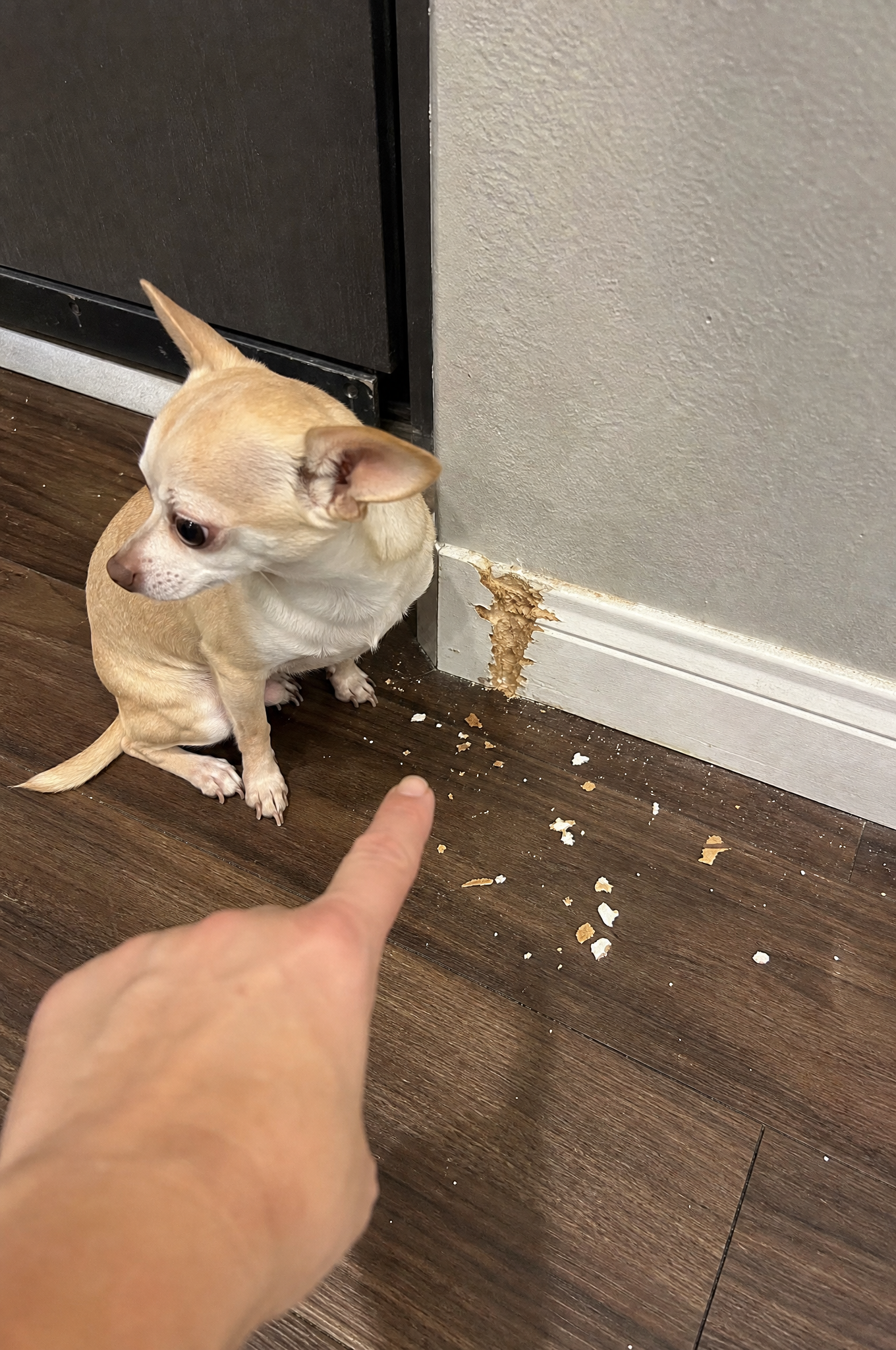
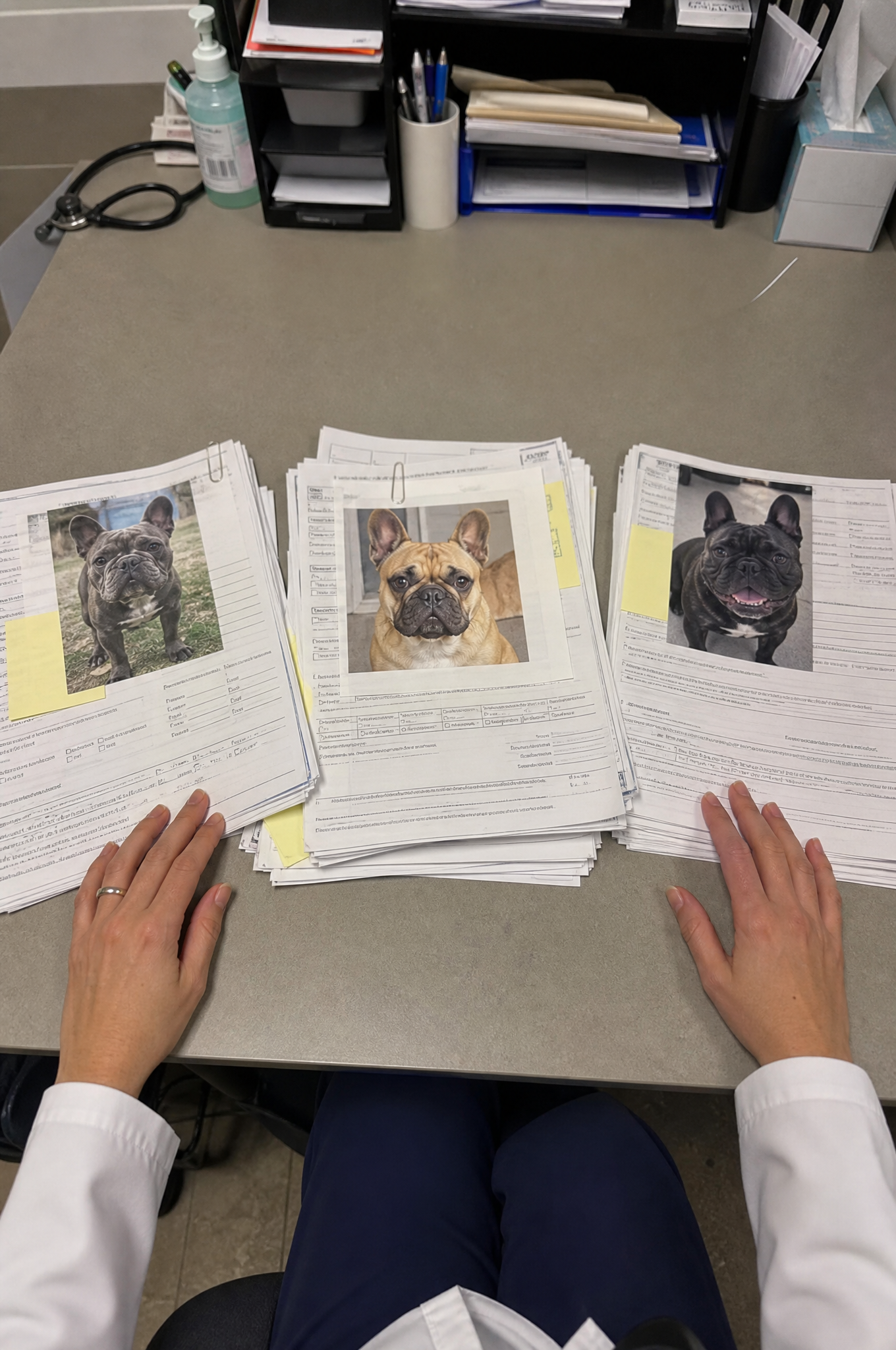
3 French Bulldogs were surrendered to the Dallas County shelter last month after their owners gave up trying to live with them. Same behavioral progression. Same failed methods. Same outcome. And all 3 owners had spent between $1,800 and $4,400 on trainers, group classes, calming supplements, and board-and-train programs. Dr. Sarah Mitchell noticed it first. She pulled me and Dr. James Rodriguez into her office on a Thursday afternoon and spread 3 intake files across her desk. "Look at the timeline. Every one of these dogs was in active training. None of them could hold a command the moment real life happened. And every single one had the exact same behavioral profile nobody ever connected to their breed." A 2-year-old named Gus: 12 weeks of obedience, still screaming for hours every time his owner left the house. A noise complaint letter had been the final straw. A 3-year-old named Bella: 2 private trainers, $2,800, still launching at every guest who walked through the front door with enough force to knock adults off their feet. A 4-year-old named Louie: a Thundershirt, a DAP diffuser, calming chews, and a 2-week board-and-train at $1,900, sent home with the note "requires ongoing management." Every single one: also refusing to go outside in the rain, ignoring commands the moment any distraction appeared, and unable to be left alone without the kind of screaming that had prompted neighbor complaints and formal building notices. Dr. Rodriguez leaned back in his chair. "What if they were never unmanageable? What if every method their owners paid for was designed for a completely different type of brain?" That simple question led to a 6-month investigation that uncovered something most French Bulldog owners, and most trainers, never connect. My name is Dr. Marcus Thompson, DVM. Along with Dr. Sarah Mitchell and Dr. James Rodriguez, we've collectively assessed over 24,000 dogs across our 3 practices at Westside Veterinary Behavior Clinic, and more French Bulldogs in the last 4 years than almost any other breed on our books. And here's what we found. It started with a French Bulldog named Cooper. His owner, Rachel, a high school teacher who spends her career managing classrooms of teenagers all day, had spent $3,200 on a group class, 2 private trainers, calming supplements, and a 2-week board-and-train. Tried every method. Couldn't get Cooper to hold a single command the moment any real-world distraction appeared. And could not leave the house without him screaming so loudly her apartment building had filed a formal noise complaint. Every trainer told her the same thing: he's just a dramatic breed, you need to be more consistent and calm about departures. But Cooper kept getting worse. Cooper was a 3-year-old French Bulldog. 24 pounds, healthy weight. Clean bloodwork. Fed a premium food, walked daily, given every calming product the pet store carried. But he couldn't hold focus for more than a few seconds outside a quiet room. Couldn't settle when left alone for even 20 minutes. Went on the rug every time it rained instead of stepping onto wet grass. And the second a doorbell rang or someone knocked or another dog appeared on a walk, every command he'd ever learned vanished like it had never existed. Rachel had run through all of it: a 6-week group obedience class for $119, 2 private trainers at $150 a session, a DAP diffuser, a Thundershirt, 3 brands of calming chews, CBD oil for 4 months, and a 2-week board-and-train at $1,900. She'd spent $3,200 in 10 months. Nothing held for more than a few days. Cooper still screamed when she left. Still couldn't be left alone without the neighbors hearing it. Still refused to step on wet grass. Still launched at every guest like a fur-covered cannonball. Then it got worse. The screaming escalated from 20 minutes to all day. He started destroying the sofa, the baseboards and her favorite shoes when left alone. The jumping became genuinely dangerous, 24 pounds of pure muscle launching into every person who walked through the door. Rachel's mother stopped visiting after Cooper knocked her into the hallway wall. Her friend stopped bringing her kids over after Cooper knocked the 7-year-old flat on her back in the entryway. Rachel doubled down. Switched to a stricter trainer who used firmer corrections. Paid $1,900 for a 2-week board-and-train. For about 10 days after Cooper came home, it looked like progress. Then it collapsed. Worse than before. Cooper couldn't hold a 5-second stay when anyone was at the door. The screaming on departure returned within the week. And the corrections had added something new: a flinch whenever Rachel reached for his harness, and an edge to his energy around strangers that hadn't been there before. The final trainer told her, not unkindly, that some French Bulldogs just have temperaments that require lifetime management. Rachel sat in our exam room 3 weeks later, a woman who manages classrooms of teenagers for a living, completely defeated. "I've managed 30 fifteen-year-olds who didn't want to be there. I can't get my own dog to come when I call him or stop screaming when I leave. What is wrong with me?" That's when Dr. Mitchell suggested something none of us had done consistently in our combined 35 years of practice. We stopped looking at Cooper's behavior, the thing every trainer had been drilling, and we examined his breed. Not his species. His specific breed. Because Cooper isn't a Labrador. He isn't a Shepherd. He is a very specific genetic profile that produces a very specific behavioral pattern that nobody in the generic dog training world is accounting for. The 3 of us sat in the break room that night until almost 9pm, going through every French Bulldog case in our files from the past 4 years. Dr. Rodriguez said it first: "How many Frenchie owners have we sent off to a generic trainer when we should have been looking at what breed is actually sitting in front of us?" Because we finally understood what was happening. Here's what they don't teach you in vet school, and here's what no trainer charging $150 a session is telling you: A French Bulldog's brain does not process training the same way a Labrador's brain does, or a Golden Retriever's, or a German Shepherd's, or any of the breeds that every mainstream training method was designed for. This isn't opinion. This is the documented behavioral profile of a breed that was created for a single purpose that has nothing to do with obedience. French Bulldogs were bred purely for companionship. Not for work. Not for utility. Not to follow instructions from a distance. They were selectively bred, generation after generation, for deep exclusive attachment to one person, enormous personality, and complete indifference to whether that behavior was convenient for anyone around them. The French Bulldogs who were calm when their person left, who accepted correction without escalating, who came when called regardless of what else was happening, were, from a breeding standpoint, failures. They were too independent. Too easy. The ones who were selected and bred were the ones with the most personality. The most persistence. The most consuming attachment drive. The most determination to be heard. That is the brain in every French Bulldog sitting in someone's apartment right now. Not a dog waiting for direction. A dog running a constant calculation about whether any given request is worth the effort at this particular moment. A dog whose bond to its person is so total and so consuming that your absence doesn't register as an inconvenience. It registers as a genuine emergency requiring immediate and continuous alarm. And 3 specific things happen that make generic training methods not just ineffective but actively counterproductive. First, "ignore the behavior" backfires completely. When you ignore a screaming, jumping French Bulldog, you are asking a dog bred for persistence to accept a blocked path. It doesn't. The persistence that made French Bulldogs perfect lapdogs for generations is the same persistence that makes them escalate when ignored. Every trainer who tells you to "just ignore it" is giving you instructions designed for breeds that give up when ignored. French Bulldogs were never bred to give up. They were bred to keep going until the connection was restored. Ignoring the behavior doesn't extinguish it. It reinforces the drive behind it. Second, corrections and harsh training methods create shutdown, not obedience. French Bulldogs are extraordinarily emotionally sensitive dogs. The confidence and stubbornness on the surface masks a breed that responds to pressure, harshness, and correction-based methods by shutting down completely. The dog that goes quiet after a stern correction hasn't learned. It has decided that you are not safe and it is going to wait you out. A dog bred for deep emotional attachment, pushed into fear by correction-based training, does not come back the same way a working breed does. We have seen this in our clinic repeatedly. Third, generic training only works when the attachment drive is dormant. A French Bulldog can learn "sit" and "stay" in a quiet room with treats because nothing is activating the drives that override everything else. The bond drive is resting. The alarm drive is quiet. The dog looks perfectly trained. Then the front door opens, or you pick up your keys, or a stranger knocks, and every drive fires simultaneously and every command learned in the quiet room becomes completely inaccessible. Not forgotten. Inaccessible. Because the brain is running in an entirely different mode. This is why every Frenchie owner has had the experience of their dog performing perfectly at home in a calm moment and being completely unreachable the moment real life happens. The training worked in the right conditions. It was never built to survive the breed's actual wiring. So the dog screams when you leave. Refuses to go out in the rain. Launches at every guest. Ignores its name the moment anything more interesting appears. Can't be left alone without destruction or noise. And the owner concludes: my dog is just dramatic. My dog is stubborn. I'm failing. My Frenchie is untrainable. The dog is none of those things. The dog has a companion brain running an attachment drive so powerful that it overrides every command learned in a quiet room, and every method the owner has paid for was designed for a brain that doesn't work that way. And it all traces back to one thing: nobody told you your French Bulldog is not a generic dog. It is a specific neurological profile that requires a specific approach. And the generic dog training industry cannot give you that because it doesn't understand the breed. And here's the part that should make you angry. The standard training pipeline doesn't assess breed-specific behavioral profiles. Trainers aren't taught companion breed neurology. So the dog gets pushed further down the pipeline, more classes, firmer corrections, a bigger board-and-train invoice, while the actual cause, the mismatch between method and brain, is never addressed. And it gets worse. Even if your French Bulldog responds temporarily to a board-and-train, the results almost never survive the return home, because the controlled facility suppressed the behavior without addressing the drives. The dog comes back "trained" for a week or two and then every single problem returns, because the companion drive never changed. It was just temporarily contained. And you've spent $1,900 for a 10-day break. More generic training just practices commands in environments where the drives aren't activated. It does nothing about the drives themselves. Calming chews only sedate. They don't address the attachment drive causing the panic. Diffusers reduce surface stress. They don't build the security framework the companion brain is missing. You are spending $150 a session on methods designed for a completely different brain. If your French Bulldog shows ANY of these signs, the breed-specific drive profile is exactly why nothing has worked: Screams, howls, or cries when left alone and takes longer than 15 minutes to settle, or never settles at all Refuses to step onto wet grass in the rain and goes on the rug instead Launches at every guest who enters your home Ignores commands completely the moment a doorbell rings, another dog appears, or anything exciting happens nearby Performs perfectly in a calm room and falls apart the moment real life begins Has gotten worse, not better, after group classes, private trainers, or board-and-train A trainer has described them as "dramatic," "stubborn," or told you to "manage expectations" You've stopped having people over, stopped making plans that require being gone more than an hour, or stopped going out entirely because of what you might come home to. When you go for a walk they try to pick fights with dogs 5 x their size. The problem isn't your dog's character. It's a breed-specific behavioral profile that generic methods cannot reach. And if you don't address it with the right approach, it escalates. The screaming gets longer. The neighbor complaints get more formal. The jumping injures someone. The destruction gets worse. And too many of these dogs, like Gus, Bella, and Louie at the Dallas County shelter, end up surrendered at 2 and 3 and 4 years old, labeled "too difficult to live with," for a training problem that was a method problem the entire time. After Cooper's case, the 3 of us made a decision as a team. For the next 6 months, we assessed the training history and method profile of every French Bulldog that came through our 3 clinics whose owner described them as unmanageable, dramatic, or impossible to train. Dr. Mitchell ran the behavioral assessments. Dr. Rodriguez compiled the data. I followed up with every owner personally. We assessed 78 French Bulldogs whose owners had reported training failure. 72 had been trained exclusively with generic methods designed for non-companion breeds. Not a single one had ever been given a protocol that accounted for the French Bulldog's specific attachment and companion drive profile. That is 92%. These were not lazy owners. These were Frenchie parents on premium food, working with certified trainers, several already using calming medication or diffusers. The training problem had not resolved for a single one of them, because every method they'd been sold was designed for a brain their dog doesn't have. After we understood how widespread this was, we assumed we just needed to find better trainers. We were wrong. Dr. Mitchell reviewed every training program and course marketed toward dog owners that we could find. 12 different programs. Every one of them stamped "works for all breeds". She cross-referenced each program's methodology against the documented behavioral profile of companion breeds. What she found made all 3 of us furious. Generic group obedience classes: built entirely on treat-lure and repetition, methods designed for food-driven working breeds. French Bulldogs quickly figure out when the treat is and isn't present and make their own decision accordingly. The behavior holds during the session. It evaporates the moment the treat disappears and real life begins. The most popular YouTube trainers: use calm authority and correction techniques designed for breeds with working drive and pressure tolerance. Applied to a French Bulldog, these methods produce a dog that shuts down or becomes anxious, not one that complies. The highest-rated board-and-train programs we reviewed: use structured obedience in a controlled facility. The controlled environment suppresses the companion drive temporarily. The drive returns the moment the dog comes home. Success rate at 2 weeks post-return for French Bulldogs, based on follow-up calls we made: less than 20%. We'd been sending our own clients to programs that were incapable of addressing the breed in front of them. Dr. Rodriguez spent the next 2 months researching breed-specific training methodologies for companion breeds, calling canine behaviorists who specialize in non-working dogs, reviewing every Frenchie-specific program he could find. Most were just generic training repackaged with a flat-faced dog on the cover. Same treat-lure methods. Same correction protocols. Same failure rate. Then we found The Complete Frenchie Guide. At first, all 3 of us were skeptical. Another training product making big promises. But when Dr. Rodriguez reviewed the methodology, something was different. It doesn't just train the behavior. It works with the specific French Bulldog behavioral profile instead of fighting against it. A complete system built around the companion breed's unique attachment drive, the "What's In It For Me" operating system, and the complete absence of built-in impulse control. Giving the brain a structure it was never born with instead of demanding compliance from a brain that was never designed to give it. The protocols use what the guide calls the Confidence Method and the Calm Protocol. Not corrections that shut down an emotionally sensitive companion breed. Not "ignore the behavior" methods that a persistent companion brain treats as a challenge to escalate. Drive-redirect and pattern-recognition techniques that work with the attachment drive and the stubbornness instead of against them. It covers the full range of French Bulldog-specific issues with protocols designed for how this specific breed processes each of them: the separation anxiety and death screaming, the rain refusal and potty regression, the jumping and greeting chaos, the selective hearing, the leash protests, and the complete failure of commands the moment real life happens. It delivers everything digitally and instantly, so owners can start the same day. Plus free monthly updates with new training games, enrichment activities, and behavior solutions every month at no additional cost. It was the only program built from the ground up for the specific brain sitting inside a French Bulldog. I called Rachel and we started Cooper on the guide's protocol. Week 1: still chaotic. Still screaming when she left. Week 2: something shifted. Rachel called me on a Monday evening. She had left for 45 minutes. Checked the Furbo from the parking lot. Cooper had settled on his bed after 6 minutes. "Six minutes, Marcus. Not six hours. Six minutes and he was asleep." She sat in her car for a long time before she could drive. Week 3: Rachel called again, her voice different. A guest had come over. A friend she hadn't had inside her apartment in months because of the launching and the chaos and the embarrassment. Cooper went to the door. He vibrated. Every wire in his Frenchie brain was firing. But he sat. He held it. The friend walked in. Cooper pressed his flat face against her knee. "She said, 'what happened to him?' Marcus, I didn't know how to explain it except that someone finally taught me how his brain actually works." Week 4: Rachel texted me on a Tuesday morning. It had rained overnight. The grass outside her building was wet. She followed the protocol from the guide. Cooper walked off the step onto the wet grass. She sent me the message in all capitals and I knew exactly why. By week 6, Rachel sent me a video. Cooper, alone in the apartment for 3 hours while she worked at school. Camera footage. Asleep on the couch for most of it. Calm. Still. Not screaming. Not destroying. Not in crisis. The dog 2 trainers had described as "requiring lifetime management" had not required management. He had required the right instructions for the specific brain he was born with. Rachel's follow-up message: "I spent $3,200 training a French Bulldog like a Labrador. He was never dramatic. He was never stubborn. He was never impossible. His brain was built for something completely specific and every method I paid for was designed for a different breed entirely. I wish someone had told me that a year ago." We've now recommended this guide to over 840 French Bulldog owners across our 3 practices. 89% report measurable improvement within 30 days, in separation anxiety, potty training, jumping, recall, and overall household behavior. Jennifer's French Bulldog Nala, 3 years old: "2 trainers told me Nala was just a dramatic Frenchie and I needed to be firmer and more consistent about departures. I was consistent. She screamed through all of it. Turns out her brain wasn't being dramatic. It had an attachment drive nobody had ever addressed. 3 weeks on the guide and she was settling within 8 minutes of me leaving. She's not dramatic. She just needed instructions designed for how she actually works." Kevin's French Bulldog Oscar, 2 years old: "Our trainer said Oscar just had separation anxiety and some dogs were like that. 4 months of calming chews, 2 diffusers, $600 in sessions, zero progress. He still screamed. Still launched at every guest. Still refused to go out in the rain. We started the Frenchie Guide because a friend's Frenchie was suddenly calm and we asked what changed. Within 2 weeks Oscar was settling when we left. He was never broken. We'd been giving a companion breed instructions designed for working dogs. Once someone explained his brain to us, everything changed." These aren't miracles. This is simply what happens when you stop fighting a French Bulldog's wiring and start working with it. Give the attachment drive a framework for security, give the stubborn companion brain a structure it can actually process, and the chaos stops because the brain finally has somewhere to go with all of it. Here's what we want you to do. If your French Bulldog has been labeled dramatic, stubborn, anxious, or impossible to train, before you book another $150 session, before you try another diffuser, before you give up on them, ask yourself one question: "Has any trainer I've hired ever designed a protocol specifically for how a French Bulldog's companion brain processes information differently from other breeds?" If the answer is no, and it almost certainly is, then every dollar you've spent on training has been aimed at the wrong target. Not because the trainer didn't try. Because the system treats all dogs the same, and your French Bulldog is not the same. You don't need another generic trainer first. You don't need to add another supplement or plug in another diffuser. You need the one thing nobody has given you yet: a training system built for the specific brain sitting inside your specific dog. You can start today. If your French Bulldog is screaming when you leave, refusing to go outside in the rain, jumping on every guest, or falling apart the moment real life begins, their brain is telling you something is wrong with the method, not with the dog. And every week it continues, the patterns entrench deeper, the habits solidify, and the behavior gets harder to address. A French Bulldog written off as unmanageable falls further behind. The screaming gets louder. The jumping injures someone. The neighbor complaints get formal. The building manager sends a letter. And too many of these dogs, like Gus, Bella, and Louie at the Dallas County shelter, end up surrendered for a "behavior problem" that was a method problem the entire time. Cooper went from "requires lifetime management" to settling within 6 minutes of Rachel leaving, in 2 weeks. And the cause was never his temperament or his personality. It was every person who tried to train a French Bulldog brain with methods built for a different breed. Get the same breed-specific guide we recommend to every French Bulldog owner who walks through our clinic. Most owners report noticeable changes within the first week. https://pawpowa.com/pages/complete-frenchie-guide P.S. The thing that stays with me is how many French Bulldogs get labeled dramatic, stubborn, or impossible to live with when every method their owner paid for was designed for a completely different brain. A dog that screams when you leave isn't broken. A dog that refuses wet grass isn't defiant. A dog that launches at every guest isn't bad. It's a companion brain running an attachment drive that nobody ever addressed with the right approach. Rachel spent $3,200 on generic training for a dog that changed in 2 weeks once someone finally addressed the breed. Don't spend another dollar on the wrong method before you've tried the right one. https://pawpowa.com/pages/complete-frenchie-guide P.P.S. None of the 3 of us are paid by anyone to recommend this. We recommend it because after reviewing 12 training programs, it was the only one built from the ground up for the specific behavioral profile of a companion breed. After 35 combined years and 24,000 dogs, we finally found something that trains the dog that is actually in front of you instead of the dog the trainer assumes you have. And if your Frenchie is under 2, you are in the best position possible. The attachment patterns are still forming. The habits aren't locked in yet. The right approach now prevents years of escalation and thousands of dollars in trainers who don't understand the breed. Don't let it get worse. Start today. https://pawpowa.com/pages/complete-frenchie-guide
Like this ad? Make it yours.
Crush rebuilds this exact creative around your product — your brand, your colors, your offer — in about a minute.