
Inactive· since Aug 3, 2026
- 30
- days it ran
- 1
- relaunches
Ad copy
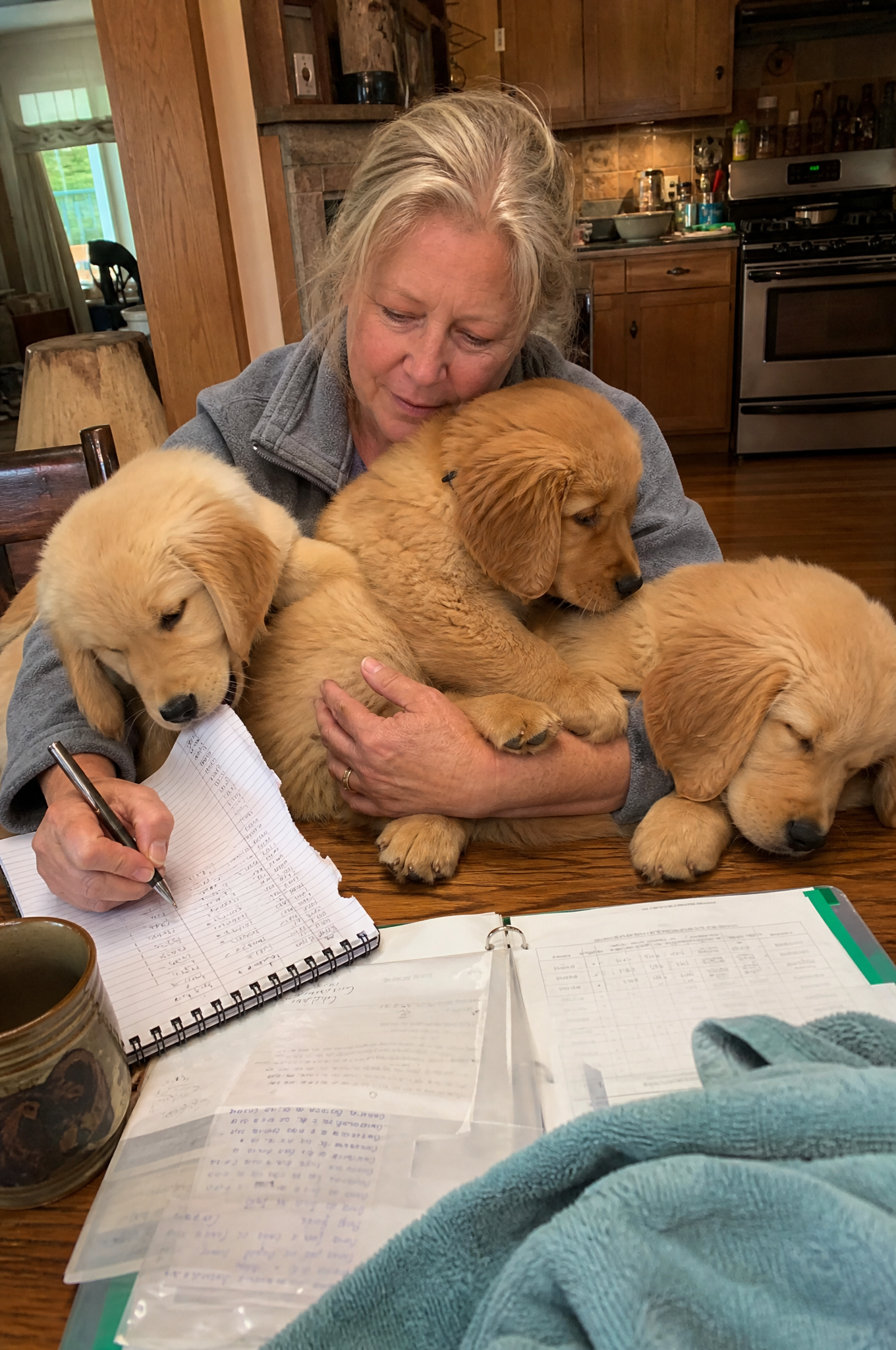
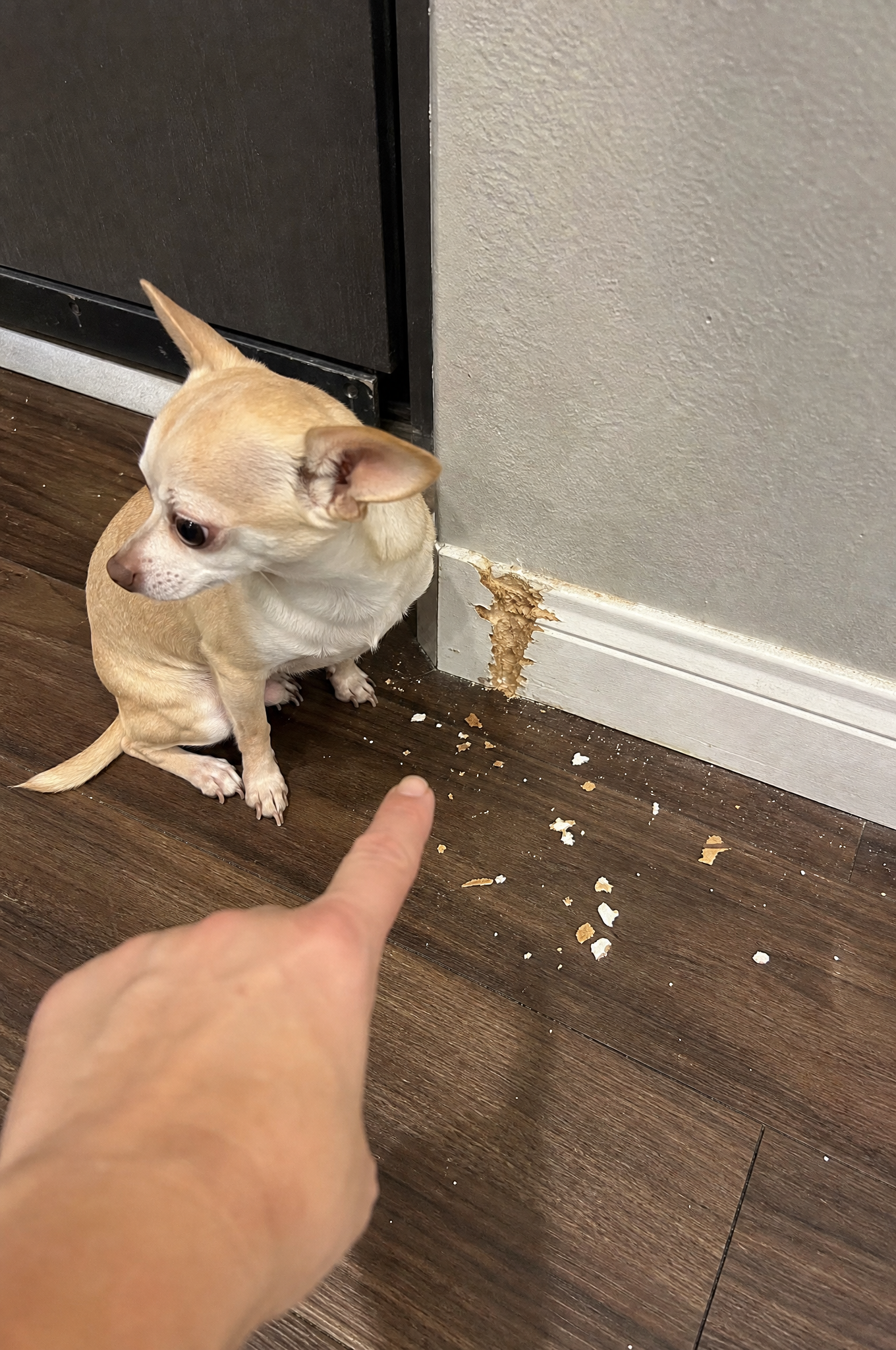
I've spent 15 years training Golden Retrievers without e-collars, without medication, and without telling a single owner they need to walk their dog for 2 hours a day. When I see what generic trainers are telling Golden Retriever owners, I cannot believe what I'm hearing. I've worked in canine behavior and breed-specific training for over 15 years. The first 8 years, I trained everything. Labs, Shepherds, Doodles, Bulldogs, Huskies. Standard obedience. Standard methods. Standard results. Then I started getting Golden Retrievers. And everything I thought I knew fell apart. In my first year working with Goldens, I saw something that kept me up at night. Golden Retriever owners coming in with dogs that were physically healthy, genetically sound, deeply loved, and completely out of control. Constant jumping. Pulling so hard on the leash the owner had rope burn on their palm. Selective hearing so severe the dog wouldn't respond to its own name outside a quiet room. Separation anxiety that had destroyed door frames, baseboards, furniture, and in one case an entire kitchen cabinet. Dogs that followed their owners from room to room, couldn't settle, couldn't switch off, couldn't be left alone for five minutes without the whole street hearing about it. Every single owner said the same thing. "My trainer said to turn my back when he jumps. My vet put him on medication. I walk him 2 hours a day. We just keep managing it." Managing it. That word. In 15 years of working with dogs, I have never heard a word that caused more damage than "managing." You don't manage a problem that has a solution. You solve it. And the reason nobody was solving it was that every trainer, every vet, every YouTube video, and every obedience class these owners had paid for was using methods designed for a completely different kind of brain. Generic dog training doesn't fix what is actually happening inside a Golden Retriever. It only suppresses the symptoms. Here is what your trainer probably hasn't told you about why your Golden acts the way it does. There is a concept that most dog trainers have never been taught and most Golden Retriever owners have never heard: the Retriever Drive Overload. And the real cause behind every behavior problem your Golden has is neurological, not behavioral. Your Golden isn't jumping because they are dominant. Not because they are stubborn. Not because you are not being firm enough or consistent enough or calm enough or alpha enough. The reason your Golden short-circuits every time a doorbell rings, a guest arrives, a dog appears on a walk, or you try to leave the house is in their brain. Golden Retrievers were bred for one thing above everything else. To work alongside humans. Constantly, closely and with total focus on their person. That drive to connect, follow, please, and stay close is not a personality quirk. It is a hardwired genetic instruction that has been bred into them for over 150 years. From the working retriever side, they inherit one of the most powerful social and bonding drives in any domestic breed. The need to be near their person, to greet, to connect, to please, is not a preference. It is as hardwired as a Border Collie's need to herd. From the same retriever genetics, they also inherit an emotional sensitivity that most owners never expect. Goldens feel everything. Your mood. The energy in the room. The tension in the leash. The frustration in your voice. They absorb it all and they respond to it, which is why punishment based training backfires so badly with them. When those drivers have a job to do, a person to work with, a task to complete, a pattern to follow, the dog is calm. Focused. Settled. Because the brain is occupied. When those drives have nothing to do, which is every minute of every day in a typical household where the dog is expected to just exist on the couch, the brain doesn't idle. It revs. It searches for input. It paces. It pants. It jumps. It pulls. It destroys. It howls at the front door. It follows you into the bathroom and whines because its brain is running at full power with nowhere to send the output. That is the jumping. That is the pulling. That is the selective hearing. That is the separation anxiety. That is the mouthing. That is the counter surfing. That is the zoomies at 7pm that make you feel like you are living with a different animal. One neurological drive with nowhere to go, showing up as different problems at different times across their entire life. And here is the part that made me furious on behalf of every owner who walked through my door. Every mainstream training method makes this worse. "Turn your back when they jump." This is designed for breeds that accept a blocked path and stop. When you turn your back on a Golden, their people-obsessed brain treats your turned back as a new puzzle. They come around to the front. They jump on your back instead. They find another angle. Because finding a way to connect with their person is what Golden genetics were designed to do. You haven't stopped the jumping. You have given their brain a more interesting game to play. "Ignore the behavior and it will disappear." This works on breeds with low persistence. Goldens have some of the highest social persistence ever documented in domestic dogs. They don't stop because you ignore them. They try harder. They try louder. They try longer. Until eventually the owner breaks and reacts, at which point the Golden's brain has learned that persistence pays and the behavior locks in deeper than before. "Use corrections. Leash pops. E-collars. Be firmer." This is the most dangerous advice being given to Golden Retriever owners right now. Goldens are among the most emotionally sensitive breeds ever studied. When you apply pain or pressure to a Golden's brain, you don't create obedience. You create anxiety. You create fear layered on top of reactivity. The friendly lunging toward other dogs turns into genuine aggression. The excited jumping turns into fearful avoidance followed by explosive outbursts. The trainer has taken a dog with an impulse control problem and turned it into a dog with a fear problem. I have seen this happen so many times in my career it makes me physically sick. "Walk them more. A tired dog is a good dog." This is the advice that breaks my heart the most, because the owner follows it perfectly. They walk their Golden for an hour. Then an hour and a half. Then 2 hours. They are exhausted. Their knees hurt. Their mornings disappear. And every single week the dog needs more exercise to hit the same level of tiredness. Because they are not draining energy. They are building a fitter, stronger, higher stamina athlete. Physical exercise tires the body. It does not tire the brain. And a Golden's brain comes home from a 2 hour walk exactly as wound up as it was before they left the house. "Medicate. Fluoxetine. Trazodone. Gabapentin." This is where the system completely fails the dog. Because the medication doesn't calm the brain. It suppresses it. The dog stops pacing. Stops jumping. Stops greeting people at the door. Stops doing the full body wiggle. Stops being themselves. The house goes quiet and the owner thinks the problem is solved. But the dog isn't calm. They are sedated. There is a difference between a dog that has learned to settle and a dog whose entire personality has been chemically erased. One is training. The other is a ghost on a tile floor with glassy eyes who used to bring you a toy every morning and doesn't anymore. Calming chews. CBD oil. Lavender diffusers. Thundershirts. None of it addresses why the behavior exists. A Golden's brain isn't in overdrive because it is anxious. It is in overdrive because it has nothing to process. So the bonding drive scans for its person and the working drive searches for a task and the nervous system stays switched on because it has no job to complete and no signal to stand down. Putting a calming chew into a mentally understimulated Golden is like putting a sleep mask on someone whose house is on fire. You are not fixing the fire. You are blocking their view of it. So the behavior keeps getting worse. The methods keep failing. The owner keeps paying. And the dog keeps escalating. And here is what nobody tells you about where this goes if you don't fix the actual cause. It doesn't stay as "just jumping" or "just pulling." It never plateaus. It always gets worse. First, the jumping becomes harder and more physical. What was cute at 15 pounds becomes dangerous at 65. Bruised arms. Scratched skin. Knocked down children. Knocked down grandparents. I have had clients whose Golden put a family member on crutches from a greeting. Not aggression. Pure love delivered at full speed with zero impulse control. Then the walks fall apart. The pulling gets stronger as the dog gets fitter from the longer walks the owner keeps adding. The owner stops walking in busy areas. Then stops walking past schools. Then stops walking past other dogs. Then stops walking altogether. The dog that was supposed to get them outside becomes the reason they stay in. Then the separation anxiety gets worse. Whining becomes howling. Howling becomes destruction. A chewed baseboard becomes a destroyed door frame becomes a dog that has hurt itself trying to escape because every time you leave, its brain floods with the drive to follow you and the panic sets in and this results in them thinking you’re never coming back. Then the owner's life shrinks. They stop having guests because of the jumping. They stop going out because the dog can't be left alone. They stop walking because of the pulling. They stop enjoying the dog because every interaction is damage control. The dog they paid $2,000 for, the dog that was supposed to be the perfect family companion, becomes the thing the whole household is built around managing. I’ve watched this happen hundreds of times. And every single time, the owner had done everything they were told. They had been consistent. They had been patient. They had spent the money. And none of it worked. Because every method they had been given was designed for a brain their dog doesn't have. That is when I understood the problem wasn't the owners. It wasn't the dogs. It was the method. And that is when I built something different. I spent 3 years building a system from scratch. Not adapting generic obedience for Goldens. Not repackaging Labrador training with a golden dog on the cover. Building a complete framework engineered specifically for how a Golden Retrievers brain processes information, stores patterns, and makes decisions. I called the core principle the Golden Mind Method. And it is built on one insight that changes everything. A Golden Retriever's chaos is not an energy problem. It is a stimulation problem. And the solution is not exhaustion. It is installation. You install the off switch their brain was never born with. A Golden's working dog DNA tells them to always be switched on. Their bonding drive is scanning for their person. Their retriever drive is scanning for a task. Neither drive has a natural off position. Neither was selected for the ability to just exist in a quiet room with nothing to do. Generic training tries to suppress the on. Medication tries to disconnect the on. Both fail because the on isn't the problem. The missing off is the problem. The Golden Mind Method doesn't fight the drives. It feeds them. Then it teaches the brain that the drives have been satisfied and it is safe to stand down. 15 minutes of structured mental work, a puzzle feeder, a scent trail, a specific brain exercise designed for how a Golden processes information, burns as much mental energy as a full mile of walking. And it actually lowers the heart rate instead of raising it, because the brain shifts from chaotic scanning mode into focused problem solving mode and the nervous system physically calms down. That is the off switch. Not medication. Not exhaustion. Not suppression. The right kind of stimulation, followed by the trained ability to settle. I want to tell you about one Golden Retriever. Because what happened is what I see when owners finally fix the right problem with the right approach. Her name was Sunny. 3 year old female Golden, 62 pounds, classic cream coat. Her owner, Claire, had spent over $3,800 in 2 years trying to calm her down. Claire lives outside Austin, Texas, in a 3 bedroom home with her husband and their 9 year old daughter, Mia. Claire was walking Sunny 2 hours a day. She had started at 30 minutes and added time every few weeks because the 30 minutes stopped working. Then the hour stopped working. Then the hour and a half. By the time she came to me, she was waking up at 5:30am every morning to walk her dog before work and walking her again after dinner, and Sunny was still pacing the kitchen at 9pm like she hadn't moved all day. Sunny was also on fluoxetine. Prescribed 5 months earlier because Claire had called the vet in tears and said she couldn't cope anymore. The medication had stopped the pacing. It had also stopped everything else. Sunny didn't greet Claire at the door anymore. Didn't do the full body wiggle when Mia came home from school. Didn't carry her tennis ball from room to room the way she used to. She just lay on the tiles in the kitchen with her eyes half open, breathing, existing. A body on a floor where a dog used to be. Claire sat in my office with Sunny lying at her feet, barely tracking movement, and she said the sentence I have heard more times than any other in 15 years. "I don't know what happened to my dog. She used to be so alive. Now she's just here." I asked Claire to tell me about the Sunny from before the medication. Before the 2 hour walks. Before the $3,800. Her eyes changed when she talked about that dog. "She was ridiculous. She'd bring me a sock every morning. Not to chew it, just to show me. She'd stand in the kitchen holding it and wagging until I said good morning. She'd do this full body wiggle whenever Mia walked in, like her whole spine was made of jelly. She was so smart, so funny, so completely over the top about everything." "She sounds like a Golden." Claire almost laughed. "She was the most Golden Golden Retriever on earth." "Do you want that dog back?" "More than anything. But the second the medication stops, the chaos starts again and I can't live with the chaos." "What if the chaos stopped without the medication?" She stared at me. "I've spent $3,800 and nobody could do that." "Nobody tried. Everyone tried to suppress the chaos. I'm going to give her brain what it has been starving for so the chaos stops on its own." I explained the Golden Mind Method. The retriever drive with nowhere to go. Why the walks were making her fitter instead of calmer. Why the fluoxetine was erasing her instead of settling her. Why every method Claire had paid for was designed for a brain Sunny doesn't have. "Sunny isn't anxious," I told her. "Sunny is deeply bonded, completely understimulated, and her brain has been running at full power with nowhere to send the output. You have been trying to switch the engine off. I am going to give it somewhere to go." Claire agreed to try. We tapered the fluoxetine with her vet over 4 weeks. Half dose for 2 weeks. Quarter dose for 2 weeks. Then stopped. And we replaced every minute of medication and exhaustion walking with the protocol I had built. Day 1: Sunny's breakfast went from a metal bowl to a snuffle mat. Her full cup of kibble scattered across the mat so she had to use her nose to find every piece. Sunny sniffed it. Pawed at it. Then she started working. Nosing through the fabric, finding each piece. 14 minutes. When she finished, she walked to the living room and lay down. Not the glassy eyed, drugged lying down. Real lying down. Tired brain lying down. Claire called me at 8am. "She's asleep. She just did 14 minutes of sniffing and she's asleep on the rug. She hasn't settled at 8am in 2 years." Week 1: We added the Threshold Pause at every door. Before the back door opens, Sunny sits and makes eye contact. Before the front door. Before the garden gate. Every transition became a moment of impulse control. By day 5, Sunny was doing it automatically, sitting at doors without being asked, because her brain had spotted the pattern and filed it as the rule. Week 2: We started the Check In Game. Random treats throughout the day whenever Sunny made eye contact with Claire without being asked. Ten times a day. Rewiring her brain to believe that checking in with Claire was the most rewarding thing she could do with her attention. The pacing dropped by half. Not from exhaustion. Not from medication. From a brain that finally had patterns to process and decisions to make. We added the settling protocol. A specific mat where Sunny learned to switch off. Not a forced down stay held in place by the fear of being corrected. A real off switch built by rewarding the physical signs of relaxation. The deep sigh. The hip roll. The chin on the floor. Sunny resisted the mat for 2 days. On day 3 she walked to it on her own, lay down, sighed, and put her chin on the floor. Claire sent me a video. Her hands were shaking while she filmed it. She was crying. "She went to the mat on her own. Nobody told her. She just went." Week 3: We cut the walks from 2 hours to 45 minutes. Sunny was calmer than she had ever been on the 2 hours. Because the 45 minute walk was paired with 15 minutes of brain work in the morning and 10 minutes of focus games in the evening and a settling protocol that gave her brain permission to switch off. Week 4: Mia came home from school. Sunny met her at the door. Full body wiggle. Tennis ball in her mouth. Dancing on her front paws. Claire told me later she sat on the kitchen floor and cried for 20 minutes. Because the dog she had been mourning for 5 months while that dog was still alive in the same house, just buried under fluoxetine twice a day, was back. "She brought me a sock this morning," Claire said on our week 4 call. Her voice was tight. "She hasn't done that in months. She stood in the kitchen holding it and wagging and I just stood there staring at her like I'd seen a ghost." "That's not a ghost," I said. "That's your dog." Week 6: 7:30pm. Wednesday evening. House quiet. Mia doing homework at the dining table. Claire's husband reading on the couch. Sunny was on her mat. Chin on the floor. Eyes closed. She didn't move for over an hour. Not because she was drugged. Because her brain had been used that day. The snuffle mat at breakfast. The scent game in the garden at lunch. The focus exercises in the afternoon. The Threshold Pause at every door. The Check In Game throughout the day. Her brain had processed, decided, searched, and settled. And by 7:30pm the off switch had engaged and the engine had powered down on its own. Claire sat down one night and added up what she had spent on Sunny over 2 years. Extended walks, dog park fees, and daycare trying to tire her out: $1,400. Calming chews, 3 different brands: $290. CBD oil, 2 brands: $160. Fluoxetine, 5 months: $190. Private trainer, turn your back method, 4 sessions: $600. Group obedience class: $129. Board and train, 10 days, results lasted 4 days: $1,100. Vet visits specifically about her behavior: $380. $4,249. $4,249 on methods and medications that either did nothing or erased her dog's personality while the actual problem, a Golden Retriever brain starving for the right kind of stimulation, was never mentioned. Not once. Not by a single vet, trainer, or behaviorist in 2 years. They told her what to buy. What to increase. What to add. What dose. Nobody told her why it wouldn't work. The why is the brain. 6 weeks of the right system with the right approach: $37. Sunny is more settled on $37 and 40 minutes a day of the right kind of work than she ever was on medication and 2 hours of walking. Because the medication turned her brain off. $37 turned it on. When I looked at how Golden Retrievers were being handled across the country, I assumed somebody had already built what I could see needed to exist. They hadn't. Every training program I reviewed, and I reviewed 14 of them, was generic obedience with a Golden Retriever on the cover. Same treat lure methods designed for food driven Labs. Same correction protocols designed for thick skinned working breeds. Same ignore the behavior techniques designed for dogs with low persistence. Same failure rate. Applied to a Golden Retriever brain that treats every single one of those methods as a problem to solve around rather than an instruction to follow. So I built The Complete Golden Retriever Guide. Every protocol inside it is built for how a Golden Retriever brain actually works. Brain games that drain mental energy in minutes instead of hours because 15 minutes of the right kind of thinking burns as much energy as a mile of walking and actually brings the heart rate down instead of sending it up. A settling protocol that installs the off switch no Golden is born with. Using the mat as the dog's dedicated clock out zone. Rewarding the deep sigh, the hip roll, the chin on the floor. Building a real ability to relax that medication only pretends to create. The Threshold Pause at every door, teaching impulse control through the one thing they want most, the door opening, so their brain learns that calm patience is the key that unlocks every good thing in life. A leash walking protocol built for a brain that outsmarts the stop and wait method in about 4 minutes, using direction changes and earned sniff rewards instead of corrections that create fear based reactions. Doorbell work. Separation anxiety protocols. Counter surfing fixes. Jumping and mouthing resets. Recall training that makes coming back to you more rewarding than anything else in the environment. Coat and grooming guidance to keep that golden coat healthy without the groomer guilt. And so much more. Plus free monthly updates with new brain games, enrichment activities and behavior exercises for life at no extra cost, delivered instantly so you can start training from your phone tonight. I share this because I have spent years watching the same pattern destroy the same families with the same dogs. Golden Retriever owners told their dog is "just high energy" and to walk them more, while the walks build a fitter athlete who needs more every week. Owners told to medicate, while the medication erases the dog they fell in love with. Owners who feel like they are failing. Like they chose the wrong breed. Like their dog is broken. They are not failing. The methods are failing them. The system is failing them. The standard training industry treats every dog like a Labrador. Sit means sit. No means no. Correction means learning. And for some breeds, that is true. But Golden Retrievers have a bonding drive and an emotional sensitivity and a social need that doesn't respond to any of those methods. It needs something built from the ground up for how it actually works. That is what The Complete Golden Retriever Guide is. The only system I have found in 15 years that trains the dog that is actually in front of you instead of the dog the industry assumes you have. $37 with instant access so you can start training tonight. I also added a 90 day money back guarantee so after implementing the simple strategies if your Golden isn't dramatically better, you pay nothing. You have spent long enough doing what you were told with nothing to show for it. It is time to train your Golden the right way, before the behavior gets to the point where the owner gives up and the dog ends up in a rescue labeled "too much" for a problem that was never about the dog. Read more about it here 👉 https://pawpowa.com/pages/golden-retriever-guide P.S. Claire spent $4,249 over 2 years on trainers that told her to turn her back, walks that built a fitter athlete, calming chews that did nothing, and fluoxetine that turned her Golden into a ghost on a tile floor. 6 weeks of a $37 guide fixed what none of it could, because for the first time something fed Sunny's brain instead of suppressing it. The walks were conditioning a marathon runner. The medication was erasing a personality. The brain games gave her what she had been asking for since she was a puppy, and the off switch installed itself because her brain finally had permission to clock out. Don't spend 2 years and $4,249 building a super athlete and then medicating them for running. Get the guide. Start the brain work tonight. P.P.S. If your Golden is under 2 and the chaos just started, you are in the best position possible. The patterns aren't locked in. The medication hasn't started. The walks haven't built an endurance machine yet. Start now. Before the fluoxetine. Before the calming chews. Before the 5am wake ups and the 2 hour walks and the vet visit where someone uses the word "anxiety" about a dog that isn't anxious, they are deeply bonded and completely understimulated and nobody ever gave their brain a job. Sunny is proof. One owner tried the generic methods for 2 years and spent $4,249 and lost her dog's personality to medication. Then she tried $37 and got her dog back in 6 weeks. The difference isn't the money. The difference is the method. Start today. 👉 https://pawpowa.com/pages/golden-retriever-guide
Like this ad? Make it yours.
Crush rebuilds this exact creative around your product — your brand, your colors, your offer — in about a minute.