Dr. Robert Sinclair
Dr. Robert Sinclair Facebook ad: “Reactivate Your Body”

Ran for 3 days, from July 8 to July 11, 2026, the last day Crush saw it.
Run by Dr. Robert Sinclair on Facebook. Crush is not the advertiser and does not verify its claims. See this ad in Meta's Ad Library(opens in a new tab)
Want an ad like this for your product?
Crush makes new ad images for your product from this ad: your logo, your product photo, your offer.
Trials from $19.95 USD, then $79.95 USD a month. Cancel anytime.
About this ad
- Meta Ad Library ID
- 1721150485881220
- Platforms
- Facebook, Instagram, Audience Network, Messenger and Threads
- Relaunches
- 0
Ad text
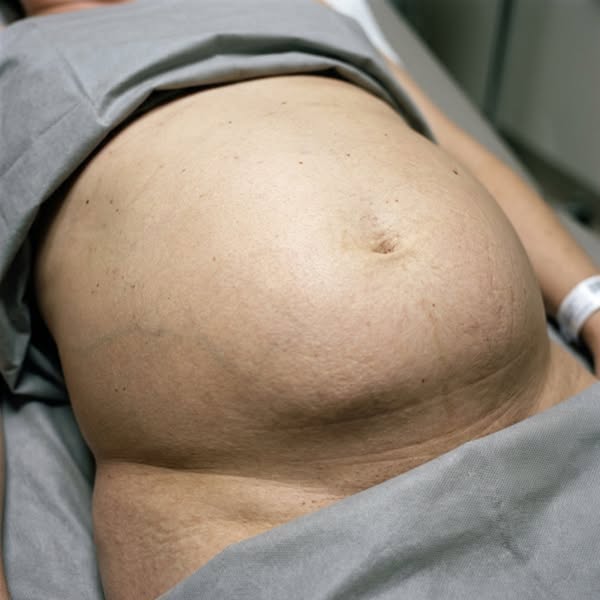
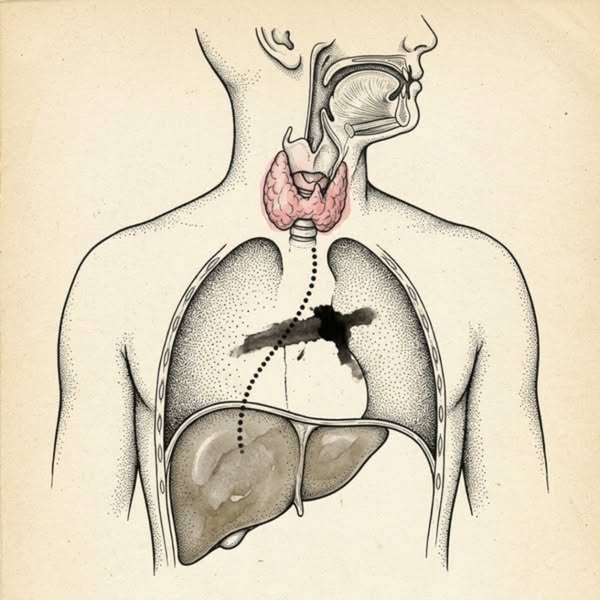
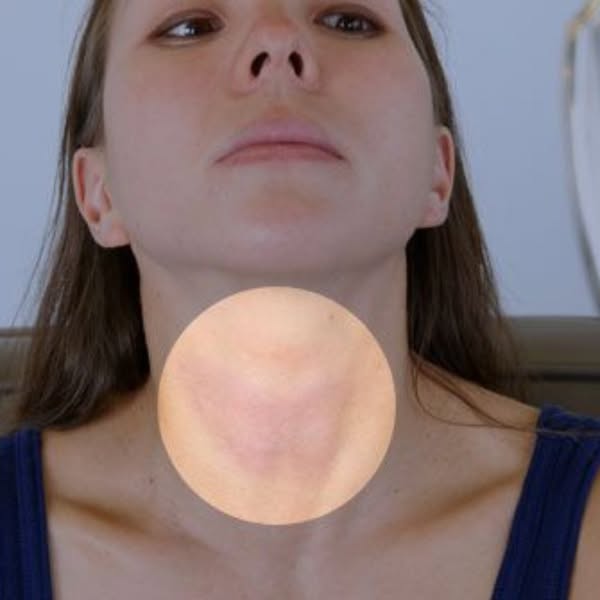
Levothyroxine keeps your TSH in the perfect range, but the belly fat keeps stubborn hold. Selenium improves your antibodies slightly, but the numbers on the scales keep creeping up. If you are gaining weight on thyroid medication whilst doing everything right, read on to discover what is truly blocking your medication—and what I give my patients instead. For FOUR YEARS, my colleague Sarah stood by and watched her body become a stranger to her. She was diagnosed with Hashimoto’s at the age of 41 and was immediately prescribed levothyroxine. Her doctor told her the medication would sort everything out. In the first year, she gained nearly over a stone. On medication. Whilst eating less than she ever had in her life. In the second year, she planned her mornings around the bloating. Every day, she spent ten minutes figuring out how to hide it. She stopped wearing half her wardrobe. Clothes she’d owned for years hung at the back of the wardrobe because she couldn’t get them zipped up. She couldn’t bring herself to throw them away either, because that would mean accepting this was permanent. In the third year, she tracked 1,200 calories on MyFitnessPal. Every single bite. She completely overhauled her diet and walked for an hour every day. The scales kept going up. And along with the stubborn belly fat, everything else arrived. The exhaustion that hit her like a brick wall at exactly 3 pm every single day, without fail. Straight onto the sofa after work, before she’d even cooked dinner. Her husband would suggest going out for the evening, and she’d say, "Maybe next week." She said it so often he eventually stopped asking. She used to be the one making plans, organising things, and bringing people together. That woman had vanished years ago, and she couldn't even tell you exactly when she left. The cold. Cold hands and cold feet in rooms where everyone else was perfectly comfortable. Extra layers that did absolutely nothing. A chill that seeped into her bones and became so normal she stopped mentioning it. The hair. Every morning, it clogged the shower drain. Not an alarming amount all at once, but that persistent daily loss that told her something had been wrong for a long time. The puffiness. The face in the mirror every morning wasn't her own. Swollen around the jawline. Puffy around the eyes. The kind of fluid retention that no amount of water, sleep, or cutting back on salt could fix. Her rings didn't fit anymore—and hadn't for over a year. The brain fog. Mid-sentence, the word would just disappear. Not on the tip of her tongue—just gone. She would sit in meetings she used to lead, completely blank. Her manager had commented that she seemed "less sharp lately." She cried in her car for fifteen minutes afterwards. And the photographs. The part she didn't talk about openly, but that I could see was quietly breaking her heart. The moment someone raised a camera, she stepped out of frame. She made her daughter delete a photo from a family birthday before anyone else could see it. That was her face—that puffy, unrecognisable face. And no matter how little she ate or how many miles she walked, it didn't change. Her TSH was 2.1. A perfect reading. Optimal. Her NHS endocrinologist looked at that number every six months and told her everything was absolutely fine. She was gaining over two pounds a month on twelve hundred calories, and everything was supposed to be fine. Every doctor said the exact same thing: "Your TSH is optimal. The medication is working." "Try to be more consistent with your calories." "Have you spoken to a dietitian?" "Some weight gain is normal with Hashimoto’s. We can adjust the dose." One of them—and it still makes my blood boil just thinking about it—suggested she look into a stress management course. She was weighing her food on a digital kitchen scale. She had a food diary going back eighteen months. She was the most disciplined person in the room, yet a GP with her full lab results right in front of him suggested the issue was her lifestyle. She saw five doctors in four years. Not one—not a single one—looked beyond her TSH to ask why the medication wasn't actually reaching her cells. So, here is what they kept advising her to do. Pay close attention, because you’ve probably tried all of this yourself. Selenium for thyroid conversion: Took it for six months; her antibodies dropped slightly, but the belly fat kept growing. The selenium was feeding an enzyme that was being switched off by something else. The enzyme sat idle despite plenty of selenium, and nothing changed. Gluten-free diet: Strictly followed it for five months; she lost a few pounds, which piled back on within weeks. It addressed inflammation without touching the actual mechanism. Ashwagandha for cortisol: Three months; she felt marginally less anxious, but her waistline didn't budge. It dampened one symptom of the problem without resetting the source. The AIP Protocol: Completely committed for four months, never cheating once; practically nothing changed. Inflammatory triggers were removed whilst the cortisol driving the conversion block kept running rampant. High-street thyroid formulas: Iodine combinations, glandular extracts, various adaptogens—nothing. Supporting the gland itself when the gland wasn't the issue. Between the supplements, private specialist appointments, a nutritionist, and a gym membership she was too exhausted to use consistently, she had spent over £5,000 in four years. Still heavier. Still exhausted. Still cold. Still puffy every morning. Still losing hair. Still losing words mid-sentence. And every doctor telling her the medication was working perfectly. By that point, I wasn't just frustrated. I was furious. Because I was watching Sarah follow every instruction, spend thousands of pounds, track every single calorie, and force herself out for walks when she could barely keep her eyes open, only to deteriorate further every six months whilst her doctors looked at a TSH score and shrugged. Managing the number. Not recovering. Not reversing. Not even asking why a woman on optimal medication with an optimal TSH was gaining weight like someone with an untreated underactive thyroid. Just tweaking the dose. Recommending dietitians. Checking the TSH. Calling it "managed." The Questions No One Wanted to Answer That’s when I started asking the questions no one else was willing to face. Why does every thyroid protocol focus entirely on TSH when TSH only measures what is circulating in the blood, not whether the hormone is actually converting and reaching the cells that need it? Why does every thyroid supplement on the market target the conversion enzyme with selenium and liver support, whilst no one asks what is stopping the enzyme from activating in the first place? Why do doctors increase the dose of a medication that is already at the right level in the bloodstream, without asking why it isn't converting? And why is NO ONE talking about what chronically elevated cortisol does at the three specific points where conversion breaks down—right underneath perfect-looking blood tests? So, I went deep into the research. I began investigating not how to support thyroid function—that had already been tried seven ways to Sunday—but why a woman with an optimal TSH on the correct medication was gaining over two pounds a month. All the standard medical websites gave me the same recycled answers: Adjust the dose. Eat a balanced diet. Reduce stress. Be patient. Then, I found a single sentence in a clinical research paper that stopped me in my tracks. Levothyroxine is T4. It is an inactive storage hormone. In the form it arrives in, it cannot power your metabolism, your energy, your body temperature, your hair growth, or your brain function. Roughly 60 per cent of it must be converted into active T3 before a single cell can use it. The bulk of this conversion happens in the liver. And chronically elevated cortisol attacks that conversion process at three separate control points simultaneously. I had to read that three times. Three control points. All at once. All completely invisible to standard TSH tests. All actively malfunctioning underneath perfect lab results. The Triple Conversion Block Here is what the science actually reveals: Control Point One: Liver Tissue Burden Cortisol encourages fat storage around the liver tissue itself. The enzyme responsible for converting T4 into active T3 resides within that liver tissue. A liver burdened by chronic, cortisol-induced stress cannot run conversion at normal capacity. The T4 from the levothyroxine arrives every morning, but the tissue processing it is compromised. Conversion slows down or stalls entirely. Control Point Two: AMPK Suppression Cortisol suppresses AMPK, the cellular ignition switch that the conversion enzyme requires to actually turn on. The enzyme sits there waiting for activation, but cortisol keeps that signal suppressed. The enzyme remains idle, no matter how much selenium you feed it. The ignition is off. You can pump as much fuel into a car engine as you like, but if the ignition is off, it won't start. Control Point Three: Reverse T3 Flood Cortisol triggers the overproduction of Reverse T3 (rT3)—a decoy molecule structurally identical to active T3. It binds to thyroid receptors throughout the body, completely blocking the sites. Once bound, it does absolutely nothing. The active T3 that does manage to convert arrives at the cells only to find every single receptor occupied by a molecule that looks like the key but won't turn the lock. Three control points, all driven by the exact same cortisol signal, and all completely invisible to standard TSH tests. Why? Because TSH only measures what is in the blood upstream of these cellular roadblocks. That is why her TSH was a "perfect" 2.1 whilst her metabolism was running on empty. That is why the belly fat kept growing on 1,200 calories. Fat cells require the T3 signal to burn fat instead of storing it. Without incoming T3, the body defaults to fat storage. No calorie deficit can override a hormonal command to store energy. She was fighting a biological program with pure willpower and losing, because willpower cannot override endocrinology. That is why her face was puffy every morning. Cortisol signals the kidneys to retain fluid. Without T3 to restore normal cellular signalling, the kidneys keep holding onto water. The puffiness had nothing to do with what she ate the night before; it was the chain reaction set off by cortisol while the conversion block went unaddressed. That is why she hit a wall at 3 pm. T3 drives energy production in the mitochondria. Sleep cannot restore this hormone. The cells are starved of T3, regardless of how much rest she gets. That is why her hands and feet were freezing. T3 controls peripheral temperature regulation. Without it reaching peripheral tissue, circulation drops, leaving hands and feet cold even in warm rooms. That is why words vanished mid-sentence. Neural energy production and neurotransmitter function rely heavily on T3. Her brain was effectively running on low fuel for four years, all while the blood tests looked optimal at a measurement point that never should have been trusted blindly. She wasn't gaining weight because she was overeating. She wasn't exhausted because she lacked sleep. She wasn't losing her hair, her words, and her morning confidence due to aging, a lack of willpower, or not trying hard enough. She had a cortisol signal driving three simultaneous conversion blocks that no one had identified—and five doctors treating a number that looked fine, whilst every downstream symptom told a completely different story. And this is the part that made my blood boil: The link between chronically elevated cortisol and impaired T4-to-T3 conversion is well-documented in endocrinology literature. The role of cortisol in liver function and its downstream effect on the deiodinase conversion enzyme is proven. The Reverse T3 mechanism and its relationship with excess cortisol has been published and replicated for decades. The AMPK suppression pathway linking cortisol to conversion failure is right there in peer-reviewed research. Yet, the clinical protocol for hypothyroid weight gain that doesn't respond to levothyroxine includes no cortisol assessment. It doesn't look at Reverse T3. It doesn't ask if chronic cortisol is driving a triple block that no dosage increase can break. Why? Because there is no pharmaceutical drug designed to clear a cortisol-induced conversion block. You cannot patent the mechanism. There is no money to be made in telling someone that their stress hormones are blocking their medication from working. But there is money to be made in increasing the levothyroxine dose when it stops working. In prescribing weight-loss injections for weight gain that was never caloric to begin with. In private clinic fees and six-monthly appointments to check a TSH level and call it "managed" while the block remains untouched. Manage the number. Never address the block. Keep the patient coming back indefinitely. Finding the Reset Switch So, I kept digging. I looked specifically for something that could reset the cortisol signal at the root—not a temporary stress-management tip, not a way to dampen cortisol downstream, but something that actually normalises the hypothalamic output driving all three blocks at once. And I found one compound that appeared repeatedly in peer-reviewed science—not in wellness blogs, but in genuine clinical research—as the definitive answer. Rhodiola Rosea. It isn't marketed for the thyroid. It isn't sold as a weight-loss supplement. It is studied specifically for cortisol, and specifically for what happens to thyroid conversion when the cortisol signal blocking it is reset at the hypothalamus. The rosavins in Rhodiola work directly on the hypothalamus—the brain structure that sends the cortisol command driving all three control points. When that signal normalises, the liver begins to clear the burden affecting the conversion tissue. Reverse T3 production drops because the cortisol overproducing it has settled. The receptor sites occupied by decoy molecules begin to clear out. At the same time, salidroside directly activates AMPK, the cellular switch that cortisol kept turned off. The conversion enzyme that was sitting idle with plenty of T4 and selenium finally receives the activation signal it needs. The ignition turns on. Conversion begins. It doesn't just target one control point; it addresses all three at once by tackling the cortisol signal driving them. Sarah tried to find a Rhodiola supplement that matched what the clinical trials described. First, she bought the highest-rated one she could find online. Four and a half stars. Thousands of reviews. She took it for eight weeks. Nothing budged. Same stubborn weight. Same exhaustion. Same cold hands. Same puffy face every morning. It was the exact same pattern as everything else she’d tried. Next, she tried an adaptogen blend from a well-known wellness brand. Ten weeks. She felt slightly less anxious, but her conversion markers and symptoms remained completely unchanged. She went back to the papers and read the methodology carefully. The studies demonstrating hypothalamic cortisol normalisation and AMPK activation used a very specific standardisation. The ratio between rosavins and salidroside had to be precise. It required root harvested at the right altitude and processed at the correct temperature—the exact ratio where the biological mechanism was actually measured and replicated. She turned both bottles around. Neither listed any standardisation. They just said "Rhodiola Rosea extract." No ratio. No guarantee that the active compounds responsible for the mechanism were present in a meaningful concentration. She had spent eighteen weeks swallowing capsules that contained little more than trace amounts of what she actually needed. The enzyme was still waiting for its ignition signal. The activation was still suppressed. Three control points were still locked. She’d spent eighteen weeks taking ground-up plant matter that couldn't shift the problem. Between the selenium, the ashwagandha, the AIP protocol, the thyroid formulas, the private consultations, and two courses of unstandardised Rhodiola, she had spent thousands of pounds over four years with nothing to show for it. The Turning Point Late one evening, I was browsing a UK-based Hashimoto’s support community. Sarah’s next appointment was coming up, and her endocrinologist was now talking about a referral to a weight management clinic for weight that had absolutely nothing to do with her appetite. I came across a thread where dozens of women were describing the exact same pattern. The same perfect TSH. The same belly fat ignoring a 1,200-calorie diet. The same selenium lowering antibodies slightly without touching the weight. The same cheap Rhodiola doing nothing at all. And then, one woman described what happened when she found a formula that was genuinely standardised to the clinically researched ratio. Same starting point, but a completely different result. Seven pounds gone in six weeks. Free T3 rising on the exact same levothyroxine dose she’d been on for years. Her rings fit again. Her face wasn't puffy in the morning for the first time in memory. Someone in the thread asked for the product name. She laid it out clearly: Rhodiola Rosea standardised to the exact ratio specified in the clinical trials. A proper clinical dose, not a token gesture just to put it on the ingredient list. No proprietary blends. The only formula she had found that truly targeted the hypothalamic cortisol signal driving the triple block, rather than just generally helping the body "adapt to stress." I looked it up, checked the standardisation, and verified the dosage against the clinical data. It was completely accurate. That product was Metanova™. Sarah started taking Metanova™. After one week? The 3 pm brick wall she’d hit every day for four years felt softer. Not gone, but softer. She text me on a Wednesday afternoon: "I’ve stayed awake all afternoon and I’ve actually cooked dinner. I know it sounds like nothing, but I cooked dinner." The conversion wasn't fully up to speed yet, but the cortisol signal driving the block was beginning to drop. Her nervous system, which had been in a state of low-level alarm for four years, was finally starting to settle. The fatigue felt different—less heavy, less immovable. After two weeks? Her hands were warm. She text me those exact words at seven in the morning: "My hands are warm." Because she had been cold for so long, she had stopped expecting it to ever change. The return of something she had accepted as permanently gone was absolutely worth a text at 7 am. Active T3 was finally reaching peripheral tissue. Peripheral circulation was normalising, and her temperature was returning. It wasn't magic; the hormone was simply reaching the cells it hadn't been able to access. After three weeks? The puffiness. She sent me a photo of just her face in the bathroom mirror, with no caption. I saw it instantly. The swelling that had defined her reflection for years was noticeably reduced. Not completely gone, but significantly less. She told me she’d stood staring at it for a full minute. Her rings went back on. She took a photo of her hands, saved it, and kept it. After four weeks? The brain fog cleared. She was in a team meeting when her director asked her a question, and the answer was just there. Immediately. She told me later she sat there in silence for a moment, completely stunned. "I just answered. The word was right there. I didn't even have to hunt for it. I don't know when I stopped expecting that to happen." After six weeks? The scales finally moved. Over half a stone gone. She didn't call me because of the number, but because of how the loss felt. "It doesn't feel like diet weight loss," she said. "It feels like something is releasing. Like my body is letting go of something it’s been desperately holding onto for years." She was right. Her fat cells were finally receiving the T3 activation signal telling them to burn fat instead of storing it. Not because she changed her diet, but because the hormone was finally completing its conversion and reaching them. After eight weeks? She sent me a photograph. Not a classic before-and-after shot, just a picture of herself in a fitted jumper she hadn't been able to wear for two years, standing in her kitchen and smiling. No caption needed. I knew exactly what it meant. The stubborn belly fat that had ignored four years of dieting, walking, AIP protocols, and thyroid formulas was finally shifting. Something that no calorie deficit could achieve because the fat had been hormonally locked by a conversion block. The lock was broken, and her body was responding. After twelve weeks? She went back to her endocrinologist for her routine blood tests. The Lab Results Her Free T3 had risen significantly, sitting comfortably in the upper third of the reference range—on the exact same levothyroxine dose she had been taking the entire time. Her Reverse T3 had dropped drastically. The cortisol driving its overproduction had normalised, clearing the blocked receptor sites and allowing active T3 to land. Her endocrinologist opened her previous lab panel, looked at the current one, and then looked up at Sarah. "Your T3 conversion has improved significantly. Your Reverse T3 has dropped, and your Free T3 is the healthiest I’ve seen it since your diagnosis. What have you changed?" Sarah explained the triple conversion block. The cortisol driving it. The TSH measuring entirely upstream of the problem. The selenium feeding an enzyme whose ignition switch was turned off. The Rhodiola standardised to the precise ratio that actually resets the hypothalamic signal behind all three control points simultaneously. The endocrinologist typed out his notes slowly. "The connection between cortisol and thyroid conversion is certainly documented in the literature," he admitted. "It simply isn't part of the standard NHS protocol because there is no pharmaceutical intervention for it. We typically look at the TSH and adjust the levothyroxine dose accordingly." "There isn't a pharmaceutical option," Sarah replied. "But there is a botanical one. Correctly standardised. And it broke the block." A long silence followed. "Your conversion markers have improved more in twelve weeks than they did in four years of dosage adjustments. I want to repeat these labs in eight weeks. Whatever it is you are doing, keep doing it." She walked out to her car, got in, and called me immediately. "Free T3 is up. Reverse T3 is down. He told me to keep doing it. Four years. Five doctors. Thousands of pounds. On medication, getting worse with every single appointment. All of them just increasing the dose while the block carried on underneath." Her husband came home that evening, looked at her in the kitchen, and said, "You look like yourself again." That was before she’d even told him a single thing about her results. Her total improvement after five months: Free T3 fully normalised. Reverse T3 well within range. Nearly a stone and a half gone. Her stomach visibly flatter. Her face completely clear of morning puffiness. Her rings fitting perfectly. Hands and feet warm. Her energy lasting well past 3 pm, and past 9 pm. Words returning instantly without searching. Hair loss slowed to a normal rate. She’s going out on weeknights again and happily standing in photos instead of hiding from them. Not by chasing a new dosage increase to manage a TSH level while a blockage runs rampant underneath. By clearing the block. Unlocking Your Metabolism This is what the standard system doesn't highlight. Once you clear the cortisol driving your conversion block, you don't need weight-loss injections for weight gain that was never about overeating. You don't need dosage increases that force more T4 into a conversion pathway that cortisol has blocked at three separate points. You don't need six-monthly specialist consultations to check a TSH level that never measured where the actual problem was occurring. When the block clears, the T4 converts. The T3 reaches the cells. Your metabolism fires up. The weight drops. Energy returns. Temperature normalises. The puffiness fades, and your clarity comes back. Exactly as it should have years ago, if anyone had looked downstream of the TSH and asked why the hormone in the blood wasn't actually converting. But you have to understand one thing: The block will not clear itself. Every month it remains active is another month T4 sits unconverted in your blood while your cells are starved of the active hormone. Another month your body defaults to fat storage because the T3 activation signal never arrives. Another month of exhaustion, cold, bloating, brain fog, and hair loss piling up. And every month brings you closer to a referral for weight-loss drugs or a conversation about a lifestyle issue that was never your fault. If you are living this right now—a waistline that ignores every calorie deficit you try, a face that is puffy every morning regardless of what you ate, exhaustion that hits like a wall every afternoon no matter how much you sleep, freezing hands and feet, hair clogging the drain, and words disappearing mid-sentence while your TSH looks "perfect"—the time to act is now. Not next month when the weight increases further. Not when your doctor suggests weight-loss injections. Now. Metanova™ provides Rhodiola Rosea standardised to the exact clinically researched ratio that resets the hypothalamic cortisol signal driving all three conversion blocks simultaneously. It isn't a basic thyroid support formula throwing selenium at an enzyme that cortisol has switched off. It is a targeted cortisol reset formula designed to clear the block at the source. Because the standard protocol isn't going to clear it for you. There is no standard framework for it, and no pharmaceutical drug for it. You have to clear it yourself.
Where the ad sends people
elovura.com
Reactivate Your Body
We were all stuck for the same reason. I spent months reading through thousands of stories from people wrestling with stubborn weight gain, and found the one thing almost nobody was talking about.
Learn more: elovura.com(opens in a new tab)