
Inactive· since May 23, 2026
- 14
- days it ran
- 0
- relaunches
Ad copy
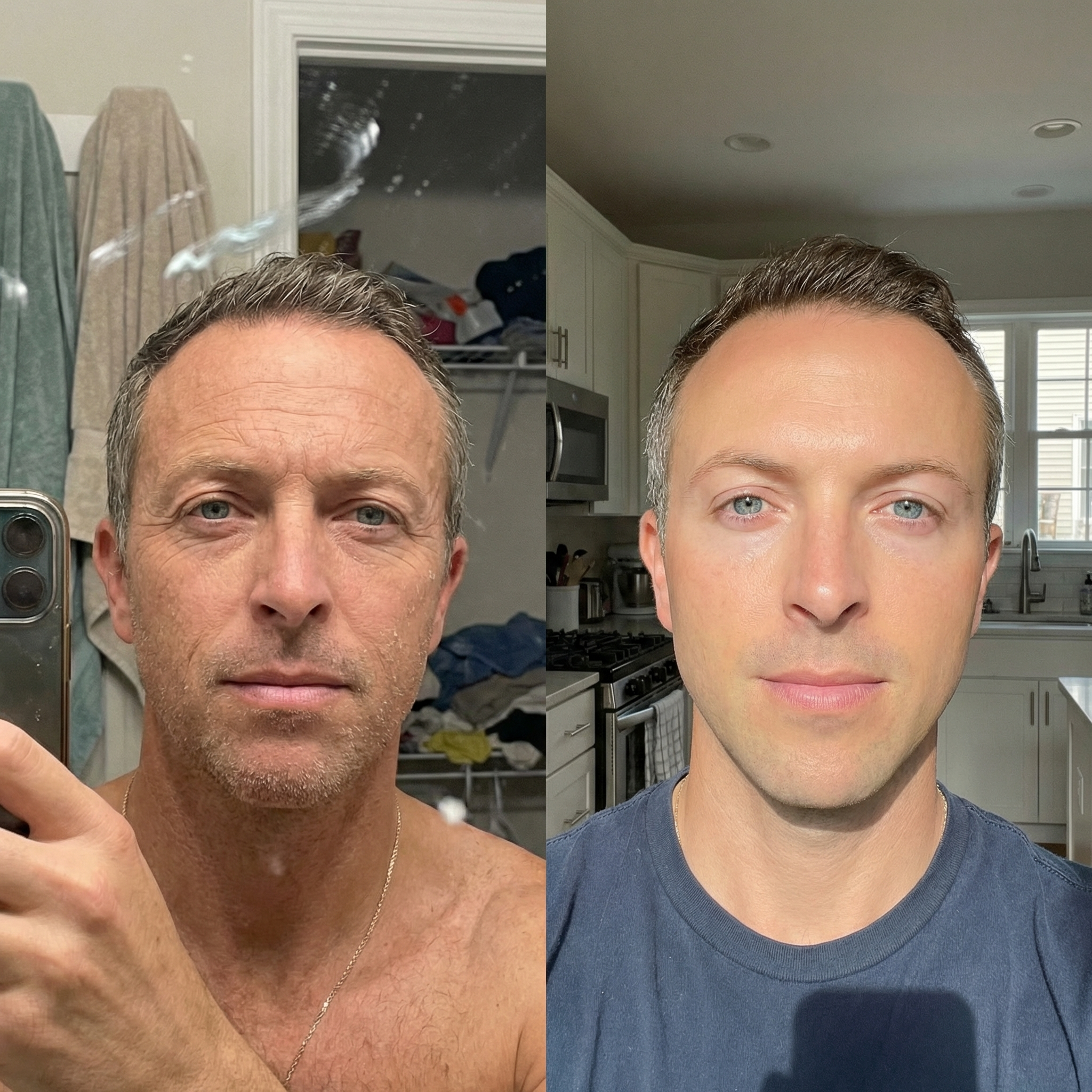
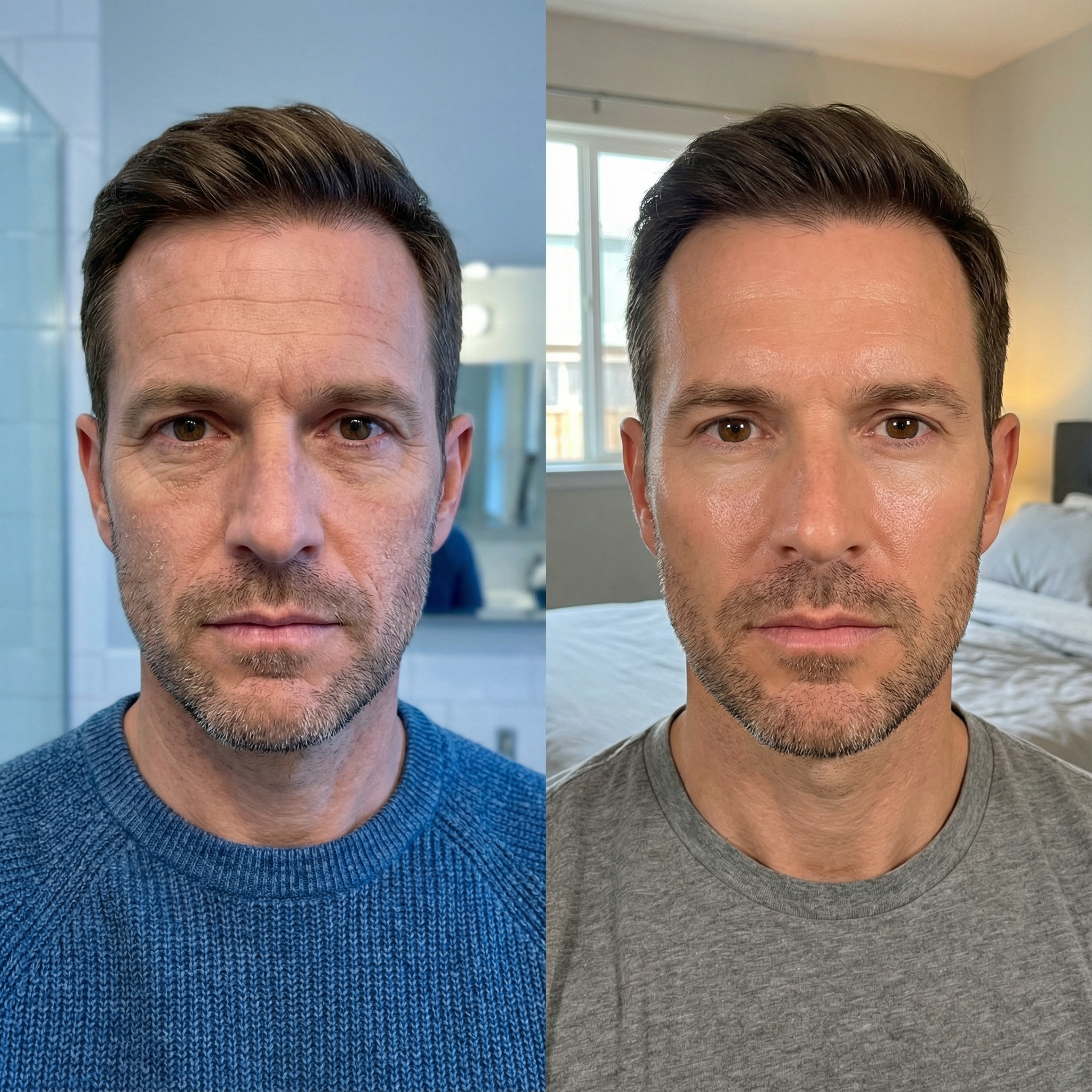
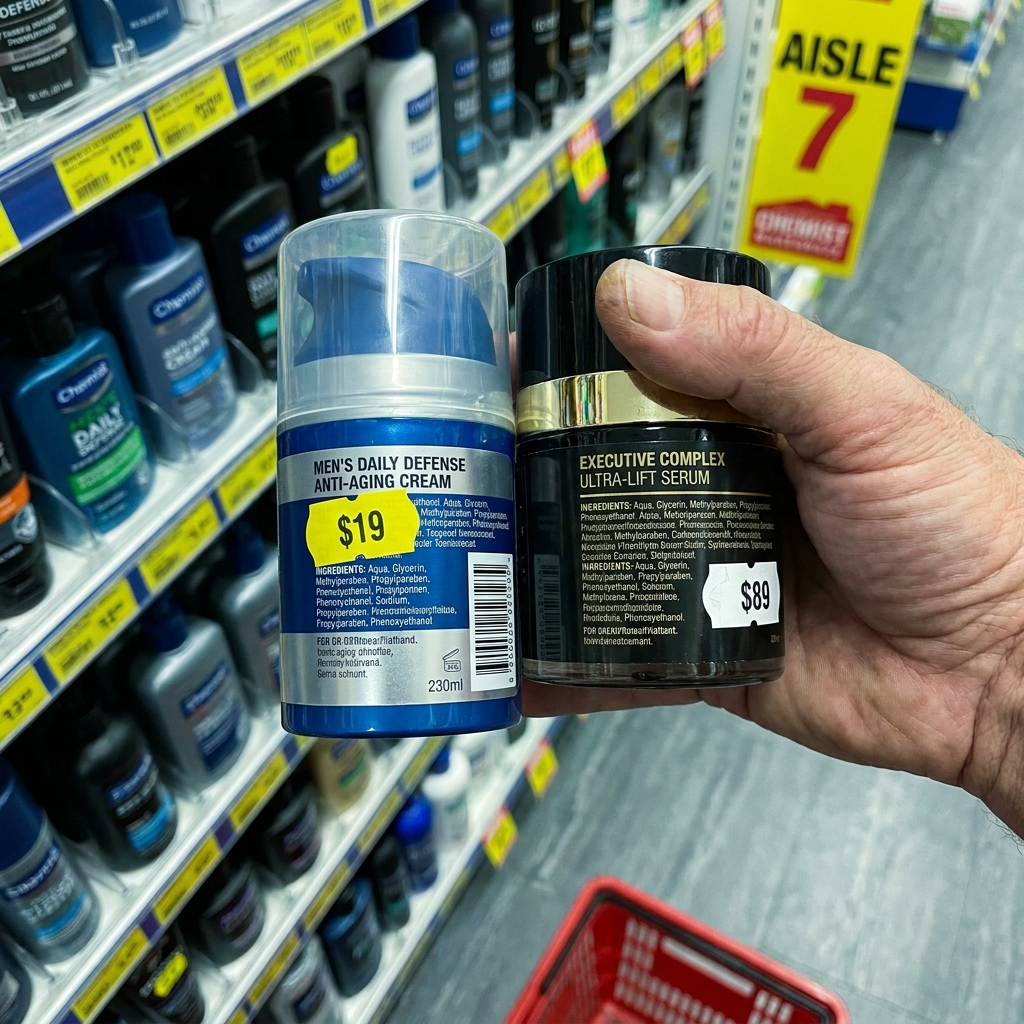
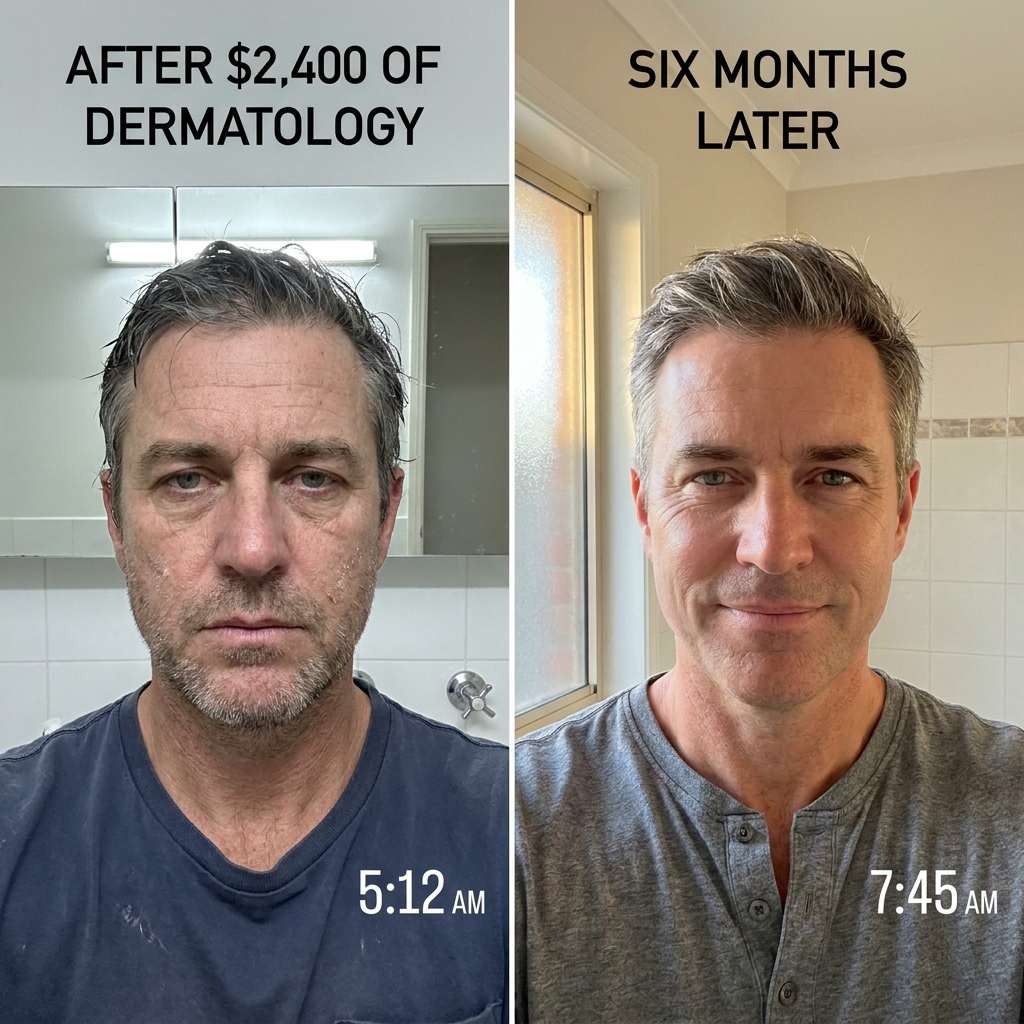
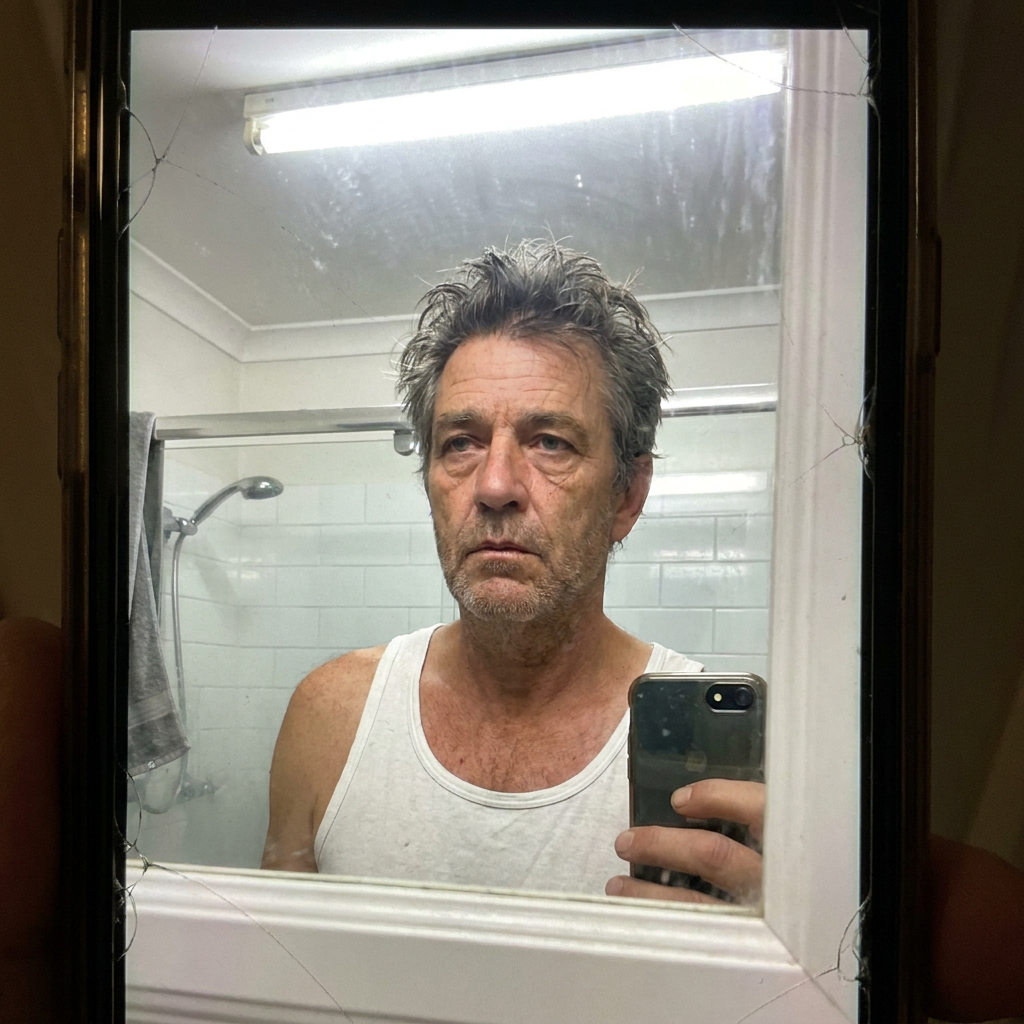
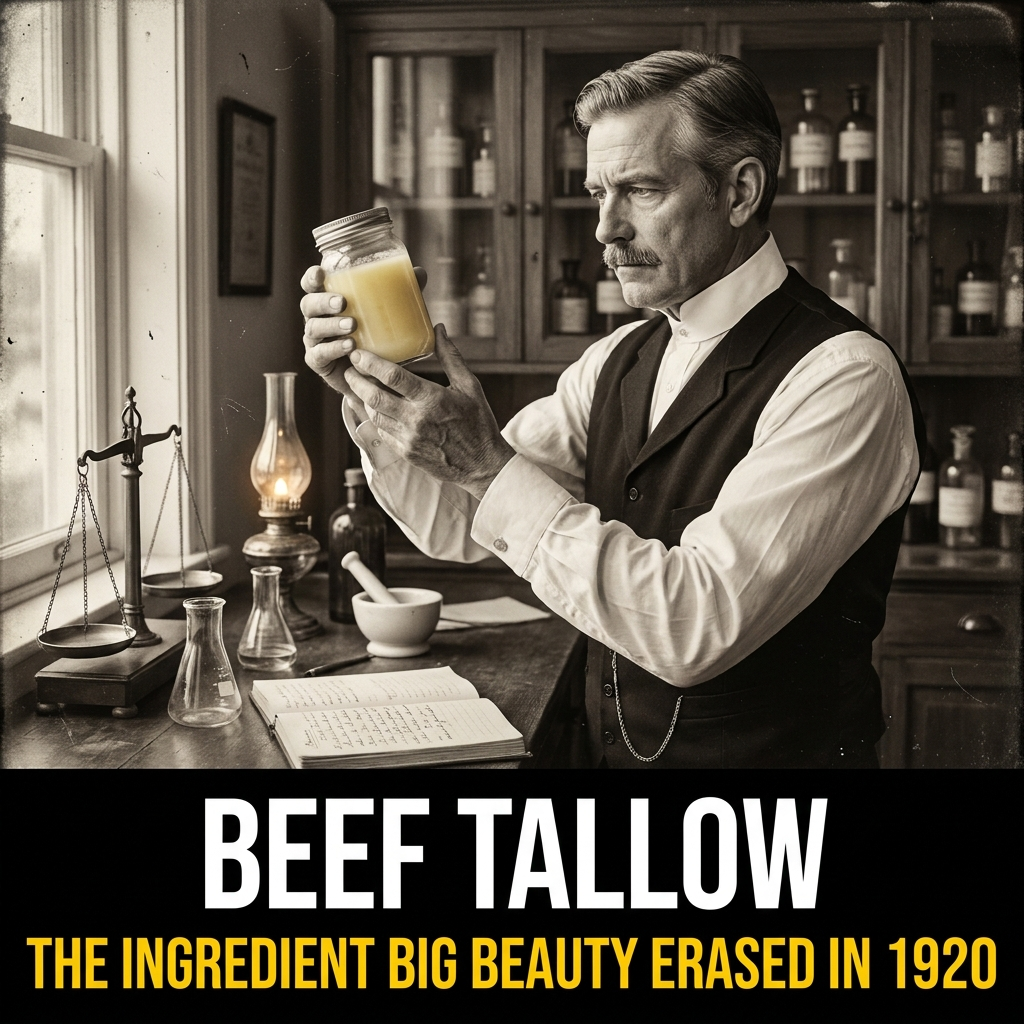
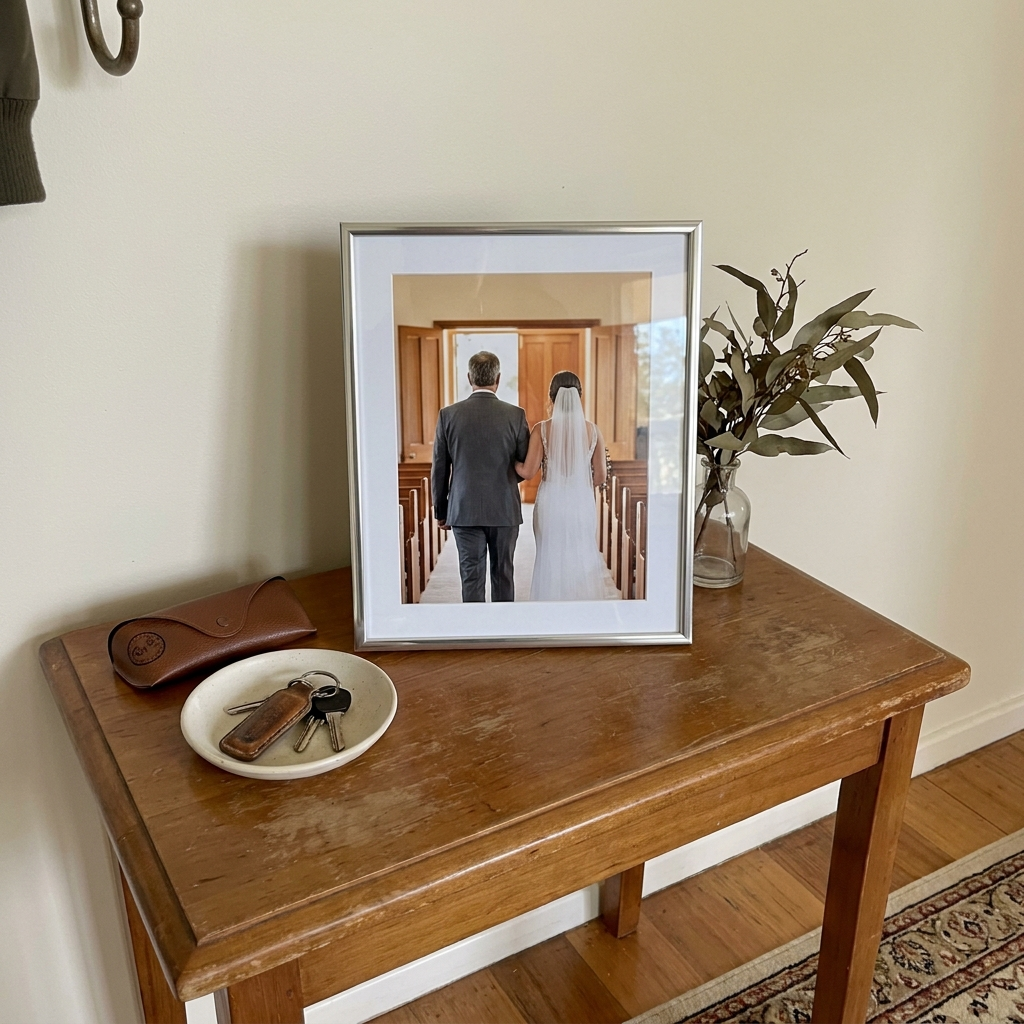
If you're a man over 50 and you've recently walked your daughter down the aisle — or one of your children is engaged and you're starting to think about the photographs — I'm about to tell you something every father-of-the-bride realises about three weeks after the wedding. And once you understand this, you're never going to look at the photos from any major family event the same way again. Because there are three things happening right now: One — Your daughter sent you the professional wedding photos and you've looked at the one of the two of you walking up the aisle more times than you'll ever admit. Two — Standing next to your daughter on the most photographed day of her life has shown you something you didn't see in the bathroom mirror or in any candid photo — and you can't unsee it. And three — The grooming industry has spent decades convincing men that what's happening to your face after 50 is inevitable... but they can't admit that the products you've been using are accelerating the very thing now permanently documented in your daughter's wedding album. So let me tell you what happened to me, because my story is going to make you go and look at the father-daughter walking-down-the-aisle photo from your own daughter's wedding tonight. For three years — over a thousand mornings straight — I'd been telling myself I was aging fine. I'm 53. Operations director at a logistics company. I'd spent the last twenty years either in suits at the office or in steel-cap boots on warehouse floors. The kind of bloke who'd been in good enough shape his whole life to never have to really think about how he looked. But the second I crossed 50? Every. Single. Family. Photo. Started looking different. I noticed it first at my son's 21st. The candids were fine. The posed group shot — the one his mother had organised with a proper photographer — was the one that stopped me. I looked at myself standing between my wife and my son and didn't recognise the bloke in the middle. By the end of every family event for the next two years, the same thing happened. The professional photographer would send through the gallery. I'd scroll through them quickly. I'd land on the ones with me in them. And I'd close the tab. I told myself it was the lighting. The angle. The fact that I was tired. The fact that I'd been working long hours. By the end of every year, my wife had started gently pulling the conversation around to "you look a bit tired lately." Which is what wives say when they've noticed something and don't want to hurt you. I knew what she meant. She knew I knew. Neither of us said it directly. I stopped insisting on being in the family photos. Started volunteering to be the one holding the camera. Took the corner seat at any group dinner with a photographer. Avoided the "let's get the whole family together" shot at any function where someone professional would be present. All. Year. Long. By the end of every twelve months, I'd been quietly editing my own visibility in my own family. And then my daughter got engaged. She'd been with him for four years. He was a good kid. Decent family. Good job. The wedding was set for eighteen months out — November of last year. The moment I knew this was real, I knew exactly what was coming. The professional engagement shoot. The proper wedding photographer. The album. The walking-down-the-aisle shot that every father of the bride gets, that gets framed, that gets hung on the wall, that the grandkids will look at one day. I had eighteen months to do something about the man I'd been seeing in those family photos. So I did what every man over 50 does. I doubled down on what wasn't working. I bought a $260 "men's premium grooming line" off a recommendation in a magazine — three bottles, a serum, a cream, an under-eye treatment. I went to a dermatologist for the first time in my life — paid $280 for the appointment, walked out with a prescription retinoid. I bought a $150 "executive grooming routine" from a website that had targeted me with ads on LinkedIn. For fifteen months I religiously applied every product they sold me. Morning and night. Sunscreen over the top. I followed every instruction. I bought every refill. And on a Saturday in November of last year, I walked my only daughter down the aisle of a vineyard chapel in front of 140 people, with a photographer documenting every step. Three weeks later, my daughter sent through the link to the professional wedding gallery. Four hundred and twenty photos. I scrolled to the father-of-the-bride section. There were fourteen of just me and her. I sat at my desk on a Tuesday night, after everyone had gone to bed, and I looked at those fourteen photos. The one where she'd just put her arm through mine at the start of the aisle. The one where I was looking at her halfway down, and she was looking at me. The one where I'd just handed her over and her husband had taken her hand. The one where I'd turned back toward the seats and you could see my face in profile. And I sat there at 53 years old, on a Tuesday night, and I cried. Not because the wedding was beautiful — though it was. Because the man in those photographs was not the man I thought I'd be in the photographs. The canyon lines around my eyes were deep enough you could see them across a wedding gallery. The washed-up, slightly grey tone under my eyes was the first thing the camera caught in every shot. The sandpaper texture along my jaw — even after the morning shave — caught the light from the chapel windows and turned my face into something that looked ten years older than the suit I was wearing. I'd given my only daughter away looking like the past. And it was permanent. The photos were taken. The album would be printed. The wall photo would be framed. My grandchildren — the ones not yet born — would one day point at that photo and ask their mother who the old man was. It would be me. I had spent fifteen months and over $1,500 on products specifically so that this photograph wouldn't be the photograph. And the photograph was exactly what I had been afraid of. My texture had not improved. My canyon lines had not softened. The grey under-eye tone had not lifted. The fifteen months of religious product application had bought me precisely nothing. So I went home that night, opened my laptop, and started asking the questions I should've asked five years earlier: Why had $1,500 of "premium men's grooming" not changed a single visible thing about my face? Why had a prescription retinoid prescribed by a licensed dermatologist made my skin thinner, redder and more obviously fragile in the wedding photos than it had been before I started? And why the fuck does the grooming industry sell men over 50 products that don't, by any photographic measure, actually change what they look like in the most important photographs of their lives? So I went down a rabbit hole. And I mean a DEEP one. I started reading dermatology and biochemistry research at the kitchen table after my wife had gone to bed — and every mainstream source was giving the same recycled corporate-friendly answers. "Use retinoids. Apply sunscreen. Establish a routine. Consider in-office treatments." But then I found research from a biochemist who actually studies the lipid composition of human skin, not the marketing claims of the cosmetics industry. And he mentioned something I had literally never heard of in three years of buying premium men's products and seeing a dermatologist. The Sebum Decline. Now pause for a second. You know what's insane? I'd spent $1,500 on grooming products in the eighteen months before my daughter's wedding. I'd paid a licensed dermatologist $280 to look at my face for eleven minutes and write a prescription. Not one of those products, not one of those bottles, not one of those appointments had mentioned the word "sebum." And that's not an accident. Because once you understand what sebum decline does, you realise exactly why I gave my daughter away looking like the past. Here's what sebum actually is: It's the natural oil your skin produces. It's literally the substance that kept your face functional for the first four decades of your life — the thing that gave you smooth, resilient skin in the photographs from your own wedding, from when your children were small, from the family Christmas albums that ended around 2010. When it's being produced at normal levels? Sebum maintains the lipid matrix of your skin. The barrier that holds moisture. The texture that makes you photograph as a man in his prime — not the washed-up version that the chapel light reveals. But when sebum production drops — and it does, significantly, after 40, and worse after 50? That's when the photographs start to change. The lipid matrix breaks down. The skin barrier fails. The texture changes. The canyon lines deepen. The under-eye grey settles in. And every professional photograph from every family milestone documents the slow drift. It's not that the camera is being cruel. It's that the substance keeping your face photograph-ready has dropped out of production — and the camera, in good light, with a proper lens, with a professional photographer, captures the truth that your bathroom mirror at 6am has been hiding from you. And here's the key thing I learned — the thing that explained why $1,500 of products hadn't moved the needle on the wedding gallery: Synthetic creams cannot replace sebum. Worse, the hormone-disrupting compounds in most "premium men's grooming lines" actively accelerate the decline. The parabens, phthalates, synthetic preservatives and prescription retinoids in the products I'd been using for eighteen months had been simultaneously suppressing my own remaining sebum production AND coating my face in a film that the chapel light revealed for exactly what it was. My problem wasn't that I'd waited too long. My problem was that everything I'd been applying for eighteen months had been working against me — and the photographer captured it permanently on the most important day of my daughter's life. The retinoid thinned my skin. The serums sat on top. The "executive grooming routine" cream coated my face in a synthetic film that read in the wedding photos as exactly the dryness and fragility it was supposed to be hiding. And underneath all of it, the sebum decline was getting worse with every monthly bottle. And here's the part that made my blood boil: The grooming industry KNOWS about sebum decline. The research is public. The dermatologists I'd paid had access to it. But unless you're willing to walk away from a $500-billion-a-year industry built on monthly refills and prescription pads, they don't give a single fuck about telling you the truth. Why? Because there's no patentable synthetic compound that's molecularly identical to human sebum. You can't patent the substance your skin actually recognises. There's no money in telling a 51-year-old man with an engagement announcement on his fridge that the "premium grooming line" he's about to spend $1,500 on for the next eighteen months isn't going to change a single thing about how he photographs at his daughter's wedding — and that the actual solution is a substance his great-grandfathers used four thousand years ago for forty dollars. There IS money in keeping him on a fifteen-month cycle of premium serums, dermatology visits, sunscreen rotations, and the eventual acceptance that the wedding photos are just the wedding photos and there's nothing he can do about it now. See how that works? So I kept researching. I'm reading lipid biochemistry papers in bed at midnight now. Studies on fatty acid composition in human sebum. Talking to blokes in ancestral health forums who'd had their own daughter's wedding moments and refused to ever be in a major family photograph looking like that again. And I found out there's an actual substance that's molecularly almost identical to human sebum. One the industry replaced around 1920 — right when synthetic chemistry took over personal care, right when premium grooming lines started replacing the substance every father had been using for four thousand years. Grass-fed beef tallow. The fatty acid profile is the closest match to human sebum that exists in nature: 1. Oleic Acid (42-50%) — The dominant fatty acid in your skin's own oil. It penetrates the lipid matrix and integrates instead of sitting on top. 2. Palmitic Acid (25%) — Critical for barrier function. Your skin uses this exact fatty acid to maintain its structural integrity. 3. Stearic Acid (18%) — Provides the structural lipid layer that holds everything together. Stops moisture loss without forming a synthetic film that catches light in chapel windows. 4. CLA — Conjugated Linoleic Acid. This is the BIG one. It's only present in grass-fed tallow — not grain-fed. Potent anti-inflammatory. Reduces the redness and irritation that prescription retinoids cause. 5. Vitamins A, D, E and K — Vitamin A stimulates collagen production. Vitamin D supports skin immunity. Vitamin E neutralises free radical damage. Vitamin K reduces dark circles and improves elasticity — including the under-eye grey that the wedding photographer captures every single time. All four are fat-soluble — only deliverable through a lipid-based carrier. Exactly what synthetic water-based premium creams cannot do. Now here's what's crazy: I found peer-reviewed studies — actual research — showing that human sebum and grass-fed tallow share nearly identical fatty acid profiles, and that the skin recognises and integrates tallow at the molecular level the way it recognises its own oil. But you'll never hear a "premium men's grooming line" mention it. You'll never see it on the men's shelf at the chemist. You'll never hear it from the dermatologist who's about to charge you $280 to write you a prescription. Because there's no prescription pad — and no margin — for "use the substance your great-grandfather used." So I tried it. For the first time in three years, I stopped applying everything that had failed me in the wedding photos and started applying something completely different. But here's the problem... I had to render the tallow myself the first time. Buy the suet from a grass-fed butcher in our area. Render it down on the stove on a Saturday morning. Filter it. Mix it with raw honey and beeswax to stabilise it. The kitchen smelled like a slow cooker for two days. I was sourcing ingredients from four different places, working out the right ratios — some recipes said 70% tallow, some said 85%, the historical sources had different numbers. I spent two weekends working out the formulation. My wife thought I'd finally cracked from the wedding stress. And I was spending close to half a Saturday on each batch. Every single month. Just to have something that might mean I never had to be in another family photograph looking like the man in the wedding album. But you know what? I did it. Because I was looking at those fourteen photos every night. And after about a week? The sandpaper texture along my jaw started softening. After three weeks? I caught myself in the bathroom mirror on a Saturday morning and didn't see the man from the wedding photos. I saw a 53-year-old man with skin that looked nourished instead of stripped. After six weeks? My wife took a candid photo of me at my son's birthday — the kind of phone photo I would've immediately deleted six months earlier. I made her send it to me. I held it up next to one of the wedding photos and the man in the birthday photo was not the same man as the one in the wedding album. The canyon lines were softer. The grey under-eye was lifted. The sandpaper was smooth. I had six weeks of tallow on my face and the difference was already visible in candid phone photography. So now I'm thinking: Okay, this protocol works. It's literally changing what the camera captures. But why the fuck is it so expensive, time-consuming and complicated to make? Turns out, a bloke named Finn Hendriks was thinking the same thing. He's a small business owner from Australia who'd watched his own father be the man in the wedding photos — the washed-up version in his sister's wedding album who'd given her away at 56 looking like the past. He'd watched his old man never recover from that gallery. He spent close to a year developing Bare Ritual Beef Tallow Honey Balm. The goal was simple: The exact ingredients men have used for thousands of years, in the right ratios, in one jar — no rendering, no kitchen experiments, no Saturday afternoons on the stove. Available to any father whose child was about to get engaged. No prescription retinoids. No "executive grooming routines." No 27-ingredient synthetic cocktails. No $1,500 premium grooming lines that don't change a single thing in the chapel light. He formulated it with grass-fed Australian beef tallow (the only source with the full CLA and Vitamin K2 profile). Raw honey (natural antibacterial, locks in the lipid matrix). Organic beeswax (stabilises the formula without synthetic emulsifiers). Cold-pressed olive oil (adds Vitamin E and squalene, the substance your skin co-produces with sebum). And most importantly: No hormone hijackers. Because parabens and phthalates in synthetic products lower testosterone in men over 40 — accelerating the very decline that turns father-of-the-bride photos into the ones nobody hangs on the wall. A few months later, I kept seeing Bare Ritual mentioned in men's health forums online — specifically by fathers in their late 40s and early 50s whose kids were getting engaged. I went to their site, ready to be disappointed like every "men's premium grooming line" I'd ever seen. And I almost fell out of my chair. They had EXACTLY what I'd been making myself — but in one jar. All four ingredients. The right ratios. Third-party tested. Grass-fed sourced. Made in small batches. Australian. No prescription compounds. No synthetic emulsifiers, no parabens, no fragrance, no industrial sludge. The jar is a 60-day supply. A pea-sized amount, morning and night — takes 30 seconds. I do it before I leave for work. I've been using Bare Ritual for ten months now. The canyon lines around my eyes are 70% softer than they were in the wedding album. The grey under-eye is completely gone. The sandpaper texture is smooth. My skin holds moisture through a 12-hour day. My son's getting engaged. The wedding is eighteen months out. He told me three weeks ago. I am not going to be the man in the album. Not this time. Here's what you need to understand: Sebum decline gets worse with age. After 55, production drops even further. The lipid matrix continues to fail. The professional photographs at every major family event continue to document it. And that's when men panic. They face every grandchild's christening, every kid's wedding, every milestone birthday, every family Christmas album for the rest of their lives being a continuous documentation of the slow fade. Face being in photos that get framed, that get hung, that get passed down — looking like the past. Because nobody told them that what the camera was capturing was specifically a sebum decline — and that it was 100% reversible at the molecular level with a substance their great-grandfathers used for four thousand years. I'm putting the link below. Even if you're skeptical — I was too, and most of the 470,000 men who've bought a jar were too — grab one. Try it for three weeks. Then pull up the last professional photograph of yourself — the wedding, the milestone birthday, the corporate headshot — and ask yourself whether the man in that photo is the man you want permanently documented for your grandchildren. The grooming industry won't save you. They'll sell you another fifteen years of premium serums that don't change anything in the next wedding album. Your daughter will get married. Your son will get married. The albums will be printed. The wall photos will be framed. You have to save yourself before the next one is taken. Here's what happens when you start Bare Ritual: Days 1-3: Apply a pea-sized amount morning and night. Smells faintly of honey — not beef, despite what you'd expect. You'll notice: "My face actually feels nourished instead of coated." The lipid matrix starts absorbing the molecularly-matched fatty acids immediately. Days 4-7: The sebum-mimicking effect is building. You'll notice: "The dryness along my jaw is softening." Or if your skin was raw from years of premium products, the redness is calming down. The CLA reduces the inflammation that synthetic creams caused. Weeks 2-4: The cumulative effect kicks in. You'll notice: "The canyon lines around my eyes have softened" and "the grey under-eye shadow has lifted." Your wife notices. The next candid family photo your daughter takes on her phone looks different — and she doesn't know why. Month 2+: This is when men report the biggest change. You'll notice: "My face photographs the way it used to." For the first time in years, you don't flinch when someone pulls out a camera at a family event. Some men start showing up in the family photos again on purpose. Most buy a second jar before they finish the first. 90-Day Money-Back Guarantee. If your face hasn't changed significantly, full refund. No return required. No forms. Just email [email protected]. You risk nothing except being permanently documented in your next child's wedding album looking like the past. Your canyon lines, your washed-up under-eye, your absence from the recent family photos — it isn't "just getting older" or "just genetics" or "just what 53 looks like." It's your sebum dropping. The lipid matrix breaking down. The substance keeping your face photograph-ready no longer being produced — accelerated by every "premium grooming" product you've been buying since you turned 45. And it's 100% addressable. The solution: Replace what your skin stopped producing. Use the substance your great-grandfathers used. Be the father in the next wedding album who actually looks like himself. Sandpaper softens in two to four weeks. Canyon lines visibly lift in three months. Most men, after six months, photograph differently in candid phone shots. After twelve months, the difference shows up in professional photography. It's that simple. Go get it. Stop being the absent man in the family photo album. You deserve to walk your next child down the aisle and be in the album the way you wanted to be in your first one. ✅ Grass-fed beef tallow ✅ Raw honey ✅ Organic beeswax ✅ Cold-pressed olive oil 470,000+ jars sold. Buy one get one free. Free worldwide shipping. 90-day money-back guarantee — no return required. 👉 https://menshealthdispatch.pagedeck.app/my-dermatologist-lied P.S. — My daughter's wedding album is already printed. The walking-down-the-aisle photo is already framed and hanging in her hallway. There is nothing I can do about that gallery. But my son just got engaged, and I have eighteen months. The reason I gave my daughter away looking like the past wasn't genetics — it was a missing fatty acid the grooming industry replaced in 1920. You can replace it at the molecular level in weeks. Don't be the father in your child's wedding album who never gets put on the wall. P.P.S. — Still skeptical? That's why Bare Ritual offers a 90-day money-back guarantee with no return required. If your face hasn't changed and you're still looking at the last family photo album the same way I looked at my daughter's wedding gallery, you get every cent back — just email [email protected]. You literally risk nothing except being the man in the next wedding album who didn't do anything about it when he still had time.
My Daughter's Wedding Photos Arrived
"I'll be honest — I thought this was a gimmick. My face looked like sandpaper and I'd tried enough things that didn't work. The only reason I bought was the 90-day guarantee. Figured I had nothing to lose. Two weeks in my wife asked what I'd changed. I hadn't told her I was using it. That was all ...
LEARN MORELike this ad? Make it yours.
Crush rebuilds this exact creative around your product — your brand, your colors, your offer — in about a minute.