Senior Times USA
Senior Times USA Facebook ad: “The #1 reason seniors lose their independence”
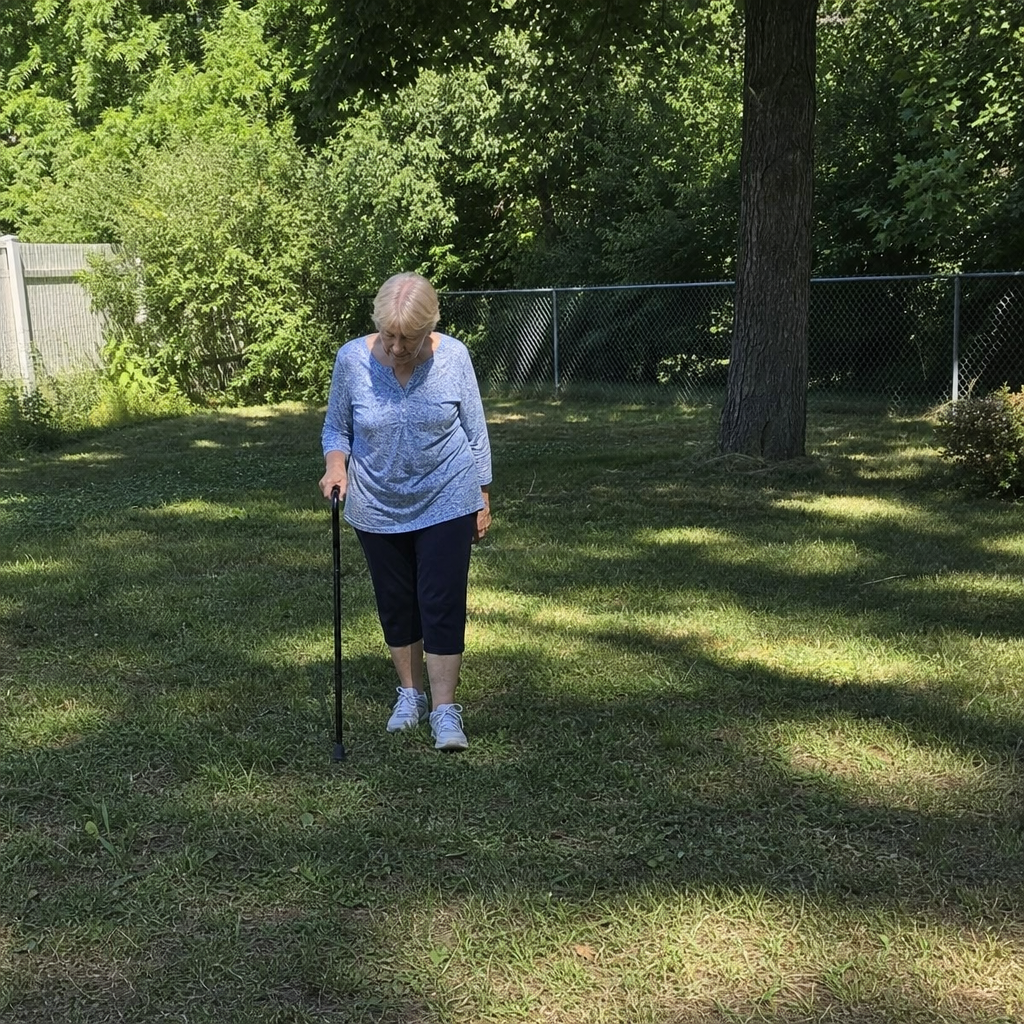
Ran for 21 days, from June 23 to July 14, 2026, the last day Crush saw it.
Run by Senior Times USA on Facebook. Crush is not the advertiser and does not verify its claims. See this ad in Meta's Ad Library(opens in a new tab)
Want an ad like this for your product?
Crush makes new ad images for your product from this ad: your logo, your product photo, your offer.
Trials from $19.95 USD, then $79.95 USD a month. Cancel anytime.
About this ad
- Meta Ad Library ID
- 1730588601696226
- Platforms
- Facebook, Instagram, Messenger and Threads
- Relaunches
- 0
- Niche
- Fashion & Apparel
Ad text
There's a 6-year window where most seniors lose their independence forever. Not from disease. Not from dementia. From something your doctor will never mention. I'm talking about the years between 68 and 74. Six years that determine whether you spend your retirement traveling with grandkids... or confined to a facility where someone monitors your bathroom trips. Here's what makes this window so devastating: At 68: Most people are still fully independent. Living alone. Driving. Walking without fear. By 74: Nearly 40% have lost the ability to live safely on their own. Not because they got Alzheimer's. Not because their heart gave out. Because they crossed an invisible threshold that doctors don't test for and won't warn you about. And once you cross it? There's almost no coming back. The Phone Call That Made Me Investigate This My mother-in-law called me from an "independent living" facility last Tuesday. She's 68. She can't live independently anymore. Not because of her mind -- it's sharp as ever. Not because of disease -- her heart's fine, no diabetes, no major health issues. She's there because she fell getting out of the shower. Broke her hip. Spent three weeks in the hospital, then rehab, and now... she's too afraid to be alone. Can't trust her own feet anymore. Can't walk on her tile floors without grabbing the wall. Can't go down stairs without death-gripping the railing with both hands. Can't feel when a surface is slippery until it's too late. "I never thought this would be me," she said. "I was still hiking at 64." Four years. That's all it took. Four years to go from independent to... dependent. The Facility Director Told Me Something Chilling "About 60% of our residents don't have cognitive decline or major illness. They're here because they fell. And once you fall badly once... the fear keeps you here." She pulled up the intake records. I asked her: "When do most people first move in?" She scrolled through the files. "Look at this," she said, turning the screen toward me. Age 68: 8 new residents that year Age 69: 12 new residents Age 70: 19 new residents Age 71: 24 new residents Age 72: 31 new residents Age 73: 28 new residents Age 74: 22 new residents "After 74, the numbers drop. Because by then, most people who were going to lose independence already have. The ones who make it past 74 without falling? They usually stay independent into their 80s." She looked at me and said something I'll never forget: "There's a window. And if you don't protect yourself during those six years... you probably never will." I Started Digging Into Why This Window Exists Turns out, there's actual science behind this. Between ages 68-74, three things converge that create a "perfect storm" for devastating falls: Your nerve sensitivity hits critical decline Doctors call it "peripheral neuropathy" or "age-related proprioception loss." After 50, the nerve sensitivity in your feet starts declining. Sounds harmless, right? But do the math: At 50: 100% ground sensation At 60: 70% remains At 68: 50% remains At 74: 30% remains By 68, you've lost half your ability to feel the ground beneath you. By 74, you've lost 70%. Your muscle response time crosses the "recovery threshold" At 65, if you start to slip, your body can still catch you in 0.3 seconds. At 70, that response time stretches to 0.6 seconds. At 74, it's 0.9 seconds. Sounds like nothing, right? But a fall happens in 0.7 seconds. Once your reaction time exceeds 0.7 seconds, you can't catch yourself anymore. You hit the ground. Your confidence collapse accelerates Here's the brutal part nobody talks about. Once you have your first "close call" -- a near-slip that rattles you -- your brain rewires itself around fear. You start walking differently. Shuffling. Grabbing furniture. This makes your balance worse, which creates more close calls, which increases fear... It's a death spiral. And it happens fastest between 68-74. So How Do We Actually Close This Window? Your body operates on instant sensory feedback from over 200,000 nerve endings in the soles of your feet. These nerves are designed to send lightning-fast signals to your brain: "The ground is slippery." "The floor is uneven." "Your weight is shifting left." This system is called proprioception -- and it's what allows your body to make micro-adjustments to keep you upright before a slip becomes a fall. But when thick, cushioned shoe soles block this feedback, your brain receives dulled, delayed signals. By the time you realize your foot is slipping, it's already too late to catch yourself. That's when you hit the ground. Which is why when I see these symptoms during the 68-74 window, I know the problem is deep sensory starvation. Because if your feet can still send signals to your brain... you can survive the danger years. You're Probably Thinking... "Wait... sensory starvation? You mean I just need better shoes or special insoles?" Not exactly. Let me explain. Let's look at it through the lens of basic biomechanics. 🌍 Modern cushioned shoes block the nerve signals your brain needs to keep you balanced. We've been sold the lie that "more cushioning = more safety." But when your feet can finally feel the ground again, two things happen: (1) Your 200,000+ nerve sensors "wake up" and start sending instant feedback to your brain, catching slips before they become falls. (2) Your body finally switches from "reactive stumbling" to "predictive stability"... That's why... Your shuffling gait disappears, your legs stop feeling unsteady, and suddenly the fear of falling, the grabbing furniture, the avoiding stairs... It all starts to melt away. I Had a 72-Year-Old Woman Come to Me... She was in year 4 of the danger window. She'd been an avid gardener her whole life. She was active, independent, and sharp... but sensory loss had made her so unsteady her daughter didn't trust her to walk to the mailbox alone. Her feet were so numb from years of thick-soled shoes she couldn't feel when surfaces changed. She'd tried balance exercises, physical therapy, and "orthopedic stability shoes" for years... but nothing worked. So I said, "Let's try something different." I gave her a pair of thin-soled, wide-toe-box shoes and told her to wear them for just one month. She looked skeptical. "At my age? What are thin shoes supposed to do?" The next month, she called me with tears in her voice and said: "I can feel the ground again." Four months later, she's 73 and back to gardening, walking on uneven ground, and going up and down stairs without fear. She made it through the 68-74 window. All it took was restoring her feet's ability to sense the ground. And There's Only One Footwear I Trust for That... HF Stride Barefoot Shoes. They're designed with an ultra-thin, flexible sole that restores ground feel... Most people wear thick, cushioned shoes that block the sensory feedback your aging brain desperately needs to maintain balance during the critical 68-74 years. But these contain the exact design your feet need to "wake up" proprioception and send signals instantly. That's why even the FIRST month of wearing them can feel like flipping a switch in your body: ➡️ Shuffling starts fading within weeks ➡️ Your feet feel connected to the ground again ➡️ Walking on uneven surfaces becomes easier ➡️ Natural confidence surges back ➡️ Stiffness eases, legs feel steadier ➡️ Fear of falling melts away ➡️ Your balance gets real long-term support, not another quick fix ➡️ Independence returns, your whole body feels capable... you feel like yourself again. They're 100% safe, lightweight, and anatomically designed... The whole process takes less than 5 seconds to slip them on... And when you wear them every day consistently -- especially during the 68-74 danger zone -- they actually work. But I Beg You... Do NOT BUY just any "barefoot shoe" online. At our age, you know how many people are after your wallet... They either use cheap synthetic materials that fall apart in weeks, or they add unnecessary "arch support" that defeats the whole purpose -- blocking the very sensory feedback you need to survive the danger window. 👉 That's what makes HF Stride different. These shoes use a precision-engineered 4.5mm sole -- thin enough to restore full ground feel, but durable enough for daily wear through your most vulnerable years. Plus a wide, anatomical toe box that lets your toes splay naturally for a stable base. That's why thousands swear by them. That's why I wear them. That's why I recommend them to everyone I care about who's in or approaching the 68-74 window. 💬 If you read the reviews, you'll see why most people refuse to buy from anyone else. Here's the Part That Matters Most Normally, people pay full price for this kind of quality. But right now, they have a special Spring Sale: 49% off plus free shipping. And fair warning: Hike Footwear is a small company that uses quality materials and precision construction, which means they can't mass-produce like the cheap knockoff brands. Their last restock sold out in 72 hours. So let me say this upfront: I'm sorry if you click and they're already gone. It happens more often than you'd think. I genuinely wish I could hold a pair aside for you -- but I can't. 👉 But if you see them in stock... don't wait. This is one of those moments where waiting even a day can make the difference between getting yours... or missing out completely. Because here's what you need to understand: Every Day Inside the 68-74 Window Counts If you're 68, you have six years to protect yourself. If you're 70, you have four years. If you're 72, you have two years. If you're 74... you're at the edge of the cliff. The statistics are brutal: People who make it past 74 with full ground sensitivity stay independent into their 80s. People who lose it during the window? Most never get it back. My mother-in-law is 69 now. Lives independently. Walks confidently on any surface. Goes up and down stairs without fear. She made it through year one of her danger zone. The facility director told her: "In 22 years, I've never seen someone regain their confidence like this." She asked what she did differently. She told her. Now she tells every family entering the window: "Get them out of those cushioned shoes before it's too late." The 68-74 Window Is Closing Not for everyone. Just for you. Every day you wait is one less day you have to protect yourself. One more day of sensory loss. One step closer to the threshold you can't come back from. Don't wait until you're in a facility. Don't wait until your kids are having "the conversation" about whether you can live alone. Don't wait until you've crossed over and the window has closed forever. Click below and protect yourself during the most dangerous six years of your life. Your future self -- still independent, still confident, still living on your own terms at 75 -- will thank you.
Where the ad sends people
offers.hike-footwear.com
The #1 reason seniors lose their independence
Let me save you the time and money I wasted. Over the past 3 years, I've tried $180 Brooks running shoes, $220 custom orthotics, $95 memory foam sneakers, those ugly Sketchers my mom recommended, two different "orthopedic" brands, some $40 Amazon shoes with 5-star reviews, and finally, these barefoo...
Shop now: offers.hike-footwear.com(opens in a new tab)