Blood Pressure Balance Community
Blood Pressure Balance Community Facebook ad: “Ceylon Cinnamon 7200mg Equivalent with MCT Oil”
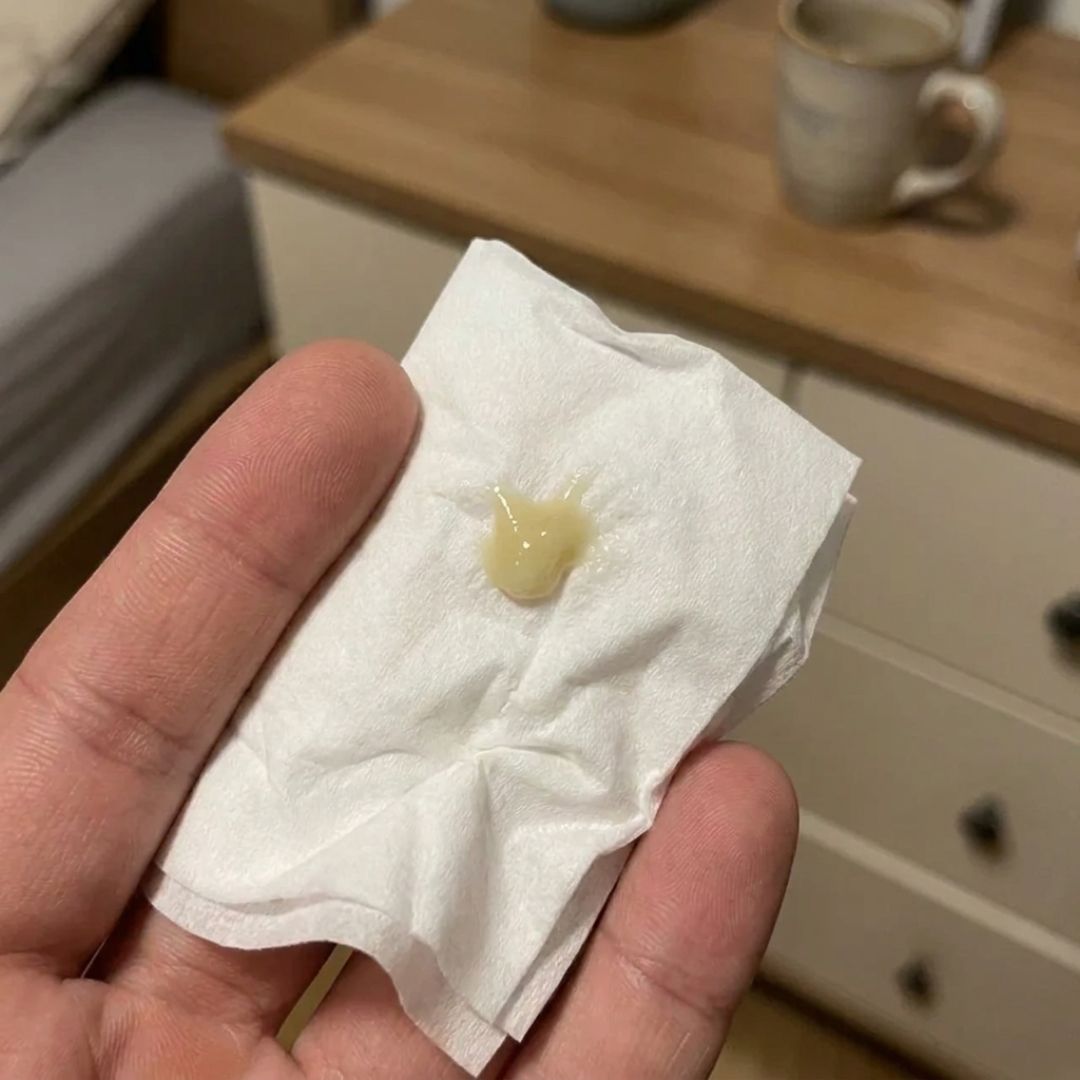
Ran for 42 days, from June 28 to August 9, 2026, the last day Crush saw it.
Run by Blood Pressure Balance Community on Facebook. Crush is not the advertiser and does not verify its claims. See this ad in Meta's Ad Library(opens in a new tab)
Want an ad like this for your product?
Crush makes new ad images for your product from this ad: your logo, your product photo, your offer.
Trials from $19.95 USD, then $79.95 USD a month. Cancel anytime.
About this ad
- Meta Ad Library ID
- 1733857317642944
- Platforms
- Facebook, Instagram, Audience Network, Messenger and Threads
- Relaunches
- 0
Ad text
My blood pressure was 152/98. I asked my new doctor for more time to consider medication. She said no. Then she typed seven words into my permanent medical record that I didn't see until later: "Patient non-compliant. Refused treatment against medical advice." I couldn't stop thinking about who might read those words — the next specialist, a cardiologist, an ER physician pulling up my file without any context. Dr. Patterson's retirement announcement came in the mail. Standard form letter. "After 38 years of practice, I'm retiring effective September 30th. Your care will be transferred to Dr. Sarah Reynolds." I stared at it sitting at my kitchen table. Thirty years. I'd been seeing Dr. Patterson for thirty years. He knew my history. My father's heart disease. My anxiety about medication. He'd always been patient. "Let's try diet and exercise first, Gary. We have time." Now he was gone. Gary Whitfield is 59 years old. My first appointment with Dr. Reynolds was on October 15th. Transfer of records. Routine physical. Meet the new doctor. I sat in the exam room. Different doctor. Same room. Same posters on the wall about blood pressure and cholesterol. Dr. Reynolds walked in. Young. Maybe 40. Tablet in hand. "Mr. Whitfield." She shook my hand. Firm grip. No-nonsense. "I've been reviewing your chart." She pulled up my records on the tablet. Scrolled. Her jaw tightened. "Your blood pressure history." She turned the screen toward me. "2019: 138/89. 2020: 142/91. 2021: 145/94. 2022: 148/96. 2023: 152/98." "Five years of progressively worsening hypertension. No medication prescribed." "Dr. Patterson and I were trying lifestyle changes first." "For five years?" Her voice was sharp. "You've been in Stage 2 hypertension for two years. That significantly raises your stroke and cardiovascular risk. This needed to be addressed sooner." My stomach dropped. "He was being careful. He knew my father had bad reactions to—" "Your father's medical history doesn't change your risk profile. You could have had a stroke." She typed rapidly. "We're starting Lisinopril. 10 milligrams. Today." "I'd like more time to—" "I strongly recommend you start today. The risk of waiting is real." The printer whirred. She handed me the prescription. I didn't take the paper. Not right away. "What happens if I want to try something else first?" She looked at me. Then at her tablet. Her fingers moved across the keyboard. Click. Click. Click. Click. "I need to document this. When a patient declines recommended treatment, we note it as non-compliant against medical advice." She said it directly. Like reading a protocol aloud. "What does that mean?" "It means your chart will reflect that you were offered standard-of-care treatment for Stage 2 hypertension and declined." "My chart. My permanent chart." "Your electronic health record. Yes." "Who sees that?" She didn't look up. Still typing. "Other providers who access your records would be able to see it. Specialists, urgent care physicians, emergency departments. Insurance carriers during reviews." The room tilted. "You're putting a note in my permanent record because I asked for more time?" She finished typing. Looked at me. "I'm documenting that I did my job. Follow up in six weeks." She stood. Left. The whole appointment took twelve minutes. Twelve minutes to get a label I didn't ask for. That I didn't fully understand. That I worried might follow me — into the next appointment, the next referral, anywhere my file arrived before I did. I sat there. Holding a prescription in one hand. The other hand gripping the armrest. I couldn't feel my fingers. In the parking lot I called Linda. "How was the new doctor?" "She put something in my chart. Non-compliant against medical advice." "What does that mean?" "It means anyone who opens my file could see it before I've said a word. Other doctors. Specialists. Insurance." Silence. Long silence. "Gary. What did you do?" "I asked for time. That's all I did. I asked for time." That night I couldn't sleep. Laid in bed staring at the ceiling. Linda's breathing steady next to me. It wasn't the blood pressure keeping me awake. Not this time. It was the label. At 3 AM I went downstairs. Sat at the kitchen table with my laptop. what does non-compliant mean on medical records Some of what came up made me feel worse. Non-compliance notations can be visible across a patient's electronic health record when other providers access it. Some sources described patients worrying that such entries could affect how future providers approached their care — how much time they took, how readily they listened before forming an impression. I didn't know how much of it applied to my situation. But I couldn't stop reading. I closed the laptop. Opened it again. lisinopril side effects Dizziness. Fatigue. Persistent cough. My father's face flashed in my mind. Fourteen years on blood pressure medication. Then congestive heart failure at 68. Dead at 71. I don't know how much any of it was connected. But I'd watched the whole thing happen, and I couldn't stop thinking about it. I didn't know what to do with either option. Take the medication and live with that fear. Or refuse it and keep the label. I couldn't find a third path that night. I kept searching. Something I hadn't expected came up. Research on the relationship between blood pressure and metabolic health. On insulin sensitivity. On structures called GLUT4 transport proteins — molecules that help move glucose out of the bloodstream and into cells after eating. In a normally functioning system, insulin signals these proteins to activate, pulling circulating glucose into muscle and tissue so blood sugar returns to a normal range relatively quickly. But in people with impaired insulin sensitivity, this signaling process may work less efficiently. Glucose can remain elevated in the bloodstream for longer than normal. Some researchers suggest that sustained elevation may promote oxidative stress and low-grade inflammation — and that over time, this may contribute to reduced flexibility in blood vessel walls and increased circulatory resistance. Factors that could add to blood pressure burden, particularly for people already prone to vascular strain. The research wasn't claiming insulin resistance causes hypertension in every case. It was suggesting that for some people, blood sugar regulation and blood pressure may be more connected than their treatment ever addresses. Certain compounds in true Ceylon cinnamon have been studied for their potential to support insulin sensitivity and healthy glucose metabolism, including through pathways involving glucose transport activity. Not a cure. Not a substitute for prescribed treatment. But a direction I hadn't considered. I didn't fill the prescription. One week passed. Then two. Dr. Reynolds's office called. "Mr. Whitfield, Dr. Reynolds has noted your continued non-compliance and wants to schedule—" I hung up. Linda found me in the garage that evening. "Gary. You need to bring her something she can't argue with. Not an argument. Numbers. Proof." She was right. The only thing that changes a label is evidence. I ordered a cinnamon supplement first. Highest rated on Amazon. No information about cinnamon variety or how it was processed. Two weeks. Blood pressure still 152/98. A product labeled Ceylon cinnamon next. No third-party verification. No Certificate of Analysis. Two more weeks. 150/97. Still Stage 2. A cinnamon and chromium blend from a health chain. One more week. Nothing. Five weeks. Three attempts. Nothing to bring to Dr. Reynolds. I called the office. The next available slot was four weeks out. Four weeks. That same weekend I stopped into a health food store and nearly walked past the supplement aisle. A woman was reading labels near the back. Late 60s. Calm. Reading glasses on a chain. "You're looking at cinnamon?" she said. "Trying to. Nothing's worked so far." "Most won't." She glanced at the shelf and handed me a bag I hadn't noticed. "The Ceylon distinction matters — not just labeled that way, actually verified." I looked at it. Metabolae Ceylon Cinnamon. I turned it over. "The concentration and the MCT oil are what separate it from most of these. The active compounds are fat soluble. Without a carrier they don't absorb well. Most products on this shelf don't account for that." She pulled up her phone and handed it to me. A Certificate of Analysis. Potency documented. Coumarin levels confirmed below tested thresholds. "My husband's been taking it for several months. One softgel with breakfast. His numbers moved in a better direction. His doctor noted the improvement and kept monitoring him." I ordered it before I left the store. The bag arrived two days later. One softgel with breakfast. Same time every morning. The first week, nothing I could clearly point to. My energy through the afternoon felt a bit more stable, though I was also sleeping better and couldn't say what was driving what. I checked my blood pressure at the end of the week. 150/96. Week two: 146/93. Linda noticed I seemed less worn out in the evenings. We started walking after dinner again. Week three: 148/94. Up slightly from the week before. I almost stopped. Week four, the day before my appointment: 138/87. Out of the Stage 2 range I had been sitting in for two years. I checked three more times. 138/87. 137/86. 139/88. At the appointment, the nurse wrapped the cuff. Pumped. 137/86. She wrote it down. Routine for her. Not for me. Dr. Reynolds walked in. Pulled up my chart. Stopped. "137 over 86." "Yes." She looked at the previous visit. 152/98. Then today. 137/86. "You started the Lisinopril?" "No." Her head snapped up. "No?" "A Ceylon cinnamon supplement. One softgel with breakfast, every morning. I kept a log." I handed her four weeks of daily home readings. She reviewed them. Set them down. "This is a meaningful improvement. I'm going to add a treatment-plan note and monitor you quarterly. If the readings hold, we'll maintain this approach." "And the non-compliant note?" She looked at the screen. Paused. Then typed. "I'm adding a current treatment plan to your record. Patient-directed supplementation, quarterly monitoring. That entry becomes part of your history too." Not erased. Updated. Context added. I walked out. Sat in my car. Called Linda. "137 over 86. And she added a new note to the chart." Silence. "Lin?" "You got your name back." That's exactly what it felt like. That was eleven weeks ago. My blood pressure has been averaging around 133/84 most mornings. About 19 points below the 152 systolic I started with. Still being monitored quarterly. No medication. I don't know exactly how much of that came from the supplement, the walking Linda and I picked back up, the reduced stress of finally having a plan, or some combination of all of it. What I know is that my readings moved, I documented them, and my doctor updated my record based on what she measured. Last month Linda and I went hiking at Yosemite. Eight miles. Elevation gain. Not winded in any way that surprised me. She took a photo at the summit. Me with my arms spread. Grinning. "Send that to Dr. Reynolds," I joked. Linda laughed. "She'd probably document it as reckless behavior." I laughed too. Because the fear was gone. Not just the blood pressure fear. The other fear. The one that sits in your stomach when you know the system has already decided who you are. If you're reading this, there might already be a note in your chart. Or one is about to be written. Your doctor doesn't call it punishment. They call it documentation. Standard of care. Liability protection. But you know what it feels like. And it follows you. Dr. Reynolds put seven words in my record based on a twelve-minute appointment. What changed that record wasn't an argument. It was a consistent log of readings over four weeks, and a doctor willing to update the care plan when the numbers supported it. I'm not suggesting anyone delay or replace prescribed treatment. What I did was take a supplement I could track carefully alongside the lifestyle changes I was already making, and then bring documented numbers to my follow-up. If your blood pressure has been climbing and you're looking at the metabolic research, Ceylon cinnamon has been studied for its potential to support glucose metabolism and insulin sensitivity. Metabolae uses a 12-to-1 concentrated extract of verified Sri Lankan Ceylon in an MCT oil softgel, third-party tested with coumarin levels confirmed below tested thresholds. One bag. One softgel with your first meal. That is what I took. That is what I tracked. That is what I brought. — Gary Whitfield Try Metabolae Ceylon Cinnamon for up to 90 days. Track your blood pressure weekly. If you are not satisfied for any reason, full refund. No questions asked. I cannot tell you this will move your numbers. I can tell you it is formulated carefully, independently verified, and straightforward to take consistently while you document your readings. If your numbers shift and you have a log to show for it, you will have something real to bring to your doctor. What she does with it is between the two of you. What I know is that mine added a new note. — Gary Whitfield P.S. By week two my readings were moving. There was a small uptick at week three that almost made me quit. Out of Stage 2 range by week four. My doctor reviewed my home log and added a current treatment plan to my chart that day. P.P.S. The original non-compliant entry is still in my record. But so is the updated treatment plan that sits alongside it now. That is what any future provider will read together. Order now.
Where the ad sends people
metabolae.com
Ceylon Cinnamon 7200mg Equivalent with MCT Oil
Metabolae
Learn more: metabolae.com(opens in a new tab)