Dr. Catherine Fields
Dr. Catherine Fields Facebook ad: “Read this if you want your libido back”
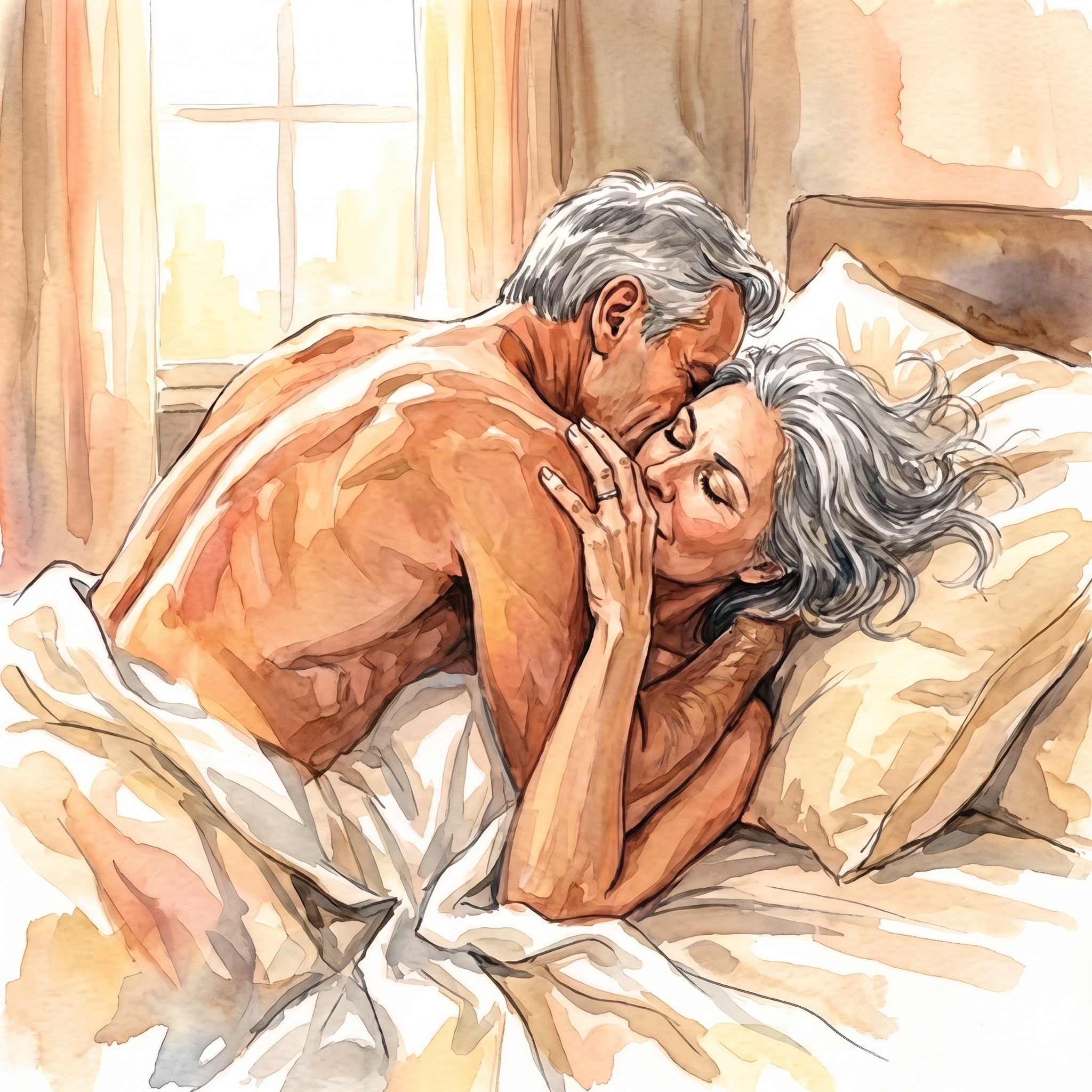
Ran for 32 days, from July 21 to August 22, 2026, the last day Crush saw it.
Run by Dr. Catherine Fields on Facebook. Crush is not the advertiser and does not verify its claims. See this ad in Meta's Ad Library(opens in a new tab)
Want an ad like this for your product?
Crush makes new ad images for your product from this ad: your logo, your product photo, your offer.
Trials from $19.95 USD, then $79.95 USD a month. Cancel anytime.
About this ad
- Meta Ad Library ID
- 1738602857563086
- Platforms
- Facebook, Instagram, Audience Network, Messenger and Threads
- Relaunches
- 0
Ad text
If you're a woman who's been through menopause — maybe you're on HRT — and your sex drive has completely disappeared, and by disappeared I mean: you lie next to your husband at night and feel nothing, when he reaches for you there's a part of you that just goes quiet and waits for it to be over, you've stopped initiating because the thought doesn't even occur to you anymore, and you've stopped bringing it up with your doctor because you already know what she's going to say. I'm about to tell you exactly what's happening inside your body that nobody warned you about. And by the end of this, you're going to be angry. Because there are three things happening right now: One — your body is telling you that years of hormonal disruption have quietly caught up with you. Two — nobody calls it a real problem because you're not depressed, you're not sick, your labs look fine — so you have no idea how much has actually changed inside your nervous system. And three — adjusting your hormones isn't fixing it. Because the problem isn't just the missing estrogen. It's something that's been running underneath it for years that nobody has addressed. Let me tell you what happened to me. Because I think it's going to sound familiar. I was 49 when menopause hit properly. The hot flashes, the sleep disruption, the brain fog — all of it arrived fast and hard. My doctor put me on HRT within a few months. Estrogen and progesterone. Then we added testosterone when the libido didn't come back. And the HRT worked. Genuinely. The hot flashes stopped. I started sleeping again. The brain fog lifted. I felt like a functioning human being. But the libido didn't come back. My doctor adjusted my testosterone dose. Twice. My levels came back "optimal." She said give it more time. I gave it more time. Nothing. I tried DHEA. Three months. Some improvement in physical comfort. Nothing in desire. I tried a pelvic floor physio — eight sessions — because someone in a forum said it helped. She was kind and thorough and completely unable to help with the thing I actually came for. I tried couples therapy. My husband suggested it. We talked about communication and intimacy and connection. The therapist was good. None of it touched the actual problem. I tried every supplement I could find. Ashwagandha. Maca capsules. A "hormone support" blend from a women's wellness brand. Red clover. Tribulus. I had a drawer full of bottles. None of it moved the needle. My doctor ran my labs again. Everything looked perfect. She said, "Your levels are exactly where we want them. This may just be where you are now." This may just be where you are now. I drove home and sat in my car in the driveway for twenty minutes. I thought about my husband. About the way things had changed between us. Not dramatically — he never complained, never made me feel guilty. But I could feel it. The careful way he moved around the subject. The way he'd stopped reaching for me the way he used to. The distance that had opened up so quietly that neither of us had named it. I thought about who I used to be. Before all of this. The version of me that wanted things. That felt things. That was present in my own body. I didn't recognise myself anymore. And my doctor had just told me this was probably permanent. I wasn't willing to accept that. So I stopped waiting for someone to fix it and started researching it myself. Not wellness blogs. Not supplement company websites. Actual peer-reviewed research. Neuroendocrinology journals. Studies on hormonal regulation and desire in menopausal women. I needed to understand what was actually happening. And what I found made me want to put my fist through my desk. Here's what's actually happening inside your body after menopause: When estrogen drops, cortisol — the body's primary stress hormone — spikes hard to compensate. Estrogen naturally keeps cortisol in check. When estrogen disappears, cortisol rises to fill the space. That's not an opinion. That's biochemistry. And when cortisol stays elevated, the body shifts into a sustained state of fight-or-flight. Survival mode. In survival mode, the body has one job. Keep you alive. It does that by switching off everything it doesn't consider essential to that goal. Sleep fragments. Temperature regulation goes haywire. Digestion slows. And desire — which requires the nervous system to feel safe, present, and connected — gets switched off completely. Not because something is broken. Because the body believes it's under threat. A body that believes it's fighting for survival cannot want. It can only survive. I found a study from a neuroendocrinology institute that said it directly: Sustained cortisol elevation following estrogen withdrawal plays a greater role in suppressing female sexual desire than estrogen deficiency alone. I read that sentence four times. The research went further. Estrogen naturally helps suppress cortisol. That's part of why HRT provides relief for so many symptoms. But HRT is not addressing cortisol directly. Which is why so many women on HRT still struggle with dead libido. Testosterone addresses desire signalling. It doesn't address the cortisol state that's blocking the signal from landing. DHEA addresses precursor hormones. It doesn't address the nervous system that's switched off. Every treatment I'd tried was aimed at the hormone level. None of it addressed what was happening upstream. The cortisol state. The survival mode. The nervous system that had been locked in emergency for so long it had forgotten what safety felt like. That's why nothing worked. Not because I was broken. Because every solution I'd been given was solving the wrong problem. Like taking painkillers for a broken bone. The pain eases. The bone doesn't heal. And here's what made me lose my mind. Doctors KNOW about cortisol suppression of desire. It's in the research. It's in the journals. The mechanism is documented. But unless you're in a severe psychiatric crisis — they don't address it. At all. Why? Because there's no pharmaceutical drug for cortisol regulation in this context. You can't patent botanicals. There's no billion-dollar molecule to prescribe. There IS money in keeping you on testosterone gel at $90 a month when your levels drop. Specialist visits at $350 every six months to "monitor" your numbers. Adjusting doses. Running panels. An endless cycle of testing and managing without ever actually fixing anything. Monitor the decline. Bill at every stage. Never address the cortisol. So I kept digging. I needed to find what actually restores the regulatory system — not artificially, not with another hormone, but something that worked on the body's own ability to regulate itself. That's when I found the research on maca root. Not the capsule studies — those are inconsistent and I'll explain why. The liquid extract studies. The ones examining how maca works on the body's hormonal regulation system — the system that controls how the body produces and responds to its own hormones, including cortisol. Maca doesn't add hormones to the body. That's the critical distinction. It works on the regulatory system itself. When that system gets thrown off — which is exactly what happens when estrogen drops and cortisol stays elevated — the body loses its ability to self-correct. It stays locked in survival mode because it can't send itself the signal to stand down. Maca supports that regulatory system. Not by adding estrogen. Not by blocking cortisol artificially. By helping the body restore its own ability to regulate. Cortisol starts to normalise. The nervous system gets the signal that it's safe. And when the body finally exits survival mode, desire doesn't have to be manufactured. It comes back on its own. Because it was never gone. It was just switched off. Now — why the capsule studies are inconsistent. Maca capsules don't work the same way as liquid drops. Capsules have to go through digestion before anything reaches your system. By the time that process is finished, only a fraction of the active compounds make it through. Liquid drops go under the tongue and enter your system directly, instead of being processed through digestion first. That's why liquid maca showed results in studies — and capsules didn't. I'd been taking capsules for months. Nothing changed. That's why. I found a formula called Losveo Maca Root Complex. Liquid drops. Maca root as the core — targeting cortisol regulation and hormonal balance, the two things that go offline when estrogen drops. Ashwagandha — which directly supports the stress response. Helps cortisol normalise. Fenugreek — which supports free testosterone, the active fraction that actually signals desire. Not total testosterone levels. The fraction your body can use. Beet root and L-arginine — for blood flow. Because the body coming out of survival mode needs circulation to come back online as well. Not a random pile of women's health herbs. A formula targeting the actual mechanism. I ordered it. I didn't tell my husband. I'd been down too many dead ends to get anyone's hopes up, including my own. Week two: my sleep changed. The 3am wake-ups that had been my normal for two years stopped. I woke up one morning and realised I'd slept through the night. I couldn't remember the last time that had happened. Week four: something I can only describe as "the noise going down." The low-level tension I'd been carrying so long I'd stopped noticing it — the tightness, the hypervigilance, the sense of always being slightly braced — began to ease. I felt quieter inside. Calmer. Not medicated-calm. Actually calm. Week six: I was lying in bed one evening and my husband reached for my hand. And something happened that hadn't happened in a very long time. I wanted him to. Not out of obligation. Not because I was trying. Just — I wanted him to. I didn't say anything. I just moved closer. He didn't say anything either. But I felt him exhale. Week eight: I'm not going to go into detail. But something I had genuinely started to believe was gone came back. Not all the way — not yet — but enough that I cried afterwards. Not from sadness. From relief. Week twelve: I went back to my doctor for a routine check. She asked how I was doing. I told her about the formula. I told her about the cortisol research. I told her what had changed. She was quiet for a moment. Then she said, "I've never looked at it from that angle." She wrote it down. That's medicine for you. The research exists. The mechanism is documented. And most doctors have never been taught to look at it. I wasn't broken. My hormones weren't the problem — or at least, not the whole problem. My nervous system had been locked in survival mode for years. And everything I'd been given was aimed at the wrong layer. Once I addressed the right layer, my body did the rest. Here's what I need you to understand. You're not broken. You're not a woman for whom nothing works. You're a woman who was handed solutions to the wrong problem — over and over — by a medical system that never looked upstream. Nobody warned you that the cortisol spike from estrogen withdrawal would lock your nervous system in survival mode. Nobody explained that HRT replaces hormones but doesn't reset the system that's keeping desire switched off. Nobody told you that the maca capsules in your drawer couldn't work because by the time they get through your digestive system, very little of the active ingredients are left. The dead libido isn't the problem. It's the symptom. The problem is a nervous system that's been in emergency mode for years and never got the signal to stand down. You have to reset the signal. Link below. Take Losveo for 60 days. Just a dropper under your tongue each morning. If your desire doesn't start coming back, your sleep doesn't improve, and that sense of being switched off doesn't begin to lift — return it for a full refund. No questions. But move on this. Every batch sells out. And once you understand what's actually been happening inside your body — and that there's a way to address it without another hormone adjustment, without another specialist visit, without being told to give it more time — waiting doesn't make sense. Because nobody else is going to tell you this. Your doctor will adjust your dose and say give it more time. Your friends will say welcome to menopause. And your nervous system will stay locked in survival mode while you wonder why nothing helps. You have to reset your own signal. 👉 https://trylosveo.com/products/maca-root-complex
Where the ad sends people
trylosveo.com
Read this if you want your libido back
Losveo
Learn more: trylosveo.com(opens in a new tab)