Dopamine Restoration Clinic by Dr. Alan Mercer
Dopamine Restoration Clinic by Dr. Alan Mercer Facebook ad: “If You Drink With ADHD.”
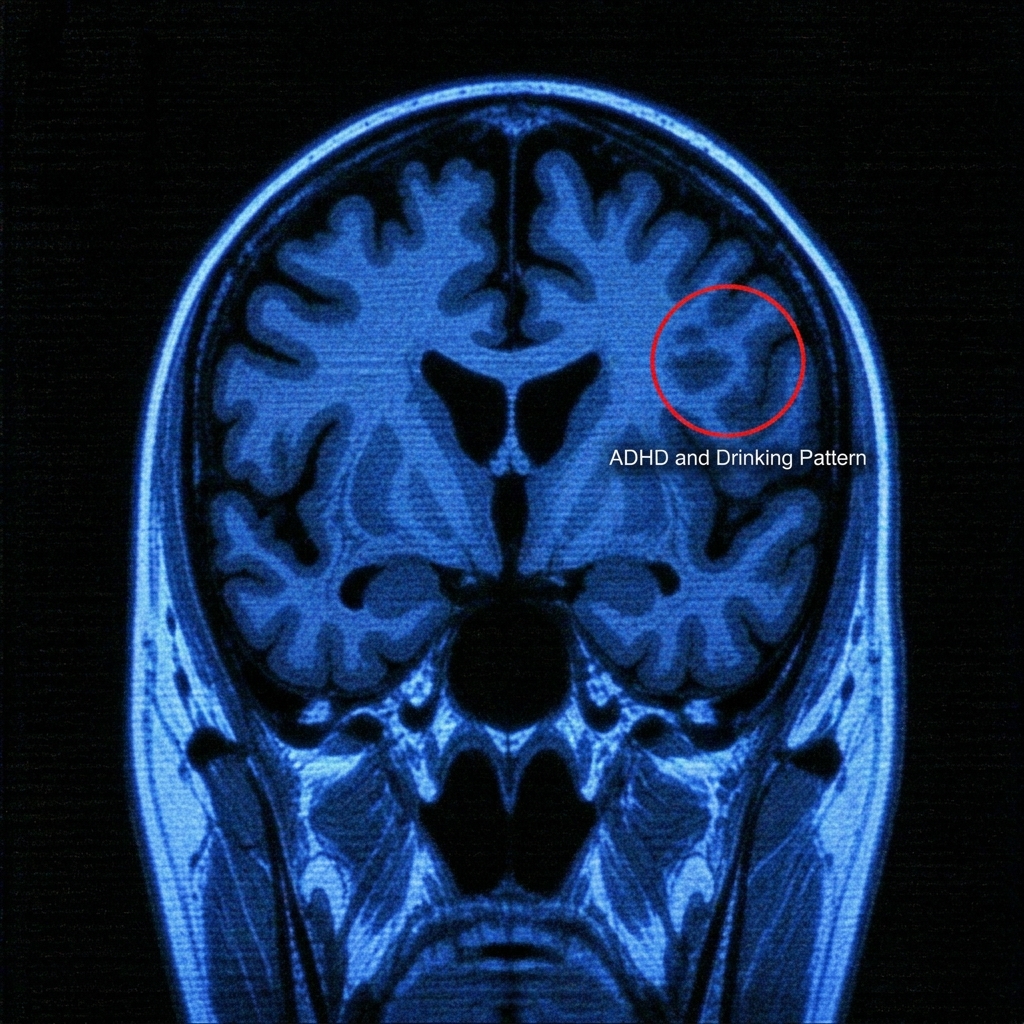
Ran for 44 days, from May 31 to July 14, 2026, the last day Crush saw it.
Run by Dopamine Restoration Clinic by Dr. Alan Mercer on Facebook. Crush is not the advertiser and does not verify its claims. See this ad in Meta's Ad Library(opens in a new tab)
Want an ad like this for your product?
Crush makes new ad images for your product from this ad: your logo, your product photo, your offer.
Trials from $19.95 USD, then $79.95 USD a month. Cancel anytime.
About this ad
- Meta Ad Library ID
- 1759104835461044
- Platforms
- Facebook, Instagram, Audience Network, Messenger and Threads
- Relaunches
- 3
Ad text
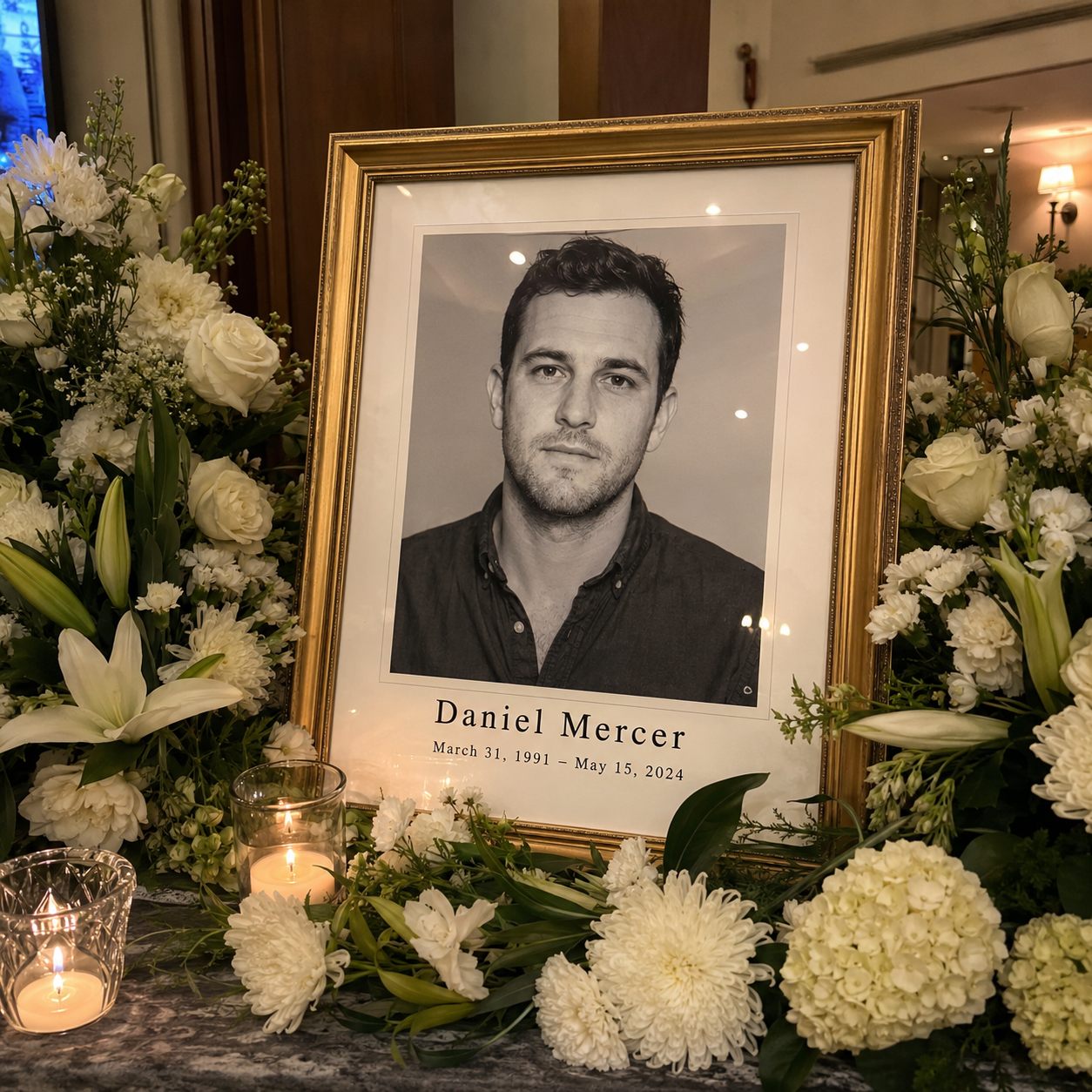
Most high-functioning adults with ADHD do not look like an addict. They look like the person at the party who can drink anyone in the room under the table and walk out at the end of the night without slurring. The family legend. The one nobody worries about. That was my younger brother. He died at 33. My name is Dr. Alan Mercer. I run the Dopamine Restoration Clinic. Before I built it, I was a family physician for 12 years. I closed that practice three years ago because of what I am about to tell you. Adults with ADHD are roughly 10 times more likely to develop alcohol use disorder than the general population. Women with ADHD, closer to 12. Almost none of them are ever told why. They are told they have an "addictive personality." Told to white-knuckle it. Work the steps. Cold plunge. Meditate. Go for runs at 6am. None of those things fix the chemistry that is actually broken. Because the drinking is not the disease. The drinking is the patch. My brother Daniel was the smart one in our family. The one teachers wrote home about. The one who could read 400 pages in two days and remember every character a year later. He had his first beer at 16 the night of the spring play. He was throwing up backstage from anxiety. A senior handed him a flask. He drank it. He walked on stage. He said his lines. That night he told me something I did not understand for 25 years. "Alan. The volume just... went down. For the first time in my life it was quiet in my head for an hour." By 19 he was the guy at every party who could drink anyone in the room under the table and walk out without slurring. The family legend. "Daniel doesn't get hungover." By 24 he had built a construction company. Six employees. Never missed a Monday. Kept a fifth of vodka in his truck console. By 28 my mother walked in on him at his birthday and noticed his hand was shaking before he picked up the glass. He died at 33 from complications of chronic alcoholism. He had never been diagnosed with ADHD. He had never been asked the right questions. He had been called "high functioning" his entire adult life. He had been quietly drinking, for 17 years, to feel like the rest of us already felt sober. At his service, my father turned to me at the church door after the last person had left, and said something I have never been able to put down. "For 28 years we told ourselves he just liked to drink, Alan. We were wrong the whole time." A few months ago a 33-year-old woman walked into my clinic. Just got her ADHD diagnosis in March. At 33. After 20 years of being called "scatterbrained" by every teacher and every boyfriend. She crossed her legs. Apologized for being there. Said she did not really have a problem, her sister was just worried. Then she said it. "It is not a drinking problem. I just need two or three to feel like everyone else seems to feel by default. I am the most fun version of myself between glass two and glass four. And then I am normal." I heard Daniel at 19. I heard Daniel at 26. I heard Daniel on his 28th birthday in my parents' kitchen. I told her she was not drinking to escape her life. She was drinking to regulate her brain. And those two things sound identical from the outside but are completely different diseases. She did not say anything for almost a minute. Then her eyes filled. "My grandmother was an alcoholic. My mother is an alcoholic. I have been calling it genetics for years." I told her it was not genetics. It was chemistry. And we have been mistaking one for the other for three generations of women in her family. Here is what almost nobody in mainstream psychiatry will tell you out loud. Your brain runs on a chemical called dopamine. Dopamine is your inner volume knob. It is what lets you sit through a meeting without your foot bouncing. What lets you watch a slow movie without checking your phone. What quiets the voice telling you that you are behind, you are failing, you are not as smart as everyone in the room thinks you are. In an ADHD brain, that chemical runs 30 to 40 percent below baseline. Sparser receptors. And the small amount that does get released gets broken down too quickly by an enzyme before the brain can actually use it. An ADHD brain lives every day in a state of chronic dopamine starvation. With the volume turned up on every sensory input the rest of the world manages to ignore. Now think about what alcohol does the first time it crosses into the brain. It forces a fast dopamine release. Quiets the nervous system. Silences the imposter voice. Pulls the brake on the inner monologue that has been running since 6am. For a neurotypical person, two drinks feels like a buzz. For an ADHD brain, two drinks feels like arriving. Like finally becoming the version of yourself you have always suspected was in there somewhere. That is not escape. That is regulation. You cannot meditate your way to enough dopamine. You cannot cold plunge your way to enough dopamine. You can borrow regulation from those tools for an hour or two. But the deficit is still there at 5pm when the wine starts calling. That is why the recovery rates for this population are what they are. The brain is still starving. So it finds a new way to feed itself. A new substance. A new compulsion. The recovery community calls it a willpower failure. It is not a willpower failure. It is a chemistry failure. And the shame stacked on top of it is, I believe, one of the cruelest things modern medicine has done to the ADHD population. Three years ago, after Daniel, I started chasing the chemistry side of this seriously. I had been a family doctor for 12 years and I knew none of it. I ended up in a basement lab in Boulder, Colorado, across from a 71-year-old PhD neurochemist who had been studying dopamine for four decades. Two of her papers had never been cited in any psychiatric textbook I had ever opened. When I told her about Daniel, she listened until I was finished. Then she said something I have been repeating to patients ever since. "Your brother did not have an alcohol problem. He had a dopamine problem he learned to manage with the cheapest sedative the world makes legal." She told me there are four things that determine whether an ADHD brain reaches for the bottle at 5pm or just... does not. The first is the actual raw material the brain uses to manufacture dopamine in the first place. An amino acid called L-Tyrosine. Almost no adult eats enough of it in any usable form from food alone. Without it, the rest is moot. The second is the cofactor the brain needs to actually convert that raw material into dopamine. The active form of B6. The body either has it or it does not. The third is the enzyme that breaks dopamine down too quickly inside an ADHD brain. The one that pulls the chemical away before the brain ever gets to feel it. She told me there is exactly one botanical with serious human research behind gently slowing that enzyme down. Rhodiola Rosea. But only when it is standardized properly. The cheap drugstore extracts are almost decorative. And the fourth is the overstimulation underneath all of it. The reason the music is too loud, the lights are too bright, the meeting room is unbearable. Two things quiet that, gently, without sedation. L-Theanine. Magnesium. They turn the volume knob down without putting you to sleep. There is also a slower piece, she said. Vitamin D3, acting like a neurosteroid in the brain. The thing that makes the improvements compound over months instead of plateauing at week six. Most people skip it because it is not flashy. It is the most important one for the long game. I asked her if anyone had built this in one place. She paused. Then she told me her former graduate student had spent four years quietly getting it right with a small supplement company. Two capsules a day. Everything we had just talked about, in the exact forms and exact doses she had walked me through. She wrote the name on the back of a notebook. CTRL. I went home that night and read everything I could find on it before I made any decision. What I cared about was simple. It was natural. It was not a stimulant. It would not interact with the medications most of my patients are already on. And the formula was specifically designed around the brain's own dopamine pathway, instead of overriding it the way Adderall does. That last part mattered to me more than anything else after watching Daniel. The whole problem with the prescription stimulant model is that it floods the system and the brain downregulates to protect itself. By year three the patient is on twice the dose with half the effect. CTRL works the opposite way. It is designed to feed the system, not flood it. The raw materials. The cofactors. The two compounds that take the brain out of seeking mode without sedating it. And the long-term piece that lets the improvements compound instead of plateauing. That is the whole formula. Nothing in it the brain becomes dependent on. Nothing in it the body has to come down from at the end of the day. Nothing in it that someone in early sobriety, or on antidepressants, or pregnant, or anything else, has to white-knuckle around. It is designed to do one thing. Quietly rebuild what was always supposed to be there. So I put myself on it for two months before I gave it to a single patient. By day 9 I was sitting through a 90-minute charting session without reaching for my phone for the first time in 8 years. By day 21 I had stopped pouring the second glass of wine after dinner. Not because I willed myself to stop. The pull was just... not there. It did not feel like I had taken something. It felt like something had finally stopped being missing. That was eleven months ago. The 33-year-old woman from earlier in this post is patient 84 on this protocol. Her sister will not be sitting across from me in five years the way I sat in front of my father at Daniel's funeral. That is what this is for. That is what this is all for. If you have ever quietly wondered why two glasses of wine feels less like a buzz and more like finally being yourself... If your therapist has told you it is your nervous system, and your AA sponsor has told you it is a spiritual disease, and your doctor has told you it is genetics, and none of those answers has ever fully fit... If you have spent years calling it an "addictive personality" because nobody has handed you a better word... The word is dopamine. The chemistry is fixable. And CTRL is what I now share with the people sitting in front of me asking what to try first. You were not drinking because you were weak. You were drinking because you were starving. Chemistry, unlike character, can be repaired. If something in this hit close, this is where I would start: https://try-balanced.com/pages/ctrl-lp-all — Dr. Alan Mercer, Dopamine Restoration Clinic P.S. I am not affiliated with the company that makes it. I do not get paid to mention it. I write things like this on Sunday afternoons because the patients I cannot fit into my schedule deserve the same answer the patients in my schedule get. Daniel deserved that answer 17 years ago. He never got it. This is the closest I can come to giving it to someone else now. P.P.S. The patient from earlier called me a few weeks after her first appointment. She had been sober for 23 days. Not white-knuckling. Just not reaching for it. She cried for most of the phone call. Then she said something that has stayed with me. "I did not know being normal was supposed to feel this quiet." That phone call is part of why I finally sat down to write this.
Where the ad sends people
try-balanced.com
If You Drink With ADHD...
Balanced
Learn more: try-balanced.com(opens in a new tab)