Dopamine Restoration Clinic by Dr. Alan Mercer
Dopamine Restoration Clinic by Dr. Alan Mercer Facebook ad: “What Vaping Does To Your Brain”
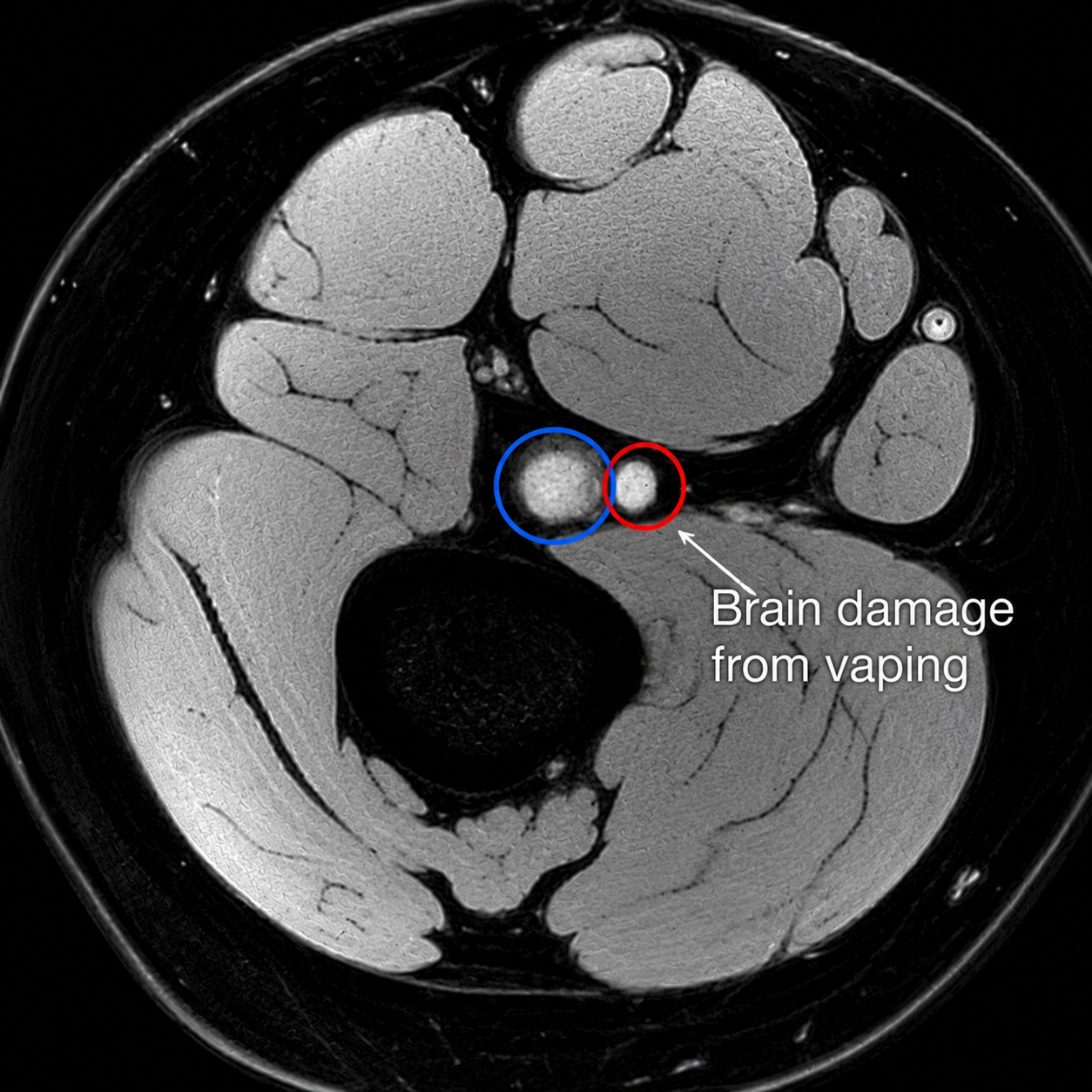
Ran for 35 days, from May 27 to July 1, 2026, the last day Crush saw it.
Run by Dopamine Restoration Clinic by Dr. Alan Mercer on Facebook. Crush is not the advertiser and does not verify its claims. See this ad in Meta's Ad Library(opens in a new tab)
Want an ad like this for your product?
Crush makes new ad images for your product from this ad: your logo, your product photo, your offer.
Trials from $19.95 USD, then $79.95 USD a month. Cancel anytime.
About this ad
- Meta Ad Library ID
- 2860435260959815
- Platforms
- Facebook, Instagram, Audience Network, Messenger and Threads
- Relaunches
- 0
Ad text
I saw a number last month that made me sick. Daily vape users develop the first signs of dementia an average of 23 years earlier than non smokers. I didn't believe it when I read it. I've been a behavioral neuroscientist for 22 years. But here's the truth. Your family doctor runs blood panels. Your neurologist runs scans only after something's already gone wrong. The damage sits between them... and nobody is paid to look there. That's why most people never heard this. That's why I didn't hear it either. My brother was part of that statistic. Eight years of vaping. By 47 he was forgetting client names he'd known for a decade and sitting in his car for 20 minutes before he could remember why he'd driven to the store. I'm a researcher. I have a clinic. And I missed it in my own family for almost two years. And what saved him wasn't a prescription. It wasn't the patch. It wasn't willpower. It was a 70 year old researcher outside Lancaster, Pennsylvania, who explained one thing to me in his kitchen that no doctor I'd ever worked with had said out loud. But to understand why I drove four hours at 5 AM to meet a man whose research got buried in 2008, you have to know what I watched a small black device do to my own brother. And what I didn't know it was quietly doing to millions of other adults exactly like him. For TWO YEARS... almost 24 months... my brother Mark was disappearing in front of me. It started small. He'd forget where he parked at restaurants we'd been to a dozen times. We laughed about it. He's 47. We're getting old. Then he started repeating stories. The same one at the same dinner. My wife caught it before I did. Mentioned it gently on the drive home. Then he lost a major client at work. Forgot a meeting. Then forgot another. His assistant started double texting him reminders an hour before every appointment. His wife called me one night crying. She said, "Alan. He sat at the kitchen table for ten minutes this morning staring at the coffee maker. He couldn't remember how to turn it on. He's been using that coffee maker for six years." I told her he was stressed. Probably sleeping bad. Maybe early andropause. She gave me a long silence I should have heard. For almost two years I watched my brother reach for that small black device every few minutes and didn't connect it to anything. I was looking for drinking. Looking for sleep apnea. Looking for the things a 47 year old man typically falls into. I wasn't looking at the vape. One Sunday in October he came over for dinner. Sat in the driveway in his car for 15 minutes before coming in. I watched him through the window. He wasn't on his phone. He wasn't on a call. He was just sitting there. Vape in his hand. When he finally came in I asked him what he'd been doing in the car. He said, "I don't know. I think I forgot why I came over." He said it like it was a joke. It wasn't a joke. After dinner I sat with him on the back porch. Asked him about the vape. When was the last time he'd gone two hours without it. He thought about it. Thought longer. Then quietly said, "I don't think I have. Not since I switched from cigarettes." That night I started reading. Not the news. Not the wellness blogs. The hard research. The papers buried in journals nobody reads. What I found scared me more than anything in 22 years of clinical work. Here is the mechanism. Read this slowly. A cigarette delivers nicotine to your brain in 19 seconds. The smoke has to travel through the lungs, get absorbed into the tissue, ride the blood up to the brain. A vape delivers nicotine in 7 seconds. Sometimes less. Vapes use propylene glycol and nicotine salts. The molecules are smaller. The absorption is faster. The blood brain barrier gets crossed before your brain even registers what hit it. That 12 second difference is the difference between a manageable addiction and a brain injury. Your dopamine system was built to respond to real rewards. Food. Sex. Music. A workout. A win. A conversation with someone you love. When something good happens, your brain releases a small steady wave of dopamine. That wave is also what powers memory consolidation, focus, motivation, word retrieval, all of it. Dopamine isn't just pleasure. It's the chemical that keeps your brain online. Cigarettes hijack this system. But slowly enough that your brain still functions underneath. You forget things sometimes. You can't remember a name once in a while. Normal stuff. A vape hit at 7 seconds creates a dopamine spike so fast and so high that your brain stops bothering to make its own. We call this dopamine downregulation. The receptors get flooded so often, so fast, that they stop responding to anything except the vape. Food doesn't register. Sex doesn't register. Conversations don't register. And here is the part that almost nobody is talking about yet. When your dopamine system downregulates, memory consolidation goes with it. So does word retrieval. So does executive function. So does emotional regulation. You sit at the coffee maker and forget how to turn it on. You drive to the store and sit in the car trying to remember why you came. You walk into rooms and forget what you walked in for. You see a client you've known for 10 years and the name won't come. It looks exactly like early Alzheimer's and dementia. Because functionally, that's what it is. Long term studies on chronic nicotine downregulation are starting to show overlap with the same neurological patterns we see in Alzheimer's and dementia patients. Same regions affected. Same proteins disrupted. Same symptoms. Except this isn't happening at 75. It's happening at 47. That's why my brother was sitting in driveways forgetting why he'd come. That's why he was losing meetings. That's why his wife was crying on the phone. His brain was downregulating. Faster than it had any business doing at his age. Because he was hitting a device every few minutes that crossed his blood brain barrier in 7 seconds. I sat with this for two weeks. I had my brother falling apart, his wife asking me questions I couldn't answer, and I had no protocol for him. Here's what I learned in those two weeks of reading. The patches don't fix this. They feed the same chemical from a different angle. Same downregulation. Just slower delivery. The gum is the same. Lower nicotine pods are the same. They keep the addiction alive. They keep the brain offline. Cold turkey is worse. You pull the nicotine away from a brain that has stopped producing its own dopamine. There is nothing for the brain to come back to. No reward signal. No motivation. No focus. Just a hollow, anxious, foggy version of yourself that has no chance of holding out past day four. That's why 95% of people who quit vaping cold turkey relapse inside a month. It's not weakness. The brain has no fuel to run on. So I started asking a different question. Not how do we get the nicotine out. But how do we wake the brain back up. How do we get the dopamine factory online again so the vape becomes irrelevant on its own. That question took me to a name I hadn't thought about in 20 years. Dr. Hollis. 70s now. Left the university system in 2008 after a falling out over funding. Runs a small private lab outside Lancaster, Pennsylvania. I'd cited his work in my dissertation. He was the only person publishing on what he called dopamine receptor recovery. The idea that the brain could be coaxed back into making its own dopamine after long term downregulation. Not with another drug. By giving the brain back the specific raw materials it had stopped producing on its own, in the right combination, and stepping out of the way. His work got buried. Nobody wanted to fund "natural recovery" research when there were pharmaceuticals to develop. He kept working anyway. Quietly. For 30 years. I emailed him at 11 PM. He wrote back at 4 AM and said come tomorrow. I drove out at 5. He met me at the gate with a cup of coffee. Walked me into a small lab attached to his farmhouse. Pages of patient data taped to the walls. Recovered addicts. Cocaine. Heroin. And in the last five years, an entirely new category. Adults who couldn't put down their vapes. He looked at me. "Alan. You didn't drive four hours to hear what you already know. You came because you watched it happen to someone you love. Tell me about him." I told him about Mark. The driveway. The coffee maker. The two years of decline. He nodded the whole time. Like he'd heard it a hundred times. Then he said something I wrote down word for word. "Your brother's brain has forgotten how to make dopamine on its own. You cannot replace the chemical. You have to rebuild the production line. And there are only four things that do it. In a specific ratio. In a specific order. Every other combination fails." He pulled out a piece of paper and drew a diagram I still keep on my desk. He drew the dopamine production pathway as a four step assembly line. Step one. Raw material. The amino acid L-Tyrosine. Without it the brain literally has nothing to build dopamine from. He told me 80% of chronic vape users are clinically deficient because their brain has been pulling from this reserve for years to keep up with the demand. You can't manufacture a chemical without the building block. Pharmaceutical grade L-Tyrosine in the right dose is the first input. Step two. The calm signal. L-Theanine. He explained that as long as the brain is in fight or flight from cravings, dopamine production stays shut down. The body prioritizes survival over reward chemistry. L-Theanine drops the prefrontal cortex out of panic mode within 40 minutes of ingestion. Without this step, every other ingredient gets blocked. The factory stays locked. Step three. The nervous system reset. Magnesium glycinate. Specifically glycinate. He was emphatic about this. The vape addict's nervous system is wired so tight that even with the first two steps, the brain can't hold a steady dopamine baseline. Magnesium glycinate is the only widely available form that actually crosses the blood brain barrier in meaningful amounts. The other forms sit in the gut. This one reaches the brain stem. Step four. The hold. Rhodiola rosea. This is the one he said almost nobody understood, and almost nobody got right. He told me. "Alan. You can rebuild the factory. You can manufacture dopamine again. But if you don't extend its life in the synapse, you burn through it in seconds and never feel a thing. Rhodiola is the only adaptogen with clinical data showing it inhibits the enzyme that breaks dopamine down too quickly. It keeps the dopamine alive in the synapse long enough for the brain to register it. Without Rhodiola, all you have is wasted chemistry." I sat there for a long time staring at the diagram. Then he said the thing I've thought about every day since. "Your brother's brain is not broken. It is starving. Feed it. Calm it. Reset it. Hold the dopamine in place. Do those four things in that order at the right doses and you don't have to quit the vape. The vape quits you. Because there's nothing left for it to give." He told me there were maybe two companies in the country that produced all four ingredients at clinical grade in the right ratio. Most stacks on the market threw L-Tyrosine in at a token dose, used cheap magnesium oxide, used heat dried Rhodiola root powder which loses 70% of its active compound during processing, and called it a day. He gave me the name of the one he'd been recommending to his own patients for two years. CTRL. A small California formulator had spent almost three years getting the exact ratio right. Two capsules a day. He said it was the only stack he'd seen on the market that matched the protocol he'd been running by hand in his lab for a decade. I drove home with the diagram on the passenger seat. Ordered a bottle that night. I called Mark the next morning. Told him I had something I wanted him to try. Didn't tell him to quit the vape. Didn't tell him to do anything different. Just take two capsules in the morning with breakfast for 30 days and call me at the end. He said yes because he was scared. Week one he told me the cravings between hits felt softer. Not gone. Softer. Week two his wife called me. She said he'd come home from work and remembered three things she'd asked him to pick up without writing them down. First time in over a year. Week three he texted me from a hiking trail. He'd gone with his Saturday group. First time in 14 months. He wrote, "I forgot the vape in the car. Realized at the summit. Didn't want to walk back down for it." Week four he called me on a Sunday morning. Told me he'd run an entire client meeting on Friday without notes. He remembered every name. He remembered the project history. He remembered the joke the client's wife had told at the holiday party two years ago. He was crying on the phone. Week six he walked into my office and handed me the vape. Said, "I don't want this. Throw it away. I don't trust myself to do it." I threw it away. He hasn't asked for it in 14 months. Back at work full time. Promoted in April. His wife told me at Thanksgiving that he's been the man she married again for almost a year. That is the protocol I now run for every vape patient at my clinic. The exact formulation. The same four ingredients in the same ratio Dr. Hollis drew on that piece of paper. If you're reading this, you probably see yourself in this story. Or you see your husband. Or your brother. Or the person you used to be before you picked one of these up. You reach for it every few minutes without thinking. You've tried to quit. You can't. You walk into rooms and forget why. Words you've used your whole life sit just out of reach. Names of people you've known for years take three seconds longer than they should. You laugh it off. You blame stress. You blame sleep. You blame age. You're not getting old. You're not losing your mind. Your brain's dopamine factory has gone offline. Every system that depends on dopamine, memory, focus, word retrieval, emotional steadiness, is running on fumes. And every other approach you've tried, the patches, the gum, the pods, the cold turkey, has missed the actual problem entirely. They were trying to manage the addiction. They were never going to fix the factory. The medical system isn't going to catch up to this for another decade. By then we will have an entire generation of adults in their 50s with brains that look 75. There will be congressional hearings. Lawsuits. Documentaries. Someone will write a book. In the meantime you have a vape in your pocket and a brain that is forgetting how to function without it. You have to rebuild the factory first. Then the vape becomes optional. Then it becomes irrelevant. That's the order. It only works in that order. You're at a crossroads. One path. Keep hitting it. Keep telling yourself you'll quit next month. Keep blaming the forgetfulness on age. Keep watching your memory shrink, your focus shrink, your life shrink until one morning you sit at the coffee maker and can't remember how to turn it on. Other path. Try what I gave Mark. Rebuild the factory. Let your brain manufacture its own dopamine again. Get your memory back. Get your focus back. Give it 30 days. Your brain will tell you what's happening on its own. The product is CTRL. Two capsules in the morning. That's the whole protocol. This is the link I share with every patient at my clinic: https://try-balanced.com/products/ctrl -Dr. Alan Mercer Dopamine Restoration Clinic P.S. Mark went from hitting the vape every few minutes to forgetting it on his nightstand by week four. His memory came back somewhere between week two and week three. Your timeline might be different. But you won't know until you try it. P.P.S. If you're sitting there thinking "I'm not that bad, I just hit it more than I used to"... that's the downregulation talking. Mark said the same thing to me last September. By October he was sitting in a driveway forgetting why he'd come over for dinner. Give it 30 days. Let the factory come back online. See what happens. Not 2 years earlier. Not 5. Twenty three
Where the ad sends people
try-balanced.com
What Vaping Does To Your Brain
Balanced
Learn more: try-balanced.com(opens in a new tab)