
Inactive· since Jul 16, 2026
- 16
- days it ran
- 0
- relaunches
Ad copy
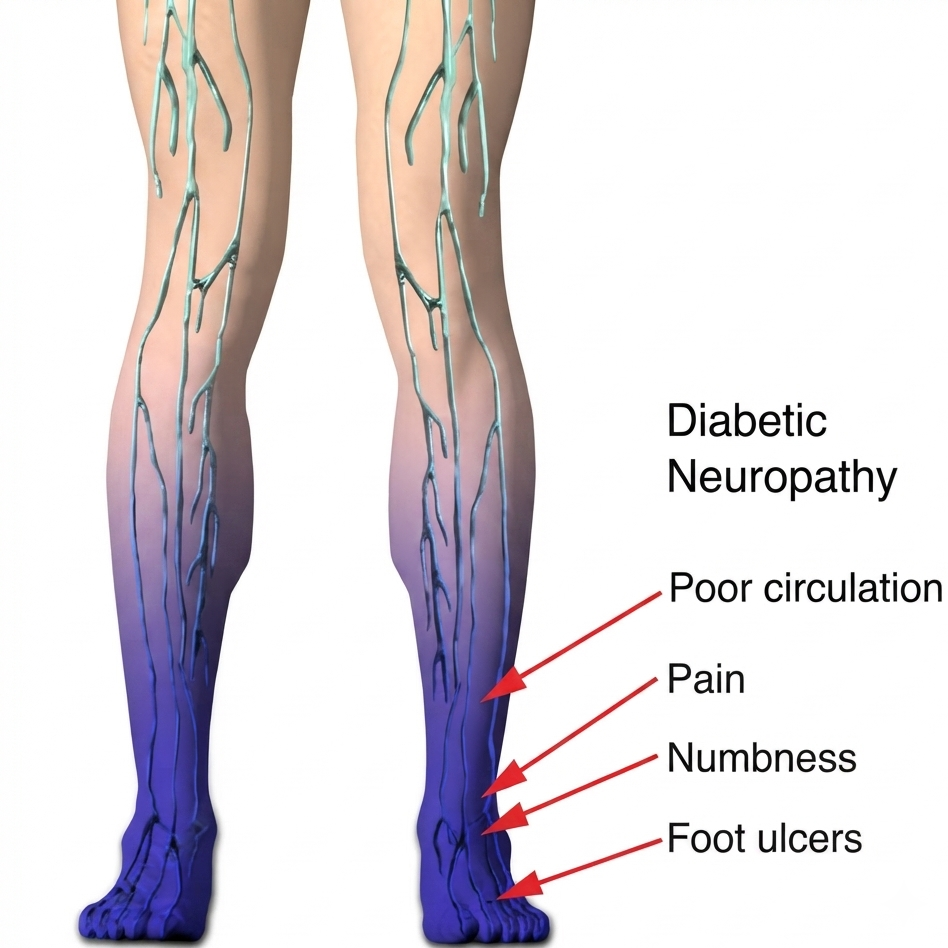
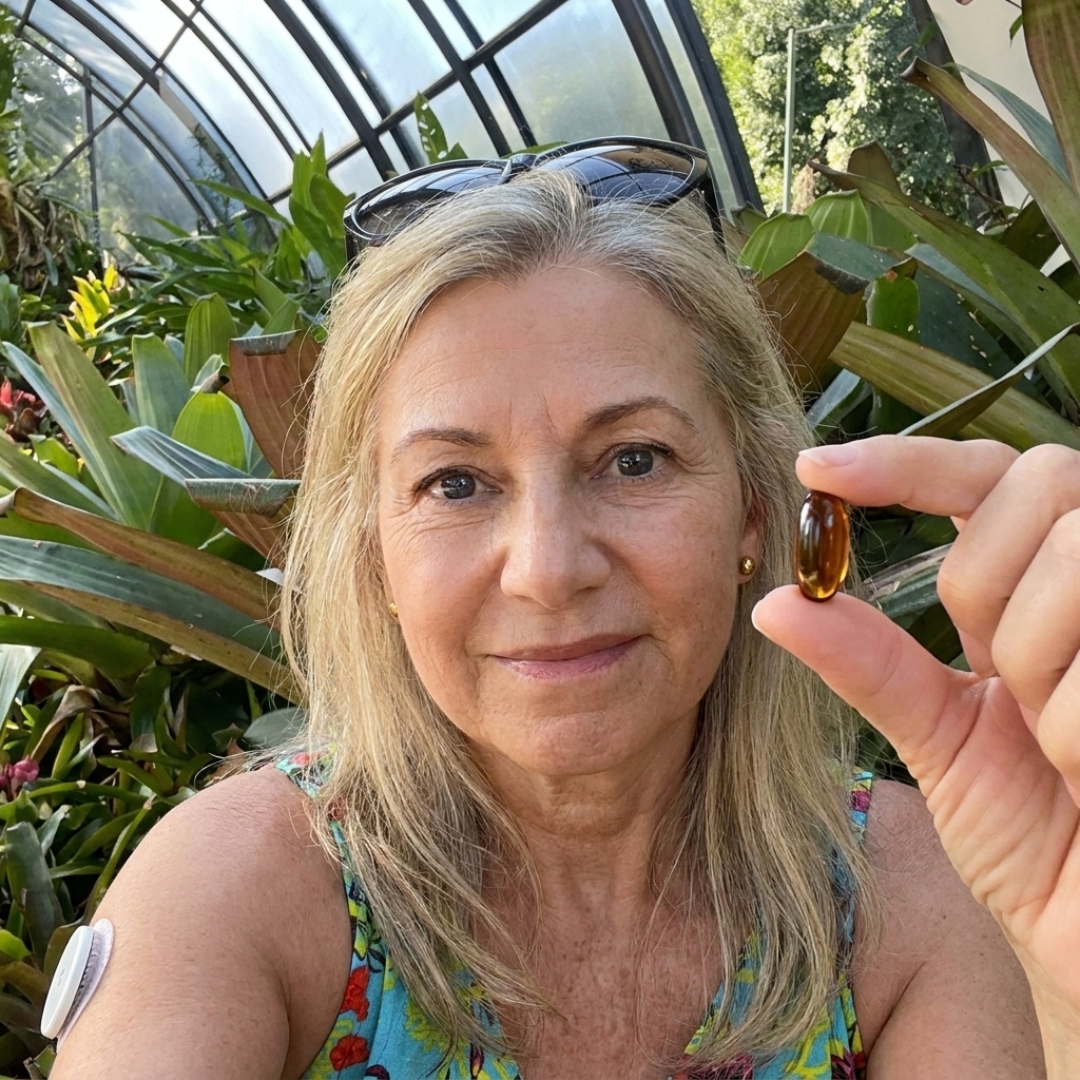
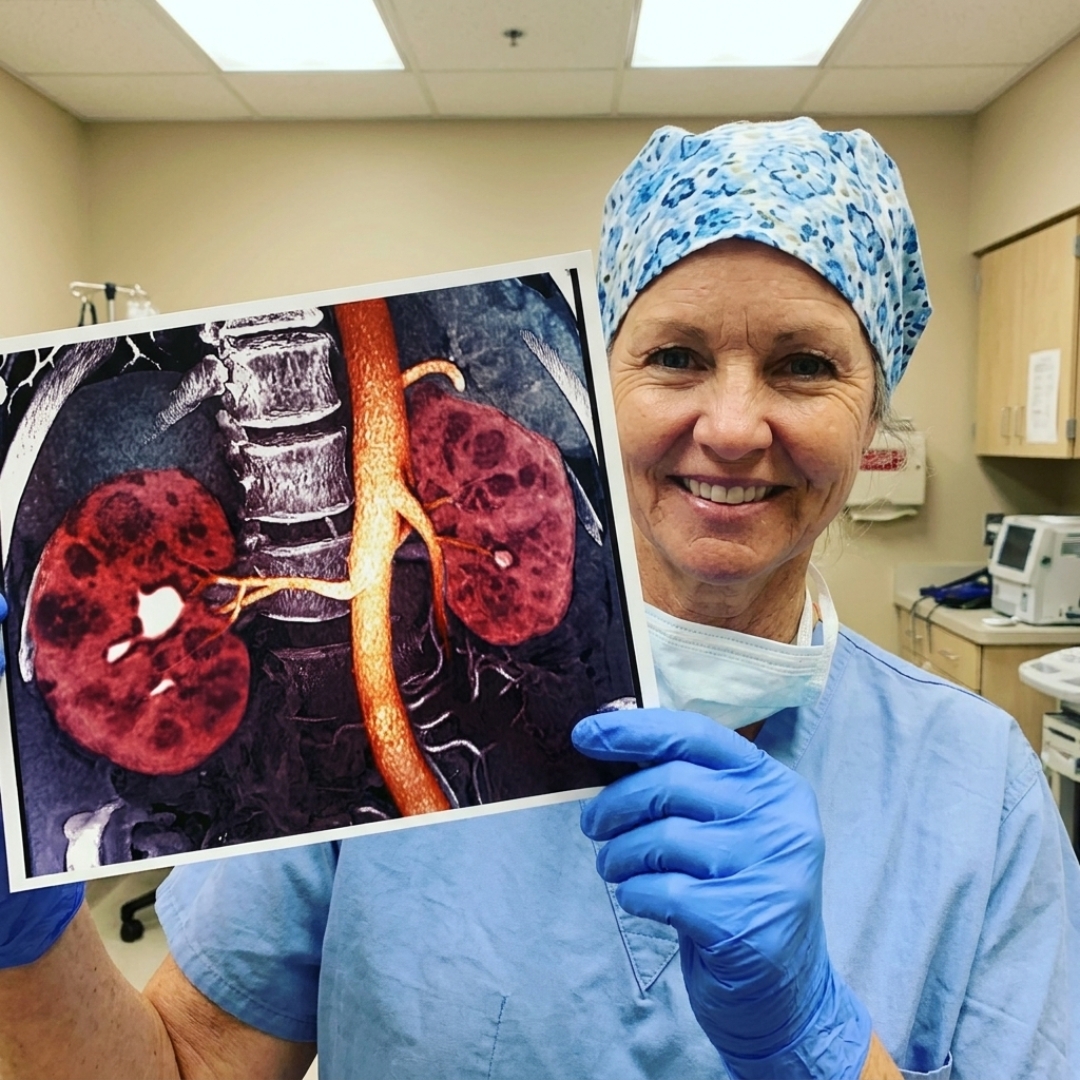
After 31 years as a podiatric nurse at the same diabetic foot clinic, I watched Ray fill out his intake form with hands that moved fine. It was his feet that had stopped working. He had spent over $2,000 on specialists. Seen three neurologists and two endocrinologists. Tried B12 injections, alpha lipoic acid, benfotiamine, and gabapentin for fourteen months. His feet still burned every night. The tingling had spread from his toes to his ankles. Three spots on his monofilament test that had registered clean two years ago were now silent. His doctor was threatening to double his gabapentin dose. I finally asked him the one question nobody else had: "Has anyone ever explained to you what glucose is actually doing to the blood vessels that feed your nerve fibers? And why gabapentin doesn't address any of that?" He looked at me like I was speaking another language. My name is Sandra Keller. I've been a podiatric nurse for 31 years. I've performed the monofilament test on more diabetic feet than I can count. I've marked the silent spots. I've had the conversation about foot care that nobody wants to need. And here's what the supplement industry doesn't want you to know about diabetic peripheral neuropathy, why almost every oral nerve supplement fails before it reaches your nerve fibers, and the one upstream failure that controls whether your nerve cells stay alive or quietly die. Ray was 61 years old. Type 2 diabetic for eight years. A1C sitting at 7.2, which his endocrinologist called managed. The exact kind of patient I'd been seeing more of every year. Tingling, burning, numbness that kept progressing while every blood number read fine on paper. Doctors treating the symptom with gabapentin and calling it neuropathy management. He'd done everything right. Taken his metformin faithfully. Added B12 and alpha lipoic acid. Cut the carbs. Lost 22 pounds. Spent over $2,000 between specialist visits, nerve conduction studies, and supplement stacks that kept growing month by month. His doctor kept pushing the gabapentin dose upward. "Your neuropathy is progressing. We need to manage the symptoms." But Ray had watched his father on gabapentin for six years. The fog that settled in within the first month. The 35 pounds of weight gain. The way he'd stop mid-sentence and lose the thought. The man who used to fix his own truck stopped reading the manual because he couldn't follow the steps anymore. And the nerve damage progressed anyway. Six years of gabapentin fog, and his father still lost two toes he never felt get infected. Ray was terrified. He couldn't accept another specialist visit ending with the same prescription. And he couldn't accept the side effects he'd watched hollow out his father for nearly a decade. He believed he was facing a choice between progressive nerve damage and years of medication that would steal his mind. That's when I did something I hadn't done in over a decade of practice. Instead of adding to his supplement list, I started asking about what his nerve fibers actually needed. Not what would quiet the signal. What would stop the destruction producing the signal. I sat down with Ray and asked one question that changed everything: "What do you know about what glucose is actually doing to the blood vessels feeding your nerves right now?" He said what almost every patient says. "My A1C is managed. My doctor says my blood sugar is under control." And I understand that completely. Because almost every patient I see with progressing neuropathy has a managed A1C. And the burning keeps getting worse. Not because the A1C number is meaningless. Because a managed A1C and a dying nerve fiber are not contradictions. They happen at the same time, in the same body, because the measurement your doctor is watching is not measuring what is happening to your nerves. Here's what your nerve fibers actually need to stay alive. And why they are almost certainly being destroyed right now even if your doctor says your numbers are fine. Every peripheral nerve fiber in your body runs through a network of tiny blood vessels called the vasa nervorum. These capillaries are the nerve fiber's only source of oxygen and nutrients. They are so small that even minor changes in blood flow through them can starve the fiber they're feeding. When glucose cannot clear the bloodstream because your GLUT4 transporters have stopped responding to insulin, that sugar-saturated blood moves through those capillaries continuously. Glucose inflames the capillary walls. It damages the pericyte cells that regulate blood flow. The vessels narrow. The nerve fiber on the other side of that narrowing begins to starve. Think of it like a power line losing its insulation while the electricity substation feeding it slowly loses pressure. Two failures at once. Both silent. Both invisible on your A1C. At the same time, glucose physically attaches to the proteins in the myelin sheath wrapped around every nerve fiber. This is called glycation. It warps the structure of the sheath the same way heat warps plastic. The insulation breaks down. Signals leak. Cross-fire. Misfire. That is what the burning is. Damaged nerve fibers misfiring because the insulation has been glycated and the blood supply has been choked off simultaneously from two directions. The burning that wakes you up at night. The tingling that spreads further up your leg over months instead of staying in one place. The spots on the monofilament test that stopped registering. The blister you found in your shoe that you hadn't felt forming. These are not separate problems that need separate solutions. They are the same root cause. Peripheral nerve fibers being starved and glycated by glucose that is circulating through their blood supply because the GLUT4 doors stopped opening. And here is the fact the medical system does not tell you directly. Nerve fibers do not regenerate meaningfully once they die. The window to address the upstream cause is open at a specific stage. It closes permanently. Tingling is the window. Numbness is the window narrowing. No sensation is the window closed. Gabapentin suppresses the nerve signal that is misfiring. It quiets the burning. It does not repair the myelin sheath. It does not reopen the capillaries starving the fibers. It makes the symptom quieter while the destruction continues underneath. That is not your doctor's fault. Gabapentin is the path of least resistance in a twelve-minute appointment. Explaining delivery mechanisms takes twenty. Your metformin manages the input side. It tells your liver to produce less glucose. It reduces the flood. That is a real, useful thing. But it does not touch the doors. The GLUT4 transporters are still not responding. The glucose that remains in your blood, even at a managed level, keeps circulating. Keeps passing through the capillaries feeding your nerve fibers. Keeps glycating the myelin sheath. Keeps closing the window. That is not your fault. You took the pills. You tracked the number. You kept every appointment. You were not failing the system. The system was only giving you half the answer and never telling you the other half existed. Now here's the part that explains why the oral supplements you already tried didn't work. And why it isn't your fault that they didn't. When you swallow an oral B12 or alpha lipoic acid capsule, it has to survive your stomach, absorb through the wall of your small intestine, enter your bloodstream, and then travel to wherever your body decides to send it. But peripheral nerves sit at the end of the line. The longest nerve fibers in your body run from your spine all the way to the tips of your toes. And the capillaries feeding those fibers are already compromised by glucose damage. The blood flow that is supposed to carry nutrients to your nerve tissue is being choked by the same vascular destruction the supplements were meant to address. Think of it like an ambulance dispatched to the right address but stopped at a checkpoint three miles from the scene. The dispatch log shows it was sent. The record says it's on the way. But it never reaches the patient. Your oral B12 is circulating in your bloodstream. Your blood panel shows it was taken. But your peripheral nerve tissue, on the other side of those narrowed capillaries, is still waiting. That is why you can be taking B12 and alpha lipoic acid every day and still have nerve fibers dying every night. The problem was not the nutrients. It was that the delivery route to the nerve tissue was already damaged by the same process destroying the nerves. And this is where the upstream cause matters. You cannot patch the delivery route by adding more supplements to the oral stack. You fix the delivery route by addressing what narrowed it. The glucose that keeps circulating because the GLUT4 doors stopped opening. After Ray's appointment, I started going back through the research on what actually triggers GLUT4 transporters to surface. Not insulin. Not metformin. A direct cellular trigger that bypasses the broken signal entirely. Here is what I found. And here is the thing I should have learned years earlier. There is a specific compound that goes directly to the cell and wakes the GLUT4 doors back up. It does not force more insulin into an already overwhelmed system. It speaks directly to the cellular machinery that was always supposed to open the doors. It has been published. Peer-reviewed. Cited by the ADA's own journals. Sitting in databases that a fifteen-minute appointment leaves no time to read. Ceylon cinnamon. Not cassia. Not the spice in your cabinet. Not the generic capsules ranked number one on Amazon. True Ceylon, Cinnamomum verum, grown in Sri Lanka, contains two active compounds called Type-A Polymers and MHCP. These compounds do something your medications do not. They go directly to the cell and trigger the GLUT4 transporters to surface. Not by forcing more insulin into an already overwhelmed system. By going around the broken signal and speaking directly to the cellular machinery that was always supposed to open the doors. A study published in the Journal of the American College of Nutrition found that MHCP triggers the same internal chemical cascade that insulin is supposed to trigger, and was 20 times more effective at activating this pathway than any other natural compound tested. Twenty times. A second study published in the Archives of Biochemistry and Biophysics confirmed that Ceylon extract physically increases the number of GLUT4 transporters at the cell surface. The doors do not just crack open. They multiply. A randomized, double-blind, 12-week human trial showed significant A1C reduction in type 2 patients. And a study in Diabetes Care, the ADA's flagship journal, found an 18 to 29 percent reduction in fasting blood glucose across multiple doses of cinnamon in diabetic patients. This is not fringe research. This is peer-reviewed, ADA-adjacent science sitting in plain sight. When the doors open, when glucose actually begins clearing from the blood into the cells, the pressure drops. The capillaries feeding your nerve fibers face less sustained assault. The myelin glycation slows. The vasa nervorum begin to open back up. The nerve fibers still alive have a chance to stabilize. And the fibers that were misfiring because of lost insulation and lost blood supply begin to quiet because the cause of the misfiring is finally being addressed at the root. The drain opens. I called Dr. Michael Farris, a neurologist I had worked with on diabetic foot protocols for three years. "Michael. What do you know about GLUT4 activation through Ceylon cinnamaldehyde compounds in peripheral neuropathy patients?" Long pause. "Sandra. Where are you seeing this?" "The MHCP literature. The Archives of Biochemistry and Biophysics paper. The tissue concentration data on what happens to the vasa nervorum when GLUT4 transporters start responding again." Another pause. "We've been looking at this in our integrative unit informally for about two years. The mechanism is sound. But it never reaches standard neuropathy protocols because there's no pharmaceutical company with a patent on a bark compound. No monthly prescription. No recurring revenue. The system doesn't reward answers that don't come with a prescription pad." "Why hasn't it spread into general practice?" "Because the easier answer is always gabapentin. You see a neuropathy patient, you have twelve minutes, and gabapentin is the path of least resistance. Prescribing it takes two minutes. Explaining the GLUT4 mechanism takes twenty. The incentives are completely backwards." This had been available while Ray's nerve fibers were dying month after month. But I could still help the patients in front of me right now. I don't benefit financially from recommending this. What matters is your nerves, your feet, and whether you still have full use of them in five years. I found Metabolae and their concentrated Ceylon softgels. Each softgel delivers 7,200mg equivalent of true Cinnamomum verum in MCT oil, bypassing the absorption problem that dry capsules structurally cannot solve. DNA-verified at the species level. Third-party tested for potency, purity, and coumarin levels. GMP-certified. Sourced exclusively from Sri Lanka. The softgels come in a bag, not a bottle, which is part of how they keep the supply chain small and the quality controls intact. The formulation is deliberate. The MCT oil is not a filler. It is the fat carrier that the fat-soluble active compounds in Ceylon require to cross the intestinal wall and reach the bloodstream at therapeutic concentrations. Without it, you can take the right species at the right dose and still absorb almost nothing. I started with Ray. "Let's try this for twelve weeks. One softgel with breakfast." Week two: "The burning at night calmed down. I slept until 5 AM without waking up. That hasn't happened in over a year." Week four: "The tingling in my ankles is quieter. It's still there but it's not screaming anymore. Like someone turned the volume down." Week six: "I walked the entire grocery store without stopping. My feet weren't on fire by the time I got back to the car." Week eight: His fasting glucose had dropped from 139 to 108. I re-ran the monofilament. Two of the three silent spots were registering. His nerve fibers finally had glucose clearing away from their blood supply at a rate they hadn't seen in years. Once the vasa nervorum pressure began to ease, the misfiring started to settle. Then sensation started returning in the spots that still had living fibers underneath. Then the burning backed off. Then the second patient improved. Then the fifth. Then the seventeenth. Every single one reported the same sequence. Burning quiets first. Sleep returns within the first week or two. Fasting glucose drops in weeks two to four. Tingling fades. And then, at the next foot exam, spots that had been silent start responding. One patient put it this way: "It wasn't dramatic. It was quiet. The noise in my feet just started getting softer. And then one morning I realized I'd walked to the kitchen without thinking about my feet at all. That hadn't happened in two years." But here's what kept me up at night. The research connecting GLUT4 dysfunction to peripheral nerve destruction through the vasa nervorum had been published and available for years. And in 31 years of podiatric nursing, I had never been trained to think about the GLUT4 doors in the context of neuropathy. I had been trained to run the monofilament, mark the silent spots, adjust the gabapentin referral, and schedule the next follow-up. After Ray, I started evaluating every Ceylon cinnamon product on the market. I wasn't satisfied recommending a category. I needed to know which products were actually delivering therapeutic levels of the active compounds to the cells where the GLUT4 transporters needed to surface. I ordered eight products. I requested Certificates of Analysis from every company and compared the formulations against the clinical literature on dose, species, and delivery. Standard Ceylon capsule, 500mg, top-rated on Amazon: Better than cassia but catastrophically underdosed. The clinical research showing measurable metabolic results used extract equivalent to 6,000 to 7,200mg daily. A 500mg raw powder capsule is not a small gap from that number. It is the difference between a therapeutic dose and a decorative amount. Cassia labeled as Ceylon from three separate brands: The label said Ceylon. The Certificate of Analysis, when I could get one at all, told a different story. Cassia contains up to 250 times more coumarin than true Ceylon. At daily supplement doses, coumarin adds liver stress on top of whatever metabolic burden the patient is already carrying. The European Food Safety Authority documented that as little as a quarter teaspoon per day pushes coumarin intake past safe limits. These patients were not taking the wrong amount. They were taking the wrong plant. Ceylon extract in dry powder capsules at higher doses: Even when the species and dose were right, the delivery format undid the work. The active compounds in Ceylon are fat-soluble. Your cell walls are a double layer of fat molecules. Fat-soluble compounds need a fat carrier to cross them. A dry powder capsule has no fat. The Journal of Food Science and Molecular Nutrition and Food Research both document this clearly. The compounds reach the gut, find no carrier, and pass straight through without absorbing. Liquid Ceylon tinctures claiming better absorption: No standardized dosing. No Certificate of Analysis provided despite repeated requests from two of the three companies. Coumarin content not documented. Not appropriate for the daily sustained use that moving GLUT4 transporters actually requires. The pattern held every time. Wrong species. Wrong dose. Wrong delivery. Usually all three at once. I spent four weeks contacting manufacturers. Requesting Certificates of Analysis. Asking about species verification, coumarin testing, and delivery mechanism documentation. Most did not respond. Two sent documents from testing conducted two or more years ago. Then I contacted Metabolae. They answered. I asked for their Certificate of Analysis. They sent it the same day. From an accredited independent laboratory. Batch-specific. Covering species verification by DNA analysis, cinnamaldehyde concentration, coumarin levels, MCT oil carrier composition, and heavy metal screening. I asked about species verification. They confirmed Cinnamomum verum at the DNA level, not a label claim. I asked about dose and concentration. They confirmed 7,200mg equivalent per softgel through a 12:1 concentrated extract, the dosing range that corresponds directly to the published clinical trials. I asked about the MCT oil delivery. They explained the formulation specifically uses coconut-derived MCT to serve as the fat carrier the fat-soluble compounds require, and that every batch is tested to confirm the cinnamaldehyde concentration survives through the final softgel. I asked about coumarin. Confirmed below detectable limits in every tested batch. They were the only company that answered every single question with documentation. I sent their softgels to the same independent lab. The results: Confirmed Cinnamomum verum by DNA analysis, zero Cassia contamination. Confirmed 7,200mg equivalent cinnamaldehyde concentration per softgel. Coumarin confirmed below detectable limits. Zero heavy metal contamination. MCT oil carrier confirmed present at therapeutic concentration. Batch-specific third-party testing documentation verified. I called Ray that same day. "I've confirmed the formulation. Let me track your twelve-week results formally." At week twelve, his fasting glucose had come down from 139 to 101. Three monofilament spots that had been silent were all registering. His neurologist, who had been managing his gabapentin prescription for two years, reviewed the monofilament chart and asked what I had prescribed. Ray told him. A softgel. Ceylon cinnamon in MCT oil. He looked at the chart. Then at Ray. Then back at the chart. "That's not possible from a supplement." But it was. And I had the monofilament results to prove it. I've now recommended this to over 200 patients in my clinic. Margaret's case, 64 years old: "I had tried every oral nerve supplement my naturopath recommended for eighteen months straight. Nothing moved the needle. The burning was the same. The tingling kept spreading. Four weeks on Metabolae and the burning at night was lighter. At ten weeks I went back for my foot exam and two spots that had been silent for a year were registering. My podiatrist had been telling me neuropathy only progresses. Mine went the other direction." David's case, 67 years old, retired electrician: "My doctor wanted me on a higher gabapentin dose. I'd watched my brother on it for five years. Foggy, gained 40 pounds, and the neuropathy progressed anyway. I refused. Started Metabolae. At twelve weeks, three spots that had been silent came back. My fasting glucose dropped from 144 to 107. My doctor agreed to hold the gabapentin where it was." These are not exceptions. This is what happens when you stop managing the signal and start addressing what is destroying the source. Next time you see your podiatrist or neurologist, ask this exact question: "Has anyone explained to me what glucose is doing to the blood vessels feeding my nerve fibers right now? And does gabapentin do anything about that process?" If they tell you the gabapentin is managing the symptoms appropriately, ask: "Is the nerve destruction underneath the symptoms still continuing? And why are more monofilament spots going silent if the management is working?" Most will not have a direct answer. Not because they don't care. Because the system trains clinicians to treat neuropathy symptoms with nerve-suppressing medication, not to investigate whether the upstream cause is still running. Gabapentin suppresses the misfiring. It does not restore the blood supply to the fibers causing it. You don't need a specialist referral to start. Ceylon cinnamon is not a drug. Every week of glucose circulating through the capillaries feeding your nerve fibers is another week of the vasa nervorum being starved and the myelin sheath being glycated. Nerve fibers are slow to recover once deterioration has accumulated. The earlier you address the upstream cause, the more nerve function there is to protect. The mechanism isn't the problem. The delivery is. The only Ceylon formulation I trust after testing everything available: Metabolae. One softgel with breakfast. MCT oil delivery. One step. Most patients notice a difference within two to four weeks. Start with a three-bag supply to give your nerve tissue the time it needs to respond to GLUT4 transporters finally opening back up. Ninety-day money-back guarantee. No questions asked. If you are dealing with: Burning or shooting pain in your feet or legs, especially at night when you stop moving. Tingling that spreads further over time rather than staying in one place. Spots on the monofilament test that have stopped registering at your last exam. A fasting glucose that will not break below 130 no matter what you cut from your diet. An A1C your doctor calls managed while your feet keep sending signals that something is getting worse. The fear of amputation growing louder each time you leave the clinic. Give it 90 days. Track your fasting glucose every morning. Note your sleep, your burning, your foot sensation. Go back for your next exam. If your symptoms do not change, you get your money back. But if they do, if the burning stops waking you at 2 AM, if the tingling fades, if the spots that had gone silent start registering again, if your clinician marks something different in your chart than they have marked at every visit for years, you will understand why I now have this conversation with every type 2 patient who walks into my clinic. ~ Nurse Sandra Keller, RN, Podiatric Nursing, 31 years P.S. If your neuropathy has been progressing despite gabapentin, oral B12, alpha lipoic acid, or other nerve supplements, this is almost certainly an upstream problem. The GLUT4 doors have stopped opening. Glucose keeps circulating through the capillaries feeding your nerve fibers. Every supplement you swallow to quiet the symptoms is arriving through a delivery route that glucose damage has already compromised. Most patients notice a meaningful change in burning and tingling within the first two to four weeks of taking Metabolae daily. P.P.S. I don't benefit financially from recommending Metabolae. Not a dollar. I recommend it because after testing eight Ceylon products and demanding documentation from every company I could locate, Metabolae was the only one that passed every test. Confirmed Cinnamomum verum by DNA analysis. Confirmed 7,200mg equivalent per softgel. Confirmed coumarin below detectable limits. MCT oil carrier verified. Batch-specific third-party testing. After 31 years and thousands of diabetic foot exams at my clinic, it's the first Ceylon formulation I've found that gets the species, the dose, and the delivery all right at once. Your nerve fibers deserve that."
Like this ad? Make it yours.
Crush rebuilds this exact creative around your product — your brand, your colors, your offer — in about a minute.