Inactive· since May 27, 2026
- 28
- days it ran
- 3
- relaunches
Ad copy
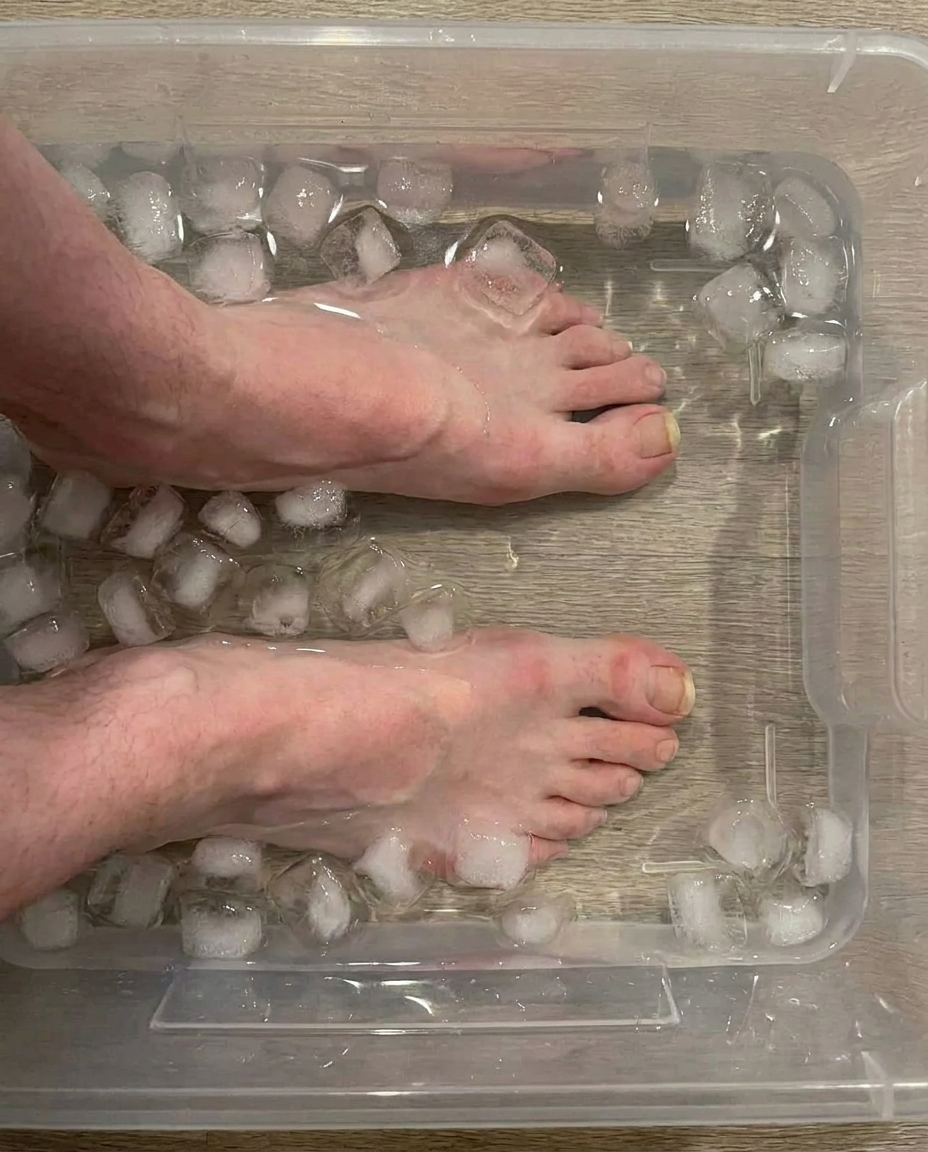
I found a notebook in my husband's truck last March and I haven't told him I saw it. He's been driving long-haul for 31 years. Same company since he was 24. Same route up the I-75 corridor, Atlanta to Detroit and back, four days on, three days off, for as long as I've known him. His name is Wendell. Everyone calls him Wen. I'm Margie, I'm 57, and we live in a small ranch house outside Cordele, Georgia, the kind of town where the Piggly Wiggly is still the social center and everybody knows whose truck is whose. We've been married 34 years this October. I was cleaning out his cab because he'd come home that Friday with a stomach bug and asked me to grab his thermos and his lunch cooler before everything went rancid in the heat. His truck was parked in our gravel driveway, idling because he'd left the AC running for the dog, our old beagle Roscoe, who likes to sit in the passenger seat when Wen's home. I climbed up into the cab. And there, tucked into the visor above the steering wheel, was a small black Moleskine notebook I'd never seen before. I should have left it alone. I know I should have. But I'm a wife. And I'm 57. And when you've been married to a man for 34 years and he starts keeping a notebook he's never mentioned, you look. I opened it. And what I saw on the inside cover made my hands go cold. It was a diagram of two feet. Hand drawn. In ballpoint pen. Like the kind of foot chart you'd see at a podiatrist's office, except sketched by a man who hadn't drawn anything since middle school art class. And each toe was numbered. And next to certain toes, he'd written little notes in his cramped block handwriting. "Pinky, left. Numb since November." "Big toe, right. Pins and needles. Worse at night." "All four small toes, left foot. Feel like ice even in summer." "Heel, right. Can't tell if I'm pressing brake hard or soft anymore." I sat in the driver's seat of my husband's truck with that notebook in my lap and I couldn't breathe. There were 14 pages. 14 pages of entries, going back almost 11 months. Most of them just two or three sentences. Dated. Methodical. The way he tracks fuel and mileage in his work log. He'd been keeping a record. A secret record of his own feet going numb. And he hadn't told me. I closed the notebook. I put it back exactly where I found it, with the little elastic band turned the same way. I climbed down out of the cab. I walked into our kitchen, and Wen was asleep on the couch with Roscoe on his chest, and I made myself a cup of coffee with hands that wouldn't stop shaking. I didn't say a word. Not that day. Not that week. Because Wendell is the proudest man I have ever known. And I knew if I confronted him, he would lock down. He would minimize. He would tell me it was nothing. And then he would get back in that truck on Monday morning and drive 700 miles north with feet that couldn't feel the pedals. So I started watching him instead. And the more I watched, the more I saw. The way he'd brace himself on the kitchen counter when he stood up from the breakfast table, just for a second, like he was getting his bearings. The way he'd kicked off his work boots in the mudroom and then sit on the bench for an extra minute, rubbing the tops of his feet with his thumbs, his face doing that careful blank thing it does when he's hiding pain. The way he'd been wearing two pairs of socks even in July. The way he'd stopped going on his Sunday walks with Roscoe down to the creek and back, and instead he'd just stand on the porch and throw the ball into the side yard. I don't know how I'd missed it. We'd been married 34 years and somehow my husband had been quietly disappearing inside his own body and I had been so busy with my own life, my job at the elementary school cafeteria, my mother's slow decline in the nursing home over in Vienna, my book club on Wednesdays, that I had not seen what was right in front of me. I was so angry at myself I cried in the laundry room with the door shut. And then I got practical. Because that's what you do when you've been married to a man like Wendell for 34 years. You don't fall apart. You make a plan. I called Dr. Tilman's office on a Tuesday morning while Wen was on the road. Dr. Tilman has been our family doctor for 22 years. He delivered both our boys. He cried at my mother in law's funeral. I explained everything. The notebook. The feet. The bracing on the counter. He was quiet for a long time. Then he said, "Margie, you need to get him in here. The longer this goes on without him talking to me about it, the harder it gets to do anything about it." He told me the word for what Wen was probably describing. Peripheral neuropathy. It's when the small nerves in your feet and your hands stop sending the right signals to your brain. They get sluggish. They get loud. They get quiet. They get cold when nothing is cold. And it's incredibly common in men who have done what Wendell has done. Sitting for 10 to 12 hours a day. Vibration from the road traveling up through the pedals into his legs for three decades. Blood sugar that's been on the high end of normal for years because he ate truck stop food for half his adult life. Dr. Tilman said the nerves don't fail all at once. They fail in slow motion. And the body is a very patient liar. I drove home from the school that afternoon and I sat in my car in the driveway for 20 minutes before I went inside. Because here's the thing nobody tells you about being married to a long-haul trucker. His body is his job. If his feet stop working, his career ends. If his career ends, the man I married, the man who has been so proud of being a provider that he refused to let me work full time until our youngest was in middle school, that man ends with it. I wasn't just scared for his feet. I was scared for who he would become without that truck. I went inside. He was at the kitchen table eating a sandwich. Roscoe was at his feet. I sat down across from him and I said, "Wen, I found the notebook." He didn't look up. He just stopped chewing. For maybe 15 seconds, he didn't move at all. Then he set the sandwich down. And he covered his face with both his big calloused hands. And my husband, who I have seen cry exactly twice in 34 years, once at our wedding and once when his daddy passed, started crying at our kitchen table. He said, "Margie, I can't feel the brake pedal half the time. I press it and I'm guessing. I'm guessing how hard." He said, "I've been guessing since Christmas." I won't tell you what the next two hours of conversation were like. Some things stay between a husband and a wife. But by the end of it, we had agreed on three things. One: he would call dispatch and request local routes only. No more overnight hauls. Day trips inside Georgia and Florida. Two: he would see Dr. Tilman that Friday. Three: we would figure out together what was happening in his body, and we would not pretend anymore. Dr. Tilman ran the tests. His A1C was higher than it should have been. Not diabetic. But the kind of number where Dr. Tilman tapped his pen on the desk and said, "Wendell, your nerves have been swimming in a soup that isn't great for them for a long time." His circulation in his lower legs wasn't what it should be for a 58 year old. And the nerves themselves, on the conductive test, were responding slower than Dr. Tilman wanted to see. He gave us some lifestyle stuff to work on. Cut the truck stop food. Walk more. Some B vitamins. He talked about a prescription for the nerve sensations, but Wen didn't want to start something he'd be on forever, and frankly I didn't want him driving on it either. We left the office with a folder full of pamphlets and a quiet ride home. Wen looked out the window the whole way and didn't say anything until we passed the cotton fields outside Ashburn. Then he said, "Marge, I don't want to be the kind of old man who shuffles. My daddy was that kind of old man. I'd rather not get there." It broke my heart. So I started reading. Every night after he went to bed, I'd sit at the kitchen table with my laptop and a cup of tea and I'd read until 11 or 12. I read about nerve health. About circulation. About what the research said about why small fiber nerves stop working the way they should. A lot of it was over my head. I'm a school cafeteria worker, not a scientist. But what I kept running into, in article after article, was the same word. Inflammation. Quiet, low-grade, body-wide inflammation. The kind that doesn't make you swell up or run a fever. The kind that just hums in the background for years and slowly, slowly, makes the small things in your body work a little less well than they should. The small blood vessels feeding your fingers and toes. The small nerves that branch out into your hands and feet. The little signaling pathways that keep everything talking to everything else. And then I ran across a name I'd never heard before. Amla. It's a fruit. A small green sour berry that grows on a tree in India. They've been using it in traditional medicine over there for a couple thousand years. It's also called Indian gooseberry. I almost closed the tab. Because I've been around long enough to know that every couple of years there's some new "miracle berry" everyone's talking about. Acai. Goji. Noni. The grocery store ends up with a shelf full of overpriced juice and then nobody talks about it again. But something kept pulling me back. The research wasn't fluffy. It wasn't influencers in linen pants on a beach. It was actual papers, in actual journals, from places like the National Library of Medicine. What it kept coming back to was this. Amla is one of the densest sources of vitamin C in the natural world. But it's not the vitamin C alone doing the work. It's the polyphenols. The tannins. A whole pile of plant compounds that, taken together, are some of the strongest natural antioxidants ever studied. And antioxidants matter, especially for nerve and circulatory health, because of something called oxidative stress. Think of it this way. Your body is a house. And every day, just by being alive, your body produces a little bit of smoke. Cooking smoke. The exhaust from being a human running on fuel. If your house has good ventilation, the smoke clears. No big deal. But if the ventilation is off, the smoke builds up. Slowly. Year after year. And it stains the walls. It dulls the windows. It clouds the air. That smoke is oxidative stress. And in people who've spent decades sitting in a truck with their blood sugar a little high and their circulation a little sluggish, that smoke builds up in the smallest, most delicate parts of the body first. The capillaries in the feet. The tiny nerves in the toes. Amla has been shown to support the body's antioxidant defense systems. It works with what your body already does naturally. It helps clear some of that smoke. The research also pointed to amla being associated with healthier inflammation responses, and with supporting healthy blood sugar regulation in people whose numbers were drifting in the wrong direction. Which was exactly Wendell. I sat there at the kitchen table at 11:30 at night and I thought, this can't be real. If a little green berry could do all this, somebody would have told us. Dr. Tilman would have told us. But then I thought about the pamphlet Dr. Tilman gave us. The whole thing was lifestyle changes and a prescription. There wasn't a single page in there about nutritional support for nerve health. Not because Dr. Tilman is a bad doctor. He's a wonderful doctor. But because that's not what he was trained to do. He was trained to manage symptoms, not to think about the soil the symptoms grew out of. I kept reading. And I came across a brand called Alevia. They make an amla supplement. Just amla. No filler, no proprietary blend nonsense, no 18 other ingredients muddying the water. Just concentrated organic amla in a capsule, made in the United States, third party tested. What I appreciated, sitting there at my kitchen table at midnight, was that the company didn't promise anything dramatic. They didn't say it would fix Wen's feet. They didn't say it would reverse anything. They talked about supporting the body's natural defenses. Helping maintain healthy circulation. Supporting nerve and vascular wellness as part of a healthy routine. It was the first thing I'd read in three months that didn't feel like it was selling me a miracle. I ordered two bottles. And here is the part I want you to understand, because this is the part I would have rolled my eyes at six months ago. I didn't tell Wen. Not at first. Because I knew what would happen. He'd hold the bottle in his hand and he'd say "Marge, this is a berry. I'm not putting a berry in my body and expecting it to do anything." And then he wouldn't take it. And I would have wasted my money. So I put one capsule in his vitamin organizer every morning, next to the B complex Dr. Tilman recommended and the fish oil he's been taking for 10 years. He took it without asking. Three weeks went by. Nothing dramatic. Nothing that would make a Facebook post. But around week 4, I noticed he stopped wearing the second pair of socks at night. Around week 5, he came in from working in the side yard and he said, almost to himself, "My feet didn't fall asleep today." I about dropped the plate I was washing. He didn't even realize what he'd said. He just said it the way you'd say "didn't rain today." Like a small observation, made and dismissed. But I was watching now. I was paying attention. Around week 7, he and Roscoe started doing the walk down to the creek again on Sunday mornings. Slowly at first. Then a little farther. Then the full loop. Around week 9, he came home from a day route and he sat in his recliner and he wiggled his toes inside his socks and he said, "Marge, I can feel my pinky toe. The left one. I haven't felt that toe in a year and a half." He looked at me like he was nine years old and had just found a $20 bill on the sidewalk. I told him then. About the amla. About the late nights reading. About the bottle on the shelf. He looked at the bottle for a long time. Then he said, "Well. I'll be." That's all he said. Wendell is not a man of long speeches. But the next morning, he took the capsule out of the organizer himself. And he's been taking it every day since. It's been about 8 months now. He's not 100 percent. I want to be honest with you. The nerves in his feet didn't grow back overnight, and Dr. Tilman warned us they might never come all the way back to where they were at 40. But the notebook is gone. I asked him about it a few weeks ago. He said he threw it out. He said he didn't need to track it anymore because most days he doesn't notice his feet, and the days he does notice them, it's because they feel normal, and noticing normal isn't worth writing down. He's still driving. He took back two of his longer routes. He says he can feel the pedals. He walks Roscoe every morning before his coffee. He sleeps without two pairs of socks. He doesn't brace on the counter when he stands up. And last Saturday, he carried our 4 year old grandson Eli on his shoulders all the way through the Cordele Farmers Market, which is something he hadn't done with our own boys since they were toddlers. I cried in the produce section. Wendell saw and made fun of me for it the whole car ride home. Some things don't change. I'm not writing this to tell you that a little green berry from India is going to do for your husband what it did for mine. I'm writing this because I spent 11 months not knowing something was wrong with the man I love. And I spent another 3 months scared that there was nothing I could do about it. And the thing that finally moved the needle, after the doctor, after the pamphlets, after the lifestyle changes, was something I'd never heard of, made by a company I'd never heard of, recommended by nobody in my actual life. If you've been watching someone you love get quieter about their body, if you've noticed the little things, the second pair of socks, the bracing on the counter, the walks that don't happen anymore, the smile that doesn't quite reach the eyes when they say they're fine, I want you to know that you're not crazy and you're not being dramatic. Bodies are patient liars. They will hide what's wrong for a long, long time. But the things that are quietly making them tired, the inflammation, the oxidative stress, the slow drift of small systems out of tune, those things can be supported. Not magically. Not overnight. But meaningfully. With something as simple as a fruit that's been used in a tradition older than this country has existed. Alevia Amla is what we use. One capsule a day. It costs less than what Wendell used to spend on truck stop coffee in a week. They offer a 90 day money back guarantee. Which I appreciated, because I'm a cafeteria worker, not a millionaire, and I don't throw money at things that don't work. If you try it and your body doesn't respond, you send it back and you get every penny back. They make it easy. I order ours from their website. You can too, at the link below. If you have a Wendell in your life, or if you are the Wendell in someone else's life, this might be worth a look. The body wants to feel like itself again. Sometimes it just needs a little help clearing the smoke. P.S. I still think about that notebook sometimes. The 14 pages of him quietly trying to manage something all by himself because he didn't want to scare me. I keep thinking about how many men out there are keeping their own notebooks. Their own quiet records of things that are slipping. If you love one of them, talk to him this week. Not next week. This week. And maybe slide a bottle of this onto the kitchen counter while you're at it. P.P.S. The 90 day guarantee is a real one. I called the company once because I had a billing question and a woman named Tara answered on the second ring and stayed on the phone with me for 14 minutes. That doesn't happen with most companies anymore. It made me trust them more, not less. P.P.P.S. Wendell wanted me to add that his pinky toe says hello. He thinks he's funny. I let him think that. 👉 https://alevia.com/amla/33
Like this ad? Make it yours.
Crush rebuilds this exact creative around your product — your brand, your colors, your offer — in about a minute.