Antony Hylton
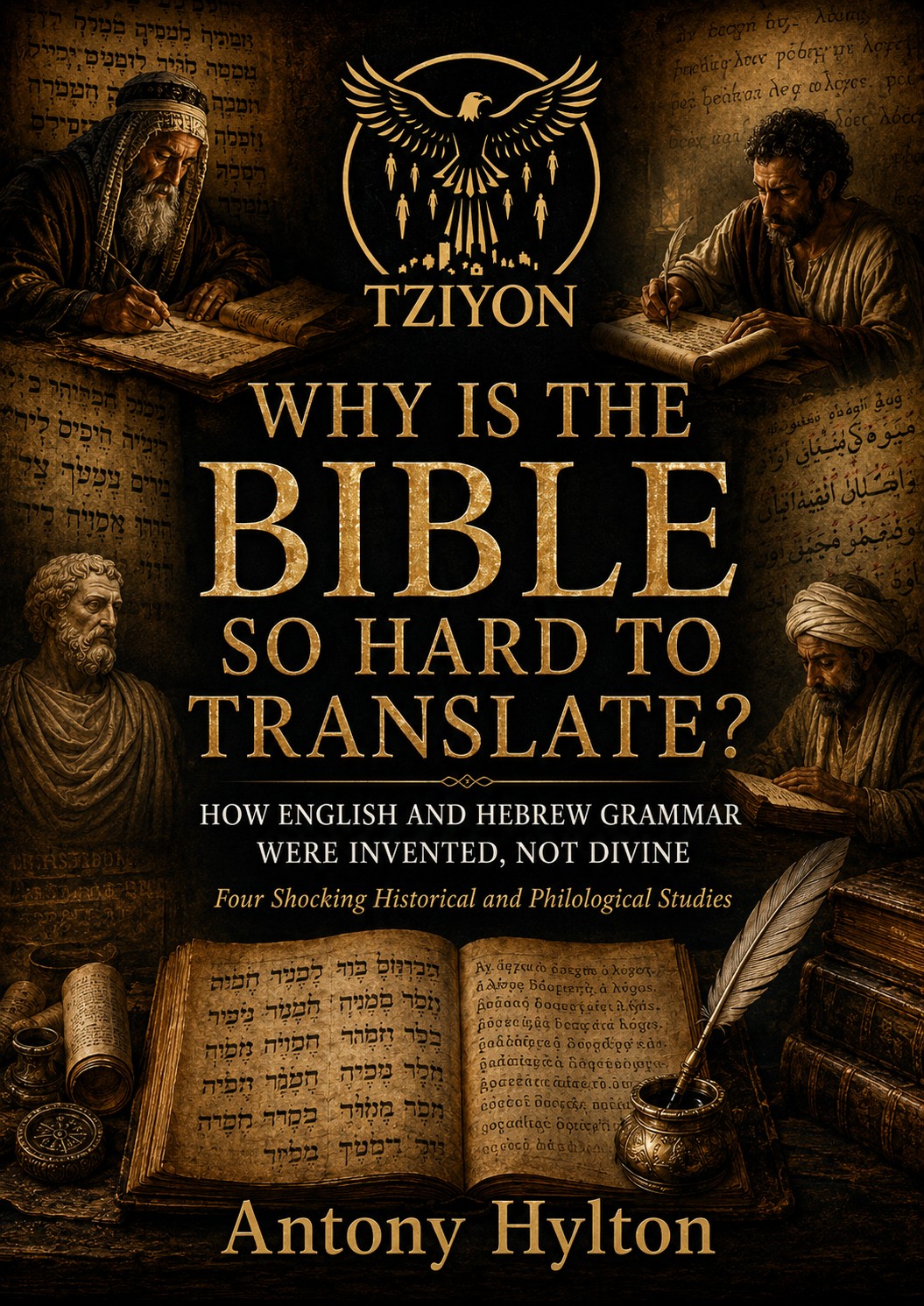
 Facebook ad: “WHY IS THE BIBLE SO HARD TO TRANSLATE? HOW ENGLISH AND…”
Ran for 5 days, from October 24 to October 29, 2026, the last day Crush saw it.
Run by Antony Hylton on Facebook. Crush is not the advertiser and does not verify its claims. See this ad in Meta's Ad Library(opens in a new tab)
Make your own version of this ad
Crush makes it, launches it in your own Meta ad account, scales the winners and pauses the losers.
About this ad
- Meta Ad Library ID
- 1778057253414258
- Platforms
- Facebook, Instagram and Audience Network
- Relaunches
- 0
- EU reach
- 80
Ad text
Contents About This Collected Edition 7 Contents 7 ARTICLE ONE 8 Introduction: Why the History of Grammar Matters 9 Part One — The Development of the Parts of Speech in English 9 1. Before Eight Parts of Speech: Plato and Aristotle 9 2. The Stoics and the Growth of Grammatical Analysis 10 3. The Alexandrian Eight 10 4. From Greek to Latin 11 5. Donatus and the Medieval School Tradition 11 6. English Grammars and the Latin Inheritance 11 7. How the Traditional English Eight Emerged 12 8. Modern Linguistics and the Limits of the Eight-Part Model 13 Part Two — The Development of Hebrew Grammar 13 9. Hebrew Before Hebrew Grammar 13 10. The Masoretes and the Preservation of Linguistic Form 13 11. Arabic Grammar and the Birth of Systematic Hebrew Grammar 14 12. Saadia Gaon and the Threefold Classification 14 13. The Triliteral Root: Hayyuj and the Great Breakthrough 15 14. Ibn Janah, Ibn Ezra, and the Kimhi Tradition 15 15. Hebrew Grammar Enters Christian Europe 16 16. Gesenius and Comparative Semitic Grammar 16 17. Modern Biblical Hebrew and Modern Israeli Hebrew 17 The Binyanim as a Morphological System 17 Conclusion: Two Histories, Two Ways of Seeing Language 18 Appendix C — Comparative Tables 19 From the Alexandrian Eight to the Traditional English Eight 19 Two Broad Grammatical Traditions 20 Selected Bibliography 21 ARTICLE TWO 22 Selected Medieval Works Referenced in the Study 23 Introduction 23 Ibn Janah: Life, Setting, and Contribution 26 Sources and Scope of the Study 27 Examination of Existing Literature 28 1.2 Graetz 29 1.3 Hatti 32 1.4 Jastrow 33 1.5 Chomsky 34 1.6 Durant 37 1.7 Gerli 37 1.8 Kutscher 38 1.9 Brisman 39 1.10 Rosenthal 39 1.11 Barr 41 1.12 Maman 43 Historical and Philological Analysis 47 Ibn Janah: Time and Place 47 The Language Factor 47 The Edomite Language Factor 48 The Arabic (“Hagarite”) Influence 50 The Leadership Factor 50 The Intellectual Environment 51 3.0 The Trinitarian Verb: Three Radicals—One Root, Much Fruit 52 Hayyuj: The Decisive Forerunner 52 3.2 Ibn Janah: Write Down the Vision That He Who Reads May Run 57 In Defense of the Truth of the Bible 59 The Book of Roots: Ibn Janah’s Great Contribution 61 Outline and Method of the Book of Roots 62 3.5.1 Ibn Janah's Arabic Comparison with Anakh 62 3.5.1 The Septuagint: Anakh as a Hard Substance Like Steel 63 3.5.2 The Vulgate: Anakh as a Mason's Trowel 64 3.5.2a The Targum: Anakh as Judgment 65 3.5.3 Aquila and Theodotion: Anakh as “Splendor” or “Melting” 65 3.5.4 Rabbi Chisdai: Anakh as Wronging 65 3.5.5 Menahem's Notebook: Anakh and Nekhim 66 Dunash Criticizes Ibn Saruq’s Definition of Anakh 67 3.5.7 Ibn Janah and the Arabic Comparison: Anakh and Anuk 68 The “Plumb Line” Interpretation Spreads 69 Landsberger and the Modern Reassessment of Anakh 70 3.5.8 Anakh as Wordplay in an Israelian Dialect: “Tin” 71 Conclusion 71 Bibliography 74 ARTICLE THREE 78 Part I. The Eight Parts of Speech in English Grammar 79 Greek Origins 79 Roman Adaptation 79 Medieval and Early Modern English Grammar 79 Settling into the Modern Eight 80 Modern Linguistics 80 Part II. An Alternative History: Hebrew Grammar 80 Masoretic Foundations (6th–10th century CE) 80 The Birth of Hebrew Grammar as a Discipline (Tenth Century) 81 The Andalusian Golden Age (Tenth–Twelfth Centuries) 81 Christian Hebraism (Sixteenth–Seventeenth Centuries) 81 Modern Developments 82 Part III. Two Pioneering Grammarians 82 Saadia Gaon's System 82 Why Ibn Janah Is Called the “Father of Biblical Hebrew Grammar” 83 Part IV. The Vocalization Systems of the Hebrew Bible 84 Overview of the Three Systems 84 The Palestinian System, Explained Simply 85 Part V. Sources and Systematization of the Palestinian System 86 Are the Cairo Genizah Fragments the Only Source? 86 Who Systematized the Palestinian System? 86 Part VI. Accessing the Primary Scholarship 87 Paul Kahle's Works in English 87 Copyright Status — Important Distinction 88 Public-Domain Access to Kahle’s 1902 Dissertation 89 Source Note 89 ARTICLE FOUR 90 Introduction 91 Bible Translation before Paul 92 The Texts from Paul Time 95 Literature Review 100 The Whiston Solution 101 The Divergent Text Solution 104 The Memory Solution 106 The Rhetorical Solution 107 Main Part: Methods of Citation and Translation 115 Examples of the Practice of Translation: Abba and Isaiah 28:11 116 Paul's Most Challenging Citation: Isaiah 28:11-12 118 Paul's Philosophy of Translation 124 The Interpreter-Translator: hermeneutés / diermeneutés 125 Paul's Corinthian Model for the Translator 128 The Messenger and the Message 128 The Receptors 129 The Hermeneus in the Corinthian 130 The Ancient Rabbinic Standard of Interpretation 133 Bibliography and End Notes 134 Bibliography 134 Supplementary Endnotes from the Original Paper 137 Master Appendix: Original-Language Texts from the Four Contributions 143 Article One: How Grammar Came to Be 143 Hebrew Terms and Examples 143 Hebrew Forms Used in the Binyanim Discussion 145 Arabic Grammatical Terms 145 Article Two: Rabbi Jonah Ibn Janah 146 Hebrew 146 Arabic 155 Article Three: Grammar Across Traditions 155 Article Four: The Bible of the Apostle Paul 156 Hebrew / Semitic-Script Forms 157 Greek 159 Contributions by Antony Hylton (Michael Adi Nachman) Copyright © 2026 Antony Hylton. All rights reserved. Published by A Michael Hylton Har Tziyon AS (Har Tziyon Publications). No part of this publication may be reproduced, distributed, or transmitted in any form or by any means without the prior written permission of the publisher, except in the case of brief quotations embodied in critical reviews and certain other noncommercial uses permitted by copyright law. ISBN 978-82-94256-76-1 pb About This Collected Edition This 6 × 9 collected edition brings together four related studies on the history of grammatical classification, the development of Biblical Hebrew grammar, Hebrew vocalization traditions, and the language of Scripture in the writings of the Apostle Paul. Each contribution retains its own argument and scholarly framing while sharing a common publication format. For continuous reading and audiobook use, Hebrew, Aramaic, Arabic, and Greek are presented in readable Latin-character transliteration in the main body. Hebrew and Aramaic transliterations include vowels rather than consonants alone, so that a reader or narrator can pronounce them naturally. Original-script material from the four contributions has been consolidated into a single master appendix at the end of the volume. Comparative tables that are substantive parts of an article remain with that article. Copyright notices and authorship represented in the source contributions remain applicable to those contributions. This collected edition is prepared for publication in 2026. Contents Article One — How Grammar Came to Be: The Historical Development of the Parts of Speech in English and Hebrew Article Two — Rabbi Jonah Ibn Janah: The Father of Biblical Hebrew Grammar Article Three — Grammar Across Traditions Article Four — The Bible of the Apostle Paul: Hebrew or Greek? Master Appendix — Original-Language Texts from the Four Contributions ARTICLE ONE HOW GRAMMAR CAME TO BE The Historical Development of the Parts of Speech in English and Hebrew Introduction: Why the History of Grammar Matters Students are often introduced to grammar as though its categories were self-evident facts of language. A noun is a noun, a verb is a verb, and the familiar list of parts of speech can appear timeless. History shows something more interesting. Grammatical categories are analytical tools. They were developed by particular communities, for particular languages, and for particular educational and interpretive purposes. English and Hebrew provide an especially useful comparison. The traditional English system descends largely from Greek and Latin grammatical thought. Hebrew grammar, by contrast, was systematized within Jewish scholarship and was profoundly stimulated by medieval Arabic linguistics. The result is not merely two lists of categories but two different intellectual habits: one emphasizes word classes such as noun, verb, adjective, and preposition; the other places unusual weight on consonantal roots, morphological patterns, and the broad division of words into nominal, verbal, and particle classes. Part One — The Development of the Parts of Speech in English 1. Before Eight Parts of Speech: Plato and Aristotle The Western history of the parts of speech begins in ancient Greek philosophy rather than in a school grammar. Plato, in the fourth century BCE, distinguished two basic components of a statement: onoma, a name or nominal expression, and rhema, what is said or predicated. These categories are not identical to the modern school categories 'noun' and 'verb', but they provided the seed of the later distinction. Aristotle developed the analysis further. Alongside name and verb, he discussed connecting or functional expressions under the term syndesmos. The important point is that the earliest analysis was not an eight-part taxonomy. It began with the logical structure of statements and only gradually developed into a classification of word types. 2. The Stoics and the Growth of Grammatical Analysis The Stoic philosophers greatly expanded grammatical analysis during the Hellenistic period. They distinguished proper and common names more carefully and developed accounts of case, tense, voice, and other inflectional categories. Their work helped transform grammar from a philosophical reflection on propositions into a more detailed study of linguistic form. 3. The Alexandrian Eight The famous number eight is associated above all with the grammatical tradition represented by Dionysius Thrax and the Techne Grammatike, traditionally dated to around the second or first century BCE. In this tradition the eight parts were: noun, verb, participle, article, pronoun, preposition, adverb, and conjunction. Alexandrian category Approximate English equivalent onoma noun rhema verb metoche participle arthron article antonymia pronoun prothesis preposition epirrhema adverb syndesmos conjunction Two differences from the familiar English school list immediately stand out. Adjective was not yet a separate major category, while article and participle were counted independently. The number eight therefore predates the modern English list but does not contain exactly the same eight members. 4. From Greek to Latin Roman grammarians adapted Greek analysis to Latin. Because Classical Latin lacked a grammatical article comparable to the Greek article, the inherited list could not simply be transferred unchanged. The Latin tradition retained the prestigious eightfold scheme by dropping the article and recognizing the interjection as a separate part of speech. A typical Latin eight therefore contained noun, pronoun, verb, participle, adverb, preposition, conjunction, and interjection. This adaptation is a crucial reminder that the number eight was already becoming a tradition capable of surviving changes in the membership of the list. 5. Donatus and the Medieval School Tradition In the fourth century CE, Aelius Donatus produced elementary and advanced Latin grammars that became central to European education. His Ars Minor organized instruction around the parts of speech in a question-and-answer form suitable for memorization. Through Donatus and related school texts, grammatical classification became not only a scholarly system but an educational institution. For centuries, to study 'grammar' in Western Europe largely meant to study Latin. English-speaking pupils therefore encountered grammatical terminology first through a language structurally different from their own. 6. English Grammars and the Latin Inheritance When English began to receive systematic grammatical descriptions in the sixteenth and seventeenth centuries, the available analytical framework was overwhelmingly Latin. William Bullokar's Pamphlet for Grammar (1586), often identified as the first printed English grammar, stands at the beginning of a long tradition in which English was described through categories already familiar from Latin schooling. This inheritance was productive, because many categories genuinely fit English. Yet it also encouraged grammarians to look for Latin-like structures where English behaved differently. The history of English grammar is therefore partly the history of a gradual movement from applying inherited categories to describing English on its own terms. 7. How the Traditional English Eight Emerged The traditional English school list eventually stabilized as noun, pronoun, adjective, verb, adverb, preposition, conjunction, and interjection. Compared with the Alexandrian eight, six categories remain recognizable: noun, verb, pronoun, preposition, adverb, and conjunction. Article and participle disappear as independent top-level categories, while adjective and interjection occupy their places. The adjective became particularly important in English because English adjectives behave differently from Latin adjectives. Latin adjectives inflect extensively for case, number, and gender and therefore resemble nouns morphologically. Modern English adjectives, by contrast, normally remain unchanged in expressions such as 'a good man', 'a good woman', 'good men', and 'good women'. The participle did not disappear from grammar; it was reclassified. Forms such as 'running', 'written', and 'broken' came to be treated primarily as forms of verbs or as forms capable of adjectival use. The article also remained in the language, but traditional English grammar often grouped 'a', 'an', and 'the' under adjectives. Modern grammars more commonly treat them within the class of determiners. 8. Modern Linguistics and the Limits of the Eight-Part Model Modern linguistics does not generally regard the number eight as a natural law. Word classes are identified by a combination of morphology, syntax, distribution, and meaning. English can therefore be analysed with additional categories such as determiner, auxiliary, coordinator, subordinator, and particle. The traditional eight remain educationally useful, especially as an introduction. Historically, however, they are best understood as the latest form of an ancient classificatory tradition rather than as the only possible description of English. Part Two — The Development of Hebrew Grammar 9. Hebrew Before Hebrew Grammar Biblical Hebrew possessed a rich grammatical system long before anyone wrote a systematic Hebrew grammar. The biblical writers used nouns, verbs, https://www.amazon.com/dp/B0HHLGJDL4 @followers Dagens.noChurch LeadersChristian Youth FellowshipChristianity TodayVerdinyttCharisma NewsBiblical knowledgeBiblical Creation & Apologetics MinistriesBringing the Bible to LifeHebrew Bible Study - Tanach - Commentary & TranslationMuseum of the Bible #bibleverse #biblestudy #biblia #bible#BiblicalInterpretation#translation#bibletranslation#thepassiontranslation
Where the ad sends people
amazon.com
WHY IS THE BIBLE SO HARD TO TRANSLATE? HOW ENGLISH AND HEBREW GRAMMAR WERE INVENTED, NOT DIVINE: Four Shocking Historical and Philological Studies
WHY IS THE BIBLE SO HARD TO TRANSLATE? HOW ENGLISH AND HEBREW GRAMMAR WERE INVENTED, NOT DIVINE: Four Shocking Historical and Philological Studies
Learn more: amazon.com(opens in a new tab)