The Men's Hair Regrowth Report
The Men's Hair Regrowth Report Facebook ad: “Fix Your Hair at the Follicle Level”
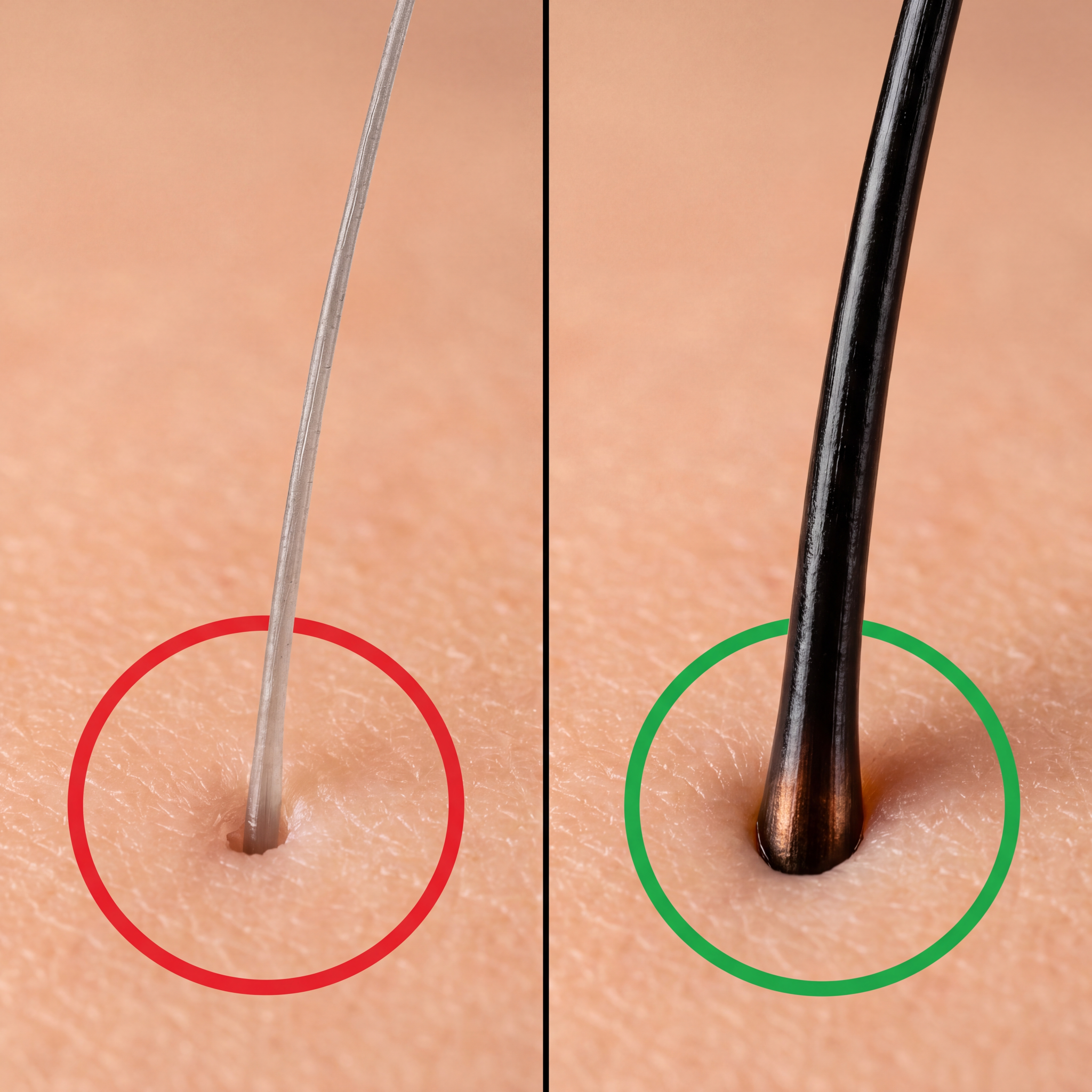
Ran for 3 days, from May 9 to May 12, 2026, the last day Crush saw it.
Run by The Men's Hair Regrowth Report on Facebook. Crush is not the advertiser and does not verify its claims. See this ad in Meta's Ad Library(opens in a new tab)
Make your own version of this ad
Crush makes it, launches it in your own Meta ad account, scales the winners and pauses the losers.
About this ad
- Meta Ad Library ID
- 1782599449774725
- Platforms
- Facebook, Instagram, Audience Network, Messenger and Threads
- Relaunches
- 0
- Niche
- Hair Care
Ad text
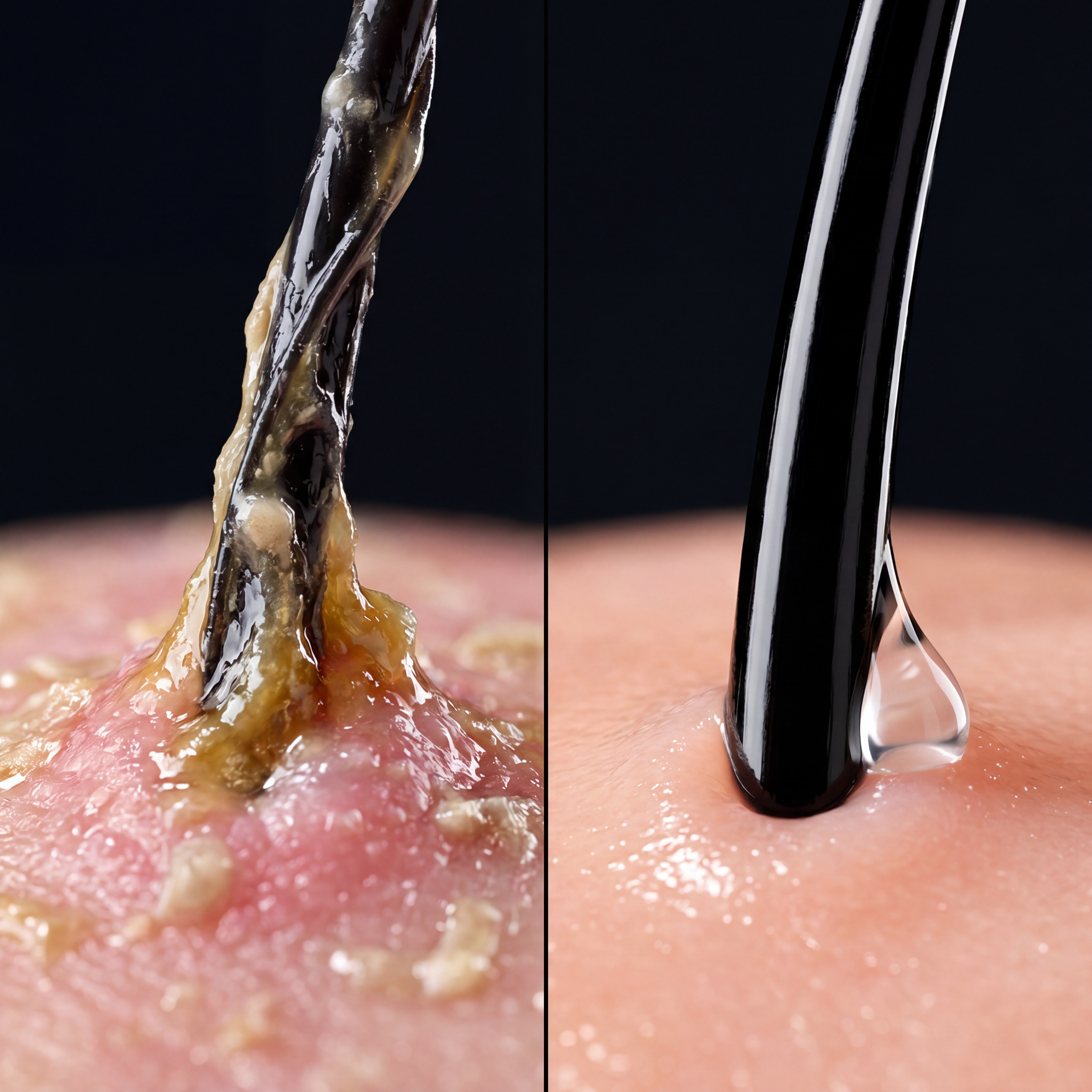
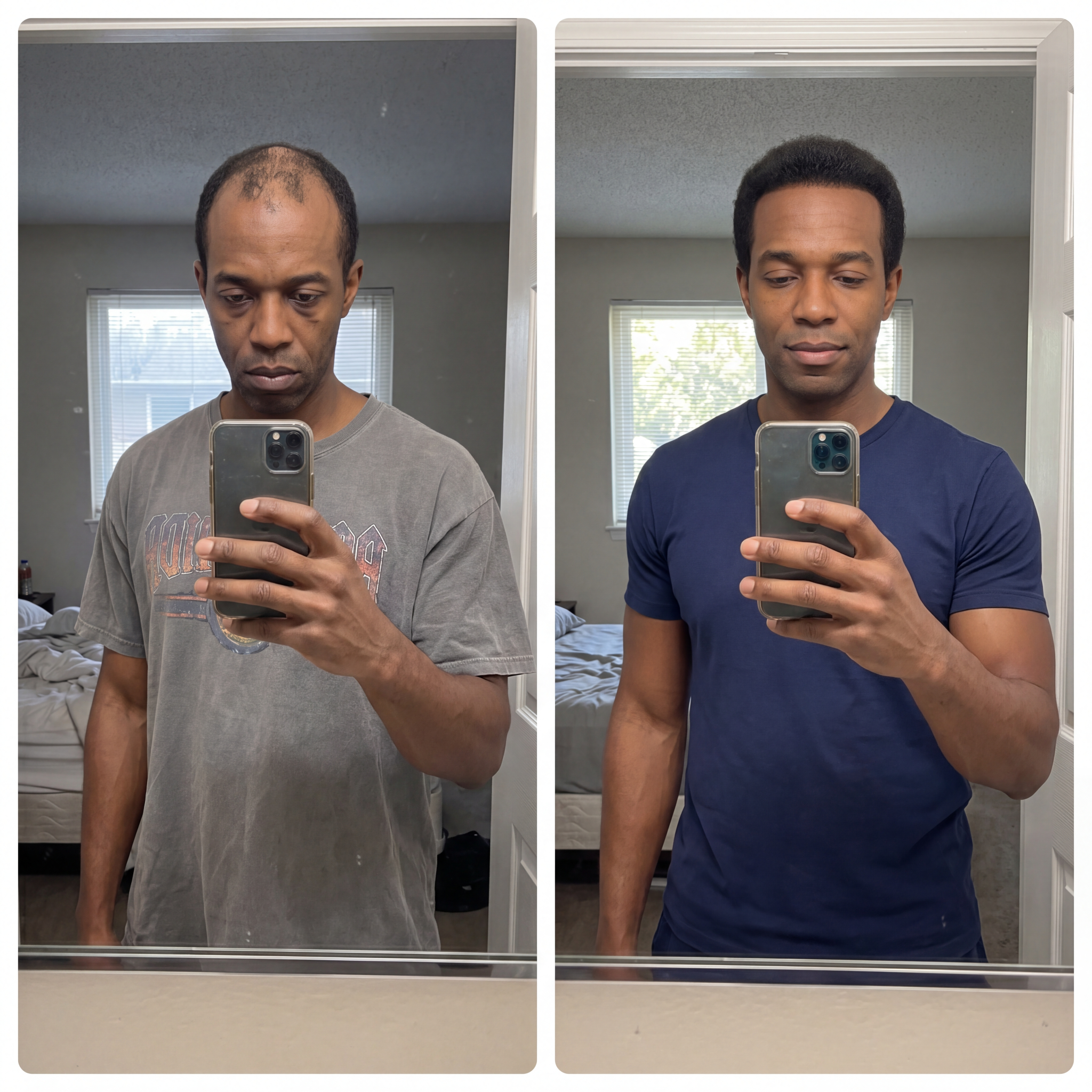
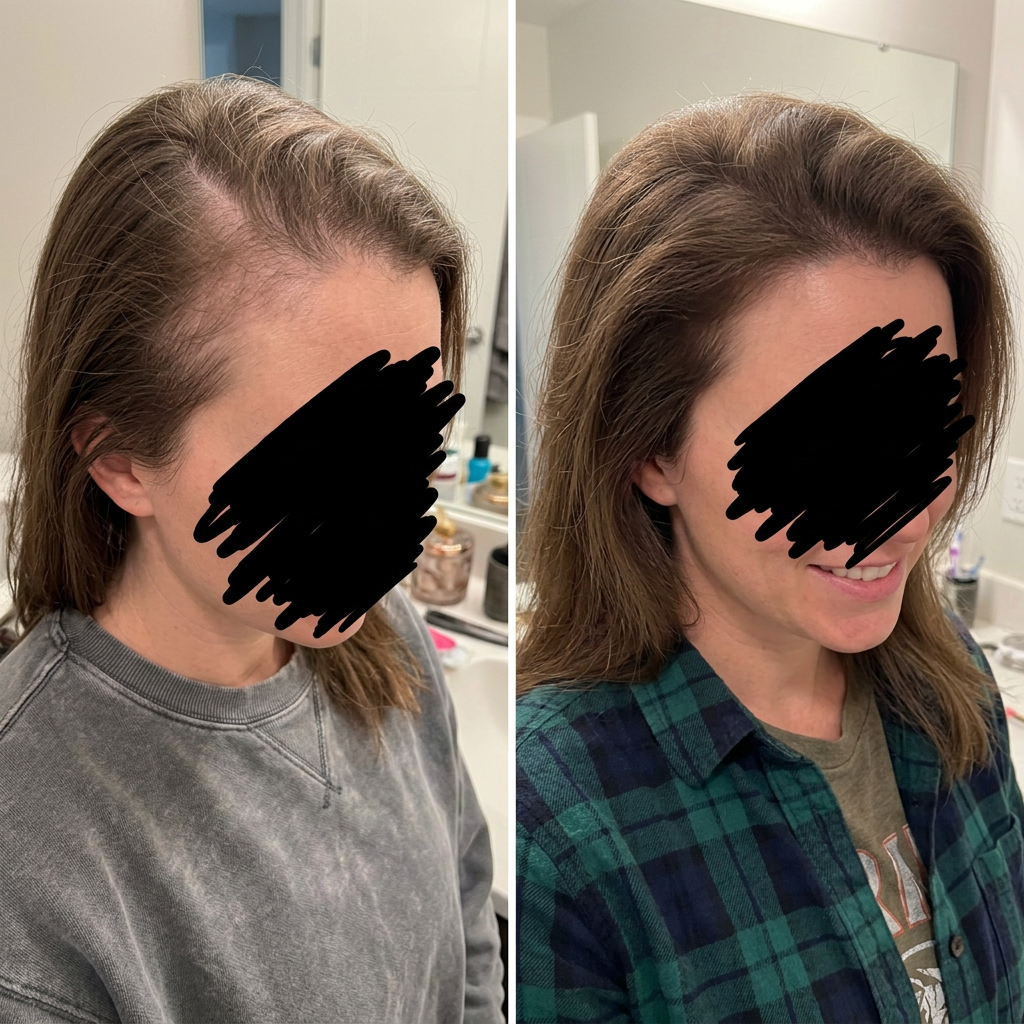
I've been losing my hair for seven years. I've been leading a sales team for fourteen. A husband for eleven. A father for four. The first product I tried gave me my density back — for a while. Then it destroyed everything else. I need to tell you what happened — because if your hair is thinning and you're taking finasteride or thinking about it or trying to fix it on your own with biotin and saw palmetto and pumpkin seed oil and caffeine shampoo and dermarollers and every other thing the internet says works — you need to read this. All of it. My name is James. I'm 39 years old. I started in enterprise sales when I was 25 — walked into my first boardroom with a full head of hair and a suit I couldn't really afford and closed a deal I had no business closing. Kept walking into those rooms for the next fourteen years. Regional sales. Then national. Then I was managing a team of twelve and presenting quarterly numbers to a CEO who remembered names by faces. In that world, presence is currency. The handshake. The eye contact. The way you carry yourself when you stand up in front of a room of people who control eight-figure budgets. You don't get a second chance to look like the guy they trust with their money. My father was a good-looking man. Broad shoulders. Strong jaw. Full head of dark hair through his thirties. Then one Thanksgiving I came home from college and barely recognized him. He was 42. His hairline had pulled back to the crown and the temples had gone completely. He looked ten years older than the last time I'd seen him. My mother said he'd stopped going out as much. Stopped playing in his weekend basketball league. "He just doesn't feel like himself," she told me in the kitchen while he sat in the other room watching football with a hat on indoors. I was 21 when I saw that. I told myself it wouldn't happen to me. By 32, it was happening to me. I noticed it in the shower first. More hair in my hands than belonged there. Then in photos — a company headshot where the overhead lighting caught the thinning at my crown and made it visible in a way the bathroom mirror never did. My wife saw the photo before I did. She didn't say anything. She didn't have to. The way she looked at it and then looked at me and then changed the subject told me everything. My dermatologist put me on finasteride when I was 33. One milligram. Once a day. Told me it was the gold standard — FDA-approved, backed by decades of data, take it at bedtime, come back in six months. I didn't question it. Why would I? I was healthy. I worked out four days a week. Tracked my macros. Wore an Oura ring. Optimized everything I could control. My hair was thinning and the doctor said the drug was the smart move. Six months later, my shedding had slowed visibly. My wife noticed. My barber noticed. The drug was doing exactly what it was supposed to do. Some brain fog in the mornings. Nothing I thought twice about. I was 33 and running a national sales team. Long hours happen. Fog happens. By year two the fog had a name. Silence. Silence in the bedroom. My wife would reach for me at night and I'd feel — nothing. Not disinterest. Not distraction. Absence. Like someone had turned down a dial I didn't know existed. The desire that had always been there, automatic, as reliable as breathing — was fading. Not gone. Fading. Slowly enough that I could pretend it was stress, or the new baby, or the fact that I was waking up at 5 AM for East Coast calls. But I knew. I told my dermatologist. He pulled up my chart. Looked at the photos from my last visit. "James, your density is holding. Minimal progression since we started. These are excellent results. Whatever you're doing, keep doing it." I said: "I'm not asking about my hair. I'm asking about what's happening to the rest of me." He said sexual side effects are a known possibility with finasteride. Affects a small percentage of patients. For most men, the benefits significantly outweigh the risks. He'd keep an eye on it. Keep an eye on it. Easy to say when your marriage isn't the thing going dark. By year three the fog was everywhere. Not all at once. I didn't wake up one morning and decide to stop being sharp. It happened in pieces. First the quick mental math during a pitch — the instant recall of a prospect's numbers, the ability to pull a stat out of thin air and land a point mid-sentence — those started getting slower. A half-second delay here. A missed reference there. Nothing the client would catch. But I caught it. And my VP caught it. I started preparing twice as long for every meeting. Bringing notes I'd never needed before. I told my team I wanted to "be more buttoned-up" and "let the data do the talking." My VP knew what I was really saying without me saying it. A sales leader who suddenly needs notes for a pitch he used to deliver from memory is a sales leader who's losing his edge. I was 35 years old and I was compensating. The real break happened around month thirty. My wife — Lauren — sat on the edge of our bed one night and said something she'd clearly been holding for months. "I don't know how to say this. But you feel like a different person. Not just in bed. Everywhere. You used to walk into a room and the energy shifted. Now you walk in and you're just... present. That's it. You're just there." She wasn't being cruel. She was terrified. Because she could see what I was trying to hide. The man she married — the guy with the edge, the sharpness, the drive that powered everything from the boardroom to the bedroom — was being chemically flattened by a pill designed to keep hair on his head. Not sluggish. FLATTENED. Like someone had taken the full range of who I was — the highs, the lows, the hunger, the fire — and compressed it into a narrow band of functional numbness. I went back to my dermatologist. Told him the fog was worse. Told him about Lauren. Told him I felt like I was disappearing behind my own face — that the hair on my head was staying but the man underneath it was leaving. He looked at my chart. "James, your density is excellent. Minimal miniaturization at the crown. The temples are holding. I understand the side effects are frustrating, but the follicular protection finasteride provides at your stage is significant. The benefits outweigh the risks. I'd strongly recommend you stay on it." The benefits outweigh the risks. He said it the way you'd compliment a child's report card. Like the follicle count on the chart was the only thing that mattered. Like the man attached to the chart — the man whose marriage was dimming, whose sharpness was fading, whose wife sat on the edge of their bed and said "you feel like a different person" — was irrelevant. I quit finasteride that week. Within six weeks the fog began to lift. Within three months the bedroom came back to life. Lauren noticed before I did. She didn't say it in words. She just started reaching for me again. And I was there this time. Actually there. But the hair started falling out immediately. The finasteride had been holding a line. The moment I stopped, everything it had been holding back came rushing forward. My temples pulled back half an inch in two months. The crown thinned visibly. My barber — the same one who'd complimented the improvement two years earlier — looked at me during a cut and said quietly, "You stopped something, didn't you?" I'd traded my hair for my manhood and my mind. And now I was watching the hair leave anyway. I decided if the drug wasn't the answer, I'd find the answer myself. Maybe I could hold the line naturally. Maybe reverse some of it. Get my density back without losing everything else in the process. So I tried everything. And I mean everything. I started with minoxidil. The foam. Twice a day — morning and night, every single day, rubbing it into my crown and temples and letting it sit for four hours before I could wash my hair or exercise or let my daughter put her head against mine. I did that for eight months. A full eight months. My scalp itched constantly. My face bloated from the water retention. And yes — the dread shed hit me at week three. I stood in the shower watching hair come out in clumps that made my stomach drop. My wife saw the shower drain and her face went white. I told her it was supposed to happen. I wasn't sure I believed it myself. After eight months, I had some vellus hairs at the temples. Fine, colorless peach fuzz that you could only see in direct sunlight if you were looking for it. No real density. No visible change in any photo. And a creeping realization that had been growing louder with every passing month: this isn't a treatment. This is a hostage situation. Stop applying and everything falls out. Keep applying forever. Until I die. I stopped. The vellus hairs were gone within six weeks. Back to zero. Eight months of twice-daily application, itching, bloating, dread shed, and my wife's face going white — erased in a month and a half. Saw palmetto. Somebody at the gym told me it's a natural DHT blocker. A NATURAL DHT blocker. Like that's supposed to be better. I took it for six months hoping it would slow the loss without the sexual sides. It did nothing except give me stomach cramps. I found out later that saw palmetto works through the same mechanism as finasteride — it's a 5-alpha reductase inhibitor. A weaker one. With the same class of potential side effects. I'd been swallowing a milder version of the exact drug I'd quit. Nobody told me. Biotin. Ten thousand micrograms a day. The big pills every influencer on Instagram swears by. Four months. All it did was give me cystic acne on my jawline for the first time since I was 16. My wife counted the breakouts. Seven in one month. My hair didn't change at all. Just expensive B-vitamin that made my skin look worse while my hair kept thinning. Caffeine shampoo. Alpecin. Read about it on a European hair forum that swore caffeine stimulates follicles at the root. Used it every shower for five months. The tingling felt like something was happening. Nothing was happening. Just an expensive shampoo that smelled like a coffee shop and left my scalp dryer than before. Dermarolling. Bought a 1.5mm titanium roller off Amazon for $18. Somebody on Reddit swore by it — the Dhurat study, microneedling plus minoxidil, five times the results. I rolled my scalp once a week for four months. Bled every time. Never knew if I was pressing hard enough or too hard or at the right angle or the wrong angle. My scalp was tender for two days after every session. One night my daughter climbed into my lap and put her hand on my head and I flinched. She pulled away scared. That was the night I threw the roller in the trash. Laser cap. Seven hundred dollars for an FDA-cleared device that promised clinical-grade LLLT. I wore it thirty minutes every other day for five months. Sat in my home office looking like a man wearing a helmet that was supposed to grow hair with light. My wife walked in once, looked at me, and walked out without saying a word. The compassion on her face was worse than anything she could have said. Five months. Seven hundred dollars. Zero visible change. When I tried to return it, they charged me a 25% "service fee" and made me pay shipping. Cost me $875 total for nothing. Nutrafol. Eighty-eight dollars a month. Eight capsules a day. Ashwagandha, saw palmetto again, marine collagen, tocotrienols. "Clinically proven whole-body approach to hair growth." I took it religiously for seven months. My wife did the math one night — $616 in pills. She said: "James, you've got more supplements on that bathroom counter than the GNC down the street. And not a single one of them has changed a thing I can see." She was right. Pumpkin seed oil capsules. Rosemary oil mixed with a carrier and rubbed into my scalp every night. Collagen peptides in my morning coffee. Zinc. Iron. Vitamin D. Omega-3s on top of the fish oil I was already taking. A red light panel I mounted in the bathroom. Castor oil treatments on weekends. I was spending over $300 a month on products. My bathroom looked like a dispensary. My wife counted the bottles and jars one Saturday morning — nineteen. Nineteen things that were supposed to help. And the worst part? Through all of it — the minoxidil, the saw palmetto, the biotin, the caffeine shampoo, the dermaroller, the laser cap, the Nutrafol, the rosemary oil, the pumpkin seed oil, every supplement I could find — my hairline kept receding. The crown kept thinning. And I couldn't tell if any of it was doing anything because I had no baseline, no consistent photos, no system, and no way to measure what was actually happening on my head. I was doing everything you're supposed to do. Everything the forums say. Everything the dermatologist-influencers recommend. Everything the guy at the gym swears by and everything my buddy credits for his regrowth. None of it worked. And I couldn't figure out why. The night I almost shaved my head was a Wednesday in November. I was getting ready for a client dinner. Big account — the kind of relationship you build over years. I was standing in my bathroom adjusting my collar when the overhead light caught my crown at an angle I'd been avoiding for months. The thinning was undeniable now. Not slight. Not "maybe it's the lighting." A visible patch of scalp showing through hair that used to cover it completely. I stared at it. Then I opened my phone camera and held it above my head. What I saw on that screen didn't match the man I saw in the mirror every morning when the light was softer and the angle was kinder. The phone camera was merciless. The scalp was visible. The hairline had pulled back further than I'd realized. The density was gone in places I didn't know I'd lost it. I stood in that bathroom at 6:30 PM on a Wednesday with the sounds of my wife getting our daughter ready for bed down the hall — Lauren singing something, my daughter laughing, the ordinary sounds of a house where life was happening — and I looked at that photo and I thought: that's not me. That's what's left of me after seven years of losing ground and three years of trying everything the category offered. I thought about my father. About the Thanksgiving I came home and didn't recognize him. About the hat worn indoors. About my mother saying "he doesn't feel like himself." I picked up my clippers. Held them for a long time. Lauren walked in. Saw the clippers in my hand. Saw my face. She took the clippers out of my hand and set them on the counter and said: "James. Don't decide tonight. Come downstairs. Don't decide tonight." I didn't shave it. But I went downstairs that night knowing something had to change. The finasteride had chemically neutered me. The minoxidil held my hair hostage. The supplements were expensive placebos. And nineteen bottles on my bathroom counter hadn't moved the line a single millimeter. I didn't start with the right question. I started where everyone starts: "Why doesn't anything work for hair loss." Two hundred thousand results. "Why do hair serums fail." Millions. "Hair loss products that actually work." Forums full of men describing exactly what I was living. Engineers who'd spent thousands on subscriptions. Attorneys who'd tried every DTC brand and quit them all. Founders who dermarolled for a year with nothing to show for it. I wasn't alone. I wasn't a non-responder. And I wasn't "just unlucky." But the search that changed everything was one I almost didn't click: "Why do topical hair serums never reach the follicle." That's where I fell down the rabbit hole. And I didn't come back up the same person. Here's what seven years of thinning and three years of product-cycling never explained to me — and what every supplement I'd tried completely ignored: Your scalp has a barrier. It's called the stratum corneum — the outermost layer of your skin. Its job is to keep things out. Bacteria, irritants, environmental damage. It is very good at this job. It is so good at this job that less than 3% of any topically applied active actually penetrates deep enough to reach the follicle bulb — the place where stem cells live, where the growth cycle is regulated, where DHT does its damage. Less than three percent. The other 97% sits on the surface, evaporates between applications, gets caught in the hair shaft, runs down your forehead, or washes out in the shower before it has a chance to do anything at all. That $88-a-month supplement? It never got below the surface. That $60 serum? Same. The rosemary oil, the caffeine shampoo, the pumpkin seed extract — every single topical I'd ever applied to my scalp was being stopped at the gate by a barrier that evolution spent millions of years building specifically to keep foreign substances out. For three years I'd been paying for ingredients. I'd never once paid for delivery. My dermatologist was watching the hair count. Nobody was checking whether the actives were actually reaching the follicle. And here's where I saw my own bathroom counter in the research: Hair loss isn't one problem. It's three problems happening simultaneously inside the same follicle. First: DHT attack. Dihydrotestosterone binds to androgen receptors in the follicle and miniaturizes it over time. This is what finasteride addresses — by blocking the enzyme that converts testosterone to DHT. Systemically. Throughout your entire body. Which is why it works for hair and destroys everything else. Second: stem cell dormancy. The dermal papilla cells that signal new hair growth go quiet. They stop recruiting. The follicle enters a prolonged resting phase and stops cycling into active growth. This is what minoxidil partially addresses — it's a vasodilator. It increases blood flow. But blood flow isn't a growth signal. It's a delivery mechanism for a signal that isn't being sent. Third: shortened anagen phase. Even the follicles that are still active are growing for shorter and shorter periods before entering the resting phase again. The growth window compresses. Hair comes in thinner, shorter, weaker, until eventually it doesn't come in at all. Three problems. Simultaneous. At the follicle level. And here's what finally explained why everything else I tried also failed: Every product on the market pulls one lever. Finasteride blocks DHT. That's it. One lever. And it does it systemically — throughout your entire endocrine system — which is why it can crush your libido, fog your brain, and flatten you into a man your wife doesn't recognize. To address a problem that exists at the FOLLICLE level. Minoxidil dilates blood vessels. That's it. One lever. More blood flow to the scalp. It doesn't block DHT. It doesn't reactivate dormant stem cells. It doesn't extend the growth phase. It just opens the pipes. And the moment you stop opening them, everything reverses. Every DTC serum — the saw palmetto drops, the caffeine formulas, the peptide serums, the pumpkin seed extracts — picks one ingredient and one mechanism and hopes it's enough. It's never enough. Because you can't fix three problems with one tool. I spent three years mopping one corner while the house flooded from three directions. That's why I could apply minoxidil twice a day for eight months and watch vellus peach fuzz appear that would disappear the moment I stopped. One lever. That's why I could take Nutrafol for seven months and see nothing change — because a supplement swallowed as a capsule is being absorbed systemically, reaching the follicle at trace concentrations, and even then sitting on the wrong side of the stratum corneum. That's why I could line up nineteen bottles on my bathroom counter and spend $300 a month and still stand in my bathroom at 6:30 PM holding clippers I didn't want to use. Everything I'd tried — the drug AND the natural alternatives — was pulling one lever. Through a barrier that stopped 97% of it from arriving. With no system to tell me if it was working. The research led me to three compounds I'd never heard of. Procapil. GHK-Cu. Redensyl. I'd never encountered any of them. You probably haven't either. That bothered me at first — if these worked, wouldn't my dermatologist have told me? Wouldn't I have seen them at the pharmacy next to the minoxidil that made my face bloat and the finasteride that nearly ended my marriage? Then I looked at the research. Procapil was developed by Sederma, a subsidiary of Lubrizol — one of the largest cosmeceutical ingredient manufacturers in the world. Based in France. They'd been supplying licensed actives to European dermatology clinics for over two decades. A head-to-head clinical trial — Karaca and Akpolat, published and peer-reviewed — compared an RCP combination including Procapil against 5% minoxidil over 24 weeks. The Procapil combination showed 88.9% improvement on photographic evaluation versus 60% for minoxidil. Researcher assessment scores: 64.7% versus 25.5%. Not a supplement company's marketing page. A real trial with real investigators and real photos. GHK-Cu — Copper Tripeptide-1. Discovered in 1973 by a biochemist named Loren Pickart who was studying why human plasma made aging liver cells behave young. He found a copper-peptide complex that triggered cellular regeneration. Mainstream science mostly ignored it for 37 years. Then in 2010, the Broad Institute confirmed it modulates the expression of over 31% of human genes. Thirty-one percent. Direct follicle studies showed it wakes dormant dermal papilla cells and signals stem cell activation. The hair connection was discovered accidentally when GHK-Cu applied to a wound caused enlarged follicles at the wound site. This isn't fringe science. It has more clinical evidence behind it than most of the nineteen bottles that were sitting on my counter. Redensyl — developed by Givaudan, patented with a specific mechanism: DHQG and EGCG2 compounds that recruit outer root sheath stem cells and extend the anagen growth phase. The window that was shortening with every cycle — Redensyl's job is to hold it open longer. Three compounds. Three distinct mechanisms. Each targeting a different failure point inside the same follicle. DHT defense at the follicle level — without hormonal disruption. No endocrine system involvement. No systemic 5-AR inhibition. Procapil uses apigenin and oleanolic acid to modulate DHT sensitivity at the follicle itself. Defends without disrupting. The exact thing finasteride cannot do. Stem cell activation — waking the dormant follicles. GHK-Cu signals the dermal papilla cells to start recruiting again. The growth signal that minoxidil's blood flow was supposed to deliver but never actually contained. Anagen extension — holding the growth window open. Redensyl extends the active phase so hair grows longer, thicker, and stronger before the follicle cycles back to rest. Three problems. Three actives. Sourced from Sederma, Lubrizol, and Lipotec — licensed, patented, dermatology-grade manufacturers. Not Amazon private-label supplements. Not mystery peptide blends from a DTC brand that launched last month. But here's what made it actually click for my situation: None of these actives matter if they can't get past the stratum corneum. And that's where I found the device. Direct Follicular Infusion. DFI. Not a dermaroller — dermarollers tear the skin, create channels, and then you apply the serum on top and hope some of it falls into the channel before it closes. Not a dermastamp. Not a nanoneedle. A controlled-depth micro-channel array that infuses the active directly into the channel during the same motion. One pass, two functions. The channels open and the serum is deposited at follicle depth simultaneously. Not on the surface like a serum. Not in the gut like a supplement. Not in the bloodstream like a pill. Into the follicle itself. Where the stem cells live. Where the DHT damage happens. Where the growth phase is regulated. The exact place that three years and nineteen bottles had never reached. And then there was the piece that surprised me most: the app. A structured 180-day protocol. Four named phases — Foundation, Density, Maturity, Maintenance. Guided sessions that tell you exactly what to do, when to do it, and how. Guided photo tracking with side-by-side comparison — same lighting conditions, same angle, same framing — so you can actually SEE what's happening month over month instead of squinting at random phone photos taken under different bathroom lights. Smart reminders. Milestone moments. An education library that explains what's happening at each phase and what to expect. And a defined endpoint — not "use forever" but "follow this protocol for 180 days and then transition to maintenance." I'd been looking for a product. What I found was a method. The system is called the Lineage Tri-Phase. Made by Lineage. Three patented actives delivered through a DFI device, structured through a 180-day guided protocol with real measurement built in. I'll be honest. I almost didn't try it. I'd spent three years trying things that didn't work. I'd been burned by minoxidil that held my hair hostage and left when I did. By finasteride that kept my hair and took my manhood. By a laser cap that cost me $875 and did nothing. By Nutrafol at $88 a month that didn't move a single visible follicle. Nineteen bottles on my counter and nothing to show for it except lighter pockets and the same thinning crown. A micro-infusion device and a phone app? After everything else failed? But this was different. I could see it was different — not because the marketing was better but because the mechanism was different. Everything else I'd tried was working on the surface — on top of the stratum corneum, in the gut, in the bloodstream. This was working at the follicle — inside the channel, at depth, where the stem cells and the growth signals actually live. And it wasn't pulling one lever. It was pulling three. Simultaneously. With a delivery system that bypassed the barrier that had stopped everything else. And there was a method. A real system with phases and tracking and accountability. Not a bottle that ships monthly with a note that says "be patient." I ordered the 180-Day Starter Kit that night. The first thing that changed was the mirror. Week two. I finished my morning session — the app walked me through it, start to finish, showed me the technique, timed the session, prompted the progress photo — and I looked at my scalp in the bathroom light. Not different yet. But something had shifted. For the first time in three years, I wasn't looking at my head with dread. I was looking at it with a plan. I knew what I'd done. I knew why I'd done it. I knew when I'd check again. And I knew exactly what I was looking for. That sounds small. It wasn't. After three years of guessing, the certainty alone was worth the price. By week four, the shedding stopped. Not reduced. Stopped. The shower drain that had been collecting hair every morning for seven years was clean. Lauren noticed before I mentioned it. She was cleaning the bathroom and she looked at the drain and then looked at me and didn't say anything. She didn't have to. The drain was saying it for her. Week six — I was doing my guided session in the bathroom and I looked at the side-by-side the app had generated. Week one versus week six. Same angle. Same lighting. Same framing. And there — at the temples, right along the hairline where I'd lost the most ground — I could see vellus hairs. Not the thin, colorless peach fuzz that minoxidil had given me and then taken back. These were darker. Denser. Starting to hold pigment. I stared at that comparison for a long time. Week eight — the temple hairs were thickening. The app's photo comparison was showing density returning in areas I'd mentally written off. My barber noticed during a cut. He ran his fingers along my temple and paused and said: "Whatever you're doing, keep doing it." First time a barber had said that to me since I quit the finasteride. Week twelve — the Foundation Phase completed. The app transitioned me to Density Phase. New session cadence. New serum in the protocol. I opened the app and looked at my twelve-week timeline — twelve photos, same conditions, same angle, laid out side by side. The progression was undeniable. Not dramatic. Not overnight. But undeniable. Hair was growing where it hadn't been growing. Density was returning where it had been lost. The crown patch that had been visible under overhead light was filling in. I showed Lauren. She looked at the photos. Then she looked up at me. Then she did something she hadn't done in a long time — she reached up and ran her fingers through my hair. Slowly. The way she used to when we were dating and she'd sit next to me on the couch and play with my hair without thinking about it. She stopped doing that years ago. I never asked why. I didn't have to. Week sixteen — I was getting ready for a client presentation. Standing in the same bathroom where I'd held the clippers four months earlier. Same overhead light. Same angle. I looked up at the mirror. The crown was filling in. The temples were holding. The hairline was — not restored. Not yet. But present in a way it hadn't been in years. I adjusted my collar, looked at my own reflection, and for the first time in longer than I could remember, I didn't flinch. I didn't angle my head. I didn't check the back with my phone camera. I just looked at myself. And the man in the mirror looked like someone I recognized. I walked into that client meeting and the CEO I'd been presenting to for three years looked at me and said: "James, you look good. You look rested or something." I wasn't rested. I was coming back. Week twenty — my VP pulled me aside after a team meeting. We'd been working together for six years. He said: "I don't know what changed, but you've been on another level the last couple months. The edge is back." He didn't know about the hair. He didn't need to. What he was seeing wasn't about hair. It was about a man who'd stopped hiding. A man who walked into rooms the way he used to walk into rooms. A man who made eye contact without calculating whether the person across the table was looking at his hairline. The edge wasn't back because of hair. The edge was back because the man wearing the hair had stopped disappearing. Last Saturday. Regular Saturday morning. Lauren and I were getting ready to go to our daughter's soccer game. I was standing at the bathroom mirror. The same mirror. The same light. Lauren walked up behind me. Looked at my reflection. Put her chin on my shoulder — something she used to do every morning before the thinning started and I started hunching forward to keep her from seeing the crown. She said: "Remember when you were holding the clippers?" I nodded. "I'm glad you listened to me." I turned around and looked at her and I saw something in her face I hadn't seen in years. Not relief. Not pity. Pride. The kind of pride that comes from watching someone you love fight their way back to themselves. I didn't trust myself to speak. I just pulled her close and held her and listened to our daughter yelling from downstairs that we were going to be late. I took progress photos at month five. Pulled up the full timeline in the app — twenty comparison sets, same conditions, every two weeks. I was scared to look. Three years of failure conditions you for disappointment. Every time I'd ever looked at a "result" from a product, the result was nothing. Or nothing enough to matter. The timeline showed: Temple density: measurably thicker than baseline. Vellus hairs from month two had matured to terminal hairs. The hairline was holding. Crown coverage: the patch of visible scalp that had been undeniable under overhead light at month zero was covered. Not perfectly. Not thick enough to forget about. But covered. Hair was growing where hair had stopped growing. Overall density: visually, photographically, measurably improved versus every single photo in the timeline. My barber measured with his fingers. My wife measured with hers. No sexual side effects. No brain fog. No bloating, no face swelling, no dread shed, no dependency, no "take it forever or everything falls out." My hormones were mine. My drive was mine. My sharpness was mine. And the hair was coming back. Let me say that again. My hair was visibly, photographically improved — without a single drug that touches my endocrine system. Without finasteride. Without minoxidil. Without a pill or a prescription or a telehealth consultation with a doctor who's never seen my scalp. Three patented actives, delivered past the barrier, through a protocol I could actually follow and actually measure. I brought the photos to my dermatologist. Set them on his desk. He studied them for a long time. "You stopped the finasteride," he said. Not a question. "Two years ago." "What are you using instead?" I told him. Procapil. GHK-Cu. Redensyl. The DFI delivery system. The stratum corneum research. The Karaca trial data. The 180-day protocol. He listened. When I finished he said: "I'm going to be honest with you. I don't know enough about these actives yet. But your photos don't lie. And you look like a different man than the one who was sitting in that chair a year ago." He was right. I was a different man. Because for three years a category had been slowly erasing me — selling me one lever at a time, through a barrier that stopped 97% of it, with no system to tell me whether any of it was working — and in five months, I'd come back. He didn't tell me to go back on finasteride. First time in six years he didn't suggest it. I'm writing this for every man sitting somewhere right now — a desk, a driver's seat, a bathroom mirror — whose reflection isn't what it was. If you've been on finasteride — or you've considered it and the side effect reports stopped you cold — and you're watching your hair thin while your options narrow to "risk your hormones" or "accept it"... there's a third option now. One that doesn't ask you to choose between your hair and the rest of who you are. And if you've been trying to manage your hair loss with topicals — the minoxidil every morning and night, the dermaroller every week, the DTC subscription serums, the supplements that cost you $200 a month — and you can't tell if anything's working... maybe it's not that you're a non-responder. Maybe everything you've tried is working on the surface while the problem is below the surface. At the follicle. Behind the stratum corneum. Where nothing you've applied has ever reached. I did everything right. I took the drug for three years. When the drug started destroying me I tried every alternative I could find. I spent thousands of dollars and three years of my life on products that worked on one lever through a barrier that stopped 97% of them with no way to tell if any of it was doing anything. The Lineage Tri-Phase addressed the problem. Three actives. Three mechanisms. Delivered past the barrier. Tracked through a protocol that showed me exactly what was happening. Procapil defends against DHT at the follicle level — without touching my hormones. GHK-Cu wakes dormant stem cells and signals new growth. Redensyl extends the growth window so hair comes in thicker and stays longer. The DFI device gets all three past the stratum corneum to the follicle depth where the stem cells actually live. And the Method app gives me the structure, the tracking, and the evidence that nineteen bottles never could. My photos are better at month five than they ever were on finasteride — and I have my mind back, my marriage back, and my drive back. Lauren runs her fingers through my hair again. My daughter puts her head against mine without me flinching. I walk into boardrooms without calculating the lighting. Seven years. I wasn't ready to let it win. P.S. — After I told a few guys at my gym what happened — the full story, the finasteride, the nineteen bottles, the Lineage system — three of them ordered it on their own. I didn't push it. Didn't have to. These are men who've been working out next to me for years. They watched my hair thin. They watched me try everything. And they watched me come back. That was enough. One of them — a 42-year-old portfolio manager who'd been on minoxidil for four years — texted me at week three to say his shedding had stopped for the first time since he started treatment. He thought it was a coincidence until it didn't come back. A real estate broker, 37, hairline receding since his late twenties, had been buying DTC serums for two years. He ran his first progress comparison at week six and showed me the side-by-side on his phone during a set break. His temples had vellus hairs he'd never seen before. His wife noticed before he did. A software engineer — the quiet one, never talks about his hair, never talks about anything really — pulled me aside last week and said his barber asked him what changed. He's been thinning for five years. He didn't even realize new hairs were growing until someone whose job is to look at hair pointed them out. Six weeks in. That's four men in my circle now. I didn't recruit a single one. I just told my story and showed them my photos. They did the rest. P.P.S. — Here's what I'd say to you: start the first session. Open the app. Follow the guided protocol. Take the baseline photo. You're going to feel something shift — not in your follicles yet, but in your head. A clarity. A sense that for the first time, you're not guessing. You're not spraying a serum on top of your scalp and hoping. You're running a method. With phases, milestones, and measurement. Something that nineteen bottles and three years of your life couldn't give you. The density improvement takes weeks to show up in photos. But that first-session shift? That's your brain telling you: finally — something that actually reaches where it needs to go. And something that shows me whether it's working. P.P.P.S. — The Lineage Tri-Phase comes with a 180-day satisfaction guarantee tied to the full protocol. If you follow the Method and your photos don't show improvement, you get your money back. Compare that to the finasteride sitting in your medicine cabinet right now — which comes with a lifetime commitment, guaranteed hormonal disruption, and a doctor who looks at your follicle count instead of your face. Compare it to the nineteen bottles I had on my bathroom counter — $300 a month, no system, no measurement, no guarantee, and my hairline kept receding. I wasted three years and thousands of dollars on products that were never structurally capable of working. Three years I spent getting closer to the clippers. Don't burn your timeline the way I burned mine. Your follicles are miniaturizing right now. Every month you wait is a month further along the Norwood scale — and the Norwood scale moves in one direction. Give your follicles a real shot at recovery before you lose ground you can't get back. P.P.P.P.S. — Lineage sources its actives from Sederma, Lubrizol, and Lipotec — licensed European manufacturers. These aren't commodity ingredients. Supply is limited by the manufacturers themselves. I'm not saying that to pressure you — I'm saying it because when I told the guys at my gym and they tried to order, two of them had to wait for a restock. Your hairline doesn't wait for a restock. If you're at a Norwood 2, 3, or 4 — and you know you are, because you've checked — start the protocol while you can. Every day you wait is another day your follicles miniaturize without intervention and another day you spend applying something that sits on the surface while the real problem happens underneath. I waited seven years. Don't be me. P.P.P.P.P.S. — Do not forget about their 180-day money-back guarantee. https://lineage180.com/pages/lineage-five-reasons-lineage
Where the ad sends people
lineage180.com
Fix Your Hair at the Follicle Level
LINEAGE
Learn more: lineage180.com(opens in a new tab)