Golden Living Daily
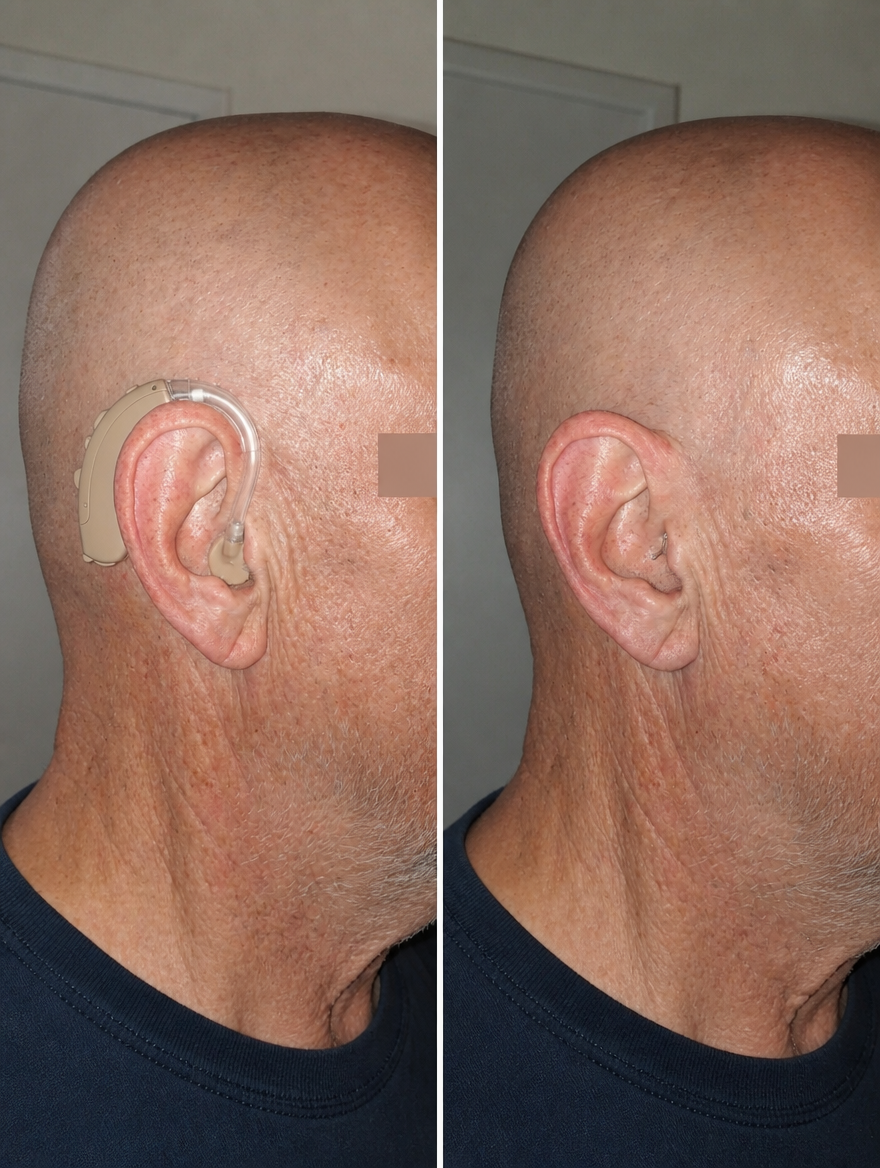
Golden Living Daily Facebook ad: “Top 5 Hearing Aids Ranked by Audiologist, See Who’s #1!”
Running for 16 days since September 16, 2026. Crush last saw it on October 2, 2026.
Run by Golden Living Daily on Facebook. Crush is not the advertiser and does not verify its claims. See this ad in Meta's Ad Library(opens in a new tab)
Want an ad like this for your product?
Crush makes new ad images for your product from this ad: your logo, your product photo, your offer.
Trials from $19.95 USD, then $79.95 USD a month. Cancel anytime.
About this ad
- Meta Ad Library ID
- 1782947403021525
- Platforms
- Facebook, Instagram, Audience Network, WhatsApp and Threads
- Relaunches
- 0
- Niche
- Clinics & Medical
Ad text
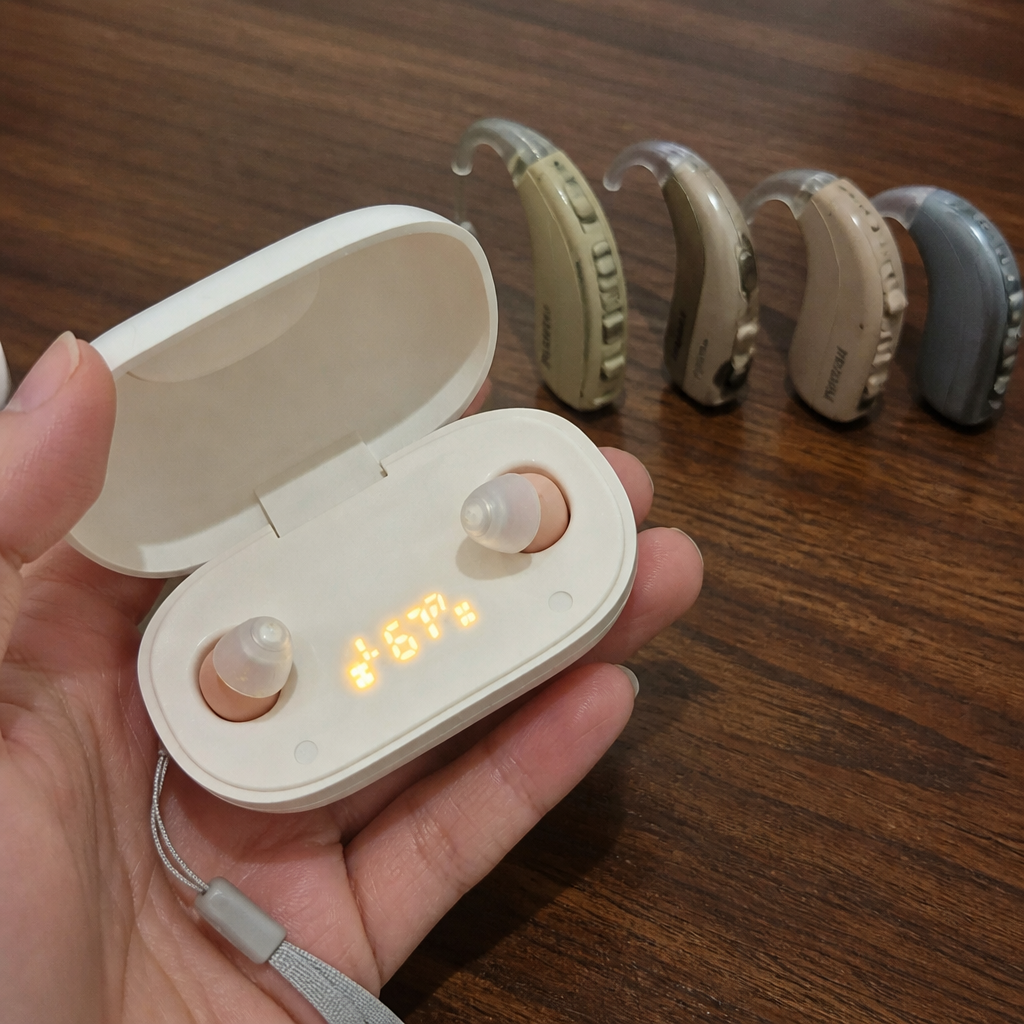
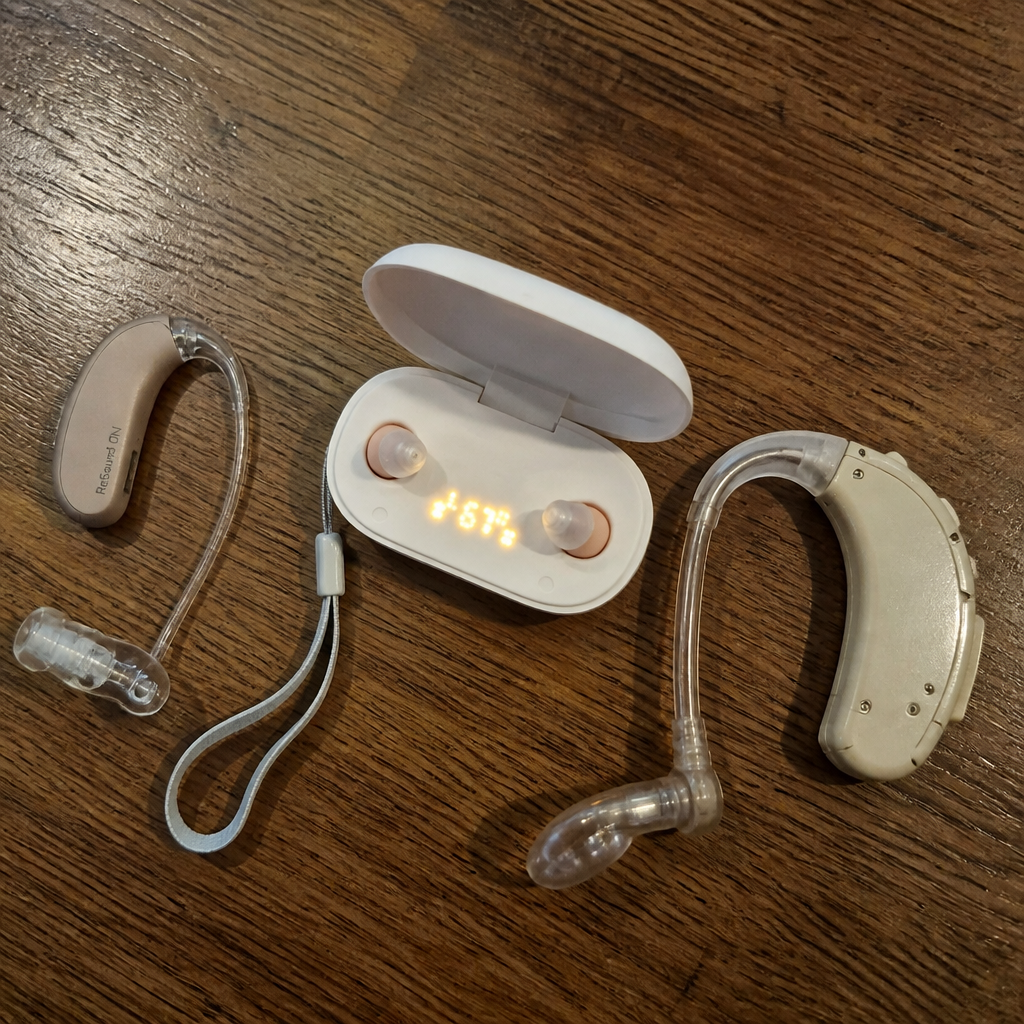
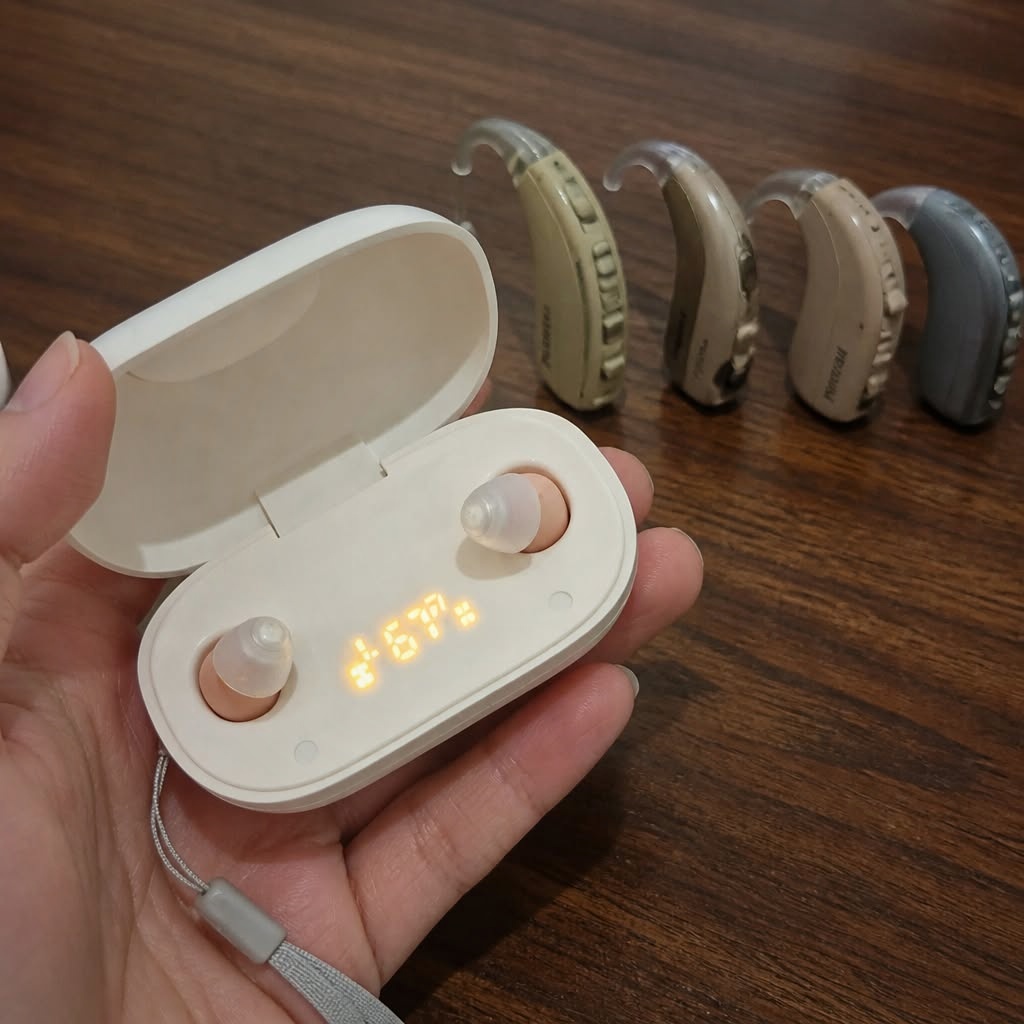
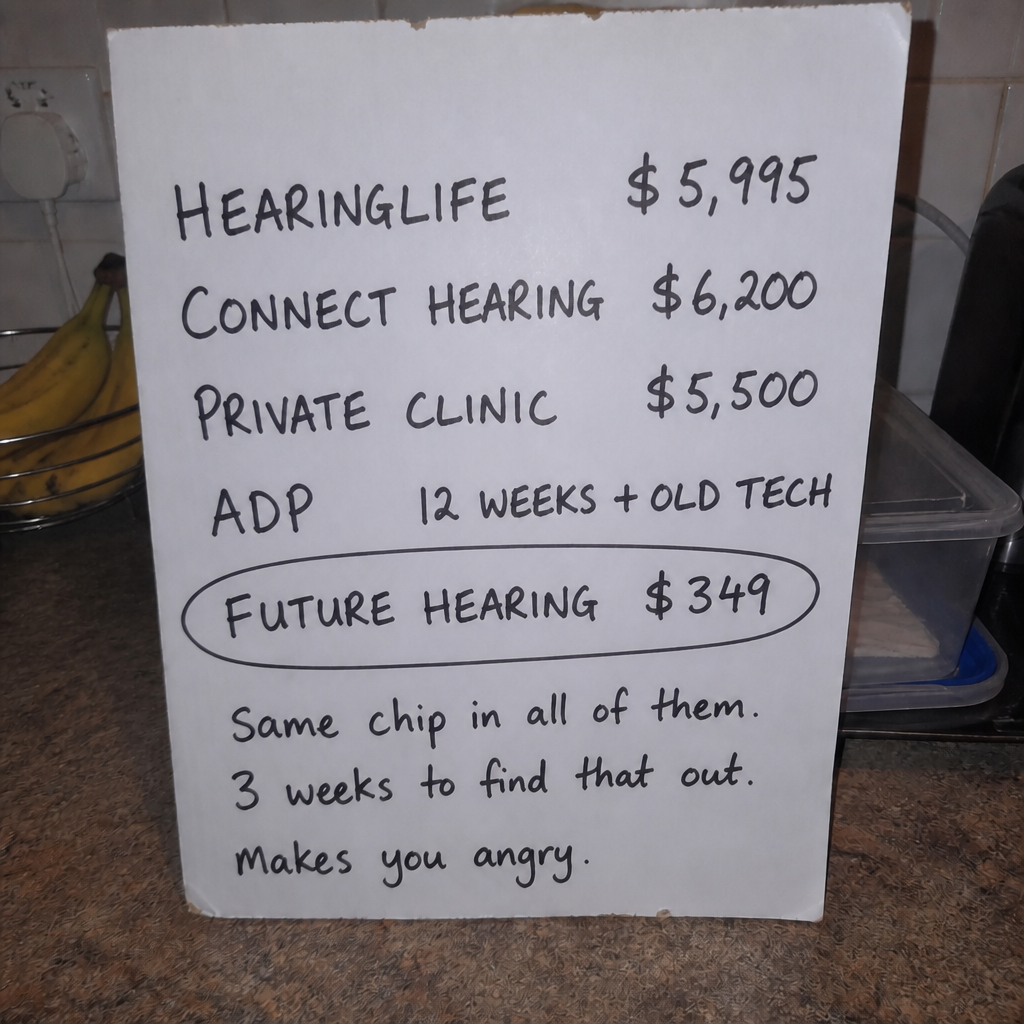
Bloom Hearing quoted me $5,500. Specsavers offered me $3,495. I spent three weeks investigating the hearing aid industry from the inside out. The markup on a hearing aid is one of the most aggressive in any consumer medical product in Australia. --- I sat at my kitchen table staring at two pieces of paper. Bloom Hearing invoice: $5,500. Specsavers quote: $3,495 for their Advance Premium pair. Five and a half thousand dollars. Or three and a half from the one that markets itself as the affordable option. I'm Jim. 73. Retired civil engineer from Newcastle, New South Wales. Forty-five years building infrastructure across this country. I know what things cost to make. I know what labour and components look like when they're priced honestly. And I know when a number on a piece of paper doesn't match the product it's supposed to represent. So I didn't accept the choice. I investigated instead. Three weeks. Every hearing aid option available in Australia. Every price point. Every technology claim. The components, the manufacturers, the supply chains, the markup structures. Everything. Here's what I found. --- **Option 1: Specsavers Audiology — $1,495 to $4,995 per pair** Familiar. Visible. The brand most Australians trust because they've bought glasses there. Their own Advance-brand hearing aids are described by independent consumer body Choice as substantially cheaper than competitors — premium models at $3,495 per pair compared to $6,000 to $8,000 or more for mainstream brands. That framing deserves examination. When the marketing says substantially cheaper than competitors and the price is still $3,495, the question worth asking is: cheaper than what, and why? I spoke to a retired independent audiologist during my research. She had left a major clinic chain specifically because she found the commission structure incompatible with genuinely independent clinical advice. She was direct about it. The clinic chains buy at volume and build the margin in at every layer — lease, staff, commission, corporate overhead. What they sell is not determined primarily by what's right for the patient's level of loss. It's determined by what the distribution model supports. Specsavers is better than some. The pricing is more transparent than most. The commission structure underneath it is identical to every other private hearing aid operation in Australia. The premium range comes off the display first. Every time. Verdict: More honest than most on price transparency. Still a markup built for the building, not the hearing aid. --- **Option 2: Bloom Hearing Specialists — $3,000 to $8,000+ per pair** Bloom operates over 200 locations across Australia. Backed by WS Audiology — a global manufacturer that produces Signia and Widex hearing aids. This is where the vertical integration I kept encountering in my research became visible. WS Audiology manufactures the devices. Bloom Hearing sells those same devices in its clinics. The manufacturer and the retailer are the same corporate entity. For the patient sitting in the chair, this creates a specific problem. The audiologist recommending the device, the company that made the device, and the company that profits from the sale are all connected through the same corporate structure. Genuinely independent clinical advice — the kind that would include mentioning a $349 alternative with the same chip inside — becomes structurally difficult to deliver from inside that arrangement. I confirmed this with the independent audiologist I'd spoken to. She said: "Australia has one of the most vertically integrated hearing care markets in the world. In most countries there's at least a nominal separation between manufacturer and retailer. Here that separation often doesn't exist. Most patients have no way of knowing this when they make the appointment." Verdict: Professional clinical staff. Advanced technology. An ownership structure that makes the $349 alternative invisible to everyone inside the building. --- **Option 3: The Hearing Services Program — Free to $3,000+ out of pocket depending on what you actually need** The HSP is the Australian Government's main subsidy scheme. For pensioners and DVA cardholders it provides fully subsidised hearing devices. In theory. In practice the fully covered devices sit on an approved schedule of technology that hasn't kept pace with current hearing science. The basic tier devices address the loss but don't perform comparably to what a current-generation 16-channel processor does in noisy real-world environments. Restaurants. Family dinners. Group conversations. To get the device the audiologist actually recommended for my level of loss I would need to pay a top-up fee. The top-up put the out-of-pocket cost at $2,800. The process itself took fourteen weeks from deciding to act to having a fitted and adjusted device. Fourteen weeks of continued managing while the paperwork moved through the system. I spoke to a former HSP audiologist during my research. She said: "The gap between fully subsidised and clinically appropriate has been widening for years and most patients don't know it exists until they're sitting in the chair." Verdict: The right answer for pensioners who qualify for the basic tier and can wait four months. For everyone else the HSP is a partial subsidy with a significant top-up cost or simply inaccessible depending on which card you hold. --- **Option 4: Online and Grey Market Imports — Avoid** The price gap in Australia is large enough that a grey market has developed. Devices imported from overseas without Therapeutic Goods Administration registration. Devices sold as hearing aids that contain no DSP chip at all. The TGA registers medical devices in Australia for a reason. A device that is not TGA-listed has not been assessed for safety and performance against Australian standards. For something worn inside the ear canal all day that matters considerably. Beyond the regulatory issue: the same problem that makes cheap online devices inadequate applies here. If the complete component cost of a proper hearing aid is $100 to $150, a device selling for $60 does not contain those components. It contains a microphone connected to a speaker. Not a hearing aid. Verdict: Regulatory risk. Quality risk. No support. No recourse. Not a legitimate option. --- **Option 5: Clear Hearing — $349 AUD** This is what three weeks of investigation led me to. A former military audiologist — twenty-six years fitting hearing aids across hospital and private practice settings — had published a comparative test of five options. Real patients. Side-by-side performance data. Technical specifications documented. Every price listed. No brand paid for its position in the results. Clear Hearing. Same Knowles Corporation components found in the Specsavers, Bloom Hearing, and independent clinic premium ranges. 16-channel digital processing — the technology that actually separates voices from background noise rather than amplifying everything indiscriminately. Rechargeable — charging case, no batteries. Completely in-ear. TGA compliant. No clinic. No commissioned sales staff. No commercial lease. No vertically integrated parent company taking a margin at every layer. Shipped direct to your door. $349 AUD. I called the audiologist whose report I'd found. She confirmed the component sourcing. She confirmed the processing specification. She confirmed that for mild to moderate hearing loss — the most common diagnosis, the type I had — the performance was comparable to clinic devices costing fifteen times as much. I asked her why more Australians didn't know about this. She said: "Because no one in the distribution chain has any incentive to tell them. The HSP sends you to approved providers. The approved providers sell clinic devices. Some of those providers are owned by the same companies that make the clinic devices. The circle is very closed and Clear Hearing sits completely outside it." I ordered that evening. Five days to my door. TGA compliant packaging. Charging case. Six ear tip sizes. Manual written in plain English. Put them in at the kitchen table on a Saturday morning. Margaret was in the yard. "Any good?" she called through the window. I heard every word. Not louder. Clearer. There is a difference and I understood it immediately because I'd spent three weeks learning exactly what multi-channel processing does. The chip separates the signal. Margaret's voice comes forward. The yard noise stays back. That's the technology. That's what $100 to $150 worth of Knowles components actually does when it isn't buried inside $5,150 worth of overhead. "Say something else." "You're a stubborn old fool and I love you." Crystal clear. If you want to read an article by a former audiologist that compares many hearing aids, check this: https://goldenlivingdaily.life/pages/golden-living-daily-we-tested-the-actual-cost-of-5-top-hearing-aids-au If you want to check the top #1, check here https://myclearhearing.com/products/clear-hearing-comfort $349 AUD. 45-day trial. Send them back if they're not right. Jim Henderson, 73 Retired Civil Engineer Newcastle, New South Wales Three weeks. Five options. One conclusion. $349. P.S. The first two weeks were an adjustment I want to document because I nearly sent them back on day four. When hearing loss has been present for months or years the brain adapts to the degraded baseline. When full signal is restored it initially feels like too much. Footsteps. The refrigerator. Margaret's voice arriving at full resolution after two years of being partially filtered. That is not device failure. That is the auditory cortex recalibrating upward. It resolves within seven to fourteen days. Give it the two weeks. What's on the other side of day four is worth every minute of it.
Where the ad sends people
goldenlivingdaily.life
Top 5 Hearing Aids Ranked by Audiologist – See Who’s #1!
Golden Living Daily
See details: goldenlivingdaily.life(opens in a new tab)