Rebecca Bennett
 Facebook ad: “Read my story so it doesn't happen to you”
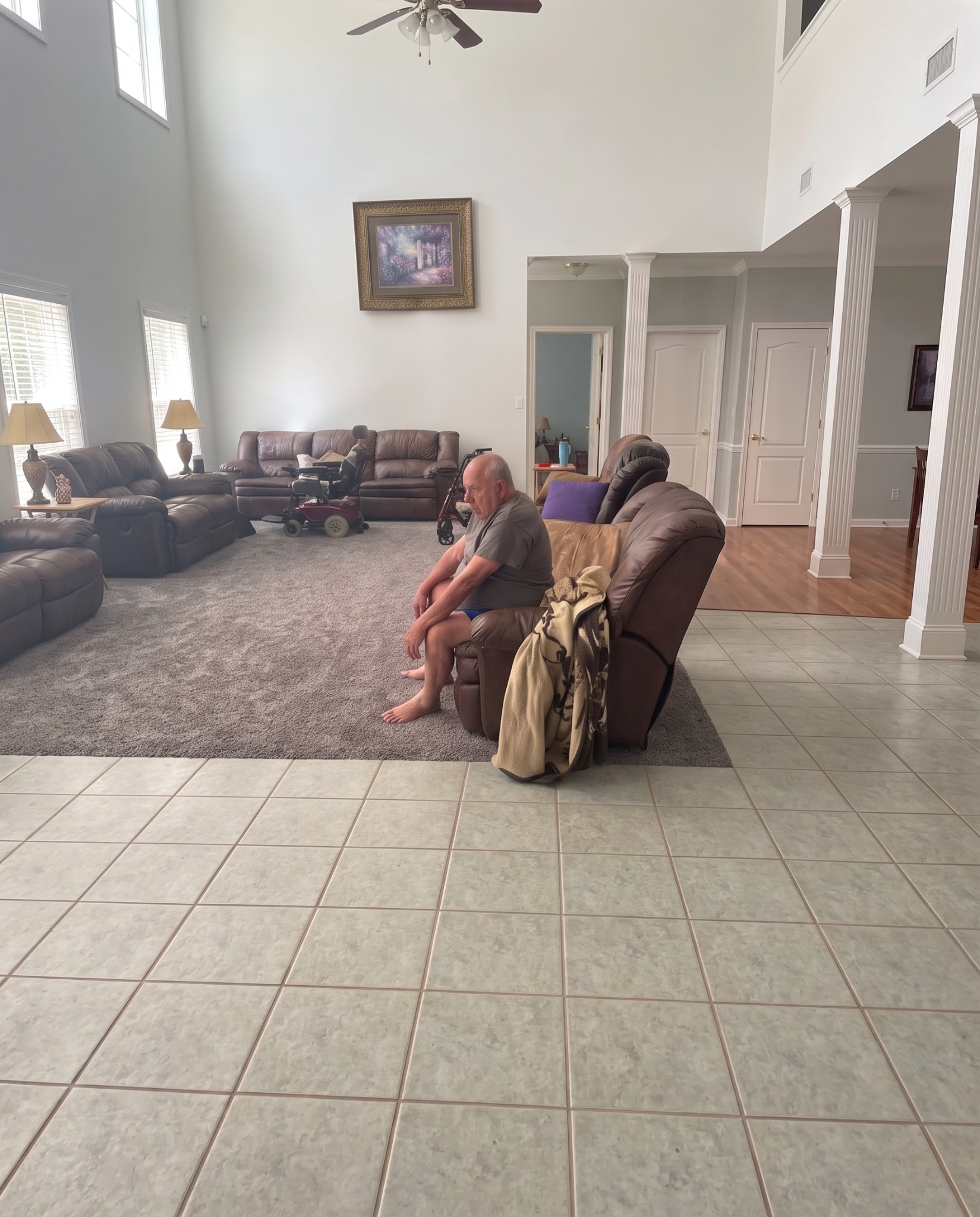
Ran for 40 days, from September 16 to October 26, 2026, the last day Crush saw it.
Run by Rebecca Bennett on Facebook. Crush is not the advertiser and does not verify its claims. See this ad in Meta's Ad Library(opens in a new tab)
Make your own version of this ad
Crush makes it, launches it in your own Meta ad account, scales the winners and pauses the losers.
About this ad
- Meta Ad Library ID
- 1785225892669405
- Platforms
- Facebook and Instagram
- Relaunches
- 0
Ad text
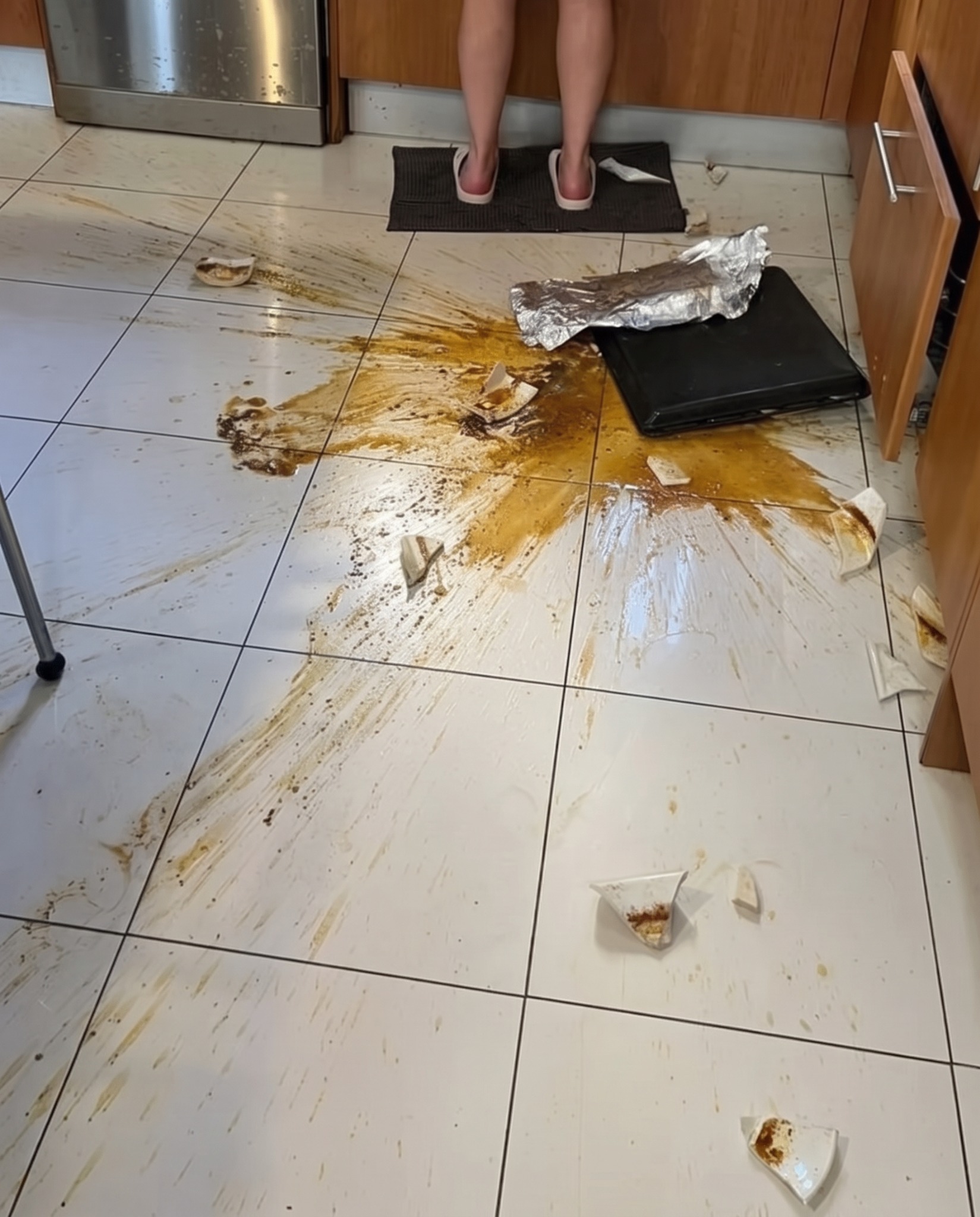
My husband dropped a hot griddle on our kitchen tile last September and walked to the couch without turning off the burner. I need to write that down because I have not been able to say it to anyone yet. Not to our daughter Melissa in Toledo. Not to our son Jason in Indianapolis. Not to Father Rademacher at St. Vincent last Wednesday morning, even though I sat in the parking lot afterwards for seventeen minutes trying to work up to it. I am 60 years old and my husband is 62 and we have been married thirty-seven years and I have never known him to walk away from a hot stove. My name is Beverly. Everybody calls me Bev. I worked the stock manager job at the Vera Bradley outlet on Jefferson Boulevard for twenty-six years and I retired the summer of 2023. My husband Wally, Wallace Kroll on the paperwork, has been at the International Truck body shop on Meyer Road for thirty-four years and he still goes in five days a week because he does not know what to do with himself if he doesn't. He is a body-shop foreman and he has hands the size of cast iron skillets and he has been the same man since I met him at Piere's in 1988. We have two kids. Jason is 36 and he is a project manager for a construction company in Indianapolis and he is married to Kayla and they have our grandson Hayes who is eight and who is going to be a lefty pitcher whether he wants to or not. Melissa is 33 and she teaches second grade in Toledo and she is married to Ryan and they have our twin granddaughters Poppy and June who turned five in April and who are the two loudest human beings I have ever loved. I am telling you all of that because the man I am about to describe is not the man any of them know. And the reason I am writing this on the internet, which I have never done in my life, is because it took me a year and a hot griddle on the kitchen tile to see what had been happening in my own house. And I do not want another wife to sit in a church parking lot in her Explorer with the heat running and not know why her husband is disappearing from his own life. It started with the buttermilk, though I did not know at the time that anything had started at all. For twenty-some years Wally had driven down to the Fort Wayne Farmers Market on Barr Street every Saturday morning for the buttermilk from the Amish stand and a pint of blueberries in season and half a pound of good bacon from the man with the mustache. He would leave at seven and be back by nine with everything laid out on the kitchen counter for the pancakes on Sunday. It was his errand. He did not want help with it. He wanted the drive, and the coffee at the Firefly on the way, and the walk through the stalls, and the excuse to be up early on his own. Sometime in the spring of last year he came home from the market on a Saturday and said, "Bev, I am going to just get the buttermilk at Kroger from now on. Saves us an hour." I said fine. I did not think anything of it. I thought, he is 61, he has earned an hour on a Saturday. I thought, Kroger buttermilk is the same buttermilk. That was the first rung. I did not know it was a rung. Around that same time I started noticing him scratching in the night. His forearms. He would kick the covers halfway off and drag his fingernails up and down his arms in his sleep. I asked him about it in the morning and he said, "Dry skin, Bev. It is winter." It was April. He got a bottle of Curél from the drugstore and put it on his nightstand and I did not ask again. The Sunday table came off him next, in July. For all the years the grandkids had been coming to breakfast on Sundays, Wally had been the one who set the table. He would come down at 6:45 in his flannel pajama pants and put the four plates out and the syrup pitcher and the little juice glasses that had belonged to his mother, and he would have the coffee going by the time I was down. That was his part. One Sunday I came into the kitchen at 7:15 and the table was bare. He was in his chair reading the paper. He looked up and said, "You're up before me now anyway, honey. Made no sense both of us doing it." I set the table myself. I told myself he had a rough week at the shop, the summer was hot, he was tired. I did not put it next to the buttermilk. I noticed his belly that same month, at Melissa's Fourth of July cookout in Toledo. Ryan had a picture of the two of them on the deck and I looked at it later on my phone and I did not recognize my husband's silhouette. His stomach was out over his belt like he was carrying something. His arms coming out of the polo were thin. He had never been a big man, six feet, one-eighty since the wedding, and now his belly had a shape I had never seen on him and his arms did not match it. In the picture his shirt was not tucked in. Wally has tucked his shirt in every day since I have known him. He wears a belt to the shed. I mentioned it in the car on the way back to Fort Wayne. He said, "I am 61, Bev. This is what 61 looks like." I let it go. Late July he started trying to fix the tired. He bought a case of 5-Hour Energy shots at the Meijer on Coldwater Road and kept them in the door pocket of his Silverado. He drank one on the way in to the shop and one at two in the afternoon. He was up to three a day by the second week of August. I bought him a bottle of One A Day Men's 50+ at Costco and he took one every morning with his coffee for a month. He came home from Menards one Saturday with a tub of powder called "Alpha Male" that was on the endcap next to the protein, and I looked at the label and told him to please not, and he took it back on Monday. He got a bottle of melatonin gummies at the CVS on Getz Road because he was not sleeping through the scratching, and they made him foggy in the morning without helping him sleep in the night, and he stopped after a week. Nothing moved. He kept going in to the shop at 6:15 and coming home at 5:45 and falling asleep in the recliner by 8. Labor Day weekend was when he stopped calling the grandkids on Saturday nights. For as long as they had been old enough to answer the phone, Wally had called Hayes on Saturday evenings around six and Poppy and June around six-fifteen to make sure they were still coming for pancakes in the morning. He would ask Hayes if he wanted the chocolate chip one or the banana one. He would ask the twins if June wanted hers with the little face or plain like Poppy's. He would tell them he was going to have the griddle hot by seven-thirty and they had better be at Papaw's house on time. The Saturday after Labor Day I set the phone down next to his recliner and said, "You calling the kids?" He said, "They know when it is, Bev. They don't need me nagging them." Melissa called at ten to see if breakfast was still on. She said, "Dad okay? He always calls the girls." I told her he was fine. He was on the couch. His right hand was under his rib cage. I had been watching him do that at night for weeks and I had told myself he had pulled something at the shop. The hand under the rib. That was what I could not stop seeing once I had noticed it. He did it watching the Colts. He did it in the passenger seat when I drove home from Melissa's. He did it standing at the kitchen counter waiting for the coffee. Not pressing hard. Just resting there, like he was holding a place. I asked him once if his stomach hurt. He said, "It's not the stomach, honey. It's higher. It's not a thing. It comes and goes." The pancakes went the second Sunday in September. He was up. The Griswold was on the front burner, the way it had been on every Sunday morning for twenty-seven years. It was his mother Marta's griddle before it was ours. His father Emil bought it in 1954 and scratched "M. Kroll" into the underside of the handle with a nail because Marta was after him about which pans were hers and which ones belonged to his mother down on Fairfield. Marta cooked on it every Sunday of her life until she passed in 1998, and it came to our kitchen the next week, and Wally has cooked pancakes on it every Sunday since. The kids were not there that morning. Hayes had a soccer thing. The twins had a birthday party. It was just the two of us. Wally poured the batter into a bowl. He turned the front burner on high because the Griswold takes a minute. He took a spoon from the drawer and stirred the batter one more time. He set the spoon down. Then he picked the whole griddle up off the burner with his bare hand and a folded dish towel, cold batter still on the counter, and he carried it four steps across the kitchen and set it down on the tile in front of the pantry and walked past me into the living room and lay down on the couch. I said his name. He did not answer. The burner was still on. The kitchen smelled like batter beginning to burn on hot iron because the griddle had been heating already. I turned the burner off. I picked the Griswold up with a hot pad. The tile underneath it has a black scorch mark in the shape of the pan that is still there. I sat down on the kitchen floor. I do not remember for how long. When I got up he was asleep on the couch and it was 9:20 in the morning. Wednesday morning I drove to St. Vincent for the 8:30 mass the way I had for thirty-some years, and I sat in the parking lot afterwards in the Explorer with the engine on for the heat and I cried for seventeen minutes by the clock on the dashboard. Father Rademacher came out the side door once during it and I turned my head toward the passenger window like I was looking for something in the glovebox. He waved. I waved back with a hand he could not see was shaking. I called Melissa from the parking lot. I told her about the griddle on the tile. I told her about the buttermilk. I told her about the rib and the belly and the arms and the scratching and the Saturday-night phone calls that had stopped. I told her about the pancakes that had not happened. She said, "Mom. You are getting him to the doctor this week. Today if you can. I will drive up Friday and we will go together." I said okay. I said I did not know how to get him there. She said, "You tell him it is that or you are calling Jason to come do it." Wally went in that Friday with Melissa and me at Dr. Rachlin's office on Randallia Drive at Parkview. She has been his primary care since 2011. It was the first appointment he had made himself in seven years. The one before that was a shingles vaccine. Dr. Rachlin came in and shook his hand and said, "Wallace. It's been a while. Let's hear it." Melissa did the talking. She had written it on a legal pad in the car. The buttermilk. The table. The griddle on the tile. She read the last two years of Wally in three minutes with her hand on his knee. Dr. Rachlin listened. She did not interrupt. When Melissa was done she asked Wally to stand up and lift his shirt. She put her hand under his right rib and pressed. Wally winced. She said, "How long has this belly been like this." Then she said something I have thought about every day since. "Wallace, I want to walk through these one at a time with you. The soreness under the right rib, that is the capsule around your liver being stretched because the liver is swollen. The liver itself does not have pain receptors, but the sac around it does. The itching on your forearms at night, that is bile acids in your skin because the drainage out of the liver is sluggish. The belly that came on without you gaining weight anywhere else, and the arms and legs thinning out, that is fat accumulating inside the organ and muscle protein being pulled to run the metabolism the liver isn't running clean anymore. The fog. Griddle. Same organ. Every one of these things points at the same organ." She wrote for bloodwork and a fibroscan the same afternoon. Twenty-one minutes total in the room. The panel came back Monday. ALT 187. AST 152. The fibroscan showed F2 fibrosis and enough steatosis that Dr. Rachlin used the word "significant" twice in one sentence. Fatty liver. Not the drinking kind. Wally has a beer with the neighbors at the fire pit on a Saturday and a Manhattan on Christmas Eve and that is it. His was the other kind. The metabolic kind. The kind you get from thirty-four years of drive-through breakfasts on the way to the shop and a Coke with lunch and one of Marta's recipes for dinner because Marta cooked in butter. Dr. Rachlin gave him a lifestyle prescription. Mediterranean diet. Forty minutes walking a day. Cut the sugar hard. Milk thistle capsules, not because she believed in them, but because she said "some patients find it comforting to take something." Follow-up panel in four months. I drove him home. He did not say a word from Randallia to Waynedale. In the driveway he sat with the seat belt on for a full minute after I turned the car off. He said, "Bev. This is what my father had." Emil Kroll worked in the foundry at International Harvester for forty-one years. He was a good father. He was a quiet man. He built the shed in our backyard the summer Jason was born because he did not know how else to say congratulations. He was diagnosed with fatty liver in 2003. He was 62. The doctor at Lutheran told him the same things Dr. Rachlin told Wally. Cut the beer. Cut the fried food. Walk. Come back. Emil did every one of those things. He was a rule follower his whole life. He gave up the Old Style he had drunk since he was 18. He gave up the fried perch at Wagner's on Fridays. He walked around Franke Park with Marta every morning for an hour, and after Marta died he walked it by himself with his hands folded behind his back. He took milk thistle capsules his sister Rose brought him in bulk from the Amish store up in Grabill. He was, as the doctors say, an ideal patient. He died at Lutheran Hospice on the last Saturday of October, 2007. He was 66. His skin was yellow. His belly was full of fluid the nurses drained with a needle every eight days. He had lost 47 pounds in the last four months. He did not know Wally's name the last week. He called him Jimmy, which was his own younger brother's name. Emil did everything they told him. And the thing had walked right through it. Wally sat in the driveway with his hand on the console between us and he said it again. "Bev. This is what my father had." I said, "You are not your father. We are going to do it different." I did not know what different was. I said it anyway. He did it, though. For four months he did it. He cut out the Coke. He cut out the drive-through. I made him salmon and broccoli and lentils and quinoa and everything else the pamphlet said, and he ate it and never once complained. He walked forty minutes every morning around the neighborhood before he left for the shop, in the dark from November on. He took a milk thistle capsule with breakfast and, after Melissa read about it online, a NAC capsule with dinner. He weighed himself every Sunday morning on the scale in the bathroom and wrote the number in a little notebook on his dresser. He was doing what Emil had done. I did not say that to him. I did not have to. In February we drove back to Randallia for the four-month retest. Dr. Rachlin came in with the panel on her laptop. His ALT had come down from 187 to 179. His AST had come down from 152 to 148. The fibroscan showed the stiffness the same or a hair worse. He asked her, "Am I doing something wrong." She said, "You are doing everything right, Wallace. This is what it looks like sometimes." He nodded. He shook her hand. He walked out. I did not go to the desk with him for the follow-up card. I stood in the exam room for a minute after he left with my hand on the paper on the table and I felt something break in my chest that I had felt exactly once before, the morning Emil died. I did not know what to do with it. I drove him home. He did not say a word. I found her the way you find anything these days. On a Tuesday afternoon in the second week of February, in the medical section on the third floor of the Allen County Public Library downtown on Wayne Street. I had gone in because I did not want to keep googling at the kitchen table with Wally in the next room. I had checked out three books. One on fatty liver disease. One on cirrhosis. One with the word "regenerative" in the title that I had grabbed because I liked the word. I was sitting at a table by the window with all three of them open. I had a legal pad. I was taking notes the way I used to take inventory at the outlet, in three columns. Symptom. Mechanism. Treatment. I was crying a little. I did not know I was crying until a woman sat down across from me and slid a Kleenex across the table. She said, "Which one of them is it, honey." I looked up. She was maybe sixty-five. She had a red raincoat and short grey hair and she was smiling like she already knew the answer. I said, "My husband." She said, "How long." I said, "About a year I have been watching it. Four months I have been watching him do everything right and get nowhere." She sat back. She looked at the book with "regenerative" in the title. She said, "I want to tell you about my Dwight." Her name was Lorraine Huffman. She had been a secretary at North Side High School for twenty-seven years and had retired in 2019. Her husband Dwight was 68 and had been a Norfolk Southern conductor for thirty-five years and had been diagnosed with fatty liver in the fall of 2023, ALT 168, F2 fibrosis. He had done what Wally had done. Diet, walking, milk thistle from Meijer, NAC capsules their daughter had ordered from Amazon. Eighteen months. Numbers climbed. She said, "Then my son-in-law's uncle down in New Braunfels, Texas, called us. He is a retired heating and cooling man. He had had the same numbers Dwight had. His son-in-law's wife had put him on something. And he told my Dwight about it on the phone and I made Dwight write it down." She reached into her purse and took out a folded piece of paper. It was a printout from Parkview lab, from January of this year. Dwight Huffman. ALT 26. AST 22. Fibroscan stiffness improved a full stage from F2 to F1. She said, "Ten weeks. He was on it ten weeks." Then she told me the name of what he had taken. She told me why it worked. She said, "Your husband's liver needs a compound called glutathione to filter everything that passes through his body. Food. Medications. Toxins. Hormones. All of it." She said, "After 40, the body produces about 10 percent less glutathione every year. Modern life, processed food, medications, environmental toxins, burns through what is left even faster. By 55 most people have lost nearly half their production capacity without knowing it." She said, "Without it, the liver keeps running but has nothing to work with. Fat backs up inside liver cells. Toxins recirculate. Enzymes climb. The damage has nowhere to go." She looked at my legal pad. She tapped the symptom column with the tip of her finger. She said, "That is why your Wally's fog. The toxins that cannot leave the body come back around into the blood. That is why his belly. That is why his thin arms. The fat has no way out of the cells and the body starts pulling protein out of the muscle to run the metabolism the liver is not running clean. That is why the itching on his forearms at night. The bile that is supposed to leave through the drainage cannot get out and it settles into the skin." I wrote it down as fast as she said it. She said, "The diet, the walking, the cutting things out. They slow down how fast you deplete what is left. It doesn't refill what's already gone. That is what your Wally has been doing for four months. That is what my Dwight did for eighteen. That is what Emil did for six years, honey. None of us was refilling anything." I had not told her Emil's name. She said the milk thistle was the second problem. "Milk thistle protects liver cells. But you cannot protect cells running on an empty tank. It sits on the surface while the depletion continues underneath. And a liver running on empty can't absorb a capsule properly. Most of the active ingredient passes through unused." She said the NAC capsule Melissa had ordered was the right compound in the wrong form. A compromised liver cannot process a capsule. Liquid reaches the bloodstream directly. Capsule sits and waits and passes through. She said the product was called Purelia. It was a liquid. Two droppers in the morning. It started with NAC. She said, "NAC is the compound hospitals inject IV when a liver is shutting down. It forces your liver to rebuild its own glutathione supply from the inside out." She said hospitals had used it for decades in the ER when someone came in with acute liver failure. This was the oral liquid version of the same mechanism. The Purelia formula paired NAC with L-Glutathione, which replenishes what has already been depleted at the same time. Then choline, which is what packages the fat inside a liver cell and hauls it out, so the belly and the thin arms and the fatigue that come from that back-up can actually start to move. Then a bitter herb blend, artichoke and dandelion, that opens the drainage pathway so what the liver processes actually leaves the body instead of recirculating. She said, "The rib ache. My Dwight's went in week four. The scratching stopped by week three. He slept a whole night through for the first time in a year." She said, "On top of, not instead of. Nothing gets quit. Your Wally keeps the walking. He keeps the Mediterranean food. This goes on top of it, and it does the part the food and the walking cannot do." She said, "Not protecting. Restoring." I drove home from the library. I did not tell Wally where I had been. I ordered a bottle that night from the phone in the kitchen while he was out in the garage. It came on the Friday. I put it on the counter next to the coffee maker. Saturday morning I put two droppers in his coffee cup and I said, "Wallace. Sit down." I told him about Lorraine. I told him about Dwight's printout. I told him about the empty tank and the capsule that does not get absorbed. I said, "You are keeping the diet. You are keeping the walking. This is on top of it. If eight weeks in nothing has changed, we throw it out and we take the refund." He looked at me for a long time. He said, "Okay, honey." He took the two droppers with his coffee that Saturday morning at 7:20. The first two weeks he felt nothing that either of us could name. The scratching was still there. The rib was still there. I watched him for it every night and I did not see any difference. The Thursday of the third week he came in from work at five and said, "I did not need my afternoon coffee today. Didn't even want it." He had been drinking a large Circle K coffee at two in the afternoon every workday for the last three years to get through. He had one on Friday out of habit and then not again for a month. The Sunday of the fourth week I woke up and Wally was still asleep and his forearms were not moving. I lay there for ten minutes to be sure. He slept through until 6:45. The Wednesday of the fifth week he was standing at the kitchen counter waiting for the coffee and I looked over and his right hand was at his side. Not under his rib. At his side. I did not say anything. I did not want to scare it away. That Saturday night he called Hayes about the pancakes. The second Sunday in March the Griswold went back on the front burner at 7:20 in the morning. Hayes was on the counter stool on the left. Poppy was in the middle. June was on the right. Wally poured the batter with his mother's ladle and the first cake went on the iron and it hissed the way it has hissed on Sunday mornings for twenty-seven years. He flipped it. He plated it. He handed it to Hayes and Hayes cut into it and looked up at him and said, "Papaw, you back?" Wally said, "Yeah, buddy. I'm back." I stood in the doorway with a dish towel over my mouth. Not the church parking lot cry. The other one. At week six Dr. Rachlin called him at the shop. He put her on speaker on his desk. She said, "Wallace. Your ALT came back at 79. I want to run it again to make sure the lab did not make a mistake. Whatever you're doing, keep doing it while I run it." She ran it again the next day. It came back at 78. At week ten we drove back to Randallia. She came in with the panel and she read the numbers to him twice. "ALT 28. AST 26. That is normal range, Wallace. Both of them. Whatever you're doing, keep doing it." The fibroscan the same afternoon showed the stiffness had dropped a full stage. F2 to F1. She said, "I would like to know what you're doing." Wally told her. She wrote the name down on her prescription pad and put the paper in the pocket of her white coat. Since then his belt is on the third notch, one over from where it was in February. His arms have shape to them again. He tucked his shirt in at Easter for the first time in a year and Jason noticed and did not say anything, which is how Jason says things. Since March I have put Purelia into three other households in Fort Wayne. My friend Judy Rockwell from the outlet. Her husband Kenny had been "borderline" at the doctor for three years, monitored, never lifted. Twelve weeks on it, ALT 92 down to 34. He goes bowling on Tuesday nights again and Judy told me on the phone last week she has her husband back. Our next-door neighbor John Steury, retired IPFW facilities man, 65. He had never had his enzymes checked because his father died at 89 of a hip fracture and John figured his family did not have liver problems. He looked at Wally across the fire pit in April and asked what had changed. Ten weeks in his belt fits different and Marlene told me over the fence that he slept through a whole month. And my sister-in-law Nancy up in South Bend. Her husband Terry, 66, retired teacher, dx last fall, F2 fibrosis, complied hard, nothing moving. He is week five as I am writing this. His color is coming back. His energy is coming back. Nancy called me last night crying. I told all three of them what Lorraine told me. On top of, not instead of. Nothing gets quit. Purelia has a sixty-day money-back guarantee tied to labs. That is what got my card out of my wallet in front of the phone that night. If Wally's numbers had not moved by his next panel, they refund the whole thing, no restocking, no questions asked. The guarantee is sixty days. That is the deal. A company willing to bet on its own product against a Parkview lab printout is a company I will bet on back. The last thing Lorraine said to me at that library table was this. She said, "Beverly. I do not know you. But I am going to tell you what the man in New Braunfels told my Dwight. Do not sit on this. Every week you sit on it is a week the tank is not being refilled and a week your father-in-law had that he did not know what to do with." I did not sit on it. I ordered it that night. I am asking you to do the same thing. There is a man reading this right now with an ache under his right rib and a belly he did not earn and forearms he has been scratching in his sleep for a year, and there is a wife next to him or in the next room who has been watching it and telling herself it is age or the shop or the weather. I want you to picture your own kitchen. Your own Sunday morning. Whichever thing in your house he stopped doing that used to be his. Whichever pan is sitting cold on your stove that used to be hot at 7:20. Ten weeks from now is Easter or Mother's Day or the second Sunday of some month you do not know yet, and the choice you have this week is whether that thing is back on the stove or it isn't. Do not wait for the griddle on the tile. 👉 https://try.officialpurelia.com/liver-aj-rb I have to go. Wally is starting the coffee. P.S. The sixty-day guarantee is what tipped me over. I am a woman who ran outlet inventory numbers for twenty-six years. If a bottle of liquid can move a lab number in ten weeks, that is a fair fight, and if it does not, they refund the money. A company willing to bet on its own product against a Parkview lab printout is a company that has done the work. P.P.S. Melissa and Jason have a rule now. Anybody in this family over 45 is on it. Kayla put her dad on it last month. He is 68 and has been "borderline" for four years. Ryan's mother, who buried Ryan's father from cirrhosis in 2016, cried when Melissa handed her the first bottle. She said, "Melissa. This is what your father-in-law needed." P.P.P.S. To the woman reading this at the kitchen table at 11 at night with your husband asleep on the couch and your googling in three tabs and your notebook in your lap. Do not wait until Sunday. Do not wait until the numbers get worse. Get the bloodwork. Get the fibroscan. Get the bottle. And do the thing my mother-in-law did not know she could have done for Emil. 👉 https://try.officialpurelia.com/liver-aj-rb
Where the ad sends people
try.officialpurelia.com
Read my story so it doesn't happen to you
Purelia Liver Restore is a four-compound liquid formula built for people whose liver enzymes are climbing and whose doctor has nothing to offer except “cut back and come back in six months.”It delivers NAC, L-Glutathione, Choline, Milk Thistle, Dandelion, and Artichoke at clinical dose - in a li...
Shop now: try.officialpurelia.com(opens in a new tab)