Melissa Taylor
 Facebook ad: “The Sheets Good Morning America Says Sell Out Extremely Fast”
Ran for 13 days, from November 4 to November 17, 2026, the last day Crush saw it.
Run by Melissa Taylor on Facebook. Crush is not the advertiser and does not verify its claims. See this ad in Meta's Ad Library(opens in a new tab)
Make your own version of this ad
Crush makes it, launches it in your own Meta ad account, scales the winners and pauses the losers.
About this ad
- Meta Ad Library ID
- 1790651088831532
- Platforms
- Facebook and Instagram
- Relaunches
- 2
Ad text
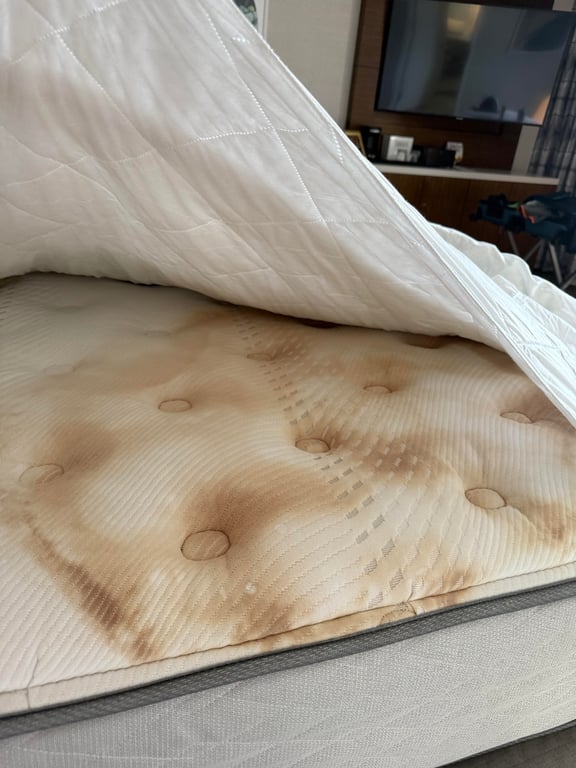
When NASA sent twenty-four men to the moon on the Apollo missions, there wasn't a single drop of chlorine on the spacecraft. They kept the astronauts' drinking water sterile with silver. Nobody had to debate it. Nobody had to run a commercial for it. If a bacteria colony bloomed inside a closed water tank two hundred thousand miles from Earth, the crew would die. So NASA wired a tiny silver-ion generator into the water line, and not one astronaut ever got sick. Here's what they knew in 1969 that we've completely forgotten. I didn't learn that from a documentary. I learned it at my own kitchen table from my father—a man who spent thirty-three years as an aerospace fluid systems engineer in Huntsville, Alabama, and never once thought to look at what was pressed against his own face for eight hours every night. By the time he told me about the Apollo water tanks, we were forty-eight hours away from locking him inside a $6,400-a-month memory care facility for a brain condition he didn't actually have. I'm 42. My dad is 74. Walter. If you knew my dad three years ago, you'd know why watching him fade felt like watching a bridge collapse. For three decades he designed life-support filtration loops. He did the Saturday crossword in blue ink without crossing a letter out. At 70, he pulled the 289 V8 engine out of a 1967 Mustang in our garage using a chain hoist he welded himself, labeled every bolt in muffin tins, and rebuilt the transmission on a sheet of plywood. He has never once in my life used the word "tired" about himself. Remember the Mustang. About twenty months ago, he started disappearing. Slowly, the way it always starts when families explain it away. First, his nights broke into pieces. He'd go to bed at 10, wake up drenched at 1:30 AM, wake up again at 3 AM, and by 4 AM my mom, Evelyn, would find him standing in the dark kitchen staring into the open refrigerator like he couldn't remember what food was for. By 2 PM he was passing out in his recliner with his reading glasses sliding down his nose. Then came the smell in their bedroom. I want to be careful here because my dad is a proud, immaculate man who showers every morning at six. But his side of the bed developed this sharp, sour, metallic odor. Like wet pennies. Like a handful of old copper change left in a damp basement. My mom washed their sheets every single Sunday in hot water with the expensive detergent, and by Tuesday morning the smell was right back, along with a stubborn yellow-grey halo on his white pillowcase where his cheek rested. In sixteen months, my dad lost twenty-one pounds he didn't have to lose. His hands got a tremor so bad he couldn't hold a soldering iron, then couldn't hold a coffee mug without using both palms. The '67 Mustang sat under a canvas tarp in the garage with the hood propped open, collecting dust. Then the fog rolled in. He started repeating the same story three times during Sunday dinner. He'd stop in the middle of a sentence, snap his fingers twice, and stare at the floor waiting for a word that never came. In April, my seven-year-old son Leo asked my dad to play chess—something they'd done every Sunday since Leo was five. My dad sat across from him for four minutes holding a white knight in his hand, looking at the board like he'd never seen one before. On the drive home, Leo looked at me in the rearview mirror and said, "Mom, why did Grandpa's eyes go empty?" I had to pull into a church parking lot and cry until my ribs hurt. We did everything a terrified family is supposed to do. Four doctors in seven months. His primary care doctor ran a full metabolic panel, CBC, thyroid, B12, vitamin D, testosterone, cortisol. Every single line came back normal. He looked across his desk at a man who looked like a ghost and actually said the words, "Walter, your labs are remarkably healthy for seventy-four. Brains just slow down." Doctor two was a sleep specialist. Overnight lab with twenty wires glued to his scalp. No severe apnea. No restless legs. He handed us a prescription for trazodone, which left Dad hungover until noon and still had him pacing the hallway at 3 AM. Doctor three was an endocrinologist who shrugged and suggested melatonin and magnesium. Doctor four was a neurologist. We waitedfour months for the appointment. They did a brain MRI and a three-hour cognitive battery. When the report came back, it had a sentence that knocked the air out of my lungs: "Cognitive decline consistent with an early neurodegenerative process. Recommend monitoring and long-term care planning." We all knew what "long-term care planning" meant. I kept every receipt in a manila folder in my desk. $420 in specialist copays. $950 for the cognitive workup. $1,480 out-of-pocket for the MRI. $260 on Ambien, trazodone, and sleep supplements. And because my brother read an article about sleep quality and aging brains, we pooled our money and bought my parents a $2,100 cooling hybrid mattress. We replaced the $2,100 mattress. And my mother put her favorite ten-year-old, 800-thread-count Egyptian cotton sheets right back on top of it. Remember that, too. Nothing changed. He kept slipping. Then came October 18th. 2:14 in the morning. My phone rang. It was my mom, and she was crying so hard she couldn't get a full breath. "Claire, please come. He's in the driveway and I can't get him inside." I drove the four miles to their house in my pajamas and coat. When my headlights swept across their driveway, I saw my father standing in thirty-eight-degree rain in his flannel pajama pants and bare feet, holding a half-inch crescent wrench in front of my mom's empty carport. He was looking for my 1998 Honda Civic. The car I drove to high school. The car we sold twenty-two years ago. "Claire's got first-period calculus," he told me, his teeth chattering, rain running down his grey face. "The radiator hose is weeping. I can't let her take the highway till I clamp it." My dad—the smartest man I have ever known—was freezing in the dark trying to fix a car from 1998 so his sixteen-year-old daughter would be safe. The next day, my brother and I toured a locked memory care facility off Highway 72. It smelled like lemon bleach and boiled cabbage. The director smiled and told us it was $6,400 a month, plus a $4,500 community deposit, and that Dad could bring his favorite recliner "so it feels like his own den." I sat in my car afterward with the deposit agreement in my lap and sobbed until I threw up in the bushes. That night, my husband Brian looked at the unsigned deposit check on our kitchen island and said the sentence that saved my father's life. "Before we cash out his retirement and put him behind a keypad, take them to the coast for five days. Give your mom one last good trip while he still knows who she is." I booked two connecting rooms at the Ritz-Carlton on Amelia Island. Put the whole thing on my credit card. My mom protested that they couldn't travel "with Walter the way he is," so I lied and told her the rooms were non-refundable. I left the connecting door cracked open that first night so I'd hear him when he got up at 2 AM to wander. At 3:30 AM, I woke up to silence. I crept into their room. My dad was dead asleep on his back, breathing slow, deep, and silent. He slept nine hours straight. He hadn't slept five consecutive hours in nearly two years. Morning two, he woke up at 7:30, showered without Mom reminding him, and ordered three scrambled eggs, bacon, sourdough toast, and black coffee. He didn't drop his fork once. By day three, I was sitting at the breakfast table watching a miracle I was too scared to name. Our waiter mentioned he was taking an engineering prerequisite at the community college, and my father spent twenty-five minutes drawing a diagram on a cocktail napkin explaining how pressure-fed fuel tanks work in zero gravity. Every math equation was right. Every term was sharp. My mother sat across from him with her hand over her mouth, tears running down her cheeks, terrified to blink. By day four, he walked two miles down the beach with Mom, holding her hand. The gray, sunken look under his eyes had lifted. His palms were warm and dry. He looked at the ocean and said, "Evie, I feel like somebody unplugged a vacuum from my head." We all thought it was the ocean air. The sunshine. Getting away from the stress of the house. We drove home to Huntsville on Saturday afternoon. That night, Dad climbed back into his own bed, on his $2,100 mattress, wrapped in those freshly washed ten-year-old Egyptian cotton sheets. Sunday night he was up twice, drenched in sweat. Monday morning at 3:15 AM—less than forty-eight hours after getting home—my mom called me. Her voice was completely dead. "He's sitting on the bottom step with his work shoes on, Claire. He just asked me when his father is coming home from the foundry. And the bedroom smells like pennies again. Everything came back." I hung up the phone, sat in my dark kitchen at 3:20 in the morning, and something clicked together in my head so loudly I actually stood up. "It's the bed." Not his brain. Neurodegenerative diseases do not vanish for five days in Florida and come roaring back in forty-eight hours in Alabama. It was something in that bedroom. The next morning I tore their room apart like a forensic investigator. Carbon monoxide detector: zero. Mold test in the vents: negative. New mattress: six months old. Medications: unchanged. Then I pulled up my phone and scrolled through the photos I'd taken on the trip. On the morning of day four in Amelia Island, I'd snapped a photo of my dad still asleep at 8:15 AM because my brother hadn't believed me when I texted him that Dad was sleeping nine hours. I pinched the screen and zoomed in on the corner of the white pillowcase behind his head, where a small woven fabric tag was sticking out of the seam. Five words were stitched in silver-grey thread: "Antimicrobial Silver-Ion Woven Linen." I called the Ritz-Carlton that afternoon. I got transferred from the front desk to housekeeping, and finally to a woman named Brenda who managed their linen operations. I told her my 74-year-old father had slept through the night in her hotel for the first time in two years and collapsed forty-eight hours after coming home, and I needed to know what was on their beds. Brenda didn't laugh at me. Not for a second. "All of our guest rooms use commercial silver-infused antimicrobial bedding," she said. "With the number of guests we turn over, standard cotton sheets become a bacterial hazard within hours. We use fabric with pure silver woven into the thread so bacteria die on contact. And honey—you'd be amazed how many families call us asking this exact question a week after they check out." That Sunday, I went to my parents' house for lunch and told my dad what Brenda had said. He was having a foggy afternoon, staring quietly at his soup spoon. Until I said the words "silver ions killing bacteria." My father's head snapped up. And for the next forty minutes, the man who couldn't remember my high school car was gone, and the Huntsville aerospace engineer was sitting at the head of the table. "One hundred parts per billion," my dad said, his voice ringing clear as a bell. "That's all it took on Apollo. When we were designing the command module water systems in the sixties, the medical guys wanted chlorine. We told them chlorine would corrode the stainless steel bladders and make the water taste like a swimming pool. So we went back to silver." He leaned forward, both hands steady on the table, his eyes bright. "People think silver is some folk tale because pioneers dropped a silver dollar in the milk pail or the water barrel crossing the plains. It wasn't folklore, Claire. Silver ions carry a positive charge that shreds a bacterium's cell wall on contact and chokes its respiration before it can divide once. Every hospital burn unit in the country wraps open wounds in silver. Every newborn baby in America used to get two drops of silver nitrate in their eyes five minutes after birth." Then he stopped. He looked down the hallway toward his bedroom door, and his face went pale. "We engineered silver into spacecraft water lines," he said quietly. "We put it in hospital ICUs. And then at home we wrap ourselves in porous cotton for a third of our lives and never once ask what's breeding in it." I walked into his bedroom, pulled the pillowcase off his pillow—washed three days earlier—and held it up to the bedroom window in the afternoon sunlight. In the dim bedroom, it looked white. Against the daylight, the six-inch strip where my father's nose and mouth rested every night was a dingy, translucent yellow-grey. I put it to my nose. Sour, metallic wet pennies. Go take your own pillowcase to a window in the daylight tomorrow. I'll wait. That night I stayed up until 3:30 AM reading microbiology studies on the NIH database, and what I found made me furious at every doctor who had cashed our copay checks. Here is the plain-English science nobody tells you: Cotton fibers are microscopic hollow tubes. Every single night, your body sheds roughly 500 million dead skin cells and sweats up to a cup of moisture and sebum directly into your sheets. All of that organic matter soaks deep inside the hollow core of the cotton tube, where bacteria and dust mites move in and feast on it. When you wash your sheets on Sunday—even in hot water—you are only washing the outside of the tube. The inside of the fiber stays packed with bacterial biofilm and mite waste. Published university testing shows that within days of washing, a standard cotton pillowcase harbors up to 17,000 times more bacteria than a toilet seat. And the higher the thread count—like my mother's prized 800-thread-count Egyptian cotton—the tighter the weave traps the moisture and bacteria inside. Then two devastating things happen for eight straight hours, two inches from your nose and mouth: First, your immune system detects that massive bacterial load pressed against your skin and airways and launches an all-night inflammatory war. Histamine floods your nasal passages, your body temperature spikes into drenching night sweats trying to fight the exposure, and your nervous system stays locked in low-grade combat mode. You aren't resting. You're fighting. Second—and this is the part that almost cost my father his freedom—as those bacterial colonies digest your sweat and oils, they excrete toxic waste compounds called biogenic amines: cadaverine, putrescine, and histamine. Those amines are literally the chemical compounds of decay. That is the sour, "wet pennies" smell on the pillowcase. And when you breathe those compounds in all night, they actively block your brain from entering deep slow-wave sleep. Deep slow-wave sleep is when the brain's glymphatic system switches on and flushes out metabolic waste proteins. If you starve a 74-year-old brain of deep slow-wave sleep every single night for twenty months, the waste piles up until the person can't find words, can't remember dates, and wanders into the driveway at 2 AM. Clinicians even have a name for it: pseudodementia. It looks like dementia on every test. Except the brain isn't dying. It's suffocating in a toxic bed. That's why the Ritz-Carlton gave us my father back in seventy-two hours. Five nights on silver-infused fabric gave his brain a ceasefire so it could finally clean house. Then he came home to ten-year-old cotton, and within forty-eight hours he was being poisoned all over again. I spent the next two hours searching for how regular families could buy the exact same silver-woven technology luxury hotels and hospital burn units use, without paying $700 a set to a commercial hospitality supplier. Every medical forum and independent review pointed to the exact same name: Miracle Sheets. They weave pure, natural silver directly into the fibers—not a cheap chemical spray coating that washes out in three loads, which is the scam all the Amazon knockoffs run. Because the silver is permanently part of the thread itself, it prevents up to 99.7% of bacteria growth on contact, wash after wash. And because it's engineered to be self-cooling and temperature-regulating, it doesn't trap soggy heat and sweat the way heavy cotton does—in fact, it stays fresh 3x longer, meaning 3x less laundry. Over 24,078 people had left five-star reviews telling stories that read just like ours. A full set was on sale for $119 (normally $214), backed by a 100-night money-back guarantee. I ordered two sets right then at 4 AM—one for my parents, one for my own bed. When they arrived Thursday, I didn't tell my dad. I know how engineers think; if I told him, he'd analyze every hour and blame placebo. While my mom took him to get his hair cut, I went into their bedroom and stripped that bed like a crime scene. The ten-year-old Egyptian cotton sheets went straight into a black contractor bag and into the outside dumpster. I made the bed with the Miracle Sheets and left. That night, Mom called me at 9 PM. "Walter just got in bed and asked why the sheets feel so cool and smooth. What do I tell him?" "Tell him they were on sale," I said. "And get out your yellow pad." My mom tracked every single night on the nightstand pad. I still have the pages: Night 1: He slept 5 hours and 45 minutes straight. Woke up once at 3:30 AM to use the bathroom, walked straight back to bed, and slept until 7. The sheets were bone dry. Night 3: 6 hours and 52 minutes. When Mom walked into the bedroom with her coffee, she stopped in the doorway. The sour wet-pennies smell was completely gone. Night 6: 7 hours and 40 minutes. He got up before my mother, made a full pot of coffee, and was sitting at the kitchen table doing the Thursday crossword. In ink. Week two, I drove over on Sunday afternoon with Leo. The garage door was open, and music was playing on the shop radio. My dad was standing under the hood of the 1967 Mustang with a torque wrench in his steady right hand, whistling. He looked up, wiped his hands on a shop towel, and grinned at my son. "Get the board out, Leo. You owe me a rematch from April." He beat my seven-year-old in fourteen moves, and then taught him how to castle. I stood at the kitchen sink with my mom and we both cried into the dish towels so he wouldn't see us. Then, in week three, we had the scare that proved to me beyond a shadow of a doubt that this was real science. On a Wednesday morning, Mom called me in a panic. "Claire, he was up at 2 AM sweating again, and he couldn't remember where he put his glasses." My stomach dropped to the floor. I drove straight over and checked the laundry room. My mother, out of fifty years of habit, had washed the sheets the day before with a capful of liquid Downy fabric softener and two dryer sheets. Fabric softener works by coating fibers in a waxy chemical film—which seals off the silver threads so they can't make contact with bacteria. I stripped the bed and ran the Miracle Sheets through two hot washes with plain detergent and white vinegar to strip the wax off, dried them with zero dryer sheets, and put them back on the bed. That night, my father slept 7 hours and 51 minutes. Dry. Clear-headed. That one mistake was the ultimate proof. If his recovery had been coincidence or placebo, a capful of fabric softener wouldn't have switched his symptoms back on—and washing the coating off wouldn't have switched his clarity right back on twenty-four hours later. It was a physical mechanism. At his neurology follow-up six weeks later, the doctor administered the exact same cognitive recall test my dad had failed in the spring. My dad aced every section. The neurologist stared at his screen, looked at my father, and said, "I've been doing this twenty-two years and I don't see scores reverse like this. What on earth changed?" "We took the ten-year-old cotton off his bed and put him on silver-infused sheets," I said. He didn't laugh. When my dad spent five minutes explaining the Apollo silver-ion water system and biogenic amines to him, the doctor actually typed "Miracle Sheets — antimicrobial silver bedding" into the clinical notes and told us he was going to start asking every memory patient about their sleep environment. We tore up the $6,400-a-month memory care deposit check that afternoon. Since then, I've turned into an evangelist. On my own bed, the chronic morning sinus headaches I'd blamed on Alabama pollen for a decade disappeared in five days, and my husband Brian's chainsaw snoring dropped by at least seventy percent because his nasal passages aren't swelling shut all night anymore. I bought a set for my sister's fifteen-year-old son, who had angry red breakouts all along his jawline and cheeks that $400 of dermatologist creams hadn't touched. His skin cleared up in three weeks once he stopped pressing his face into a bacteria-loaded pillowcase for nine hours a night. And my mom? She turns 72 next month and her friends at church keep asking what expensive cream she's using because the dry, crepey irritation on her cheeks is gone and she looks ten years younger. Here is the math that still keeps me awake at night: We spent over $4,600 on doctors, MRIs, prescriptions, and a $2,100 mattress that did nothing. We came within forty-eight hours of signing away $6,400 every single month—$76,800 a year—to lock my brilliant father inside a facility. The fix was $119. If someone you love is starting to fade, losing words, or wandering the house at 3 AM while their bloodwork comes back "remarkably healthy"... If their bedroom has that sour, metallic wet-pennies smell no amount of Sunday washing removes... If you wake up drenched in sweat, stuffed up, coughing, or exhausted after eight hours in bed... If your partner snores like a freight train or your teenager's skin won't clear up... What if it isn't their brain? What if it isn't "just getting older"? What if it's the eight hours they spend every night marinating in cotton fibers that a washing machine can't clean inside? Miracle Sheets is running a sale right now where a set is $119 (down from $214), and they give you a full 100-night money-back guarantee. Wash them with regular detergent (no fabric softener!), put them on the bed, and sleep on them for over three months. If they don't transform how you or the person you love sleeps, breathes, and wakes up, send them back for every penny. With 24,078+ five-star reviews and what I witnessed in my own parents' house, I can promise you that you won't be sending them back. Spend $119 before you spend $2,100 on a mattress. Spend $119 before you sign a $6,400-a-month check. Stop treating the symptoms. Eliminate the source: https://lnkto.to/huzcbq57mw P.S. — My mom wanted me to add the part about how much less work these are. Because the silver prevents up to 99.7% of bacteria growth and regulates temperature so nobody is sweating through the bed, the sheets stay fresh 3x longer—which means 3x less laundry for her. Plus, regular cotton sucks the natural moisture and nighttime creams right off your face while you sleep; Miracle Sheets don't, which is why Mom's skin looks better at 71 than it did at 60. P.P.S. — Do the daylight test tomorrow morning. Pull the pillowcase off your bed—even if you washed it two days ago—and hold it up to a bright window. Look for that faint yellow-grey shadow where your face goes, and smell the fabric. That wet-pennies odor is bacterial waste. Five nights on Miracle Sheets and it was gone from my parents' bedroom forever. P.P.P.S. — Huge warning: do NOT buy the cheap "silver sheets" on Amazon. After our family's story spread through our church, my uncle tried to save thirty bucks with an Amazon knockoff and got zero results. Those fakes just spray a chemical silver coating onto cheap fabric, and it washes completely down the drain in three or four laundry loads. Real Miracle Sheets have pure silver permanently woven into the fibers so it never washes out. Get the authentic ones with the $119 discount right here: https://lnkto.to/huzcbq57mw P.P.P.P.S. — Dad, I know you're going to see this when Mom shows you her iPad. I'm sorry for telling the internet about the Honda Civic in the rain. But the '67 Mustang sounded pretty damn good pulling out of the garage last Sunday, and Leo says he's taking your queen this weekend. I love you.
Where the ad sends people
thegrannyblog.com
The Sheets Good Morning America Says Sell Out Extremely Fast
Click Here To Get 46% OFF Miracle Sheets Today
Learn more: thegrannyblog.com(opens in a new tab)