Age Spot Reset
Age Spot Reset Facebook ad: “Read If You’re Tired Of Age Spots”
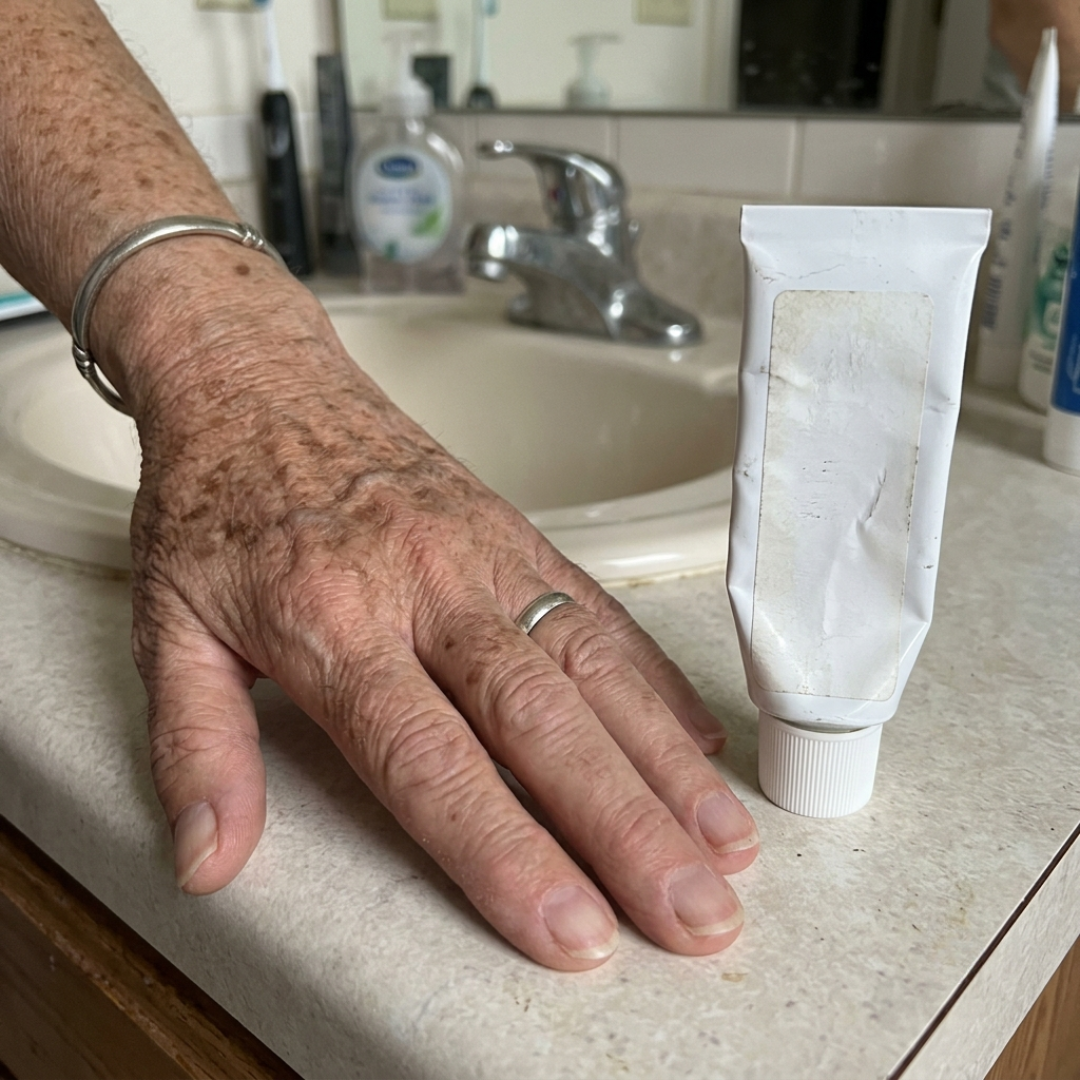
Ran for 16 days, from July 3 to July 19, 2026, the last day Crush saw it.
Run by Age Spot Reset on Facebook. Crush is not the advertiser and does not verify its claims. See this ad in Meta's Ad Library(opens in a new tab)
Want an ad like this for your product?
Crush makes new ad images for your product from this ad: your logo, your product photo, your offer.
Trials from $19.95 USD, then $79.95 USD a month. Cancel anytime.
About this ad
- Meta Ad Library ID
- 1805289733793877
- Platforms
- Facebook, Instagram, Audience Network, Messenger and Threads
- Relaunches
- 0
Ad text
Visible sun damage has four stages. The first two are easy to ignore. The third is when women start hiding. The fourth is when they start believing laser is the only option left. Most dark spot creams are made for stage one. That is the part nobody told me. I spent 19 years working around cosmetic dermatology. Not as a doctor. I want to be very clear about that. But I sat in enough consultation rooms, prepared enough patient charts, watched enough women pull down their sleeves, and listened to enough conversations to know the pattern by heart. A woman comes in. Usually late 60s. Sometimes early 70s. She holds out her hands like she is apologizing for them. She says some version of the same thing: “My face is fine. It’s my hands.” Or: “I don’t wear short sleeves anymore.” Or: “I hate how my chest looks in the sun.” And almost every time, the answer she gets sounds harmless. “Use Vitamin C.” “Try retinol.” “Wear SPF.” “Use a brightening cream.” “Moisturize daily.” “Give it time.” And if she comes back months later with the same brown spots, the conversation changes. “Some sun damage is stubborn.” “At your age, this is normal.” “Laser may be your best option.” I heard that for years. And for years, I believed it. Until it happened to me. I was 69 when I realized my hands had started looking older than the rest of me. Not a little older. A lot older. The backs of my hands had those brown spots I used to notice on other women. My wrists looked uneven. My forearms had tiny speckled patches that got darker every summer. And my chest had that mottled, sun-stained look near the neckline that made every scoop-neck shirt feel like a mistake. I did what everyone does. I bought the creams. Vitamin C serum. Retinol hand cream. Brightening body lotion. Dark spot corrector. Niacinamide cream. SPF hand lotion. The expensive department store jar. The one my friend said “worked wonders.” The one I bought at midnight because the reviews made me hopeful. Every single one gave me the same result. Soft skin. Same spots. That sentence still makes me angry. Because that is the trap. A cream can make your skin feel better and still do almost nothing for the way it looks. Your hands feel softer. Your chest feels less dry. Your arms feel smoother. So you think it is working. You think maybe you just need another week. Another jar. A stronger formula. A more expensive version. Then the tube is empty. And the same dark spots are still there. The same uneven patches. The same skin you keep trying to cover. I started blaming myself. Maybe I waited too long. Maybe I was too old. Maybe I should have used sunscreen better. Maybe I should have started Vitamin C ten years ago. Maybe this was just what happened after 65. Then one afternoon, I caught myself doing something that made me stop. My daughter had sent me a photo from my granddaughter’s birthday. It should have been a photo I loved. My granddaughter was laughing. The cake was on the table. Everyone looked happy. But all I saw was my hand. It was right in the middle of the photo. Brown spots across the back of it. Wrinkles around my knuckles. Dry-looking skin. A hand that looked older than I felt. I cropped it before I saved the picture. That was the moment I knew this was not “just vanity.” Because I was editing myself out of my own memories. I had watched women do this for years. Hide their hands in their laps. Pull their sleeves down. Avoid bracelets. Choose higher necklines. Laugh it off when someone mentioned “sun spots.” Say they were fine when they were not fine. And now I was doing it too. That was when I started thinking about the pattern differently. Not as a skincare problem. As a progression. Because visible sun damage does not show up all at once. It has stages. And most women are never told which stage they are actually in. Stage one is the easy stage. One little brown spot near the thumb. A few freckles across the chest. A small mark on the forearm that only shows in summer. You barely notice it. If you do notice it, you think: “That’s normal.” And honestly, at stage one, almost anything feels like it helps. A moisturizer makes the skin look smoother. SPF makes you feel responsible. A cheap brightening cream gives you hope. This is where most dark spot creams are built to live. Tiny spots. Light discoloration. Early changes. Surface dryness. Stage one is where the beauty industry makes its promises. But most women do not panic at stage one. They wait. Because life is busy. Because the spots do not hurt. Because nobody wants to think about their hands. Then stage two arrives. The spots are no longer isolated. The skin starts looking uneven. The chest looks speckled in sunlight. The forearms look blotchy. The hands look different in the car than they do indoors. You start noticing them more often. On the steering wheel. At the kitchen window. When you reach for your purse. When you hand someone your credit card. This is when women start buying stronger creams. Vitamin C. Retinol. Niacinamide. Brightening lotions. “Clinical” dark spot treatments. And the confusing part is that they often do something. They make the skin softer. They smooth the texture. They make the surface look moisturized. But the brown spots do not move the way you hoped. That is when the cycle starts. You buy. You rub. You wait. You check. You get disappointed. Then you buy again. Stage three is the hiding stage. This is the stage no one talks about honestly. Stage three is when you stop wearing your favorite bracelet because it draws attention to your hands. It is when you wear long sleeves in warm weather. It is when you choose a higher neckline even though the lower one looked better. It is when you stop raising your hand in photos. It is when you crop pictures before saving them. It is when you look at your hands before you look at your face. It is when sunlight becomes cruel. And this is the stage where ordinary creams start to feel almost insulting. Because by stage three, the issue is not just dry skin. It is not just a tiny spot. It is years of sun history showing through on the places that carried it the longest. Hands. Arms. Chest. Shoulders. The places your face routine forgot. The places you only protected after they burned. The places that took years of driving, gardening, vacations, patio lunches, beach days, windows, and “just a few minutes outside.” Then stage four is the surrender stage. This is when women start thinking: “Maybe I just have to accept it.” Or: “Maybe laser is the only thing left.” Or: “I guess I’m too old now.” This is where I almost ended up. Because after years of creams, I was starting to believe the problem was my skin. But the problem was not my skin. The problem was the kind of formulas I kept using. Most ordinary dark spot creams are water-based. They are designed to feel nice. They absorb quickly. They moisturize the surface. They make the skin feel soft. And that is exactly why they are so easy to keep buying. Because softness feels like progress. But sun-damaged skin on the hands, arms, chest and shoulders often needs more than surface softness. That was the part I wish someone had explained to me years earlier. I was treating stage-three sun damage with stage-one creams. I was treating years of sun exposure like it was a dry skin problem. I was expecting a fast-absorbing lotion to change the look of areas that had been building visible damage for decades. No wonder I kept getting the same result. Soft skin. Same spots. The first person who explained it to me properly asked one simple question. “What kind of formula are you using?” Not which brand. Not how expensive. Not how long. What kind of formula. I said creams. Lotions. Serums. Mostly water-based products. She nodded like she already knew. Then she said: “You’re sending surface creams to deal with years of sun history.” That sentence stayed with me. Because it finally made sense. My hands were not just dry. My chest was not just aging. My arms were not just missing moisturizer. They were sun-exposed areas with years of visible damage. And I had been using products that disappeared in thirty seconds and made me feel productive. That night I started searching differently. Not “best dark spot cream.” Not “strongest hand cream.” Not “how to remove age spots fast.” I searched for why ordinary dark spot creams fail. That is when I found the Dermiqua article. I almost skipped it because I was tired of skincare pages. But it did something different. It did not immediately tell me to buy another jar. It explained the stages. It explained why dark spots often look mild at first, then spread into uneven tone, then become something women start hiding. It explained why ordinary creams can make the skin feel softer without giving the visible improvement women are actually looking for. It explained why sun-exposed skin on the hands, arms, chest and shoulders is different from facial skincare. And it explained why Dermiqua was made as a Sun Damage Repair Body Oil instead of another water-based cream. That phrase mattered to me. Sun Damage Repair Body Oil. Not hand cream. Not body lotion. Not another brightening jar. A concentrated oil-based formula made for the areas women actually hide. Hands. Arms. Chest. Shoulders. The article explained the ingredients too. Oil-soluble Vitamin C. Bakuchiol. Sea buckthorn. Camellia oil. 16 botanicals. And for the first time, I understood why the formula type mattered. Because I did not need another cream that vanished before I left the bathroom. I needed something that made sense for dry, sun-exposed, uneven-looking skin. A nightly oil. A few drops. No 12-step routine. No harsh peel. No laser appointment. No pretending I was fine with hiding. I ordered it after reading the article twice. But the truth is, the article changed my mind before the product ever arrived. Because it made me stop blaming myself. It made me stop thinking I had waited too long. It made me stop believing that my only options were more creams, more hiding, or laser. I started using Dermiqua at night. Hands first. Then wrists. Then forearms. Then chest. Then shoulders when summer came. The first thing I noticed was the texture. My hands stopped looking so dry and papery. The skin around the spots looked more nourished. The harsh contrast started looking softer. Not gone overnight. Not perfect. But softer. Calmer. Less angry in the light. After a few weeks, I noticed I was not checking my hands every hour anymore. That might sound small. It is not. When you have spent years staring at the same spots, not thinking about them is freedom. Then one morning, I put my bracelet on without thinking. The same bracelet I had stopped wearing because it made my hand look older. I looked down and realized what I had done. I did not cry because my hands looked young. They did not. I cried because they looked cared for. That is all I wanted. Not young. Cared for. If you are in stage one, read the article now. Before one spot becomes a pattern. If you are in stage two, read it before you buy another cream that only makes the surface feel soft. If you are in stage three, read it before you spend another summer hiding your arms, chest or hands. And if you are in stage four, read it before you decide laser or acceptance are your only options. Because visible sun damage has stages. And the mistake is treating every stage with the same kind of cream. I wish someone had explained that to me before I wasted years. Before I filled a bathroom cabinet with products that almost made sense. Before I cropped my hand out of my granddaughter’s birthday photo. Before I sat in my car after that last appointment thinking: So this is it? It was not it. I just needed to understand what my creams had been missing. The Dermiqua article explains it better than I can. Why ordinary dark spot creams often fail. Why sun-exposed skin needs a different approach. Why oil-soluble ingredients matter. Why hands, arms, chest and shoulders are usually the places women start hiding first. And why Dermiqua was made as a Sun Damage Repair Body Oil instead of another cream. This is not the product page. It is the explanation page. Read that first. Then decide for yourself. Because once you understand what stage you are in, you stop buying the same promise in a different tube. Almost forgot the link. Here it is: https://dermiqua.com/pages/age-spots/ P.S. If your cream makes your skin soft but your spots still make you hide, that is not progress. That is stage-three frustration in a prettier jar. Read the article before you buy another one. P.P.S. I am not saying every spot disappears overnight. I am saying I wish I had understood the four stages sooner — and why treating years of sun damage like dry skin kept giving me soft skin with the same spots.
Where the ad sends people
dermiqua.com
Read If You’re Tired Of Age Spots ☝️
Dermiqua
Learn more: dermiqua.com(opens in a new tab)