Burning & Tingling Feet Community
Burning & Tingling Feet Community Facebook ad: “Feel finally free, from your pain”
Ran for 39 days, from July 31 to September 8, 2026, the last day Crush saw it.
Run by Burning & Tingling Feet Community on Facebook. Crush is not the advertiser and does not verify its claims. See this ad in Meta's Ad Library(opens in a new tab)
Want an ad like this for your product?
Crush makes new ad images for your product from this ad: your logo, your product photo, your offer.
Trials from $19.95 USD, then $79.95 USD a month. Cancel anytime.
About this ad
- Meta Ad Library ID
- 1806488207396004
- Platforms
- Facebook, Instagram, Audience Network, Messenger and Threads
- Relaunches
- 0
Ad text
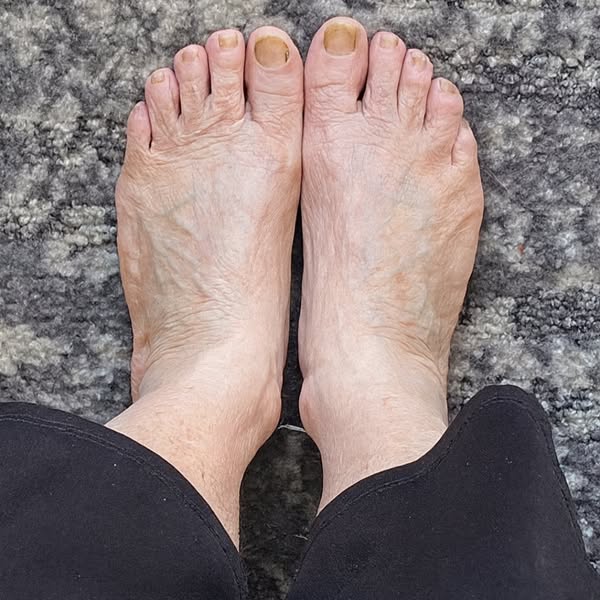
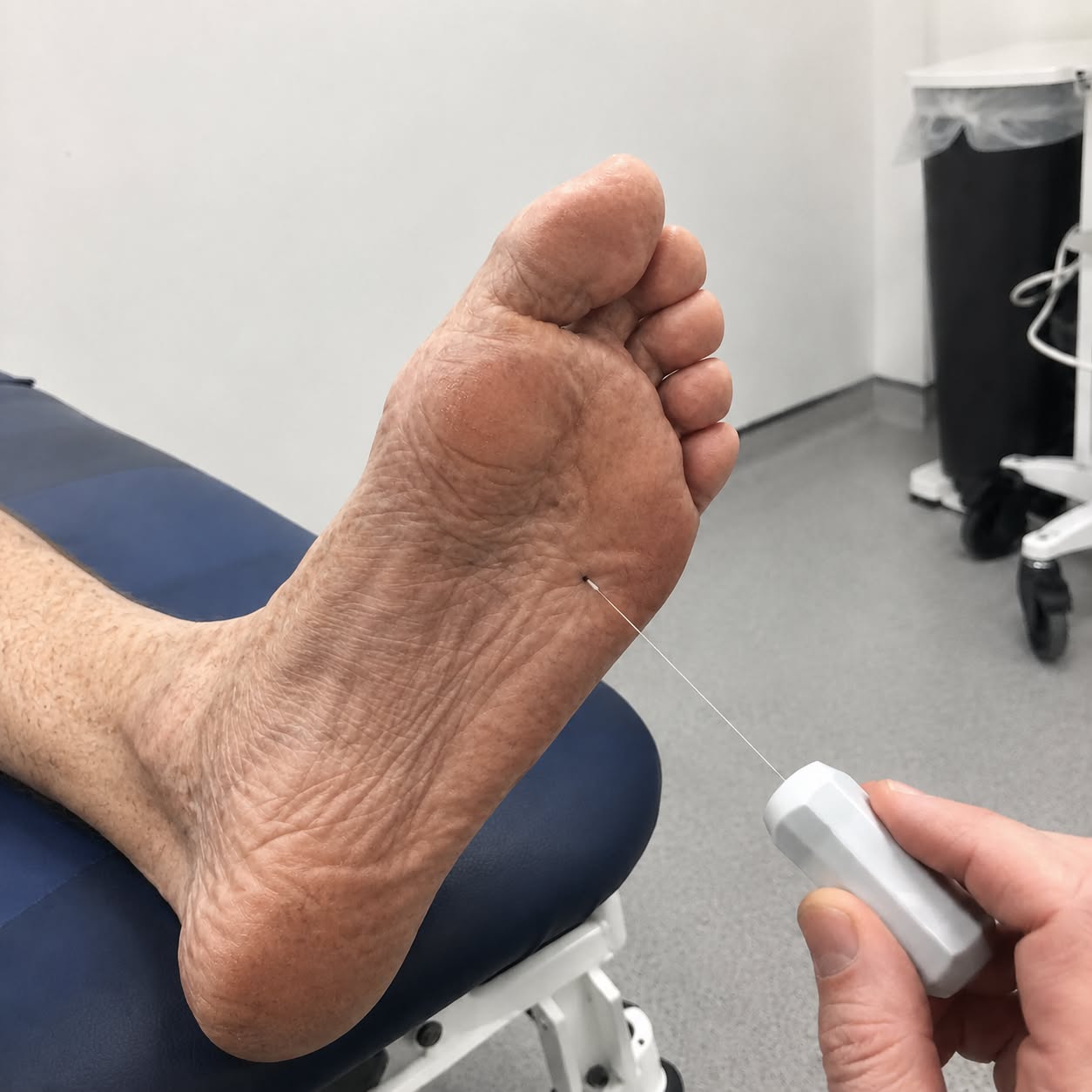
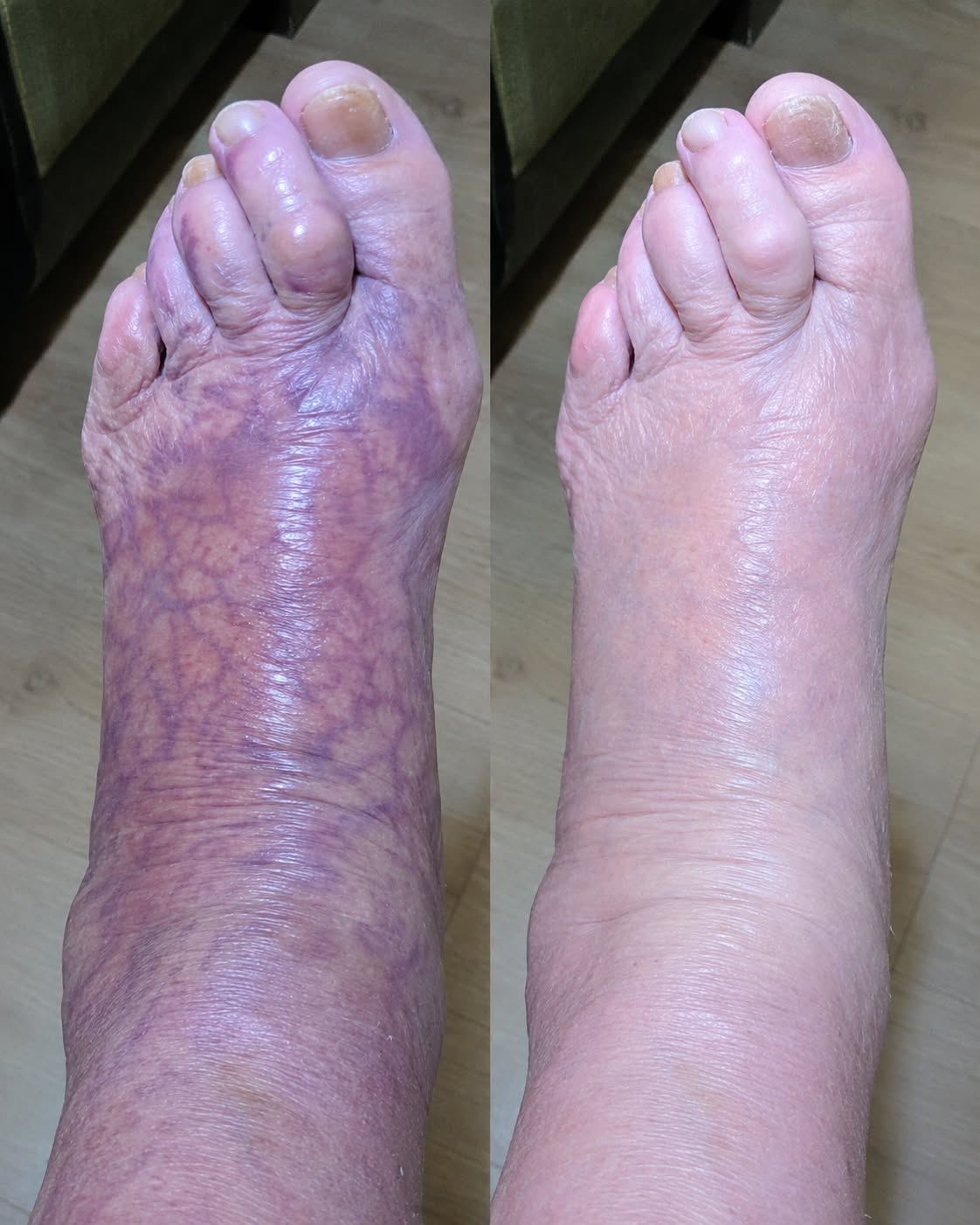
One of my patients had seen 5 doctors and received 5 different explanations for her burning feet. Her biopsy gave me the real answer in under a minute—and revealed why nothing she swallowed had worked. Let me back up. I work in a university research lab. Doctors send me nerve samples when they've run out of answers. Skin punch biopsies. Nerve tissue. Slides from patients who've been in pain for years and nobody can figure out why. By the time a sample hits my bench, I already know what the chart is going to say. Because it always says the same thing. Patient presents with burning feet at night. Doctor's notes: likely aging or circulation. Recommend better footwear. Patient returns. Numbness and tingling creeping up the toes. Doctor's notes: possible pinched nerve. Refer to physical therapy. Patient returns. Sharp, electric, stabbing pains in the soles. Doctor's notes: consider plantar fasciitis or a neuroma. Patient returns. Can't sleep — the weight of the bedsheet feels like fire on the feet. Doctor's notes: sleep disturbance. Likely stress. Prescribe a sleep aid. Patient returns. Losing balance. Can't feel the floor. Doctor's notes: age-related. Discuss fall prevention. Five visits. Five years. Five separate diagnoses. Five separate prescriptions. Then someone finally sends the biopsy to me. I fix the slide. Look through the eyepiece. And in less than a minute I find what explains every single one of those visits. Nerve damage. But not the kind they think. Nerve fibers stripped bare — the protective sheath eaten away, the wiring exposed and misfiring. Endings withered and dying back, retreating up the foot inch by inch. And wrapped around all of it, a thick band of inflammation, so swollen and dense it chokes off the blood supply and hides the healthy tissue underneath. Inflammation. The nerve's noose. A cuff pulled so tight it seals the nerve off — from your blood, and from every pill you swallow. Five years of doctors. Five prescriptions. Thousands of dollars. And the answer was sitting on my slide in under sixty seconds. This is what I see every single day. It never changes. The symptoms are always the same. The wrong diagnoses are always the same. The years of suffering are always the same. And the inflammation is always there. Choking the nerve. Waiting. So when I got invited to a research conference in Tokyo last spring, I added two extra weeks to the trip. Because something had been bothering me for years. Something I couldn't explain with anything I'd learned in 12 years of studying these nerves. Aging is the number one driver of nerve die-back. That's first-year textbook material. Every nerve specialist knows it. The older you get, the more the nerves in your feet burn out. But Japan has the oldest population on earth. More people over 90, over 100, than anywhere on the planet. By everything I was trained to believe, the Japanese elderly should be the most neuropathic population in the developed world. Feet on fire. Numb to the floor. Losing their balance in droves. That makes no sense. They should have MORE of the symptoms I see in my patients back home. Not less. I needed to understand why. After the conference I took a train south to Okinawa. The region with the highest concentration of centenarians on the planet. People living past 100 — not in wheelchairs, but walking the hills, working their gardens, climbing down to the shore. I arranged a homestay through a local program. The woman I stayed with was named Fumiko. She's 98 years old. Lives alone. Tends her garden every morning. Walks to the market. Stands at her stove cooking every meal. And she's on her feet from sunrise to dark. I'm sitting at her kitchen table on day three, watching her walk barefoot across the cold stone floor. My neuropathologist brain is going haywire. I'm thinking about every slide I've ever examined. Every dying nerve I've ever catalogued. This woman is 98 and has spent 80 years on her feet. Based on everything I know, her feet should be numb blocks she can barely feel — burning at night, failing her balance. But she walks the rocks barefoot and feels every one. She has more spring in her step than most of my 40-year-old colleagues back home. I had to ask. "Fumiko, don't your feet hurt? The burning, the numbness — at your age?" She stops. Looks at me. Starts laughing. "Of course they could. Everyone's could. That's exactly why we take care of them every night." She wipes her hands and tells me to sit down. "You want to know the real secret? Why we still feel our feet at 100 here, while people in the West lose theirs at 60? Why my neighbor is 102 and still climbs down to fish every morning?" "It's because we calm our nerves from the outside. Every single night. From the time we are children until the day we die." "People in the West swallow pills and think they are treating their feet. But you cannot reach a nerve in your foot by putting something through your stomach. The stomach sends it to the brain. The pill quiets your head, and the fire in your foot stays." She shakes her head. "We learned a long time ago. You must go in through the skin. Where the nerve actually is." I sat there staring at her. I have a PhD in neuropathology. I have 12 years of laboratory research. I've published papers on nerve inflammation and small-fiber degeneration. And this 98-year-old woman just described the exact limitation of oral nerve drugs that I've been documenting in my research for over a decade. In one sentence. Like it was obvious. She walks to a cabinet and pulls out a ceramic jar and a stack of neatly folded cotton socks. The jar is filled with a balm. Warm, thick, faintly minty. The socks are soft and worn from decades of use. "Every night before I sleep, I warm the balm. I rub it into my feet and up my calves — slow, into the sole, around the ankle." She presses her thumb into the arch of her foot. "Then the socks, to hold the warmth in. And I sleep." "My grandmother gave me this ritual. She did the same thing every night of her life. She lived to 101, feeling her feet to the end. Her mother did the same. Every woman in our family. Everyone in this village who still walks past 90." "It goes in through the skin. Deep. Where the pills cannot reach. It calms the fire in the nerve, and it brings the blood back so the nerve can drain what's choking it — while you sleep." She taps the top of her foot. "At night. That's when the nerve burns worst. That's when you lie down and the fire comes. That's when it is begging for help. You calm it at night, or you don't calm it at all." Then she says something that stopped me cold. "People in the West swallow a pill in the morning for a fire that starts at midnight. That's why their feet are dying." I need you to understand what it felt like hearing that. I am literally the scientist who studies this. I have the slides. I have the data. I have 12 years of research papers on my desk. And this woman, with no degree, no microscope, no published research, just described four things I know to be scientifically true: One. Oral nerve drugs can't reach the nerve. She said the pill only quiets your head. She's right. Gabapentin, Lyrica, and the rest work up in the brain — they dial down the signal after it screams. They never reach the inflamed nerve endings in the foot where the fire actually starts. Two. Transdermal delivery gets there. She said you must go in through the skin. That's exactly what the pharmacokinetics support. Through the skin over the foot, you skip the digestive system entirely. Full concentration reaches the nerve — not a diluted trace that survived the gut. Three. Circulation clears what's choking it. She said it brings the blood back and drains what's choking the nerve. Warmth and massage over the foot open the small vessels and move the lymph. That's how you bring oxygen to a starved nerve and drain the inflammation strangling it — instead of just numbing the alarm. Four. Nocturnal timing matters. She said the nerve burns worst at night. She's right. Small-fiber nerve pain flares between midnight and 4am — when you lie down, circulation slows, and the inflamed endings fire hardest. That's the 3am burning that tears people out of sleep. Four facts I spent 12 years and a PhD confirming. She learned them from her grandmother. I spent the rest of that week talking to every elderly person in the village. Her 94-year-old neighbor rubs her feet every night. Has since she was a girl. Her husband is 91. Same ritual. Same warm balm his mother used. The fisherman down the street who's 102 told me: "The sea gives us our legs. But we care for our feet every night, or the years take them. The hands do what the stomach cannot." I examined their feet. Not with a microscope. Just with my eyes and my hands. Warm skin. Good color. They felt the lightest touch on the sole. Steady on their feet. No burning. No numbness. No dead patches. These people are decades older than my patients, and their feet work better than every biopsy that's ever landed on my bench. Then I think about those patients. People in their 40s and 50s. Feet on fire at night. Numb to the floor. Losing their balance. Being told it's aging. Being told it's circulation. Being told everything is normal. While I find the dying nerve on their slide in under a minute. The Okinawans stay on their feet to 100 because they calm the nerve every night. My patients back home take pill after pill, see doctor after doctor, and end up as biopsies on my lab bench. The contrast made me sick. When I got back to the West, everything Fumiko taught me lined up with the research. The balm she used was built around the same compound I'd been reading about in nerve studies for years. Magnesium. Specifically magnesium chloride — the one form that actually crosses the skin barrier. Magnesium is what an over-firing nerve runs out of; it's the mineral that tells an excited nerve ending to settle down. Not mask the signal. Quiet the nerve at the source. I've known about magnesium and nerve excitability in an academic context for a long time. But I'd only ever thought about it as an oral supplement. And orally, for foot nerves, it barely works. I know the science. The gut lets a fraction through, the kidneys dump most of it, and what's left is spread across your whole body. By the time any reaches the inflamed endings in your feet, the concentration is nowhere near enough to calm them. That's the limitation I've been documenting for 12 years. Every oral protocol fails for the same reason. But Fumiko wasn't swallowing it. She was rubbing it into her feet. And that changes everything. When magnesium is massaged into the foot with warmth, it absorbs through the skin. Skips the stomach completely. No gut throwing most of it away. No dilution across the whole body. Full strength into the tissue around the nerve. Body heat opens the small blood vessels and drives it down toward the nerve. The massage pushes it in and brings fresh blood to endings that have been starved for years. Right to where I've seen the damage on every slide I've ever examined. The same movement gets the lymph flowing and drains the inflammation strangling the nerve — instead of leaving it to sit there and choke it. That's what Fumiko meant when she said it "brings the blood back and drains what's choking it." She was describing circulation and lymphatic drainage without knowing the terms. And overnight. 6 to 8 hours, held warm under a sock while you sleep. During the exact window when the nerve burns and flares. Midnight to 4am. The hours I've documented as peak nerve-pain activity in study after study. Fumiko's nightly ritual addresses every single limitation I've spent my career documenting in oral nerve drugs. It reaches the nerve the pills can't. It calms the endings that misfire. It drains the inflammation choking them. And it works at night, when the nerve is screaming loudest. As a scientist, I can tell you: this is the only approach that makes sense based on where the damage actually is, and what an inflamed nerve actually needs. The fire doesn't stand a chance. Every ancient culture figured this out independently. That's the part that really got to me. Fumiko's village in Okinawa. Ayurvedic healers in India rubbing warm oil into the soles every night — they call it padabhyanga, and they've done it for over 4,000 years. Greek and Roman soldiers who massaged warm oil into their legs and feet after marching. Mediterranean grandmothers who worked mineral-rich oils into aching legs by the fire. Healers across the ancient world who knew a foot is calmed from the outside — warm, at night. Different cultures. Different continents. No contact with each other. Same practice. Same method. Same result. That's not coincidence. That's convergent discovery. In science, when independent groups arrive at the same conclusion without contact, we take that very seriously. Every civilization that stayed on its feet into old age treated them from the outside. The ones that stopped — that traded the nightly ritual for a morning pill? We're the ones with the neuropathy epidemic. The burning feet. The numb toes. The 3am fire. The balance that fails in our 50s. Meanwhile, Fumiko climbs down to the shore barefoot at 98. Which brings me back to why I'm angry. Your doctor spent a few hours on peripheral neuropathy. In their entire medical education. An afternoon, out of four years. I spent 12 years studying what your doctor covered before lunch. So when you walk in with burning feet, numb toes, and nights you can't sleep, your doctor reaches for what they were trained to reach for. Aging. Circulation. Stress. "Keep your sugar down." Not because they're stupid. Because they were never taught to think about what I find on my slides every single day. And the test is a joke. I say that as the scientist whose literal job is to find this. The standard nerve conduction test your doctor orders only detects damage to the large nerves. The small fibers — the ones carrying the burning, the ones dying first in your feet — don't even register on it. Published fact: in small-fiber neuropathy, the standard test comes back normal. So they tell you nothing's wrong. That it's in your head. I know these nerves. I know how they fail. The small-fiber damage setting your feet on fire is invisible to the one test they run. It's designed to miss this. And every year it's missed generates years of revenue. Gabapentin. Lyrica. Cymbalta. The dose climbs, the refill comes monthly, indefinitely — and your feet keep going number. Fumiko's village has no neuropathy clinic. No cabinet full of nerve pills. Because they calm the nerve every night instead of numbing their heads every morning. "People in the West swallow a pill in the morning for a fire that starts at midnight." She was right. I started rubbing a magnesium balm into my feet every night when I got home from Japan. Why me? Because two years ago the tips of my toes started to tingle. The thing I warn my patients about — the first whisper of it — starting in me. I'm on my feet in that lab all day. I told myself it was nothing. But it wasn't getting better. Night one. About fifteen minutes after I rubbed it in, the buzzing in my toes went quiet. Not numbed — quiet. For the first time I could remember, my feet felt calm under the covers. I slept. Week two. The tingling that used to creep in every evening was fading. I started feeling textures under my feet I'd stopped noticing — the grain of the floor, the seam of a sock. Week three. This is the week that matters. Every oral protocol I've ever studied stalls by week three — the relief plateaus, the dose has to go up, the symptoms creep back. Nothing crept back. The calm held. As a nerve scientist, I knew exactly what that meant. I wasn't masking a signal that would return. The nerve itself was settling, and the blood was reaching it again. Week four. The 3am burning that used to tear me out of sleep was gone. My balance felt planted. I stood through an entire research meeting with my feet under me, not on fire. A colleague looked at me across the lab and said, "Did you do something different? You're moving lighter." I hadn't done anything different. I'd just finally done for myself what Fumiko has been doing every night for 80 years. Week six. Full turnaround. Both feet steady and whole. Balance solid. Sleeping through the night. The whisper of neuropathy that had been creeping up on me — gone. I'm 42 years old and my feet feel younger than they did at 35. Not because I found some breakthrough. Because I finally listened to a 98-year-old woman who understood these nerves better than my entire field was willing to admit. Before you try piecing it together yourself at home, don't bother. I tried. Bought a bottle of raw magnesium oil from a health shop. Rubbed it on straight. It stung like needles, dried into a chalky, itchy film, and did almost nothing — the magnesium just sat on the surface and flaked off. Then I tried mixing my own oils. Greasy mess, all over the sheets, no lasting relief, and none of it actually drove anything into the nerve. Fumiko's balm was refined over generations — the right form of magnesium, the right botanicals to carry it deep, the warmth to open the skin. Nobody in the West has that on a shelf. The one I use now is from a small company called NuraCalm. Magnesium chloride in the transdermal form that actually crosses the skin — no sting, no chalk. MSM to pull down the inflammation choking the nerve. Arnica for the deep ache and the starved circulation around it. Vitamin B6 to steady the nerve's own signal so real feeling comes back. And a cool menthol finish that tells you it's working the second it goes on. It rubs in clean, drives deep, and holds through the night. No mess, no stained sheets, no burning your skin. One jar lasts months. It's the modern version of what Fumiko's family has done for generations. What every culture on earth did before we were told to swallow a pill instead. One purchase. No subscription. No monthly nerve pills that only climb in dose and numb your head anyway. 90-day money-back guarantee. If your feet don't feel different, every penny back. I still examine slides every day. I still find dying nerves in patients whose doctors said nothing was wrong. I still see inflammation so thick it strangles the fiber underneath. I still read charts full of "it's just aging" and sleep-aid refills for people whose real problem is sitting on my slide under 400x magnification. And now I think about Fumiko every time. 98 years old. Barefoot on the rocks. Feels every stone. Sleeps through the night. Steady on her feet. Because she calms the nerve every night. Because her grandmother taught her. Because her grandmother's grandmother taught her. While my patients back home take pill after pill and lose a little more of their feet every year. If your feet burn the moment you lie down. If pins and needles never fully leave your toes. If the weight of a bedsheet feels like fire on your skin. If the numbness is creeping up from your toes, month by month. If you've started losing your balance because you can't quite feel the floor. Those aren't five separate problems. They're one. A nerve inflamed, starved, and misfiring — screaming a little louder every year. And nothing you swallow can reach it. Your doctor's standard test won't catch it. The pills won't reach it. They'll numb your head while your feet keep going. I've spent 12 years proving that. But a 98-year-old woman in Okinawa showed me what actually works. The same thing every ancient culture on earth figured out independently. Through the skin. With warmth and massage. Overnight. When the nerve is flaring and exposed. Every night you sleep without calming that nerve is another night it burns. Another night the inflammation tightens. Another night the endings die back a little further up your foot. I don't want your biopsy on my bench. I don't want to find under my microscope what five doctors missed over five years. I've seen that story too many times. Fumiko is 98 and feels every stone under her feet. She'll never end up on my slide. Because she figured out what our entire medical system refuses to look at. You can start tonight. But NuraCalm is a small company and they sell out constantly. If you click and they're out of stock, sign up for the restock notification. It's worth the wait. Stop numbing the alarm. Put out the fire where it burns.
Where the ad sends people
try.nuracalm.com
Feel finally free, from your pain
Learn more: try.nuracalm.com(opens in a new tab)