Willow Space
Willow Space Facebook ad: “Feel It Finally Let Go.”
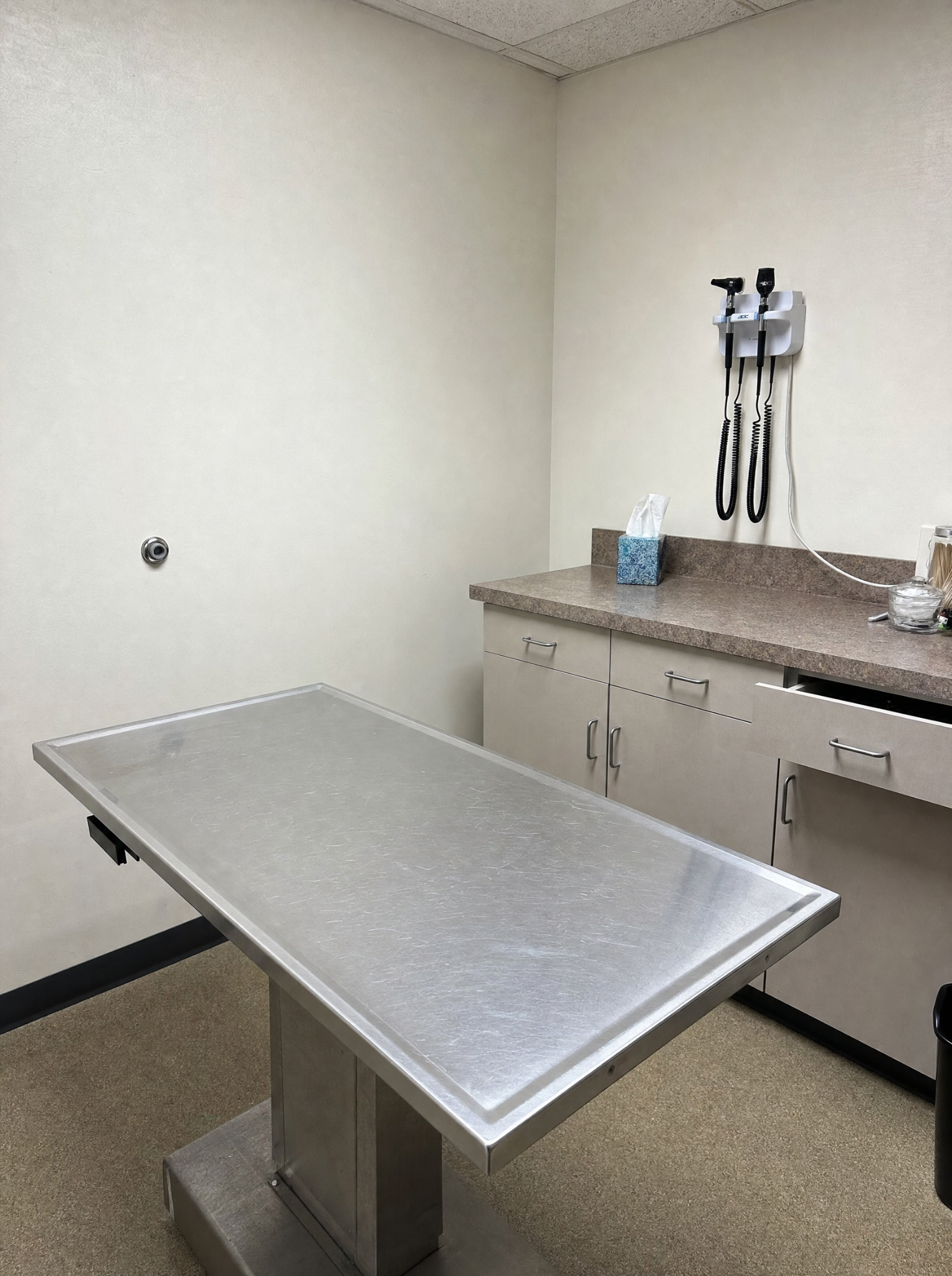
Ran for 2 days, from August 29 to August 31, 2026, the last day Crush saw it.
Run by Willow Space on Facebook. Crush is not the advertiser and does not verify its claims. See this ad in Meta's Ad Library(opens in a new tab)
Want an ad like this for your product?
Crush makes new ad images for your product from this ad: your logo, your product photo, your offer.
Trials from $19.95 USD, then $79.95 USD a month. Cancel anytime.
About this ad
- Meta Ad Library ID
- 1809328720223597
- Platforms
- Facebook, Instagram, Audience Network, Messenger and Threads
- Relaunches
- 3
Ad text
I have put 2,847 animals to sleep in nineteen years. The family cries. The animal goes still. And I wash my hands and walk to the next room and do it again. Room 3 to Room 1. Fifteen steps. Soap, water, paper towel. New chart on the door. A golden retriever with an ear infection or a cat who won't eat or a puppy getting its first round of shots, and the family in that room is smiling and the family I just left is carrying a leash with nothing on the end of it out to their car, and I am standing between both rooms at the same time inside my own body. That is what nineteen years of this has felt like. Standing between two rooms at the same time. My name is Dr. Ellen Hartley. I own a small-animal veterinary practice in Charlottesville, Virginia — Valley View Animal Clinic, two exam rooms and a surgery suite in a cinder-block building on Route 29 that my father helped me put a deposit on in 2006. My associate is Dr. Kapoor. My technicians are Britt and Casey. My receptionist Joan has been with me since the second year. I became a veterinarian because I loved animals. I stayed a veterinarian because I'm good at it. What nobody prepared me for is that this job is not primarily about animals. This job is about humans. It is about the woman who holds a fourteen-year-old beagle in her arms and says "He's my last connection to my husband." It is about the man who drove forty minutes with a barn cat in a laundry basket and sits in the parking lot afterward for an hour because he can't drive home yet. It is about the child who wrote a letter to their hamster and asks me to put it in the box. I do the procedure. I am calm. I am gentle. I explain what will happen. I tell them they can stay or they can step out. Most stay. They hold the animal. I administer the sedative, then the pentobarbital. The animal relaxes. The breathing slows. The breathing stops. And then the room fills up with something I have never found a clinical word for. Not sadness. Sadness is what the family feels. What fills the room is heavier than sadness. It is the weight of a bond breaking. The sound a taut rope makes when it snaps. Except there is no sound. There is just a pressure that settles on every surface in the room — the table, the counter, the walls — and on me. I absorb it. I have always absorbed it. It was never a choice. It was never a skill they taught at Virginia-Maryland College of Veterinary Medicine. It is simply what happens when you are the person in the room who is supposed to remain steady while something irreversible takes place. Steady. That is the word they use. "Dr. Hartley is so steady." My clients say it in their Google reviews. Dr. Kapoor says it when she refers a difficult euthanasia to me. Joan says it when she warns a new family that the appointment will be emotional but Dr. Hartley will guide them through it. Casey says it after the ones with children — "You were so steady, Dr. H." Steady is the word that means: she holds it so well that nobody has to worry about her. And it is the most dangerous word in veterinary medicine, because what it actually measures is how much you can absorb before someone notices you're full. I learned steady from a woman named Dr. Ruth Prewitt. Ruth taught my senior surgery rotation at Virginia-Maryland and ran a small-animal practice in Blacksburg for twenty-six years. She was the reason I went into small-animal instead of large-animal. She was the reason I stayed in the profession during my first year, when the euthanasia volume almost broke me. She was the steadiest veterinarian I have ever known. Ruth could euthanize a family's dog and walk into the next room and examine a kitten and the family with the kitten never knew what had just happened ten feet away. She taught me how to hold the syringe so the family can see the animal's face, not the needle. She taught me how to breathe between Room 3 and Room 1. She taught me how to keep my hands from shaking by pressing my thumb into my palm under the table where nobody could see. She was steady. For twenty-six years she was steady. She processed every euthanasia with clinical grace. She published a chapter in a veterinary textbook about compassion fatigue management. She taught other veterinarians how to be steady. Ruth retired at sixty-two because her hands shook too badly to operate. The neurologist called it essential tremor. Said it ran in families. Ruth accepted that. Her colleagues accepted it. I accepted it. Ruth died at sixty-four of a massive stroke. Two years after retirement. Two years after her hands stopped holding the syringe. She died in her study at 5 AM on a Tuesday in March. Her husband found her at seven when he came downstairs. The death certificate said cerebrovascular accident. It did not say: twenty-six years of unfinished stress cycles thickened the walls of the arteries that fed her brain until one of them closed. I was thirty-four when Ruth retired. I was thirty-six when she died. I stood at her memorial service in the veterinary school auditorium and everyone said what a brilliant doctor she was and how steady she was and how she never let it get to her, and I believed all of it. I am fifty-four now. Ruth was fifty-four when her hands started shaking. She had ten years left. I am standing at the same age, in the same profession, with the same steadiness everyone praises, and my hands are doing something I can no longer ignore. The first thing that went was touch. I don't mean numbness. I mean something more specific and more frightening. I was at home on a Saturday afternoon in October. My dog Walter — a twelve-year-old basset hound with a gray muzzle and a snoring problem — climbed onto the couch and put his head on my lap. He does this every evening. He has done this every evening for twelve years. And my arms went rigid. Not sore. Not tense in the way you get tense from exercise or stress. Rigid. Locked. The same posture my arms take when I'm holding an animal on the table. My left hand behind the head, my right hand on the shoulder, steady pressure, controlled contact. The clinical hold. I was holding my own dog the way I hold animals before I end their lives. I stood up so fast Walter fell off the couch. He looked at me with his hound-dog confusion face — one ear up, one ear down — and I stood there in my own living room with my arms at my sides, shaking, because my body could not tell the difference between holding something I love and holding something that's about to die. Nineteen years of steady had fused the two into one gesture. My arms didn't know the difference anymore. They only knew the hold. That was October 12th, 2024. I did what doctors do. I ordered tests on myself. I went to my own physician, Dr. Hernandez, who ran a nerve conduction study. Normal. She ran a cortisol panel. Elevated. She ran a thyroid panel. Normal. She said "You're under chronic stress" and asked if I'd considered cutting back on my caseload. I hadn't considered that because I own the practice. Cutting back means someone else does the euthanasias, and Dr. Kapoor is seven years in and I will not hand her my caseload because I have seen what this job does to veterinarians by year ten. Our profession has the highest suicide rate of any medical field. I know four veterinarians who have taken their own lives. I was not going to solve my problem by creating hers. So I tried to process it. That is the word everyone uses. Process. Dr. Hernandez said I needed to "process the stress." The therapist said to "process the grief." The AVMA compassion fatigue workbook said to "process each euthanasia intentionally." The mindfulness app said to "process your feelings." Every continuing education speaker at every veterinary conference I attended for three years said some version of: "You need to learn to process what you carry." I processed. I tried therapy. A counselor who specialized in compassion fatigue. She was thoughtful and she understood the work. We talked about boundaries and self-care and processing each euthanasia — naming the animal, naming the family, naming the emotion, locating it in my body, describing it with clinical vocabulary, filing it. I processed forty-seven euthanasias in fourteen months of sessions. Each one named, located, described, filed. $2,240 in copays. I built the most organized filing cabinet of dead animals that any veterinarian has ever constructed. My arms were still rigid. I tried a meditation retreat. Three days at a farm in Nelson County. $1,200. Silent mornings, guided meditation, nature walks, a woman named Aurora who played singing bowls at sunset. I felt calmer for about six days afterward. Then Room 3 came back. The family came in with a black lab named Duke who had bone cancer in his left shoulder, and the woman was pregnant and she was holding Duke's face in both hands and talking to him, and the calm from the retreat was gone before the syringe was empty. I tried CBD. I tried ashwagandha. I tried magnesium glycinate. $380 over four months. Three bottles lined up on my bathroom counter like a row of promises. None of them touched the arms. I tried a weighted blanket. It added weight on top of the weight. I tried running — four miles in the morning, which my knees objected to by month three. I tried what a colleague at a conference in Richmond called "emotional compartmentalization," which as far as I can tell means processing faster so the next one doesn't stack on top of the last one. I tried that for two weeks and then I snapped at Joan over a misfiled chart and cried in the supply closet for ten minutes, which is not what compartmentalization is supposed to look like. Fourteen months. Roughly $3,800 between the therapist, the retreat, and the supplements. The arms were still rigid. The 3 AM was still there. And the thing that scared me most — the inability to hold Walter without my body switching to the clinical mode — was exactly the same. I processed beautifully. I processed every animal. I named every grief. I filed every euthanasia in its proper drawer. And the drawers were full and my arms were locked and the processing had not discharged a single thing. Here is what I understand now about processing that I did not understand then: processing is an organizing function. It sorts. It labels. It files. It gives every event a name and a place. That is what processing does. That is all processing does. Processing does not remove things from the body. Ruth processed for twenty-six years. She processed with clinical precision. She published papers about how to process. And she died at sixty-four with arteries full of plaque that twenty-six years of cortisol had built while she was busy being steady. Here is what I understood about the nervous system as a veterinarian, which is to say: everything about animals and almost nothing about myself. I know what happens when a cat is chronically stressed. Its cortisol stays elevated. Its body stays in a defensive posture — muscles contracted, pupils dilated, startle response heightened. It hides. It stops grooming. It stops eating with the same enthusiasm. Its resting state shifts from relaxed to guarded, and if the stressor doesn't change, the guarded state becomes the permanent state. The cat doesn't know it's stressed anymore. It thinks this is normal. It thinks it was always like this. I know all of that about a cat. I did not recognize it in myself. I had an elevated cortisol panel in my own medical file. Dr. Hernandez had shown me the number. It was sitting in my MyChart app in black and white. And I — a doctor, a woman who has spent nineteen years reading lab panels on animals and diagnosing the exact pathology that elevated cortisol causes — looked at my own number and heard "chronic stress" and nodded and went home and did not draw the line from that number to my arms, to my 3 AM, to the way my body holds Walter, to the way Ruth's hands shook, to the way Ruth died. Because the thing that changes in the body is not the thing you think about. It is not your thoughts. It is not your emotions. It is your baseline. The resting state your nervous system returns to between events. In a healthy system, the baseline is low — muscles soft, breath slow, hands open. After a stressful event, the system activates, deals with the event, and then discharges the activation and returns to baseline. The discharge is the part you can feel: the trembling after a close call, the deep breath after the danger passes, the crying that comes out of nowhere after a hard day. That's the nervous system resetting. But after 2,847 euthanasias and nineteen years of absorbing the moment a bond breaks — over and over and over — the discharge mechanism stops getting its chance. There's no gap. There's no "after." Tuesday's grief bleeds into Wednesday's grief bleeds into Thursday's grief. The activation that's supposed to be temporary becomes permanent. The baseline shifts up. And now my resting state — the state my body is in when I'm sitting on my own couch with my own dog on a Saturday afternoon — is the same state my body is in when I'm holding an animal on a stainless steel table while its owner says goodbye. My body couldn't tell the difference because, for my nervous system, there was no difference. The baseline had shifted so far up that "holding Walter" and "holding a dying lab" fired the same response. Not because I was broken. Because the discharge mechanism was buried under nineteen years of material that never got cleared. I was not steady. I was locked. And locked looks exactly like steady from the outside. And here is the thing I should have known — the thing I DID know, in animals, and failed to see in my own body — about where that path leads. Every time I stand in Room 3 and the family's grief transfers into my body — through my hands on the animal, through the pressure in the room, through the frequency of a bond breaking — my hypothalamus fires. The pituitary responds. The adrenal glands release cortisol. This is the HPA axis — hypothalamic-pituitary-adrenal — the body's emergency broadcast system. I teach it to vet students in the context of feline stress response. I have explained this pathway hundreds of times. In a normal activation, the cortisol spikes, the family leaves, the vagal nerve sends the all-clear signal, the system resets. Heart rate drops. Breathing deepens. Muscles soften. Cycle complete. My cycle has not completed since 2006. Because Room 1 fills before Room 3 empties. When the HPA axis fires for 2,847 euthanasias over nineteen years — when the cortisol spikes and there is never enough silence between procedures for the vagal nerve to send the all-clear — the cortisol stays elevated. Not at crisis levels. At maintenance levels. A low, constant hum that your body adjusts to the way you adjust to the fluorescent lights in the exam room. You stop noticing. But it never stops running. I looked it up the way I look up drug interactions — by reading the research. A 2014 study in the Journal of the American Veterinary Medical Association found that veterinary professionals with high compassion fatigue scores showed chronically elevated cortisol and cardiovascular risk markers identical to the ones I check in geriatric patients. We diagnose it in animals and miss it in ourselves. A separate study — published in Frontiers in Human Neuroscience — randomized 60 healthcare workers with chronic stress into three groups. One received layered binaural beat audio. One received ambient sound. One received nothing. The binaural beat group showed significantly reduced cortisol and increased vagal tone. Not the ambient sound. Not the silence. The specific layered frequencies. This is the research that exists in neuroscience journals that nobody in veterinary medicine reads. And chronically elevated cortisol does something that I teach about in cats and have never been taught about in myself. It thickens the walls of blood vessels. This is not metaphor. This is published cardiovascular research. Chronic cortisol elevation triggers sustained low-grade inflammation. The inflammation damages the endothelial lining of the arteries. The body repairs the damage with plaque. The plaque narrows the vessels. The narrowed vessels raise blood pressure. Over years, the system that was built to protect you from the grief in Room 3 simultaneously destroys the infrastructure that keeps you alive. In cats, I diagnose this. Hypertrophic cardiomyopathy in chronically stressed felines — cortisol-driven cardiac remodeling. I have euthanized cats for the very condition that chronic cortisol builds in my own body. I have never connected that my cortisol panel reads like theirs. Ruth retired at sixty-two with shaking hands. She died at sixty-four of a stroke. Her death certificate said cerebrovascular accident. What it should have said is: twenty-six years of steady. Twenty-six years of cortisol never returning to baseline. Twenty-six years of plaque building in arteries while she processed every euthanasia with clinical grace and her colleagues called her the steadiest vet in Blacksburg. She did not have a weak brain. She had a nervous system that never discharged, and a vascular system that paid the compound interest on twenty-six years of unfinished cycles. I am fifty-four. Ruth was fifty-four when her hands started shaking. My cortisol is elevated. My hands do the rigid thing. My arms hold my own dog like he's dying. I am standing at the same age, on the same path, with the same steadiness everyone praises, and the number on my lab panel is the same number I would flag in a cat as a risk factor for cardiac disease. The elevated cortisol is not stress. It is a countdown. The arms are not trauma. They are cortisol. The 3 AM is not insomnia. It is an unfinished cycle trying to complete. These are not symptoms to process. They are warnings to answer. The same warnings Ruth had. She processed them. She managed them. She was steady about them. And they killed her. Processing does not answer warnings. Discharge does. Casey, my vet tech, is the person who changed this. Casey is thirty-one. She's been with me for six years. She is the one who holds the animals during procedures when the owners can't. She is, in many ways, the person who absorbs what I absorb, except she absorbs it through her hands and I absorb it through the syringe. In January of this year she came into my office after the last appointment and closed the door. She said: "Dr. H, can I ask you something personal?" I said yes. She said: "When you get home, can you hold Charlie without your arms doing the thing?" Charlie is her cat. Casey had noticed my arms. Of course she had. She stands two feet away from me during every euthanasia. She'd seen the rigidity. She recognized it because she'd had it herself — two years of locked arms, the 2 AM startles, the inability to hold her daughter Rosie without feeling like she was in a procedure room. She left for four months in 2023 and worked at a pet supply store, and the arms were still rigid four months after her last euthanasia. The pattern was stored, not active. Leaving the job didn't erase the recording. "You're so steady, Dr. H," she said. "That's the problem. You're steady because you're locked. You've been locked for nineteen years and you don't know what your arms feel like unlocked." What unlocked them was something her cousin Marlene — a massage therapist in Staunton who works with trauma survivors — recommended. An audio program. Seven minutes. Specific frequencies under brown noise that bypassed the brain and reached the nervous system at the layer where the pattern was stored. "It doesn't use words," Casey said. "It's sound. And the sound reaches the layer where talking can't get." She said she'd been using it for three months. She said Rosie had climbed into her lap on Sunday and Casey had held her — just held her, no rigidity, no clinical mode — for the first time in two years. She cried telling me this. I had never seen Casey cry in six years, including during the worst euthanasias. I needed it to meet five conditions: It had to reach the autonomic nervous system directly, not through conscious processing. The discharge mechanism lives below cognition. Words can't reach it. Fourteen months of therapy proved that. It had to use sound. The procedure room is quiet. The grief transfers in silence. The pattern was encoded in a sensory channel that has no words in it. Sound — specific frequencies, not music, not talking — is the only modality that reaches the brainstem without passing through the cortex first. It had to be short. I operate from 7:30 AM to 6 PM. I don't have an hour. Seven minutes is a gap between charting and dinner. It had to trigger the discharge response — the trembling, the exhale, the release — that had been suppressed for nineteen years. It had to be something I could do lying down with my eyes closed, because the last thing my body needed after a day of holding dying animals was another practice that asked me to sit upright and try. The program Casey used was called The Sonic Shower. She showed me on her phone. Six audio tracks — three core sessions called Commute Scrub, SOS Clear, and Morning Shield, each in a guided and instrumental version. Layered brown noise and somatic binaural sweeps. $37. Download or stream. Play on your phone with headphones. I ordered it in my office at 6:14 PM on a Wednesday in January, still wearing my scrubs. I'm going to tell you the truth about the first ten days because if Casey hadn't warned me, I would have deleted the files. Night one. Commute Scrub. Headphones. Lights off. I felt the brown noise settle over me like a weighted blanket made of sound. Underneath it, something lower — a sweep, like a slow wave passing through my chest. I felt warm. I fell asleep before it ended. This was unusual. I normally lie awake for forty-five minutes to an hour replaying the last euthanasia — not the specifics, just the pressure. That night, the pressure didn't follow me to bed. Night two through five. Same. Warm. Asleep. Nothing dramatic. The 3 AM was still there on nights two and four. I started tracking my sleep on my phone after Casey told me to. Night one: 3 hours 50 minutes. Night five: 5 hours 20 minutes. Not enough to mean anything. But enough to keep going. Day eight. I told Casey it wasn't doing anything. She said: "Dr. H, how long did it take to build what's in your body? Give it a month." Day eleven. I was in Room 1. Mr. and Mrs. Kaplan. An eighteen-year-old tabby named Professor. The wife was holding him in a towel. I administered the sedative. Professor relaxed into the towel. The wife's hand was on his ribs and she was whispering "good boy, good boy, good boy." I administered the pentobarbital. Professor stopped breathing. Mrs. Kaplan looked up at me. And for the first time in years, the pressure that fills the room after a euthanasia came in — I felt it — and then it moved through me and out. Not disappeared. Not ignored. Moved through. Like a wave passing through a net instead of collecting in it. I stood in Room 1 with Mr. and Mrs. Kaplan and I felt sad — which is the correct thing to feel when a family loses an eighteen-year-old cat they named Professor — and the sadness was clean. It didn't stick. It didn't add to the weight. It came and it moved and it was gone by the time I washed my hands. Night fourteen: 6 hours 10 minutes. Night twenty-one: 7 hours 5 minutes. Night thirty: 7 hours 40 minutes. Four numbers on my phone. That was the proof before anyone else noticed. Day sixteen. I slept through 3 AM for the first time in — I don't actually know how long. I know it was more than two years. I played SOS Clear that night, the three-minute track. It was shorter, sharper, and something cracked open in my chest around minute two. Not painful. Like a knot coming untied that I'd stopped noticing was tied. Day twenty-three. A Saturday. Walter climbed onto the couch. Put his head on my lap. And my arms stayed soft. I sat there with my basset hound on my lap and I ran my hand along his ear and he groaned the way basset hounds groan when you do something they approve of, and I realized I was just petting my dog. Not bracing. Not clinical. Not steady. Just petting my dog. In my house. On my couch. On a Saturday afternoon. Mark came into the living room and saw me crying. He stood in the doorway and he didn't say anything. He walked over and he put his hand on my shoulder. And I didn't flinch. I didn't brace. I didn't go rigid under his touch the way I had for years — a stiffening so habitual that neither of us registered it as anything other than normal. His hand landed on my shoulder and my shoulder received it. Soft. Warm. No clinical hold. No table posture. Just a hand on a shoulder. And that is when we both understood what had changed — not because of what I said, but because of what my body didn't do. He didn't ask what it was. He didn't need to. Nineteen years married to a woman who holds death for a living, and he could feel the difference in one touch. If you've read enough: 👉 go.mywillowspace.com/ss/10 It's been seven months. Last Thursday I did four euthanasias in a single day. The Brennan family with Gus, the Lab. A single woman named Helen with a twenty-year-old Siamese. A couple from Crozet with twin dachshunds, both terminal, who wanted them to go together. And a walk-in — an elderly man who drove in from Waynesboro with a shoebox and a hamster that had stopped eating three days ago. Four in one day. I have never had four in one day. I came home. I ate dinner. I sat on the couch with Walter. My arms were soft. I played Commute Scrub. I was asleep in four minutes. I slept through the night. Not because the day didn't matter. Because the day moved through. I still feel it. I feel every one of them. What changed is that the feeling moves now. It arrives and it passes and my body returns to baseline — real baseline, not the shifted one I'd been living in for nineteen years. I still use SOS Clear — the three-minute track — on the hard ones. After the twin dachshunds, I sat in my office with the door closed, put in one earbud, three minutes, and the pressure from that room moved through and out before I walked to the parking lot. And I use Morning Shield — the ten-minute one — before the first appointment. It is like sterilizing the table before the first patient. Clean surface. Nothing left from yesterday. If you want to know whether this is real, do what Casey told me to do. Tonight, when you get home from the clinic, notice your arms. Put your hands in your lap and notice what they do. Do they hold? Do they go rigid? Do they rest? Write it down. One word. Hold or rest. Do it for seven nights. Then start the Sonic Shower and write it down again at week three. That's your number. That's the only proof you need. Dr. Kapoor noticed before I told her. She came into my office after a euthanasia on a Friday and said: "Ellen, you're moving differently in the room." I asked what she meant. She said: "You used to hold the animal and the family's grief at the same time. You were steady — you held it all. Now you hold the animal and the grief passes through you and the family can feel that it's okay to feel what they're feeling. You're not carrying them anymore. You're just with them." She didn't know what she was seeing. She was seeing a woman who had been steady for nineteen years finally becoming soft, and soft looks different from steady in a way that a seven-year associate notices before anyone else. Joan — my receptionist, who has watched me walk from Room 3 to Room 1 thousands of times — said it her own way. She said: "Dr. Hartley, you're taking fewer steps." I said: "What?" She said: "Between rooms. You used to take that extra moment at the sink. You don't anymore. You wash your hands and you walk. Like the room stays in the room now." Casey told me last week that Rosie asked her to be the one who puts her to bed now. She didn't used to want that. She used to ask for her dad. Casey said: "She said I feel warm again." I don't work for Sacred Willow. I'm a veterinarian in a cinder-block building on Route 29 who has held 2,847 animals through their last breath and can finally hold her own dog without her body thinking he's next. That's not a marketing line. That's a Tuesday. The Sonic Shower Protocol is six audio tracks. $37. One time. You own them forever. There's no subscription, no app to install, no course to follow. You put on headphones, you press play, and you give your nervous system seven minutes to do what nineteen years of steady wouldn't let it do. Thirty-seven dollars. I spent $2,240 on fourteen months of therapy that processed everything and discharged nothing. I spent $1,200 on a meditation retreat that lasted six days. I spent $380 on CBD, ashwagandha, and magnesium that softened nothing. I spent more than $37 on a weighted blanket that put weight on top of weight. I spent more than that on three months of running that shredded my knees and didn't move the arms. Thirty-seven dollars. One time. You keep it forever. 👉 go.mywillowspace.com/ss/10 365 days. Not 30. Not 90. A full year. Every pharmaceutical company that sells me medications for animals guarantees nothing. Not the sedatives. Not the anti-anxiety drugs. Not the pain medications I administer every day. Not one of them offers a guarantee. Amanda at Sacred Willow gives you a year and lets you keep the tracks even if you ask for your money back. I have never seen a company that confident in what they sell. I ordered it because the risk was not $37. The risk was zero. P.S. — If you're wondering whether this is meditation: it isn't. I tried meditation. The silence filled up with procedure rooms. This is sound — layered brown noise and somatic binaural sweeps at specific frequencies that reach the part of the nervous system that talking and thinking and sitting quietly can't reach. The discharge mechanism. The thing that's supposed to fire after each euthanasia and didn't because there was never a gap between them. The tracks create the gap. Seven minutes. Three sessions — Commute Scrub for the end of the day, SOS Clear for the acute ones, Morning Shield before it starts again. Start with Commute Scrub at bedtime. Headphones. Eyes closed. Don't try to make it work. Don't analyze it. You're a veterinarian — you spend all day holding steady for everyone else. This is seven minutes where you don't have to hold anything. Casey says the moment she stopped "trying to feel something" and just lay there is the night it started working. She's right. I gave the link to Dr. Kapoor. She texted me on a Saturday morning, nine days in: "My jaw. Ellen, my jaw. I didn't know it was clenched." Steady women don't know they're clenched. They think the clenching is the steadiness. It isn't. 👉 go.mywillowspace.com/ss/10 P.P.S. — I told you about Ruth at the beginning. Sixty-four. A stroke in her study at 5 AM. The steadiest vet in Blacksburg for twenty-six years, and her steadiness was cortisol and her cortisol was plaque and her plaque was what killed her. Every night I put on the headphones, I think: this is the thing nobody gave her. Seven minutes. A sound that goes where the grief went and completes the cycle that never completed. I cannot give it to Ruth. I am giving it to you. 👉 go.mywillowspace.com/ss/10
Where the ad sends people
go.mywillowspace.com
Feel It Finally Let Go.
"I didn't expect it to actually work, thank you." — Nora L
Learn more: go.mywillowspace.com(opens in a new tab)