Willow Space
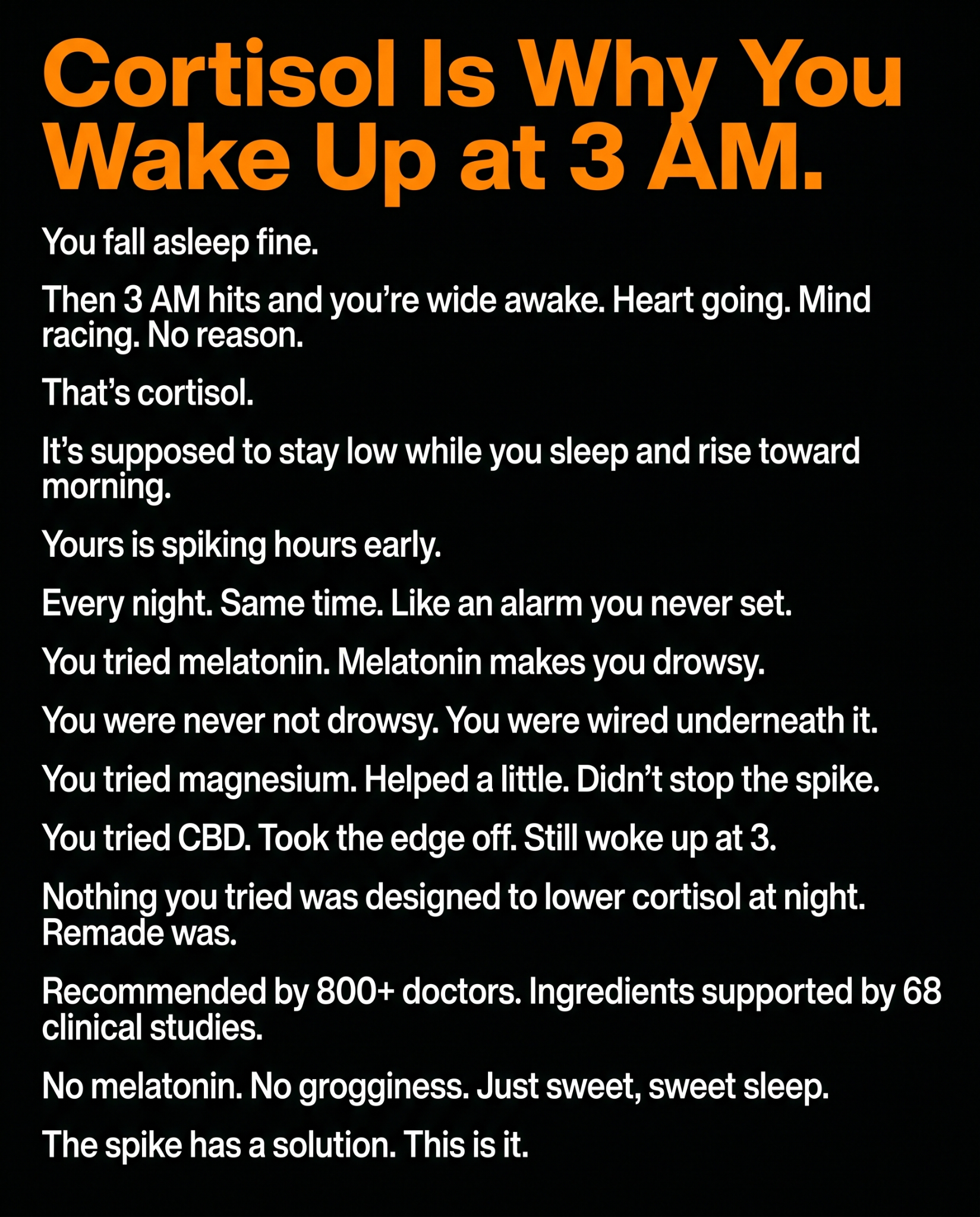
Willow Space Facebook ad: “Feel It Finally Let Go.”
Ran for 11 days, from August 31 to September 11, 2026, the last day Crush saw it.
Run by Willow Space on Facebook. Crush is not the advertiser and does not verify its claims. See this ad in Meta's Ad Library(opens in a new tab)
Want an ad like this for your product?
Crush makes new ad images for your product from this ad: your logo, your product photo, your offer.
Trials from $19.95 USD, then $79.95 USD a month. Cancel anytime.
About this ad
- Meta Ad Library ID
- 1978519356189005
- Platforms
- Facebook, Instagram, Audience Network, Messenger and Threads
- Relaunches
- 1
Ad text
I have sat in the front pew of a 300-member church for thirty-one years, and not one person in that building has ever asked me how I'm doing. Not because they are unkind. Because it would never occur to them. I am the pastor's wife. I am the woman who greets you in the lobby and remembers your daughter's surgery date and brings the casserole and sits with your mother at the hospital and knows which family is struggling and which marriage is falling apart and which teenager is in trouble — and I hold all of it without being asked, because that is what a pastor's wife does. Nobody told me this was the job. There is no job description. There is no title. There is no salary. There is no training. You marry a man who is called to ministry and the congregation assumes you were called to carry them. My name is Sheila Arden. I am fifty-seven years old. My husband David has been the senior pastor of Covenant Fellowship in Greer, South Carolina — twenty minutes north of Greenville, off Wade Hampton — for thirty-one years. We married the summer before he took the pulpit. I was twenty-six. I had a degree in elementary education from Anderson University and I had taught third grade for three years and I was good at it. The week David was offered the pastorate, we sat at our kitchen table and he said, "I think this is what God wants." I never went back to teaching. I need to explain what the last thirty-one years have looked like, because the word "pastor's wife" covers about 2% of it. I coordinate women's ministry, which means I plan twelve events a year, lead a weekly Bible study of forty women, and am the first call when any woman in the congregation has a crisis. I organize the meal trains — the system where church members bring food to families in crisis. I have personally organized 247 meal trains. I know this because I keep a notebook. David thinks the notebook is for recipes. It is not for recipes. It is so I don't forget anyone. I sit with families in the emergency room. I sit with widows the week after the funeral — the week when everyone else has gone home and the casseroles have stopped arriving and the house is quiet and the widow calls the church phone at 9 PM because she cannot figure out the cable bill and she thinks she is calling David but she is calling the phone that sits on my nightstand because we forward the church line to our house after 6. I answer the phone. Not David. Me. Because David is asleep, and if I wake him he won't sleep again until 3, and he has to preach in the morning. I have been answering that phone for thirty-one years. There is a specific kind of holding that happens in a faith community that I have never seen described in any book. When someone comes to David's office — and they come weekly, sometimes daily — they bring their worst. An affair. An addiction. A child who tried to take their own life. A diagnosis. A marriage that's been dead for years. They sit in that office and they unload it, and David holds it, and then he comes home and I hold David while he holds it. This is the part no one sees. The pastor carries the congregation. The pastor's wife carries the pastor. But here is the thing that took me thirty-one years to understand: David has a system for what he carries. He prays. He counsels. He preaches. He has a framework — a theological and professional framework — for processing grief and pain and brokenness. He has elders he can call. He has a denomination that provides pastoral counseling. He has a structure. I have a casserole. That is not a metaphor. That is literally what the church gives me for being the woman who holds everything. They give me a casserole when I'm sick and a card on my birthday and a gift card at Christmas and they tell me "we couldn't do any of this without you, Sheila" in the lobby every Sunday. And then they turn around and tell me their daughter is pregnant at sixteen and their husband is drinking again and their mother is dying and they don't know how to pray anymore and they need me to listen and I listen and I listen and I listen and I drive home and I am so full of other people's pain that I can't eat the casserole. The thing that finally broke me open was a Wednesday night in November. Small group night. We host one in our living room — eight couples, fifteen years running. Same people. David leads. I make the coffee and the dessert and I sit on the end of the couch and I participate, or I appear to participate, because what I am actually doing is scanning every face in the room and tracking who is struggling. That Wednesday, Tom Mercer — a deacon, sixty-one, a man who never misses a service — sat down in the chair by the window and his eyes were red. Nobody else noticed. I noticed because I have been reading the room for thirty-one years and I can tell when a man has been crying in his car. His wife Carol was not with him. She always comes. She was not there. After small group, I pulled David aside and said Tom looked wrong. David said he'd check on him. The next day, David told me Carol had a biopsy Tuesday. The results came back and it was stage three. I didn't sleep that night. Not because of Carol. Because of the thing that happened in my body when I saw Tom's eyes. The instant I clocked his grief — before I knew what it was, before I had any context — my chest locked. My breath shortened. My hands went cold. My body absorbed his grief like a sponge hitting water. Automatically. Without consent. Without awareness. And I realized: this has been happening to me every Sunday, every Wednesday, every phone call, every hospital visit, every meal train, every lobby conversation, every living-room small group, for thirty-one years. My body has been absorbing the emotional frequency of three hundred families and I have never once discharged any of it. Not once. David's mother, Ruth, was a pastor's wife for forty-one years. Same role. Same holding. Same phone on the nightstand. She never complained. She never broke. She was the strongest woman in any room she walked into. She died at sixty-eight — a stroke in the church kitchen on a Wednesday afternoon while she was preparing for the potluck. Nobody was holding her when she fell. She had been holding everyone else. Nobody connected forty-one years of holding to the stroke. Nobody wrote "occupational" on the death certificate. Ruth had "high blood pressure." I was twenty-six when she died — the same year I married David, the same year I became a pastor's wife. I believed the blood pressure story. I am fifty-seven now, and I sit in the front pew with a chest that locks and hands that clench into fists at 4 AM, and I understand what Ruth had: a nervous system that ran for forty-one years without ever discharging, and a cardiovascular system that was the first part to give out. I need you to understand that, because it is the reason I am writing this instead of keeping quiet for another thirty-one years. I couldn't go to therapy. I need to say that plainly. In our community — and I am not ashamed of my community, I love my community — a pastor's wife in therapy is a conversation. Not a scandal. But a conversation. "Have you heard Sheila is seeing someone?" And the conversation doesn't stay in one room. It moves through the lobby and the parking lot and the women's Bible study and eventually it becomes a question about David. "Is everything okay with Pastor David? Because Sheila..." And then it becomes a question about the church. I tried to talk to David. He is a good man and a good husband and he listened. And then he did what pastors do — he offered Scripture. He offered prayer. He said, "Cast your burden on the Lord, and He will sustain you." I wanted to say: "David, I have been casting my burden on the Lord for thirty-one years and my body is still clenched shut at 4 AM." I didn't say that. Because that sentence, in our world, sounds like a failure of faith. It is not a failure of faith. It is a failure of anatomy. My faith is intact. My nervous system is not. The word that kept me stuck was "process." David uses it. His elders use it. The denominational counselor uses it. "You need to process what you're carrying, Sheila." "Process the grief." "Process the burden." The entire framework of pastoral care is built on the word: take the raw pain, bring it to God, process it through prayer and Scripture and community, and come out the other side transformed. David processes grief through prayer, through Scripture, through a theological framework that has a word for suffering and a response to it. His processing is real. It reaches his spirit. But it does not reach his body — and he does not need it to, because his body is not the one absorbing three hundred families every Sunday. He preaches to the room. I absorb the room. His body stands at the pulpit. Mine sits in the front pew reading every face, tracking every absence, holding every red-rimmed set of eyes. We hear the same sermon. Our bodies do different work. I tried to process the way David processes. I prayed. I read. I surrendered. I laid it at the altar — not metaphorically, literally. I knelt at the altar of our church on a Tuesday morning when nobody was there and I said, "Lord, take this weight." And I felt peace. Real peace. The peace of God which passes understanding. I got up from the altar and the clenching in my jaw was still there. Because the weight was not spiritual. It was neurological. And processing — whether cognitive processing in a therapist's office, or spiritual processing at an altar — organizes the weight. It gives the weight meaning. It gives the weight a name and a place and a purpose. Processing does all of that beautifully. Processing does not remove the weight from the body. That is the word's lie: "process" promises transformation and delivers organization. You process your grief. You process your burden. You process the three hundred families and the phone at 3 AM and Tom's eyes and Carol's diagnosis. You process all of it. And all of it stays. Neatly organized. Theologically framed. Spiritually contextualized. And still clenching your jaw shut at 4 AM. Ruth processed for forty-one years. She processed grief through prayer, through service, through the same framework David uses. She processed beautifully. Her spirit was the strongest thing in any room she walked into. And her body — the part that processing never reached — gave out at sixty-eight in a church kitchen while she was serving the people she had spent forty-one years processing for. Processing is not discharge. Processing is maintenance. And maintenance on a system that never discharges is a countdown. I found the thing that helped through a woman named Marilyn Purvis. Marilyn is the wife of a pastor in Easley — about thirty minutes west. She's sixty-two. She has been a pastor's wife for twenty-eight years. We've known each other through the denomination's annual conference since 2004. The kind of knowing where you see each other once a year and you say the things that are true because you only have two hours before you go back to your congregations and pretend you said nothing. At the conference last March, we were sitting in the back of the hotel restaurant at 10 PM. Everyone else had gone to bed. Marilyn looked at me across the table and said, "You look like I did two years ago." I said, "What did you do?" She said, "I stopped asking my mind to fix what my mind didn't break." I didn't understand. She said: "Sheila, everything you've absorbed from those people — the grief, the fear, the crises, the affairs, Tom's eyes — none of it came in through your thoughts. It came in through your nervous system. Through your body. Your body read their bodies and absorbed their state. That's biology, not sin, and no amount of praying about it can reach the layer where it's stored. Not because God can't reach it. Because prayer works on the mind and the spirit. This is stored in the body. The body needs something that speaks its language." I looked this up after. I needed to understand the biology Marilyn was describing — what actually happens inside a body that absorbs for decades without discharging. When your body reads another body's distress — when you see Tom's red-rimmed eyes, or a widow's voice breaks on the phone at 9 PM, or a woman in the lobby tells you her husband hit her — your hypothalamus fires before your conscious mind registers the words. The pituitary responds. The adrenal glands release cortisol. This is the HPA axis — hypothalamic-pituitary-adrenal — the body's emergency response system. In a normal activation, the cortisol spikes, the threat passes, and the vagal nerve sends the all-clear signal. Heart rate drops. Breathing deepens. Cycle complete. In a pastor's wife, the cycle never completes. Because the next Sunday is always coming. The next phone call. The next lobby. The next pair of red-rimmed eyes. The cortisol never returns to baseline because the next activation arrives before the current one resolves. So it stays elevated — not at crisis levels, at maintenance levels. A low, constant hum beneath everything you do. You call it "just how Sundays feel." You stop noticing it the way you stop noticing the air conditioning. And chronically elevated cortisol does something that nobody told me and nobody told Ruth. It damages the walls of your blood vessels. This is cardiovascular research, not theology. Chronic cortisol elevation triggers sustained low-grade inflammation. The inflammation damages the endothelial lining of the arteries. The body repairs the damage with plaque. The plaque narrows the vessels. The narrowed vessels raise blood pressure. The raised blood pressure stresses the heart — or, in Ruth's case, the vessels in the brain. Ruth had "high blood pressure." For years. Her doctor managed it with medication. Nobody asked where the blood pressure came from. Nobody connected forty-one years of absorbing three hundred families' worth of distress — every Sunday, every Wednesday, every phone call, every hospital visit — to the slowly narrowing vessels that burst in a church kitchen on a Wednesday afternoon. She did not have a cardiovascular defect. She had an undischarged nervous system, and her blood vessels paid the compound interest on four decades of cortisol that never cleared. I am fifty-seven. Ruth died at sixty-eight. My jaw clenches at 4 AM. My chest locks in the lobby. My hands are fists when I wake. These are not symptoms of stress. These are cortisol-driven bracing patterns — the same patterns Ruth had. She processed them through prayer. She processed them through service. She processed them for forty-one years. And they killed her. The answer is not more processing. The answer is discharge — a signal that reaches the vagal nerve, the jaw, the bracing pattern, at the depth where three decades of absorbing a congregation is stored. She took out her phone. She played me something. A low sound — layered brown noise with something underneath it, shifting, warm. Not music. Not nature sounds. Not a hymn. Something I could feel in my jaw before I heard it in my ears. She said: "It's called the Sonic Shower. A woman named Amanda makes it — a small company called Sacred Willow. Six audio tracks. Thirty-seven dollars. I've been using it every night for two years and I have not told a single soul except three other pastor's wives I trust." She looked at me across the table. "Now four." I said, "Three others?" She said, "Five of us now, counting you. Five pastor's wives. Five denominations. Five states. None of our husbands know. None of our congregations know. We don't talk about it at conference. We don't mention it from the pew. We just sleep through the night for the first time in decades, and nobody asks why we look different, because nobody was looking at us in the first place." Five women. Five churches. The same weight. The same silence about the weight. The same sound, seven minutes a night, in five parsonages nobody knows about. She said her husband doesn't know. Her congregation doesn't know. She said: "I'm not telling you it fixes everything. I'm telling you it reaches the thing that Scripture and counseling and my own prayers could not reach, and I have been sleeping through the night for the first time in nineteen years." I need to address this directly, because I know the objection and I share it: this is not a replacement for faith. It is not a replacement for prayer, for Scripture, for the presence of God in your life. I am a woman who believes deeply in all three. I have not stopped praying. I have not stopped reading. I have not stopped trusting. What I have done is acknowledged that my body is not my spirit. My spirit is willing. My body was full. The fullness was not spiritual. It was neurological. The accumulation of thirty-one years of absorbing other people's pain through my nervous system required an intervention that could reach my nervous system. Not my theology. Not my cognitive beliefs. My vagal nerve. My fascia. My jaw. The place behind my sternum where the weight of three hundred families sat like a stone I couldn't put down. Prayer could not put the stone down because prayer was not what picked it up. My body picked it up. Automatically. Without permission. One room at a time, one crisis at a time, one set of red-rimmed eyes at a time, for three decades. I know what some of you are thinking. I thought it too. If prayer isn't reaching it, maybe I'm not praying right. Maybe this is a faith issue, not a body issue. Let me tell you why it's not. When I tripped on the steps last year and twisted my ankle, I prayed for healing. And I also went to the doctor and got an X-ray and wore a boot for six weeks. Nobody in my church said the boot was a failure of faith. Nobody said the X-ray replaced God. My ankle was injured. My ankle needed treatment. My nervous system is injured. My nervous system needs treatment. The sound is the boot. Not the replacement for prayer. The boot. I want to tell you what I tried before this, because I tried the things you're probably considering. Journaling. David's suggestion. I wrote morning pages for four months. Three pages, longhand, 6 AM, before the day started. I wrote about every feeling, every weight, every name. It was clarifying — I could see patterns on the page. But seeing a pattern did not discharge it. Naming the weight did not lift the weight. It organized the weight. My shelves were neater. The load was the same. Essential oils and bath rituals. I bought the starter kit. Lavender in the diffuser, Epsom salt in the bath, a candle, thirty minutes. The baths were pleasant. I felt relaxed while I was in the water. I got out, and within thirty minutes the clenching was back. Relaxation is not the same as discharge. Relaxation is a pause. The frequency starts again the moment the pause is over. A women's retreat. The denomination runs one every October. Three days. Cabins, lakeside, worship sessions, small groups with other ministry wives. I went twice. Both times I came home feeling understood — which is valuable — but not lighter. Understanding does not remove the accumulation. It comforts the person carrying it. The accumulation stays. Walking. My doctor's suggestion. Thirty minutes a day. I walked every morning for five months. My cardiovascular health improved. The clenching in my jaw did not change. Walking moves the body. It does not discharge what the body is holding. Not at the depth I needed. After all of it — the journaling, the baths, the retreats, the walking — I understood what the difference was. The thing that actually works has to meet five conditions. It has to bypass the conscious mind entirely — no instructions, no visualization, no breathing pattern to remember. It has to use layered frequencies, not a single tone, because a single tone masks and layered frequencies entrain. It has to be calibrated for the vagal nerve specifically, not for "relaxation" generically — those are different targets at different depths. It has to be short enough to use every day without it becoming another obligation in a life that's already all obligation. And it has to work as a protocol — morning, emergency, and night — not a single ambient track you play on repeat and hope something shifts. The Sonic Shower is the only thing I found that does all five. What the Sonic Shower does that none of those things did is simple. It doesn't ask me to think, pray, journal, visualize, or do anything at all. I put on headphones. I press play. I close my eyes. And layered brown noise and somatic binaural frequencies move through the same pathways the pain came in on. That is the difference. The pain came in through proximity — through voices, through the specific pitch of a man whose wife has cancer, through the way grief travels from one body into the next through touch and presence. The Sonic Shower uses those same pathways in reverse. Frequencies that bypass the conscious mind and speak directly to the vagal nerve, the jaw, the chest, the bracing pattern. Not from above, through the mind. From below, through the body. I looked it up afterward. I needed to know this wasn't wishful thinking. A 2005 study published in Anaesthesia — a peer-reviewed medical journal, not a devotional blog — randomized 108 patients into three groups. One received binaural beat audio for thirty minutes. One received plain sound. One received nothing. The researchers measured anxiety with a validated clinical scale. The binaural beat group showed significantly lower anxiety than both other groups. The plain sound didn't do it. The silence didn't do it. The specific layered frequencies did. Published. Peer-reviewed. Measured. Not testimony — data. There are six tracks — three core sessions (one for the end of the day, one for emergencies, one for the morning), each in a guided version and an instrumental version. The guided version has a voice. The instrumental is just the frequencies. I started with the guided Commute Scrub at bedtime. Seven minutes. I was asleep before it ended. I didn't need to believe in it. I needed to put on the headphones. If you've read enough: 👉 go.mywillowspace.com/ss/8 Here is what happened, honestly. The first two nights, nothing I could name. I fell asleep faster than usual, but I've had nights like that before. I didn't attribute it to anything. Night three. I woke at 4:15 — an hour later than my usual 3:15 — and noticed that my hands were not fists. I have been waking up with my hands clenched into fists for at least a decade. That night, they were open. Relaxed. Lying flat on the mattress. I stared at them in the dark for a long time. Week one. The jaw pain — the pain I had attributed to TMJ, to aging, to stress — dropped noticeably. Not completely. But enough that I stopped reaching for the ibuprofen at bedtime. I had been taking 400 mg of ibuprofen every night for three years. I was buying a 500-count bottle of ibuprofen every eleven weeks. I know because the pharmacy auto-refills it. My last refill was fourteen weeks ago. There are 340 tablets left. I counted. Week two. I made it through a Sunday morning without the chest lock. Nobody said anything unusual to me. Nobody brought me a crisis. But usually, just BEING in the lobby — scanning the room, reading faces, absorbing the ambient state of 300 people filing past me — was enough to leave me clenched by noon. That Sunday, I drove home and I noticed I was breathing from my stomach. Not my throat. I had been breathing from my throat for so long I thought that was how women breathe. Week three. David noticed. He didn't say "you look different." He said, "You're humming." I was. I had been humming while I unloaded the dishwasher. I hadn't hummed in years. Humming requires a relaxed jaw and an open throat. I had neither of those things for so long that humming had simply left my body without me noticing. Week four. I sat in the front pew on a Sunday and I listened to David preach and I was just in the room. Not scanning. Not tracking. Not absorbing. Just sitting. In a room full of three hundred people, hearing a sermon, like a woman in a church. It lasted about twenty minutes before the old pattern kicked back in. But those twenty minutes were the first time in thirty-one years I had sat in that pew without working. If you want to know whether this is doing anything, track one number. Just one. How many nights per week you reach for the ibuprofen. Or the Tylenol. Or whatever it is you keep on your nightstand. Write it down this week. All seven nights. Then start the Sonic Shower. At week three, count again. That was the number that proved it to me before anything else did. Seven nights a week became zero in fourteen days. I didn't decide to stop taking it. I forgot to. Because there was nothing to take it for. I had a dental cleaning at week six. Dr. Farid has been making night guards for me for three years. He does the thing where he checks the jaw range of motion — open, close, side to side. He did it, then he did it again. Then he sat back and said: "Sheila, your TMJ tension is significantly reduced. Did your doctor change your prescription?" I said no. He said: "Something changed. Your jaw is opening fourteen millimeters wider than your last visit. That doesn't happen from a night guard alone." I didn't tell him what it was. I just smiled. But fourteen millimeters is not an opinion. It's a measurement. Two months in, Marilyn called me. She didn't ask if it was working. She said, "When did your shoulders come down?" I said, "Somewhere around week three." She said, "Mine too. Three weeks. Every single one of us. Three weeks." A woman named Helen — not a close friend, just someone who sits in the third row and always brings lemon bars to the potluck — stopped me in the parking lot after service. She said, "Sheila, I don't know what you're doing differently but you look ten years younger." She meant it as nothing. A passing comment from a woman I organize meal trains for. I sat in my car for five minutes after she walked away. Because Helen has sat in that third row for nineteen years and she has never once commented on how I look. She noticed because the change was visible to someone who wasn't looking for it. Last Sunday after service, Tom Mercer — the same Tom, the deacon, the one whose eyes started all of this — came up to me in the lobby. Carol's treatment is going well. He grabbed my hand and said, "Sheila, I don't know how you do it. Thirty-one years of this. You're the strongest woman I know." He meant it as a compliment. And I received it as one. But what I wanted to say — what I will say now, to you, because you might be the only person who understands — is that I was never strong. I was full. And I didn't know there was a difference until the weight started to move. I am not selling anything. I am not an affiliate. I do not receive a discount or a commission or anything else from Sacred Willow. I am a pastor's wife in Greer, South Carolina, and the only reason I am writing this is that there are women in churches all over this country who are holding what I was holding, and nobody is going to tell them about this from a pulpit. The whole thing costs $37. One payment. If you want to try it: 👉 go.mywillowspace.com/ss/8 The Sonic Shower Protocol is six audio tracks. $37. You keep them forever. There is no subscription, no app, no course, no coach. You put on headphones, you press play, you close your eyes. Seven minutes. Thirty-seven dollars. I spent $45 on the essential oil starter kit that gave me pleasant baths and changed nothing. I spent $185 on a single women's retreat registration that left me understood but not lighter. I spent $92 on walking shoes that improved my cardiovascular health and didn't move the clenching in my jaw by one millimeter. I spent $8 a bottle on ibuprofen every eleven weeks for three years. Thirty-seven dollars. One time. You keep it forever. 👉 go.mywillowspace.com/ss/8 365 days. Not 30. Not 90. A full year. Every meditation app charges you monthly and guarantees nothing. Every supplement gives you 30 to 90 days. Amanda at Sacred Willow gives you a year and lets you keep the tracks even if you ask for your money back. I have never seen a company that confident in what they sell. I ordered it because the risk was not $37. The risk was zero. P.S. I told you about Ruth at the beginning. Sixty-eight. A church kitchen. A Wednesday potluck she was preparing alone because she was always the one preparing alone. Every night I put on the headphones, I think: I am eleven years from where Ruth was. Eleven years on the same path, with the same clenching jaw, the same cortisol narrowing the same vessels. Every session is a deposit against a timeline I can see because I watched it take someone I loved. Somebody should have given Ruth seven minutes. Nobody did. I am giving them to myself. And I am giving this to you. P.P.S. This is not a spiritual tool. It is not worship music. It is not a devotional. It is a sound that speaks to your nervous system — the part of you that has been absorbing the room for decades. Your faith is between you and God. This is between you and your body. The two don't compete. P.P.P.S. The guarantee — 365 days, keep everything, no questions — is the most generous thing I have seen from a company this small. I wouldn't have ordered it without it. I ordered it because the risk was zero and the alternative was another decade of 3 AM and clenched fists and breathing from my throat. That is not a trade I was willing to keep making. 👉 go.mywillowspace.com/ss/8
Where the ad sends people
go.mywillowspace.com
Feel It Finally Let Go.
"I didn't expect it to actually work, thank you." — Nora L
Learn more: go.mywillowspace.com(opens in a new tab)