Sarah Bennet
Sarah Bennet Facebook ad: “Your Favorite Hymn Quotes a Book They Took Out of Your Bible”
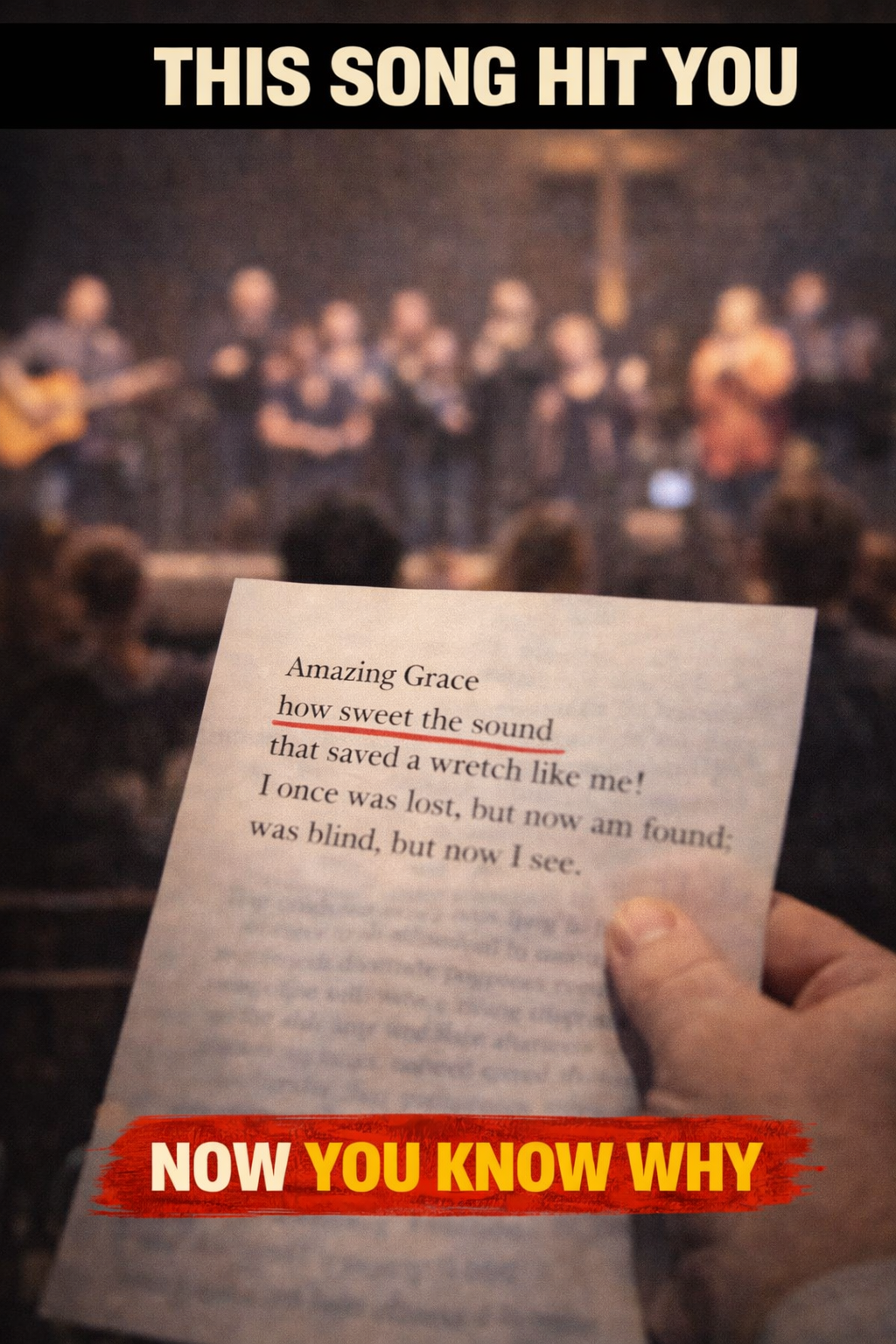
Ran for 3 days, from June 20 to June 23, 2026, the last day Crush saw it.
Run by Sarah Bennet on Facebook. Crush is not the advertiser and does not verify its claims. See this ad in Meta's Ad Library(opens in a new tab)
Want an ad like this for your product?
Crush makes new ad images for your product from this ad: your logo, your product photo, your offer.
Trials from $19.95 USD, then $79.95 USD a month. Cancel anytime.
About this ad
- Meta Ad Library ID
- 1812059330201006
- Platforms
- Facebook, Instagram, Audience Network, Messenger and Threads
- Relaunches
- 1
Ad text
I've been leading worship at my church for 15 years. I've sung thousands of songs from the front of the sanctuary. Some I chose because they fit the sermon. Some I chose because they fit the season. And a handful I chose because they break something open in me every single time I sing them. Last month I was putting together a worship set for a Sunday on wisdom. I wanted everything to connect — the sermon was on Proverbs, so I wanted songs that echoed the same themes. Practical wisdom. Walking with God in daily life. Applying faith to real decisions. I started looking up the scriptural basis for some of the older hymns in our rotation. I like to include the verse references in the worship slides so the congregation can look them up later. That's when I found something I wasn't prepared for. One of our oldest hymns — one we sing at least once a month, one that the congregation knows by heart, one that people have told me moves them more than almost any other song we do — quotes a passage I couldn't find in my Bible. I checked the hymnal's scripture index. It referenced the Wisdom of Solomon. I went to my Bible. Looked in the table of contents. Genesis through Revelation. No Wisdom of Solomon. I checked my concordance app. Nothing. Checked my study Bible. Nothing. Searched three different Bible apps. The Wisdom of Solomon isn't in any Protestant Bible. The hymn we've been singing for years — the one that makes people close their eyes and lift their hands — is quoting a book that was removed from our Bible over 200 years ago. . I assumed it was a one-time thing. An old hymn writer drawing on a poetic tradition outside the canon. Interesting but isolated. So I kept checking. I went through every hymn in our regular rotation and traced each one back to its scriptural source. It wasn't isolated. Another beloved hymn draws its central imagery from Sirach — practical wisdom about living faithfully that reads like an expanded Proverbs. The hymn writer cited chapter and verse. The chapter and verse aren't in my Bible. A communion hymn we sing every month contains language that scholars trace directly to the Wisdom of Solomon — specific phrasing about the righteous and their reward that doesn't appear anywhere in the 66-book canon. A funeral hymn — one of the most comforting songs in our tradition — draws from a passage about the souls of the righteous being in God's hand. "No torment will ever touch them." That passage is Wisdom of Solomon chapter 3. It's not in the Protestant Bible. An Advent hymn references imagery that scholars connect to passages in the removed books — language about wisdom coming down from heaven, dwelling among humanity. The Gospel of John echoes this imagery. But the original source the hymn writer was drawing from wasn't John. It was an older text. One that was removed. Five hymns. Five connections to books that aren't in my Bible. The songs remembered what my Bible forgot. . I brought this to my pastor after the service. Not confrontational. Just confused. "Did you know that several of our hymns quote books that aren't in the Protestant Bible?" He nodded slowly. "The old hymn writers had access to the Apocrypha. Most of them considered it scripture. It was in their Bibles." "It was in their Bibles?" "The original 1611 King James included those books. They were right there between the Old and New Testaments. The hymn writers who lived in that era — they were reading and singing from an 88-book Bible. Not a 66-book Bible." I stared at him. "So the hymn writers had a bigger Bible than we do?" "Yes. The books were removed later. By publishers. To save on printing costs." I'd been leading worship for 15 years. Choosing songs. Preparing scripture references. Building sets that connected music to the word of God. And the songs were connecting to a bigger word than the one I had. The music knew something my Bible didn't. . That night I started researching. The original 1611 King James Bible included the Apocrypha — the Wisdom of Solomon, Sirach, Maccabees, and others. Published intentionally by the translators. Right there in the middle of the Bible. The hymn writers of the 17th, 18th, and 19th centuries were reading from that complete edition. When they wrote songs about wisdom, about righteousness, about comfort in death, about the nature of God — they were drawing from all of it. 88 books, not 66. Then publishers removed the Apocrypha to reduce printing costs. The Bible got smaller. But nobody updated the hymnals. The songs kept quoting texts the printed Bible stopped including. And nobody noticed. Because nobody checks where hymns come from. You just sing them. You feel them. You assume they're from your Bible. But some of them aren't. Some of the most powerful, most beloved, most emotionally resonant songs in the Christian tradition are quoting scripture you've never been allowed to read. The music preserved what the printers removed. . I also found out that it wasn't just hymns. The New Testament itself quotes and references these same books. Jude quotes the Book of Enoch by name. Verse 14. Calls it prophecy. That book isn't in the Protestant Bible. Paul echoes the Wisdom of Solomon in Romans. Scholars have documented the parallels for centuries. The author of Hebrews describes people who were "sawn in two" for their faith. That story comes from a text called the Ascension of Isaiah. Not in the Protestant Bible. Paul names two Egyptian magicians — Jannes and Jambres — who opposed Moses. Those names come from Jewish texts outside the 66-book canon. The hymn writers weren't drawing from fringe sources. They were drawing from the same texts the apostles were drawing from. The same library. The same scripture. The same 88-book Bible that existed before publishers made it 66. . I found out the Ethiopian Orthodox Church never removed any of these books. They've had the same 88-book Bible for over 1,500 years. The same collection they've had since Christianity arrived in Ethiopia — before the Western canon was finalized. Before the publishers. Before anyone decided what to cut. The Ethiopian eunuch in Acts 8 — the one Philip baptized — went home with these scriptures. His church kept all of them. They also kept God's true name — Yahweh — on every page. The same name that was stripped out of the King James Bible over 6,800 times and replaced with "LORD." When the Dead Sea Scrolls were discovered in 1947, the oldest biblical manuscripts ever found didn't match the Western Protestant Bible. They matched Ethiopia's. For 2,000 years, the world read 66 books while Ethiopia quietly protected all 88. Not because they were heretics. Because they were never conquered. The only Christian nation never colonized by a foreign power. The only nation that claims to guard the Ark of the Covenant to this day. . I ordered the Complete Ethiopian Bible from The Living Word. All 88 books. Modern English. Nothing removed. Nothing censored. Yahweh's true name on every page. The first thing I did was look up the passages our hymns had been quoting. I found every single one. The Wisdom of Solomon on the fate of the righteous. Sirach on practical wisdom for daily life. The imagery the Advent hymn draws from. The communion language. The funeral comfort passage. All there. All in one Bible. All in the books that were removed from mine. Then I kept reading. Maccabees explained the 400 years between the testaments that nobody talks about. How the Pharisees formed. Why the Jewish people hated Roman occupation by the time Jesus arrived. Why Jesus celebrated Hanukkah in John 10:22 — a holiday whose origin story isn't in the Protestant Bible. Jubilees filled in the Genesis timeline with every date, every name, every detail the shorter version skips. It's not mystical. It's just context. The kind of context that makes the rest of Genesis make sense. Enoch explained Genesis 6 — the Nephilim, the fallen angels, why the flood was necessary. It also contains the "Son of Man" prophecy — the exact title Jesus chose for Himself over 80 times. Not a humble title. A cosmic claim. The book that explains what it means was removed. The Bible I'd been reading my whole life wasn't wrong. It was the abridged edition. And the songs I'd been leading worship with were quoting from the unabridged version the whole time. . The following Sunday, I did something I'd never done before. Before the first song, I told the congregation where it came from. "This hymn quotes from the Wisdom of Solomon, chapter 3. That book was in the Bible for over a thousand years before it was removed by publishers to save on printing costs. It's not in our Bible. But it's in our hymnal. And it's been in your hearts every time you've sung this song." The room was quiet. Then we sang it. It sounded different that morning. Not because the melody changed. Because the congregation knew where the words came from. And they knew those words had been taken from them. After the service, more people came up to me than after any sermon I can remember. Not about the music. About the books. "I didn't know our hymns quoted books that aren't in our Bible." "Where can I read the Wisdom of Solomon?" "Is there a Bible that has all 88 books?" I told them about The Living Word. Three people ordered copies that week. One of them was our choir director. She's been singing these songs for 30 years. She said, "I always felt like these hymns touched something deeper than the passages I could find in my Bible. Now I know why. They were touching books I didn't have." . I'm not writing this to criticize any church or any tradition. I love our worship. I love our hymns. I love the way music opens hearts in ways that sermons sometimes can't. But the songs know something we forgot. The hymn writers had an 88-book Bible. We have a 66-book Bible. And the songs are still trying to connect us to the books we lost. The music preserved what the printers removed. I still lead worship every Sunday. I still love every song in our rotation. But now I also read the books our songs come from. The books the hymn writers were reading. The books the apostles were reading. The books Ethiopia never removed. And when we sing those hymns now, I don't just feel them. I understand them. . The Living Word is a small publisher. Just one woman who believed people deserved the complete canon — not the version that survived budget cuts and printing shortcuts. She's selling it for a fraction of what it normally costs. Not to make money, but because she believes more people should have it. Over 15,000 people have already ordered their copy. Every order comes with a 90-day money-back guarantee. If you read it and it doesn't change the way you understand the songs you sing every Sunday, send it back. No questions asked. I'll leave a link to their website below 👇 https://thelivingword.shop/pages/ethiopian-5 Here's the only thing I'd flag: The Living Word is a small operation and these aren't mass-produced. They restock in batches, and I've seen them sell out more than once. If the link above works, copies are available. If it doesn't, they'll restock in about two months. I'm not in a rush to pressure anyone. This isn't that kind of post. But if you've ever sung a hymn in church and felt it touch something deeper than the verses you could find in your Bible — if you've ever felt like the music knew something the text didn't — you were right. The songs remember what the printers forgot. The books they were quoting are still out there. They've been preserved for 2,000 years. Someone just decided you didn't need to read them. The music disagreed. I'll leave the link below 👇 https://thelivingword.shop/pages/ethiopian-5 P.S. I'm not paid to write this. I'm not affiliated with The Living Word. I'm just a worship leader who found out the songs I've been singing for 15 years are quoting books that were removed from my Bible. Now I read those books. And the songs make more sense than ever. P.P.S. If you're still seeing this post, copies are still available. I'll update this when they're not.
Where the ad sends people
thelivingword.shop
Your Favorite Hymn Quotes a Book They Took Out of Your Bible ☝️
The Living Word
Learn more: thelivingword.shop(opens in a new tab)