Sarah Bennet
Sarah Bennet Facebook ad: “You Are Reading The Wrong Bible”
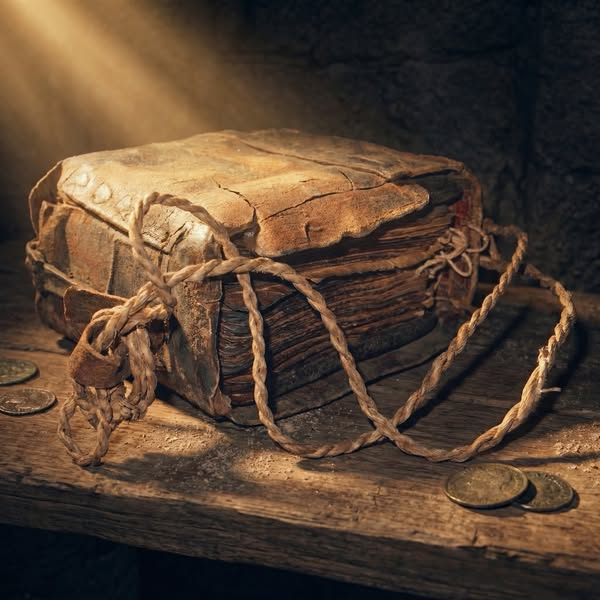
Ran for 38 days, from April 24 to June 1, 2026, the last day Crush saw it.
Run by Sarah Bennet on Facebook. Crush is not the advertiser and does not verify its claims. See this ad in Meta's Ad Library(opens in a new tab)
Want an ad like this for your product?
Crush makes new ad images for your product from this ad: your logo, your product photo, your offer.
Trials from $19.95 USD, then $79.95 USD a month. Cancel anytime.
About this ad
- Meta Ad Library ID
- 2045537116030352
- Platforms
- Facebook, Instagram, Audience Network, Messenger and Threads
- Relaunches
- 1
- Niche
- Business & Money
Ad text
The moment I realized Hebrews 11 describes a martyr being "sawn in two" and I couldn't find that story anywhere in my Old Testament, I knew something was missing from my Bible. I was doing a read-through-the-Bible-in-a-year plan. One of those structured ones with daily readings. I'd been consistent for nine months. Felt good about it. I got to Hebrews 11. The "Hall of Faith" chapter. The greatest highlight reel in scripture. Verse 37 lists how the faithful suffered. Stoned. Tempted. Killed with the sword. Then this phrase: "They were sawn in two." I stopped reading. Reread the verse. Sawn in two. That's not a metaphor. That's a specific, brutal execution. The author of Hebrews is clearly referencing a real person. A real story. A story the original audience obviously knew. So I went looking for it. I checked Genesis through Malachi. Every prophet. Every narrative. Every act of violence and persecution. Nobody gets sawn in two. Not in the Protestant Old Testament. I searched the concordance app on my phone. Nothing. I checked three different study Bibles. One had a footnote that said "Traditionally attributed to Isaiah, per Jewish tradition." Per Jewish tradition. Not per the Bible. That bothered me. Because Hebrews isn't quoting folklore. The author lists this execution alongside verifiable stories—Abraham, Moses, Rahab, David. These are historical references. Why would the author suddenly switch to an unverifiable legend in the middle of the list? He wouldn't. He was referencing a text his audience had access to. A text I didn't have. I went looking for it. Found it in a book called The Ascension of Isaiah. An ancient Jewish text that describes the prophet Isaiah being executed by King Manasseh—placed inside a hollow log and sawn apart while he continued to prophesy. It's graphic. It's heartbreaking. And it explains Hebrews 11:37 perfectly. But that book isn't in my Bible. That sent me down a path I didn't expect. I started looking at other places where the New Testament seems to reference stories that aren't in the 66-book Protestant canon. And I kept finding them. Paul writes to Timothy and mentions two Egyptian magicians named Jannes and Jambres who opposed Moses. That story isn't in Exodus. Those names come from Jewish texts outside the standard canon. Paul talks about a "spiritual rock" that followed Israel through the wilderness. That detail doesn't come from the five books of Moses alone. It comes from traditions preserved in texts like the Book of Jubilees. The author of Hebrews describes Moses choosing to suffer rather than enjoy the "pleasures of sin for a season." The expanded version of that choice—the political dynamics, the timeline, the reasoning—is found in Jubilees, not in Exodus. The New Testament writers were reading books I'd never been given. I brought this up at church on a Sunday. Not in a confrontational way. Just casual. After the service, talking to one of the elders. "I was reading Hebrews 11 and I noticed it references a story that isn't in our Old Testament. The prophet being sawn in two. Do you know where that comes from?" He thought for a second. "That's probably just an oral tradition. Not everything needs a written source." But Hebrews treats it as history. Lists it alongside Abraham and Moses. "Well," he said, "we have everything we need for salvation in the 66 books." Maybe. But I wasn't asking about salvation. I was asking about context. About understanding what the apostles understood when they wrote the words I was reading. I started researching. Not conspiracy sites. Not YouTube rabbit holes. Just history. I found out that between the last Old Testament prophet, Malachi, and the birth of Jesus, there are roughly 400 years. Four centuries. The period most pastors call "The Silent Years" or "The Intertestamental Period." But God wasn't silent during those 400 years. That period produced the Maccabean revolt. The rise of the Pharisees and Sadducees. The Hasmonean dynasty. The transition from Persian to Greek to Roman control. The development of synagogues. Every single one of those things shapes the world Jesus walked into. You can't understand why the Pharisees acted the way they did without knowing the Maccabean crisis. You can't understand why the Jewish people hated Roman occupation so viscerally without knowing what happened under Antiochus Epiphanes. That history is recorded. In 1 Maccabees. In Sirach. In the Wisdom of Solomon. In books that were in the Christian Bible for over a thousand years. Books that were removed. Not because they were proven false. Not because new evidence discredited them. They were removed because printing them was expensive, and certain Protestant publishers in the 1800s decided they weren't essential. They weren't removed by God. They were removed by a budget decision. I learned that the original 1611 King James Bible—the one people hold up as the gold standard of English scripture—included the Apocrypha. It was published with those books between the Old and New Testaments. The translators put them there on purpose. They were only stripped out later. By printers. To save on paper costs. That changed something in me. I also learned that the Ethiopian Orthodox Church never removed any of these texts. They've maintained the same 88-book canon for over 1,500 years. The same collection they've had since Christianity arrived in Ethiopia in the fourth century. While Western churches argued about which books to keep and which to cut, Ethiopia just kept reading the whole library. The same Ethiopia mentioned in Acts 8, where Philip baptized the Ethiopian eunuch. One of the first recorded conversions in the New Testament. That man went home with scripture. And his church kept it all. And they didn't just keep the extra books. They kept God's true name — Yahweh — on every page. The same name King James stripped out over 6,800 times and replaced with "Lord." The Dead Sea Scrolls, discovered in 1947, confirmed what Ethiopia had been saying all along. The oldest biblical manuscripts ever found didn't match the western Bible. They matched Ethiopia's. For 2,000 years, the world read 66 books while Ethiopia quietly protected all 88. Not because they were heretics. Because they were never conquered. I found a copy of the Complete Ethiopian Bible by The Living Word. The full canon. All 88 books. Modern English. Readable formatting. I hesitated before ordering it. Some part of me still felt like I was crossing a line. But I ordered it anyway. The first thing I read was 1 Maccabees. It reads like a war narrative. Detailed. Historical. Specific names, dates, battles. It tells the story of how Antiochus Epiphanes desecrated the Temple in Jerusalem. Set up a pagan altar. Outlawed the Torah. Executed mothers who circumcised their children. And then a family—the Maccabees—fought back. Against impossible odds. With faith and guerrilla tactics. They won. They recleansed the Temple. They relit the menorah. That's where Hanukkah comes from. Jesus celebrated Hanukkah. It's mentioned in John 10:22. But the story behind it? Not in the Protestant Bible. Without 1 Maccabees, you don't understand the political powder keg Jesus walked into. You don't understand the Zealots. You don't understand why the crowds wanted a military Messiah. You don't understand why the Pharisees cared so obsessively about the Law—because their grandparents died to protect it. Then I read the Wisdom of Sirach. It felt like Proverbs, but longer and more specific. Practical wisdom about controlling your tongue. About choosing real friends. About how to raise children. About grief. About patience. It didn't feel foreign. It felt like the part of Proverbs that should have been there all along. Then I read the Book of Jubilees. Jubilees takes the Genesis narrative and fills in the gaps. It gives you the timeline. The genealogies. The reasoning behind events that Genesis mentions in a single verse but doesn't explain. It explains the origin of demons—where they came from, why God allowed some to remain. It explains the calendar system the Israelites used. It explains why certain feasts fell on certain days. It's not weird or mystical. It's just context. The kind of context that makes everything else click. And then I read Enoch. The book Jude quotes by name in the New Testament. The book found among the Dead Sea Scrolls alongside Genesis and Isaiah. The book the early church fathers—Tertullian, Irenaeus, Clement of Alexandria—treated as authoritative scripture. Enoch explains Genesis 6. The "sons of God" who took human wives. The Nephilim. The corruption that led to the flood. It names the fallen angels. Describes what they taught humanity. Explains why God's judgment was so severe. And it contains messianic prophecy. A figure called the "Son of Man" who would come with his holy ones to execute judgment. The exact imagery Jesus used to describe Himself in the Gospels. When Jesus called Himself the "Son of Man" repeatedly, He wasn't just being humble. He was pointing back to Enoch's vision. His audience would have known that. I didn't know it. Because I didn't have the book. The Bible I'd been reading my whole life wasn't wrong. It was just the abridged edition. Like reading a biography that skips the subject's childhood and all the historical context and then wondering why the middle chapters feel confusing. I still read my King James. I still love it. I'm not trying to throw anything away. But now I also have the full library. The books the apostles quoted. The history the New Testament assumes you know. The context that makes the "Silent Years" anything but silent. Two months after I got the book, a friend from church saw it on my desk. Thick. Imposing. He picked it up and flipped through the table of contents. "Wait—Maccabees is in here? And Enoch?" "All of it," I said. "88 books. The full Ethiopian canon." He stared at the table of contents for a long time. "I always wondered where the Hanukkah story was," he said quietly. "I just assumed it was in the Old Testament and I'd missed it." He hadn't missed it. It had been removed. He ordered his copy from The Living Word that night. I'm not here to tell anyone their Bible is wrong. I'm not looking to start arguments. I just know that the New Testament quotes books most Protestants have never read. That the apostles assumed their audience knew texts we've never been given. That there are 400 years of history between the testaments that nobody handed me. The Ethiopian church preserved those texts. The Dead Sea Scrolls confirmed their antiquity. The early church fathers cited them as authoritative. Someone decided, a few centuries ago, that I didn't need them. I disagree. And now I have them. If you've ever wondered why Hebrews describes a martyrdom you can't find in your Old Testament, or why there's a 400-year gap between Malachi and Matthew that nobody fills in, or why the apostles seem to reference stories you've never heard, you're not alone. The answers exist. They've been preserved. In Ethiopia. In the ancient manuscripts. In the books the first Christians used. Someone just decided you didn't need them. I needed them. And now I have them. . If you want to read the same complete scripture, here's what I'd tell you. The version I found — the Complete Ethiopian Bible by The Living Word — is the only one I've seen that gets it right. All 88 books. Nothing removed. Nothing edited. Yahweh's true name on every page, not replaced with "Lord." It includes the Book of Enoch. Jubilees. Maccabees. Sirach. The Wisdom of Solomon. The Ascension of Isaiah. Every text I mentioned above. The books the apostles quoted. The history the New Testament assumes you know. The Living Word is a small publisher. No corporate backing. No big distribution deal. Just one woman who believed people deserved access to the complete canon and not just the version that survived budget cuts. She's selling it for a fraction of what it normally costs. Not to make money, but because she believes more people should have it. Over 15,000 people have already ordered their copy. Every order comes with a 90-day money-back guarantee. If you read it and it doesn't change the way you understand scripture, send it back. No questions asked. I'll leave a link to their website below 👇🏻 https://thelivingword.shop/pages/ethiopian-5 Here's the only thing I'd flag: The Living Word is a small operation and these aren't mass-produced. They restock in batches, and I've seen them sell out more than once. If the link above works, copies are available. If it doesn't, they'll restock in about two months. I'm not in a rush to pressure anyone. This isn't that kind of post. But if you've been feeling the same gaps I felt — the missing context, the stories that don't quite connect, the 400 years nobody explains — the answers are in this book. They've been there for 2,000 years. Someone just kept them from you. I'll leave the link below 👇🏻 https://thelivingword.shop/pages/ethiopian-5 P.S. I'm not paid to write this. I'm not affiliated with The Living Word. I'm just a Christian who spent thirty years reading the abridged edition and didn't know it. I want other people to have what I found. P.P.S If you're still seeing this post, copies are still available. I'll update this when they're not.
Where the ad sends people
thelivingword.shop
You Are Reading The Wrong Bible☝️
The Living Word
Learn more: thelivingword.shop(opens in a new tab)