Zoomies
Zoomies Facebook ad: “Nobody with a stiff older dog wants to hear this, and I've…”
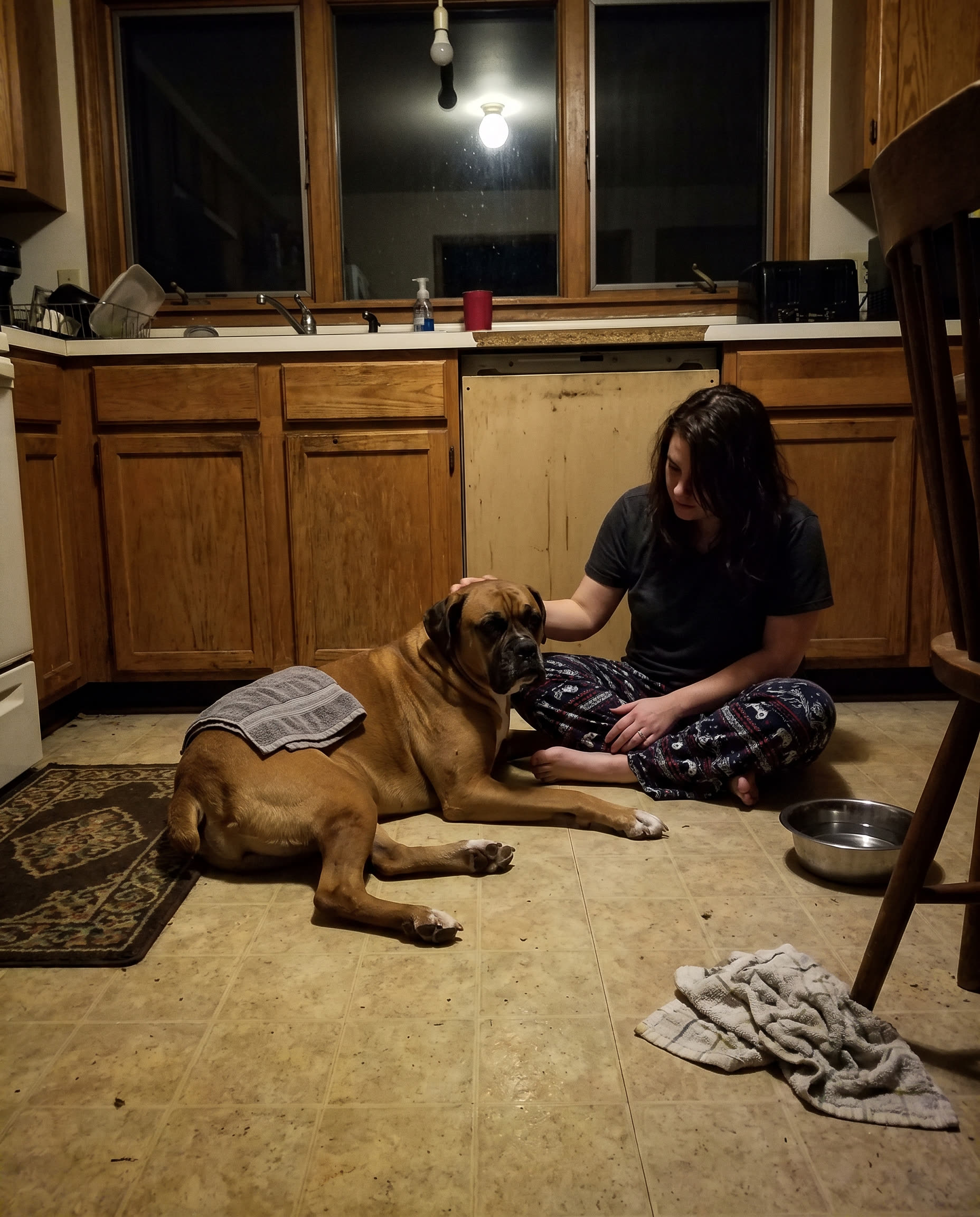
Ran for 5 days, from September 3 to September 8, 2026, the last day Crush saw it.
Run by Zoomies on Facebook. Crush is not the advertiser and does not verify its claims. See this ad in Meta's Ad Library(opens in a new tab)
Want an ad like this for your product?
Crush makes new ad images for your product from this ad: your logo, your product photo, your offer.
Trials from $19.95 USD, then $79.95 USD a month. Cancel anytime.
About this ad
- Meta Ad Library ID
- 1820331859123889
- Platforms
- Relaunches
- 0
Ad text
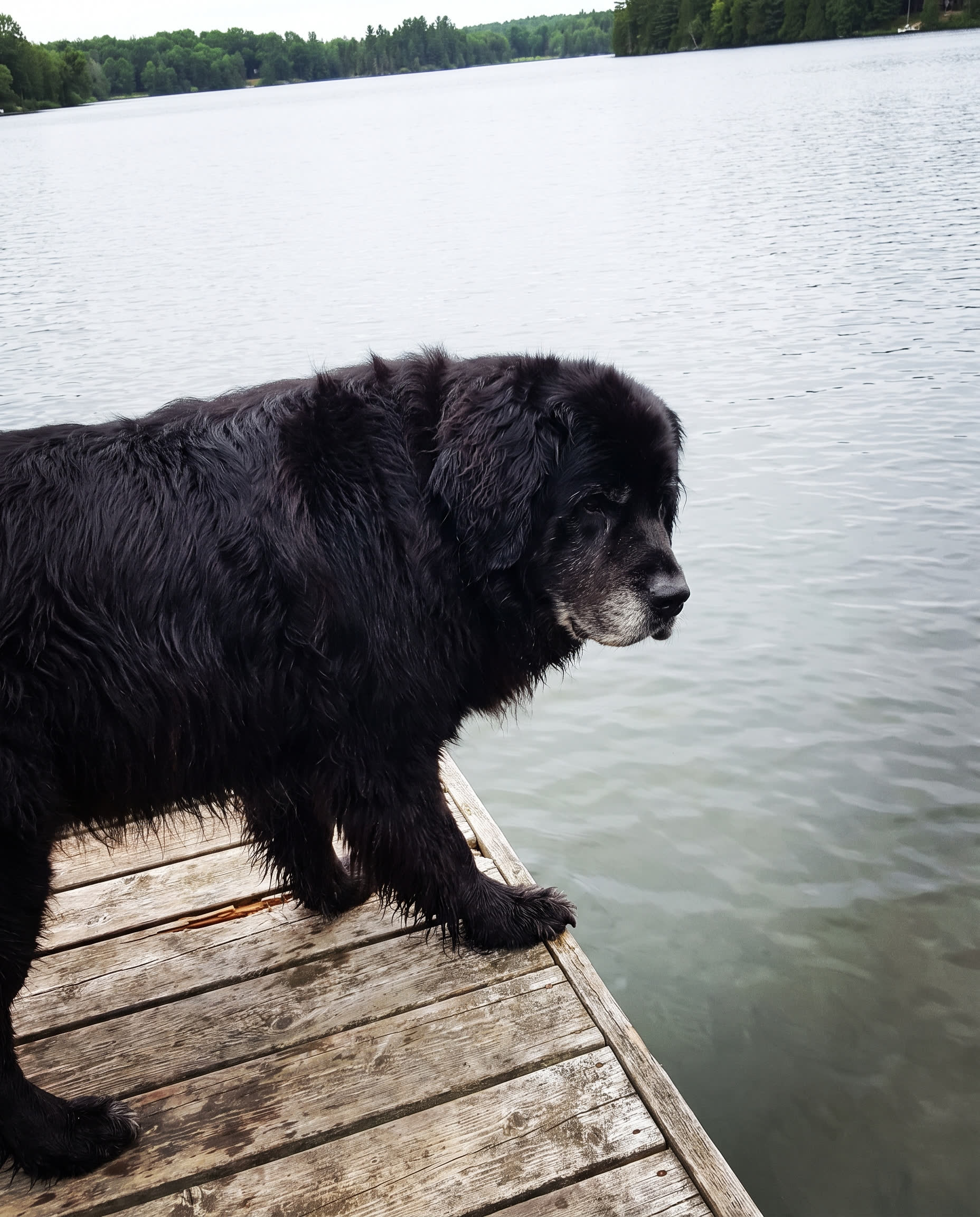
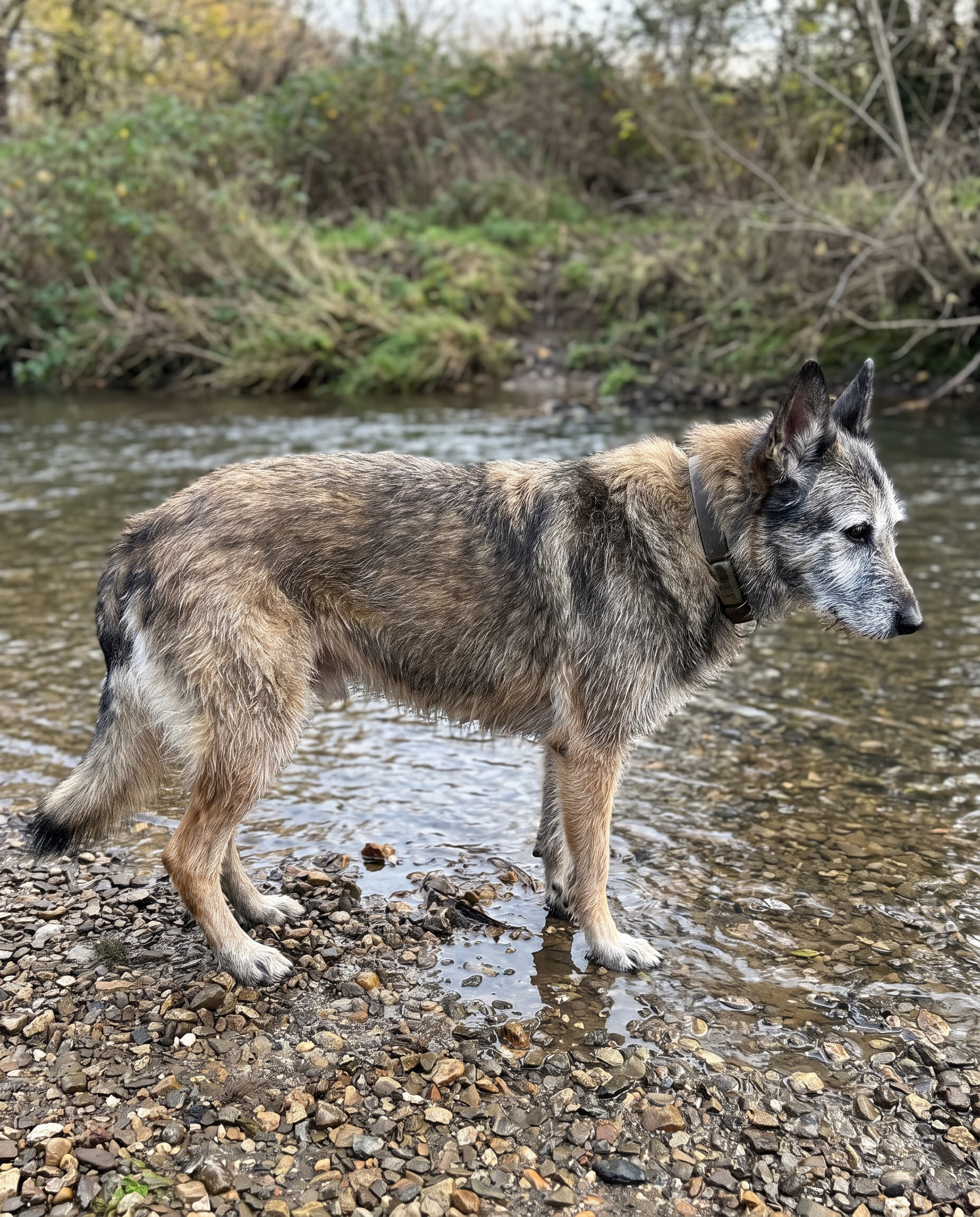
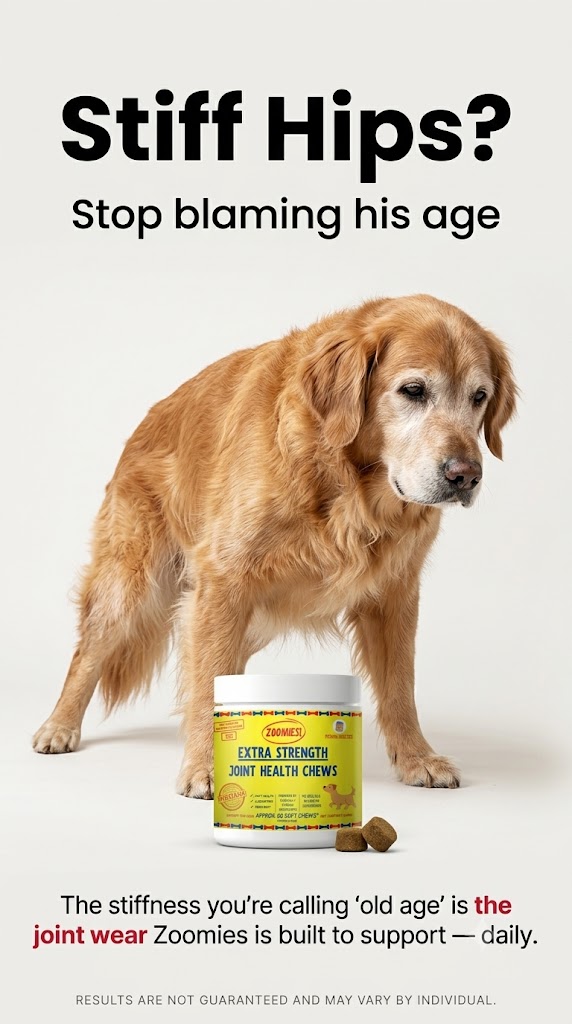
I'm going to say something that nobody with a stiff older dog wants to hear, and I've stopped caring whether it upsets people. Glucosamine isn't going to do it. Chondroitin isn't going to do it. Another bag of the same thing with a different dog on the front isn't going to do it. None of it is going to work. I know, because I bought the lot. Every tub. Every chew. Every powder. Every "extra strength" version of the thing that had already failed. For eighteen months. And it ended with my dog's knee letting go and a three-thousand-five-hundred-dollar surgery — because I spent a year and a half managing a stiffness problem that was never only a stiffness problem. And the worst part? My other dog started doing the same thing. Same sideways sit. Same pause before the couch. Same slow narrowing of what she was willing to do. And I nearly let it run the same course, because I was still buying the same thing that hadn't worked the first time. I'm done being polite about this. If your dog is stiff and you're in a comment section asking which brand to try next, you are burning time your dog can't get back. Read the whole thing. Every word. Because the answer is in here — and it is not another tub. I'm Gail. I'm 47. I live outside Peoria with my husband Ray and two dogs. Hutch is an eight-year-old boxer mix. Serious. Watches the road. The kind of dog who takes his job extremely seriously even though nobody has ever told him what it is. Winnie's a four-year-old staffie cross. Idiot. Wonderful. Follows me room to room and sighs when I sit down. Two completely different dogs. They ended up with the same problem. For Hutch, it started about two years ago. He'd get up off the floor and take a second to sort his back end out. Then he'd shake off, like he was resetting. Five, six times a day. I asked the vet at his annual. "Early arthritis, most likely. Very common in a dog his size at that age. Keep him lean, keep him moving, and you can start him on a joint supplement if you want to." So I started him on a joint supplement. The first three weeks, I'd have sworn it was working. He seemed brighter. He got on the couch without the pause. I thought: okay. Handled. Then the pause came back. But this time it was different. It wasn't just getting up anymore. He stopped doing the stairs at night and started sleeping in the hall at the bottom of them. Three in the morning, I'd hear him shift and grunt and reposition on the hardwood, and I'd lie there in the dark deciding not to get up. I asked in a big dog owners' group. "He did great on a joint supplement for a few weeks. Now he's worse than when we started. Same dose. What do I do?" Everyone had a suggestion. "Double the dose, most people underdose." "That brand's junk, get the one with the green lid." "You need the liquid, powders don't absorb." "Add fish oil." "Add turmeric." "Ask about the monthly injection." So I tried. I doubled the dose. Bought the one with the green lid. Bought the liquid. Added fish oil. Added a turmeric chew. Bought a second brand and ran them together for a month like a lunatic. I spent something like four hundred and sixty dollars in five months trying to find the tub that worked. Hutch kept getting stiffer. And then Winnie started. She'd been fine. Four years old, no issues, jumped on everything she wasn't allowed on. But I'd started her on the same supplement as Hutch — because if he needed it, surely it wouldn't hurt her. Within about three months, Winnie was sitting with one hip rolled out to the side. Not like Hutch. Nothing dramatic. But she'd started taking the couch in two moves instead of one. I was checking both of them constantly. In the morning before I'd had coffee. When I got home. At eleven at night, standing in the hallway watching a dog get up off the floor and counting the seconds under my breath like a crazy person. I was exhausted. But more than that, I was scared. Because Hutch was getting worse in a way I could measure. The muscle over his left hip had gone visibly flatter than the right. You could see it from across the room once you knew. He'd stopped putting real weight on that side, so the muscle wasted, so the joint had less holding it steady, so he loaded the right side more, so the right side started to go too. He stopped getting in the truck. Then he stopped trying. My dog was folding himself up smaller every month. I took him back in. "Has anything changed?" "He's been on joint supplements for eight months. Two brands. It worked at first and now he's worse than when we started." The vet nodded. "That happens. Let's get radiographs and see what we're actually dealing with." Two views. A hundred and seventy-two dollars for the imaging, on top of the exam. The results were about what she expected. Arthritic change in both hips, worse on the left. Nothing surgical. Nothing dramatic. "So what do we do?" "We manage it. I can put him on a daily anti-inflammatory — that's about thirty-six dollars a month — or we can talk about a monthly injection for mobility, which for his size runs somewhere in the seventy-five to a hundred-and-fifty range. Keep him lean, keep him moving, keep him on the supplement." "Keep him on the supplement that hasn't done anything for eight months?" "It doesn't seem to be hurting him." I want to be fair here, because I've been unfair about this in my own head plenty of times since. She wasn't dismissing me. She gave me a real diagnosis, real imaging, and real options, and every one of those options was a legitimate thing to offer. But "it doesn't seem to be hurting him" is not the same sentence as "it works," and it took me another six months to notice the difference. Month one on the new plan: about the same. Month two: about the same. Month three: I called the office nearly in tears. "He's not better. He's on everything. What do I do?" "These things take time, and arthritis is progressive. We're managing, not fixing." Managing. I was sitting on my kitchen floor at eleven at night with a heat pack on a dog's hip, and he wouldn't settle, and I said out loud, "Please just let me help you," to an animal who cannot understand English. He put his head down and looked away. Six weeks later he came off the back step wrong, yelped once, and wouldn't put the right leg down. Cruciate. The good side. The one he'd been overloading for eighteen months while I bought tubs. Surgery. Three thousand five hundred and twenty-five dollars, which I have since learned is almost exactly the national average, which somehow made it worse. Eight weeks of crate rest. A dog who hated every second of it. And the entire drive home from that surgical consult I couldn't stop thinking: I watched it. I WATCHED IT. For EIGHTEEN MONTHS I watched him shift off that hip. First on one supplement. Then two. Then the anti-inflammatory. Then heat packs on the kitchen floor at eleven at night. And every step of the way somebody told me it was normal. "That's just big dogs." "These things take time." "It doesn't seem to be hurting him." But it wasn't about time. He'd been compensating in plain sight for a year and a half, and the compensating is what took the other knee. And the worst part? Winnie was doing the exact same thing. Sitting sideways. Two moves onto the couch. Four years old. I knew exactly where that road went, because I'd just paid three and a half thousand dollars to get to the end of it. So I tried everything else first. New orthopedic bed. Still sitting sideways. Runners on every hard floor. Still sitting sideways. Cut her food back and got two pounds off her. Still sitting sideways. It wasn't the floors. It wasn't her weight. It was something the supplement I'd been giving her every single day was not touching. So I spent two weeks doing the thing I should have done at the very beginning. I stopped asking people what brand to buy, and I went and read what had actually been published. And this is the part that made me want to put my head through the kitchen wall. In 2022, in the International Journal of Molecular Sciences, volume 23, issue 18, article 10384, Barbeau-Grégoire and colleagues published a systematic review and meta-analysis of nutraceuticals for osteoarthritis in dogs and cats. Fifty-seven articles. Seventy-two trials. On glucosamine and chondroitin — the two things at the top of every panel in my cupboard — the authors' phrase is "very marked non-effect." Eighty-eight point nine percent of trials: no effect. Zero percent demonstrated an effect. The conclusion, printed in the paper, is that they "should no longer be recommended." And it isn't a lone contrarian. The Merck Veterinary Manual — which sells nothing, and which is on the shelf in most clinics in this country — takes the position that the evidence did not support the use of them. Eighteen months. Four hundred and sixty dollars in tubs. A hundred and seventy-two dollars in radiographs. Thirty-six dollars a month. Three thousand five hundred and twenty-five dollars for a knee. Aimed at a target that the published literature says isn't there. I was crying on my front steps about it on a Saturday morning, which is where Ilene found me. Ilene is seventy-two and lives two doors down. She worked in canine rehabilitation for thirty years before she retired — the swim tank, the underwater treadmill, the post-op cases. She has a very old, very fat corgi and opinions about everything. She sat down on the step. "What's happened?" I told her all of it. Hutch. The tubs. The surgery. The bill. Winnie starting the same thing at four years old. And then I showed her the two containers I still had in the cupboard. She turned them over and read the backs. "Right. Before I say anything else — I'm not a veterinarian. Everything I ever worked on came to me through one, and everything I say to you should go back to yours. Do you understand that?" I said yes. "Good. Because most of the people who talk to you about this won't say that part." She held up the first tub. "Fourteen ingredients. Glucosamine, chondroitin. Then MSM, then glycerin, then flavoring, then a list of things that are there to hold a chew together. And there —" she turned it toward me and pointed near the bottom — "is the ingredient they put on the front of the bag. Ninth." "So it's underdosed?" "I've no idea what the dose is, because they don't have to print it in a proprietary blend and they haven't. What I can tell you is what order it's in. That's not a secret and it's not a conspiracy. It's printed on the tub in your hand." Then she said the thing that reorganized eighteen months for me. "You've had two problems this whole time, and you've been buying one product that doesn't do either of them." She counted them off on her fingers. "Problem one is stiffness and inflammation. Fast clock. That's Hutch taking a second to sort himself out. That's your first two minutes of the morning. That can get worse in a week and better in a week." "Problem two is the joint. Cartilage. The fluid in the joint. The tissue actually taking the load. Slow clock. Weeks and months, and it does not speed up because you're anxious." "If you only ever hit the fast clock, you get a good fortnight and then you're back where you started and you decide your dog is a non-responder. If you only ever aim at the slow clock, you see nothing for a month and you quit. You have to be hitting both. And almost nothing on that shelf is even trying, because almost everything on that shelf is the same two compounds in a different colour tub." "So the arthritis isn't really the problem?" "The arthritis is the problem. What I'm telling you is that nothing you've bought was ever pointed at it." I thought about eight months of "it doesn't seem to be hurting him." "So what do I look for?" "Four things. And you can hold me to them." Eggshell membrane at the front of the panel, not the back. Boswellia serrata in there, for the fast clock. Hyaluronic acid — which is just a compound naturally present in healthy joint fluid — for the slow one. And no glucosamine and no chondroitin at all. "Not less," she said. "None. Because if a company is still leading with those, they've either not read the last four years of literature, or they've read it and decided the shelf matters more than your dog." "Wait there." She went inside and came back with a bag. "This is what my corgi's on. Zoomies. Three actives, and that is the whole list of actives — natural eggshell membrane, Boswellia serrata, hyaluronic acid. No glucosamine, no chondroitin, no seed oils, no cheap filler ingredients. Made and sourced here, both of those, which is more unusual than it should be." "And why eggshell membrane specifically?" "Because it's the one with a real trial. Ruff and colleagues, 2016, Veterinary Medicine: Research and Reports, volume seven, pages one-thirteen to one-twenty-one. Randomized, double-blind, placebo-controlled. Fifty-one dogs. At one week, owner-assessed pain was 19.4 percent better than placebo — P of 0.010 — and owner-assessed function 20.5 percent better, P of 0.028. At six weeks the veterinarian-assessed pain scores were 23.6 percent better, P of 0.012, and quality of life 26.8 percent better, P of 0.033." Then she did something no rep, no comment section, and no packet insert had ever done to me. She talked herself down. "Now — that is one trial. Fifty-one dogs. Not every endpoint in it reached significance, and I want you to know that before you spend a penny. And if anybody ever quotes you a big round mobility figure or a lameness percentage for eggshell membrane, stop listening to them, because that study did not produce one and they've invented it." "So will it work on Winnie?" "I don't know. Nobody knows. What I can tell you is that it is pointed at something, which is more than you've had for eighteen months, and that if it does nothing at all you get your money back, so the worst version of this costs you time and not money." "And if it's too late for Hutch?" She thought about it. "Then you'll know you aimed at the right thing eventually. He's had one knee done. He's still got a life. He's eight, not fifteen." I started both dogs on it that week. The first few days, nothing. I was braced for that, and I was still disappointed, which tells you something about how much hope I had left. But around day five, I noticed something. Winnie took the couch in one move. Once. I decided it was a fluke. Day seven: twice more. Week two: Hutch, post-surgical, doing his rehab walks, stopped doing the shake-off reset every time he got up. He went from five or six a day to maybe two. Week three: Winnie stopped sitting sideways. I noticed it in a photo of something else entirely, sitting square in the background like nothing had ever happened. Week four: Hutch met me at the door. And then all the smaller things I hadn't registered as missing. He started sleeping on his side again instead of upright like a sphinx. He rolled over on the rug. He started coming into the kitchen when he heard the fridge, which he'd stopped doing so long ago I'd forgotten it used to be a thing he did. Week six: he got in the truck. He is a post-TPLO eight-year-old and he got in the truck and I stood in my own driveway and had to have a moment. At his eight-week surgical recheck the vet was pleased with the knee, which she should have been, because she's good at her job and the surgery worked. Then she went over his hips and asked me what I'd changed, because he was using the left side more than he had before the operation. I told her. The two clocks. The meta-analysis. The Ruff trial. Three ingredients. A chew. She said, "Send me the citations." Then she said the sensible thing, which is that some of this is a dog moving more because he's more comfortable and then getting stronger because he's moving more — which is the loop we want, and is exactly why I haven't cut back on his walks. That was five months ago. Winnie hasn't sat sideways since week three. Hutch is on his own four feet, in the truck, on the couch, and up the stairs, which he had not done in over a year. And I think about the eighteen months every single day. Not the money. The eighteen months. Now the part I'd rather lose you on than skip. This is a supplement. Not a drug. It does not cure anything, treat anything, or prevent anything. Hutch has arthritic hips and he will have arthritic hips forever. He has bad days. He's slower in the cold. Do not stop anything your vet has prescribed because a woman in Peoria wrote a long post. If your dog is on a daily anti-inflammatory, that is a conversation to have with your vet, not with me. The FDA publishes owner warnings for that class of drug — gastrointestinal ulcers and perforations, reduced blood flow to the kidneys linked to kidney damage and sudden-onset kidney failure, and liver injury usually appearing within about three weeks — and their own list of things to watch for at home is vomiting, diarrhea, bloody or black stool, decreased appetite, decreased activity, and yellowing of the whites of the eyes or gums. If you see any of them, call your vet the same day. One more, on the monthly injection, and then I'll stop. The FDA sent a Dear Veterinarian Letter about a monthly mobility injection on the 16th of December 2024, and between the 5th of May 2023 and the 31st of March 2025 the agency received 12,234 adverse event reports associated with it. I'm putting that here because I asked about that injection myself and nobody mentioned it to me, and I'd have wanted to know it existed. But I need to be extremely clear about what that is and isn't. An adverse event report is not a finding that anything caused anything. Nobody has established causation. Those counts cannot be used to calculate an incidence rate or to compare one product against another, and the FDA says so itself. I am not telling you that drug harmed any dog — I don't know that, and neither does anyone else. I'm telling you the letter exists so that you can raise it with your vet and have a real conversation instead of the one I had, which was no conversation at all. Do not stop or refuse anything on the strength of an internet post. And the one that matters most. If your dog's back paws are knuckling under and scuffing along the ground, if his back legs cross over one another, and if it obviously doesn't hurt him — if you fold a back paw under and he leaves it folded — that is not arthritis. No supplement addresses it. Not this one, not any of them. Get to a vet this week. I would rather you walk in there and buy nothing from anybody, including this, than lose three months to a chew for something that was never a joint problem. Don't let eighteen months be your story. Don't spend another year buying the tub that a systematic review of seventy-two trials calls a very marked non-effect. Don't wait until the good side goes too. www.zoomiespethealth.com EDIT: A lot of people have messaged saying they already give their dog "the eggshell membrane one" and it did nothing. So I asked them to turn the bag over and count. Every single one so far has been a twelve-to-fourteen-ingredient chew with glucosamine and chondroitin at the top and eggshell membrane somewhere around eighth or ninth. That is not the same product and it is not the same argument. I'm not calling anybody out and I'm not naming brands — I'm telling you to read your own label, which takes ninety seconds and is free. First on the panel is a completely different thing from ninth on the panel. P.S. Hutch shifted off his left hip for eighteen months while I bought four hundred and sixty dollars of tubs, and the knee that went was the right one — the side he'd been overloading the whole time. Three thousand five hundred and twenty-five dollars. The compensating is the expensive part, and the compensating is the part nobody was aiming at. www.zoomiespethealth.com P.P.S. Here's the whole thing in four lines, because I know this was long. Read your own bag. If glucosamine and chondroitin are at the top, a systematic review of seventy-two published trials calls that a very marked non-effect. If the ingredient on the front is ninth on the back, that tells you something too. And there's a ninety-day money-back guarantee, so the worst version of trying something different costs you nothing but the time you're already losing. P.P.P.S. Ray, who said all of this was nonsense and that Hutch was just old, took him to the river on Sunday and sent me a photo of him standing in the water up to his chest. Ray now tells people about the eggshell membrane trial as though he discovered it. I'm letting him have it.
Where the ad sends people
usa.zoomiespethealth.com
Nobody with a stiff older dog wants to hear this, and I've stopped caring
“I trusted my vet for 4 years. We did Carprofen, then Adequan injections twice a week, then prednisone for the bad days. His pain was 'managed' the whole time. Then one morning he couldn't get up. The drugs never fixed anything — they just hid it while everything else fell apart.” — Robert T...
Learn more: usa.zoomiespethealth.com(opens in a new tab)