
Active· since Jul 1, 2026
- 27
- days running
- 1
- relaunches
- 1
- EU reach
Ad copy
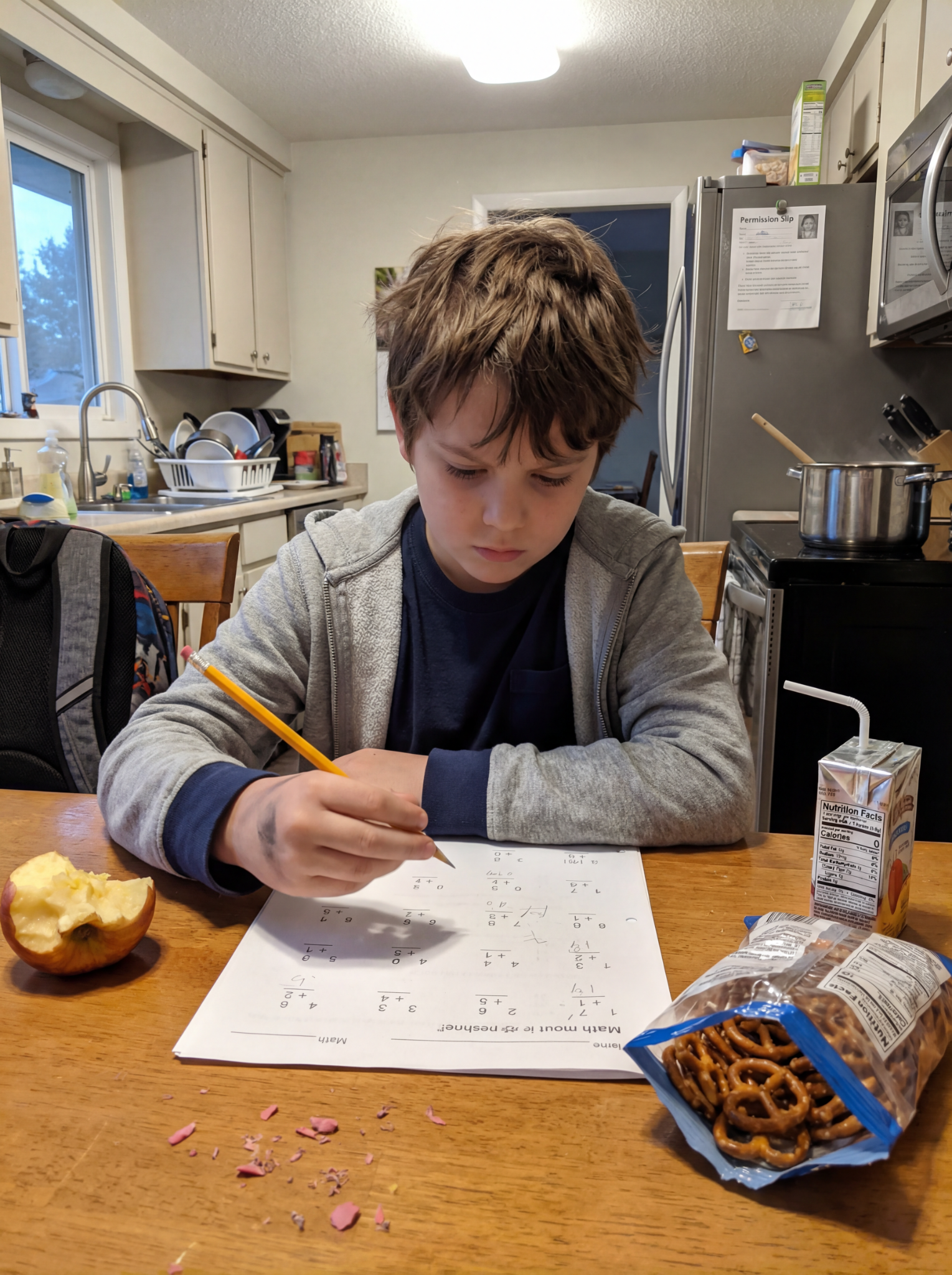
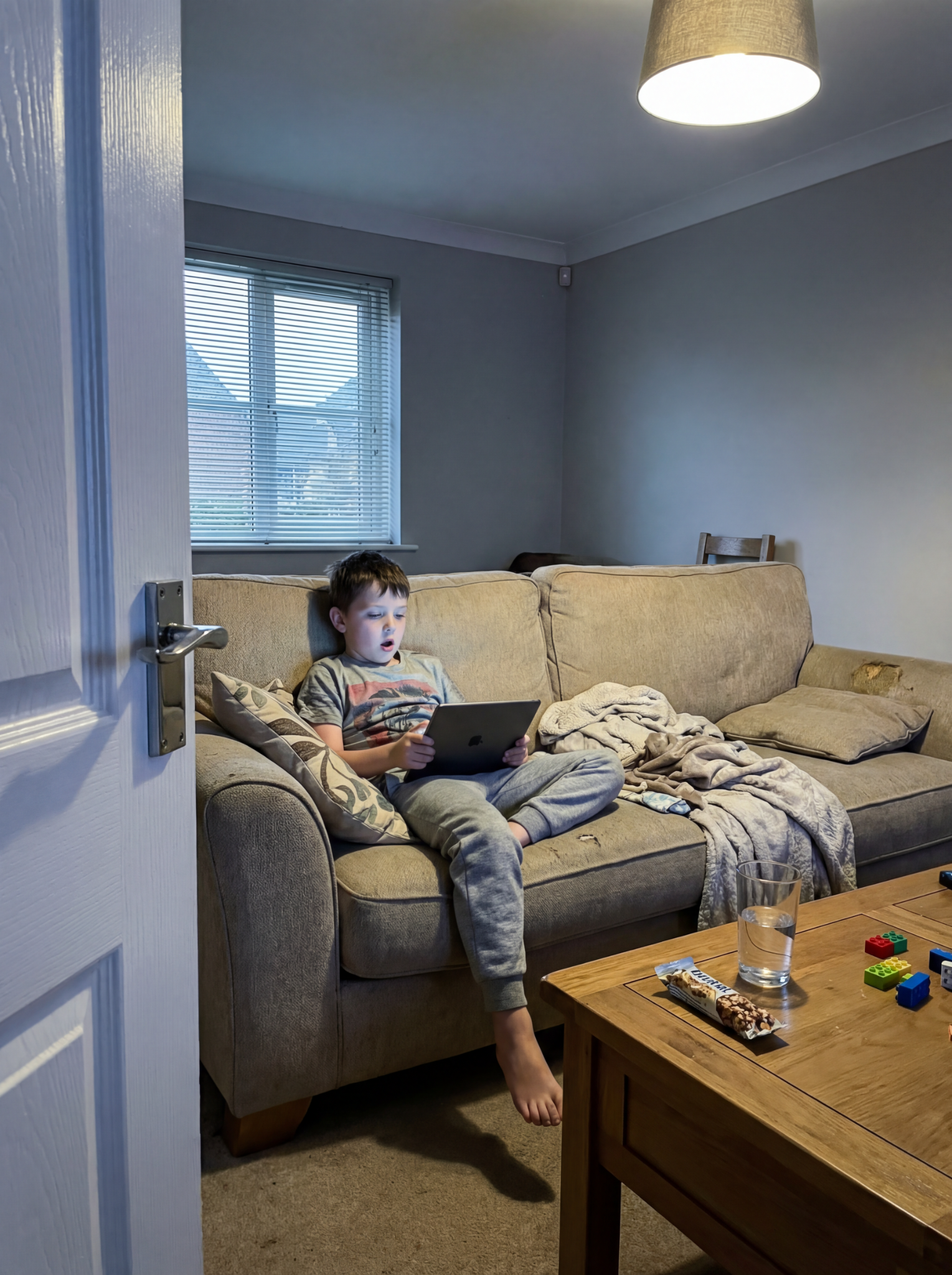
Please STOP taking screens from your ADHD child like I did. It's the reason it never got better. For three years I followed every bit of advice I could find for my son's ADHD. "Limit his screen time," they all said. So I did. I started with weekdays. Then weekends. Then completely. But the more I took screens away, the worse he got. His meltdowns got bigger every time the iPad came out of his hands. He went from a kid who used to cry for ten minutes to a kid who screamed for an hour, threw his shoes across the room, told me he hated me, and refused to eat dinner. The mornings before school turned into wars. The afternoons after school turned into wars. The transitions between activities turned into wars. Every single day. He stopped sleeping through the night. He stopped eating his lunches. He stopped wanting to go to soccer. He cried in his bed one night and told me he wished he had never been born. He was nine years old. I tried everything. And I mean everything. I installed Bark and Qustodio and the iPhone screen time controls. I locked the iPad in the trunk of my car. I sent it to my mother's house for a month. I signed him up for a screen-free summer camp in Wisconsin that cost two thousand dollars. I bought him a Rubik's cube, a chess set, two boxes of LEGOs, three different sticker charts, and a chore-reward system from Etsy. Each one made him angrier than the last. He threw the chess set down the basement stairs after I told him he could earn screen time by playing one game with me. I started keeping him in long sleeves at family events. Not because I was ashamed of him. Because he had bruises on his arms from where he had been hitting himself during the screen-time meltdowns, and his cousins kept asking me what was wrong with him. It felt like every conversation turned into advice I didn't ask for. "Have you tried more outdoor time?" Yes. "Have you tried a sticker chart?" Yes. "My sister's kid was the same way. They just went cold turkey. No screens for thirty days. Now he reads chapter books." I tried cold turkey. He stopped sleeping. He stopped eating. He bit his sister. He told his second-grade teacher he wanted to die. I gave the iPad back at 11 PM on day six because I was scared of my own child. My husband found me in the bathroom one night, scrolling through my phone at 1 AM, looking at Reddit posts from other moms whose ADHD kids had stopped eating after a screen detox. "We'll figure it out," he said. But I could hear it in his voice. He was running out of hope too. The worst part wasn't even the meltdowns themselves. It was the thirty seconds after I took the iPad away. He would just go blank. His face would go slack. His eyes would unfocus. And then the screaming would start. He was a kid who could sit on Roblox for three hours without moving. And five minutes after I took the iPad away, he was on the kitchen floor crying like his life was ending. What kind of mother can't fix this? I had screen-time apps I had paid for and uninstalled. The Wisconsin summer camp tuition receipt was still in my drawer. The Etsy chore charts were in a folder on my desktop. Each one a little monument to my failure. I was running out of hope. I remember thinking maybe this was just how he was going to be. Maybe he was an iPad kid forever. Maybe I had ruined him by letting him have screens when he was three. Maybe I was the problem. And then I met someone named Megan. That's when everything changed. Not in person, but on Facebook. One of those ADHD mom groups I joined at 3 AM on a desperate night. I had posted a photo of the broken Rubik's cube my son had thrown across the kitchen with the caption am I the only one whose kid melts down within five minutes of putting the iPad down? The responses were the usual. Try a visual timer. Give him a five-minute warning. Try a token system. Take the iPad away earlier in the day so he has time to adjust. Then Megan sent me a private message. "I saw your post. My son was exactly the same way eighteen months ago. Can I call you?" That's weird, I thought. But also I was desperate enough to say yes. We talked for an hour. She told me about her son. Same age as mine. Same diagnosis. The same screen war I was in. She had tried everything I was trying. The apps. The lockboxes. The camps. The cold-turkey detox. And every single one had made her son worse. "I thought I was losing my mind," she said. "I was doing everything right. Every limit. Every restriction. Every parenting strategy that every expert was telling me to use. And he kept getting worse." "That's exactly what's happening to us," I said. "Right. And everyone acts like you're not trying hard enough. Like if you just took the iPad away more aggressively or did the right reward system, he would magically become a kid who reads books and plays outside." She gets it. She really gets it. Then she said something that stopped me cold. "Did you know taking the screens away is the reason he's getting worse?" I didn't know that. She explained it like this. ADHD brains don't make enough of three brain chemicals. Dopamine. Serotonin. Norepinephrine. They run low on all three at once. Dopamine handles focus. Serotonin handles emotional regulation and sleep. Norepinephrine handles motivation and drive. Together they run the whole nervous system. And what does Roblox do? Or Minecraft? Or YouTube? "It floods their brain with all three at once," Megan said. "Every level. Every reward. Every challenge. The screen delivers the exact three chemicals their brain is starving for. That's why your son can sit on the iPad for three hours and lose it within thirty seconds of you taking it away. The screen is the only place his brain feels normal all day." "Wait," I said. "So when I take the iPad away, I'm…" "Taking away the only thing supporting his brain chemistry," she said. "His brain is already running low on three chemicals. The screen has been giving him all three. The second you remove the screen, his nervous system crashes. That's what the meltdown is. That's not a behavior problem. That's withdrawal." She explained it like she was learning it again herself and couldn't believe nobody had told her sooner. "Every other expert is telling you the screen is the addiction. The screen isn't the addiction. The screen is the only thing filling the deficit. Take the screen away and you take away the only place his brain can get what it needs." It's a loop. A horrible loop. The screen helps. So he wants it. So I take it away. So he melts down. So I feel like a failure. So I try harder to take it away. So he melts down worse. So I try harder. And that's why nothing was working. "All those limits we're setting," Megan said, "they're not solving anything. They're just removing his only chemical support and then telling him to regulate without it. He can't regulate without it. His brain doesn't have what it needs to." I felt like someone had turned on a light in a dark room. That's why the cold turkey detox almost broke him. That's why every limit made the meltdowns worse instead of better. The medication my pediatrician had us on only treats one of the three chemicals. The screen was the only place treating all three. When I took it away, I left his brain running on a fraction of what it needed. "How did you figure this out?" I asked. "I didn't," she said. "I was up at 2 AM and I fell down a rabbit hole reading about ADHD neurotransmitters. There are all these studies about it. Apparently every ADHD kid is running low on three chemicals, not just dopamine. And screens deliver all three. It's basic neuroscience. But nobody is telling parents." We were both quiet for a second. "So what do I do?" I asked. "Give him the iPad back?" "No," she said. "That's not the answer either. The iPad is fueling him but it's also wrecking his attention span. The answer is giving his brain what it needs from somewhere else. So the screen stops being the only place he can get it." She told me she had tried almost everything. Magnesium. Omega-3s. 5-HTP. L-tyrosine. Each one targeted one chemical. None of them moved the needle. "I felt so stuck," she said. "Like I finally understood what the real problem was, but I couldn't figure out how to fix it." "So what changed?" I asked. "I found this gummy," she said. "I almost didn't try it because I was so tired of wasting money on supplements that didn't do anything. But I read the ingredients and I realized it was designed to support all three chemicals at once." "The main ingredient was saffron. Clinical-dose saffron extract. Not the cheap stuff. I'd tried saffron supplements before, the ones with five-star reviews on Amazon, but they did nothing for my son." "This one is different," Megan said. "Most saffron supplements use generic extract at maybe twenty percent active compounds. The clinical research uses ninety-five percent crocin and safranal. Below that threshold, brain chemistry doesn't change. That's why parents try saffron and nothing happens. The dose isn't there." She told me about a clinical trial. Researchers had compared clinical-strength saffron extract head-to-head against methylphenidate in children with ADHD for six weeks. Same gains in focus and behavior, rated by parents and teachers. No side effects. The saffron group actually did better on emotional regulation than the medication group. The saffron supports all three chemicals naturally. The medication only forces one. The screen only forces them temporarily. "But the saffron alone isn't enough," Megan said. "Saffron tells the brain to make more of all three chemicals. The brain needs raw materials to actually build them. B6. B12. Magnesium glycinate. The methylated forms because they actually cross the blood-brain barrier." "So the saffron tells the brain to make all three, and the building blocks give the brain what it needs to actually do it?" I asked. "Exactly," she said. "That's why it actually works. The screen forces all three artificially. The medication forces one. This supports the brain producing all three on its own. Once his brain has its own supply, the screen stops being the only place he can get it." Then she sent me the link. The gummy was called Mood Balance. I didn't know if I believed her. I wanted to. God I wanted to. But I'd been disappointed so many times. I'd spent so much money on apps and camps and supplements that didn't work. I wasn't sure I could handle another failure. "I know," Megan said. "I was the same way. But this isn't another limit or another restriction. It's giving him what his brain is actually missing. You should give it a shot." "And did it work for you?" I asked. "Yeah," she said. "It worked." The way she said it. So quiet. So sure. "My son puts the iPad down on his own now. He goes outside. He reads. He comes home from school and asks if he can help me make a snack. He sleeps. He eats. He laughs at his sister. It took about three weeks to really see it, but by week one I could already tell something was different." She sent me a video. Her son sitting on the living room couch with the iPad next to him, untouched, reading a book about Greek mythology. He had been on the iPad three hours a day six months earlier. Now it was sitting on the cushion and he had not picked it up in forty minutes. "That's really him?" I asked. "That's really him." I was still skeptical. Part of me didn't want to get my hopes up again. But seeing that video of her son just leaving the iPad on the couch made something click. I ordered it that night. I didn't tell my husband because I didn't want him to know I was spending more money on another thing that probably wouldn't work. I figured I'd tell him only if it actually did. It arrived two days later. The first thing that surprised me was that my son didn't fight me on it. He chewed it on a Monday morning before school with his breakfast. He said it tasted like a real gummy bear. Asked for another one. I gave him just the one and held my breath. The first week, nothing dramatic. Tuesday afternoon he came home from school and went straight to the iPad like always. But at 5:30 PM I told him dinner was almost ready and he put it down and walked into the kitchen. No yelling. No throwing. He just put it down. That had not happened in two years. By Thursday I noticed he was eating again. He ate his whole sandwich at lunch. He ate his dinner without me reminding him three times. He had seconds of pasta. Second week the meltdowns started slowing down. Not all the way. Some days were still off. But the after-school transition from iPad to homework was not a war anymore. He would put the iPad down on the kitchen counter and sit down at the table. Some days he asked me for a snack first. Some days he just started his worksheet. Third week he was sleeping through the night. I had not had a full uninterrupted night of sleep in three years. Then on a Friday evening five weeks in, my husband and I were sitting at the kitchen island. My son had been on the iPad for about an hour. It was 5:45 PM. I was about to call him for dinner. Before I could say anything, I heard him put the iPad down on the coffee table in the living room. I heard him stand up. I heard him walk into the kitchen. He went to the cabinet. He pulled out two plates. He started setting the table. He had never set the table without being asked. Not once. Not in his entire life. My husband looked at me. I looked at my husband. Neither of us said a word. My son looked up from the place setting and said, "Mom, can Lily and I play that color game after dinner? The one with the cards?" Lily is his sister. He had not played a card game with her in over a year. I sat down on the kitchen stool because my legs gave out. I told him yes. I called Megan that night after they both went to bed. "It worked," I said. "It actually worked." "I know," she said. And I could hear her smiling. Here's what I understand now that I didn't before. The screens were never the problem. My son was not addicted to the iPad. He was using the iPad because the iPad was the only thing on earth that gave his brain the three chemicals he needed to function. Taking the iPad away was not the solution. It was the thing making him worse. Every time I took the screen away, I removed his only source of dopamine, serotonin, and norepinephrine. That is what the meltdown was. That is what the screaming was. That is what the I wish I had never been born was. His brain was crashing. I had been told for three years that screens were the enemy. My pediatrician told me. My therapist told me. The teacher emails told me. Every parenting book told me. Every documentary on Netflix told me. And every single one of them was treating the symptom instead of the deficit. You don't fix this by taking the iPad away. You fix this by giving his brain what it needs so the iPad stops being the only place he can get it. Clinical-dose saffron supports the brain's natural production of dopamine, serotonin, and norepinephrine. The methylated B vitamins and magnesium glycinate give the brain the building blocks to actually make all three. Once his brain has its own supply, the iPad stops being the only thing keeping him regulated. That's why he can put it down now. That's why dinner is not a fight. That's why he is sleeping again. His brain has what it needs from somewhere besides Roblox. I think about the three years we lost. The chess set on the basement stairs. The Wisconsin camp. The night he told me he wished he had never been born. The bruises on his arms from hitting himself when I took the iPad away. The morning he bit his sister. The way I would lie awake at 2 AM wondering if I had ruined him by letting him have screens when he was a toddler. I think about all the money I spent on apps and camps and restrictions that couldn't possibly work because they were all built on the wrong theory. I think about how simple it was once Megan explained it to me. And I get angry that this isn't common knowledge. That my pediatrician told me to limit screens for three years and never once told me his brain was running low on three chemicals or that screens were the only thing filling that deficit. That every parenting book is written by someone who thinks screens are a behavior problem instead of a chemistry problem. My son is ten now. He still uses the iPad. He plays Roblox on the weekends. But it is not the only thing keeping him alive anymore. He puts it down. He goes outside. He reads. He talks to his sister. He sleeps. He eats. He is himself. If you're reading this at 2 AM, desperately googling whether you should take the iPad away from your ADHD kid, I need you to understand something. You're not failing. You're not doing anything wrong. The screens you have been taking away weren't the problem. They were the only thing supporting your kid's brain chemistry. Every limit you set, every cold-turkey detox you tried, every camp you sent him to, every parental control app you installed, was removing the only place his brain could get what it needed to function. That's why he melts down so hard every time. That's why nothing has worked. That's why he gets worse every time you crack down. Your kid is not addicted to the iPad. His brain is starving for three chemicals and the iPad is the only place delivering all three. You need something else that delivers all three. Not a limit. Not a restriction. Not another detox. A source. Clinical-dose saffron at ninety-five percent crocin and safranal supports the brain's natural production of dopamine, serotonin, and norepinephrine. Methylated B6 and B12 and magnesium glycinate give the brain what it needs to actually produce them. That's what Mood Balance is made with. I don't know if it will work for your kid the way it worked for mine. Every kid is different. But every ADHD brain is running low on the same three chemicals, and no amount of screen restriction is going to fix that. I wish I'd known about this two years earlier. I wish someone had told me the screens were not the addiction the day he was diagnosed. I wish I hadn't sent him to that screen-free camp where he cried himself to sleep for two weeks straight. But at least I can tell you now. At least you don't have to waste years like I did. At least your kid can start coming back tonight instead of next year. I'm not trying to sell you anything. I don't get paid for this. I'm just a mom who figured something out at 2 AM, something I wish another mom had shown me sooner. If someone had just told me the iPad was filling a deficit instead of creating a behavior problem, I could have saved three years of my son thinking he was broken. Your ADHD kid isn't addicted to the screen. His brain is starving for what the screen delivers, and no other source has been giving it to him. Now you know. Now you can do something about it. Now you can stop fighting him over the iPad and start giving him what he actually needs. Like I finally did. EDIT: I almost forgot to put the link, here it is. Mood Balance. Clinical-dose saffron at ninety-five percent crocin and safranal with methylated B6, methylated B12, and magnesium glycinate. I keep getting asked if they sell it on Amazon and they don't, knockoff sellers ship underdosed generic saffron in similar-looking bottles and parents wonder why nothing happened. Buy it from the company directly. They are running a free unit promo right now but stock keeps selling out with pediatric clinics ordering in bulk for their patients. Click below to check if it's still available: https://uselumexa.com/pages/saffron-2
"My son is finally calm, focused, and happy. I wish I found this sooner." — Kathy N.
Lumexa
LEARN MORELike this ad? Make it yours.
Crush rebuilds this exact creative around your product — your brand, your colors, your offer — in about a minute.