
Inactive· since Apr 18, 2026
- 72
- days it ran
- 0
- relaunches
Ad copy
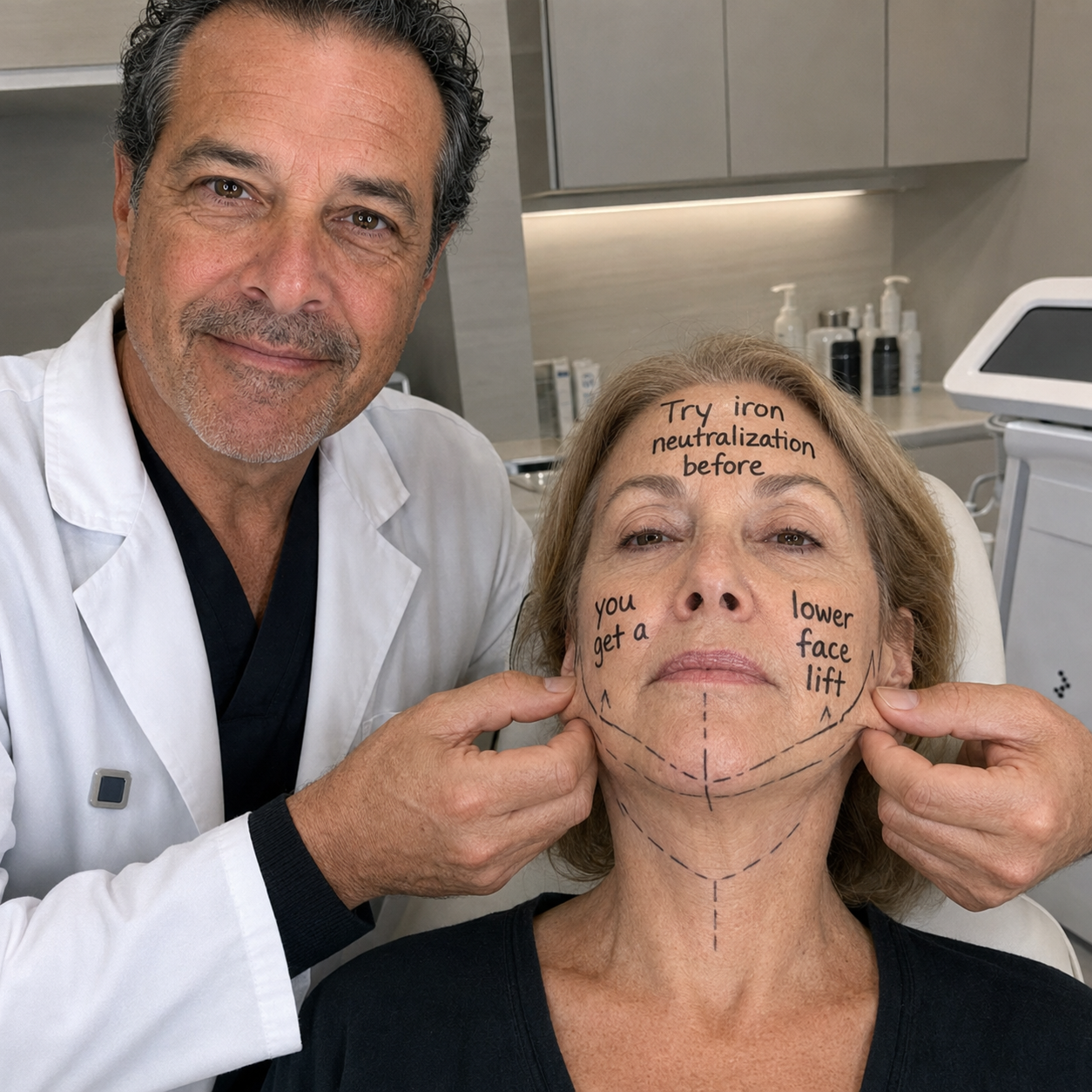
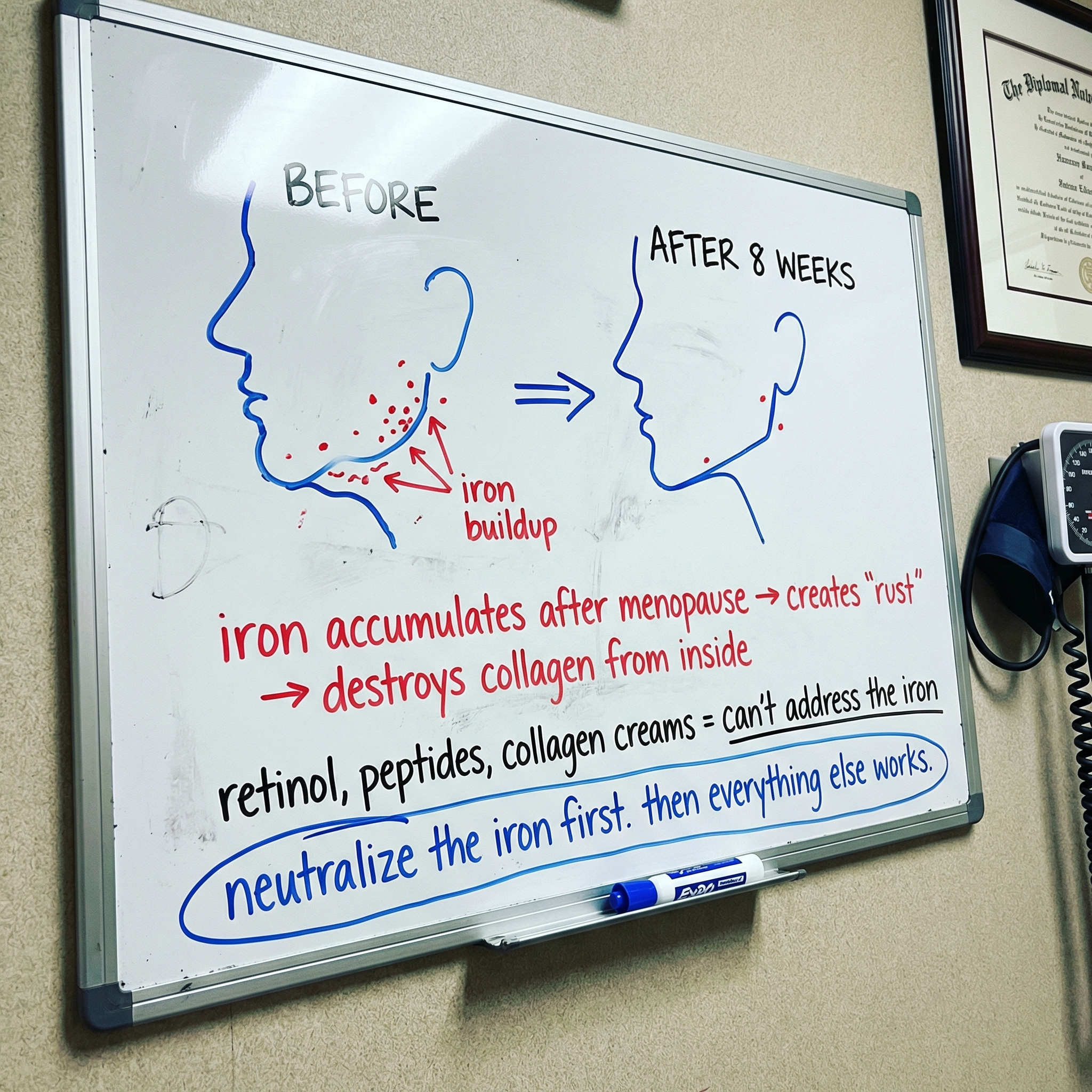
Stop buying retinol for your sagging jawline. It was never designed to fix what's actually causing it. I know that sounds crazy. Retinol is supposed to be the gold standard. But there's a reason it's not working, and it's the same reason peptides and collagen supplements aren't working either. They're all addressing a symptom while something else is destroying your skin underneath. Watch this to understand what's really going on. Margaret did everything right. She should have had the jawline to prove it. She didn't. Prescription retinol every night for three years. A medical-grade peptide serum twice a day. Collagen supplements with breakfast. She didn't miss applications. She didn't skip days. She followed every instruction I gave her and spent over $3,000 doing it. Her texture improved. Her dark spots faded. And her jawline got worse. If you've used retinol consistently and your jawline hasn't changed, this will make sense to you. If you've added peptides, collagen supplements, even professional treatments like Sculptra, and still watched the lower third of your face soften month after month, keep reading. If you've started pulling the skin back in the mirror just to remember what your jawline used to look like, and then letting go and feeling something between frustration and grief, you're not alone. And if you've started quietly researching facelifts, not because you want surgery but because nothing else has worked, what I'm about to share could change that. Margaret was not my only patient with this pattern. She was one of hundreds. As a dermatologist, I spent most of my career telling women over 50 the same thing every other derm tells them. Use retinol. Add a peptide serum. Consider fillers. If it gets bad enough, here's a referral for a surgical consult. I believed it. I prescribed it. I watched women follow every instruction perfectly. And their jawlines kept going. Not their foreheads. Not their cheeks. Their jawlines. Their necks. The lower third of the face, softening and sagging at a rate that didn't match anything else happening to their skin. Margaret came back for a follow-up and said "My texture is beautiful. My dark spots are fading. But look at my jaw. It's worse than when I started." She was right. I could see it. And I didn't have a good answer for her. That bothered me more than I want to admit. Because Margaret wasn't an outlier. She was the pattern. Woman after woman, doing everything I recommended, watching their jawlines deteriorate while the rest of their skin improved. I stopped asking "what should we add to her routine." I started asking "what is specifically happening to post-menopausal skin along the jawline and neck that retinol cannot address." That question changed everything I thought I knew. I found a study published in 2020 in Aging Cell. Peer-reviewed. Lead researcher named Oblong. The finding was not subtle. Post-menopausal women have 42% more stored iron in their skin tissue than pre-menopausal women. 42%. In the actual dermal tissue. Here's what nobody learns in medical school. Before menopause, menstruation clears 30 to 40 milligrams of iron from the body every month. It's one of the body's primary iron regulation mechanisms. After menopause, that mechanism stops. The iron accumulates. In organs, in blood, in skin. And accumulated iron doesn't sit there quietly. It undergoes a chemical reaction called the Fenton Reaction. The iron oxidizes and generates hydroxyl radicals. The most destructive free radicals in human biology. Those radicals attack collagen and elastin fibers deep in the dermis. Not at the surface. At the structural level. I read this and felt something I rarely feel in clinical practice. Anger. Because I had been prescribing retinol to women whose collagen was being destroyed from the inside by iron-generated free radicals. Retinol accelerates cell turnover. It does nothing about iron. I was asking these women to repaint a house while termites ate the framing. Peptides signal collagen production. But if iron is tearing collagen apart faster than peptides can stimulate replacement, the peptides are running on a treadmill. Collagen supplements try to add collagen back. They cannot outpace active oxidative destruction. Every product I had been recommending was designed for a version of aging that doesn't account for 42% more iron generating hydroxyl radicals in the dermis 24 hours a day. None of those products are bad. They do real things. But they were never designed for this mechanism. And this mechanism is the primary driver of structural collapse in post-menopausal skin. That is why your jawline keeps sagging even though your retinol is working on everything else. The retinol is doing its job. It was never given the right job. I kept reading. A 2021 study in Antioxidants confirmed iron-mediated oxidative damage in skin tissue. A review in Cureus in 2023 found consistent evidence across multiple studies. Three journals. Three years. The same conclusion. Published and publicly available. And not one major skincare brand had reformulated around it. The industry has billions invested in retinol, collagen, and peptide product lines. Acknowledging a different mechanism means acknowledging that their flagship products don't address the root cause of post-menopausal jawline sagging. No publicly traded company is going to volunteer that information. I started recommending a different approach to my patients. A serum built specifically around this science. Not another retinol. Not another peptide. A formula designed to neutralize the oxidative damage from the Fenton Reaction so the collagen and elastin still present in the skin could stop being destroyed. I gave it to Margaret first. Two weeks in she said her skin texture felt different. Denser. Not tighter exactly, but like there was more substance to it. Week three she called and said nothing new was happening. I told her to stay with it. Weeks three and four are what I call the quiet phase. The deeper structural repair doesn't show on the surface yet. Week six she came in. The laxity along her jawline had visibly decreased. When I did the pinch test, the snap-back time had improved from almost four seconds to under two. She looked at me and said "Why didn't anyone tell me about the iron?" I didn't have a good answer for that either. I have since recommended this to over 3,000 patients. The timeline is consistent. Texture changes weeks one and two. Quiet phase weeks three and four. Visible firming begins between weeks six and eight. I'm not telling you to throw away your retinol. Retinol does good things for your skin. But if your jawline is sagging and nothing you've tried is touching it, now you understand why. Your products were never built to address what is actually happening in your skin after menopause. I wrote a short article that breaks down the full mechanism. The published studies, the iron science, and what 3,247 women over 60 are doing differently. It takes about 4 minutes to read. 👉 https://www.fezeli.com/pages/snap-back I'd encourage you to look up every study I've cited before you spend another dollar on a product that was never designed for this problem.
Like this ad? Make it yours.
Crush rebuilds this exact creative around your product — your brand, your colors, your offer — in about a minute.