The Blood Sugar Journal
 Facebook ad: “Feel Like Yourself Again”
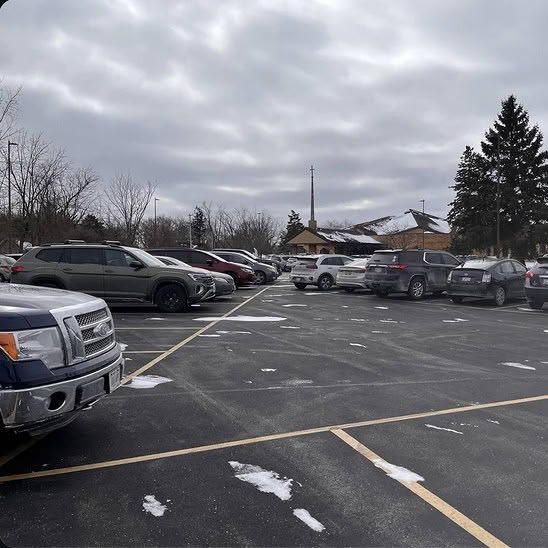
Running for 22 days since October 9, 2026. Crush last saw it on October 31, 2026.
Run by The Blood Sugar Journal on Facebook. Crush is not the advertiser and does not verify its claims. See this ad in Meta's Ad Library(opens in a new tab)
Make your own version of this ad
Crush makes it, launches it in your own Meta ad account, scales the winners and pauses the losers.
About this ad
- Meta Ad Library ID
- 1840312057331880
- Platforms
- Facebook, Instagram, Audience Network, WhatsApp and Threads
- Relaunches
- 0
Ad text
I watched a man order the bread basket and nearly started crying right there in the middle of Carmine's. That sounds like the opening line of something embarrassing. I know. But if you'd been in my seat, you'd understand. It was a Tuesday. One of those gray Shreveport Tuesdays in January where the sky can't decide between clouds and rain and just kind of commits to both. My coworker Darrell and I were at lunch, the kind of working lunch that's really just an excuse to get out of the office for an hour. We'd walked over to Carmine's on Texas Street because it's fast, it's close, and because Darrell had been talking about their mushroom ravioli since October. We sat down. Menus went up. And then the bread basket came. This is the part I need you to understand. Because for the past 3 years, the bread basket had been a decision. A whole negotiation I ran in my head every single time it appeared on a table. How many hours since I'd last eaten. What else I was planning to eat. Whether I'd walked at lunch the day before. Whether I could afford it, not in dollars but in the currency I was always counting now, the invisible running tally I kept of everything I put in my mouth. Some days I covered the basket with my napkin so I wouldn't have to look at it. Darrell didn't do any of that. Darrell, who had spent the past year and a half monitoring his own situation more carefully than I monitored mine, who drove 40 minutes to a doctor in Bossier City because he didn't want to see anyone who knew him at the Shreveport offices, who had done more research and more adjusting and more stressing about food than any person I'd ever met, reached right into that basket. Without thinking. He tore a piece off. Dipped it in the olive oil. Ate it. Ordered the mushroom ravioli. And I just sat there looking at him like I was seeing something that didn't make sense. Like watching someone touch a hot burner and not burn. My name is Tamara Deckard. I'm 54 years old. I work as a paralegal at a small civil litigation firm on Milam Street in Shreveport, Louisiana. I have two kids, both grown, one in Baton Rouge and one in Memphis. I live alone now in the same house I bought with my ex-husband in 2003, in a neighborhood that used to have more kids on bikes and now has more Ring doorbells and security cameras. I'm not a dramatic person. My coworkers would tell you I'm the one who stays calm when a deadline gets moved up and half the office starts making noise. I like crossword puzzles. I watch too many renovation shows. I drive a 2018 Camry that still has 37,000 miles on it because I work 8 minutes from my house and I don't go anywhere I don't have to go. That last part hadn't always been true. I used to go places. Weekends in New Orleans with my friend Cheryl. My daughter's place in Baton Rouge for long weekends where we'd cook too much food and stay up too late watching movies. A trip to Atlanta every year or two just to see a city that moved differently than this one. But the past 3 years I'd gotten quieter about it all. Less willing to be spontaneous. Less willing to eat somewhere I didn't already know the menu. Less willing to let a meal happen to me instead of planning it in advance. It started with a number. Not a catastrophic number. My doctor didn't say anything alarming. She just said "elevated" and "let's keep an eye on this" and "try to cut back on refined carbohydrates." She said it the way doctors say things when they're not quite worried yet but they want you to be a little worried so you'll do something. I did something. I did a lot of things. I cut the bread. I cut the white rice. I cut regular pasta. I ordered salmon and vegetables at restaurants and quietly calculated whether sweet potato was better or worse than the other potato. I walked the neighborhood after dinner most nights, even in the heat, even in July when the air in Louisiana feels like wet towels. And my numbers moved. A little. Not as much as I wanted but enough that my doctor said "good progress, keep it up." So I kept it up. For 3 years I kept it up. And I'm not going to pretend it was some terrible burden because parts of it were fine. The walking I actually liked. The salmon was fine. But there was something exhausting underneath all of it that I couldn't shake. Not the effort. The vigilance. The constant awareness of what I'd eaten and what I hadn't and what the meal I was about to eat might do to the number I'd see the next time I got bloodwork. I stopped thinking about food the way I used to think about food, which was joyfully, hungrily, the way my grandmother taught me to think about it, the way every woman in my family cooked and ate, together and loud and with no apology. I started thinking about food like it was a problem to be managed. That's a small thing. I know it's a small thing compared to what other people deal with. But it's also not nothing. After 3 years it adds up to something. A quietness about eating. A wariness. A meal that used to be pleasure turned into calculation. And so I sat across from Darrell at Carmine's watching him eat bread like a man with nothing to think about, and I said, "How are you doing that?" He looked up from the basket. "Doing what?" I nodded at the bread. He understood immediately. Because Darrell Thibodaux had spent the better part of the last year and a half on his own version of the same journey. He knew what I was talking about without me having to explain it. He chewed. Set the bread down. Looked at me. "I'm going to tell you something. But you have to promise not to make a thing about it at the office." "Darrell. I have kept every secret you've ever told me." "That is true," he said. He told me. About 4 months before this lunch, Darrell had run into an old acquaintance from his church, a man named Brother Calvin who had retired from practicing pharmacy maybe 6 years earlier. They'd been in the same Sunday school class for years, the kind of slow friendship built on handshakes and fifteen-minute conversations in parking lots after service. Darrell had mentioned, offhand, that he was watching his diet. Just casual conversation. Brother Calvin had asked what kind of watching. Darrell had explained. The elevated numbers. The dietary adjustments. The two years of careful eating that had helped but hadn't fully satisfied him. Brother Calvin had nodded slowly. Then he said, "You ever look into what happens with how fast your body turns food into sugar? Not what you're eating, but how fast the process runs?" Darrell had not looked into that. Brother Calvin had explained it this way. He said the body has a process, like a speed valve, that controls how fast the food you eat gets broken down into sugar before it enters your blood. When you're young and healthy, that valve is working right. Food comes in, the process slows it down, sugar trickles into your blood gradually and your body handles it without much effort. But that process can get worn down over time. Stress wears it down. Processed food over decades wears it down. Just aging itself wears it down. And when the valve can't do its job the way it used to, food that enters your body gets broken down faster than it should. Sugar floods in faster than your body is built to handle at once. That's the spike. That's the crash after. That's why the same meal can hit two people differently. "What you eat matters," Brother Calvin had told Darrell. "But if the process itself is worn down, you can eat the perfect diet and still be fighting it uphill." Darrell said he'd stood there in the church parking lot for probably 10 minutes listening to this man talk. He asked Brother Calvin what you were supposed to do about that. And that's where pomegranate entered the conversation. I want to be clear that when Darrell said "pomegranate" in the middle of Carmine's, my first thought was not a charitable one. I thought of juice in a glass bottle that costs too much and a fruit that looks beautiful and takes about 45 minutes to peel. I did not think of something that would change how I ate lunch on a Tuesday. But Darrell kept going. Brother Calvin had told him that inside pomegranate, specifically in the peel and the concentrated extract made from it, there are compounds called punicalagins. Not something you'd find in a regular piece of fruit you'd buy at a store. These are concentrated compounds found at high levels in pomegranate peel extract, and they had been studied specifically for their role in supporting that speed-control pathway. The process that manages how fast carbohydrates get broken down before they hit your blood. There are specific enzymes in your digestive system that break carbohydrates into sugar. Punicalagins have been studied for their effect on those enzymes. The research suggests they can help support how that breakdown happens, so the process runs more gradually. Sugar entering your blood more slowly, the way it did when you were younger. The spike not hitting so hard. The crash afterward softened. Same meals. Your body just handling them differently. And because that process, that worn-down valve, had been under oxidative stress for years, the antioxidant activity in pomegranate was relevant too. Punicalagins are among the most studied antioxidant compounds found in any food, and that antioxidant support can help protect the system from the ongoing oxidative wear that slows it down further year after year. Brother Calvin had been a pharmacist for over 30 years. He had no reason to oversell a fruit. He'd said it the way pharmacists say things, carefully, with caveats, clearly distinguishing between what the research suggested and what was proven and what was still being looked at. That's what had made Darrell trust it. "He's not a supplement guy," Darrell said to me. "He's not a wellness person. He's an old pharmacist who spent 30 years reading labels and rolling his eyes at things. When a man like that says 'look into this,' I look into it." He had looked into it. He'd ordered a concentrated pomegranate peel extract from a company called Auniva. 2 capsules a day, in the morning with breakfast. He'd been taking it for about 10 weeks at the time we were sitting in Carmine's. "And?" I said. He picked up another piece of bread. I stared at the bread. He said, "And I ordered the ravioli." I sat with everything Darrell told me for about 4 days. I didn't immediately run home and order something. That's not how I work. I am, professionally, a person who reads things carefully before making decisions. I spend my days reviewing documents for details that other people missed. I do not act on something because a coworker told me about it at lunch. But I kept thinking about what Brother Calvin had described. The process that controls the speed. The valve that wears down. Not the food itself but the machinery underneath the food. I'd spent 3 years adjusting the inputs. Changing what went in. What I hadn't thought much about was whether the system processing those inputs was operating the way it was supposed to. Whether the pathway itself had gotten worn down underneath me without my knowing. That reframe stuck. I looked up what I could about punicalagins and carbohydrate metabolism. I found research on the enzymes that break down carbohydrates. I found studies looking at pomegranate extract and blood sugar markers. There was a lot out there, more than I expected, and most of it was careful, qualified, not the kind of exaggerated language that makes you suspicious. What I found was consistent with what Brother Calvin had described. Pomegranate's compounds, and punicalagins specifically, had been looked at in the context of how the body handles carbohydrate breakdown. Multiple studies. Multiple populations. The language was measured but the direction was consistent. I ordered Auniva Pomegranate on a Thursday night. It arrived that Saturday. 2 capsules. Organic concentrated peel extract. Made in the United States. I took them the next morning with breakfast, which that Sunday happened to include biscuits because I'd made them for my daughter who had driven up from Baton Rouge and I was not going to not make biscuits for my daughter. I took them the next morning. And the morning after that. The first 2 weeks I noticed nothing that I would call notable. Which was fine. I wasn't looking for something dramatic in the first 2 weeks. I'd done enough reading to know this wasn't that kind of thing. Week 3, I realized I'd eaten lunch 3 days in a row without the mid-afternoon feeling that usually followed. The thing I'd come to think of as the 2:30 slump. Not dramatic. Not a crash, really. Just a kind of heaviness and slowness that settled in after lunch on most days, the feeling that would have me looking at the vending machine at 3 o'clock not because I was genuinely hungry but because my body was asking for something. That asking got quieter. It didn't disappear. But it got quieter. The 3 o'clock tug became less of a pull. Week 5, my daughter called on a Sunday evening and we talked for almost 2 hours, and somewhere in the middle of that conversation I realized I had made pasta for dinner. Not as a cheat. Not with a plan to walk an extra mile afterward. Just because I wanted pasta and I made pasta and I ate it and then I talked to my daughter on the phone and I didn't think about it again. I can't tell you exactly when it happened because it wasn't a moment, it was a shift. Like the dial on a radio finally finding the station instead of the static you'd been hearing so long you forgot it was static. Week 7, I went to a dinner at my friend Cheryl's house. Cheryl makes everything from scratch and she doesn't believe in small portions and her table looks like a celebration every single time. In the past few years I'd started doing a quiet inventory before her dinners. What I'd eaten during the day. What I could reasonably have. How to navigate it. I sat down at Cheryl's table that night and I just ate dinner. Not with abandon. Not with recklessness. Just with the ease of a person eating good food with a friend they love. There's something I want to say about that, because I don't think it sounds like much from the outside. But for someone who has spent 3 years in a constant low-grade negotiation with every meal, ease at a dinner table is not a small thing. Ease at a dinner table is the thing you gave up so gradually you barely noticed it going. And when it comes back, even partially, even just as a loosening of the vigilance, you notice it the same way you notice a knot in your shoulders finally letting go. Not with drama. With relief. My numbers at my next appointment were better than my last visit. My doctor didn't make a big production of it. She said "good, keep doing what you're doing." She said it the same way she says everything. But I know what changed. The only thing that changed was Auniva Pomegranate, 2 capsules every morning. I haven't stopped eating well. I still walk. I'm not pretending the eating habits I built don't matter. They do. But I think about what Brother Calvin said in that church parking lot. About the valve. About the system underneath. About 3 years of adjusting the inputs without ever addressing the machinery that processes them. Something in that machinery had gotten support it wasn't getting before. And the difference showed up not as a dramatic announcement but as a Tuesday at a restaurant where the bread basket was just bread. Where lunch was just lunch. Where I wasn't negotiating with every single thing on the table before I let myself eat it. I'm still the same Tamara who walks after dinner and likes salmon. I didn't change anything dramatic. I just added something small in the morning and the small thing turned out to matter more than I expected. I told Cheryl about it. She told her sister in Natchitoches. Her sister called me two weeks later to ask for the name of the company. That's all I'm doing here. Passing on what Darrell passed on to me, what Brother Calvin passed on to him. Auniva Pomegranate. Organic concentrated peel extract. 2 capsules a day. Made in the USA. You can find it at auniva.co/pom/5. They have a 90-day guarantee. If you try it for up to 90 days and it's not the right fit, send it back for a full refund. So the risk of trying is low. And I think the risk of not trying, of spending another 3 years in the same negotiation I was in, is the higher cost. The bread basket is waiting. 👉 auniva.co/pom/5 P.S. I ran into Darrell in the break room about 3 weeks after that lunch at Carmine's. I told him I'd started taking it. He nodded like he'd expected I would eventually. He said, "Give it 6 weeks. Don't watch it like a clock. Just let it do what it does." He was right about that. The weeks you stop monitoring so closely are usually the weeks you notice something has quietly shifted. P.P.S. The reason it matters what kind of pomegranate you're taking is this: most commercial pomegranate products are standardized to ellagic acid, which shows up in a lot of fruits and is not specific to pomegranate. What the research on carbohydrate metabolism and that speed-control pathway actually focuses on is punicalagins, which are found at high concentrations specifically in pomegranate peel. A juice or a fruit snack doesn't give you what the extract does. That's what makes concentrated peel extract the relevant form. That's what Auniva uses. P.P.P.S. There's a 90-day money-back guarantee. What that means practically is that you have 3 months to find out whether this does anything for you. If it doesn't, return it and get your money back. That's a real trial. That's long enough to let the pathway support build and see whether your body responds. If you're in the same 3-year negotiation I was in and you're tired of it, 90 days is a reasonable thing to give something that has science behind it. 👉 auniva.co/pom/5
Where the ad sends people
auniva.co
Feel Like Yourself Again
"This actually worked, thank you so much." - Emily T.
Learn more: auniva.co(opens in a new tab)