Dr. Amy Brown
Dr. Amy Brown Facebook ad: “Feel like yourself again”
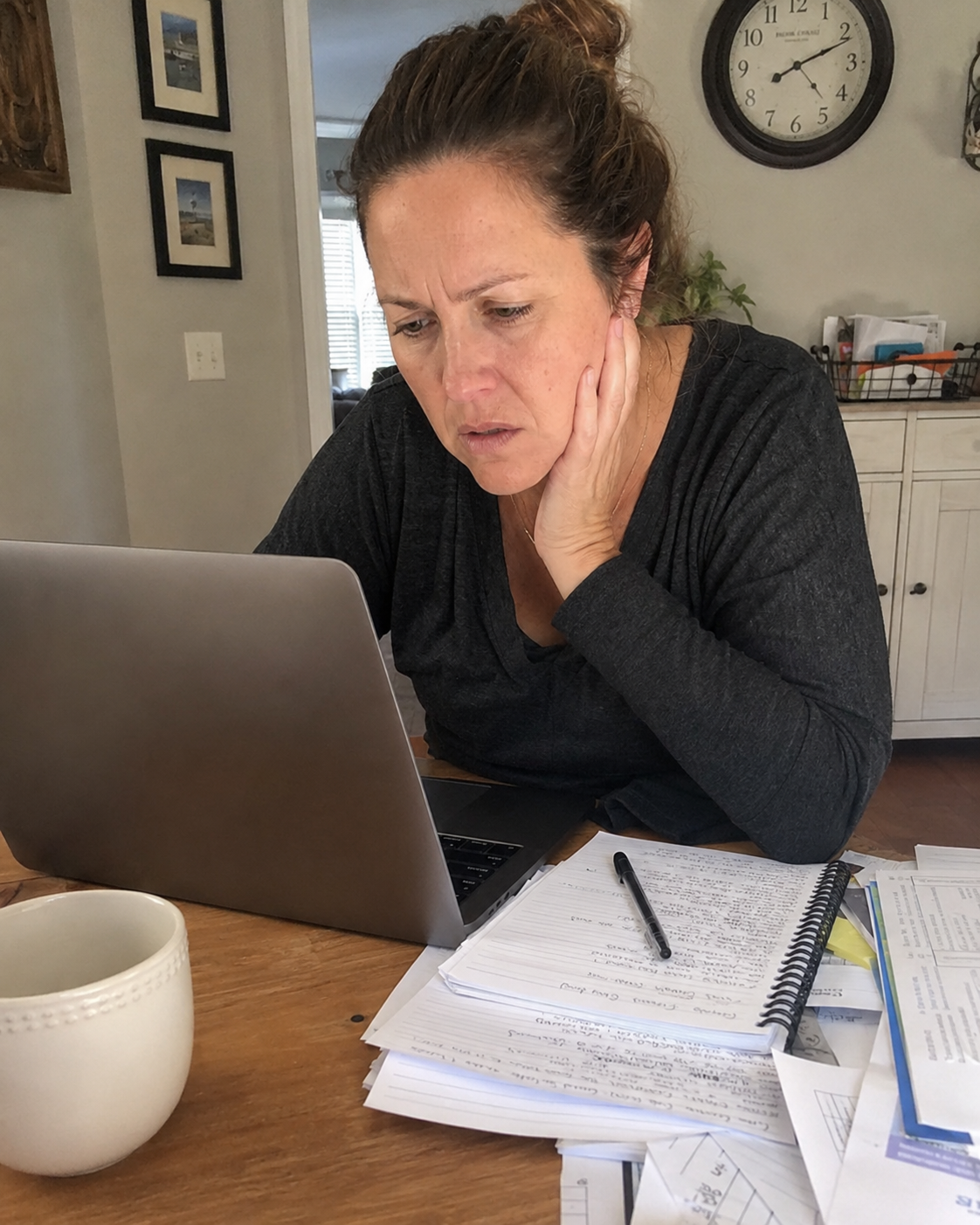
Ran for 2 days, from August 17 to August 19, 2026, the last day Crush saw it.
Run by Dr. Amy Brown on Facebook. Crush is not the advertiser and does not verify its claims. See this ad in Meta's Ad Library(opens in a new tab)
Want an ad like this for your product?
Crush makes new ad images for your product from this ad: your logo, your product photo, your offer.
Trials from $19.95 USD, then $79.95 USD a month. Cancel anytime.
About this ad
- Meta Ad Library ID
- 1841321703899548
- Platforms
- Facebook, Instagram, Audience Network, Messenger, WhatsApp and Threads
- Relaunches
- 0
Ad text
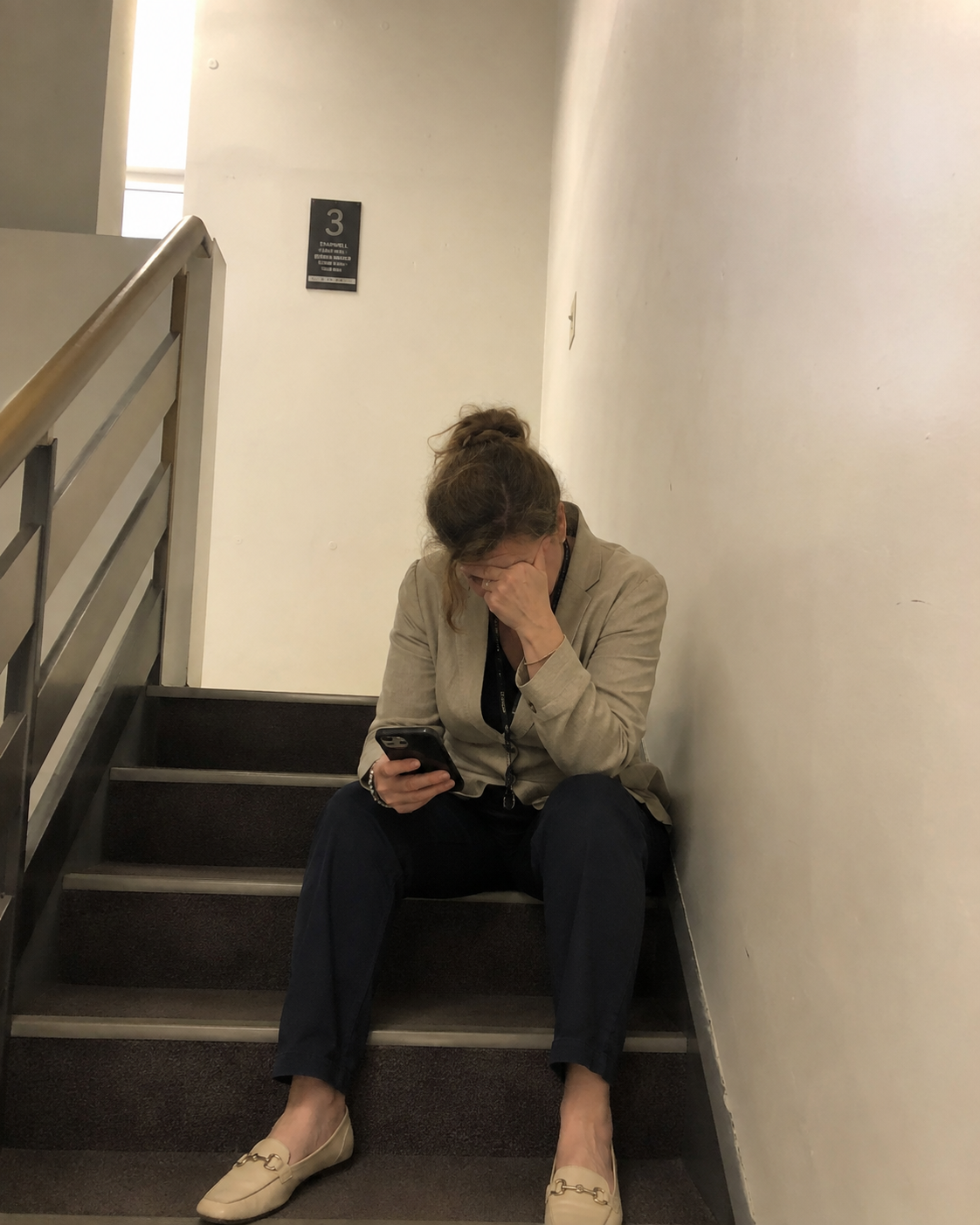
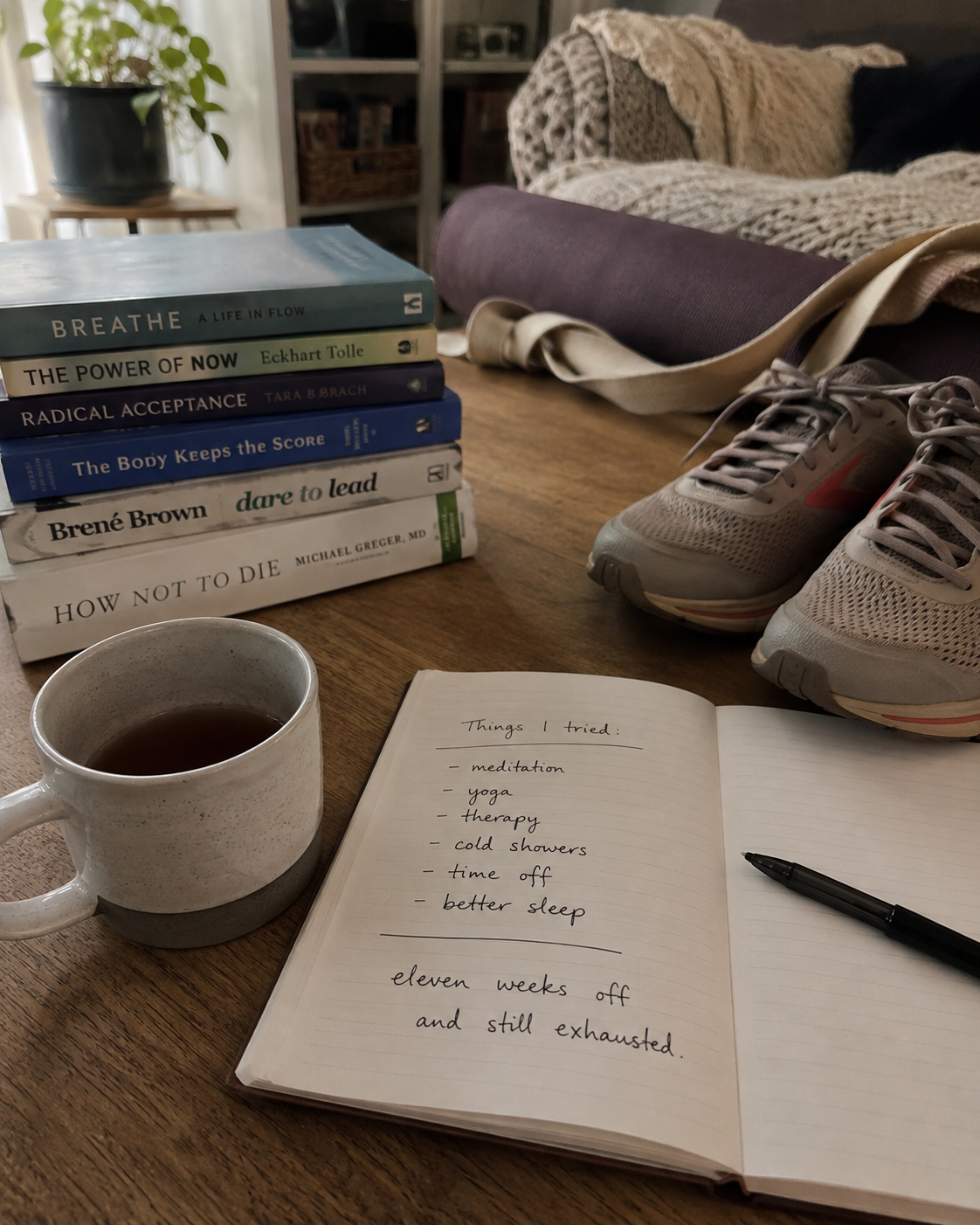
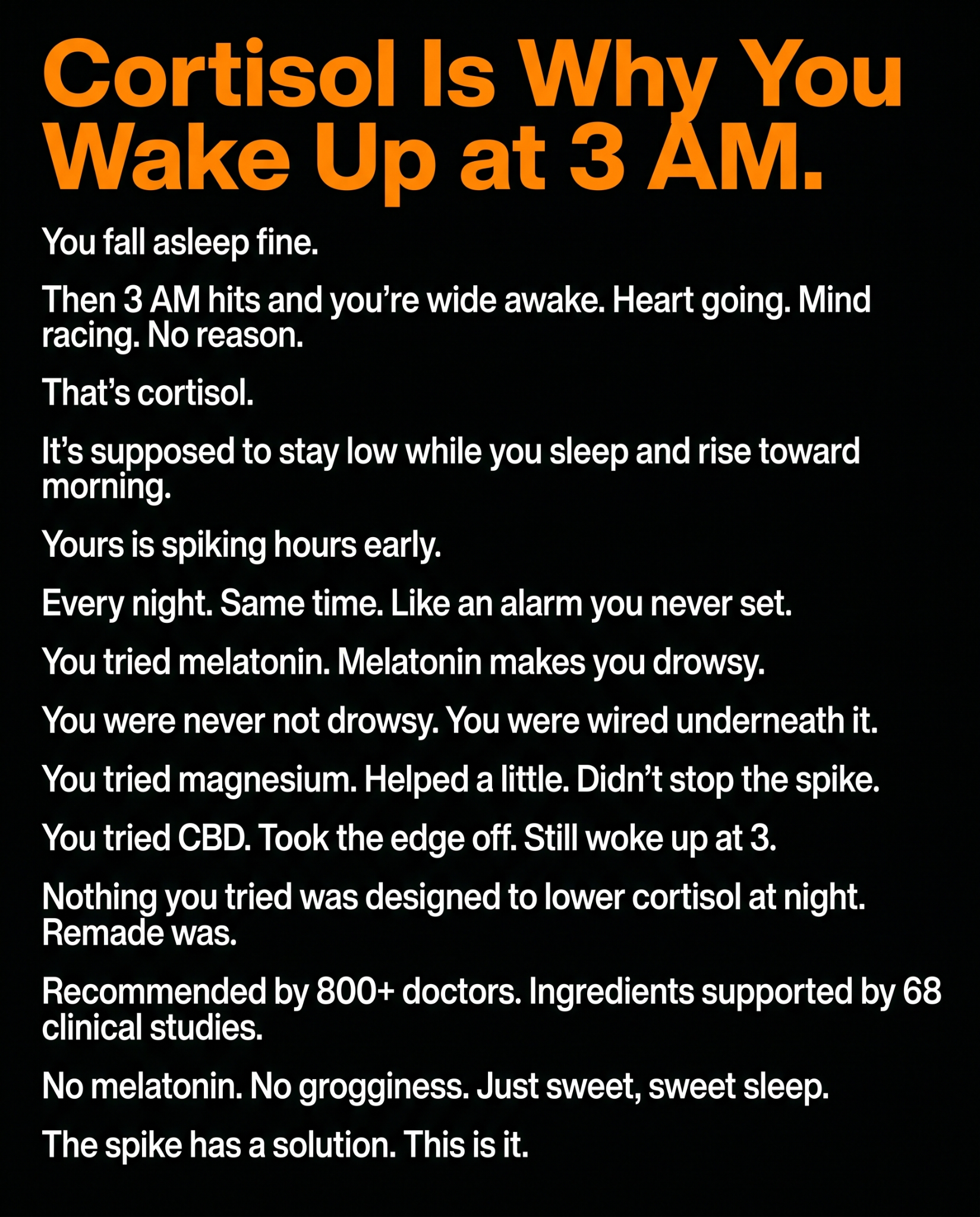
I ran HR for a 400-person company for eleven years. I signed off every stress-related leave. I want to tell you what I noticed — and what I got wrong for a decade. Eleven years as an HR director. Roughly four hundred people, about sixty percent women. I sat in the meetings. I signed the forms. I did the return-to-work conversations. And over eleven years I watched the same thing happen to somewhere north of forty women, in almost exactly the same sequence. I want to describe the sequence, because I don't think anyone has ever laid it out for you, and because recognising which stage you're at is genuinely useful. **Stage one.** She's excellent. She's the one everyone routes things through. She stays late without being asked and she's slightly proud of it. **Stage two.** She starts managing herself. Not the work — herself. She stops sending emails before three in the afternoon because her first draft is always sharper than she means it to be. She stops booking difficult conversations on Monday mornings. She develops rules for her own temper without ever calling them that. **Stage three.** The recovery time goes. Something happens at ten in the morning and she's still carrying it at four. This is the stage nobody notices, including her, and in my experience it's the point of no return if nothing changes. **Stage four.** It shows physically. Jaw. Shoulders. She mentions she's not sleeping. She's exhausted and completely unable to switch off, both at once, and she'll say that sentence to you as if it's a contradiction she's embarrassed about. **Stage five.** Something small happens — genuinely small, a changed deadline, a reply-all — and she cries in a stairwell or a bathroom, and then comes back and runs a meeting. **Stage six.** She's in my office. Forty-odd women. Eleven years. Same six stages, near enough every time. WHAT I USED TO DO ABOUT IT Everything the profession tells you to do, and I did it sincerely. Time off. Phased returns. Workload reviews. Reassigning line reports. The employee assistance programme. Mental health first aiders. A mindfulness app subscription for the whole company, which I championed and which cost a fortune. And here's the thing I could never explain, which bothered me for most of a decade: **The time off didn't hold.** I'd sign off four weeks, or eight, or in two cases a full three months. She'd come back looking better. And within two to four weeks she'd be exactly where she'd been. Not always. But often enough that I stopped being surprised by it, which in retrospect is the part I'm least comfortable with — I built an expectation around it rather than a question. I put it down to the job. To her going back into the same environment. Which is partly true and which is what my whole profession says, and which never fully accounted for it, because in several cases we genuinely did change the environment. We cut the workload. We moved the reports. And she'd still be back at stage three by the spring. THE QUESTION I NEVER ASKED I retired from that role two years ago, and I've thought about this a lot since, and the honest summary is: I had a very good process for stopping the spending and no concept whatsoever of refilling anything. That distinction was explained to me by a woman I used to work with — she left to retrain and now does something adjacent to nutrition — over a lunch about eighteen months ago. She asked what I thought burnout actually was, physically, and I gave her the usual answer, which is a sort of hand-wave about chronic stress. And she said: do you know what a stress response costs? I said what do you mean, costs. Here's what she told me. I've since repeated it to about a dozen people. You already know it's cortisol. That's not the revelation. It's the stress hormone, it ramps you up, and it's supposed to come back down afterward. The problem in every one of my six stages isn't that these women were producing cortisol. Everyone produces cortisol. The problem is that it wasn't coming back down, and that it took less and less to set it off. **And cortisol burns magnesium.** Every stress response your body runs spends magnesium out of your stores. It's a transaction, not a mood. And magnesium is also the mineral your nervous system uses to bring cortisol back down afterward. Same account. Both directions. So the loop runs: cortisol burns magnesium → low magnesium means cortisol stays elevated longer, because there's less of what's required to switch it off → staying up longer burns more → the next thing sets her off faster and clears slower. Which is, and I want to be precise about this, **a mechanical description of my stage three.** The recovery time going is not a personality change and it isn't a resilience failure. It's what running low looks like from the inside. AND WHY MY TIME OFF NEVER HELD This is the part that reorganised eleven years for me. **Rest stops the spending. It doesn't refill the account.** Eight weeks off meant eight weeks of drawing down more slowly. It did not put back three years of drawdown. So she came back with an account that was still empty, and two ordinary working weeks emptied whatever had accumulated, and she was at stage three again by the second Friday. I signed off, conservatively, three hundred weeks of stress-related leave in eleven years. Every one of those was the right decision and none of them was the missing piece, and nobody in my profession ever told me there was a missing piece. It also explained something about the supplements these women were taking, because they'd tell me — you learn a lot in return-to-work conversations. Ashwagandha, constantly. And they'd all report the same shape: helped for about three weeks, then quietly stopped mattering. They'd assume tolerance and switch brands. Adaptogens work on the response — they blunt how hard the alarm rings. That part is real, and I don't think forty women imagined the same first three weeks. What they don't do is replace what the ringing spent. So the volume goes down on an alarm that's still emptying the account every time it fires. It was never tolerance. There was nothing going back in underneath it. They aren't competing options. One works on the response, the other on the reserve. In eleven years I never once saw anyone take both, because nobody had told them there were two halves. WHY IT WAS ALWAYS THE WOMEN Sixty percent of my headcount was female and something like eighty-five percent of my stress-related cases were. I used to attribute that entirely to load — the second shift, the caring responsibilities, the fact that the women in my company were doing more than the men outside of work and being asked to do the same amount within it. That's real and I'll defend it. But there's a physical piece I didn't know. Most women are running low on magnesium before anything difficult happens. The levels in produce have declined and the amount you'd need to eat isn't realistic. The cycle uses it. Pregnancy uses it. And the hormonal shifts from the late thirties onward use more than any of that. My burnout cases clustered between 38 and 52. I had a spreadsheet. I always assumed that was career stage plus young children. Some of it was. Some of it was that they were going into the hardest decade of their working lives with the account already low. THE PART I'D WANT ANYONE TO KNOW Plenty of these women had tried magnesium and told me it did nothing. Here's why, and it's the single most useful thing I learned after leaving. **Magnesium isn't one substance.** It's a family of compounds — oxide, citrate, glycinate, orotate, malate, taurate. Chemically different from one another. Your body absorbs each through its own pathway, at its own rate. Almost every bottle on a shelf contains one form. Usually oxide, sometimes citrate — because they're the cheapest raw materials by a wide margin and let a big number go on the front of the label. A single pathway saturates. Past that point the rest isn't absorbed; it moves through you and it leaves. That's why cheap magnesium is famous for sending people to the bathroom — not a side effect, but the visible evidence it never got in. The number on the front was never the number that reached the bloodstream. A bigger dose of the same form doesn't help, because the limit isn't how much you swallow. Nor does a more expensive bottle, which is usually the same compound with better design. Price isn't the variable. Form is. And **the forms do different jobs.** Glycinate is the one associated with calm and relaxation. Taurate is the one tied to the stress response. Orotate is the one associated with cellular energy. Malate is used in muscle energy. Citrate is mostly known for moving your bowels. Oxide is none of them. So a woman at stage four buys a bottle, takes it faithfully for six weeks, feels nothing, and concludes that her body is the problem. It isn't. She bought the cheap compound and it never arrived. WHAT I SUGGEST NOW Bare Willow Magnesium Complex. Ten forms of magnesium in one serving — ten absorption pathways instead of one, so the 800mg complex — 350mg of elemental magnesium — actually gets absorbed, and the calm-side and stress-side forms are genuinely present rather than one cheap compound doing one job. It also contains ashwagandha, which matters for a reason I'd have missed before that lunch. Roughly half the women who came through my office were already taking an adaptogen on its own and getting three good weeks out of it. This is both halves in one capsule — the adaptogen on the response, the ten forms on the reserve — which is the combination none of them were making. Plus B6, B12, folate, D3 and K2, the cofactors needed to use it. Two capsules a day. I take it. I'm 58 and I spent eleven years absorbing other people's crises for a living and I was further into my own six stages than I admitted at the time. What people report, consistently: the jaw in week two, the leg cramps in week two or three, and then — the one that matters — **the recovery time coming back somewhere around week four.** Something goes wrong and it's over in half an hour rather than the rest of the day. That's stage three running backwards, and it's the single most important thing on the list. IF YOU RECOGNISE YOUR STAGE If you've built rules for your own temper without calling them that. If something at ten in the morning is still with you at four. If you have a specific stairwell. You're not less resilient than you were. And if you've had time off and it didn't hold, you didn't rest wrong. Rest stops the spending. It doesn't refill the account. Go and get whatever magnesium is in your cupboard and turn it around. Read the form on the back, not the milligrams on the front. If oxide is the only magnesium on it, you haven't actually tried this. Bare Willow Magnesium Complex. Ten forms of magnesium — an 800mg complex delivering 350mg of elemental magnesium per serving — plus ashwagandha, B6, B12, folate, D3 and K2. Two capsules a day. Third-party tested, non-GMO, no fillers, made in a GMP-certified, FDA-registered facility. 90-day money-back guarantee. https://try.barewillow.com/magnesium-women-sp P.S. Take the leave if it's offered. I'm not arguing against any of it — the time off, the workload review, the EAP, all of it is worth having and I'd sign every one of those forms again. It just isn't the whole intervention, and for eleven years I acted as though it was. P.P.S. If what you're experiencing is persistently low or hopeless rather than wired and depleted, please talk to your doctor or use whatever support your employer has. Those are different things, and in eleven years the cases I got most wrong were the ones where somebody treated the second as the first. One practical note: it contains vitamin D3 at 5,000 IU. If you're already taking a separate vitamin D supplement, check the total with your doctor or pharmacist rather than stacking them on top of each other.
Where the ad sends people
try.barewillow.com
Feel like yourself again
The body uses magnesium in over 300 processes every single day — switching on cellular energy, releasing tense muscles, calming the nervous system, activating vitamin D, and supporting healthy hormone balance. That's why one shortage can show up as restless sleep, the afternoon crash, cramps, PMS ...
Learn more: try.barewillow.com(opens in a new tab)