
Inactive· since Jun 30, 2026
- 74
- days it ran
- 0
- relaunches
Ad copy
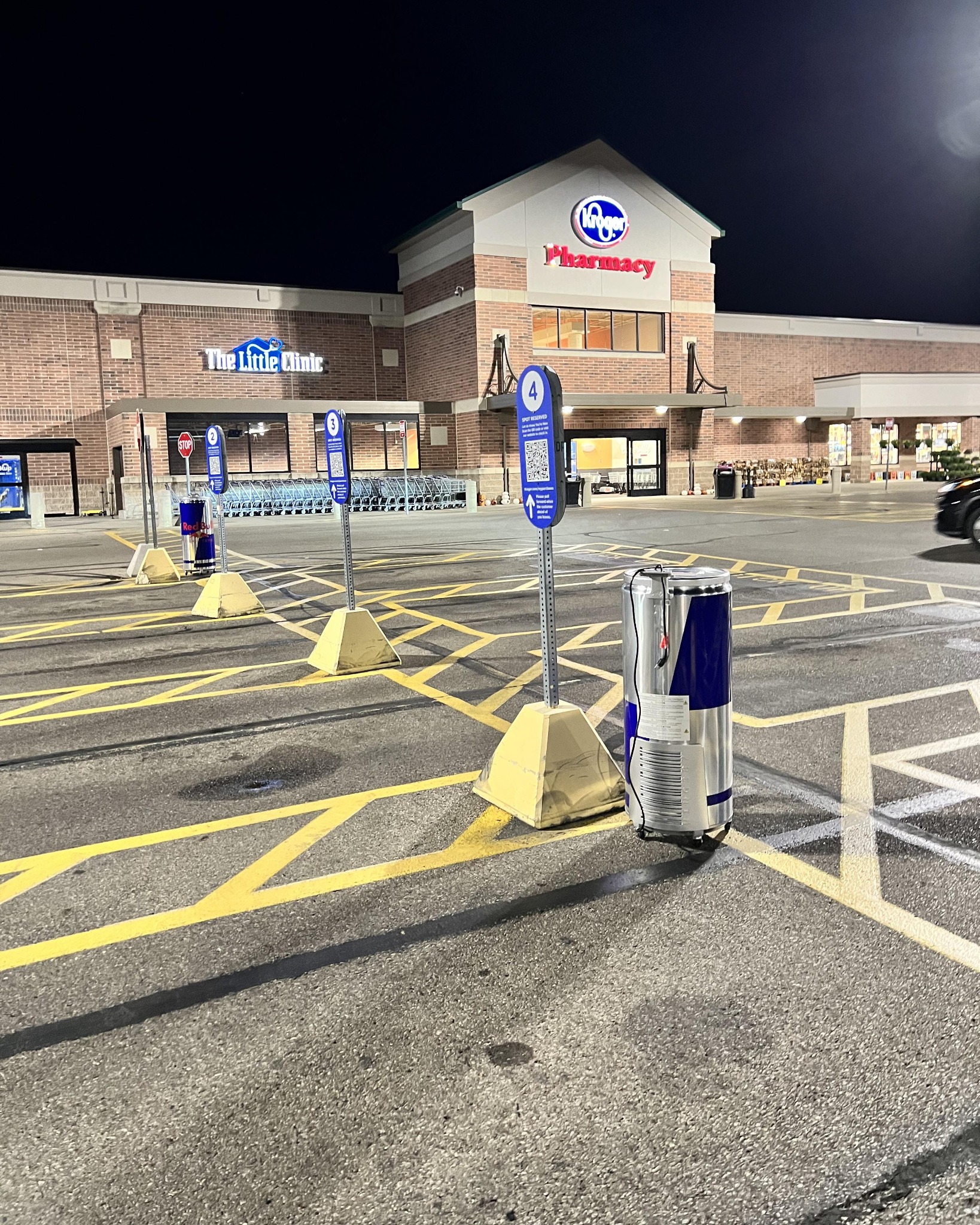
I locked my keys in my car at the Kroger on Kingston Pike last March. Not the end of the world. I know. I'm aware that in the grand scheme of things, locking your keys in your car is a Tuesday afternoon problem, not a turning point. But what happened in that parking lot, in the 47 minutes I stood there waiting for the locksmith, changed how I think about my own body. I want to tell you about it. My name is Diane. I'm 61 years old and I have lived in Knoxville my whole life except for 4 years in the early 80s when I followed a man to Chattanooga and lived to regret it. I came back, I married a good one named Ray, we raised two boys, and Ray died of a stroke in 2020 at the age of 63. That last part matters. Hold onto it. So there I was in the Kroger parking lot, a bag of groceries melting in the trunk, my purse and my phone on the passenger seat, my keys in the ignition where I had left them when I jumped out to grab the cart. I had borrowed my neighbor's phone to call AAA and AAA said it would be 90 minutes and I said no thank you and called a locksmith out of a flyer pinned to the corkboard inside the store. The locksmith showed up 22 minutes later in a white van with magnetic letters on the side that said EARL'S LOCK & KEY. Earl was 67. He told me that within the first 3 minutes. He had a soft round belly, a clean white beard, hands like a man who had worked with them his whole life, and an East Tennessee accent so thick you could cut it with a butter knife. He squatted down by my driver's side door with a little metal tool and started talking the way some men talk when they're concentrating, like the talking is what keeps their hands steady. He asked me about my day. I told him about my day. He asked me what I was doing buying so many groceries on a Wednesday. I told him my granddaughters were coming for the weekend. He asked me how old they were. I told him 6 and 9. And then, about 11 minutes into picking my lock, he said something I have not been able to stop thinking about. He said, "I almost didn't make it to see my granddaughters grow up." I said, "Oh?" And he told me his story. Earl had a widowmaker scare 4 years ago. He was 63 at the time. Same age as my Ray. He was loading a riding mower into the back of his truck on a Saturday in July when his chest tightened up like somebody had tied a belt around his ribs. He sat down on his tailgate and waited for it to pass. It passed. He went inside and didn't tell his wife. 3 days later, at the dinner table, the same thing happened. This time he told her. His wife is the kind of woman who does not mess around. She put down her fork, picked up the phone, called their daughter who is a nurse in Nashville, and within 4 hours Earl was in the cardiac unit at UT Medical getting a workup that he did not want and could not afford to refuse. His LDL number was, in his own words, "the kind of number where the doctor stops looking at his clipboard and just looks at you." Earl walked out of that hospital 2 days later with a stent in one artery, a prescription for a statin, a pamphlet about a Mediterranean diet, and an appointment with a cardiologist in 6 weeks. He sat in his truck in the hospital parking lot and cried for an hour before he could drive home. I'm not making this up. He told me all of this while picking my Toyota Camry's door lock in a Kroger parking lot. He talked while he worked. He worked while he talked. Neither one of us made eye contact the whole time, which I think is the only reason he told me as much as he did. Some men can only say hard things if they don't have to look at you. He told me he took the statin for 8 months and felt like he was 90 years old. Tired in his bones. Sore in his legs. Brain fog so bad he forgot the name of his own dog for a minute one morning. He said he sat his cardiologist down at the 6 month checkup and said, "Doc, I appreciate everything, but this medicine is taking my life away from me. Is there anything else?" The cardiologist, to his credit, didn't get defensive. He said, "Earl, the medicine works. But if you do not want to be on it, you have to do everything else. Diet, exercise, weight, stress, sleep. All of it. And you should look into a few things they don't teach us in medical school." That was the sentence that hit me. They don't teach us in medical school. Earl looked at me, finally, with my car door now open and my keys dangling from his fingers, and he said, "Ma'am, that's where I started learning about Amla." I said, "About what?" He spelled it for me. A M L A. He said it like "AHM-luh." He said it was a berry from India. He said his cardiologist's nurse, of all people, had handed him a printout about it after his appointment with a sticky note that said "ask Dr. Mehta about this at your next visit." He said he had been taking it for 3 and a half years. He said his last lipid panel was, in his words, "the kind of number where the doctor stops looking at his clipboard and just smiles." He handed me my keys. I paid him 75 dollars in cash. He told me to have a good visit with my grandbabies. He got in his white van and pulled out of the parking lot and I stood there next to my Camry with the trunk still open and a tub of butter pecan ice cream slowly turning to soup. I drove home. I unloaded the groceries. I sat at my kitchen table. And I thought about Ray. Ray died of a stroke. But what killed Ray, really, was 30 years of numbers on a piece of paper that nobody, including us, took seriously enough. I have those same numbers. I have known I have those same numbers since I was 47. My doctor at the time, a woman named Dr. Hollis who I loved, told me my cholesterol was "creeping up" and that I should "watch it." I watched it. Watching it didn't change it. By the time I was 55 it had stopped creeping and started running. By 58 I was on a statin too. And I felt the same way Earl had felt. Tired. Foggy. Sore in my hips when I got out of bed. I quit it after 4 months and didn't tell my doctor. I told myself I was going to handle it with diet. I did not handle it with diet. You know how this goes. You eat well for a week, then your daughter brings over a pan of lasagna, then it's Sunday at your sister's house and there's banana pudding, then it's Tuesday and you forgot to plan, then 3 years go by and your last lipid panel is worse than it was when you started. I had been losing this fight quietly for 14 years. And here was a stranger in a Kroger parking lot telling me about a berry. I went home and I got on my laptop and I started reading. This is the part where I have to be careful, because I want to tell you what I learned, but I am not a doctor and I am not going to sit here and pretend I am. What I can do is tell you what I read, and what made sense to me, and why I decided to try something. Here is what I came to understand about cholesterol after a lot of reading. Your liver makes cholesterol. Most of it, actually. The food you eat plays a role, but the bigger driver for most of us is what the liver decides to crank out and what it decides to clear away. Your liver is the foreman of the whole operation. When the foreman is doing his job well, the numbers stay in a healthy range. When the foreman gets sluggish or overworked or distracted, the numbers drift in the wrong direction. Statins work by telling the foreman to stop making so much. Which works. But it also messes with a few other things the foreman is supposed to be doing, which is why people like Earl and me feel like we got hit by a truck while we're on them. Amla, from what I read, works differently. It doesn't shut the foreman down. It supports the foreman. It helps the liver do its own job better. There is a class of compounds in Amla called polyphenols, and Amla happens to be packed with them at concentrations you don't really find anywhere else in the plant world. Specifically there are compounds called emblicanin A and B that have been studied for what they do to support healthy lipid metabolism. Translated into English by Earl in a Kroger parking lot, "it helps your liver chew through the bad stuff." I read studies. I read forums. I read a long thread on Reddit where a man in Ohio talked about his lipid panels before and after. I read an article that summarized a review of 14 different clinical studies on Amla and cardiovascular markers. The pattern was consistent enough that I started paying attention. I want to say something that I think a lot of people in my situation need to hear. I have spent 14 years feeling like a failure about my cholesterol numbers. Every doctor's visit, every lipid panel, every time my daughter would casually mention "Mom, did you get your blood work done?" I would feel this hot little burn of shame, like my body's chemistry was a moral failing. What I started to understand, reading about Amla and how it actually works, was that this wasn't about willpower. It wasn't about whether I'd had banana pudding at my sister's house in October. It was about a liver that needed support. For the first time in 14 years I felt like the problem had a shape that wasn't shaped like me. I cannot tell you what that feels like at 61 unless you've been there. The relief of finally looking at a long term problem and seeing it as a mechanical thing instead of a personal failing. I ordered a bottle of Alevia Amla on a Sunday night. I want to tell you why I chose them specifically, because I did look around. There are a lot of companies selling Amla. Most of them are selling a powder in a plastic tub that you have no real way of knowing what's in. Some of them are pills that are mostly filler with a sprinkle of the actual extract. Alevia stood out for a few reasons. Their product is standardized, which means the active compounds are in the same amount in every capsule. They use a concentrated extract, not just dried berry powder packed into a pill. And they have a 90 day money back guarantee, which mattered to me because at 61 I am not throwing away money on supplements that don't work. The bottle came in the mail on a Thursday. I took my first capsule on Friday morning with my coffee. I'm going to tell you the honest truth about the first 5 weeks. I felt nothing. I almost gave up at week 3. I called my friend Carol and I said, "I think I bought into a Kroger parking lot scam." Carol said, "Diane, you've been ignoring your cholesterol for 14 years, give the berry 90 days." So I kept taking it. Around week 6, something changed that I didn't immediately connect to the Amla. I felt lighter. That's the word. Lighter. Not in weight, although I had lost a few pounds without really trying. Lighter in my body. Lighter when I got out of bed in the morning. Lighter when I walked from my car to the front door of Kroger. Lighter when I climbed the stairs at my daughter's house instead of pausing at the landing. Around week 8 I noticed I wasn't snoring. Or I wasn't snoring as loudly. I sleep alone now, so this is harder to verify, but my granddaughters slept over one weekend and the older one, who is 9 and tells the truth about everything because she has not yet learned not to, said, "Grandma, you didn't snore last night." I had been the snoring grandma for the better part of a decade. The girls had a system. The 6 year old slept in the spare room with a sound machine and the 9 year old slept on the couch downstairs because, in her words, "I can still hear you through the wall, Grandma." My grandbabies had been running from my snoring for years and I had been laughing it off and feeling secretly humiliated. This is what I mean when I say I cannot tell you exactly what Amla does. I cannot give you a number on a lab report. What I can tell you is that I climbed stairs differently, I slept differently, my granddaughters could sleep in the same room with me, and I felt like a version of myself I had not felt like since Ray was still alive. I went in for my annual physical at the 5 month mark. My new doctor, Dr. Reeves, looked at my lipid panel, then looked at me, then looked at the panel again. She said, "Diane, what have you been doing differently?" I told her about Amla. She did not pooh pooh it. She said, "I've been seeing some patients do well with it. Keep doing what you're doing." I'm not going to tell you my numbers because I'm not allowed to tell you that Amla did anything specific to my numbers. What I can tell you is Dr. Reeves smiled at me and that was a smile I had not received in a doctor's office in 14 years. I called my son that night. My older one. He's 36 and he's a worrier and he has been worried about me since his daddy died. I told him about the appointment and about Earl in the Kroger parking lot and about the berry. He was quiet for a minute and then he said, "Mama, I'm glad you didn't end up like Daddy." I had to hang up before I started crying. Here is what I want to say to you if you've read this far. If you're sitting where I was sitting a year ago, with numbers on a piece of paper that have been quietly getting worse for years, with a doctor who has run out of things to say to you that don't involve a prescription that makes you feel terrible, with a body that you have been treating like a moral failing instead of a mechanical system, I want you to hear me. It might not be you. It might be your liver needing support. It might be a mechanism that has been quietly grinding along for years without the help it needs. It might be something that, with the right support, can come back into balance in a way you have not been able to figure out on your own. Alevia Amla is what worked for me. It's a small capsule. You take one a day. It does not taste like anything because you swallow it. You will not notice anything for 4 to 6 weeks, which is the part where most people give up. Don't give up. They have a 90 day money back guarantee. If 90 days goes by and you haven't noticed anything, you send the bottle back and they refund you. No fight. No questions. I read the policy before I bought it because I am 61 years old and I do not have time for nonsense. I am not Earl. I am not anybody famous. I am a widow in Knoxville who locked her keys in her car at the Kroger on Kingston Pike and ended up having a conversation with a 67 year old locksmith that, I now believe, may have actually saved my life. Or at least kept me from leaving my granddaughters the way Ray left me. If you've been losing this same quiet fight, you can find out more here. P.S. I went back to that Kroger 6 months later hoping to run into Earl. I wanted to thank him. The girl at the customer service desk said Earl had retired in May. I asked her if she had a way to contact him. She said no. I asked her to tell him that the lady with the Camry says thank you, if he ever comes in. She wrote it down on a Post-it and put it on her monitor. I don't know if he ever got the message. I hope he did. P.P.S. The 90 day guarantee is the reason I want you to try this. I know that "supplement" is a word that most of us hear and immediately get suspicious about, and we should. The guarantee means you do not have to trust me. You do not have to trust the company. You only have to trust your own body for 90 days. If it doesn't do anything, you get your money back. That is the deal Alevia made with me and that is the deal they make with you. P.P.P.S. My granddaughters are coming this weekend. Both of them. Same bedroom. I bought butter pecan ice cream again. I will not be locking my keys in the car this time. But if I do, I hope it's the kind of mistake that turns into the kind of conversation that turned into the kind of year I had. 👉 alevia.com/amla/33
Like this ad? Make it yours.
Crush rebuilds this exact creative around your product — your brand, your colors, your offer — in about a minute.