Dennis Callahan
Dennis Callahan Facebook ad: “Feel Like Yourself Again”
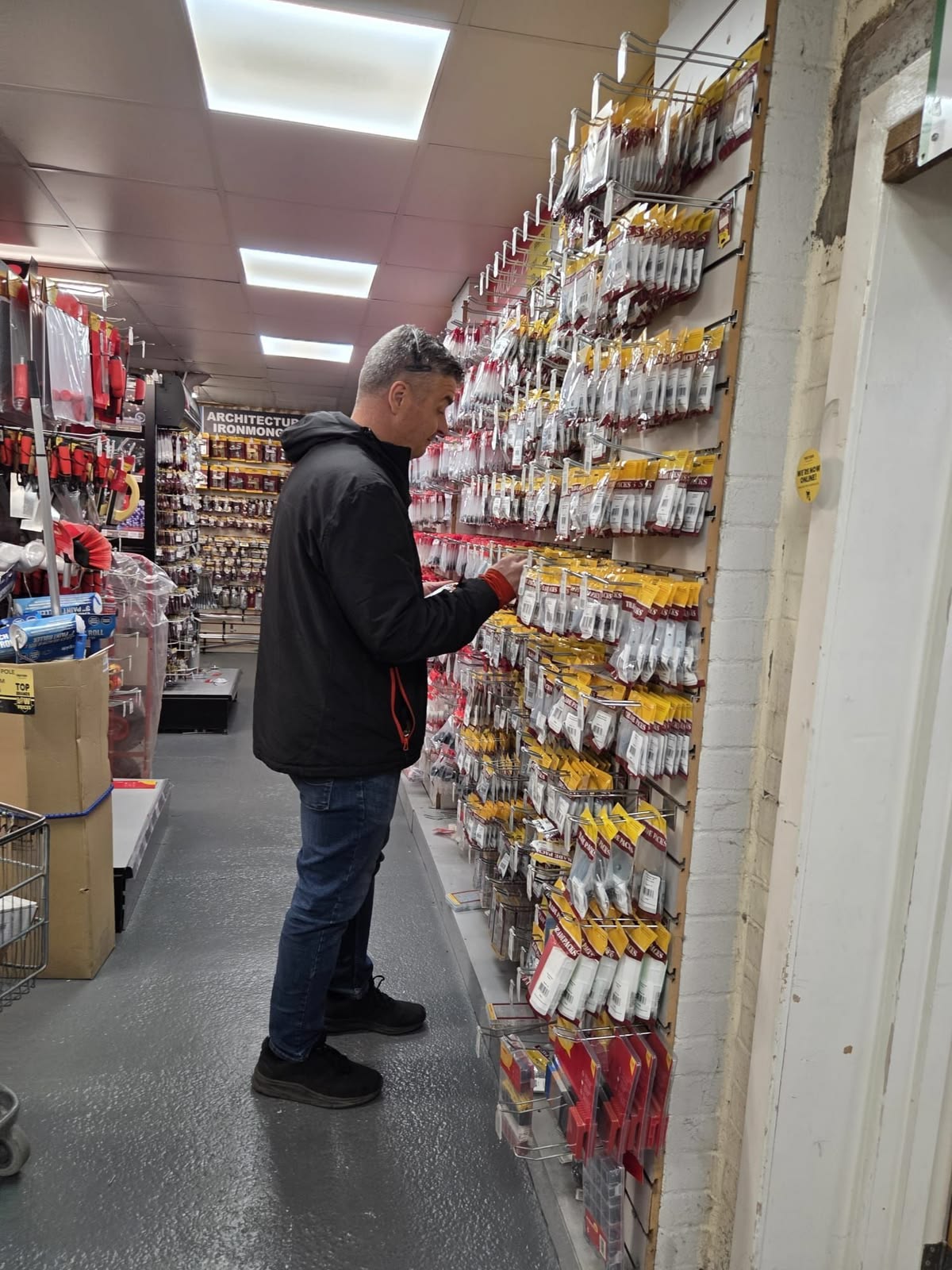
Ran for 1 day, from June 17 to June 18, 2026, the last day Crush saw it.
Run by Dennis Callahan on Facebook. Crush is not the advertiser and does not verify its claims. See this ad in Meta's Ad Library(opens in a new tab)
Want an ad like this for your product?
Crush makes new ad images for your product from this ad: your logo, your product photo, your offer.
Trials from $19.95 USD, then $79.95 USD a month. Cancel anytime.
About this ad
- Meta Ad Library ID
- 1927512921289911
- Platforms
- Facebook, Instagram, Audience Network, Messenger and Threads
- Relaunches
- 1
Ad text
The first time I gave a man CPR I was holding a box of 3/8 inch copper fittings in my left hand. That's the detail my brain keeps going back to. Not the sound his head made when it hit the concrete floor. Not the way his glasses skidded across the aisle and stopped against a display of PVC pipe. Not the woman two aisles over who screamed. The copper fittings. I was still holding them when I knelt down. Still holding them when I started compressions. I didn't even realize until somebody — an off duty EMT it turned out — gently took the box out of my hand and set it on the floor next to me. This was a Saturday morning in March. Hennessey's Hardware on State Street. The same hardware store I've been walking into every Saturday morning for nineteen years. The man I was working on was Walt Hennessey. 68 years old. Owner of the store. Father of three. Grandfather of six. The man who sold me my first pipe wrench when I was 25 and still had hair. He didn't die that day. I want to tell you that up front because what I'm about to share is not a tragedy. It's the opposite. But I need you to understand what it felt like in those 11 minutes before the ambulance got there. Because that's the thing that changed me. Let me back up. My name is Dennis. I'm 57. I run a one-truck plumbing operation out of my garage in a neighborhood called Glenwood. My wife Carol works at the hospital, billing department, has for 21 years. We've got two grown kids. Our son Tyler is finishing his accounting degree. Our daughter Becca lives in Pittsburgh with her husband and our two grandkids. I'm not a hero. I want that on the record. I'm just a guy who took a CPR class in 2009 because Carol made me when the kids were little and a refresher in 2015 because the union required it and I'd never used it once. Not on a doll. Not on a person. Not anywhere. When somebody collapses in front of you your brain does this thing where everything gets very loud and very quiet at the same time. The fluorescent lights buzzed louder. The little radio behind the counter playing classic rock got muffled like somebody put a pillow over it. I could hear my own heart in my ears. And I could hear Walt's wife Diane screaming his name from the front register. She'd been ringing up a bag of grout for some other customer when she heard the thud. She came around that counter so fast she knocked over a display of work gloves. She got to him about the same time I did. I'd been standing there 30 seconds earlier. Just standing there in the plumbing aisle looking for 3/8 inch copper fittings for a bathroom job I had scheduled for Monday. Walt had been three feet away from me restocking a shelf talking about the weather. Mid sentence. He just went down. Knees first. Then sideways. His shoulder hit the corner of the shelving unit and he kept going. By the time his head met the concrete his eyes were already closed. I don't remember deciding to move. I just remember being on the floor. Diane was screaming. Somebody was on the phone. The off duty EMT — a guy named Carlos — came running from the paint section. I started compressions. Carlos counted. Diane held Walt's hand and said Walter stay with me Walter you stay right here. The ambulance took 11 minutes. Walt was breathing on his own before they loaded him. The paramedic — a young woman with a long braid — looked at me as they were lifting him and said you saved his life. Whatever you did before we got here you saved his life. I stood in the parking lot of Hennessey's Hardware on a Saturday morning in March holding a box of copper fittings watching an ambulance turn left onto State Street with its lights on. I drove home. I don't remember the drive. I remember walking into the kitchen and Carol was at the table doing the bills and she looked up and saw my face and she said what happened what happened Dennis. I sat down. I didn't say anything for a minute. Then I told her. And then I did something I haven't done since I don't know when. I cried. Not because I was scared. Because of how fast it had been. How Walt had been talking about the weather and then he was on the floor. How Diane had been screaming his name. How close it had been. That night I couldn't sleep. I lay in bed and stared at the ceiling and I thought about Walt. And I thought about my own father who died of a heart attack in his garage at 62. Just dropped in the middle of a Saturday project. My mother found him with the wrench still in his hand. I'm 57. My father made it to 62. And here's the other thing I thought about. The thing I hadn't let myself think about clearly for two years. I had a problem. I'd been managing it and not talking about it and telling myself it was just getting older. I'd been getting up two and three times a night for two years. I'd been dealing with urgency that didn't give me much warning. The flow that started and stopped and never felt finished. The dull weight in the lower belly that was just always there. I'd seen a urologist. Dr. Patel. He'd told me my numbers looked normal. BPH was common. He'd given me a paper with supplement recommendations. He'd said let's talk about this in six months. I never went back. The paper sat on my dresser for a while and then it got moved to a drawer and then I stopped seeing it at all. After Walt collapsed I opened that drawer. I had to dig. I found the paper underneath an old watch and a stack of receipts and a pocket knife I'd been looking for since 2021. The numbers on it didn't mean much to me. But I remembered Dr. Patel circling one and writing the word elevated next to it in pen. I was 57 years old. My father made it to 62. And I had a paper in a drawer I'd been pretending didn't exist. The next Saturday I went to see Walt at his house. He'd been home from the hospital for three days. He was sitting in a recliner in his living room with a cat on his lap and the game on mute. He looked smaller than he'd looked the Saturday before. Diane brought us coffee. She kept touching his shoulder every time she walked past like she was making sure he was still there. Walt looked at me for a long time before he said anything. Then he said Dennis. I owe you my life. I said you don't owe me anything Walt. He said Diane and I have been talking. About the store. About retirement. About what could have happened. He paused. He took a sip of his coffee. He said the cardiologist who saw me told me something I didn't know. He said this didn't happen Saturday morning. He said this happened over twenty years. The Saturday morning was just when it finally added up. I didn't say anything. I just listened. He said he pulled up my numbers from a physical I had four years ago. Numbers I didn't pay attention to. He circled them on the screen with his finger and he said this is when it started showing. You had four years to do something. Nobody told you what to do. He looked at me. He said Dennis. I'm going to say something to you and you can take it or leave it. You and I are about the same. You work with your hands. You worry about your truck more than you worry about what's going on inside you. I know because I'm the same way. And I almost died on the floor of my own store two weeks ago. He stopped. He set his coffee down. He said go get your numbers checked. And go back to that urologist. Don't put it off. Please. I drove home. Carol was on the porch with our dog Murphy, an old beagle who's mostly blind now. She looked at me and didn't ask. She just opened the door. That Monday I called Dr. Patel's office. They got me in Wednesday. The numbers were worse than they'd been two years before. Not catastrophic. But worse. Dr. Patel was kind about it. He said Dennis you came in. That's the hardest part. We can work with this. He talked about the supplement protocol again. He said let's be more systematic this time. He said but Dennis. Don't think about it for two more years. I drove home. I sat in the kitchen. Carol came in and sat across from me and she had that look she gets when she knows we're about to have a conversation that matters. She said what did he say. I told her. She didn't say anything for a long time. Then she said Dennis. I love you. I want you here when Tyler graduates. I want you here when Becca's kids are teenagers. I want you here when we're 75 and driving each other crazy in this house. I want you here. I said I want me here too. She got up. She walked over to the cabinet above the microwave where she keeps her vitamins and her hospital lanyard. She pulled down a small bottle. She said I want to tell you about something. I haven't said anything because I didn't know if you'd be ready to hear it. But you might be ready now. She set it on the table. Avoria. Pomegranate extract. I'd never looked closely at it before. It had been sitting in that cabinet for I don't know how long. She said one of the nurses in the urology unit at the hospital — a woman named Tina who has been there for fifteen years — told me about this about two months ago. I started taking it then. I didn't say anything because I wanted to see if it did anything first. I said and. She said and I think it's helping. But more importantly I think it could help you. And Tina told me why. I picked up the bottle. Turned it over in my hands. Read the label. She said Tina told me about it because we were talking at lunch about a patient she'd been seeing. A man who had been dealing with the same thing you've been dealing with for four years. Tried everything the urologist recommended. Nothing moved. Then his wife found this and he started taking it and at his next appointment his urologist asked what had changed. She said Tina wasn't selling me on it. She was just telling me what she'd seen. And she explained why she thought it was working when everything else hadn't. I said what did she say. Carol sat down across from me. She said the supplements most men take for prostate problems work around the outside of the gland. They adjust hormones. They work on flow mechanics. Things that sit downstream of the actual problem. But the actual problem is inflammation. Chronic low-grade inflammation sitting inside the prostate tissue itself. The tissue swells just enough to compress the channel. Just enough to send false signals to the bladder that the tank is full when it isn't. Just enough to make every bathroom trip feel incomplete and every night feel interrupted. She said the inflammation is the leak. Everything you've been taking is mopping the floor. Saw palmetto works on DHT — a hormone connected to prostate growth. Doesn't touch the inflammation. Beta-sitosterol works on flow mechanics. Doesn't touch the inflammation. Every supplement working on the wrong address while the inflammation sits inside the gland untouched. She said Tina showed her a clinical study. Men scheduled for prostate surgery. One group took pomegranate extract capsules — concentrated, standardized, not juice — for four weeks before the operation. When they analyzed the prostate tissue afterward the pomegranate compounds were physically measurable inside the gland itself. Not in the bloodstream. Not working at a hormonal distance. Inside the tissue. Where the inflammation lives. She said that's the first time any supplement compound has ever been shown to do that. Saw palmetto doesn't reach the tissue. Beta-sitosterol doesn't reach the tissue. Once pomegranate extract reaches the tissue it works on the inflammation directly. The swelling that's been compressing the channel eases. The false signals to the bladder quiet down. The flow stops fighting itself. Not managing the problem. Reaching the source of it. I sat at that kitchen table and I thought about two years of getting up at two in the morning and pushing for two ounces and lying back down and doing it again. Two years of the dull weight that never moved. Two years of the urgency that ran every car trip and every job site and every morning. All of it aimed at the wrong address. The supplements working on everything except the place where the problem actually lives. I looked at the bottle she'd set on the table. I said how long have you had this in the cabinet. She said two months. I said why didn't you tell me. She said because you weren't ready two months ago. You are now. She was right. I picked up the bottle. I said all right. And I started taking it that night. Two capsules with water. I set a reminder on my phone because I've never taken anything daily in my life and I knew I'd forget. The first week nothing. I felt the same. I told Carol. She said give it time. End of week two something shifted. The pressure — that dull low weight in the lower belly that I'd been carrying so long I'd stopped calling it a symptom — had eased. Not gone. Eased. Enough to notice when I sat down at the kitchen table in the morning. Week three I got through my morning coffee without the hard clench that usually hit around the forty-minute mark. Once. Then twice. Then most mornings. Week four the flow had changed. The stop-and-start that I'd quietly accepted as just how things were had smoothed out. I stood at the sink one morning and registered: that was different. I didn't say anything to Carol yet. I didn't want to make something of it before I was sure. By week six I was sure. The urgency was manageable. The kind you notice, respond to, and it listens. Not the kind that runs the morning. The nights had changed. Getting up once instead of two or three times. Then most nights not at all before five. The flow was consistent. Not fighting itself. Not the stop-and-start I'd been living with for two years. Just — a body doing what a body is supposed to do. I told Carol. She said she'd noticed the sleep two weeks earlier and hadn't said anything because she didn't want to jinx it. At eight weeks I went back to Dr. Patel. He pulled up my numbers. He looked at them. He looked at me. He looked at them again. He said Dennis. What did you do. I told him. All of it. Carol. Tina. The cabinet above the microwave. The pomegranate extract. The tissue penetration study. The inflammation being the actual source. He nodded slowly. He said I can't tell you what's doing what here. But whatever you're doing keep doing it. These numbers are better. In eight weeks. I drove home. I called Carol. She was at lunch at the hospital. I said the numbers are better. She said Dennis I told you. That was seven months ago. I'm still on Avoria. Same two capsules every morning with my coffee. Carol's still on hers. Tina the nurse is still on hers. Walt Hennessey is back at the store four days a week. Diane made him give up Saturdays. He turned 69 in August. He told me at his birthday dinner that his cardiologist had told him to keep doing whatever he was doing. He looked at me across the table and said Dennis. Open the drawer. Don't wait. I don't talk about this stuff much. I'm a plumber. I'm a private man. I'm not the type to post on Facebook about my health. But I'm posting this because of the drawer. Because of the paper that sat in my drawer for two years. Because there are men reading this right now who have a paper just like mine. Who got told by some doctor in some appointment that something was worth watching. Who walked out and meant to do something about it and never did. Who keep telling themselves they'll deal with it when things slow down. Don't wait for somebody to collapse in front of you to take it seriously. Open the drawer. Read the paper. Make the call. And if you've never heard of pomegranate extract and you've got a reason to be paying attention to your prostate, look into it. Read the research yourself. Don't take my word for it. I'm a plumber from Glenwood. I'm not your doctor. But I'll tell you what. The bottle Carol put on the kitchen table is called Avoria. They make it here in the States. The capsules are easy to swallow. The bottle lasts a month. And they have a 30-day money-back guarantee — if you take it for 30 days and don't notice anything different, you send it back and you get your money back. I asked before I ordered more. They confirmed. So there's no real downside to trying. Two capsules. Every morning. With your coffee. 👉 https://getavoria.com/products/pom-2 P.S. I think about Walt every Saturday. Not in a sad way. In a grateful way. A man went down on the floor of his own store and got back up. And the version of him that got back up was the version that finally started paying attention to what was going on inside. I want that for every man reading this. Open the drawer. Don't wait. P.P.S. The reason saw palmetto and beta-sitosterol feel like they're doing something but never fully fix it — they're working on things that sit downstream of the inflammation. The tissue is still swollen. The channel is still compressed. Until something gets inside the gland and addresses that directly you're mopping the floor. Pomegranate extract gets inside the gland. That's been shown in a controlled clinical study. Nothing else in the prostate supplement category has demonstrated the same thing. P.P.P.S. The 30-day guarantee is the part I want you to think about. When my father went to his doctor in the years before he died nobody offered him a refund on the time they spent watching his numbers. The guarantee is Avoria's way of saying they'll stand behind what they sell. Take it for 30 days. If your body doesn't tell you something is different send the bottle back. You're risking nothing. I waited two years with a paper in a drawer. Don't do what I did. 👉 https://getavoria.com/products/pom-2
Where the ad sends people
getavoria.com
Feel Like Yourself Again
Avoria
Learn more: getavoria.com(opens in a new tab)