
Inactive· since Apr 28, 2026
- 28
- days it ran
- 0
- relaunches
Ad copy
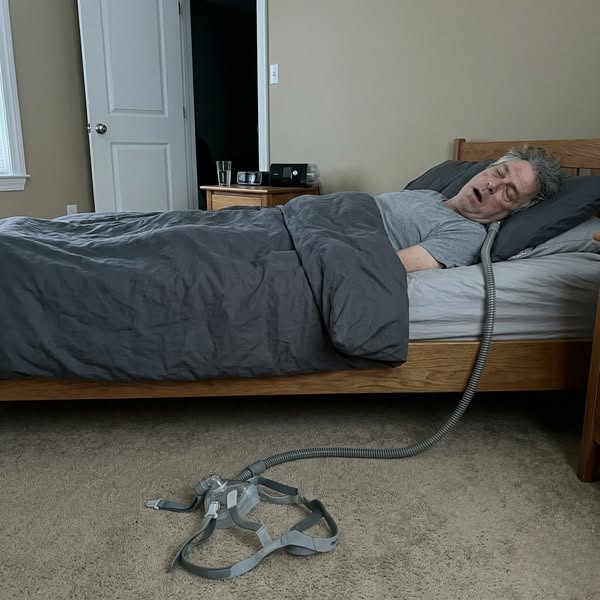
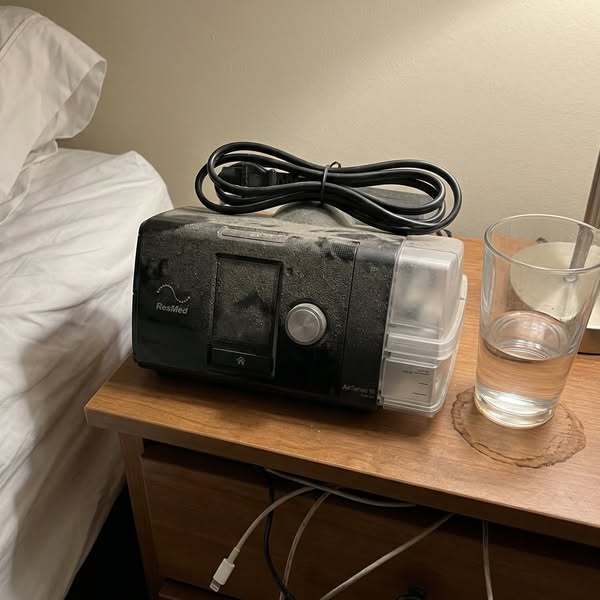
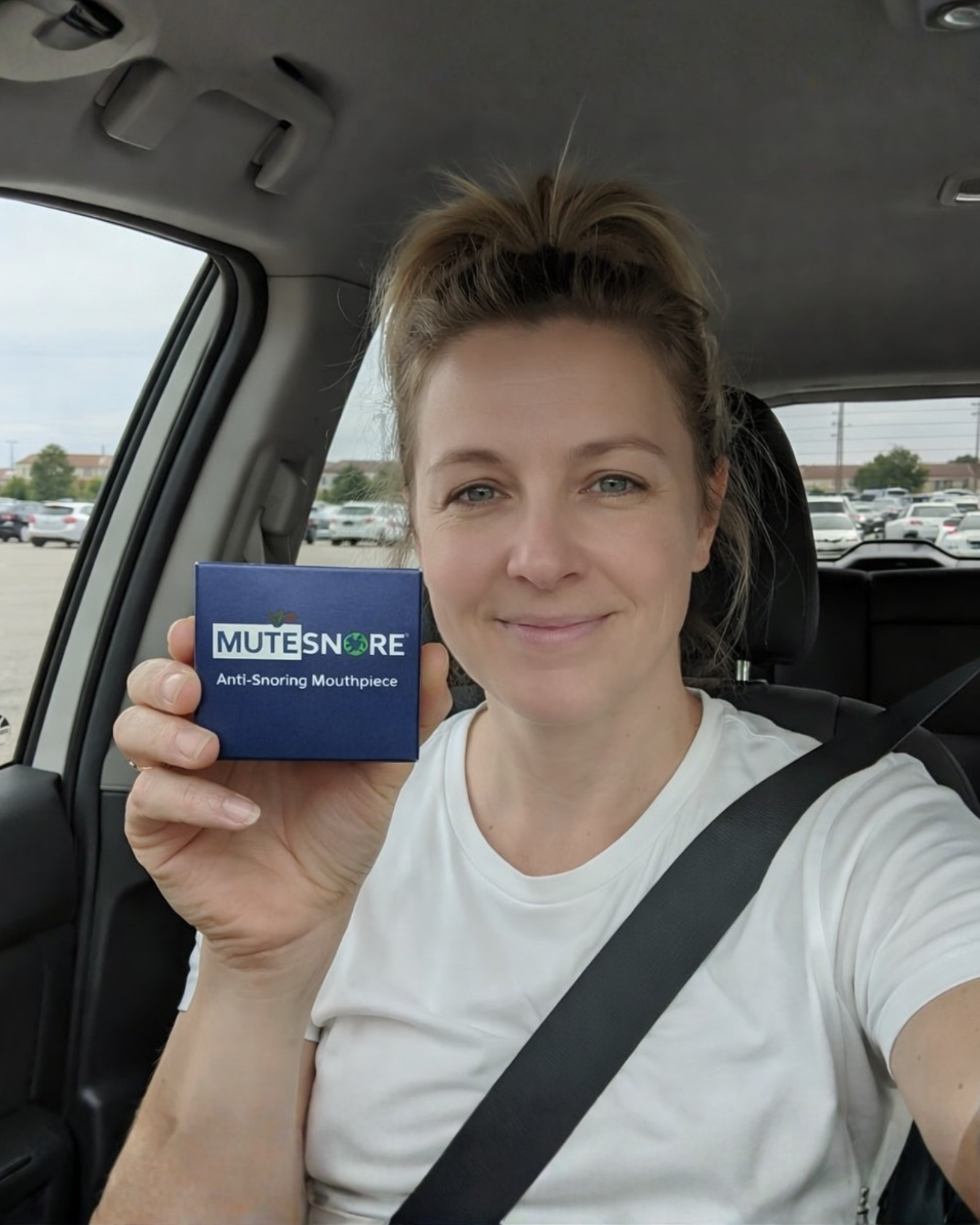
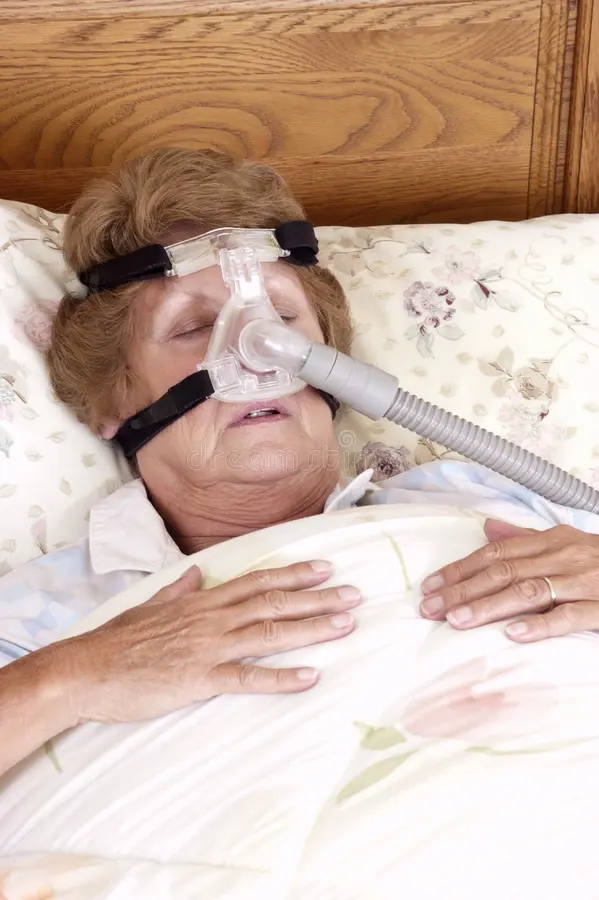
My mother wore her CPAP machine every single night for eight years. Her compliance data was perfect at every checkup. When she nearly died of a cardiac event at 68, I asked her sleep specialist how that was possible. What he told me changed everything I thought I knew about sleep apnea treatment. Because six months ago, I was standing in a hospital corridor at 54 years old, holding my mother's hand, realizing I was looking at my own future. Same diagnosis. Same machine. Same doctor telling me — like hers had been telling her — that my numbers were fine and to keep wearing it. And I almost went home from that hospital without asking the one question that changed everything. My name is Laura Brooks. My mother is 68. I am 54. We have the same jaw structure, the same genetics, and — as of eighteen months ago — the same sleep apnea diagnosis. When my sleep study came back at an AHI of 29, my doctor didn't hesitate. "We've watched this long enough. I'm prescribing a CPAP. You should have been on this two years ago." I had watched my mother fight with her CPAP for eight years. I knew what I was being handed. I wore it. I tried. The claustrophobia. The dry throat. The hose at 2am. The way it changed our bedroom from something intimate into something clinical. I lasted longer than I wanted to admit before I started leaving it off on the nights I felt I couldn't face it. My mother never left it off. Eight years. Every single night. Perfect compliance. Her doctor congratulated her at every appointment. She still nearly died in her kitchen at 68. And that is when I stopped accepting the numbers and started asking the real question. My mother had picked up my nephew Sam — five years old, sandy hair, the kind of kid who narrates everything in a running commentary — early on a Tuesday morning while my sister went to a work appointment. Sam sat at the kitchen table with his cereal while my mother made toast. She turned back toward the counter. And went down. Sam started screaming. My sister arrived twelve minutes later to pick him up. She found my mother on the floor and her five-year-old son crouched next to her, shaking her arm. The paramedics were there in nine minutes. My mother survived. But the cardiologist's words when I sat in her hospital room two days later have not left me since. "Her CPAP was doing what it was designed to do. Her event count was down. Her data was clean at every checkup. But the cardiovascular damage from the years before diagnosis — and the ongoing structural weakness that the CPAP treats nightly rather than resolves — those continued to progress. Her compliance was excellent. Her underlying mechanism was never corrected." I stared at her. I was 54 years old. Same diagnosis. Same machine. Same doctor telling me my numbers looked fine. And then I said the same thing to myself that I imagine every person reading this will say. I need to understand what this actually means. So I did something I had never done before. I made an appointment with a cardiovascular specialist who specifically focused on sleep medicine — not my regular doctor, not the one who had prescribed my CPAP and reviewed my compliance data. A specialist. Her name was Dr. Chen. She practiced at a sleep and cardiovascular center forty minutes from my house. I sat in Dr. Chen's office and told her everything. I told her about my mother. About the eight years. About the perfect compliance. About the Tuesday morning and my nephew crouched on the kitchen floor. I told her about myself. Same diagnosis. Same machine. Same doctor saying the same words. I told her we were mother and daughter. Same jaw anatomy. Same genetics. Likely the same structural reason the airway collapses. And I said: "Tell me what almost killed my mother. And tell me if it's going to kill me." Dr. Chen didn't rush to reassure me. She didn't say "I'm sure you're fine." She didn't tell me my numbers looked acceptable. She listened. She asked questions. She took notes. Then she ran assessments I had never heard of — arterial stiffness evaluation, cardiac stress markers, vascular compliance testing. She looked at things my primary doctor had never checked in years of annual physicals. When she came back with the results, she was not smiling. "Ms. Brooks, your sleep study shows an AHI of 29. That tells me one thing — your airway is collapsing frequently during sleep. But these tests tell me something your sleep study can't." She turned the screen toward me. Graphs. Readings. Numbers I did not immediately understand. "This is your cardiovascular stress profile. It measures the cumulative strain on your heart and blood vessels from repeated nocturnal oxygen deprivation events." She pointed at a range on the chart. "A healthy woman your age should be here." She pointed at another range. Significantly worse. "You're here. I typically see this profile in patients who are fifteen to twenty years older and have had untreated apnea for a decade." I stared at her. "But I'm on the CPAP. Most nights. My numbers—" "The machine addresses the events while it is running," she said. "But your cardiovascular system has been absorbing the damage of those events for years — probably longer than your diagnosis suggests. The reading your doctor is tracking? That is the surface. What I am seeing underneath it is far ahead of where your study number suggests." She let that settle. "Your AHI didn't jump to 29 overnight. It crept up. Occasional snoring. Then frequent snoring. Then partial collapses. Then full obstructions. Over years. Your doctor watched the symptoms climb and said 'let's monitor it' until the number crossed a threshold. Then he reached for a prescription." "But what was happening inside your cardiovascular system during those years? Every time your airway collapsed — every single time your body triggered an adrenaline surge to force itself back awake and breathing — your heart rate spiked. Your blood pressure spiked. Your system flooded with cortisol. And then it happened again. Thirty, forty, fifty times a night. Night after night. Year after year." "Your sleep study is the surface," she said. "What I am seeing underneath it reflects years of cumulative cardiovascular strain that began long before your numbers crossed a clinical threshold." I felt sick. "So what does the CPAP actually do?" She was direct. "The CPAP forces pressurized air through your collapsed airway, holding it open from the outside. Your airway event count drops. Your study data improves. Your doctor says 'looking good, keep wearing it.'" She paused. "But it only works while the seal holds and the pressure is set correctly. It does not fix the structural reason your airway collapses. It does not restore the muscle tone or jaw positioning that allows the collapse to happen. It does not address the underlying mechanism. The data on the machine improves. The reason your airway collapses every night — what I am seeing in these assessments — continues unchanged." She looked at me. "The machine is like putting a pump in a pipe with a structural fault. While the pump runs, water flows. But the fault is still there. Every night the pump has to work. Every night the fault is still there underneath." And that is when I understood what had almost happened to my mother. She had worn her CPAP faithfully for eight years. Carried it on every trip. Kept it clean. Never missed a night. Her compliance reports were, by every clinical measure, exemplary. Her doctor congratulated her at every appointment. And the machine helped. The acute events reduced. The gasping stopped. But my mother's airway had been collapsing for years before diagnosis — years during which her cardiovascular system had been absorbing those nocturnal stress surges without anyone knowing to stop them. The machine addressed the events it could detect while it was running. It did not undo what the preceding years had built up. It did not reverse the arterial stiffness. It did not restore the vascular health that a decade of nightly oxygen deprivation had quietly compromised. She nearly died at 68. With her CPAP on the nightstand and her compliance data showing eight years of near-perfect usage. Eight years of managed event counts. Eight years of a machine that worked while it ran. And it almost wasn't enough. I told Dr. Chen. She was quiet for a moment. "That is not uncommon," she said. "The CPAP managed her airway events while the machine was running correctly. But the cardiovascular damage from the years before diagnosis — and the ongoing structural weakness that the CPAP treats nightly rather than resolves — those continued to progress. Her compliance was excellent. Her underlying mechanism was never corrected." There it was. The answer to the question I had been carrying since I stood in that hospital corridor. Her data was perfect for eight years. And she still nearly died of the thing they were managing. Now a specialist was telling me why. And she was telling me that I was on the same trajectory. "So what do I do?" I asked. "Is the machine the only option?" She said I had two paths. Path one: continue the CPAP. The event count stays down. The data looks better at every checkup. "But the structural reason your airway collapses every night is still there," she said. "And over time, mask fit issues, pressure adjustments, and the simple human reality of wearing equipment on your face for the rest of your life mean that compliance tends to drift. The machine does what it does while it runs. It does not fix anything." Path two: actually address why the airway collapses in the first place. "How?" I asked. She explained it like this. When you fall asleep, the muscles throughout your head and neck relax. Your jaw — without the tone of waking muscle activity to hold it in position — slides backward. As it slides, the soft tissue at the back of your throat follows it inward. The airway — the passage through which oxygen must flow freely all night — folds shut. Like a garden hose that someone has stepped on and pinched in the middle. Your body detects the oxygen drop and triggers an emergency response. Adrenaline. Cortisol. Heart rate surge. Blood pressure spike. The throat muscles jolt back into enough tone to reopen the passage. Breathing resumes. The cycle starts over within minutes. "This happens because of one mechanical event," she said. "The jaw slides backward. Everything else — the tissue collapse, the oxygen drop, the stress response, the cardiovascular strain — follows from that one movement." "The CPAP's answer is to overpower the consequences," she said. "Enough pressure to hold the passage open despite the collapse. It addresses the outcome without addressing the cause. Your jaw is still sliding backward. The tissue is still collapsing. The machine is simply powerful enough to push past it." She looked at me. "What if the jaw simply didn't slide backward?" I stared at her. "Something holds it forward?" "A small device," she said. "Sits in the mouth during sleep. Repositions the lower jaw slightly forward — just enough to act as a physical support for the airway. The tissue cannot collapse inward because the jaw is not sliding backward. The airway stays open. Not because a machine is forcing it. Because the collapse is prevented before it starts." "No machine?" I said. "No machine. No mask. No hose. No pressure. No nightly seal check. No compliance monitoring. No equipment. Just a jaw held in the correct position." Managing. Not healing. That is what the CPAP does. This was different. "Is there a device that does this?" I asked. She wrote two words on her notepad and slid it across the desk. MuteSnore. I nearly said I had heard of those. I had dismissed them — the boil-and-bite mouthguards, the DIY kits that people tried and returned because the molding went wrong or the jaw pain was unbearable or the device shifted teeth in ways that cost thousands to correct. She held up a hand. "Not a boil-and-bite kit. I want to be specific about that." She explained that traditional boil-and-bite mouthguards require the user to submerge them in boiling water, bite into soft material, and hope the mold sets accurately. The margin for error is significant. Imprecise molds create uneven pressure across the jaw and teeth. The consequences — bite misalignment, chronic jaw pain, dental damage — are well documented and not minor. MuteSnore required none of that process. Medical-grade hypoallergenic material. Precision-engineered to hold the jaw in the clinically correct forward position. No molding. No boiling. No fitting appointment. No DIY process with a margin for expensive error. Ready directly from the box. First night. "I recommend this to patients who need their airway held open but do not want to spend the rest of their lives dependent on a machine," she said. "It addresses the mechanism. Not the consequences of the mechanism. That is a fundamentally different approach." She looked at me. "Your mother's CPAP managed the consequences of a collapsing airway for eight years. It never corrected the collapse. This corrects the collapse. The distinction matters — for her, and for you." I ordered two. One from my phone in the parking garage before I reached my car. One that I drove to my mother's house and placed on her nightstand that same evening. I did not go home and deliberate. I did not make a list of pros and cons. My mother had worn a machine for eight years and it had almost not been enough. I was on the same path. I was not going to sit in a parking garage and weigh my options. The packages arrived two days later. No setup. No boiling. No instructions more complex than a single paragraph. We both started that same evening. And here is what happened over the following five weeks. Week one: I put MuteSnore in for the first time and lay in the dark for a long time waiting. I woke up the next morning and ran through the internal checklist that years of poor sleep had built into me. Throat. Not raw. Not dry. Head. No pressure headache. No fog behind the eyes. I got up and stood in the bathroom for a moment just registering how I felt. Not the particular hollow flatness of a body that had spent the night fighting for air. Something closer to actual rest. My husband asked if I was all right. I told him I thought so. He said he had not heard anything. Nothing. Not the sound I made. Not the gasping. Not the thing that had been waking him at 2am for years. I stood in the kitchen and thought about my mother on that floor. My mother called me that morning before I had finished my coffee. She said: "I slept." Just that. I had to sit down. Week two: The fatigue I had attributed to getting older — the mid-afternoon heaviness, the early evenings, the brain fog that had become my baseline — was lifting. I felt sharper by mid-morning than I had felt all day in years. My husband noticed before I mentioned it. "You seem less heavy," he said one evening. "Like something is lifting." He was right. I had stopped dragging. Something that had been sitting on top of every day for longer than I could precisely remember was getting lighter. My mother said the same thing in almost those exact words when I called her that week. "I feel lighter," she said. "Like whatever was pressing on me at night is gone." Week three: My husband woke me on a Wednesday morning to tell me something. He said that for the past three weeks he had not once been woken by anything. Not a sound. Not a gasp. Not the particular sharp intake that used to come at 2am and leave him lying there with his heart going, hand on my shoulder, deciding whether to wake me. He looked at me across the bed and said something he had not said in years. He said: "I slept." Just that. I did not speak for a moment. Because I understood what it had cost him to lie next to me for years listening to what he was listening to. Week four: I went back to Dr. Chen for the reassessment she had scheduled. She ran the cardiovascular stress markers again. Looked at the results. Then at me. "Your cardiovascular stress profile has improved measurably since your first visit," she said. "Not just the surface indicators. The underlying markers. This is what correction looks like." She paused. "Not management. Correction." She had run the same reassessment on my mother the day before. Same findings. Measurable improvement. Underlying markers moving in the right direction for the first time in years. Week five — the day before my follow-up with my primary doctor. I had been tracking my sleep quality daily. I had not woken once from a gasping event in five weeks. My husband had slept through every night. The morning fog was gone. The afternoon heaviness was gone. I felt, for the first time in years I could not precisely count, like a woman who was actually resting at night. At the appointment the nurse ran the assessment. My oxygen saturation was normal. Resting heart rate was down. Everything she measured was better than the previous visit. My doctor walked in. Pulled up my chart. Stopped. He looked at the previous data. Then at today's. "You started the CPAP consistently?" "No. I switched to something else. A mandibular advancement device. It holds the jaw forward during sleep so the airway cannot collapse. No pressure. No machine. No mask. It addresses the mechanism rather than the consequences." He was quiet for a moment. "What's it called?" "MuteSnore." He typed it in. Read the mechanism description. Looked at the clinical basis. Read the outcome data. A long silence. "Continue what you are doing. I want to see you back in eight weeks. If your indicators hold at this level, we move to quarterly monitoring with no prescription required." Quarterly monitoring. No prescription required. I walked out of that office. Sat in my car. Called my mother. "Quarterly monitoring. No machine. No prescription." She was quiet for a moment. Then she said something that I will not forget. "I wish someone had told me this eight years ago." That was five months ago. Dr. Chen ran full reassessments on both of us last month. Both of our cardiovascular stress markers are within normal range. Both of our arterial stiffness indicators have improved to what she described as consistent with someone a decade younger than our current profiles. Not managed. Improved. My mother's grandson Sam visited last weekend. She got on the floor and played with him for two hours. Built a block tower, knocked it over, built it again. She was not winded. Was not heavy. Was not watching the clock. She showed me a photo afterward. She looked like herself. Dr. Chen told me something at that last appointment that I have not been able to stop thinking about. She said that if we had stayed on the CPAP route — the machine running every night, managing the events while the structural mechanism remained uncorrected — we would both be following the same trajectory she sees in most long-term CPAP patients. "Your mother's story is not unusual," she said. "The machine managed her events while it ran. The cause was never addressed. Her cardiovascular system absorbed the consequences of years of structural airway collapse. Her compliance was excellent. Her underlying mechanism was never corrected." My mother managed an event count for eight years. Her airway kept collapsing underneath. She nearly died on the machine. We corrected the mechanism. In five months both of our cardiovascular profiles are healthier than they have been in a decade. --- If you are reading this, you are where I was. Or you are watching someone you love be where my mother was. Their sleep study shows airway events. Their doctor has them on a CPAP. The compliance data looks great. They are the ideal patient. And you are watching them and thinking: something is still not right. They are still exhausted. Still foggy. Something is still wrong even though the doctor keeps saying the numbers look good. Here is what nobody told us until a specialist sat down for fifty minutes and explained it properly. The snoring and airway events are not the problem. They are the last symptom of a structural problem that began years before the study was done. The jaw has been losing muscle tone since the forties. Every night it slides a little further back during sleep. Every time it does, the soft tissue at the back of the throat collapses inward. The airway seals. The body floods itself with adrenaline and cortisol to force it back open. The heart surges. The blood pressure spikes. And then it does it again. Thirty, forty, fifty times a night. For years. The CPAP forces air through the collapse while it is running. It does not stop the jaw from sliding backward. It does not prevent the tissue from collapsing. It addresses the outcome without correcting the cause. And every night they sleep, the cause is still there. My mother proved where that path leads — even with eight years of perfect compliance. A mandibular advancement device holds the jaw forward. Not with pressure. With position. The jaw cannot slide backward because something is gently, precisely holding it forward. The tissue cannot collapse because the jaw never retreats. The airway stays open. The adrenaline surges stop. The cardiovascular stress stops. From the very first night. But the device matters enormously. Most boil-and-bite mouthguards are imprecise DIY kits with a significant failure rate and documented risks of jaw pain, bite misalignment, and dental damage. They are not what I am describing. MuteSnore is medical-grade hypoallergenic material precision-engineered to hold the jaw in the clinically correct forward position. No boiling. No molding. No fitting process with a margin for expensive error. One ingredient in the mechanism: correct jaw position. Ready the moment it comes out of the box. First night. Now here is the practical reality. A dentist-fabricated mandibular advancement device — the clinical version, custom-made at a dental office — costs between two and four thousand dollars. Multiple appointments. Impressions. Laboratory time. Fitting adjustments. Most people never pursue it because the process and the cost are prohibitive. MuteSnore delivers the same jaw-forward repositioning mechanism without the appointments, the laboratory fabrication, or the price that requires a payment plan. A fraction of the clinical cost. And right now it is available at fifty percent off with free shipping. And here is what makes this a decision with no downside. MuteSnore comes with a full sixty-day money-back guarantee. Try it for sixty nights. Track your sleep quality. Notice whether your partner sleeps through the night. Notice whether the morning fog lifts. Notice whether you — or the person you love — wakes up feeling like someone who actually rested. And if for any reason you do not feel the difference — full refund. No questions. No hoops. You risk nothing. --- You have two paths. One path: Keep the machine. Keep the data looking good at every checkup. Manage the event count while the structural mechanism remains unchanged underneath. Hope the compliance holds for the rest of your life — and hope the years of managed events are enough. Another path: Correct the mechanism. Hold the jaw forward. Stop the collapse before it starts. Sleep without a machine, a mask, a hose, or a seal that has to be rechecked every night. My mother chose the first path because it was the only one she was offered. She nearly died on it after eight years of perfect compliance. I chose the second path because a specialist took fifty minutes to explain that the first path treats the consequences while the cause continues unchanged. Five months later both of our cardiovascular profiles have improved. Our specialist uses the word correction, not management. Our partners sleep through the night. We wake up rested. My mother wore her machine faithfully for eight years. The cause was never corrected. She nearly died at 68 on the machine. Do not follow her path. Follow ours. --- Click below to check current availability while the fifty percent off pricing is still active. If MuteSnore is in stock, do not wait. You will be glad you did not. — Laura Brooks --- P.S. — My husband noticed the silence by week one. My own energy improved measurably by week two. My specialist confirmed cardiovascular improvement at week four. My primary doctor moved to quarterly monitoring at week five. My mother's results followed the same timeline. Your timeline may vary — but the sixty-day guarantee means you risk nothing finding out. P.P.S. — My mother managed an event count for eight years while her cardiovascular system absorbed the damage of a structural problem that was never corrected. A specialist showed me the difference between managing consequences and fixing causes. Five months later both of our blood vessels are healthier than they have been in a decade. No machine. No mask. Just a jaw held in the right position every night. That is the entire solution. 👉https://mutesnore.com/pages/sleep-specialist-review
My Mother Wore Her CPAP Every Night for Eight Years. She Still Nearly Died at 68.
I didn't want to share this...
LEARN MORELike this ad? Make it yours.
Crush rebuilds this exact creative around your product — your brand, your colors, your offer — in about a minute.