
Stopped· since Jan 13, 2026
- 42
- days it ran
- 0
- relaunches
Ad copy
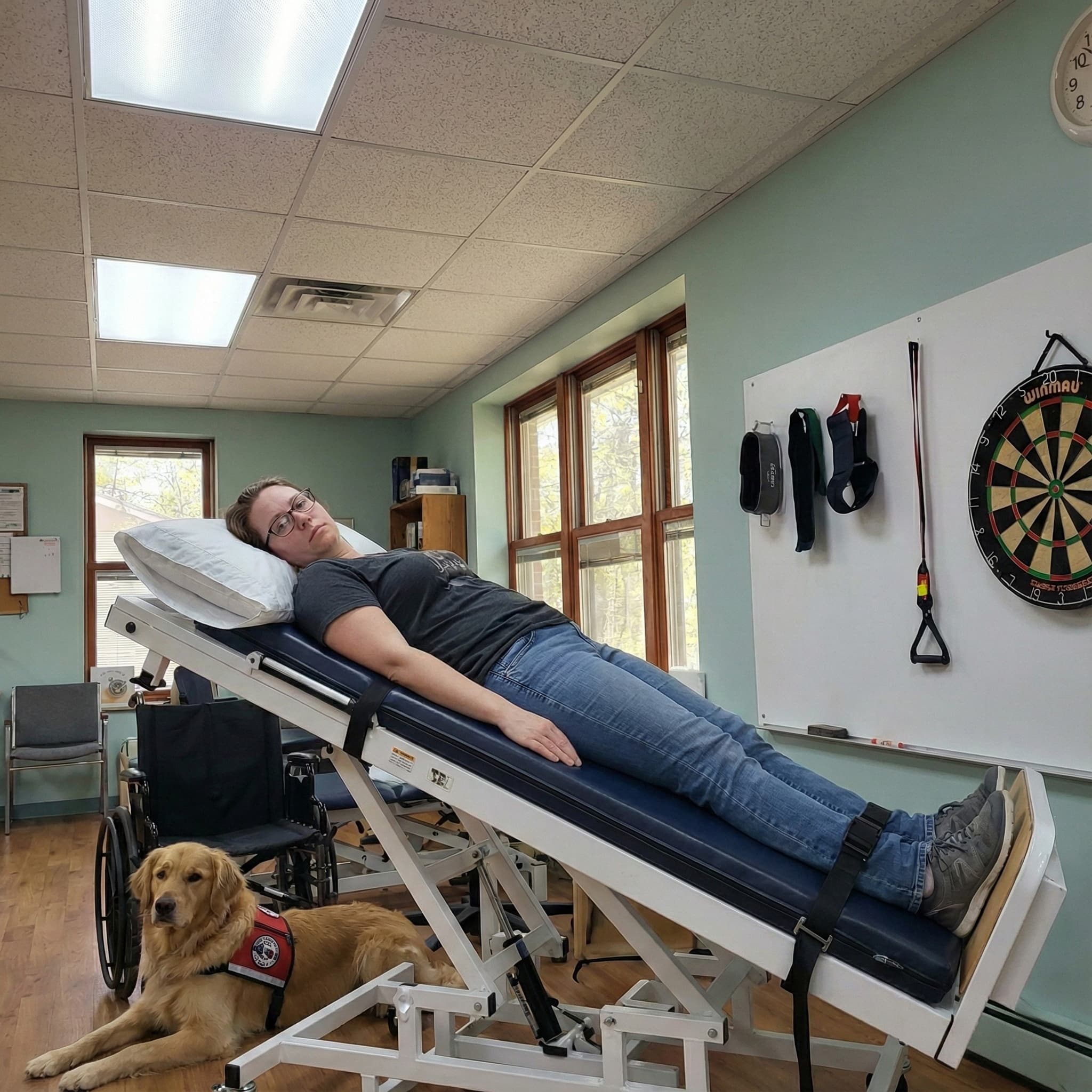
The day POTS struck my daughter: I will never forget the day Ashley walked into the kitchen, with a confused look on her face. Her words were slurred and she struggled to speak. I thought she was having a stroke. She was 23 years old. I drove her to the ER begging her to stay awake in the passenger seat. When we got there, she collapsed while getting out of the car. They rushed her in. Ran every test imaginable—bloodwork, scans, imaging, everything. Three hours later, a doctor walked in with the results and said: "Everything came back normal. She's probably just dehydrated and stressed. Possible signs of an anxiety attack I suggest following up with your PCP." But a mother knows when something is off. We saw four different doctors over the next two months. Each one had a different theory: anxiety, panic attacks, low blood sugar, "she needs to eat more," "she's probably just tired." No one could explain why she was collapsing 3-4 times a day. Why standing in the shower made her dizzy. Why her heart would race to 140bpm just from walking to the mailbox. Then one morning, she didn't get out of bed. Not because she didn't want to—but because she physically couldn't without her vision tunneling and her legs giving out. That's when I realized: my daughter wasn't sick for a few days. This was her life now. It took five months to get a diagnosis. Five months of watching her world shrink. Ashley was in her second year of nursing school. She'd just been accepted into a pediatric clinical rotation—the exact program she'd been working toward since high school. She had to withdraw. Not temporarily. Completely. Because she couldn't stand long enough to take a patient's vitals without sitting down. She couldn't walk through a hospital hallway without needing to lean against a wall. And she definitely couldn't be trusted to administer medication when her hands were shaking and her vision was greying out. The day she called me from the school parking lot, sobbing because she didn’t have the will to continue—that broke me. I watched her give up on the one thing she'd wanted her entire life. When we finally got the POTS diagnosis, I thought: "Okay. Now we have a name. Now we can fix it." I was wrong. The cardiologist handed us a printout and said: "Increase salt. Drink more water. Wear compression socks. There's no cure, but symptoms usually improve over time." That was it. No treatment plan. No follow-up. They basically said, “good luck.” So I did what any mother would do—I became a researcher. I joined every POTS forum. Read every study. Talked to other parents whose daughters were going through the same crisis. And everyone said the same thing: "Electrolytes. You need high-sodium electrolytes." So I bought them all. Liquid IV. LMNT. Drip Drop. Pedialyte packets. Salt tablets. Buoy, You name it, we tried it. Ashley would chug servings of Liquid IV before getting out of bed. Her heart rate would still spike. Up to 130 just from just brushing her teeth. She'd take salt tablets with every meal. She'd still collapse in front of me. I started to think: maybe this is just how it's going to be. Maybe my daughter will never be independent again. For eight months, I couldn't leave her alone. Not for an hour. Not for 30 minutes. Because I didn't know when she'd faint. I didn't know if she'd hit her head on the bathroom sink or the kitchen counter. I didn't know if she'd be conscious enough to call me if something happened. So I stayed. I canceled plans. I worked from home. I checked on her every two hours. And she hated it. Not because she didn't appreciate the help—but because she was 24 years old and needed her mother to watch her like a toddler. She told me one night: "Mom, I feel like a burden for you and I'm sorry." That gutted me. Because I would do anything for her. So I kept looking for anything that could’ve helped. Then one night, at 1am, I was scrolling through a POTS parent support group. I'd been doing this for months—reading posts trying to understand orthostatic intolerance. And I found a thread where a mother had shared an article—an interview with a cardiologist who specializes in autonomic disorders. I opened it and started reading. And the cardiologist said something I'd never heard a single doctor explain before: "POTS patients aren't dehydrated. They're dealing with a blood volume problem. When they stand, blood pools in the legs. The heart compensates by racing—sometimes hitting 140, 160bpm—just to push blood back up to the brain. What we know is that increasing blood volume with sodium works better than most solutions. So we recommend electrolytes." "But here's what most don't understand: standard electrolyte products are designed for athletes losing minerals through sweat. Those formulas replace what's lost. POTS patients don't need replacement they need blood volume expansion. The ratios are completely different." I read that paragraph multiple times. The article explained it clearly: POTS patients need roughly a 2:1 sodium-to-potassium ratio, with at least 500-1000mg of sodium per serving. That's what creates the hydraulic pressure needed to prevent blood pooling. So I searched up every electrolyte product we'd tried and checked the labels against what the research said. Liquid IV: 380mg sodium, loaded with sugar. Ratio was off. LMNT: 1000mg sodium, but only 200mg potassium. Too imbalanced. Drip Drop: 330mg sodium per serving. Not even close to the 500mg minimum. Not a single one matched what the research said. They were all built for athletes. Not patients fighting gravity. I wasn't using the wrong products. I was using the wrong category of products. Now I knew what to look for. So I went back to the parent support group and asked if anyone had found an electrolyte formula that matches the 2:1 ratio. Within an hour, I had 12 responses. Most of them were the same: "We're dealing with the same thing. Nothing works." But one mother replied differently. She said: "I spent a year trying everything. Then I found one that's specifically formulated for POTS patients—not athletes. It's the only one that gave my daughter any stability. It's called SafeSip." She left a link. I clicked it, pulled up the nutrition label, and checked the formula myself. 800mg sodium per serving. Potassium and magnesium in the exact levels the research stated. 2:1 ratio. No sugar. No dyes. No stevia. It looked like every other electrolyte product I'd already wasted money on. But here's what caught my attention: The website said they built the formula based on feedback from POTS patients—not athletes, not doctors, but the actual people living with this condition. And the reviews backed it up. Woman after woman saying: "This is the only one that worked." "I've tried everything. SafeSip is the first one that gave me consistent results." "My daughter can finally leave the house without panicking." Not influencers. Not ads. Real POTS patients and their parents. I was still skeptical. We'd already spent over $300 on products that didn't work. But they had a 60-day money-back guarantee. If it didn't work, I'd get my money back. So I ordered one bag. A few days later, it arrived. I remember that morning because Ashley was feeling nauseous. I mixed one packet of SafeSip with 20oz of water and handed it to her that morning. She drank it. We waited. Within 30 minutes, she said: "I don't feel nauseous." That was the first sign. I thought: maybe it’s just a good day. But the nausea didn’t come back. The next morning, she drank another packet. And she got out of bed without feeling sick the whole morning. She took a shower without needing to rest afterwards. She made herself breakfast—something she hadn't done in six months. By the end of the first week, I realized she was fainting less. Two weeks later, I left her alone for four hours. I went to the grocery store. Ran errands. Didn't panic the entire time. When I got home, she was sitting on the couch, reading. She told me she'd had a good week and was feeling more like herself again. It brought me so much joy, I almost cried. Because for the first time in eight months, I wasn't her caretaker. I was just her mom. It's been three months now. Ashley still has POTS. She still has rough days. But she doesn't have bad weeks anymore. She can drive to physical therapy by herself. She can stand long enough to cook dinner. She's even talking about going back to school—maybe online, maybe part-time, but she's talking about it. That's something she couldn't even imagine four months ago. SafeSip didn't cure her POTS. But it gave her something more important than a cure: it gave her consistency. The ability to plan her day without wondering if she'll have the energy to finish it. The ability to be alone without me hovering. The ability to exist as a 24-year-old woman—not as a patient who needs constant supervision. If you're reading this as a parent—if you've spent the last year watching your daughter's world shrink, if you've canceled your own plans because you can't leave her alone, if you've tried every electrolyte product on the market and nothing has worked—I understand. I know what it's like to feel helpless. To watch your daughter give up on her dreams because her body won't cooperate. To feel like you're failing her because you can't fix this. But here's what I learned: you can't fix POTS. But you can give her the tools to manage it. SafeSip isn't a cure. It's a tool. It's the difference between fainting three times a day and fainting three times a month. It's the difference between being bedbound and being able to walk to the mailbox. It's the difference between needing constant supervision and being able to stay home alone for a few hours. That's not a miracle. But it's freedom. Try it for 60 days. One packet in the morning. One in the afternoon if she's doing something that requires standing or focus. Track how many times she faints. Track how many times she has to sit down mid-task. Track how many times you panic because you had to leave her alone for 30 minutes. If it doesn't work, you get a full refund. But if it works—if she goes one week without collapsing, if she starts talking about her future again, if you finally feel like you can leave the house without worrying—you'll understand what I mean when I say this isn't just an electrolyte drink. It's the first step toward getting your daughter back. https://trysafesip.com/products/safesip-electrolytes
POTS? Read this ☝️
SafeSip was formulated for women who need more from their daily hydration than standard sports drinks are designed to provide. With 800 mg of pharmaceutical-grade sodium per serving, SafeSip delivers a higher-sodium electrolyte profile without sugar, artificial ingredients, or harsh sweetness. We re...
LEARN MORELike this ad? Make it yours.
Crush rebuilds this exact creative around your product — your brand, your colors, your offer — in about a minute.