Dog Health Blog
Dog Health Blog Facebook ad: “Stop trying to clean your dog's teeth the wrong way”
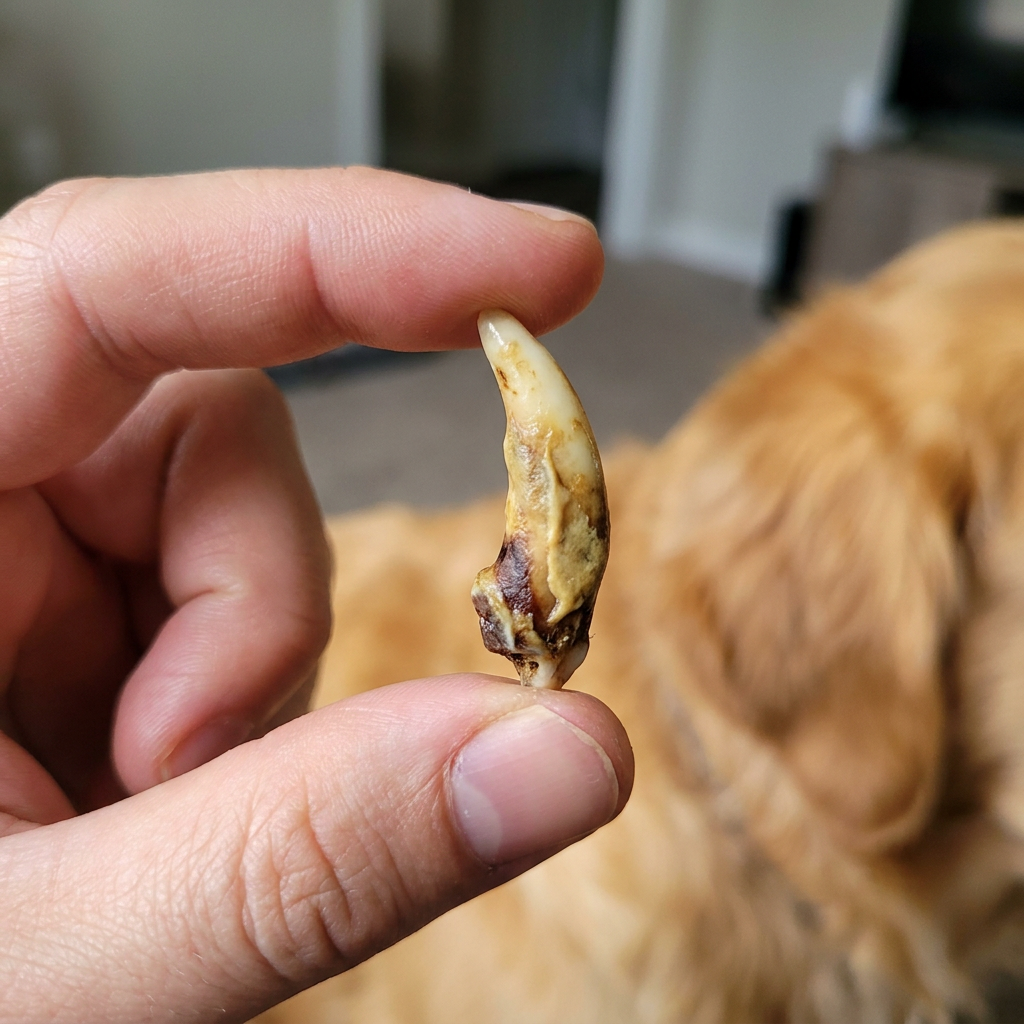
Ran for 4 days, from June 10 to June 14, 2026, the last day Crush saw it.
Run by Dog Health Blog on Facebook. Crush is not the advertiser and does not verify its claims. See this ad in Meta's Ad Library(opens in a new tab)
Want an ad like this for your product?
Crush makes new ad images for your product from this ad: your logo, your product photo, your offer.
Trials from $19.95 USD, then $79.95 USD a month. Cancel anytime.
About this ad
- Meta Ad Library ID
- 1959012261398521
- Platforms
- Facebook, Instagram, Audience Network, Messenger and Threads
- Relaunches
- 0
- Niche
- Pets
Ad text
We tracked every dog we euthanized last year. 78% had the same thing written in their file from 2-3 years earlier. The same note. Over and over. Exposed but ignored. At the end of every year, Riverside Veterinary Clinic does a case review. We look at outcomes. Patterns. Anything we could do better. This year, Dr. Harrison asked a question nobody had thought to ask before: "For the dogs we put down — is there anything in their files from years earlier that could have predicted it?" My name is Dr. Sarah Mitchell. I've been a veterinarian at Riverside Veterinary Clinic for 16 years. That question led to the most disturbing discovery of my career. We pulled the files for every dog euthanized in the past 12 months. 73 dogs. All euthanized for "quality of life." Slow decline. Failing organs. Bodies that wore out. Not cancer. Not accidents. Not emergencies. The slow fade. The same one we see every week. Then we went back in each file. Three years. Four years. Looking for anything that might have signaled what was coming. We found it. 57 out of 73 dogs — 78% — had some version of the same note from 2-4 years before they died: "Tartar noted on back teeth — common for breed, monitor." "Mild plaque buildup — recommend cleaning if it worsens." "Owner reports bad breath — early dental disease, observe." "Light calculus on canines — normal for age, watch it." The first tartar. Every time. The note that predicted death. And in every single file, we'd dismissed it. Dr. Harrison pulled up one file as an example. Max. Golden Retriever. Euthanized at 11. Age 5 appointment: "Owner reports bad breath. Mild tartar on back teeth. Common for breed. Monitor." Age 6: "Tartar spreading to canines. Still mild. Continue monitoring." Age 7: "Moderate buildup, early gum recession. Discussed cleaning. Owner declined due to cost and anesthesia risk." Age 8: "Owner elected cleaning under anesthesia. Scaled and polished. Warned buildup often returns." Age 9: "Tartar returned within months. Gum disease advancing. Two teeth loose." Age 10: "Significant periodontal disease. Bloodwork showing kidney and liver strain. Mobility and energy declining. Discussed quality of life." Age 11: "Euthanasia. Quality of life." Six years of notes. The first tartar at 5. More at 6. Cleaning at 8. Recurrence at 9. Gone at 11. We'd documented the entire cascade — without ever realizing it was a cascade. "It's the same story," Dr. Harrison said quietly. "Every file. The first tartar comes. Then everything else." She was right. We went through all 57 files with that first tartar note. Average age at first tartar: 4.8 years. Average age at euthanasia: 10.8 years. Average time between first tartar and death: 6 years. Six years of warning. Exposed in the file. Ignored by us. I started digging into why. Why would a little tartar predict gum disease, cleanings, recurrence, organ strain, and eventual euthanasia? That's when I found the research that explained everything. A 2018 study on canine oral health. One sentence buried in the data: "After feeding, the canine oral cavity becomes acidic; without neutralization, this environment drives plaque mineralization and bacterial proliferation, with chronic bacterial load contributing to systemic organ strain and reduced lifespan." The first tartar and the cascade that follows aren't separate problems. They're the same problem — an unneutralized acidic mouth — showing up as more damage over time. Here's what we finally understood: After every meal, a dog's mouth turns acidic. That acid lets plaque harden into tartar and lets the bacteria behind gum disease thrive. A chew scrapes a few teeth. A powder full of algae just floats in the saliva. None of them neutralize the acid. So the mouth turns acidic again after every meal, and it keeps winning. By age 3, most dogs already have dental disease. The acid load outpaces the mouth's defenses. Tartar forms faster than anything removes it. The first tartar appears. That's the warning at 4-6. The "common, monitor" we'd noted 57 times. It wasn't harmless. It was the mouth losing the battle. More tartar follows. Gums recede. The infection seeps into the bloodstream. That's the gum disease at 6-8. The "common in breed." Then a cleaning. Then it comes back. Then the organ strain. Then the conversation. The note in the file wasn't a harmless observation. It was a death sentence we failed to read. We'd been trained to treat tartar as isolated incidents. First tartar? Monitor it. Heavy buildup? Schedule a cleaning. Post-cleaning recurrence? Monitor again. But it's all the same thing. An acidic mouth cascading through the body. And nothing we prescribed addressed the actual cause. A cleaning? A 2020 review: tartar returns within months on the same untreated mouth. It scrapes off what's there. Doesn't fix why it forms. Premium chews and exotic powders? Never touch the acid. Bacteria come right back. Monitoring? Documents the decline. Does nothing to stop it. We'd been watching the disease progress and treating the wrong thing for years. Dr. Harrison asked the obvious question: "Why don't we just neutralize the acid?" We knew what does it. Sodium bicarbonate — baking soda — has been human dentistry's gold-standard acid neutralizer for a hundred years. But most dog products skip it. Token amounts buried under exotic algae. No real dose. No verification. That's why owners try products, see no results, and give up. The dose matters. A real baking-soda formula is different. It neutralizes the acid right where plaque forms — the moment it hits the mouth. 94% of oral acid neutralized. The film breaks up. The bacteria can't keep rebuilding. We tested every dental product we could find. Most failed. Trace baking soda. No real acid neutralization. Tartar untouched. One passed: Advanced Dental Powder from Lumiqour. Real sodium bicarbonate at 50g — the #1 ingredient. A toothpaste-grade surfactant to lift the film. Third-party tested to neutralize 94% of oral acid. Proper dose. Proper formulation. The only one we now recommend. We started a new protocol. Any dog with early tartar — we flag it. Explain what it means. Recommend Advanced Dental Powder immediately. The results in the first eight months: Cooper, 6, Lab. First tartar noted at 5. Started Advanced Dental Powder. Week 6: Breath noticeably fresher. Week 12: Tartar 40% lighter. Cooper is 8 now. Clean teeth. No new buildup. Bella, 7, Golden. Heavy tartar, considering a cleaning. Started Advanced Dental Powder instead. Week 8: Front teeth clearing. Week 14: Buildup cut in half. Bella is 9 now. Cleaning cancelled. Clean teeth for 2 years. Duke, 9, Retriever mix. Tartar back within 6 months of a cleaning. Gum disease advancing. Bloodwork already showing strain. Started Advanced Dental Powder as a last effort. Week 8: New tartar stopped forming. Week 12: Existing buildup flaking away. Week 20: Teeth clean, gums calming, bloodwork improving. Euthanasia conversation cancelled. Duke is 11 now. Still here. We don't write "tartar noted — common, monitor" anymore. We write: "Tartar noted — acid protocol initiated." Because we finally understand what that note actually means. If your dog shows ANY of these signs, the cascade has started: → First tartar appeared (even if "mild" or "common") → Bad breath getting worse → Buildup darkening or thickening → Tartar across multiple teeth → Tartar back within months of a cleaning → Vet saying "just monitor" or "it's common" The first tartar is the warning. We ignored it 57 times last year. Don't let your vet ignore it with your dog. One scoop in food. Once a day. 50% off your first jar. Breath freshens in 1-2 weeks. New tartar stops forming in 4-6 weeks. Existing buildup lightens in 8-12 weeks. 90-day money-back guarantee. Advanced Dental Powder from Lumiqour. → https://learn.lumiqour.com/5-reasons-dental-powder — Dr. Sarah Mitchell, DVM — Dr. James Harrison, DVM Riverside Veterinary Clinic | 28 Combined Years P.S. We've changed how we read files now. When I see "tartar noted" in a dog's history, I don't move past it. I stop. Because I know what comes next if we don't act. The spreading buildup. The cleaning. The recurrence. The gum disease. The organ strain. The conversation. That note isn't an observation — it's a countdown. If your dog has their first tartar, the countdown has started. You can stop it. But only if you start now. → https://learn.lumiqour.com/5-reasons-dental-powder ✅ Cleaner Teeth & Fresher Breath in Just 4 Weeks ✅ Loved by 100,000+ Dog Parents ✅ 90-Day Money-Back Guarantee
Where the ad sends people
learn.lumiqour.com
Stop trying to clean your dog's teeth the wrong way
Most owners write off the smell as normal. It isn't. That odor is the #1 sign of bacteria and plaque silently destroying your dog's mouth — eroding their comfort, their health, and their lifespan.
Learn more: learn.lumiqour.com(opens in a new tab)