
Inactive· since Jul 16, 2026
- 16
- days it ran
- 0
- relaunches
Ad copy
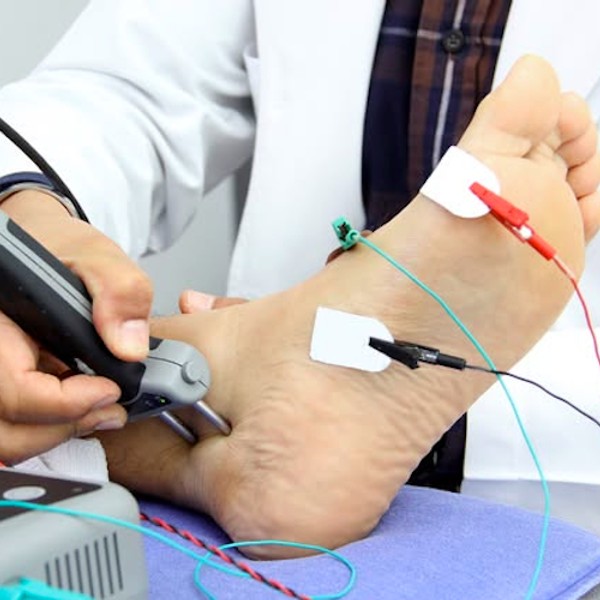
There are things neurologists say to each other in the hospital hallway that we are trained never to say to patients. I've decided to say the biggest one out loud, because it's the reason a diabetic with perfect numbers can end up in the amputation ward. It's about the gabapentin we hand you for your burning feet, and it's about the A1C your doctor calls "well controlled." Here it is, the way we actually say it to each other. Gabapentin doesn't stop nerve death. And the A1C everyone is staring at can't see the nerves dying in the first place. If a colleague said that at a patient's bedside, someone would pull him aside afterward. Not because it's false. Because it's unmanageable. There's no billing code for it, there's no pill for it, and the appointment is 12 minutes long. So the number gets managed, the pain gets quieted, and the sentence goes unsaid, year after year, while the feet quietly go dark. I'm done leaving it unsaid. My name is Dr. Elena Marchetti. I'm a board-certified neurologist, I've spent 21 years reading the electrical signals inside diabetic nerves, more than 12,000 nerve conduction studies, and every one of them tells the same story your doctor isn't telling you. Your nerves start dying years before your numbers ever look bad. And I'll tell you exactly when I decided to break the rule. It was when I started developing diabetic neuropathy myself, at 51, with an A1C my own doctor praised. Sitting on the other side of the desk, I finally heard how the script sounds when your feet are the ones burning. Your A1C is lying to your nerves. Or more accurately, it isn't lying. It just isn't telling you the part that actually matters. I've read thousands of nerve studies on diabetic patients with tingling in their feet, burning at night, that restless crawling feeling that wakes them at 2 in the morning. Thousands more on patients whose doctors told them their A1C was well controlled, while the nerves in their feet were quietly going dark, one fiber at a time. And I've seen what those same doctors never order the follow up testing to catch. Because your doctor manages your A1C. They write your metformin. They hand you gabapentin for the nerve pain. And they send you home. They don't see you 8 years later, when your feet have lost so much feeling that you step on a tack and don't notice it for three days, and the little wound that should have closed in a week is still open four months later. But I do. Because I see what happens to diabetic patients whose number looked fine for years while their nerves were telling a completely different story. There was a woman, 61 years old. Her A1C had held steady at 7.0 for six years. Her doctor called it well controlled. By the time she came to me, she had already lost most of the feeling across the ball of her foot. Her number had been telling her she was fine. Her nerves had been screaming the opposite for years. There was a man, 57. "Just a little tingling, doc. My sugar's good." His A1C had been 6.8 for four years. He stepped on a piece of glass in his own kitchen at one in the morning and never felt it. The wound that followed took more than a year to close. There was another woman, 53. Burning feet every night. Her A1C sat at 7.3 and her doctor said her numbers were in range and reached for the prescription pad. She lost most of the feeling in her soles before anyone connected it to what her diabetes had been doing underneath. They don't blame anyone. They blame their own bodies for getting worse while their number stayed the same. But I know what they lost. They had years to address what was actually happening inside those nerves. Years to stop the slide before the ulcer and the amputation that were now on the calendar. Their nerves had been warning them the whole time. Their A1C just kept telling them everything was fine. Mine did too. I was diagnosed with type 2 diabetes at 48. I'm a neurologist. I knew exactly what to do. I started metformin, tightened my diet, walked every morning. My A1C settled into a range my own doctor called acceptable. 6.6, then 6.7, year after year. The number on the page kept telling me I was managing it. I should have known better than to trust the number. At 51, my feet started tingling at night. A light burning. Sometimes a restless feeling in my calves that pulled me out of sleep. I told myself it was the long hours standing during procedures. My A1C was 6.6 when it started. My doctor had no concerns. So I did what almost no patient ever gets the chance to do. I ordered my own nerve conduction study. The results showed early nerve damage. Real, measurable, already underway. My burning feet weren't an age thing or a standing too long thing. My diabetes was quietly starving the nerves in my own feet, and my A1C had no way of seeing it. Here is what your doctor doesn't explain, because the appointment is built around the blood sugar number, not the thing that number can't measure. Your nerves are living tissue. The network running through your hands and your feet and your legs is alive, and it is being kept alive every second by living cells. Those cells have one job that runs your whole nervous system. They maintain the protective coating around each nerve, they carry the signals between your brain and your body, and they repair damage as it happens. But those cells can only do that work when they have energy. And here is what makes your nerves different from almost every other cell you have. They're enormous. A single nerve can stretch more than three feet long. Keeping that much living tissue alive takes an enormous amount of energy. The cells in your nerves are the hungriest cells in your entire body. That energy comes from your mitochondria. Think of your mitochondria as the power grid for your whole body. When the grid is running strong, energy flows everywhere it needs to go, and the cells in your nerves get everything they need. Signals travel cleanly. The protective coating stays intact. Everything works because the power is flowing. But high blood sugar is brutal on that power grid. Every spike, every year of it, wears the mitochondria down. Add in the processed food, the seed oils, the stress, and the grid starts shutting down far faster than age alone would ever do it. And here is why it hits your feet first. Because the cells in your nerves are the hungriest in your body, they are the first to starve when the power drops. Other cells can get by on less. But those massive three foot long nerve cells cannot. They're first in line, and there's not enough power to go around. That's when the tingling starts. Then the burning. Then the numbness. Then the spreading. This is the part your A1C cannot show you. Two diabetics can walk in with the exact same number and have completely different nerve health, because the number measures your blood sugar average. It tells you nothing about how much power is still reaching the cells in your feet. One of them still has a working grid. The other has been running on fumes for a decade. Same A1C. Two completely different futures. And gabapentin does nothing about any of it. Gabapentin turns down the pain signal so the burning feels quieter. Your doctor is satisfied. But the cells in your nerves are still starving. Still failing. The nerve is still dying underneath. The drug turned down the alarm. It never reached the cells that were ringing it. That's why people on gabapentin keep getting worse. That's why the dose keeps climbing. That's why the numbness keeps spreading even after the burning is dulled. That's why the foot they couldn't feel becomes the amputation referral. The starvation runs the whole time, and the medication was only ever built to quiet the sound of it. I know because I tried the things diabetic patients try. I tightened my glucose harder. Got my A1C down. The burning eased a little, but the nerves weren't healing. I took alpha lipoic acid. Modest, at best. I took a full stack of B vitamins. Supportive, but the damage kept going. And I finally understood why. Every one of those was delivering raw material to cells that had no power to use it. B12 helps nerves signal, but it doesn't turn the power back on. Alpha lipoic acid fights damage, but it doesn't turn the power back on. I was dropping off lumber at a construction site with the electricity cut off. The supplies showed up. There was nothing to build with. So I stopped chasing the pain signal and started looking for the one thing that could actually restart the grid. It was a little after midnight, feet burning, when I found it. Not a new drug. Research on something called AMPK. AMPK is your body's master switch for the mitochondria. When AMPK is switched on, it reactivates your power grid and gets it producing energy again the way it did when you were younger. And when the power comes back on, the cells in your nerves are among the first to respond, because they're the hungriest and they've been starving the longest. They start doing exactly what they've been trying to do all along. Repair the damage. Rebuild the protective coating. Restore the signal between your brain and your feet. And the strongest natural activator of that switch turned out to be something I had never once mentioned to a patient in 21 years. A superfruit called Amla. Amla grows in the Himalayan mountains. Healers there have used it for more than 5,000 years, and they had a name for it. They called it the nurse. It was the thing they reached for when a body was breaking down from the inside, when the feeling was leaving someone's hands and feet. They didn't know what a mitochondria was. They just watched the feeling come back. The active compounds in Amla are called emblicanins. They do two things at once. They flip on AMPK, which restarts the power grid feeding your nerve cells. And they neutralize the oxidative stress that has been wearing that grid down in the first place, so it stays switched on. When scientists tested the antioxidant strength of more than 3,000 foods, Amla came out number one. Not close. I ordered a proper standardized Amla extract and started taking it the next morning. 2 capsules with water. That was the whole protocol. Day 7. The tingling was quieter. The burning at night had eased. Day 14. First night in over a year without the restless crawling in my legs. Day 23. I got out of bed in the morning and felt the cold floor under my feet. Not numb pressure. The actual cold of the tile. I stood there for a full minute trying to figure out what felt different. It was that. Week 8. I ran my own nerve testing again. The numbers had moved in the right direction for the first time since this started. Not masked. Measurably better. My A1C had drifted down half a point too, with no change to my metformin. The nerves were recovering. Because the power was finally flowing back to the cells that had been starving for years. I changed nothing about my medication. But I started saying the hallway sentence to my diabetic patients, out loud, in the appointment. I'm not against gabapentin. It quiets the pain. Metformin manages the glucose. They do their jobs. But they don't turn the power back on. They don't feed the starving cells. They don't touch the reason your nerves started dying in the first place. And I see where the standard road ends. I see the diabetic patients arriving at the wound clinic 10 years in, with a foot that won't heal, and then in the operating room. And nearly every one of them says the same thing. I wish someone had told me my tingling was about more than nerve pain. I'm telling you now. Your tingling isn't failing you. It's warning you. It's the earliest signal you can still act on, before the numbness spreads and the feeling is gone for good. So you have two choices. Trust the gabapentin to quiet the alarm while the cells in your nerves keep starving underneath. Or turn the power back on and give those cells what they've been missing. If you're diabetic and your feet tingle or burn at night, this is the thing to look into. If your A1C keeps coming back fine while your feet feel worse every year, this is why. And if you've already tried the B12 and the alpha lipoic acid and the creams and nothing held, it's because none of them ever reached the power grid. This does. The specific superfruit I take is Alevia's Amla. A standardized, organic Amla extract, third party tested, made in the USA in small batches with no heat processing, because heat destroys the emblicanins that flip the switch. That's also why the cheap ground powder in the vitamin aisle does nothing. It's the same reason the Amazon versions aren't the same formula. The link below goes straight to the official site. 👉 https://alevia.com/amla/7 Alevia backs it with a 90 day money back guarantee. If your feet don't feel different, you send the bottles back and you get every dollar back. In 21 years I've never once seen a drug company offer to refund you if their pill didn't work. Think about that. They make it in small batches to keep the potency up, which is exactly why it works when the cheap stuff doesn't, and also why they sell out and the next batch can take weeks. If you have a neurology appointment coming up and you want to walk in with your feet already feeling different, today is a better day to start than next month. Because once protective sensation is truly gone in a diabetic foot, it does not come back. Your nerves are trying to warn you while there's still time to answer. 👉 https://alevia.com/amla/7 Dr. Elena Marchetti Board-Certified Neurologist, 21 years P.S. Do not stop any medication on your own. Bring this to your doctor and ask them to recheck your feet in 8 weeks. My own doctor is the one monitoring me. The point isn't to fight your doctor. The point is to give your nerves the one thing the prescription pad was never designed to deliver. The power to heal themselves. P.P.S. The 90 day guarantee covers the full window on purpose. Nerve tissue is the slowest healing tissue in the body. Most people notice the first changes somewhere between week 3 and week 8, but the real repair happens across the full 90 days. If you feel nothing, you send it back. The only thing you risk is the cost of two months of coffee. 👉 https://alevia.com/amla/7
Like this ad? Make it yours.
Crush rebuilds this exact creative around your product — your brand, your colors, your offer — in about a minute.