
Inactive· since Mar 31, 2026
- 15
- days it ran
- 0
- relaunches
- 190
- EU reach
Ad copy
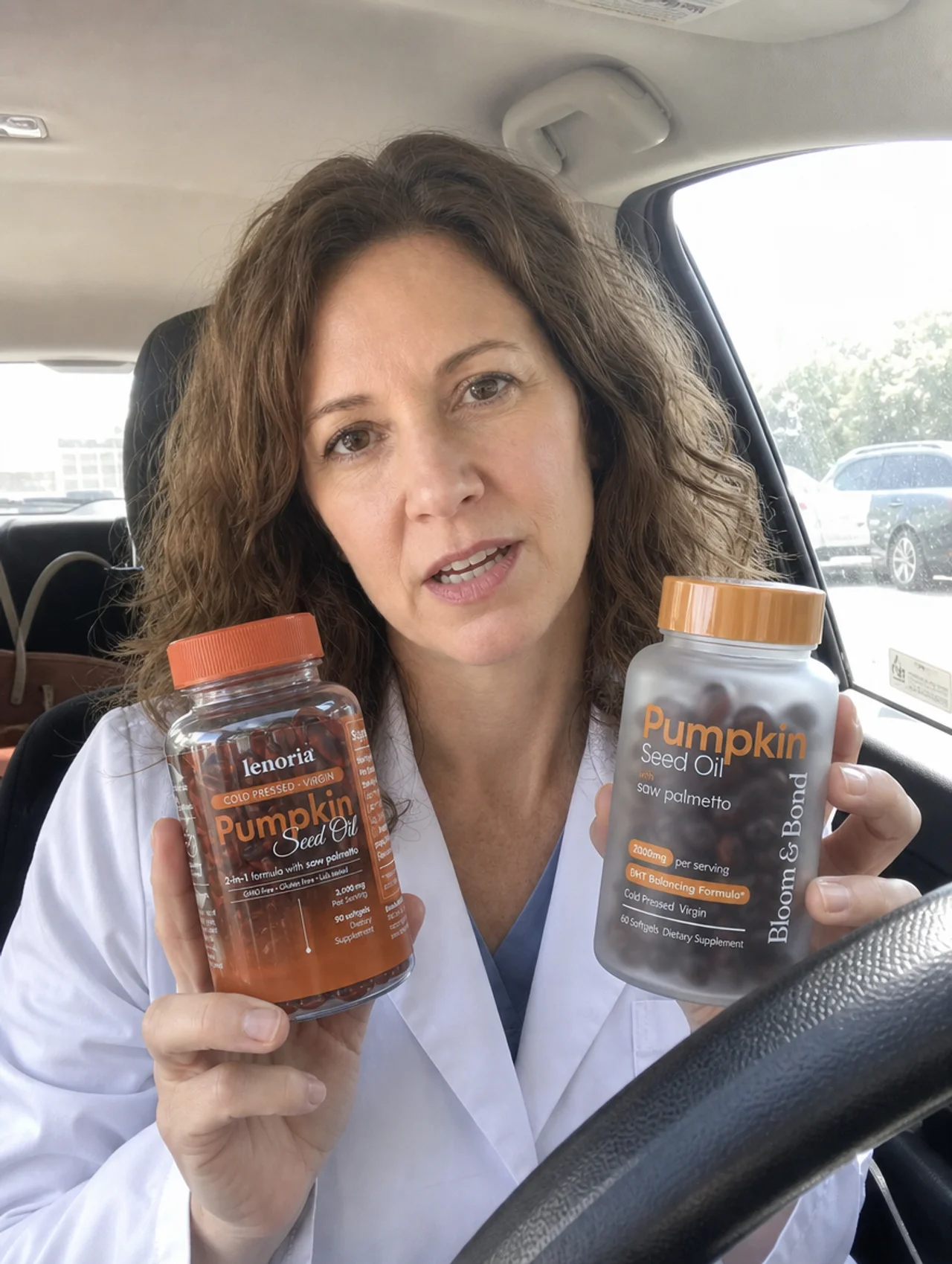
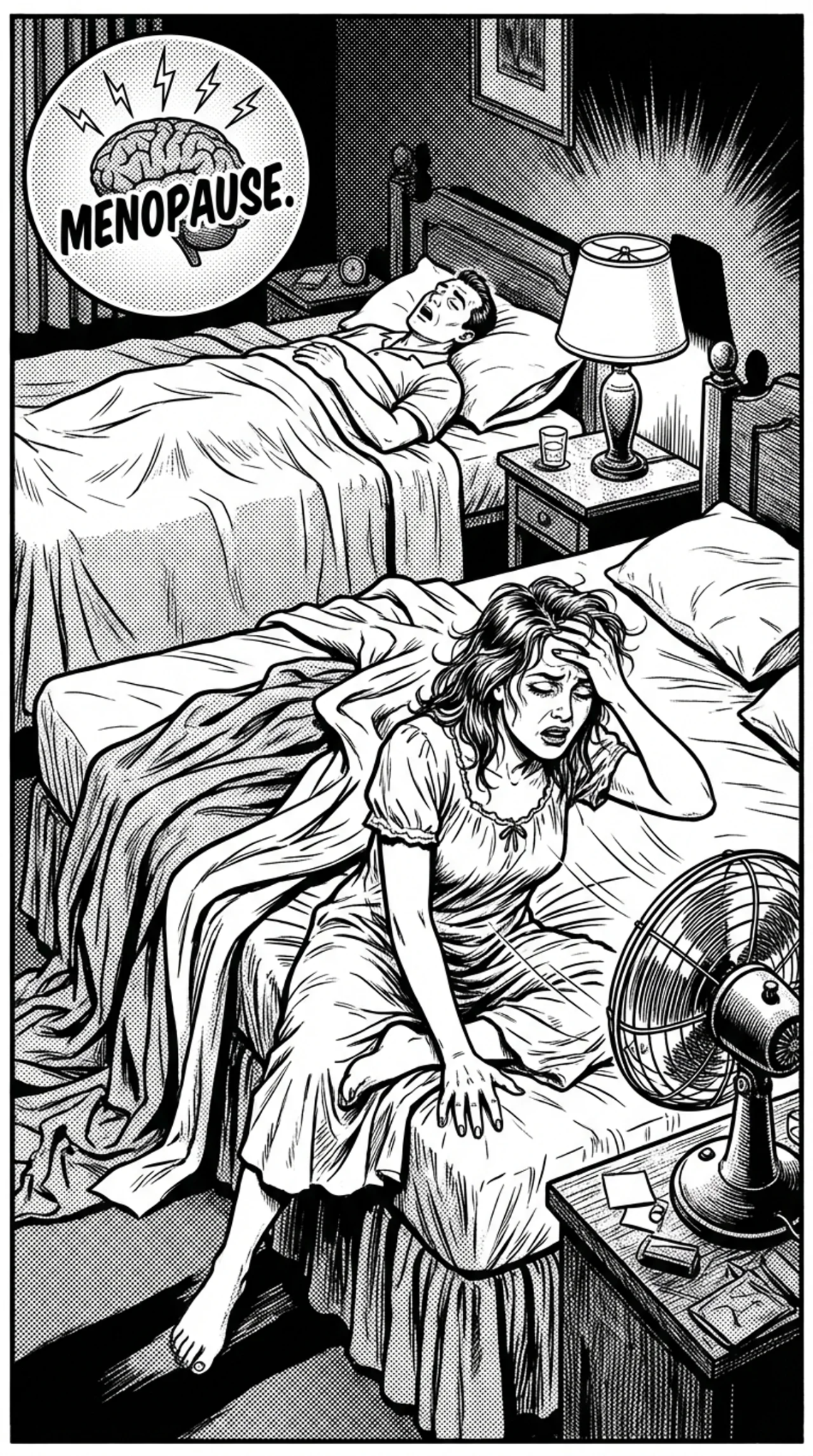
Menopause f*cked your sleep. Melatonin isn't going to unf*ck it. And the advice you've been given… The cooling sheets, the bedroom at 65 degrees, the white noise machine, none of it is working. Because none of it addresses what's actually happening inside your brain at 3am. My name is Dr. Patricia Sullivan. I'm a women's health physician. I've been practicing for 21 years. And the most heartbreaking appointments I have aren't with women who are in the middle of the worst of it. They're with women who did everything right. A patient came in last month. Her name was Carol. 52 years old. She sat down in my chair and before I could even say anything, she started listing what she'd tried. Melatonin. Three different doses. Magnesium glycinate. Every night for four months. A $280 cooling mattress pad. Moisture-wicking pajamas. Blackout curtains. Fan running in January. She had done everything the sleep articles told her to do. She looked at me. "I'm still waking up at 3am soaked through my sheets. I'm still lying there for two hours watching the ceiling. I'm functioning on four hours of broken sleep and everyone keeps telling me this is just part of menopause." She paused. "Is this just part of menopause? Forever?" I hear this every single week. Women who are exhausted down to the bone. Women whose brains are electric at midnight even though their body is screaming for sleep. Women who dread going to bed now. Women who used to love getting into bed, reading a little, drifting off easily, and now approach it like a battle they already know they're going to lose. The advice hasn't been wrong. It's just addressing the wrong problem. And that is why nothing is working. Here's what I need to explain to you. Because most doctors, good doctors, careful doctors, are only telling you half the story. There are actually two separate things destroying your sleep during menopause. Two completely different problems. And almost everything you've been told only addresses one of them. Problem One is the hot flashes. That part, the night sweats, the 3am bolt awake drenched and freezing, the soaked sheets, that's a vasomotor event. Your hypothalamus, the part of your brain that controls body temperature, becomes hypersensitive when estrogen drops. A tiny fluctuation in temperature that your body used to ignore completely now triggers a massive response. Blood vessels dilate. Sweat glands fire. Heart rate spikes. You go from dead asleep to completely soaked in thirty seconds. That's what the "just wait, it gets better" advice is referring to. And here's the thing, it IS real. The advice isn't lying to you. But here's what they're not telling you. While hot flashes are waking you up… Something else is happening. Something quieter. Something that has nothing to do with night sweats. Something that doesn't stop when the hot flashes slow down. And this is the part that is destroying the actual structure of your sleep. Let me explain what's happening inside your brain. Estrogen is not just a reproductive hormone. It is a master regulator of your entire sleep system. When estrogen is present at healthy levels, it enhances the activity of something called GABA. GABA is your brain's primary calming neurotransmitter. Think of it as your nervous system's off switch. When GABA is working properly, your brain transitions smoothly from wakefulness… to drowsiness… to deep sleep. Estrogen also regulates serotonin, the precursor to melatonin, and it buffers cortisol, the stress hormone that rises naturally in the early morning hours. When all of this is working the way it should, you sleep deeply. You wake up restored. You don't know what 3am looks like. But when estrogen drops in menopause, this entire chain breaks. GABA activity decreases. Your nervous system loses its off switch. Progesterone, which directly activates the same receptors targeted by Valium and Xanax, also collapses. The natural sedation is gone. And without estrogen buffering it, cortisol spikes sharply in the early morning hours. Not gradually. Sharply. Your body interprets this as a threat. It fires a wake-up signal. At 3am. Like clockwork. This is not psychological. This is a documented neuroendocrine cascade. It is why you are exhausted and wired at the same time. It is why your body is screaming for sleep and your brain refuses to allow it. It is why you can spend eight hours in bed and still surface feeling like you've been hit by a truck. Because even when you "got some sleep," your brain never reached deep Stage 3 sleep. The restorative stage. The stage where your body actually repairs itself. Studies using sleep monitors on menopausal women confirm this. Objectively worse sleep architecture. Even in women who don't perceive themselves as poor sleepers. Their brains are being robbed silently. So. When you take melatonin, what does it do? Melatonin helps with sleep onset. Falling asleep. It does nothing for the 3am cortisol spike. It does nothing for your collapsed GABA system. It does nothing for the progesterone that's no longer sedating your nervous system. So you fall asleep a little easier. And you still bolt awake at 3am, heart pounding, soaked, unable to get back down. Because melatonin was never addressing the problem. The cooling mattress pad? It reduces how uncomfortable the hot flash is when it hits. It does not stop the hot flash from waking you up. It does not touch the GABA system. It does not buffer the cortisol surge. You cannot engineer your way out of a hormonal collapse with bed equipment. This is exactly what I told Carol. "The melatonin is helping you fall asleep. That's real. But the 3am waking, that's cortisol. That's GABA. That's your estrogen gone. And none of what you're taking addresses any of that." Her eyes went wide. "So what does?" This is the question I get asked every week. And the answer is not a sleeping pill. Sleeping pills knock you out. They do not fix sleep architecture. Women who take Ambien still experience the hot flash, they just don't fully wake from it. They still have the cortisol surge. They wake up groggy, heavy, unrested. With a dependency they didn't want. The answer is addressing the root. The estrogen collapse. And one ingredient does this in a way that I have not found anything else do. Pumpkin seed oil. Let me explain how it actually works, because it is not what you expect. Pumpkin seed oil contains compounds called phytoestrogens. Plant-based compounds that interact directly with your body's estrogen receptors. When estrogen has collapsed in menopause, these phytoestrogens provide a mild, natural estrogenic signal. Not pharmaceutical estrogen. Not synthetic HRT. A gentle, natural input into the same system that menopause dismantled. And that input matters. Because even partial restoration of estrogenic activity begins to restore what menopause took away. The GABA system starts to re-regulate. The cortisol buffering improves. The nervous system starts to find its off switch again. That's the mechanism. That's what nothing in your sleep stack was ever doing. Before you go to Amazon and buy a pumpkin seed oil supplement, I've had patients do this. One woman bought a generic bottle off Amazon. Eight weeks later she came back. "Barely noticed a difference," she said. Here's why. Most pumpkin seed oil supplements on the market are raw seed powder. Not concentrated extract. The phytoestrogen content, the specific compounds that actually interact with your estrogen receptors, is a fraction of what's needed. You'd need to eat roughly two pounds of raw pumpkin seeds every day to reach therapeutic levels. Two pounds. Every single day. The formulation has to be right. This is why I recommend Bloom & Bond. It's the only formula I've found with 2,000mg of concentrated pumpkin seed oil extract, not raw seed powder, concentrated extract with clinically meaningful phytoestrogen levels, specifically formulated for hormonal support in women. No fillers. No synthetic additives. No melatonin masquerading as a sleep solution. Just the ingredient that addresses what menopause actually did to your hormonal system. Here's what I tell my patients to expect: ✅ Weeks 2-4: The 3am waking starts to become less severe. The cortisol spike is getting buffered. The nervous system is beginning to find its off switch again. ✅ Weeks 4-8: Sleep architecture improving. More time in deep sleep. Waking feeling less like a truck hit you. Some patients tell me this is the first time in months they've felt actually rested. ✅ Weeks 8-12: The hot flashes don't disappear, but the anxiety around sleep does. The bed stops being something to dread. They're falling back asleep after waking instead of lying there for two hours. ✅ Months 3-4: Real, consistent sleep. The kind they forgot was possible. Multiple nights in a row. Waking up and recognizing themselves again. Not every patient is the same. Some see results faster. Some take longer, especially when the disruption has been going on for years and the hormonal deficit is deep. But what I see consistently is this. Women who address the root, the estrogenic collapse, the GABA system that lost its regulator, sleep in a way that melatonin never gave them. Because for the first time, something is actually solving the right problem. I saw Carol again six weeks after that first appointment. She didn't list her sleep stack this time. She just sat down and smiled. "I slept five nights in a row," she said. "Five consecutive nights. I haven't done that in three years." She looked like herself. Not the hollowed-out version of herself that had been sitting across from me for months. Herself. "I keep waiting for it to go wrong again," she said. "But it just keeps working." That's what I want for you. Not another band-aid. Not something that helps you fall asleep while the real problem compounds underneath. A night where the 3am alarm doesn't go off. Where your brain finally finds the off switch again. Where you wake up and feel like a person. If you've been lying awake in the dark wondering if this is just what the rest of your life looks like, it's not. It's a hormone problem. And it has a solution. Don't let another month go by trying to sleep on top of the problem instead of through it 👉 https://trybloomandbond.com/pages/menopause-sleep-listicle
Like this ad? Make it yours.
Crush rebuilds this exact creative around your product — your brand, your colors, your offer — in about a minute.