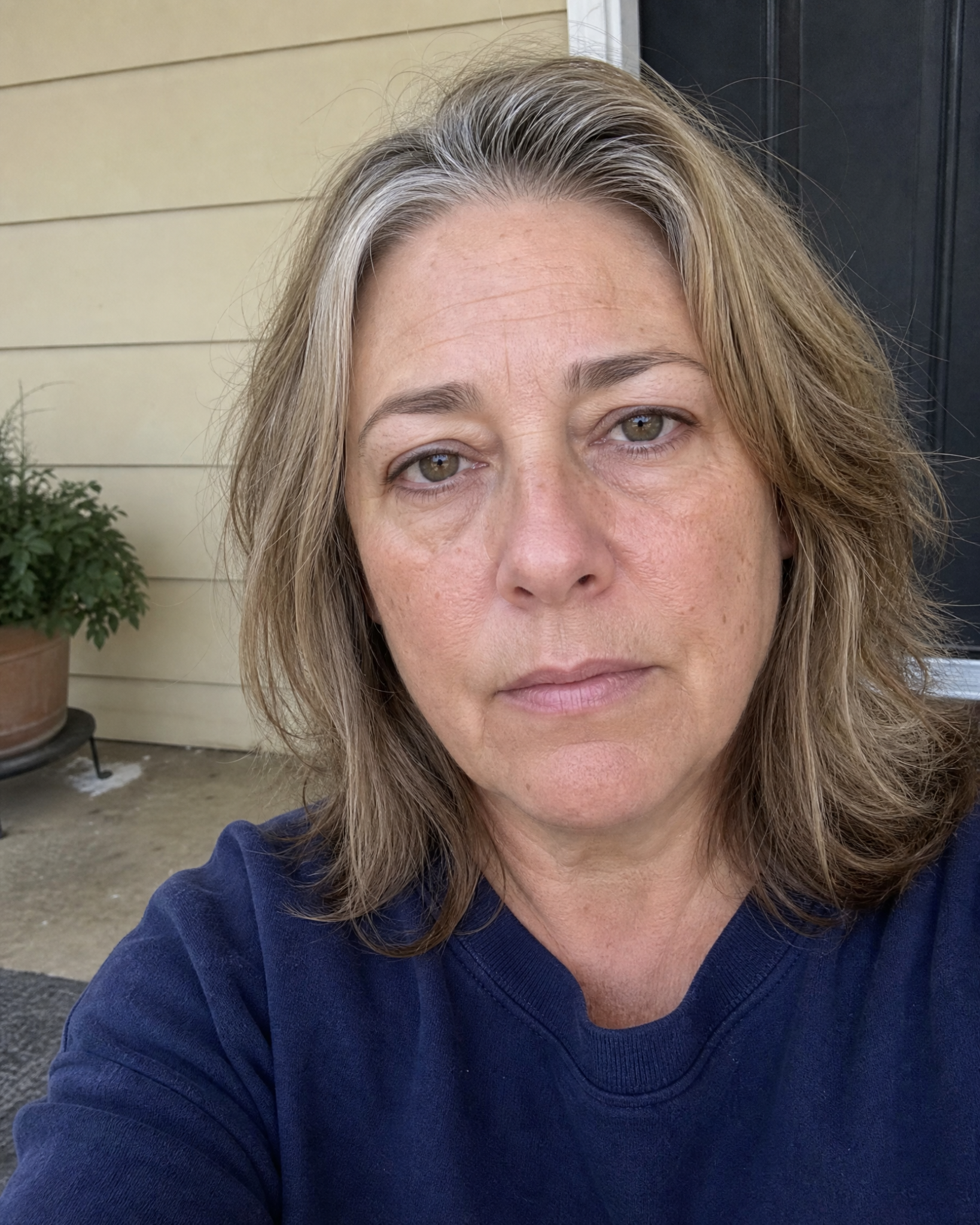
Megan Calloway
Megan Calloway Facebook ad: “visiting Ethiopia changed my life”
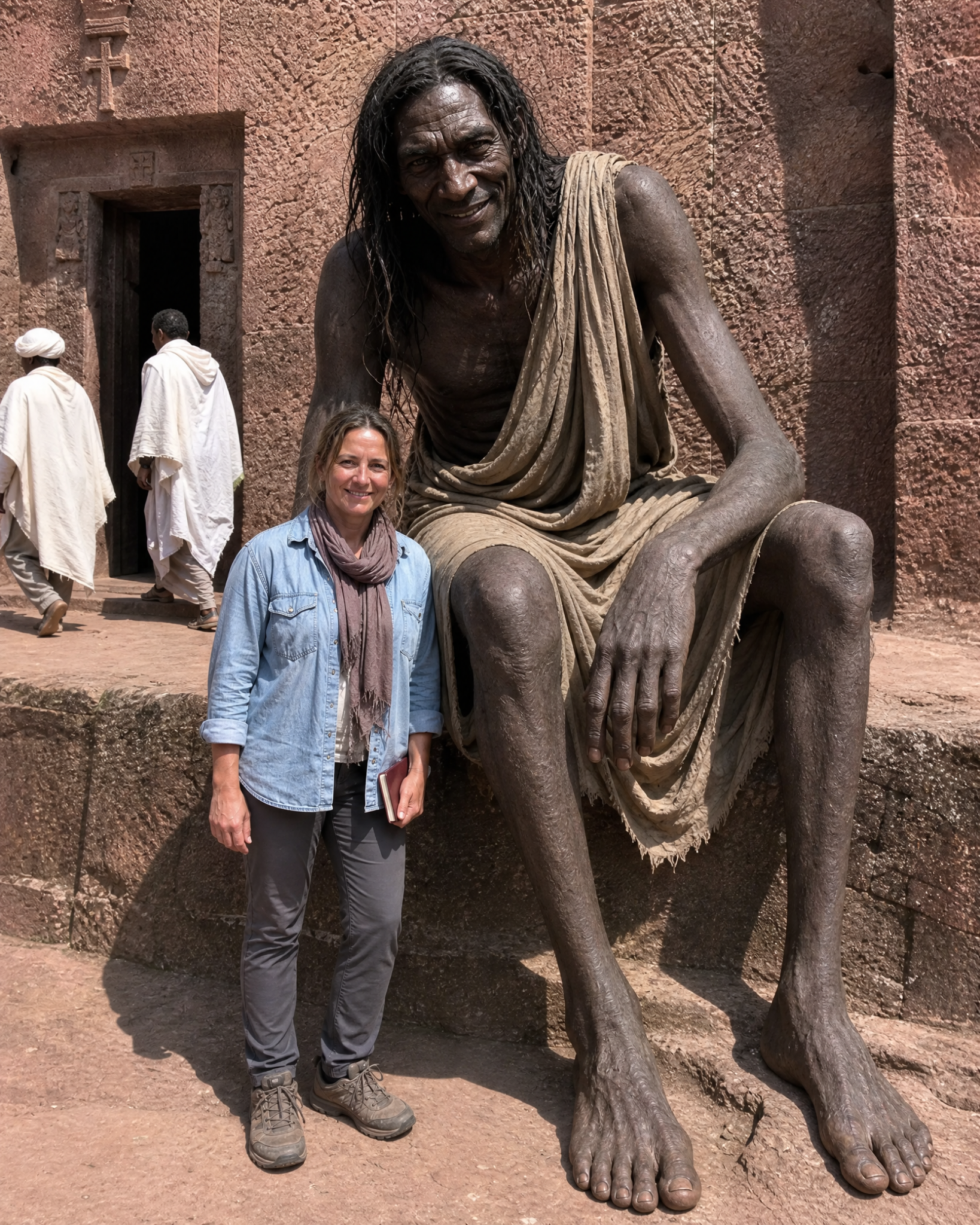
Ran for 34 days, from July 30 to September 2, 2026, the last day Crush saw it.
Run by Megan Calloway on Facebook. Crush is not the advertiser and does not verify its claims. See this ad in Meta's Ad Library(opens in a new tab)
Want an ad like this for your product?
Crush makes new ad images for your product from this ad: your logo, your product photo, your offer.
Trials from $19.95 USD, then $79.95 USD a month. Cancel anytime.
About this ad
- Meta Ad Library ID
- 1989764368344336
- Platforms
- Facebook, Instagram, Audience Network, Messenger, WhatsApp and Threads
- Relaunches
- 0
- Niche
- Parenting & Kids
Ad text
I traveled to Ethiopia because I was tired of pretending I still had a relationship with God. [There. I said it.] I still went to church. Still prayed. Still smiled when everyone else said they could “feel His presence.” But I felt NOTHING. Then an old priest looked at my Bible and asked: “If something wanted to keep Christians weak... why would it take away the whole Bible?” “It would only have to take away the pages that explain the war.” I need to back up. Because I did not fly 7,000 miles looking for a “missing Bible.” I went because I was running out of ways to pretend I was okay. I know how crazy that sounds. If you had told me a year ago that a priest in a rock-hewn church in East Africa would hand me the answer to fifteen years of spiritual silence, I wouldn’t have believed you. You shouldn’t believe me either. But I want to tell you what happened. Because I think there is a chance—maybe a very good chance—that you are carrying the exact same silence I carried. I have to tell you who I was first. I grew up in the church. Every Sunday morning. Wednesday night youth group. Summer camps. Christian college. The whole pipeline. I knew the 66 books by heart by the time I was eight. Old Testament and New Testament. In order. I could recite the minor prophets faster than the boy next to me, and I was proud of it. I was the kind of girl who actually read her Bible. Not because my parents made me. Because I wanted to. And I prayed. God, I prayed. I prayed for hours. I prayed walking to class. I prayed before tests. I prayed before bed. I prayed when I was terrified about the future, and I prayed when my heart was breaking. But here is the thing nobody in church will say out loud. The secret I carried around like a stone in my stomach for fifteen years. I never felt anything. Not once. Not the way they described it from the pulpit. Not the overwhelming peace the worship songs talked about. Not the way the testimonies said it was supposed to be. The “presence of God” they described—I never felt it. Not at altar calls. Not at retreats. Not at communion. Not in the quiet moments when everyone else swore they could feel Him in the room. I felt the exact same thing every time I prayed. Silence. It wasn’t a peaceful silence. It was the kind of silence you feel when you are speaking to yourself in an empty room. It felt like my words were just bouncing off the ceiling. It felt like God was sending me straight to voicemail. I told myself it was my fault. It had to be. God is perfect, so the defect must be in me. Maybe my faith wasn’t strong enough. Maybe I had some hidden sin I hadn’t properly repented for. Maybe I wasn’t abiding in Jesus the right way. So I tried harder. I fasted for ten days straight on nothing but water when I was twenty-two, begging God to just give me a sign He was listening. I read the Bible cover to cover three times. I bought devotionals. I confessed sins I had already confessed a hundred times, hoping I would finally hit the exact combination of words that would unlock the door. I gave money I couldn’t afford to give. Nothing changed. The same deafening silence. It got to the point where going to church became physically painful. I would sit in the pew during worship and watch the women around me. They would have their hands raised, eyes closed, mascara running down their cheeks, completely lost in this beautiful communion with God. And I would sit there, completely numb, thinking: What do they know that I don’t? Why would God make Himself so apparent to them, and remain completely absent to me, when I was seeking Him just as hard? It made me feel like a fraud. It made me feel like I was just putting on a show. Eventually, prayer didn’t just feel empty; it felt silly. My body would literally want to stop midway through a prayer because the pretending was too exhausting. I assumed it was my fault. For fifteen years, I assumed I was just broken. A second-class Christian. A reprobate. [And after a while, you stop asking God to speak. You just start hoping nobody notices you’re empty.] Then my best friend invited me to Ethiopia. It wasn’t a spiritual pilgrimage. She was researching early African Christianity for a project, and she didn’t want to travel alone. I went because I needed an escape. I wasn’t looking for a breakthrough. Honestly, my heart was too tired to hope for one anymore. I was resigned to living my life as if I were on my own. We were touring the ancient rock-hewn churches in Lalibela—massive structures carved straight down into the volcanic earth. I almost didn’t go inside the last one. I was exhausted. I am so glad I did. Because that was the first time in my life I heard someone explain what I am about to tell you. And the second I heard it, the silence finally made sense. The priest inside the church didn’t speak much English. I was holding my Bible—the same worn leather copy I had carried since college. He pointed a weathered finger at it, looked me in the eye, and asked through our translator: “Where is the rest of it?” I didn’t know what he meant. He invited us to sit. It was dark inside, smelling of frankincense and ancient stone. Through the translator, he explained that he wasn’t talking about pages torn out by accident. He was talking about texts that almost nobody in Western Christianity reads anymore. “Most Western Christians don’t know they are reading an edited Bible,” he said. “They have no idea books were removed over the centuries. And they have no idea why.” I stopped. He kept going. He said there were books that used to be considered scripture. That were quoted by Jesus’s own disciples. That were read by the early church for hundreds of years. And then they were pulled. Quietly. Systematically. From every Bible in the West. He brought out a massive, ancient-looking manuscript. The Ethiopian Orthodox Church, he explained, has 88 books in their Bible. When the rest of the Christian world started pulling books, Ethiopia just... didn’t. They never lost a single one. He pointed to one book in particular. The Book of Enoch. I had never heard of it. Fifteen years in church. Christian college. Read the Bible cover to cover three times. And I had never heard of the Book of Enoch. “If these books are true,” I asked, “why aren’t they in my King James Bible?” He didn’t give me the answer I expected. He told me that Christians had not always inherited identical collections. He told me the first 1611 King James printing itself actually contained an Apocrypha section. He told me Ethiopia had preserved Enoch while much of the West had not kept it inside its Bible. Then he opened Enoch to the account of the Watchers. I read about spiritual beings who corrupted humanity through forbidden knowledge and power. I read about the giants. And I read the part nobody in my church had ever explained: the bodies died, but the influence did not simply disappear. “So the Nephilim are still alive?” I whispered. The priest shook his head. “You are still looking for bodies,” he said. “The text tells you to look at what remained.” He tapped the page. “Influence.” Then he asked the question that divided my life into before and after. “If the same rebellion still wanted believers weak, would it need to burn every Bible?” I said nothing. “Or would it only need to decide which pages Christians learned to fear?” The courtyard seemed to go silent around me. For years I had imagined spiritual control as someone forcing me not to pray. I had never considered a more efficient strategy: Let me pray. Let me keep praying. Let me receive no obvious answer. Remove the categories that might help me interpret the conflict. Then let me blame myself for the silence. No chains were necessary. I would police my own faith. I would exhaust myself trying to perform. I would eventually withdraw from prayer, church, and God while believing the failure was mine. I stood there in that ancient, rock-hewn church, and a physical weight lifted off my chest. It wasn’t me. It was never me. I hadn’t been failing at prayer. I hadn’t been uniquely defective or unforgiven. I had been handed a manual with the most important chapters removed. I was trying to navigate a complex spiritual world without the map. That was the moment everything changed. The missing writings were not valuable because they promised to make God obey me. They were valuable because they exposed the interpretive prison I had been living inside. Silence was no longer proof that God had rejected me. It was proof of nothing by itself. And for the first time in fifteen years, I could approach prayer without putting my soul on trial. When I got back to the States, I started looking for the full text. This is where it gets harder. Because if you go online right now and search for the missing books, you will find dozens of versions. Most of them are partial. Most of them are translations of translations. Most of them have entire sections missing or softened. Most of them leave out the parts about the Watchers and the spiritual interference. The same censorship that pulled them from the canon centuries ago is still happening to the modern reprints. I bought four different versions before I figured this out. Some were missing the cosmology. Some were missing the parts about the angels. It was infuriating. I knew the Ethiopian Orthodox Church had preserved them. Their Bible has 88 books. Yours has 66. Twenty-two books that were stripped from the Western Bible are still sitting in the Ethiopian one. Untouched. Word for word. Preserved by monks for over a thousand years. I tried to get a copy. This is where it got even harder. You can’t just walk into a bookstore and buy the Ethiopian Bible. The official texts are in Ge’ez, a liturgical language almost nobody speaks anymore. There were a few partial translations floating around. Most of them were academic. Most of them were dense. Most of them were still incomplete. I gave up for a while. Then I found Ethiopica. Ethiopica is a group that went directly to the source. Not to academics. Not to Amazon publishers. To the actual unbroken tradition that preserved the text. And they brought back the full thing. Translated. Printed. Bound in a beautiful hardcover. The complete 88-book Ethiopian Bible. With all 22 books that were stripped from the Western canon. Including the full Book of Enoch with everything intact. The Watcher accounts. The descriptions of what’s inside humans. The angelic roles. The cosmology that explains how the spiritual world is actually structured. All of it. Word for word. The way Ethiopia preserved it. I ordered it. It arrived ten days later. I want to tell you what happened. I am going to be honest with you because if I’m not, this whole thing is just another sales pitch, and you deserve better than that. Week one, I just read. I didn’t pray. I didn’t try anything. I just read. I read the Book of Enoch first. Cover to cover. I read about the Watchers and the spiritual interference. I read the texts that provided the context I had been missing my whole life. Week two, I started praying again. The first night, nothing. The second night, nothing. The fourth night, something happened that I am not going to try to describe because I would ruin it. But for the first time in my entire life, prayer was not a desperate performance. I wasn’t begging for a feeling. I wasn’t putting on a show for an audience of one. I was praying with the broader context of the spiritual world I had learned from the missing books. Week four, my husband asked me what was different. He said I seemed lighter. Steadier. Like something had been weighing on me for years and it was finally off. The burden of trying to “manufacture” a feeling was gone. I stopped auditing every word I said. The numbness started to fade, replaced by a quiet, steady peace. The silence is gone. It’s just gone. You have a choice to make. You can keep doing what I did for fifteen years. You can keep praying into the silence, wondering what is wrong with you, and using every unanswered prayer as proof that your faith is defective. Or you can read the context they took out. You can read the Watcher accounts. You can read the 22 books that explain the spiritual conflict surrounding you. You can stop blaming yourself and finally look at the map. Ethiopica prints the complete 88-book canon in small, hardbound batches. It brings the broader Ethiopian Orthodox collection into one English edition, including Enoch and the other writings most Western Christians never received. They give you 90 days to read it. If it doesn’t change how you understand the silence, send it back for a full refund. No questions asked. When you order the hardbound edition, they immediately email you the complete digital version, plus a 100-hour audiobook and a 220-hour video series, so you can start reading tonight while your physical copy ships. The priest was right. They didn’t have to burn every Bible. They just had to take away the pages that explained the war. Someone finally put them back. Check here to see if Ethiopica has copies from the current batch available: https://theethiopica.com/products/the-complete-ethiopian-bible P.S. — Please do not buy this expecting a magic trick. I am not promising you a miracle, and this book does not force God to answer you. But if you are exhausted from feeling like a failure in your own faith, it will finally give you the context that was hidden from you. Read what they took out. https://theethiopica.com/products/the-complete-ethiopian-bible
Where the ad sends people
ethiopica.com
visiting Ethiopia changed my life
Ethiopica
Learn more: theethiopica.com(opens in a new tab)