Mary Harris
Mary Harris Facebook ad: “My Father Took Statins For 12 Years”
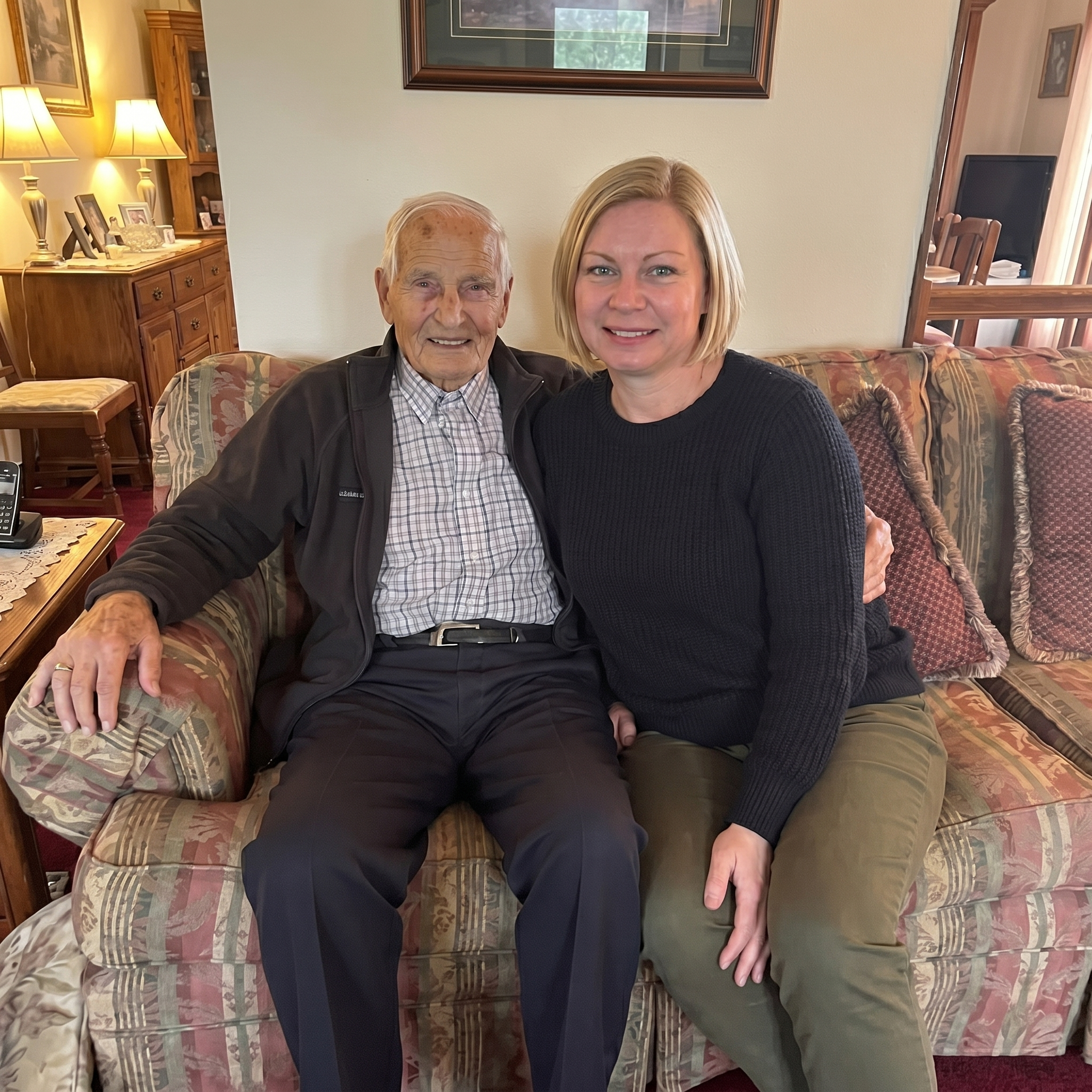
Ran for 31 days, from April 16 to May 17, 2026, the last day Crush saw it.
Run by Mary Harris on Facebook. Crush is not the advertiser and does not verify its claims. See this ad in Meta's Ad Library(opens in a new tab)
Want an ad like this for your product?
Crush makes new ad images for your product from this ad: your logo, your product photo, your offer.
Trials from $19.95 USD, then $79.95 USD a month. Cancel anytime.
About this ad
- Meta Ad Library ID
- 1994520958108066
- Platforms
- Facebook, Instagram, Audience Network, Messenger and Threads
- Relaunches
- 0
Ad text
My father took Atorvastatin for twelve years. Never missed a dose. His LDL stayed under 100 the entire time. His doctor called him a model patient. He died face-down on the floor of his woodshop. Widowmaker heart attack. Seventy-two years old. The medication didn't save him. His perfect numbers didn't save him. Twelve years of compliance didn't save him. When my own doctor pulled up my bloodwork last March and said the word Atorvastatin — the same medication, the same exact name printed on the bottle that was still sitting on my dead father's workbench — I said no. And what I found instead brought my total cholesterol from 251 to 188 and my LDL from 168 to 119. In eleven weeks. Without a prescription. But I need to tell you about my father first. Because if I don't tell you what I watched that medication do to him — and what it failed to do for him — you won't understand why I spent six straight nights reading clinical research papers until 3 AM while my kids slept upstairs. My dad was a woodworker. Not a hobbyist. A craftsman. The kind of man who could look at a piece of rough-cut walnut and see a dining table inside it. He built our kitchen cabinets by hand when I was nine. Built my daughter's crib when she was born. Built a jewelry box for my mother's 50th birthday that had dovetail joints so precise you couldn't fit a piece of paper between them. His shop was a converted two-car garage behind our house. He'd go out there after dinner every night. You'd hear the lathe start up around 7 PM. The whine of the table saw. The steady rhythm of a hand plane. My mother said she always knew where to find him. Follow the sawdust. When I was growing up, he'd let me sit on a stool in the corner and watch. He'd narrate what he was doing. See this grain? It tells you which direction to cut. You go against it, the wood fights you. You go with it, and it opens up. He had thick, strong hands. Steady. The kind of hands that made you feel safe when they held yours. He was 60 when his doctor first prescribed Atorvastatin. Total cholesterol of 243. LDL of 161. His doctor — Dr. Engel, a man my father trusted completely — told him the numbers needed to come down or he was heading for a cardiac event. Take this every night. One pill. Your numbers will come down and you'll be protected. My father was a rule-follower. Served in the Army. Paid his taxes early. Went to church every Sunday. When a doctor told him to take a pill, he took the pill. The numbers came down. Beautifully. Within four months, his LDL dropped to 98. Dr. Engel was thrilled. Whatever we're doing is working, Frank. Keep it up. Keep it up. For the first two years, nothing seemed different. My father still went to his shop every night. Still built things. Still moved like a man who trusted his body. Then the hands started. It was subtle. He'd flex his fingers in the morning like they were stiff. Roll his wrists. I noticed because I'd come over for Saturday coffee and he'd be sitting at the kitchen table opening and closing his fists. You okay, Dad? Hands are just tight. Getting old, I guess. Within a year, the tightness became cramping. His right hand — his dominant hand, the one that guided a chisel with surgical precision — would lock up mid-cut. He'd have to set the tool down. Wait. Work his fingers open one at a time. He stopped doing dovetail joints. Said his hands weren't cooperating. Switched to simpler joinery. Butt joints. Pocket screws. The kind of shortcuts he would have been embarrassed by five years earlier. I watched my father's craft — the thing that defined him, the thing his hands were made for — get smaller. Simpler. Less precise. Month by month. And his hands were just the beginning. The fatigue came next. My father was a 5 AM man his entire life. Up before the sun. Coffee on the porch. He'd have half the day's work done before most people brushed their teeth. By year four on Atorvastatin, he was sleeping until 7. Then 7:30. Then some Saturdays I'd call at 9 and my mother would say he was still in bed. He's just tired, Diane. He's getting older. He was 64. Sixty-four years old and sleeping until 9 AM on a Saturday. A man who hadn't slept past 5:30 since Vietnam. Then the fog. The first time I noticed it, we were in his shop. He was staring at a piece of cherry he'd been working on. Just staring. I asked what he was planning to make. He looked at me. Looked at the wood. Back at me. I had it a minute ago. He couldn't remember what he was building. He'd been working on it for three days. That's the moment I first felt afraid. Not of his cholesterol. Of the pill. I told him to talk to Dr. Engel about the symptoms. The hands. The exhaustion. The fog. He did. Dr. Engel checked his lipid panel. LDL of 92. Frank, your numbers are excellent. These symptoms could be age-related. The benefits of continuing the statin far outweigh any potential side effects. Keep taking it. Keep taking it. That phrase again. My father kept taking it. Year six. Year seven. The cramps spread from his hands to his legs. His calves would seize up in the middle of the night — my mother said she'd wake up to him sitting on the edge of the bed, rocking, rubbing his calf muscles with tears streaming down his face. He didn't make a sound. Didn't want to wake her. Just sat there in the dark, alone with the pain. He stopped going to the shop after dinner. Too tired. Then he stopped going on weekends. Said his hands wouldn't hold the tools steady. Then one day I drove over and found the shop door closed. Padlocked. I'm done out there, he said. Didn't look at me when he said it. I found out later he'd been in the shop the night before and dropped a chisel. Bent down to pick it up and his legs gave out. He sat on the concrete floor for twenty minutes because he couldn't get up. When he finally pulled himself up on the workbench, he locked the door and never went back in. The man who could see a dining table inside a piece of walnut couldn't get off his own shop floor. His LDL at his next checkup? 88. Outstanding, Frank. These are some of the best numbers I've seen. I wanted to scream. The phone call came on a Wednesday. November 14th. 2:47 PM. I was at my desk at work. My mother's name on the screen. I knew before I answered. Diane. It's Dad. Come now. I drove thirty-two minutes to their house. I remember every second of that drive. The light on Route 9 that wouldn't turn green. The school bus I couldn't pass. My hands shaking on the wheel. When I pulled into the driveway, the ambulance was already there. Doors open. No one rushing. When no one is rushing, it means they've stopped trying. My mother was in the kitchen. Sitting in a chair. Staring at the wall. A neighbor was holding her hand. Where is he? The shop. The padlock was broken. The paramedics had cut it. I walked through the door and saw the sawdust on the floor. Months of it, undisturbed. The lathe. The table saw. The hand planes hanging on their pegs exactly where he'd left them. He was covered by a sheet in the middle of the floor. The paramedics were packing up. Ma'am, are you family? I'm his daughter. I'm sorry. He was gone before we arrived. Massive myocardial infarction. The left anterior descending artery. The widowmaker. They told me later he'd gone out to the shop for the first time in months. My mother said he'd been talking about it all week. Said he wanted to try again. Wanted to build something for my daughter's birthday. He made it as far as the workbench. Started laying out tools. And his heart — the heart that had been quietly failing for twelve years while his numbers looked perfect — gave out. He died trying to go back to the thing he loved. In the place he loved. Alone. We found the Atorvastatin bottle on his workbench. Next to a pencil sketch of a small bookshelf. My daughter's initials were written in the corner. E.M. Emily Marie. He never built it. I spent the six months after my father's funeral in a kind of numb autopilot. Get the kids to school. Go to work. Come home. Make dinner. Stare at the television until it was late enough to justify going to bed. I wasn't living. I was maintaining. My mother aged ten years in three months. She stopped going to her garden club. Stopped answering the phone. I'd find her sitting in the kitchen staring at the chair where my father used to drink his coffee. Just sitting. Not crying. Not talking. Just looking at an empty chair. I gained fourteen pounds. Stopped exercising. Was eating whatever required the least effort — frozen dinners, drive-through, cereal for dinner twice a week. In March, I went to my doctor for a physical I'd been putting off for eight months. The bloodwork came back five days later. Total cholesterol: 251. LDL: 168. Triglycerides: 194. Dr. Kessler sat across from me and folded her hands. Diane, given your numbers and your family history — particularly your father's cardiac event — I'd like to start you on a statin. Atorvastatin, 20 milligrams. Atorvastatin. The room tilted. That's what my father took. I know. And I understand this is sensitive. But your LDL is significantly elevated, and with his history, we can't afford to wait. My father's LDL was 88 when he died. He took that medication for twelve years. His numbers were perfect every single time. And he still had a massive heart attack. In his shop. Alone. On the floor. My voice was shaking but I didn't care. His hands cramped so bad he couldn't hold his tools. He couldn't remember what he was building. He slept until 9 AM when he used to be up at 5. He locked his shop — the place he loved more than anywhere on earth — because his legs gave out and he couldn't get off the floor. That medication took twelve years of his life before it failed to save it. Dr. Kessler was quiet. I understand your concerns — Do you? Because what I'm hearing is that you want to give me the same medication that destroyed my father's quality of life for a decade and then didn't even do the one thing it was supposed to do. Protect his heart. It didn't protect him. He's dead. She closed her laptop halfway. I hear you, Diane. But your risk profile — Give me ninety days. If I can't bring these numbers down on my own, we'll talk about options. But I am not taking Atorvastatin. I am not. She agreed. Reluctantly. Made notes in my chart. Said she'd order another panel in three months. I walked to my car. Sat in the driver's seat. And for the first time since the funeral, I cried. Not the quiet, controlled tears I'd been allowing myself. The real ones. The ones that come from somewhere so deep you can't reach them to stop them. Because I wasn't just afraid of my cholesterol. I was afraid of dying in a room alone like my father did. I was afraid of my hands cramping so bad I couldn't braid my daughter's hair. I was afraid of forgetting what I walked into a room for while my daughter watched and said nothing — the way I watched my dad and said nothing for too many years. I was afraid of becoming a bottle of pills on a workbench next to something I never finished. That night I put the kids to bed and opened my laptop at the kitchen table. I typed: why do people on statins still have heart attacks. I expected nothing. I expected vague medical disclaimers and pharmaceutical talking points. What I found over the next six nights changed my life. I started with the basics. Statins work by blocking an enzyme your liver uses to produce cholesterol. Block the enzyme, less cholesterol gets made, the number on your blood test goes down. Simple. Clean. Logical. Except for one thing. Lowering the number does not address what is happening to the blood vessels themselves. I read that sentence three times. Then I read the study it came from. Then I read four more. Here is what I learned. What nobody — not Dr. Engel, not Dr. Kessler, not any doctor in twelve years of treating my father — ever explained. Inside every artery in the human body there is a lining called the endothelium. One cell thick. The most important tissue in the body that nobody talks about. When it is healthy, vessels expand and contract on demand, blood flows freely, and the heart works easily against a system that cooperates with it. When it degrades, everything suffers. And it degrades. Slowly. Silently. Under chronic inflammation, elevated blood sugar, years of metabolic wear — the cells lining the vessel walls age prematurely, stop repairing themselves. The vessels stiffen. Circulation to the extremities diminishes. The hands cramp. The legs give out. The brain fog thickens. The fatigue sets in by early afternoon and doesn't lift. Not aging. Vascular decline. And the statin does not touch it. The statin lowers the cholesterol number. It does not regenerate the endothelium. It does not restore blood flow. It does not address the cellular senescence happening inside the vessel wall while the doctor looks at the panel and says keep doing what we're doing. My father's hands. His legs. His fog. His exhaustion. That was not age-related as Dr. Engel said. That was what happens to a body whose vascular endothelium is deteriorating while its doctor points at a number and calls it excellent. I kept reading. What the research showed me — and this is the part that made me close my laptop and sit in the dark for a while — is that there is a receptor embedded in the cells of the vascular endothelium called TRPV1. Scientists only fully elucidated its mechanism in the last decade. What they found was extraordinary. When the TRPV1 receptor is activated, it triggers a repair cascade inside the vessel wall. It clears the cellular damage that accumulates with age and metabolic stress. It upregulates a protein called SIRT1 while reducing the expression of p21 — a senescence marker that accumulates when endothelial cells age prematurely. It stimulates the production of nitric oxide — the signaling molecule that tells blood vessels to expand, to stay flexible, to allow blood to move freely. A switch for vascular repair. Sitting dormant in the vessel wall of every person who has ever been told their numbers look great while their circulation quietly fails. The compound that activates it most potently is capsaicin. The active molecule in chili peppers. Something humans have eaten for seven thousand years without knowing exactly why it seemed to help with circulation, with warmth in the extremities, with energy. Now we know why. It reaches into the endothelium and turns on the repair mechanism that the statin never touches. Not lowering a number. Regenerating the tissue the number was always pointing at. I kept reading until 2 AM. Then I read for two more nights. The calcium influx triggered by TRPV1 activation stimulates calmodulin kinase II, which phosphorylates endothelial nitric oxide synthase — the enzyme responsible for sustained nitric oxide production. This creates what researchers describe as continuous, long-term vasodilatory effects. Not the temporary borrowed circulation of a pharmaceutical intervention. Actual, structural improvement in how the vessels function. The gut microbiome research stopped me completely. Capsaicin acts as a prebiotic-like modulator, favoring the growth of Akkermansia muciniphila — a bacterium inversely correlated with obesity, insulin resistance, and systemic inflammation. It stimulates the expression of MUC2 and MUC3 genes, thickening the colonic mucus layer and preventing the leakage of endotoxins into the bloodstream — a condition called metabolic endotoxemia that drives the chronic inflammation at the root of cardiovascular disease. The statin addresses none of this. The statin has never addressed any of this. My father's perfect numbers. Twelve years of them. While the endothelium degraded and the vessels stiffened and the hands cramped and the legs gave out and the fog thickened and the shop went quiet and the door got padlocked and the man who could see a dining table inside a piece of walnut sat on a concrete floor for twenty minutes because he couldn't get up. I thought about Dr. Engel. Your numbers are excellent, Frank. Keep it up. He was watching the wrong thing. For twelve years. Finding the right product took another two nights. Because here is the problem with capsaicin supplements that nobody tells you. Most of them don't work. Not because the compound doesn't work. Because it never arrives. Capsaicin is a fat-soluble molecule with a notoriously short half-life. In a standard powder capsule it degrades in the stomach, irritates the digestive lining, and what little survives into the bloodstream is rapidly broken down by the liver before it can reach the vascular tissue where the repair needs to happen. The dose is too low. The format is wrong. And people quit within thirty days because of the heartburn and the pepper reflux — which is exactly when, biologically, nothing has had time to change yet. I ordered several brands. Researched their formulations. Their delivery systems. Their doses. Their bioavailability data. One product stood out. Not marginally. Decisively. Aurivita Capsaicin Power. 3mg of pure capsaicin per serving — the dose that research consistently identifies as the threshold where vascular effects become measurable. Delivered in a softgel format, with the capsaicin already dissolved in a lipid carrier, bypassing the degradation problem entirely. It releases in the small intestine, not the stomach. No heartburn. No pepper aftertaste. No digestive irritation. It includes BioPerine — a patented piperine extract that inhibits the liver enzymes responsible for breaking capsaicin down before it reaches target tissue. The research shows this increases absorption by up to 2000% compared to standard powder capsules. Not a small difference. An order of magnitude difference. Beetroot Extract provides the endothelium with a second pathway to produce nitric oxide through the nitrate-nitrite-NO mechanism — particularly effective in low-oxygen environments like narrowed vessels — sustaining the vasodilatory effect around the clock. Vitamin K2 activates Matrix Gla-protein, which inhibits arterial calcification and directs calcium away from vessel walls and back toward bone where it belongs. Turmeric soothes the digestive lining so the protocol is comfortable enough to maintain through the full repair window. And the bag — 60 servings — matters more than any of the ingredients. Because meaningful endothelial repair takes eight to twelve weeks. The cells don't rebuild overnight. Every competitor sells a thirty-day bottle, which means most people stop exactly when the biology is beginning to respond. The 60-serving bag is sized to the repair window. That is not a packaging decision. It is a clinical one. I dropped my first three softgels on a Thursday morning. April 3rd. Before the kids woke up. The kitchen was quiet. I sat down at the same table where I'd spent six nights reading research papers. The same table where I'd learned that my father's excellent numbers had been a curtain hiding the thing that was actually happening inside his vessel walls. I waited. It wasn't dramatic. It wasn't a lightning bolt. But it was unmistakable. A warmth that started in the chest and moved outward. Not heat exactly. Something closer to circulation returning to a place that had been quiet. My thoughts felt clearer. More organized. The fog that had become my baseline since November was still there but thinner somehow. Like someone had opened a window in a room that had been closed for a long time. I bought a home cholesterol testing kit the next day. Baseline on my home monitor: LDL 164. Close enough to Dr. Kessler's reading of 168 to confirm. Three softgels every morning. A glass of water. Before the kids were up. Before the day started. My one non-negotiable. Week two: LDL 155. The brain fog was mostly gone. I was waking up at 5:45 without an alarm — something I hadn't done in over a year. The tiredness that had become my baseline since November was peeling away in layers. Week four: LDL 141. My mother called me on a Saturday morning. We talked for an hour. She said something she hadn't said in months: you sound like yourself again, Diane. I had to put the phone down for a second. Week six: LDL 133. I ran into my neighbor in the driveway. She looked at me and said: what are you doing differently? Your face looks different. You look lighter. I didn't know how to explain that I felt lighter. Like something heavy had been removed from the inside. Week eight: LDL 124. I stared at the monitor. Tested again. 123. Eight weeks. No statin. No prescription. No muscle cramps. No brain fog. No side effects of any kind. LDL from 164 to 123. I put the monitor down on the kitchen table. Walked to the window. Looked out at the backyard. The swing set my father built for Emily when she was four. The wooden frame weathered now but solid. The joints precise. The way he built everything. I stood there for a long time. My ninety-day follow-up with Dr. Kessler was eleven weeks after I started Aurivita. The nurse drew blood. Standard lipid panel. The results came back in four days. I sat in the exam room. Paper crinkling under me. The same room where she'd said Atorvastatin three months ago. Where I'd said no and she'd made notes in my chart. She walked in. Opened her laptop. Looked at the screen. Then she looked at me. Diane. Yes? Your LDL is 119. Down from 168. In eleven weeks. Total cholesterol is 188. Down from 251. She scrolled. Triglycerides are 131. Down from 194. She closed the laptop. Folded her hands. What have you been doing? I told her. All of it. The six nights of research. The endothelium. The TRPV1 receptor. The capsaicin mechanism. The eNOS pathway. The difference between lowering a number and regenerating the tissue the number was always pointing at. Aurivita. She listened. Took notes. Didn't interrupt. When I finished, she was quiet for a moment. I'll be direct with you, Diane. I'm not deeply familiar with the TRPV1 research as it applies to supplementation. But I'm looking at your panel, and these are excellent results. Your LDL is within target range. These numbers are as good or better than what I typically see with statin therapy. She opened the laptop one more time. Looked at the screen. I see no clinical reason to start Atorvastatin at this time. I held it together in the exam room. I held it together walking to my car. I held it together starting the engine. Then I called my mother. Mom. My numbers came back. My LDL is 119. The doctor said she sees no reason for medication. Silence on the other end. Then, quietly: your father would be so proud of you. I couldn't hold it together after that. Here is what I need you to understand. I'm not a doctor. I'm not a researcher. I'm a 52-year-old project manager with two kids and a mortgage and a father I buried seven months ago. I'm the daughter who watched a medication destroy a man's hands — hands that could build anything — while his doctor smiled at a number on a screen. I'm the daughter who found out, too late, that perfect numbers meant nothing because the medication was never addressing the thing that actually causes the heart to fail. I'm the daughter who sat in an exam room and heard the same medication name — the one printed on the bottle on my dead father's workbench — and said no. And I'm the woman who found something that actually worked. Not by lowering a number. By addressing the endothelium the number was always pointing at. If you're reading this, I think I know where you are. Your numbers are climbing. Maybe they've been climbing for years. Someone in your family had a heart attack or a stroke. Maybe on medication. Maybe with good numbers. Maybe while their doctor was telling them everything was fine. Your doctor wants you on a statin. Maybe you're already on one. Maybe you've been on one for years and the muscle pain is getting worse, the fog is getting thicker, and something in you knows this isn't right. You've tried the alternatives. Fish oil that didn't move the needle. Diet changes that helped a little but not enough. And underneath it all — underneath the numbers and the supplements and the doctor appointments — is the fear. The quiet, constant, 3 AM fear. That you're heading toward the same place. That the medication can't stop what's actually coming. That you're running out of time to find something that works. I know that fear. I lived in it for seven months. I don't live in it anymore. Aurivita Capsaicin Power is different from anything you've tried because it addresses the actual mechanism — endothelial degradation — not just the number on a lab report. Three softgels. A glass of water. Every morning. 3mg of pure capsaicin in a softgel with BioPerine for up to 2000% increased absorption — therapeutic concentration, delivered to the vascular tissue where the repair actually needs to happen. Beetroot Extract and Vitamin K2 supporting the endothelium from multiple pathways simultaneously. Turmeric keeping the digestive lining settled so the protocol is comfortable enough to actually finish. No CoQ10 depletion. No muscle symptoms. No brain fog. No cognitive decline. No enzyme-blocking. No nutrient robbery. 60 servings in a single bag sized to the eight to twelve week repair window that every thirty-day competitor bottle cuts short. Your body isn't broken. It's working with a vascular lining that has been quietly degrading while someone pointed at a number and called it excellent. Aurivita addresses the lining. Not just the number. Try Aurivita Capsaicin Power for 60 days. Track your numbers. Get your bloodwork done. Pay attention to your hands. Your energy. Your clarity. The fog that you've been calling aging. If your numbers don't improve — if you don't feel the difference — Aurivita will refund every penny. Money-back guarantee. No questions asked. Compare that to the statin prescription. No money-back guarantee. No trial period. Just a lifetime commitment and the quiet hope that the side effects won't outweigh the benefits. You have 60 days with zero risk. Two paths. You already know what the first one looks like. You've seen it. In your family. In your own body. In the person you love who took the medication, endured the side effects, watched their quality of life shrink year after year — and still ended up exactly where the medication was supposed to prevent them from going. The second path is the one I took. Address the endothelium. Activate the repair mechanism. Give your body the tools to restore the tissue that was always the real problem. I chose the second path. My LDL went from 168 to 119. My total cholesterol from 251 to 188. My doctor sees no reason for medication. And I'm still here. Still standing in my kitchen every morning with three softgels and a glass of water. Still braiding my daughter's hair with hands that don't cramp. Still remembering what I walked into a room for. Still waking up at 5:45 with energy I thought I'd lost forever. My father didn't have this option. Nobody told him about the endothelium. Nobody explained what the statin was doing — and what it wasn't doing. Nobody gave him an alternative. I can't change what happened to him. But I can make sure it doesn't happen to me. And I can tell you. He would have wanted me to tell you. The last thing my father built was a jewelry box for my mother's 70th birthday. He'd been working on it in secret. We found it on his workbench after the funeral. Unfinished. The joints were rough — not the precise dovetails he used to cut. His hands couldn't do that anymore. But he was trying. Even at the end. Even with hands the medication had taken from him. He was trying to build something beautiful for someone he loved. I finished it for him. Sanded the joints smooth. Applied the finish. Gave it to my mother on her birthday. Inside, I put a note. Dad built this. I finished it. Love doesn't stop when hands do. Don't let the medication take your hands. Don't let it take your mind. Don't let it take twelve years of your life and then fail to save it. There's another way. aurivita.co/products/cayenne-pepper-softgels --- P.S. — I felt something shift within days of my first dose. Measurable LDL improvement by week two. My doctor cancelled the statin conversation at my eleven-week follow-up. Your experience may vary. But you won't know until you try. P.P.S. — My mother started taking Aurivita three weeks after she saw my results. She is 71. Her LDL dropped from 189 to 152 in six weeks. She is back in her garden. She says her hands don't ache in the morning anymore. She cried when she told me that. We both knew why. P.P.P.S. — Aurivita sells in limited runs. I have seen it sell out twice since I started ordering. If you click the link and they are in stock, don't wait. Your 60-day risk free trial starts now. aurivita.co/products/cayenne-pepper-softgels
Where the ad sends people
aurivita.co
My Father Took Statins For 12 Years
Revive your circulation today with our powerful cayenne pepper and beetroot extract formula.
See details: aurivita.co(opens in a new tab)