
Inactive· since Jun 25, 2026
- 35
- days it ran
- 0
- relaunches
Ad copy
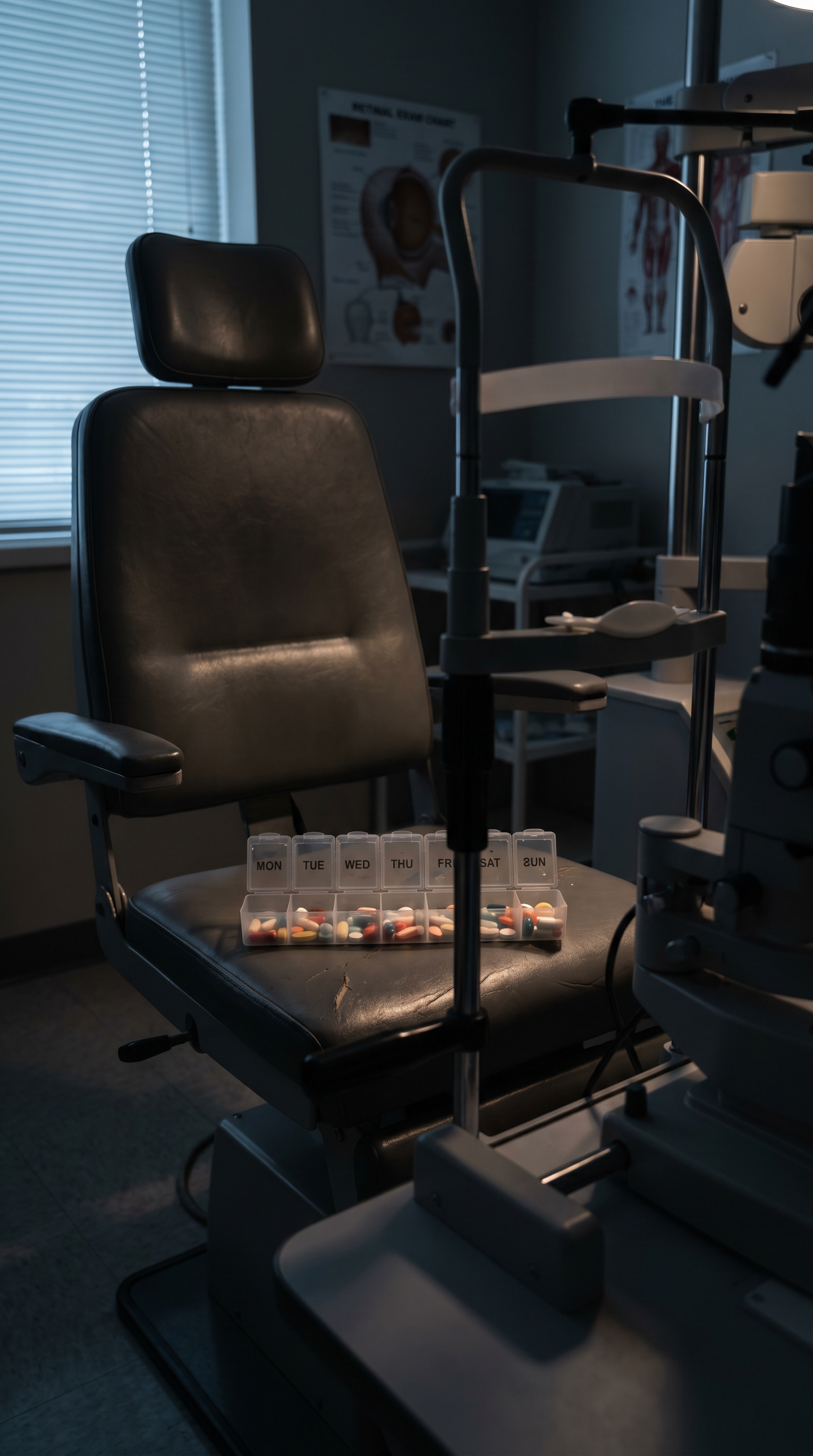
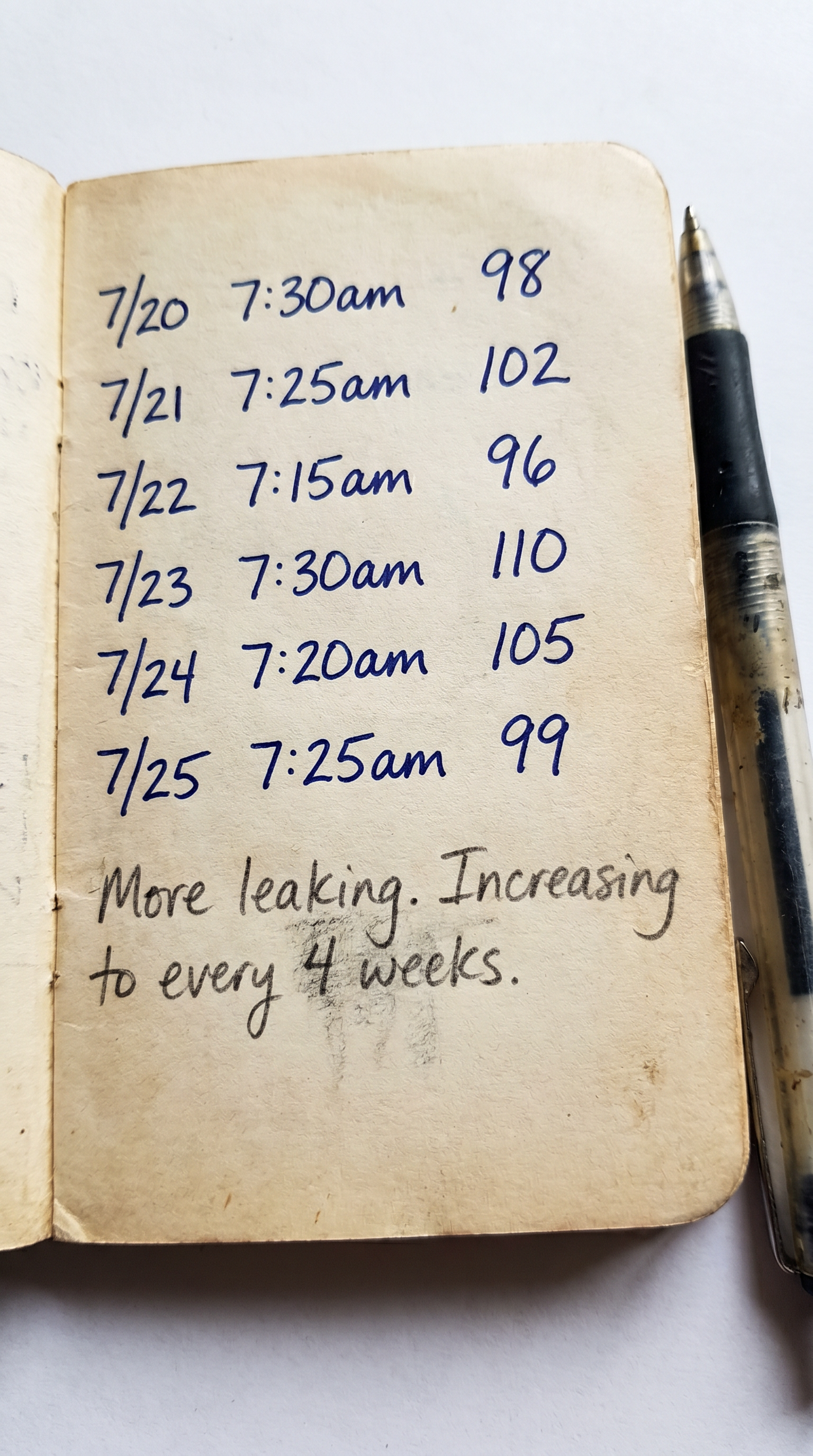
My A1C was 5.7. Perfect. I'd kept it there for three years. And my retina specialist just looked at my scans and said: "There's more leaking. We need to increase your injections to every four weeks." I sat there staring at him thinking — how? How is this possible? I did everything right. I've had type 2 diabetes for 17 years. And I want you to understand — I wasn't careless. I wasn't one of those people who ignored it. I fought this thing every single day of my life. I checked my blood sugar every morning before my feet hit the floor. Pricked my finger before every meal. Logged every number in a little notebook my wife bought me. Took my Metformin on schedule. Never missed a dose. Cut the sugar. Cut the carbs. Cut the bread. Counted every gram of everything I put in my mouth. Walked after dinner every night. Lost 35 pounds. Brought my A1C down from 9.8 to 5.7. My endocrinologist told me I was a model patient. She used my chart as an example for other diabetics. And four years ago, my optometrist found the first changes. Microaneurysms. Tiny dot-like bleeds in the back of my eyes. The earliest signs of diabetic retinopathy. I felt my chest tighten. Because I knew what that meant. My mother had diabetes too. She was on eye injections for six years. Eylea. Every six weeks. She never missed one. And she still went blind. I watched her go from reading her bible every morning to sitting in a dark room waiting for someone to bring her food. The woman who raised four kids and worked two jobs couldn't pour her own coffee because she couldn't see the cup. And now the same disease was starting in my eyes. My optometrist referred me to a retina specialist. He looked at my scans. Confirmed the diagnosis. And said: "We'll monitor this closely. Keep your blood sugar under control. If it progresses, we'll start injections." I asked him: "Is there anything else I can do?" He said: "You're already doing everything right. Just keep it up." Keep it up. Six months later, the leaking had started. He put me on Eylea. Every six weeks. $2,100 per injection. The needle. That cold metal claw they clamp over your eyelid to force it open — leaving you pinned, staring straight up, helpless, as the needle comes slowly down toward your eye. The gritty, sandy, scraping feeling that lingers for days afterward. The bloodshot, horror-movie eye that pools red across the white. My grandson wouldn't look at me for a week after my last injection. He said my eye scared him. I told him it was fine. It wasn't fine. And then the dread. The knot in my stomach that starts building three days before every appointment. The calendar on the kitchen wall with "INJECTION" circled in red every six weeks. No end in sight. For two years, I did the injections faithfully. Never missed one. And my vision kept getting worse. The floaters came first. Little dark shapes drifting across everything I tried to look at — like shadows I couldn't blink away. Then the blur that came and went. Clear one morning, smeared the next. Never knowing which version of my eyes I'd wake up to. Then the headlights at night — exploding into blinding white starbursts across the windshield. I stopped driving after dark. My world shrank to the hours before sunset. And through all of it, my A1C stayed at 5.7. Perfect. Every single screening. I sat in that exam chair at my two-year check and my retina specialist said the words I'd been dreading: "There's more leaking. We need to increase your injections to every four weeks." I looked at him and said: "I've done everything you asked. My blood sugar is perfect. I've been getting injections for two years. Why is it still getting worse?" He looked at me the way doctors look at you when they don't have a good answer. "Diabetic retinopathy is a progressive disease. We're managing it as well as we can." Managing it. Not fixing it. Managing it. I left that office and sat in my car in the parking lot for twenty minutes. And I felt something I hadn't let myself feel in years. The guilt. That quiet voice that says you did this to yourself. That if you'd just eaten better twenty years ago. If you'd caught the diabetes earlier. If you'd controlled it better in those first years before you took it seriously. This is your punishment. You earned this. I carried that guilt home like a stone in my chest. Three weeks later, at two in the morning, I was sitting at my kitchen table reading everything I could find about diabetic retinopathy. My wife had gone to bed hours ago. I couldn't sleep. The next injection was in nine days and I couldn't stop thinking about it. And I found something that changed everything. A comprehensive review published in 2020 in Clinical and Experimental Pharmacology and Physiology. Written by researchers studying diabetic retinopathy specifically. Not macular degeneration. Diabetic retinopathy. And it explained something that nobody — not my endocrinologist, not my retina specialist, not a single doctor in 17 years of diabetes management — had ever told me. There are two battlefields. My A1C measures the sugar in my blood. Every weapon I'd been given fights on that battlefield. My insulin. My Metformin. My diet. My finger-sticks. Every tool in my diabetes management fights in the blood. But the damage to my retina isn't happening in my blood. It's happening inside the eye itself. Behind a wall called the blood-retinal barrier. In the tissue. Running through two pathways that my blood sugar control physically cannot reach. The first pathway: glycation. Sugar chemically bonding to the soft walls of my retinal capillaries and hardening them from the inside — like sugar caramelizing on a stovetop. Making them brittle. Porous. Until they weep fluid. And this happens locally, inside the tissue, on its own clock — whether my blood sugar reads 5.7 or 9.0 that morning. The second pathway: oxidative corrosion. Free radicals quietly eating the cells lining those capillaries — like rust corroding a pipe from the inside. Working between every appointment. Regardless of what my last lab said. I sat there at my kitchen table at three in the morning and I felt something break open. Because I realized — my A1C was perfect. My blood sugar was managed. And the damage was happening on a completely different battlefield. A battlefield my treatment was never built to reach. I hadn't been failing. I'd been fighting in the wrong place. And the guilt I'd been carrying for years — the shame that I'd done this to myself — was based on a lie. The lie that perfect control equals perfect protection. It doesn't. Because the damage is on the other side of a wall. And nobody gave me anything to fight on that side. I cried at my kitchen table. Not because I was sad. Because I was relieved. For the first time in years, someone had explained why doing everything right wasn't enough — and it wasn't because I'd failed. It was because there was a second battlefield. And I'd never been given weapons for it. That same review confirmed something else. There's a compound called Alpha-Lipoic Acid that prevents both micro and macro damage to retinal blood vessels. It protects the pericytes — the cells that guard your capillary walls. It reduces the growth signal that triggers the abnormal vessel formation that leads to injections. And it works through multiple mechanisms — all on the second battlefield, all behind the wall that blood sugar cannot cross. And almost every eye supplement on the market leaves it out entirely. I started researching. What else reaches the second battlefield? What else actually crosses the blood-retinal barrier and gets inside the retinal tissue where the damage is happening? The answer was a small, specific group of compounds. Not vitamins. Not minerals. Fat-soluble nutrients that physically accumulate in retinal tissue — the only "keys" shaped to fit the lock that blocks everything else. And that's when I realized something that made me sick. In 17 years of diabetes management — 17 years of endocrinologists, primary care doctors, retina specialists, dietitians — not ONE person had ever told me there was something I could take for the inside of my eye. Not one. I had a pill organizer with seven compartments. Metformin. Blood pressure medication. A statin. A daily aspirin. A multivitamin my wife insisted on. Every single one fights in my blood. In my arteries. In my liver. In my bloodstream. Not one of them was ever designed to cross into my retinal tissue. Not one of them reaches the second battlefield. And when I asked my retina specialist — "Is there anything else I can do?" — he said: "Keep your blood sugar under control. Keep getting your injections. We'll monitor it." That was the entire plan. Manage the blood. Drain the leak. Monitor the damage. Repeat forever. Nobody told me there were compounds that physically cross the blood-retinal barrier. Nobody told me there were nutrients studied specifically for diabetic eyes. Nobody mentioned Alpha-Lipoic Acid. Nobody mentioned Bilberry for leaking vessels. Nobody mentioned Meso-Zeaxanthin for the center of my retina. The second battlefield didn't exist in any conversation I'd ever had with any doctor in 17 years. Not because the research doesn't exist. It does — published in peer-reviewed journals, confirmed in clinical trials. But because my retina specialist is a surgeon. He fights fires. Needles and lasers. That's his training. That's his lane. The daily nutritional support that could reinforce the capillary walls between his appointments — that lives outside his lane entirely. Nobody teaches it. Nobody bills for it. Nobody brings samples to his office. So I sat in that injection chair for two years — every six weeks, $2,100 a needle, the claw, the dread, the aftermath — while the corrosion continued on the second battlefield. And nobody told me there was anything I could send there. I found it myself. At three in the morning. At my kitchen table. I found a formula online that had everything the research said a diabetic retina actually needs. All three retinal carotenoids — Lutein at 20mg, Zeaxanthin at 2mg, and Meso-Zeaxanthin at 2mg. The only nutrients that physically cross into and accumulate in retinal tissue. A meta-analysis of 20 randomized controlled trials confirmed that adding Meso-Zeaxanthin — the one most supplements skip — produced a greater increase in macular pigment density than formulas without it. Alpha-Lipoic Acid at 50mg. The diabetic-specific ingredient. The one the published research confirmed works through multiple mechanisms to protect diabetic retinal vessels. The piece nobody ever told me about in 17 years. Astaxanthin to cross the blood-retinal barrier — something Vitamin C and E physically cannot do. Bilberry to reinforce the fragile capillary walls that are leaking — in a double-blind trial on diabetic retinopathy patients, 11 out of 14 showed significant improvement within one month. Plus: Saffron — protects retinal cells from light damage. Ginkgo — reopens blood flow to the smallest vessels. Taurine — replaces the fuel your retinal cells burn through under high blood sugar. Luteolin — calms the inflammation glycemic stress keeps firing up. Omega-3s — rebuilds the cracked photoreceptor membranes. Zinc, Copper, Vitamin C, Vitamin E — the AREDS2 ratio powering your eye's own antioxidant defense. 15 ingredients. Sugar-free. Does not touch glucose. The brand was called Visiovance. I'll be honest — I almost didn't order it. I'd never been told a supplement for my eyes was even a possibility. For 17 years, the entire plan was blood sugar management and injections. The idea that something you swallow could cross into your retinal tissue and work on the second battlefield — it sounded too good. Too simple. Too different from everything I'd been told. But they had a 90-day money-back guarantee. Even empty bottles. And I figured — I'm already spending $2,100 every four weeks on needles that aren't stopping the damage. What's one more thing to try? I ordered a bottle. Week 1: Nothing. Vision the same. Floaters the same. I documented the date and waited. Week 3: The gritty, sandy, burning feeling in my eyes — the one I'd accepted as just part of having diabetes — started fading. Subtle. But there. I noticed it because for the first time in months, my eyes didn't feel exhausted at the end of the day. Week 4: My wife said something that stopped me. "You're not rubbing your eyes anymore." She was right. I hadn't noticed, but the constant irritation had eased. Week 6: The floaters. The dark little dementors that had been drifting across my vision for two years — there were fewer of them. Noticeably fewer. I sat in my living room and looked out the window and the shadows that usually drifted across the light weren't there. Not all of them. But enough that I noticed. Week 8: Colors. I can't explain this any other way — it was like someone turned the lights back on. Everything looked more vivid. More saturated. I looked at my granddaughter's drawing on the refrigerator and the reds and blues were brighter than I'd seen in years. Week 10: I read the newspaper in the evening. Without squinting. Without the magnifying glass my wife had bought me. I read the box scores. The whole column. Front to back. First time in over a year. Week 12: I drove to church at night. My wife was in the passenger seat. The headlights from oncoming cars — they didn't explode into starbursts. They were just headlights. My wife grabbed my arm and said: "You're not flinching." I hadn't driven after dark in eight months. I drove us home too. I went back to my retina specialist at my three-month check. He dilated my eyes. Looked at the scans for a long time. Looked at me. Looked back at the scans. "The leaking has stabilized," he said. "No new microaneurysms. Capillary walls look more stable. Whatever you changed, keep doing it." I didn't need an increase in injection frequency. For the first time in two years, the news wasn't worse. He asked what I'd changed. I told him: my A1C didn't change. It's still 5.7. My diabetes management didn't change. My injections didn't change. The only thing I changed was I started sending something to the second battlefield — the one nobody ever told me about in 17 years. He wrote it down. That was eight months ago. My last screening was three weeks ago. My retina specialist used a word he'd never used with me before: "improved." Not "stable." Not "not worse." Improved. The floaters are mostly gone. The blur that used to come and go has stayed clear for four months straight. The gritty burning is gone entirely. I drive at night. I read the newspaper every evening. I looked at my granddaughter's face across the Thanksgiving table and I could see her smile. Her actual smile. Not a shape. Not a blur. Her face. My A1C is still 5.7. It never changed. My diabetes management is exactly the same. The only thing that changed was what reaches the second battlefield. And I need to tell you one more thing. If your A1C is managed and your eyes are still getting worse — it is not your fault. You did not do this to yourself. The damage is happening on a battlefield your blood sugar was never built to reach. Nobody told you. Nobody told me. And nobody told me there was anything I could send there for 17 years. That guilt you're carrying — put it down. It was never yours to carry. The gap wasn't in you. It was in the conversation that never happened. Visiovance. 15 ingredients. Sugar-free. Does not touch your glucose. 90-day money-back guarantee — even empty bottles. Less than 1% of people ask for a refund. Because it works. Your injections fight the fires. This formula stops the arson. Don't wait until the next scan shows more leaking. Don't wait until the injection frequency increases again. Don't accept the treadmill as the whole story. Your retina is waiting for support on the second battlefield. I know. Because mine was too. 👉 https://visiovance.com/products/visiovance-15-in-1-advanced-eye-formula
Like this ad? Make it yours.
Crush rebuilds this exact creative around your product — your brand, your colors, your offer — in about a minute.