My Bladder And Prostate
My Bladder And Prostate Facebook ad: “Doctor mention TURP? Read this”
Ran for 15 days, from August 24 to September 8, 2026, the last day Crush saw it.
Run by My Bladder And Prostate on Facebook. Crush is not the advertiser and does not verify its claims. See this ad in Meta's Ad Library(opens in a new tab)
Want an ad like this for your product?
Crush makes new ad images for your product from this ad: your logo, your product photo, your offer.
Trials from $19.95 USD, then $79.95 USD a month. Cancel anytime.
About this ad
- Meta Ad Library ID
- 2021760628529823
- Platforms
- Facebook, Instagram, Audience Network, Messenger and Threads
- Relaunches
- 0
Ad text
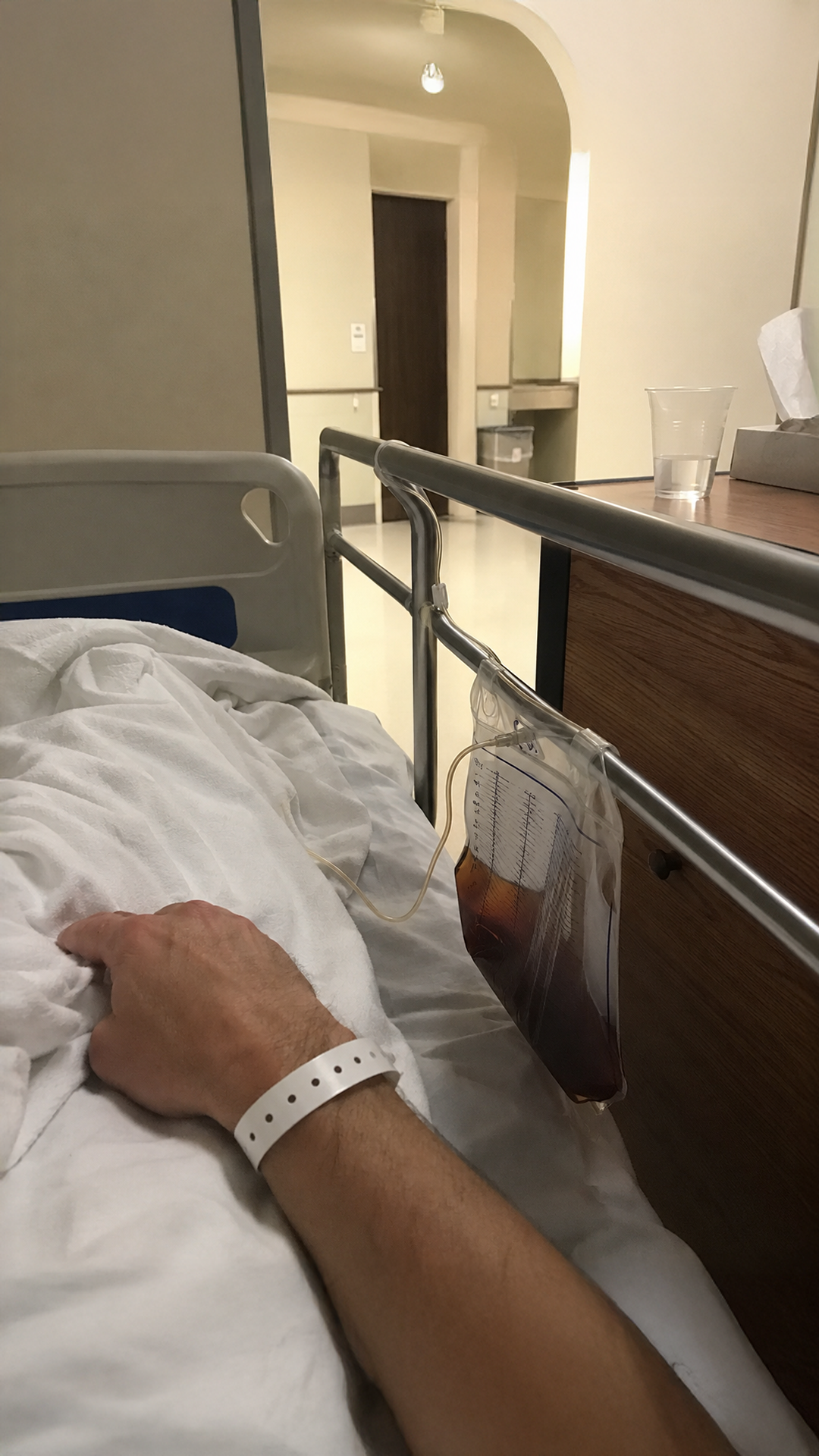
I'm 58 and I had prostate surgery 18 months ago. 3 weeks later my wife found me crying in the garage. I had not cried in 22 years. The last time was at my father's funeral. I had TURP surgery 18 months ago. If you don't know what TURP is, count yourself lucky. It's the surgery your urologist eventually offers you when the Flomax stops working well enough. They go in through your urethra with a scope, and they cut away part of your prostate. The brochure calls it "minimally invasive." I had it on a Tuesday in March. I was home by Wednesday afternoon with a catheter and a urine bag strapped to my leg. I wore that catheter for 9 days. You don't think about what 9 days with a catheter is like until you've done it. Three weeks after they took the catheter out, my wife came into the garage and found me sitting on the workbench crying. I'm 58 years old. I had not cried in 22 years. What had happened is that I had finally figured out what the surgeon meant when he said there would be "some minor changes to ejaculation." Minor changes meant nothing would come out. Ever again. The semen still gets produced. My body now sends it backward into my bladder instead of out. I pee it out the next time I go. That's permanent. It doesn't reverse. The surgeon mentioned this in our pre-op visit. He used the medical name for it. I nodded. I didn't understand what he was actually telling me. My wife and I have been married for 34 years. We've had a good run. The thing I learned crying in the garage was that the version of us we'd had for 34 years was over. There's a new version now. It's fine. It works. But it's different, and it's different forever, and the surgeon told me about it in 30 seconds in his office without making sure I understood what I was trading. She sat down next to me on the workbench. She didn't say anything. She put her hand on my back. She had figured out something before I did, which was that I wasn't crying about what was gone. I was crying because nobody had told me clearly what I was about to lose. After she went back inside, I sat in the garage for another hour. Then I went and got my laptop and I started reading. I have spent the last 18 months reading about prostates. I am the most informed I have ever been about an organ I cannot see. For the first six months, I was reading out of anger. I wanted to know who had failed me. The surgeon. The urologist. The pharmaceutical company. Somebody had to be the answer. By month nine I had figured out that the answer wasn't a person. The answer was a system that manages one piece of the problem at a time and treats the other two pieces as somebody else's problem, where "somebody else" turns out to be the next doctor, in seven years, when you can't avoid the surgery anymore. What I found out is the reason I'm writing this. Eight years ago, I went to my urologist with a slow stream and some night trips to the bathroom. He ran a PSA. The PSA was fine. He told me my prostate was a little enlarged, that this was normal for a man in his late 40s, and that we could try a medication called Flomax to help with the symptoms. I took Flomax for seven years. For seven years, the stream got a little better. The night trips got a little better. And the prostate kept getting bigger, and the bladder kept working harder, and the swelling underneath kept slowly building. My urologist never explained any of that. He never told me Flomax was managing one symptom of a problem that was getting worse underneath the management. He told me to take the pill three times a day. He said we'd see each other in a year. Last spring, the Flomax stopped working as well. The stream got weak again. The trips got more frequent. My urologist explained that this was the natural progression of BPH, and that we should "talk about surgery." I drove home and sat in my car for 30 minutes before I went inside. I asked him later, in the pre-op consult, whether there was anything else we could have done years ago. He gave me a look I'm still trying to forget. It was the look of a man trying to tell me, kindly, that I should not be asking the question I was asking. He said, "Some men are just on this path." Here's what I now know about that path. And it's the kind of thing most urologists do not explain to a patient before they prescribe Flomax for the first time. What my doctor was calling BPH, or an enlarged prostate, turned out to be only one piece of the actual problem. What I was actually dealing with wasn't just a prostate problem. It was three different things going wrong at the same time. The prostate enlarging. The bladder weakening. And chronic inflammation in the tissue around both of them. All three happen together. All three reinforce each other. The reason all three are happening at once is something most men have never had explained to them either. You know the hormone DHT? The one that's been thinning men's hair since they turn 45 or so? It's the same hormone that's been doing this to your prostate, your bladder, and the tissue around both. Starting in your 40s, your body converts more of your testosterone into DHT. The DHT accumulates in your prostate at five times the concentration it has in your bloodstream. It causes the prostate to grow. The growing prostate squeezes the urethra. Your bladder has to push harder to get urine through, year after year, until the muscle weakens. The strain creates chronic inflammation in the surrounding tissue. The inflammation produces more DHT. The DHT produces more prostate growth. It's a self-sustaining loop. By the time you notice the symptoms, the loop has been running for fifteen, twenty years. The damage compounds every year. Now here's the part I had to read twice. You might be thinking, "Saw palmetto blocks DHT. Finasteride blocks DHT. Wouldn't those just fix this?" Guess again. Saw palmetto really does block DHT. So does finasteride. They both do exactly what they say they do. The reason neither of them fully fixes the problem is that blocking DHT now doesn't undo the damage DHT has already done to your bladder over the last twenty years. And it doesn't address the inflammation that keeps amplifying DHT in the first place. To actually restore healthy urinary function, your body needs three things working at the same time. Reduce the prostate enlargement at the source. Rebuild the bladder strength the loop weakened. Maintain a healthy inflammatory response in the tissue around both. Block the source. Repair the damage. Break the cycle. Without all three, the gains do not hold. Address only the prostate, and the bladder keeps weakening. Address only the bladder, and the prostate keeps growing. Address only the inflammation, and the DHT production keeps creating new damage. That's why my brother has been on Flomax for three years and is still up four times a night. That's why the saw palmetto I tried before my surgery did nothing for six months. That's why I am already being told I am going to need a second procedure. The surgery addressed the prostate piece. The other two pieces kept running underneath the whole time. None of those approaches addresses all three pieces of the problem at the same time. They are partial solutions to a three-part problem. What I went looking for was a formula that addresses all three at the doses the actual research uses. After about three weeks of comparing labels, I landed on one called Uromend. What stood out about it is that it's the only natural formula I could find built around all three of these conditions. Not just the prostate piece. All three. Six ingredients distributed across the three conditions based on what each condition needs. For reducing prostate enlargement: saw palmetto at 250mg to address DHT activity at the source. Beta-sitosterol at 200mg for smooth muscle tone and circulation. Stinging nettle root at 150mg for urethral pressure. For rebuilding bladder strength: pumpkin seed oil at 600mg. The biggest single dose in the formula, because the bladder is the most under-treated piece by competing products. Real bladder support needs real dosing. For maintaining a healthy inflammatory response: turmeric and reishi at 100mg each. Two complementary anti-inflammatories because one alone usually isn't enough to support the body's natural response over time. 1400mg total daily across all six. Most prostate supplements run 200 to 500mg total because they're trying to fit too many under-dosed ingredients into one capsule. 1400mg is the minimum dose to actually affect all three conditions at the same time. What I will say is that my flow has improved more in four months than it did in seven years on Flomax. My night trips have dropped from four to one. The bladder feels different when I'm done than it did before. Here is what the four months has actually looked like, by the way. The first week was nothing. I want to be honest about that. You start a supplement and you wait for something to happen and nothing happens. I almost stopped. By week three, I was sleeping through the night for the first time in maybe four years. I noticed it on a Saturday morning when I realized I had not gotten up at all. Then again on Sunday. Then most weeknights after that. By week six, the stream was noticeably stronger when standing. The urgency dropped. The "I have to go right now or there will be an accident" feeling went away. By week ten, the bladder felt different when I was done. Complete. Like it used to before any of this started. I cannot quite describe what that feels like to a man who has not had years of incomplete emptying. If you have had it, you know exactly what I mean. At four months, I would say my function is closer to where it was at 45 than where it was at 57. My wife noticed within the first month. She didn't say anything until I brought it up. She just said, "I'd been hoping." The other thing I want to mention, because most men reading this will have the same question I had, is what this costs. I have spent more on Flomax in any given year than I am spending on this. I have spent more on the gas to drive to follow-up appointments than I am spending on this. I have spent more on the pads I bought after my catheter came out than I am spending on this. If you add up the seven years of medication, the surgery copay, the second surgery I am about to schedule, and the various small humiliations I have purchased my way through, this supplement is the cheapest part of my prostate by a wide margin. It comes with a 30-day guarantee. Which means the risk is on the company, not on you. You take it for 30 days. If your numbers do not move, you send it back. I did not even know that when I ordered. I just wanted to try the formula. The guarantee turned out to be a thing I told my wife about later, when she asked what would happen if it did not work. If I had been on this approach at 50, I do not believe I would have ended up on the surgical table. I am writing this because somewhere right now there is a 50-year-old man getting handed a Flomax prescription by a urologist who hasn't explained any of what I just explained. That man is at the start of a road I just walked. He is seven years away from the garage. He doesn't know that yet. I want him to know. If you're in your 40s or early 50s and your doctor has just handed you a prostate medication, you are at the start of a three-part problem. The medication is doing one thing. The problem is doing three. You have years before the surgical conversation, but those years go by faster than you think, and the other two pieces do not slow down while the medication makes you feel like it has. You can address all three conditions now. There is real research on this approach. There are formulas that target it. None of them require a prescription. I cannot get my surgery back. I cannot get the catheter weeks back, or the garage afternoon back, or the version of myself I was at 50 back. I can write this, and I can hope it reaches someone before he ends up where I did. That's the only thing left I can do for the version of me that should have known. Here is what I would do this week if I were you. Go look at the formula. Look at what each ingredient is doing. If it addresses all three of these conditions at the studied doses, that is the bottle. If they do not, find another one. Order one bottle. Take it for thirty days. Track your night trips, the way I started doing in week two. If the number moves, you have your answer. If it does not, you send the bottle back, and you have lost nothing except a month. That is the math. That is the entire risk. The only thing you cannot get back is the years I lost. Those are not coming back for me. They might still come back for you, if you start now. Click the link below to see the multi-pathway approach I'm on
Where the ad sends people
uromend.com
Doctor mention TURP? Read this
Tired of waking up 4-6 times a night? Uromend's 6-in-1 natural formula helps you sleep through the night, empty your bladder completely, and stop planning your life around bathrooms. No prescriptions. No side effects. Your bladder doesn't run your life anymore. 30-day money-back guarantee.
Learn more: uromend.com(opens in a new tab)