
Inactive· since May 6, 2026
- 53
- days it ran
- 1
- relaunches
Ad copy
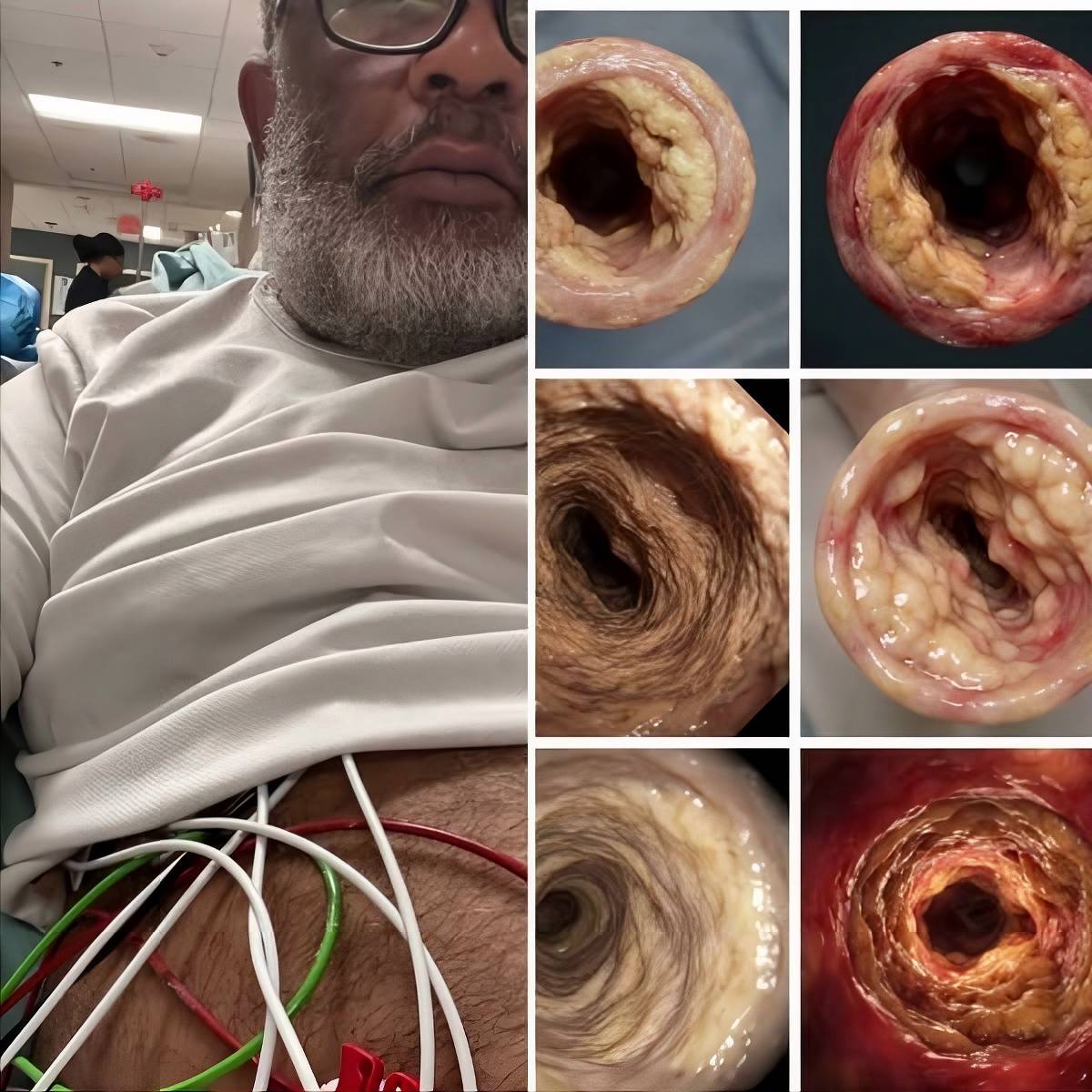
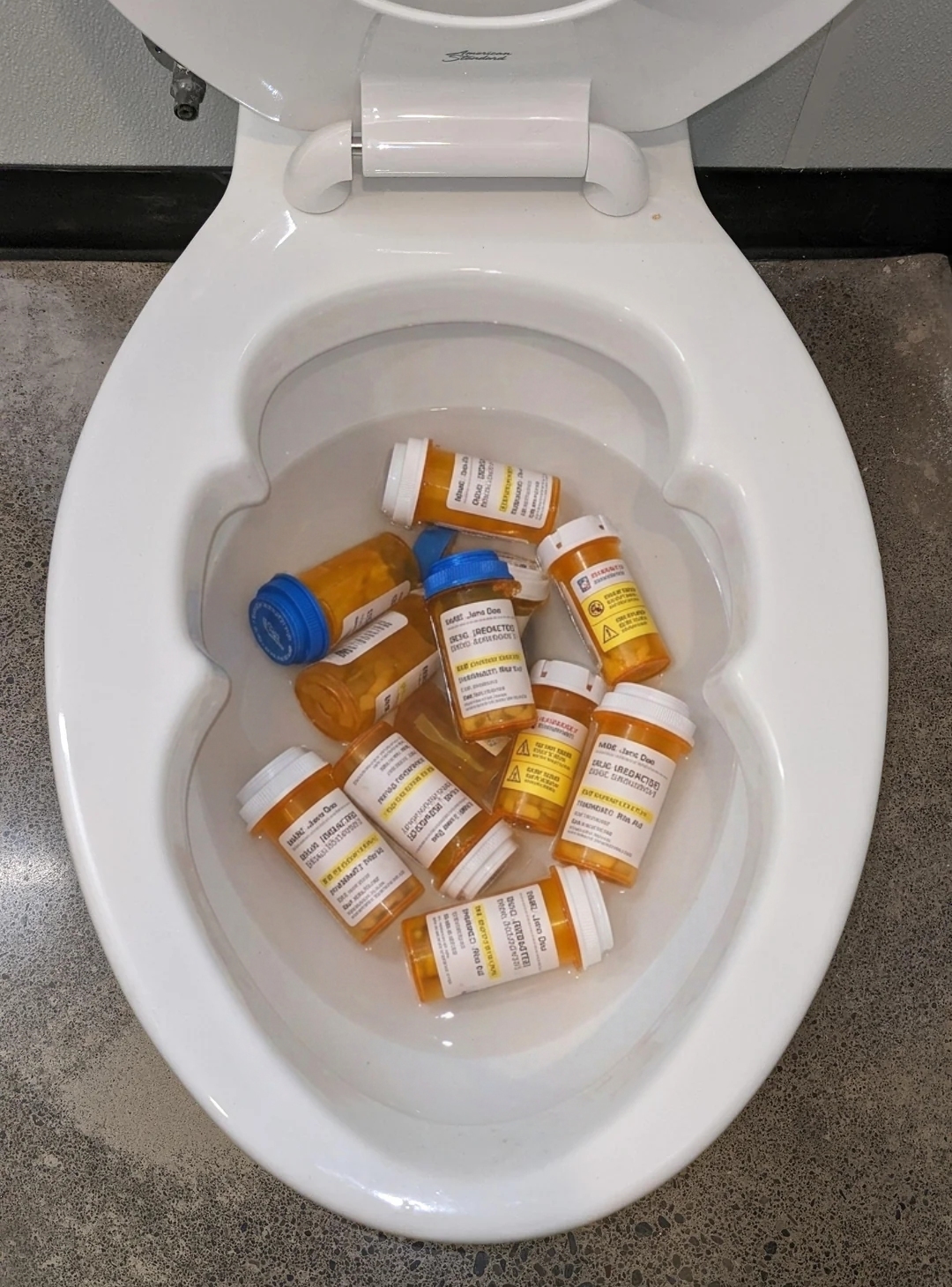
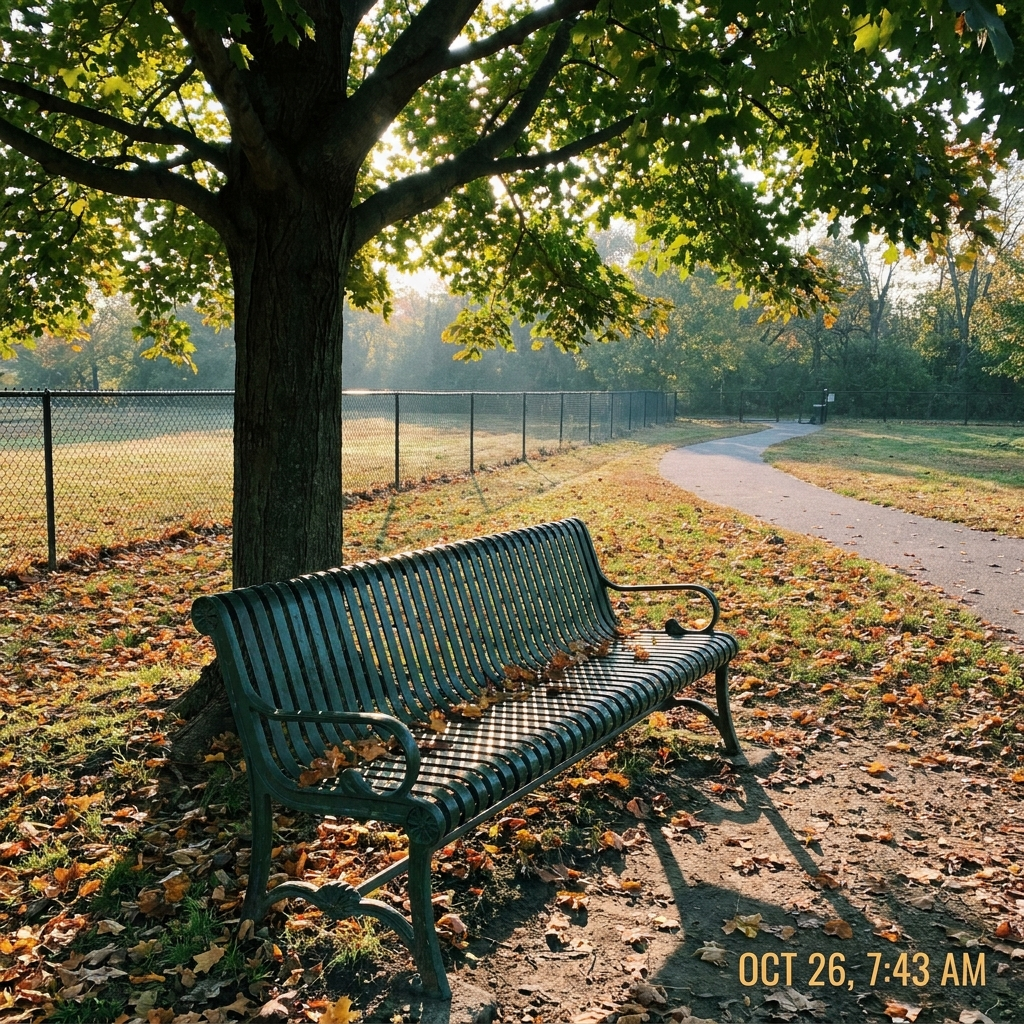
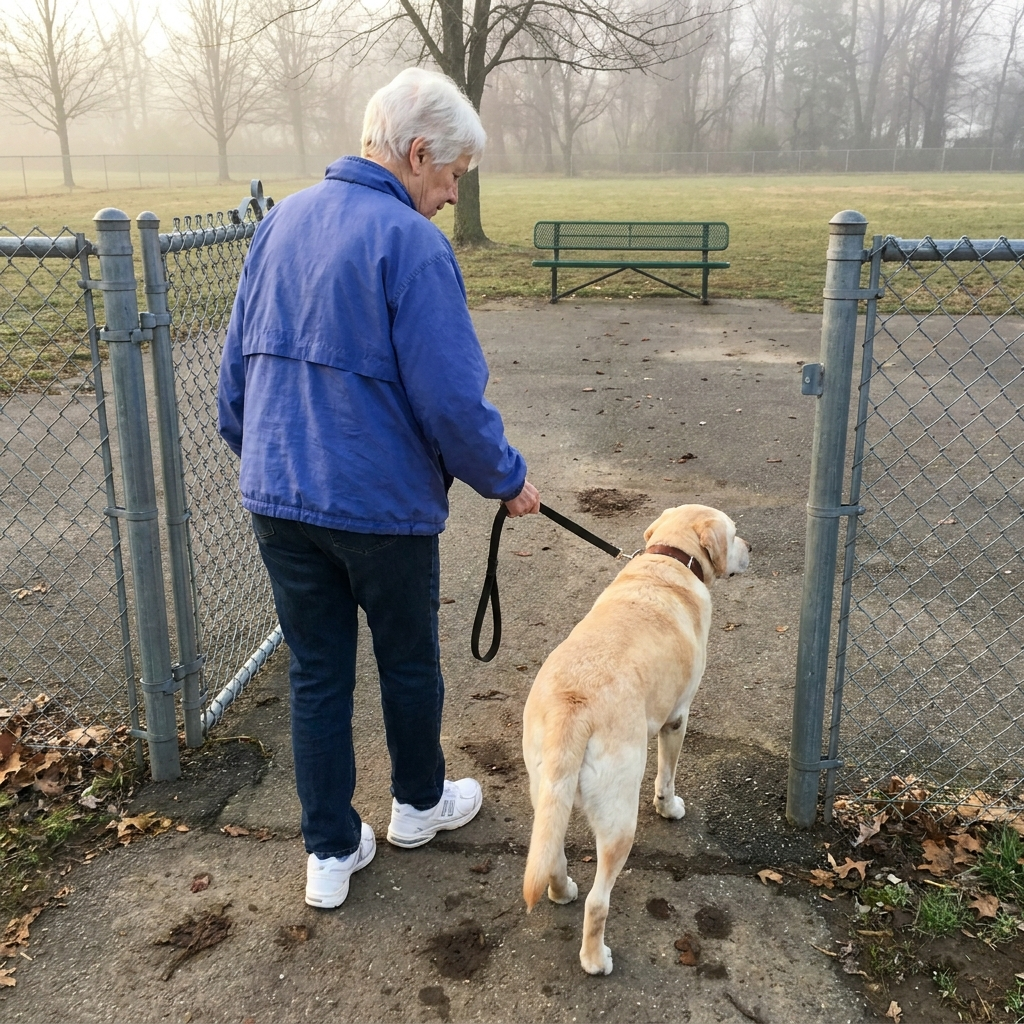
I have been going to the same dog park in Toledo for 6 years and on a Tuesday morning in May I sat next to a widow on a green metal bench and she changed the way I think about every pill in my medicine cabinet. I want to write this down before I lose the nerve. Because I'm 62 years old and I'm a man who does not write things on the internet, and what this woman told me sitting on that bench has been keeping me up at night, and I think there are other men out there in other towns sitting on other benches who need to hear it. My name is Tom. I retired from the post office in 2022 after 38 years. I walked a route in West Toledo for 26 of those years. Same neighborhoods. Same dogs. Same houses where the porch light was always on at 9 in the morning because the lady inside was widowed and lonely. I knew which mailboxes had the springs that pinched your fingers and which ones smelled like cat. I knew everybody. My wife Linda died in 2019 of pancreatic cancer. She was 58. We were married 32 years. We had no kids by choice and one Australian shepherd named Pepper that Linda picked out of a litter at a farm in Wauseon in 2016. After Linda died Pepper became the reason I got out of bed in the morning. Literally. She stands by the bed at 6:15 every day and stares at me until I move. I started taking Pepper to Wildwood Dog Park in 2020 because the apartment I moved into after I sold the house didn't have a yard. Wildwood is a 4 acre fenced park off Central Avenue with two sides, one for big dogs and one for small. There's a paved walking loop. There are 6 green metal benches. I sit on the third bench from the entrance. Always the third one. Because there's a maple tree behind it that gives shade in the summer and blocks the wind in the winter and because the man who used to sit on the second bench taught me that the third one was the best one. His name was Walter. I'm going to tell you about Walter. I have to. Walter was 67 when I met him in 2020. He had a yellow lab named Biscuit. He worked in commercial insurance. He'd been retired about 4 years. His wife Margaret had taught 5th grade for 35 years and retired the same year he did. They lived in a brick ranch off Sylvania Avenue. Walter showed up at the dog park every morning at 7:15. I showed up at 7:20. We sat on adjacent benches for about 6 months before we started actually talking. That's how it works at a dog park. You nod for a season. You comment on the weather for a season. Then one morning somebody's dog does something funny and the conversation starts. Pepper stole one of Biscuit's tennis balls in October of 2020. Walter laughed. I laughed. He moved over to the third bench, the one in the shade, and he said, "You should always sit on this one. It's the best one." That was that. After that we were friends. For 4 and a half years Walter and I sat on that bench every morning except in serious weather. We talked about football. We talked about Margaret. He talked about Margaret a lot. He loved her like men loved women in the 1950s. Quietly. Completely. With the kind of devotion that doesn't need to announce itself. Walter started slowing down sometime in 2023. I noticed because we walked the loop together every morning and he'd been walking it in 19 minutes for years and then one day it was 24 and then it was 28. He told me his knees were bothering him. He told me he was tired. He told me he'd been on a statin for 11 years and his cholesterol was great but he couldn't keep up with Biscuit anymore. In 2024 he started telling me about chest tightness. Not pain, he said. Tightness. Like a hand resting on his sternum. He told his doctor. The doctor ran a stress test. Stress test was clean. The doctor told him it was probably anxiety and to keep walking and to try not to think about it. Walter kept walking. Tried not to think about it. In February of this year Walter didn't show up for 3 days in a row. I don't have his phone number. We were dog park friends, not phone friends. I knew where he lived from a story he'd told me once but I didn't have an address. On the fourth day I drove around the neighborhoods off Sylvania looking for a brick ranch with a yellow lab in the front window. Didn't find it. He never came back. I waited 3 months. Sat on the bench. Pepper would look up every time a yellow dog came through the gate. So would I. In May, on a Tuesday morning at 7:14, Margaret walked through the gate of Wildwood Dog Park with Biscuit on a leash. I knew her from 5 years of Walter showing me pictures on his phone. She was a small woman with white hair cut short, a blue windbreaker, and the kind of face that looked tired in a deep way that you can't sleep off. Biscuit saw me. Biscuit saw Pepper. Biscuit pulled. Margaret let him. He came up to my knee and he put his head against my leg and he stood there. I leaned down and I put my hand on his head and I just held it there for a long minute. Margaret walked over. Sat down on the third bench next to me. Didn't say a word. After about 2 minutes she said, "Walter died on February 14th." I said, "Margaret, I'm so sorry." "He talked about you. He told me everybody at the bench. He told me your dog stole his ball in 2020 and that's how you became friends." I had to look at the grass for a minute. She said, "Heart attack. He was sitting in his chair watching the news. I was in the kitchen. I heard him say my name once and when I came in he was gone." She told me about the funeral. She told me about Biscuit not eating for 6 days. She told me about waking up at 7:15 every morning still. She'd been wanting to bring Biscuit to the park for weeks but she couldn't bring herself to do it because Walter had been so faithful to it that walking through the gate without him felt like a kind of betrayal she didn't have words for. I told her she could sit on his bench any morning she wanted to. Then she said something I'm going to write down word for word because I have not been able to stop thinking about it. She said, "Tom, I want you to listen to me. Walter was on Lipitor for 11 years. His cholesterol numbers were perfect. He was in the doctor's office every 6 months. He did everything they told him to do. And he died at 71 of a heart attack with an LDL of 88. And nobody can tell me why." I waited. "His brother had the same thing happen. His brother was 68. On Crestor for 8 years. Numbers were beautiful. Dropped dead in a parking lot at the Kroger." She turned and looked at me. "Tom, I need to tell you something because I think Walter would want me to. After his brother died, I got obsessed. I started reading. I read for 6 months. I read things I had no business reading. I tried to get Walter to listen to me. He wouldn't. He trusted his doctor. He'd trusted his doctor for 30 years. He wasn't going to second guess a man with a degree based on his wife reading articles on the internet." She was quiet for a second. "I want to tell you what I found. Because you sat next to my husband for 5 years and you were kind to him and I don't want you to be the next man on this bench who's gone." I'm going to tell you what Margaret told me on that bench because I think it matters. I am not a doctor. I'm a retired letter carrier. I'm telling you what one widow in Toledo told one widower on a Tuesday morning in May, and what I went home and read for myself, and what I decided to do about it. The story they tell us about cholesterol is simpler than what's actually happening. The number on the lab report is one piece of information. It's not the whole picture. The thing that actually drives a heart attack isn't just how much cholesterol is floating around in your blood. It's whether that cholesterol gets damaged. It's whether the damaged cholesterol gets stuck in the wall of an artery. It's whether the artery wall is inflamed and ready to receive it. That second part, the inflammation and the oxidation, is the part that the standard cholesterol number doesn't measure. A statin lowers the number on the lab report. It does that by blocking an enzyme in your liver that's involved in producing cholesterol. The same enzyme is also involved in producing something called CoQ10, which your muscles and your heart and your brain need to produce energy. Some people are fine on a statin. Some people are not. There's a long list of side effects that's well documented. Muscle weakness. Cognitive fog. Fatigue. The kind of slow erosion of feeling like yourself that gets blamed on age. But here's the part Margaret had been carrying around for 6 months. The lower number on paper does not necessarily mean the inflammation underneath has gone anywhere. The damage to the artery wall, the oxidative stress on the cholesterol particles, the chronic low grade inflammation that makes the whole problem dangerous in the first place. None of that is what the number measures. You can have a beautiful number and a dangerous artery. Walter had a beautiful number and a dangerous artery. That's when she told me about Amla. I had never heard the word in my life. Margaret said her sister in law in Cleveland had been on it for 9 months. Her sister in law had spent the last year trying to get Walter's brother to take it before he died and he wouldn't. After her brother in law died, Margaret started reading. Amla is a small green fruit that grows on trees in India. The English name is Indian gooseberry. People have been using it as food and medicine in South Asia for over 3,000 years. The fruit is high in vitamin C, polyphenols, and a class of compounds called tannins. What Margaret had found in her reading, and what I confirmed for myself in the next 4 days at my own kitchen table at 11 at night, was that Amla has been studied in real human trials for what it does to the things underneath the cholesterol number. The oxidation. The inflammation. The endothelial function, which is a fancy way of saying how well the inside of your arteries actually works. The studies showed reductions in markers like hsCRP, which is one of the main inflammation markers doctors use. They showed improvements in endothelial function in people with metabolic syndrome. They showed positive changes in lipid profiles, including LDL and triglycerides, but the more interesting part to me wasn't the lipid changes. It was that Amla seemed to be working on the things underneath. The damage and the inflammation that the number doesn't capture. A fruit. Studied in real people. Associated with the very thing Margaret had spent 6 months trying to convince Walter to look at. She didn't give me a sales pitch. She told me the name. She told me her sister in law had been taking a brand called Alevia. She told me there was a 90 day money back guarantee. She said that mattered to her sister in law because at her age she didn't have money to throw at things that didn't work. She said, "Tom, I'm not telling you this to sell you anything. I'm telling you because Walter sat next to you on this bench for 5 years and I don't want Pepper to come here someday with somebody else." We sat there for another 30 minutes. Biscuit stayed at my feet. Pepper laid down next to him. The sun came up over the maple tree. Before Margaret left, she gave me her phone number on a piece of receipt paper she had in her pocket. She said, "Tom, call me. Anytime. We can both come back here together with the dogs. Walter would want it that way." I drove home from the dog park that morning and I looked in my own medicine cabinet. I'd been on a statin for 9 years. Atorvastatin. 20 milligrams. My LDL had been 174 when I started and was 92 when I last checked. The doctor was happy. I'd been telling myself I was fine. But I'd been getting up slower than I used to. My calves had been cramping at night for the last couple of years. I'd been walking the loop at the dog park in 22 minutes when I used to walk it in 14. I'd been blaming all of it on being 62. I sat at my kitchen table that night with a cup of coffee and Pepper at my feet and I did the reading Margaret had done. I read for 4 nights straight. I read studies. I read summaries. I read patient stories. I read about Amla and CoQ10 and oxidative stress and endothelial function and the difference between lowering a number on a piece of paper and addressing the actual mechanism that makes high cholesterol dangerous in the first place. I'm not a young man. I'm not a stupid one either. I had to make a decision about what made sense. I called Margaret on a Saturday morning. I told her I was going to try Alevia Amla. I asked her if she'd come to the park with Biscuit on Sunday so we could sit on the bench together. She said yes. I ordered a bottle that afternoon. Why Alevia. Because Margaret's sister in law had been taking it for 9 months and was doing well. Because Alevia uses the form of the fruit that's been used in actual human research, in a dose that lines up with the studies. Because the 90 day money back guarantee meant I wasn't gambling. If a fruit didn't do anything for me in 3 months, I'd send it back. That's a fair deal. I want to be clear with you. I did not stop my statin. I'm 62 years old and I have been on it for 9 years and I'm not going to stop a medication on my own based on reading I did at a kitchen table in Toledo. I have an appointment with my doctor in July and we are going to have a conversation. He's a good man. He's been my doctor for 11 years. He will hear me out. What I did was add Amla to my morning. One capsule with breakfast. Same time every day. That's it. The first 12 days I noticed nothing. Then one Saturday morning I walked the loop at the dog park with Pepper and I checked my watch and it was 16 minutes. Not 22. 16. I had not walked the loop in 16 minutes since 2022. By week 4 my calves had stopped cramping at night. By week 6 I was getting out of bed at 6:15 without thinking about it. By week 8 I was sleeping deeper than I'd slept in 4 years. Linda used to tell me I was the best sleeper she'd ever met. I'd lost that somewhere along the way and I hadn't noticed. By week 10 Margaret looked at me on the bench one morning and said, "Tom, you look like you again." I want to tell you what I think this story is really about because it's not really about a fruit. It's about a man named Walter who sat on a green metal bench for 5 years and trusted a number on a lab report and died with a yellow lab waiting by the front door. It's about a widow in a blue windbreaker who carried 6 months of research she'd been desperate to get her husband to look at and didn't get the chance. It's about a man like me who walked the same route for 26 years and watched a thousand mailboxes through a thousand seasons and never thought to ask whether the picture his doctor was painting for him was the whole picture. The number on the page is one piece of information. It is not the whole story. There is a story underneath the number, about inflammation and oxidation and the actual integrity of your blood vessels, and that story matters more than any single number on any single piece of paper. If you're a man my age who has been on a statin for 5 or 10 or 15 years, and you've been telling yourself that you're tired because you're 60 something, I want you to read what Margaret and I read. I want you to look at what Amla has been associated with in human trials. I want you to think about what you're not measuring. And if you decide to try Alevia Amla, the 90 day money back guarantee is the thing that takes the gamble out of it. If it doesn't do for you what it did for me, you send it back. No questions. No restocking fee. That's a fair arrangement and I'm grateful that's how the company chose to do business. Margaret and I sit on the third bench together every Sunday morning now with Biscuit and Pepper. She wears Walter's jacket. I think she does it on purpose. She told me last week that she'd started taking Amla too, about 3 months ago. She said her sister in law had been telling her it wasn't just for cardiovascular support but that it had been associated with broader benefits, the kind of antioxidant and anti inflammatory support that touches everything. She said she'd been sleeping better. She said her hands ached less in the morning. She said, "Tom, Walter would have laughed at us. Two old people on a bench taking the same fruit." I don't think he would have laughed. I think he would have wanted us to. P.S. The widow at the dog park is something I think about when I think about the cost of trusting one number over the whole story. Walter was a good man and a careful man and he died because the standard tools we use to measure heart health were measuring half the problem. I'm not throwing my statin in the trash. I'm just refusing to pretend the lab report is the whole picture anymore. P.P.S. The 90 day money back guarantee is the only reason I clicked the order button. I've been burned by supplements before and I'm not a man who throws money at things. Alevia stands behind their product to the point that they'll refund you the full purchase if you don't see what you came for. That's not how most companies do business. I respect a company that knows what it's selling. P.P.P.S. Margaret asked me to add this. She said if there's a wife reading this whose husband has been on a statin for years and has been "tired" or "older" or "just slowing down," please don't wait for the chair in the living room and the silence from the kitchen. Have the conversation now. Read the studies now. Make him sit at the kitchen table with you and look at what's actually happening underneath the number. That's what she wishes she'd done with Walter. That's what she's doing now with herself. P.P.P.P.S. Pepper still looks for Biscuit every morning. They're at the gate together now every Sunday. It's not the same as it was. But it's something. And Walter would have wanted that too. 👉 https://alevia.com/amla/33
Like this ad? Make it yours.
Crush rebuilds this exact creative around your product — your brand, your colors, your offer — in about a minute.