Sarah Mitchell
Sarah Mitchell Facebook ad: “The Emotional Affects of Rosacea”

Ran for 85 days, from January 6 to April 1, 2026, the last day Crush saw it.
Run by Sarah Mitchell on Facebook. Crush is not the advertiser and does not verify its claims. See this ad in Meta's Ad Library(opens in a new tab)
Want an ad like this for your product?
Crush makes new ad images for your product from this ad: your logo, your product photo, your offer.
Trials from $19.95 USD, then $79.95 USD a month. Cancel anytime.
About this ad
- Meta Ad Library ID
- 2027981528059234
- Platforms
- Facebook, Instagram, Audience Network, Messenger and Threads
- Relaunches
- 0
- Niche
- Skincare & Beauty
Ad text
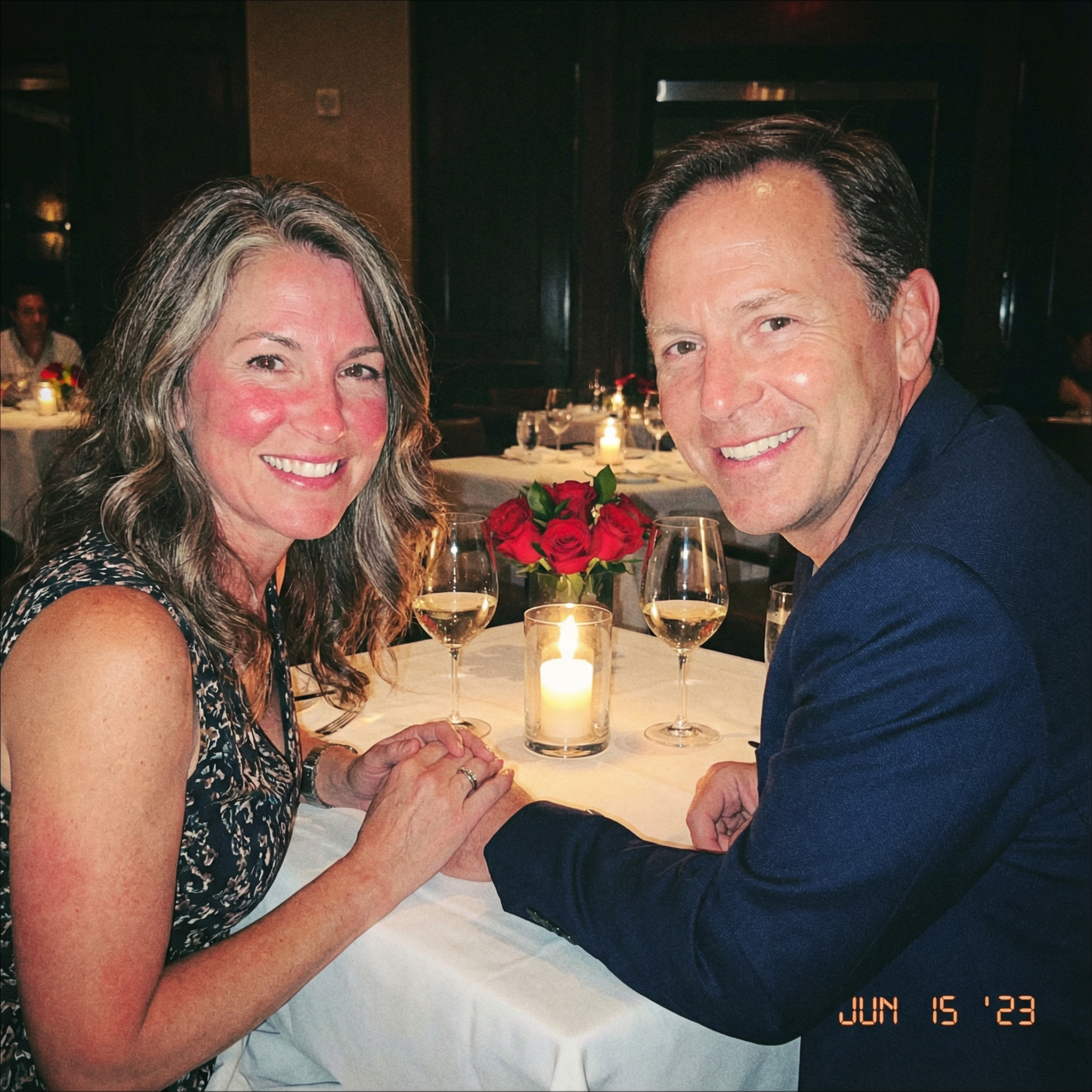
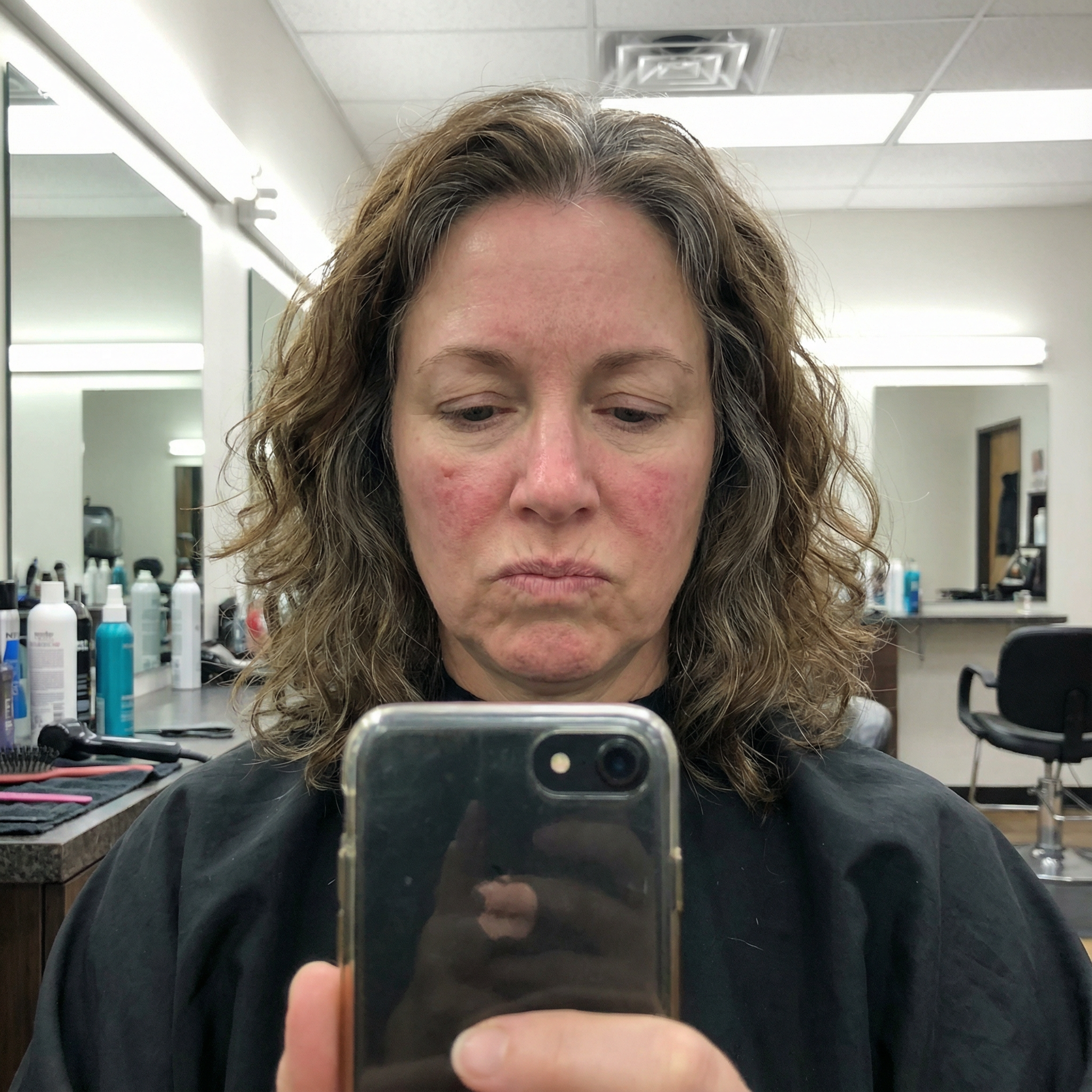
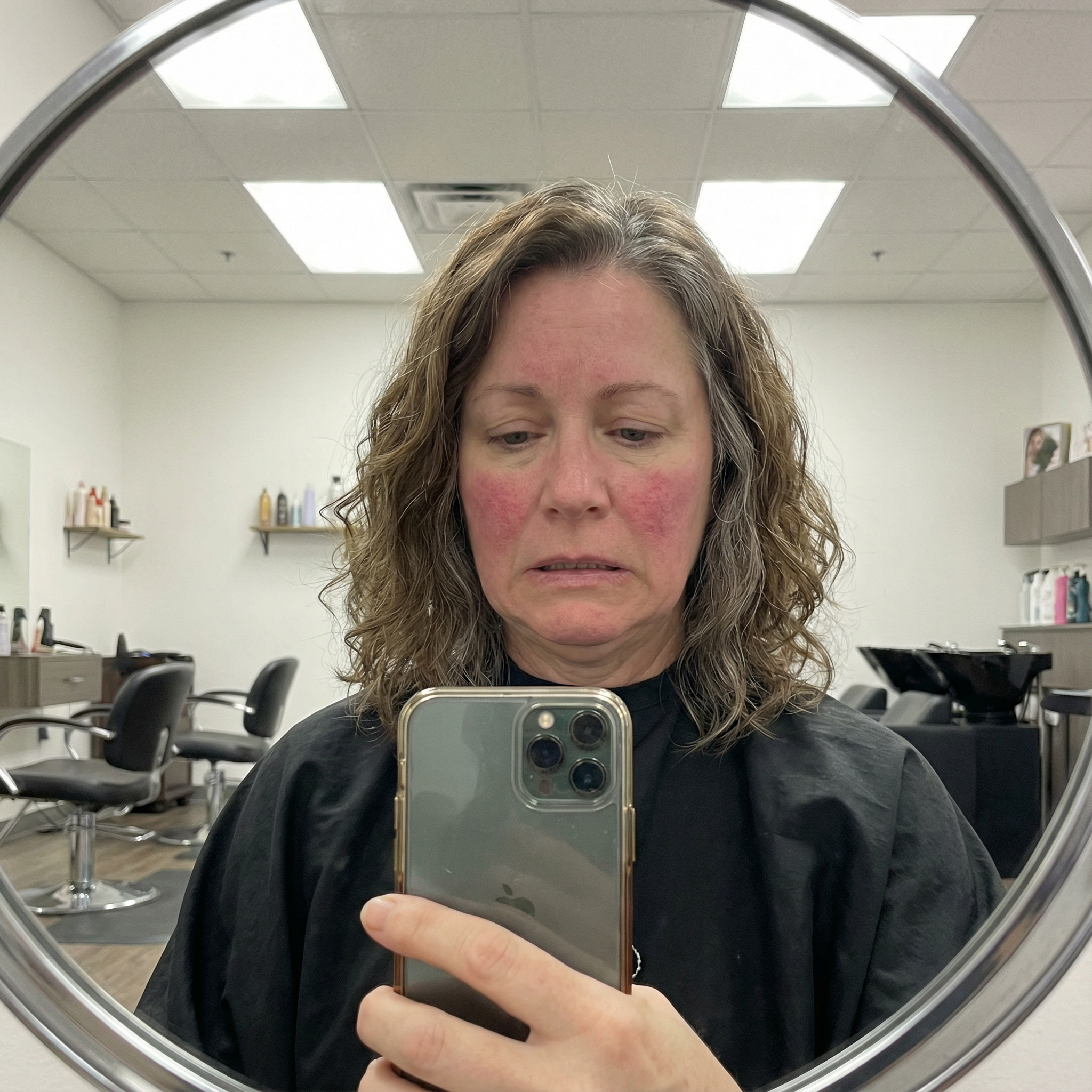
I deleted 47 photos of myself last month. Not because they were blurry. Not because of bad lighting. Because I couldn't stand looking at my own face. Every photo, same thing. The redness screaming from my cheeks. The blotchy patches I'd tried to cover with makeup. The way my skin looked angry and inflamed while everyone else in the frame looked normal. I deleted them before anyone else could see. That's what rosacea does. It makes you disappear yourself — photo by photo, invitation by invitation, mirror by mirror — until one day you realise you've been erasing your own presence from your life for years. And nobody tells you that. Nobody tells you that the real damage isn't the redness on your skin. It's what the redness does to the person underneath. If you have rosacea, you know exactly what I mean. You know the morning ritual of checking your face before you've even gotten out of bed. The way your stomach drops when you see a flare starting. The mental calculation: How bad is it today? Can I leave the house? What will I have to cancel? You know the exhaustion of performing "normal" while your face burns. Smiling through conversations while feeling people's eyes drift to your cheeks. Pretending you don't notice. You know the loneliness of having a condition that's always visible but never understood. "Just use some cream." "Have you tried drinking more water?" "My cousin had that and it cleared right up." They don't understand that you've tried everything. That you've spent hundreds — maybe thousands — on products that promised to help and made things worse instead. They don't understand that you've stopped trusting your own skin. That every new product feels like a gamble you're terrified to take. That hope has become something dangerous, because hope leads to trying, and trying leads to another flare, and another flare leads to another week of hiding. They don't understand that at some point, you stopped trying to fix it. You just started trying to survive it. I want to tell you something that might be hard to hear. The products that made your rosacea worse — the vitamin C serums that burned your skin and tripled your redness — weren't random failures. They were designed to fail you. Not intentionally. Not maliciously. But inevitably, because of how they were made. I'm going to explain exactly why. And by the end, you're going to feel something you might not have felt in a long time about your skin: Anger. Not at yourself. At the industry that's been selling you products that were never designed for skin like yours. Let me ask you something. When you tried vitamin C and your face turned red, what did you think? Probably something like: "My skin is too sensitive." "My rosacea just can't handle vitamin C." "I'm the problem." That's what I thought too. For three years, I believed there was something fundamentally broken about my skin. That everyone else could use vitamin C and get brighter, healthier skin, but my face was too damaged, too reactive, too defective to tolerate what worked for everyone else. I was wrong. And if you've been telling yourself the same story, you're wrong too. It wasn't your skin. It was never your skin. It was one ingredient — present in 97% of vitamin C products — that is chemically guaranteed to inflame rosacea-prone skin. And nobody told you. The ingredient is L-Ascorbic Acid. LAA. You'll find it in every "gold standard" vitamin C serum on the market. SkinCeuticals. Drunk Elephant. Timeless. Paula's Choice. Obagi. The ones dermatologists recommend. The ones that cost £182 a bottle. The ones with thousands of five-star reviews. They all use LAA. And LAA has a fundamental problem that the skincare industry doesn't talk about: It requires extremely low pH to remain stable. Most LAA serums are formulated at pH 2.5-3.5. That's more acidic than vinegar. Closer to lemon juice. Your skin's natural pH is 4.5-5.5. When you apply a pH 2.5 serum to rosacea-prone skin, you're not treating your skin. You're assaulting it. Low pH serum contacts skin → Acid disrupts already-compromised barrier → Barrier breach triggers immune response → Immune system floods area with inflammatory markers → Inflammation dilates blood vessels → Dilated vessels = VISIBLE REDNESS Every single time you applied an LAA serum, this cascade happened. Your skin wasn't overreacting. Your skin wasn't being "too sensitive." Your skin was responding correctly to an acid attack. The redness wasn't a flaw. It was self-defence. Think about what this means. Every time you blamed yourself — "My skin just can't handle it" — you were wrong. The product was wrong. Every time you pushed through the burning because someone online said "It gets better after a few weeks" — you were damaging your barrier further. Every time you threw away a £50, £80, £182 bottle and felt like a failure — you weren't the failure. The formula was the failure. You weren't broken. You were betrayed. By an industry that formulates for the 85% of people without rosacea and slaps "suitable for sensitive skin" on the label without changing the pH. By dermatologists who recommend "the gold standard" without asking whether that standard was ever tested on inflammatory skin conditions. By brands that know LAA triggers inflammation but keep using it because it's cheap and most of their customers don't have rosacea, so why would they care about you? You were an afterthought. And you paid for it — in money, in flares, in confidence, in years of believing something was wrong with you when there wasn't. I know what you're thinking right now. "Okay, but what am I supposed to do? Every vitamin C uses LAA." Not every vitamin C. There's a form called Aminopropyl Ascorbyl Phosphate — AAP. You've probably never heard of it. That's intentional. AAP costs more than LAA. It's been studied mostly in the last 10-15 years. And mass-market brands don't use it because they're not formulating for you. But here's what AAP does: It's stable at pH 5.5. The same pH as your skin. No acid shock. No barrier breach. No immune response. No inflammation cascade. pH-neutral serum contacts skin → Barrier stays intact → No immune trigger → No inflammatory response → No vessel dilation → NO INCREASED REDNESS But AAP doesn't just avoid making things worse. Clinical studies on rosacea patients showed 40% reduction in facial redness within 8 weeks. Not "didn't cause a flare." Actually reduced existing redness. By 40%. "If it doesn't burn, does it even work?" I want to address this because I know you're thinking it. We all did. Somewhere along the way, we learned to associate burning with effectiveness. If it stings, it must be working. If it doesn't hurt, it must be weak. This is a lie. Burning means inflammation. Inflammation means damage. Damage means more redness. The burning you felt from LAA serums wasn't your skin "adjusting." It was your skin being injured. AAP works through a different pathway. It delivers vitamin C directly to your cells without triggering inflammation. No burning required. The studies prove it works. The mechanism explains why. You don't have to suffer to see results. That was another lie you were told. "Gentle products don't actually reduce redness though. They just don't make it worse." You're thinking of THD Ascorbate — the derivative in Vanicream and Medik8. THD is gentle. It won't cause a flare. But it also barely works. It requires your skin to convert it into active vitamin C, and that conversion is slow and inefficient. Most of it never reaches your cells. That's why people say "Vanicream doesn't irritate but I'm not seeing results." AAP is different. It's directly bioavailable — no conversion needed. Your cells can use it immediately. THD: Gentle because it's weak LAA: Effective but inflammatory AAP: Gentle AND effective You don't have to choose anymore. Once I understood all of this, I went looking for AAP products. I found three. One was £120 for 15ml with a 0.05% concentration — basically nothing. One had AAP listed fifth on the ingredient list, buried behind fillers and fragrance. The third contained AAP but also niacinamide — which triggers flares in 20% of rosacea patients. None of them were formulated specifically for rosacea. None of them were built for skin like ours. The industry had the science. They just didn't think we were worth formulating for. So I decided to build it myself. I worked with Dr. Sarah Chen — a cosmetic chemist who spent twelve years at L'Oréal formulating for sensitive skin conditions — to develop a serum that did exactly what we needed. Not "suitable for sensitive skin" as a marketing phrase. Actually, specifically, deliberately formulated for rosacea-prone skin. Eight months of development. Fourteen formula iterations. One goal: A vitamin C serum that reduces redness without triggering inflammation. The result is Clear Glow. Here's what's inside: AAP at pH 5.5 — the only form of vitamin C clinically shown to reduce rosacea redness by 40%, at the exact pH of your skin. No acid shock. No barrier disruption. No inflammation cascade. 11 anti-inflammatory and barrier-strengthening actives — including Glycyrrhetinic Acid from liquorice root (clinically proven to calm redness), green tea extract, milk thistle, and a stable curcumin derivative with powerful anti-inflammatory effects. 2% Betaine — an osmolyte that helps your skin retain moisture without disrupting the barrier. 0.5% Phloretin — an antioxidant that strengthens barrier function and enhances vitamin C delivery. Here's what's NOT inside: ❌ No L-Ascorbic Acid (the ingredient that made your face burn) ❌ No niacinamide (triggers flares in 20% of rosacea patients) ❌ No fragrance, no essential oils, no known rosacea triggers We sent the final formula to an independent dermatology testing lab for irritation assessment. The results: Zero participants showed increased redness. Zero burning reactions. Zero flare-ups. Not reduced reactions. Zero. Final pH: 5.5 — matching your skin exactly. This isn't "gentle" as a marketing word. This is gentle as a measurable, testable, verifiable fact. "But how do I know this won't make me redder too? Everything else has." Let me be specific. Every product that made you redder was L-Ascorbic Acid at pH 2.5-3.5. LAA (pH 2.5): Acid contacts skin → Barrier damage → Immune response → Inflammation → MORE redness Clear Glow uses AAP at pH 5.5. AAP (pH 5.5): Neutral pH contacts skin → No barrier damage → No immune response → No inflammation → Redness DECREASES This isn't "maybe it will be gentler." This is chemistry. A pH 5.5 product cannot trigger the same inflammatory cascade as a pH 2.5 product. The reaction requires acidity. Without the acid, the cascade can't happen. Your fear is valid. Your history is real. But the mechanism that hurt you isn't present here. "I'm too scared to try again." I know. I know what it's like to stand in front of the bathroom mirror with a new product, heart pounding, thinking "Please don't flare. Please don't flare. Please don't flare." I know what it's like when it does flare — the sick feeling in your stomach, the anger at yourself for hoping, the week of cancelled plans and careful concealer and avoiding your own reflection. I know what it's like to stop trying because the disappointment is worse than the redness. But I want you to consider something. What if the reason you failed wasn't you? What if every failure had the same cause — an ingredient you didn't know to avoid, a pH nobody told you to check? What if you've been solving the wrong problem this whole time? You weren't too sensitive. You weren't too damaged. You weren't uniquely unable to tolerate vitamin C. You were using LAA. LAA requires low pH. Low pH triggers inflammation in rosacea skin. Every time. That's not a personal failing. That's a predictable chemical reaction. And now you know. Let me tell you about Rachel. Rachel is 58. Type 2 rosacea. She'd tried vitamin C products for over twenty years. Every single one made her face worse. She'd spent well over £2,000 across two decades and had nothing to show for it except deeper self-hatred and a drawer full of expensive failures. Three years ago, she stopped trying entirely. She decided vitamin C "wasn't for people like her." Her daughter sent her Clear Glow as a gift. She didn't open it for five weeks. She told me later she was too scared. She couldn't handle another hope-disappointment cycle. Not again. Not after all these years. When she finally tried it, she texted her daughter immediately: "It didn't burn." Three words. But if you've been where Rachel was, you know how much is contained in them. Week 1: No burning. No redness increase. She kept waiting for the flare that always came. It didn't come. Week 3: Her baseline redness looked softer. Less angry. She wasn't sure if she was imagining it. Week 8: Her husband — who'd learned years ago not to comment on her skin — said "Your face looks calmer." She cried. Not because of the compliment. Because of the word. Calmer. She hadn't heard anyone describe her skin that way in over twenty years. Rachel didn't have unusually resilient skin. She didn't have a mild case. She had severe rosacea that reacted to everything. The only thing that changed was the form of vitamin C. Rachel wasn't alone. I gave Clear Glow to fifteen people from the rosacea community. All of them had given up on vitamin C. All of them had spent years — some of them decades — believing their skin was the problem. Margaret, 61, Type 1 Rosacea: "I've had rosacea since my late thirties. Twenty-three years of trying things that made it worse. I'd accepted this was just my face now. Week 1 with Clear Glow: no burning. I actually gasped. Week 8: my daughter said I looked 'less tired.' It wasn't tiredness she was seeing before. It was the redness. It's finally fading." Susan, 54, Type 2 Rosacea: "I'd tried SkinCeuticals twice — once in my forties, once last year. Both times, disaster. I told my dermatologist I couldn't tolerate vitamin C. She never mentioned pH. She never mentioned AAP. First application of Clear Glow — nothing. No burn. By week six, my baseline redness had dropped noticeably. I wish I'd known about this ten years ago." Patricia, 63, Rosacea + Sensitive Skin: "At my age, you stop expecting skincare to work. You've been disappointed too many times. I tried Clear Glow because my sister insisted. Week 1: no reaction. Week 4: my cheeks looked less flushed. Week 8: I wore less foundation to my granddaughter's christening than I have in fifteen years. I could actually see my skin instead of covering it." Linda, 57, Type 1 Rosacea: "I've spent over £3,000 on vitamin C products since I turned 40. Every single one failed. Every single one made my face redder. I'd completely given up. Clear Glow is the first vitamin C in seventeen years that didn't burn on contact. By week 8, my husband noticed the difference before I did. That's never happened." Let me tell you what the next 90 days could look like. Week 1: You apply Clear Glow for the first time. No burning. No stinging. No immediate flush. You wait for the reaction you've learned to expect. It doesn't come. You don't trust it yet. That's okay. Week 2: Still no flare. You stop bracing yourself before application. For the first time in years, putting vitamin C on your face isn't an act of courage. It's just... skincare. Week 3: You notice something in the mirror. Your cheeks look less inflamed. The angry red has softened to pink. You take a photo but don't tell anyone yet. You've been disappointed before. Week 4: You compare the photo to one from three weeks ago. There's a difference. It's real. Week 6: Someone comments. Your partner, a friend, your daughter. "Your skin looks good." You don't know what to say because you're not used to compliments about your face. Week 8: You take a photo in the same lighting as your "before." The blotchy red patches have faded. The constant flush is gone. You can see your actual skin tone — the one that's been hidden under inflammation for years. Week 12 and beyond: You stop thinking about your skin so much. You go to dinner without worrying about flushing. You smile without checking the mirror after. Someone takes a photo and you don't flinch. You're not performing "normal" anymore. You just are. That's what 40% less redness actually means. It doesn't mean "slightly less pink." It means looking in the mirror without bracing yourself. It means being in photos again. It means not scanning every restaurant for the table farthest from the kitchen because heat makes you flush. It means conversations where you're present instead of half-wondering if they're looking at your cheeks. It means reclaiming the space you've been erasing yourself from. I need to tell you something about time. Rosacea is progressive. It gets worse. Every flare leaves damage. Every inflammatory trigger weakens your blood vessel walls. Every cycle of dilation makes those vessels more likely to stay dilated. Inflammatory trigger → Blood vessels dilate → Repeated dilation weakens vessel walls → Weakened vessels stay dilated longer → Baseline redness increases → Skin becomes more reactive → Smaller triggers cause bigger flares → Cycle repeats This is why your redness is worse now than ten years ago. This is why triggers that didn't bother you before now cause flare-ups. The inflammation accumulates. Every month you wait, the baseline increases. The triggers multiply. The damage deepens. The cost of waiting isn't zero. The cost of waiting is watching your skin get progressively worse while believing there's nothing you can do. There is something you can do. You can stop the cycle. Clear Glow Stabilised Vitamin C Serum → 90-day guarantee: If your redness doesn't visibly improve, full refund. No questions. We produce Clear Glow in small batches to maintain quality and freshness. Current batch ships within 48 hours. I know what you're weighing right now. You're thinking about all the times you've tried something and been disappointed. You're thinking about the money in that drawer of failures. You're thinking about how much it hurts to hope and be wrong. But I want you to consider the other side. What if this works? What if the reason everything else failed wasn't your skin — it was LAA? What if you've been one ingredient away from calm skin this whole time? You've spent years erasing yourself. Photos deleted. Invitations declined. Mirrors avoided. What if you could stop? For three years, I believed my skin was broken. I believed vitamin C wasn't for people like me. I was wrong. My skin wasn't the problem. LAA was the problem. And the moment I removed LAA from the equation, everything changed. Your skin isn't the problem either. You're not too sensitive. You're not too damaged. You're not uniquely unable to tolerate what everyone else tolerates. You were just using the wrong form. Now you know. The only question is what you do with it. → https://dermoraco.com/pages/clear-glow-offer-page P.S. You've spent years being told — by brands, by dermatologists, by yourself — that your skin can't handle vitamin C. That was never true. Your skin couldn't handle acid. AAP isn't acidic. The reaction that hurt you can't happen here. P.P.S. I know you're scared. Rachel was scared too. She let her bottle sit unopened for five weeks because she couldn't face another disappointment. When she finally tried it, she cried — not because of results, but because for the first time in twenty years, it didn't burn. Sometimes the absence of pain is its own kind of miracle. Give yourself the chance to feel it.
Where the ad sends people
dermoraco.com
The Emotional Affects of Rosacea
Clear Glow | The Vitamin C That Finally Works For Sensitive Skin 🎄 Holiday Special: Buy 2, Get 2 FREE — Ends Soon Clear Glow Benefits Ingredients Reviews FAQ Shop Now The Vitamin C Serum That Finally Works for Sensitive Skin Reduce redness. Brighten dull skin. Without the burning, stinging, or ...
Learn more: dermoraco.com(opens in a new tab)