Laura Collins
Laura Collins Facebook ad: “Raise a Kid Who Can Handle Life”
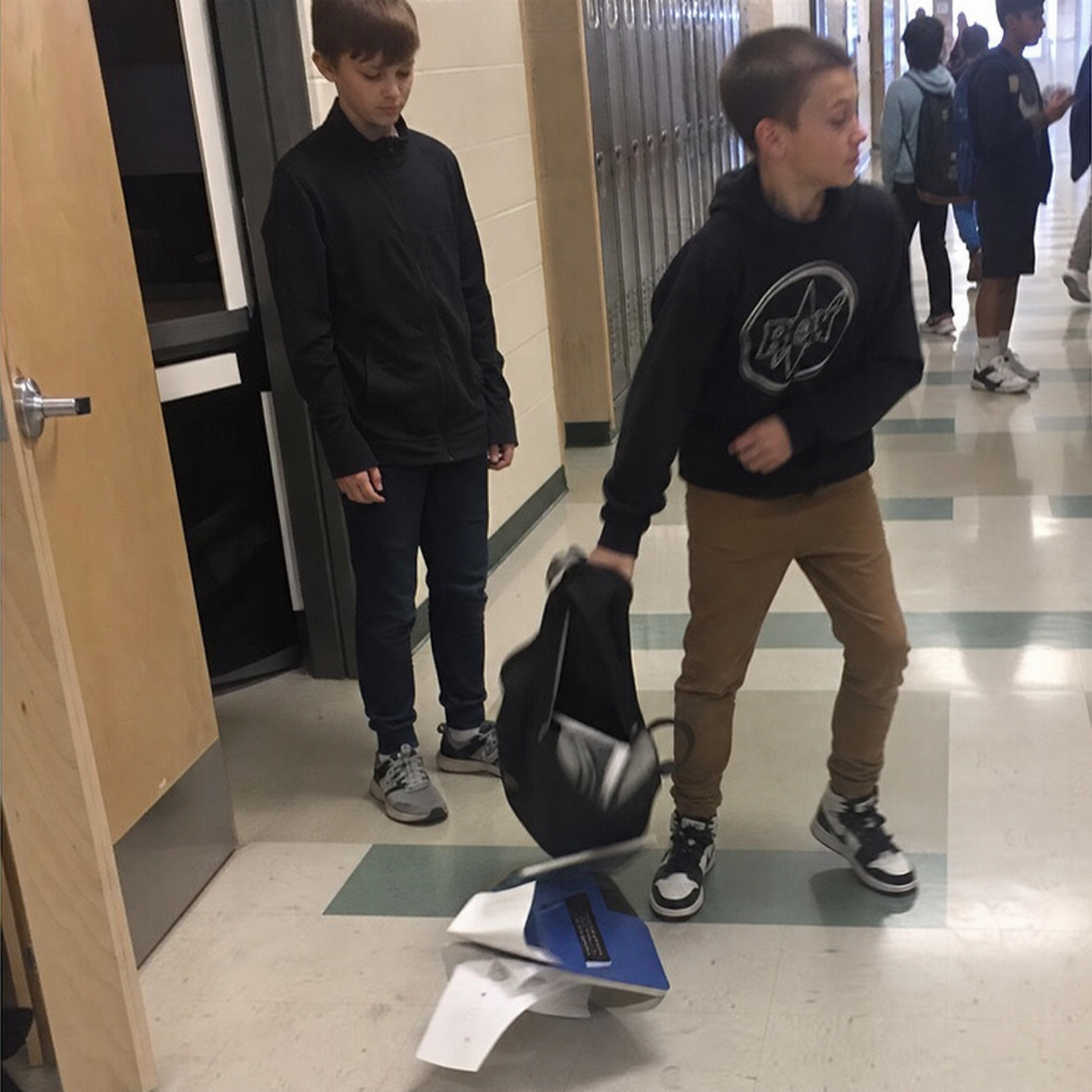
Ran for 57 days, from July 9 to September 4, 2026, the last day Crush saw it.
Run by Laura Collins on Facebook. Crush is not the advertiser and does not verify its claims. See this ad in Meta's Ad Library(opens in a new tab)
Want an ad like this for your product?
Crush makes new ad images for your product from this ad: your logo, your product photo, your offer.
Trials from $19.95 USD, then $79.95 USD a month. Cancel anytime.
About this ad
- Meta Ad Library ID
- 2039098796697610
- Platforms
- Facebook and Instagram
- Relaunches
- 0
- Niche
- Parenting & Kids
Ad text
Three red flags your kid is being bullied and hiding it. Last month my son came home from school. Walked straight to his room. Didn't say a word. I thought he was just tired. He wasn't tired. He was hiding. I'm a parent of two boys. Nathan is twelve. Owen is nine. I thought I was doing everything right. Good school. Supportive home. Open communication. But I missed it. For three months, I completely missed it. The signs were everywhere. Nathan stopped asking if friends could come over. He used to beg for sleepovers every weekend. Then suddenly... nothing. I thought: "Oh good, he's becoming more independent." He started wearing his hood up. Even indoors. At the dinner table. Watching TV. Always. I thought: "Pre-teen phase. He wants privacy." He'd come home and go straight to his room. No snack. No talking. Door closed. I thought: "He's just tired from school." Every Sunday night, he'd complain his stomach hurt. Monday mornings were a fight. I thought: "He's just lazy. Doesn't want to do homework." I was wrong about all of it. Three months of red flags. And I explained every single one away. Because I didn't want to believe what was actually happening. Last Tuesday changed everything. I came home early from work. Nathan didn't hear me come in. His door was cracked open. He was on the phone with my sister. His voice was shaking. "Aunt Lisa, I don't know what to do. They won't leave me alone. They keep saying I'm weird. They keep taking my stuff. And when I tell the teacher, it just gets worse." He was crying. My twelve-year-old son was crying to my sister. Not to me. Because he thought I wouldn't understand. Or worse — that I couldn't help. I stood there in the hallway. Frozen. My son had been bullied for three months. And I had no idea. I walked into his room. He saw me. His face went white. "How long, Nathan?" He looked at the floor. "Since September." It was December. Three months. "Why didn't you tell me?" "Because you'd just make it worse, Dad. You'd call the school. You'd talk to their parents. And then everyone would know I'm a snitch. And it would get so much worse." He wasn't wrong. That's exactly what I would have done. Because that's what we're told to do. Tell a teacher. Tell the principal. Call the other kid's parents. But Nathan already knew what I was just learning: Those things don't work. They make you a target. They make you the kid who can't handle it. They make you weak. And twelve-year-olds know that. Even if we don't. That night I couldn't sleep. I kept thinking: What do I do? I can't fight his battles for him. I can't follow him around school. I can't force other kids to be kind. But I also can't just do nothing. Wednesday morning I called my brother. He's a middle school counselor. Twenty years working with kids. "Mark, Nathan's being bullied. What do I do? Do I call the school? Do I—" He cut me off. "Don't call the school." "What? Why not?" "Because it doesn't work, Tom. The school can't see what happens in hallways. They can't monitor group chats. They can't stop a kid from being excluded at lunch. All they can do is make the bully angrier and your son more visible." Silence. "So what am I supposed to do? Just let it happen?" "No. You give Nathan the tools to handle it himself." "He's twelve. How is he supposed to—" "Tom, the kids who survive middle school aren't the ones whose parents fight for them. They're the ones who know how to read a room. How to respond without looking weak. How to protect themselves without needing an adult." He paused. "You can't protect Nathan from the world. But you can teach him how to navigate it." "How?" "Get him a book." I almost laughed. "A book? Mark, he's being bullied. I don't think reading is going to—" "Not that kind of book. It's called Raise Children Street Smart. It's a comic book that teaches kids how people actually work. Social dynamics. Power games. How to spot manipulation. How to respond without escalating. My kids who read it stop being targets. Not because they fight back. Because they stop acting like victims." He sent me the link. I ordered it that afternoon. A few days later, it arrived. I didn't force it on Nathan. I just left it on the kitchen counter. Saturday morning, he found it. Picked it up. Started flipping through it. Put it down. Picked it up again. Took it to his room. I didn't say anything. Sunday night — the night he usually complained about stomach aches — he came to dinner on his own. Sat down. Ate normally. "You feeling okay, buddy? No stomach ache?" He looked at me. "Dad, I've been reading that book you got me." "Yeah?" "There's a part about why people bully. It's not because you're weird. It's because they're testing who reacts. If you react, you're fun to mess with. If you don't react, you're boring." He paused. "I've been reacting this whole time. That's why they keep doing it." I stared at my twelve-year-old. Three days ago he was hiding in his room. Now he was analyzing social behavior at the dinner table. Week 2: Nathan came home from school. Didn't go straight to his room. Grabbed a snack. Sat down at the table. "They tried it again today." "What happened?" "They took my backpack. Threw it in the hallway. Waited for me to freak out." My chest tightened. "What did you do?" "I just picked it up. Didn't say anything. Didn't look upset. Just picked it up and walked away." "And?" "They got bored. One of them said 'Whatever, he's not even fun anymore.' And they left." He looked at me. "Dad, it worked. The book was right. They don't actually care about me. They just want a reaction. And I didn't give them one." I wanted to cry. Not because I was sad. Because for the first time in three months, my son looked like himself again. Week 4: Nathan's teacher sent an email. "I wanted to let you know Nathan seems much more confident lately. He's participating more in class. He seems happier. Just wanted to acknowledge the positive change." I forwarded it to my brother. He called me ten minutes later. "Told you." "Mark, it's been four weeks. He's a different kid." "He's not different, Tom. He's just not scared anymore. That's what happens when kids understand how the game works." Week 6: Nathan came home with a friend. First time in four months. They went to his room. Played video games. Laughed. I stood in the kitchen listening to my son laugh. And I realized something. I didn't save him. The school didn't save him. A comic book gave him the tools to save himself. That's what we miss as parents. We think our job is to protect them from the world. It's not. Our job is to prepare them to handle the world. Because we can't always be there. We can't see what happens in the hallway. We can't hear what's said in the group chat. We can't stop other kids from being cruel. But we can give our kids the ability to recognize what's happening. To respond without looking weak. To protect themselves without needing us. That's not something school teaches. That's not something most parents know how to teach. But this book does it in a way kids actually understand. Not lectures. Not rules. Just clear explanations of how people work. Why bullies pick certain targets. How to stop being that target. How to read a situation before it escalates. How to protect yourself without fighting back. Nathan is twelve. He has six years left before he's an adult. Six years to learn how to navigate a world that won't always be kind. I almost waited too long. I almost lost three months because I didn't see the signs. And when I finally did, I almost made it worse by doing what every parent does. Calling the school. Confronting the bully. Making my son more visible. A comic book taught him what years of private school tuition couldn't. How to handle the world on his own. If your child has stopped talking at dinner... If they've stopped inviting friends over... If Sunday nights are suddenly filled with stomach aches... If they flinch when you ask how school was... They're not being dramatic. They're not overreacting. They're telling you something without saying it. And if you call the school, you'll make it worse. If you confront the bully's parents, you'll make it worse. If you try to fight their battles, you'll make it worse. Because the only person who can fix this is them. And they can't fix it without the right tools. Raise Children Street Smart is a comic book that teaches nearly 100 principles of how people actually work. Social dynamics. Emotional intelligence. How to spot manipulation. How to respond without escalating. It's not homework. It's not a lecture. It's drawn like the content kids already love. And kids finish it without being asked. Because it's teaching them something school never does. How to survive the world outside your front door. Nathan stopped being a target in four weeks. Not because I intervened. Because he finally understood how the game worked. You can't protect your child from every bully. But you can prepare them to handle it. Before middle school ends. Before the damage becomes permanent. Before they stop telling you anything at all. 👉 https://wonderfulbookclub.com/pages/bully-proof-listicle
Where the ad sends people
wonderfulbookclub.com
Raise a Kid Who Can Handle Life
The real world doesn't come with a warning. This book does.
Shop now: wonderfulbookclub.com(opens in a new tab)