Laura Collins
Laura Collins Facebook ad: “Raise a Kid Who Can Handle Life”

Ran for 25 days, from August 6 to August 31, 2026, the last day Crush saw it.
Run by Laura Collins on Facebook. Crush is not the advertiser and does not verify its claims. See this ad in Meta's Ad Library(opens in a new tab)
Want an ad like this for your product?
Crush makes new ad images for your product from this ad: your logo, your product photo, your offer.
Trials from $19.95 USD, then $79.95 USD a month. Cancel anytime.
About this ad
- Meta Ad Library ID
- 2285317398937952
- Platforms
- Facebook and Instagram
- Relaunches
- 0
Ad text
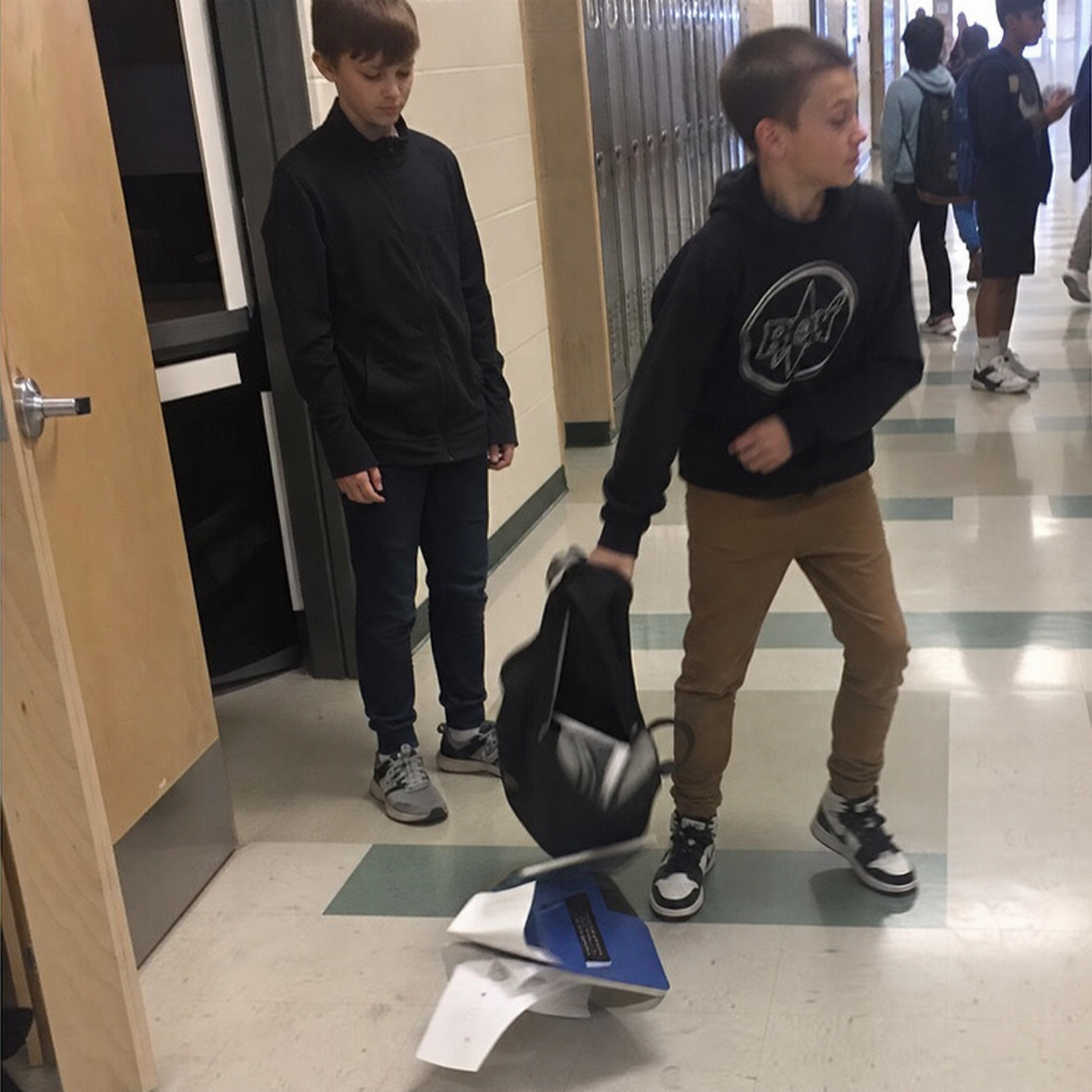
I've been a teacher's assistant for 17 years, and girl bullying is the one thing I still can't crack. It doesn't leave bruises. It leaves a different daughter. My name is Rebecca. I've worked in middle schools for seventeen years. I've seen thousands of kids come through these hallways. And I can spot boy bullying in three seconds. The shove in the hallway. The backpack thrown in the trash. The name-calling everyone can hear. It's obvious. It's visible. And honestly? It's easier to stop. Because you can see it happening. Girl bullying is different. It doesn't happen in the hallway where teachers can see. It happens in the silence. The group chat where your daughter's name isn't mentioned. The lunch table where there's suddenly no room when she walks over. The Instagram story everyone was tagged in except her. The inside joke everyone laughs at that's clearly about her. And when she finally breaks down and tells someone? The other girls look confused. "We didn't DO anything." And technically... they didn't. There's no proof. No bruises. No screenshots that make sense out of context. Just your daughter's word against a group of girls who swear they have no idea what she's talking about. Last April, a mother called the school about her daughter Sophie. Sophie was eleven. Straight A student. Used to love school. Then suddenly she was begging to stay home every Monday. Stomach aches. Headaches. "I just don't feel good." Her mother thought it was stress. Maybe anxiety. She took Sophie to the doctor twice. Everything checked out fine. The mother called me. Asked if I'd noticed anything. I hadn't. Because girl bullying is invisible. It's not happening in my classroom. It's happening in the bathroom between classes. In the group chat at night. At the lunch table when adults aren't watching. I started paying closer attention. And here's what I saw. Sophie would walk into the cafeteria. Look around for her usual table. Her friends would be sitting there. But the moment Sophie got close? Someone's bag would be on the empty chair. "Oh sorry, we're saving it for Madison." Madison wouldn't show up. The seat would stay empty the entire lunch period. But Sophie couldn't sit there. She'd end up eating alone by the windows. Next day, same thing. Different excuse. "We're working on a project." "This table's full." "Maybe try sitting with the seventh graders?" They never said "you can't sit here." They just made sure there was never room. That's girl bullying. It doesn't scream. It whispers. I pulled Sophie's mother aside after school one day. Told her what I'd been seeing. She looked at me like I'd punched her in the stomach. "How long has this been going on?" "I don't know. Months, maybe." Her voice broke. "And nobody told me?" I wanted to say something that would help. But the truth is... there's nothing the school can do. We can't force kids to include someone at lunch. We can't monitor group chats. We can't make someone's friends like them again. The mother asked if she should call the other parents. I told her the truth. "It won't work. The girls will just deny it. And Sophie will look like the problem." "So what am I supposed to do? Just let it happen?" I didn't have an answer. Because I'd been watching it happen for seventeen years. And I'd never seen anything actually work. Until last September. I was in the main office during lunch. A sixth-grade girl named Maya walked in. Calm. Confident. Completely unbothered. Three months earlier, Maya had been exactly like Sophie. Eating lunch alone. Coming to my office in tears. Begging her parents to let her switch schools. Now she walked past the same girls who used to torture her. And she looked... fine. Not fake fine. Actually fine. I stopped her in the hallway. "Maya. Can I ask you something?" "Sure, Ms. Rebecca." "You seem really different lately. What changed?" She smiled. "I finally figured out how the game works." "The game?" "Yeah. They were trying to get me to react. To cry. To beg them to let me sit with them. That's what made it fun for them." She paused. "But once I stopped caring, they got bored. Like, really fast." "How did you just... stop caring?" "My mom got me this book. It's called Raise Children Street Smart." "A book?" "It's a comic, actually. But it explains why people bully. It's not about you. It's about them testing who reacts. And the moment you stop reacting, you stop being interesting." She shrugged. "So I stopped reacting. And they stopped bothering me." Then she just walked away. Like it was the most obvious thing in the world. I stood there thinking about every girl I'd watched suffer for seventeen years. Every mother who called asking what to do. Every time I had to say "I don't know." And a comic book had solved it. I ordered it that night. Read the whole thing. And I finally understood what I'd been missing. Girl bullying works because it's invisible. It's social exclusion disguised as coincidence. It's cruelty disguised as "we're just joking." It's emotional warfare that leaves no evidence. And schools can't fight it. Because we can't see it. But this book teaches kids something we can't. How to see it coming. How to understand why it's happening. And how to respond in a way that makes it stop. Not by fighting back. Not by reporting it. By removing the fuel entirely. Two weeks later, Sophie's mother called me. "Rebecca, I need to tell you something." "What's wrong?" "Nothing's wrong. That's the point. I got Sophie that book you mentioned. The one Maya had." "And?" "She read the whole thing in three days. And yesterday at dinner, she said something I'll never forget." I waited. "She said: 'Mom, they're not mean because I'm weird. They're mean because I kept showing them it worked. But it doesn't work anymore.'" Her voice cracked. "She ate lunch with a new group today. Came home smiling. Actually smiling." "Rebecca, I spent six months thinking my daughter was broken. She wasn't broken. She just didn't understand how people work." Week four. Sophie's English teacher emailed the mother. Completely unsolicited. "I wanted to let you know Sophie has been participating more in class. She seems more confident. She's engaging with other students again. I'm not sure what changed, but I wanted to share the positive update." The mother forwarded it to me. All she wrote was: "Thank you." But I didn't do anything. A comic book did what seventeen years of experience couldn't. Here's what I wish every mother understood. Girl bullying doesn't leave bruises you can photograph. It leaves a daughter who stops singing in the kitchen. Who goes straight to her room after school. Who says she's fine but isn't. Who makes herself smaller every single day. And by the time you realize it's happening... She's already someone else. The school can't fix it. Because we can't see it. We can't monitor bathroom conversations. We can't read group chats. We can't force other kids to be kind. The only person who can fix it is your daughter. And she can't fix it without understanding how it works. That's what this book does. It doesn't teach her to fight. It teaches her to see. To understand why some kids get targeted and others don't. To recognize when someone's testing her. To respond in a way that makes them lose interest. Not by being tougher. By being boring. Because bullies don't want a challenge. They want a reaction. And the moment your daughter stops giving them one? They move on. Maya is twelve now. Sophie is eleven. They're both fine. Not because someone rescued them. Because they finally understood how the game works. And once you understand the game... You stop playing. Your daughter doesn't need a thicker skin. She needs to understand how people work. Why they do what they do. And what she should do about it. Before middle school ends. Before the damage becomes who she thinks she is. Before she stops telling you anything at all. Raise Children Street Smart is a comic book that teaches nearly 100 principles of how people actually work. Social dynamics. Power games. How to spot manipulation before it lands. How to respond without looking weak. How to protect yourself when adults can't see what's happening. It's not theory. It's real scenarios. Real responses. Real strategies that work. Kids pick it up and finish it without being asked. Because it's teaching them something school never does. How to survive the world that exists in the spaces we can't see. I've been doing this for seventeen years. I've watched hundreds of girls suffer. And I've never seen anything work. Until this. It doesn't stop mean girls from existing. It stops your daughter from being their target. And that's the only thing that actually matters. Click below to learn more about how this book teaches kids what schools can't. Before your daughter stops singing. Before she stops being herself. Before you realize too late that you missed all the signs. Because by the time you see it... She's already been fighting it alone for months. 👉https://wonderfulbookclub.com/pages/bully-proof-listicle
Where the ad sends people
wonderfulbookclub.com
Raise a Kid Who Can Handle Life
The real world doesn't come with a warning. This book does.
Shop now: wonderfulbookclub.com(opens in a new tab)