Alex Morgan
Alex Morgan Facebook ad: “Your will won't help your family. Read this.”
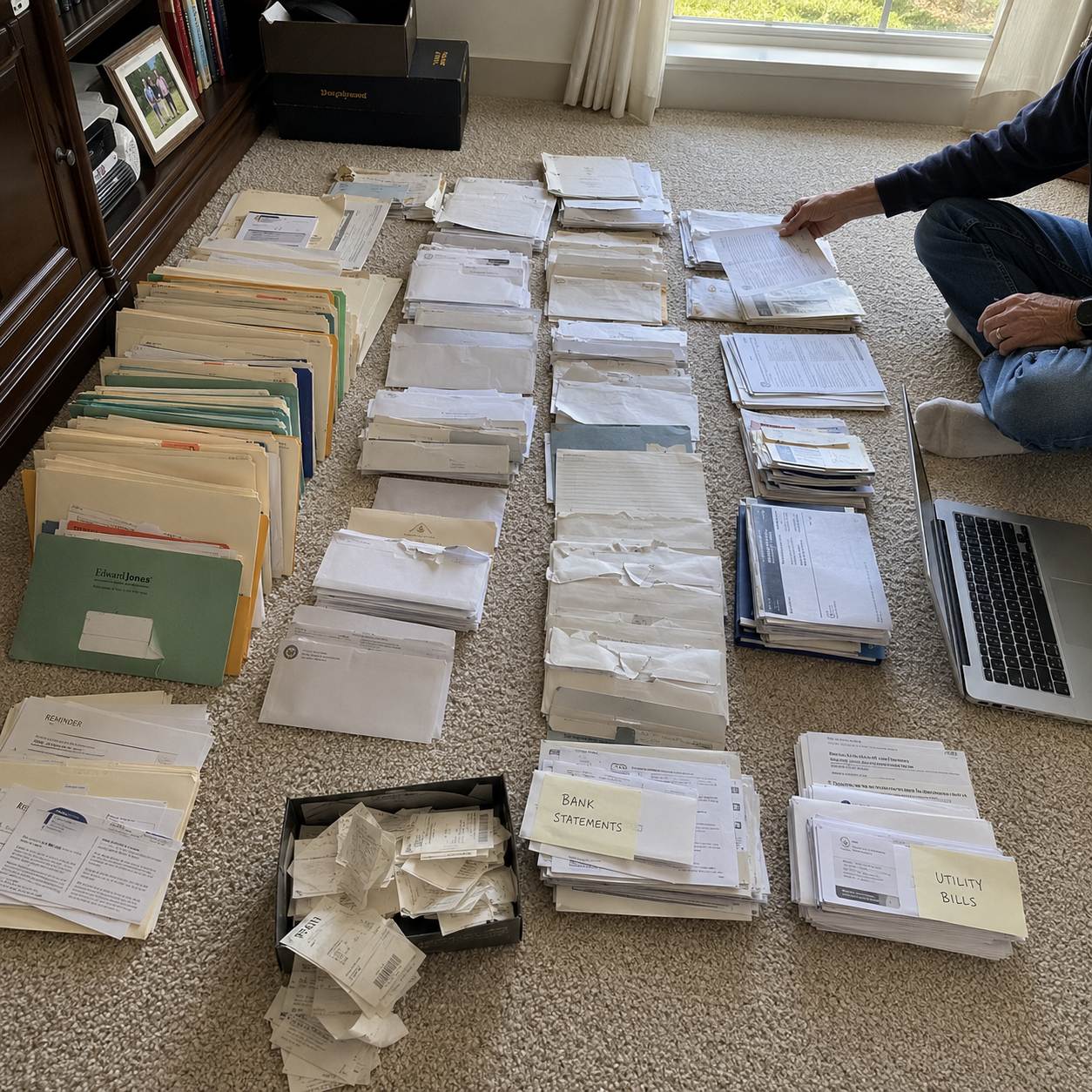
Ran for 66 days, from June 6 to August 11, 2026, the last day Crush saw it.
Run by Alex Morgan on Facebook. Crush is not the advertiser and does not verify its claims. See this ad in Meta's Ad Library(opens in a new tab)
Want an ad like this for your product?
Crush makes new ad images for your product from this ad: your logo, your product photo, your offer.
Trials from $19.95 USD, then $79.95 USD a month. Cancel anytime.
About this ad
- Meta Ad Library ID
- 2047274386663353
- Platforms
- Facebook, Instagram, Audience Network, Messenger and Threads
- Relaunches
- 1
- Niche
- Parenting & Kids
Ad text
An estate attorney told me something at a dinner party that I can't stop thinking about. He said the families who struggle most after a death are the ones who thought they were prepared. Then he explained why, and it changed what I did that same week. First, some context on why this hit me as hard as it did. My dad died two years ago. He was 76. And our family was, by every normal measure, prepared. Dad had a will. He had an attorney. He had a fireproof box and we knew where the key was. When he passed, none of us panicked about the estate, because the estate was "handled." It then took us seven months to actually settle everything. Seven months of phone calls, of hunting through drawers, of reconstructing where his accounts were, of my mother trying to track down his coverage paperwork from a company that had changed names twice since he bought it. I came out the other side confused about how it went so wrong when we'd done everything right, and I never fully got an answer. Until this dinner party, about a month ago. Friend of a friend's birthday. I end up seated next to a guy named Paul, and it comes up that he's an estate attorney, thirty years in. And because I can't help myself, I tell him a compressed version of our seven months. I expected sympathy. Instead he nodded along like I was describing the weather. And when I finished, he said, "Can I tell you something I've noticed in thirty years of this?" He said the families who struggle the most are almost never the ones with nothing. The ones with nothing know they have a mess, so they expect a mess. The families who get wrecked are the prepared ones. The will is signed, the trust is funded, the documents are perfect. So the family walks in expecting a smooth road, and then reality hits them. I asked him what reality, exactly. And he laid it out. He said something like: my documents answer the court's questions. Who inherits, who administers, who has authority. But in the first month after a death, the family isn't asking the court's questions. They're asking, where did he bank. Who managed his money. Where's the paperwork for the house. What's the password. Who do I even call first. And he said, almost word for word, "Nothing I draft answers a single one of those. That's not my job. And the tragedy is, everyone assumes it is." Everyone assumes it is. That was our family, exactly. Dad assumed the lawyer's documents covered the family side. We assumed it too. The preparation was real, it was just preparation for a different exam than the one we sat. Then Paul said the thing that actually made me put my fork down. He said in thirty years, he could count on two hands the clients whose families called him afterward just to say thank you, everything was easy. And he said those clients had one thing in common, and it wasn't bigger trusts or better lawyers. It was that somewhere in the house, there was a piece of paper, a binder, a folder, something, in the person's own handwriting, that simply listed everything. Where things were. Who to call. What they wanted. He called it "the homework nobody assigns." The homework nobody assigns. Thirty years of estates, and the difference between the smooth ones and the seven-month ones came down to whether someone had done homework that no lawyer, no bank, no advisor will ever ask you to do. Because it's not legal work. It's not financial work. It's nobody's billable job, so nobody tells you it exists. I drove home from that dinner quiet. Because I knew my own answer. Two years after burying my father, after living all seven of those months, I had still not done the homework myself. I had a will, same as dad. My wife would be exactly where my mother was. I'd been through the fire and changed nothing. That was a Saturday night. Sunday morning I started looking for how to actually do this, and I found that the thing Paul described, the folder with everything listed in one place, literally exists as a product. Other families had clearly learned the same lesson. I ordered one. I'm not going to put the name in this post because I don't want it to read like an ad, but I'll leave the link at the bottom. It's a hardcover folder with built in sections and pockets for exactly the questions Paul listed: where the accounts are, the coverage details, the contacts and their numbers, the property papers, the passwords, what you want at the end. The sections come blank, and it comes with a sheet of pre printed stickers you stick on whichever dividers fit your life, plus blank ones for anything custom. So it ends up organized the way your life actually is, not some template's idea of it. It arrived that week, which is why I said this dinner changed what I did that same week. I sat down with it on two consecutive evenings and did the homework. Every account and where it lives. Every contact my wife would need, with actual phone numbers. Where every document physically sits in this house. What I want when the time comes, written plainly, so nobody guesses in a fog the way we guessed for dad. None of it was hard. That's the strangest part. The thing that cost our family seven months took me two evenings to prevent. It was never difficult. It was just never assigned. The last section of the folder is for personal messages. I wrote a letter to my wife and one to each of my kids. Took me longer than all the practical pages combined, and it's worth more than all of them combined. My father was a prepared man in every legal sense and didn't leave us a single written word of his own. That part I've now fixed too. The folder sits on a shelf in my closet, next to the box with the will in it. My wife knows where both are. The kids know they exist. I think about what Paul said sometimes, about the two hands' worth of families in thirty years where everything was easy. The ones who did the homework nobody assigns. When my time comes, my family is going to be on somebody's short list. Not because of anything a lawyer drafted. Because of two evenings at a kitchen table and a folder that answers the questions the documents never will. Consider the homework assigned. Do it.
Where the ad sends people
nevarium.com
Your will won't help your family. Read this.
Final Chapter Folder
Shop now: nevarium.com(opens in a new tab)