
Inactive· since Apr 25, 2026
- 26
- days it ran
- 2
- relaunches
Ad copy
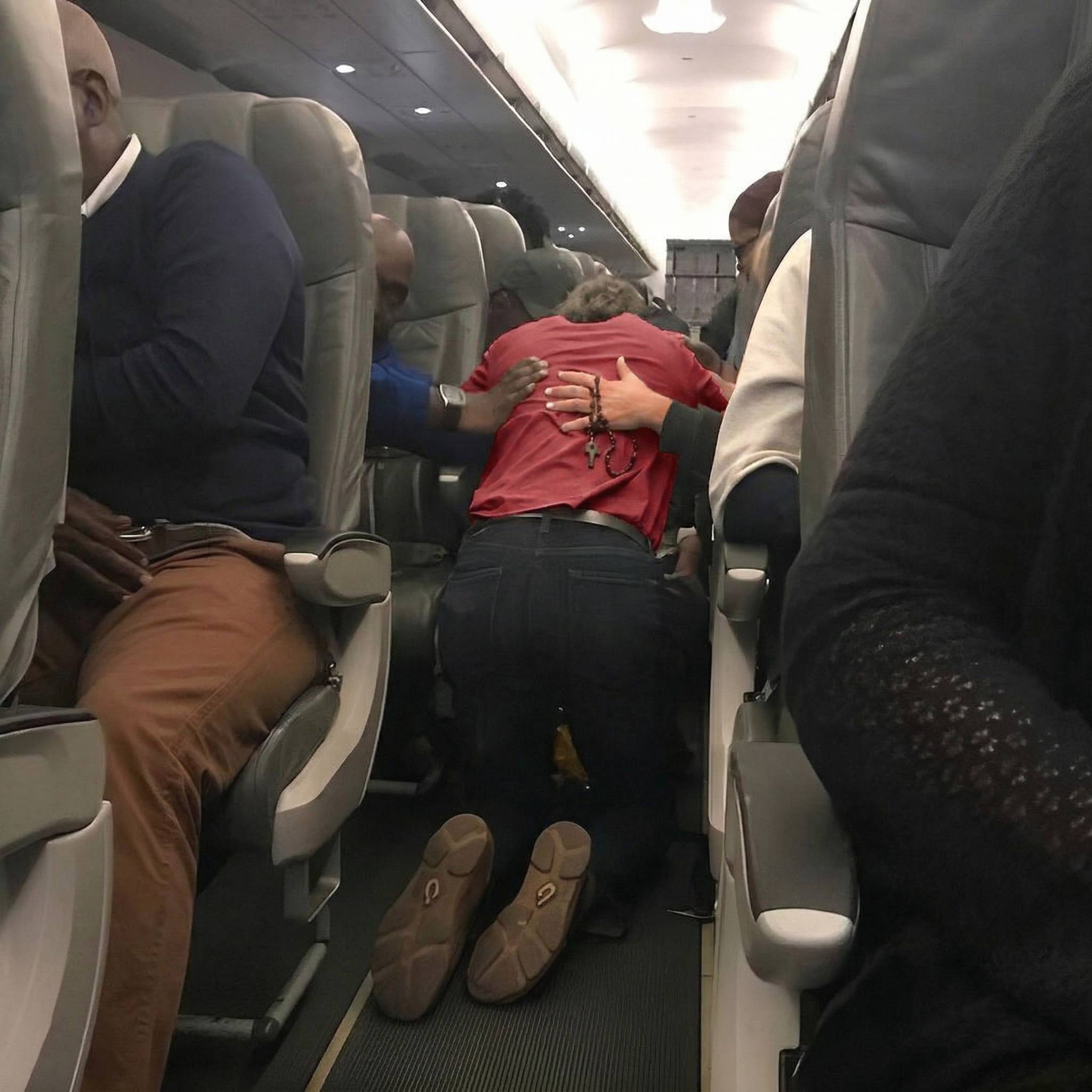
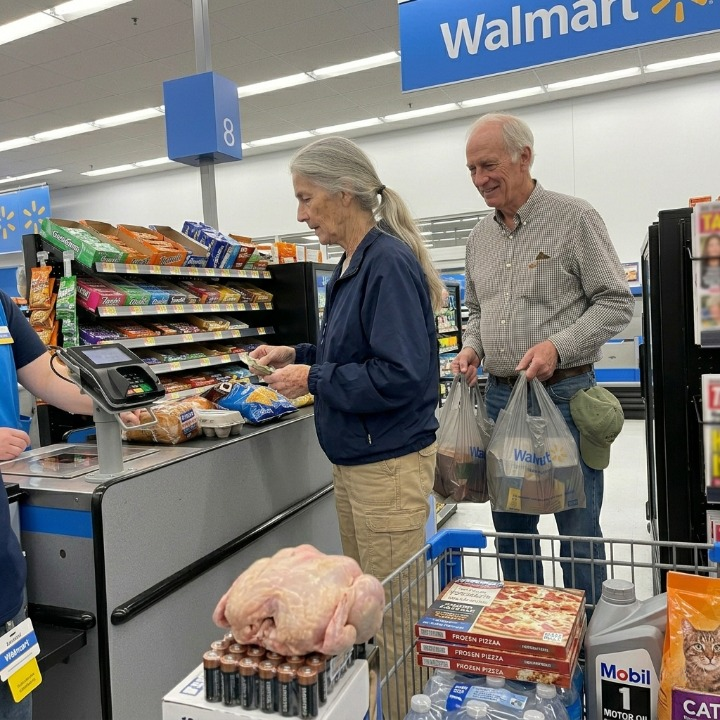
I was waiting at Gate B12 for my husband's plane to land last Tuesday. I was early. I'm always early. Ray makes fun of me for it. Says I'm the only woman in America who shows up to the airport before her husband's flight has even left the previous city. I tell him somebody has to. Planes get pushed up. Gates get changed. You miss him by 10 minutes and he's standing on the curb wondering if you forgot. I don't forget. Not after 38 years of marriage, and 30 of those years watching Ray fly in and out of cities I couldn't pronounce. He does 3 weeks on, 1 week home. Field operations manager for a construction firm out of Ohio. Builds hospitals mostly. Schools sometimes. This time he was coming home from Phoenix. I'd been at the gate 40 minutes when the announcement came. Not at my gate. The gate next to mine. B14. A woman's voice over the speaker, professional but a notch too careful. "United Flight 1847 arriving from Tampa, passengers meeting this flight please approach the gate desk." It's the sentence gate agents use when they can't say what actually happened. I watched an older woman at B14 stand up. Navy leather purse on her lap. Silver gray hair. Pink cardigan. White blouse. She looked like a kindergarten teacher on her way to meet her husband for lunch. She walked to the desk. The young gate agent leaned across the counter and said something quietly. The older woman's face didn't change at first. She was listening the way you listen when you think you're about to be told the flight is delayed an hour. Then her hand opened. The purse slipped out of her fingers and hit the floor. Not dropped hard. More like her fingers simply forgot they were holding it. The latch popped open on impact. A lipstick rolled out. A folded boarding pass. A travel size pack of tissues. A small spiral notebook. A roll of peppermints. The agent came around from behind the counter and caught the woman under the elbow before she could fall. Another agent took her other arm. They walked her slowly toward a door marked EMPLOYEES ONLY. Nobody picked up the purse. I sat there a second. A man in a suit glanced at the contents on the carpet and went back to his phone. A woman with a stroller stepped around them. Nobody moved. I got up. I'm not a hero. I want to be clear about that. I got up because I've been that woman before. Not in that exact way. Nobody has ever walked me into a back office at an airport. But I've been the woman whose hands stopped working because her brain couldn't hold what she was hearing. When my father had his stroke. When the doctor said my mother's biopsy came back with a word none of us wanted. Both times, somebody picked up the things I dropped and kept them safe until I could be a person again. You don't forget that. I walked over to Gate B14 and knelt on the carpet. Picked up the lipstick. The tissues. The peppermints. The notebook, a black cover with her name written inside in careful block letters: EVELYN HARTWELL. The boarding pass was hers. First class. A flight to St. Louis tomorrow morning. I put everything back in the purse. Zipped it shut. The male agent came back out. Saw me holding it. "Ma'am, I appreciate that. I can hold it at the desk." "Is she okay?" "She's had some news." "Is she alone?" "Her daughter's driving in from Kansas City. About 5 hours out." "Can I talk to her?" He disappeared through the door. Came back 90 seconds later. "She says yes. But I should tell you first." He lowered his voice. "The captain of her husband's flight had a cardiac event at altitude. They diverted and got it on the ground. Her husband is the captain. Was the captain." The floor did something strange under my feet. "My husband is on a plane right now," I said. I don't know why I said it. "Your husband's flight is delayed, by the way. Ground stop from the diversion pushed everything back 90 minutes." 90 minutes. I had 90 minutes. The break room was small. Fluorescent lights. A vending machine. One round table. Evelyn was sitting in a plastic chair with her hands folded in her lap, staring at the table. The female agent was sitting next to her. Two untouched cups of airport coffee between them. I sat down across from her. "Mrs. Hartwell, my name is Carol. I have your purse." I set it on the table. She looked at it the way a person looks at an object from another life. Then up at me. Her eyes were the clearest blue I'd ever seen. Not wet. Not red. Just clear. Like she hadn't gotten to the crying part yet. "Thank you." "Your daughter is 5 hours away. Would you like me to drive you home?" The agents exchanged a look. Evelyn didn't. "I don't know you." "No ma'am, you don't. But you can look at my license and text the picture to your daughter before we leave. Call her right now. Put me on the phone. Whatever you need." A long moment. "Where would you drive me?" "Wherever home is." She pulled her license from a side pocket of the purse. An address on Lindenwood Road. 43 minutes away. "I can do 43 minutes." I texted Ray. Something happened at the airport. I'm fine. A woman needs a ride home. Uber from baggage claim. I'll call you. He wrote back within a minute. The way Ray always writes back. Two letters. OK. 30 years of marriage and that's the man I've got. You tell him something impossible and he writes OK, figures you'll explain later, and trusts you will. That morning I was grateful for him in a way I hadn't been in years. Evelyn didn't talk for the first 15 minutes. I didn't either. There's a kind of silence that isn't awkward. It's respect. "The exit is in 3 miles," she finally said. "How long were you married?" "42 years in September. He was going to retire in March. Mandatory retirement at 65. The FAA doesn't let captains fly past that birthday. He was counting down. 8 flights left. Today was flight 6." She said it the way you say something you've been told is true but can't actually believe yet. "He wasn't supposed to die on flight 6." I didn't answer. There's no answer. The house was a one story brick ranch set back from the road. Old maples on either side of the driveway. A garden in front with chrysanthemums still blooming in the late October light. American flag by the mailbox, and underneath it a smaller blue flag with a golden airplane silhouette. An airline retirement flag, I'd learn later. I pulled into the driveway and turned off the engine. "You've done a kindness," Evelyn said. "I won't take more of your day." "My husband's flight is delayed another hour. Do you have food for tonight? Coffee for tomorrow?" Something in her face softened. "I have coffee but it's cold." "Let's go inside. I'll make a fresh pot." She let me. The house was spotless. That's the first thing you notice about a retired couple's home. Everything is where it goes because they have time now, and there's not much else to do. A recliner facing the TV. A bookshelf with a shelf of aviation books on one side and a shelf of cookbooks on the other. A framed map of the United States with little red pins in it, maybe 80 pins. I learned later these were every airport Frank had flown into. The kitchen was small and warm. Yellow walls. A round oak table. Two chairs. A percolator on the stove. The old kind. The kind that fills the whole house with the smell. She lit the burner under it without having to think. Muscle memory from 42 years. She poured me a cup and sat down across from me. Her hands had stopped shaking. Her eyes were still dry. She just looked tired. The kind of tired you get when your whole life has changed at 10:47 AM on a Tuesday and your brain hasn't caught up. "Tell me about him," I said. It's not the question most people ask. Most people ask what happened. I didn't need to know what happened. What I wanted to know was who he was. She didn't start with the sad part. People who really loved somebody don't start with the loss. They start with what was there before. "Frank flew for 42 years. Started as a crop duster in Indiana when he was 22. His daddy was a farmer and Frank learned to fly on a borrowed Piper Cub out of a grass strip behind the grain elevator. Moved to the regional airlines at 26. Made captain by 30. Major airline by 35. Flew wide bodies across the Atlantic for 18 years after that. He'd been captain on a 767, a 777, an A330. Last 5 years he did domestic runs because he was tired of the ocean crossings." She took a sip. "He loved it. I need you to understand that first. He'd have flown for free if the airline had let him. The man walked out of our house every flight day like he was going on a first date. Pressed uniform. Shoes polished. Hat in his left hand. He'd kiss me and say the same thing he said for 42 years. 'Back before Friday, Evie.'" Her voice caught on the nickname. "He was supposed to be back before Friday." I didn't say anything. You don't say anything in that moment. You just let someone sit with it. "His doctor put him on Lipitor when he was 51. Cholesterol was 263. He came home from that appointment and wrote the number on a Post it note and stuck it on the refrigerator. That was Frank. Everything went on the fridge. Appointments. Oil changes. The boys' baseball schedules when they were little. He said the fridge was the most reliable filing system in America." She smiled, barely. "3 months later his cholesterol was 198. LDL dropped to 117. The doctor was thrilled. We all were." She set the cup down. "He was on it for 14 years. Every night before bed. Every physical, and pilots get physicals twice a year, every one the flight surgeon would say the same sentence. 'Your numbers look outstanding, Frank. Keep doing what you're doing.'" "And Frank kept doing what he was doing. Taking the pill. Getting the stamp of approval to fly another 6 months." Her eyes went to the window over the sink. The one that looked at the empty driveway. "But he wasn't outstanding. I watched it happen, year by year, and I didn't know I was watching it because I didn't know what I was watching." "Frank used to fly a red eye from LAX to JFK and come home the next afternoon ready to mow the lawn. By year 4 on the medication, he'd get home from a red eye and sleep for 10 hours. Then 12. I'd find him in the recliner in the middle of the afternoon, dressed in his uniform pants and a t-shirt because he couldn't muster the energy to finish changing." "I told myself he was 55, then 56, then 58. I told myself men slow down. That's what I told myself for 4 years while the slowing kept accelerating." "Then his hands." She looked down at her own hands. "Frank had pilot hands. Not big hands. Precise hands. A captain flies with his fingertips. Tiny nudges on the yoke. The whole airplane responds. Frank's hands were the steadiest I ever saw. 42 years and never once did a passenger complain about a bad landing." "By year 7 he was dropping things. Not at work. He was careful at work. At home. A coffee cup shattered on the kitchen tile one Sunday morning. A remote control that slipped out of his grip and hit the hardwood hard enough to crack the back. I'd catch him flexing his fingers at the dinner table like he was working stiffness out of them." "One morning I came downstairs at 6:17 and found him sitting on the edge of the bed. Just sitting there, opening and closing his right hand. Slowly. Like he was negotiating with it. He said, 'These old hands take a minute, Evie.'" "He was 58. He had 7 more years of mandatory pilot service ahead of him. And his hands were taking a minute." "I told him to talk to the doctor. He did. Extra bloodwork. LDL was 94. 'Keep doing what you're doing, Frank.'" "Walking to my car after that appointment, Frank was already in the passenger seat. He asked if I'd drive home. Said his left leg was stiff. I drove us home and I thought, since when does Frank ask me to drive?" "The brain fog showed up around year 9. Frank had a memory like a filing cabinet. He could tell you every call sign he'd flown, every co pilot he'd flown with, every hotel he'd stayed at in every layover city going back to 1987. That was his party trick. Ask him about a layover in Frankfurt in 1994 and he'd tell you the hotel, the restaurant down the street, and the name of the waitress who flirted with him while I was sitting right there." "By year 9 he'd stop mid sentence. Just stop. Trying to find a word he knew perfectly well. 'The thing. The thing you use to, to...'" "'Yoke, Frank?' I said one afternoon. He was trying to describe the passenger door handle." "'Yes. The yoke on the door. Thank you.'" "He was calling a door handle a yoke. The man who had flown 18,000 hours of commercial aviation was confusing an airplane control with a door handle. At 60." "His first officer told me something at a Christmas party 3 years ago. Said Frank had been needing more briefings before flights than he used to. Things he'd known cold for 30 years he was asking to be walked through. I tried to bring it up with Frank. He said he was fine." "Men say they're fine. Even to their wives. Even after 42 years. Even when nothing is fine." She picked up her coffee. Set it back down without drinking. "I begged him to see the doctor again. LDL was 89. 'Some cognitive changes are normal at your age, Frank.'" "Normal at his age. He was 62. My sister is 68 and she still teaches piano to 6 students on her back porch. 62 is not the age you forget the word for a yoke. Not unless something is taking it from you." She was quiet a minute. "His last year was the hardest. Frank got quiet. That was the scariest part, because Frank was not a quiet man. He was the one at the dinner table who told 3 stories before you finished your salad. He was the one who called the boys every Sunday even after they moved out of state. By the last year he was sitting in that recliner watching cable news on mute because the volume bothered him. Not talking. Not reading. He used to read 3 books a month, aviation history mostly. The last year he didn't finish a single book. I know because there's one on his nightstand with a bookmark 40 pages in that hasn't moved in 8 months." "He'd get home from a trip and just sit. In that recliner. Staring at the garden." "He said he was looking forward to retirement. Said once he was done flying he'd have his energy back for the garden. For the grandkids. For me." "He kept saying it. I kept believing it." She took a long breath. "Tuesday morning he left at 5:30 for the airport. He'd flown a 2 day trip. Dallas turnaround yesterday, then today's flight home from Tampa. He was supposed to land at 10:45. I came to the airport to surprise him. His retirement flag was already flying out there. The airline gave it to him at a ceremony last month. I thought I'd meet him at the gate and walk him to the car and take him to lunch at the place we went on our first date. I brought him his favorite peppermints in my purse. The ones he sucks on during long flights." "The plane landed at 10:51. 6 minutes late. I didn't think anything of it. I was watching the door." "The door opened. Passengers started coming out. I was watching their faces for his, the way you watch the exit chute of a ski lift for the person you're waiting for." "Nobody came out in a uniform." "The last passenger stepped through. Then 2 flight attendants. Neither of them in the captain's uniform. One of them was crying. I remember thinking that was strange." "Then the first officer came out. He saw me. His tie was loose and his collar was unbuttoned. He walked toward me and his face told me the answer before his mouth opened." "'Mrs. Hartwell?'" "That's when I dropped the purse." She didn't speak for a long time. "The cardiac event happened at cruise altitude. Frank had been flying the leg. He said to his first officer, 'I don't feel right,' and that was the last sentence Frank Hartwell said in his life. By the time the first officer got oxygen on him, Frank was already gone. They diverted to the nearest field. The first officer landed the plane with Frank in the seat next to him. I keep thinking about that. That young man flying the approach with his captain's body in the other chair." "LDL of 89. 14 years on Lipitor. Every FAA physical perfect. Every stamp of approval for 14 straight years. And his heart stopped at 35,000 feet because he was flying home to his wife, and nobody ever told him the medication wasn't actually protecting him. It was just making the number look okay while the damage underneath kept building." "The cardiologist told me Frank had a massive plaque rupture in his left anterior descending artery. The widowmaker. I'd heard the word once in a magazine article and never thought it would apply to anyone I knew. I asked how this was possible when his cholesterol had been controlled for 14 years. You know what he said?" "He said, 'Controlled cholesterol reduces risk. It does not eliminate it.'" "Reduces risk. 14 years. Tens of thousands of dollars. A man who used to fly wide bodies across the Atlantic and ended up not finishing a book. A man who asked me to drive home because his leg was stiff. A man who called a door handle a yoke. A man who sat in a recliner and stared at the garden. And they reduced his risk." "They didn't eliminate anything except Frank." Evelyn looked at me across her kitchen table. A woman I'd known for 90 minutes. A stranger who'd driven 43 minutes to take her home. And she said something I carry with me every day. "The numbers told us one story. The drug was telling another. Nobody ever told us the difference." Evelyn's daughter called when we were on the third cup of coffee. I heard her daughter's voice through the phone. Composed, forcing herself to be composed, the voice of someone who'd been crying in a car for 3 hours and had 2 hours of driving left. Evelyn told her about me. Told her I was staying until she got there. The daughter asked to speak to me. I told her I'd stay. She thanked me in a voice that sounded 20 years older than she probably was. I stayed until the daughter pulled in at 5:11 PM. I walked out to my car in the dark. I sat in the driver's seat for a long time before I started it. I kept hearing Evelyn's voice. He called a door handle a yoke. He asked me to drive home. He stopped finishing his books. I drove 43 minutes back in silence. No radio. No phone calls. Just Evelyn's voice in my head. Frank's LDL was 89. Frank is dead. Frank took his Lipitor every night for 14 years. Frank is dead. Frank's flight surgeon said "outstanding numbers" while Frank forgot the word for yoke, and stopped being able to mow the lawn, and asked his wife to drive home because his leg was stiff. And Frank is dead. I pulled into my driveway at 6:18 PM. The lights were on. Ray's rolling suitcase was on the porch. He'd Ubered home and left it outside because he always forgets to bring it in. Through the kitchen window I could see him at the table. Reading glasses on the tip of his nose. A glass of water he'd been nursing for probably 2 hours because that's what Ray does. He pours it and forgets about it. He looked tired. He always looks tired lately. Ray is 63. He's been on Atorvastatin for 9 years. I stood on my own front porch and I saw it. For the first time. Ray used to rebuild truck engines in our garage on weekends. He hasn't rebuilt anything in 4 years. The toolbox has a layer of dust on it you could write your name in. Ray used to grip my hand hard enough when we crossed the street that it was a private joke between us. His grip is gone. He holds my hand like he's holding a piece of paper. Ray used to tell stories at dinner. He stopped telling stories 3 years ago. He eats and watches his iPad. Ray used to wake at 4:45 on his first morning home wanting breakfast and a list of things he was going to fix. Ray now sleeps until 8:30 and sits on the edge of the bed for 20 minutes before he stands up. I've watched him. He flexes his fingers. Opens and closes his right hand. Slowly. Like he's negotiating with it. I've been watching his hands for 3 years and I've been telling myself he was just getting older. He's not getting older. He's on a drug. The same class of drug Frank was on. And it's taking him the way it took Frank. Piece by piece. While a number on a chart stays "perfect." I sat in my car on my own driveway and I thought about Evelyn in a break room at the airport while her daughter drove 5 hours. I was not going to sit in a break room. I made dinner. Told Ray about my day. The purse. The drive. The widow. I didn't tell him about Frank's decline. Not yet. I didn't have the words yet for what I was feeling. He said, "That was a kind thing you did, honey." He meant it. Then he went back to his iPad. After he went to bed at 9:30, he was asleep within 4 minutes the way he always is now, I sat at the kitchen table with my laptop. I typed: Why do people on statins still have heart attacks. I expected medical disclaimers. I expected to be told statins are effective and my concern was overblown. What I read over the next 4 nights, sitting at this table, drinking coffee I'd reheated 3 times, reading until my eyes burned, changed everything I thought I knew. Here's what Ray's doctor has never explained to either of us in 9 years. And what Frank's flight surgeon never explained to Evelyn in 14. Atorvastatin, and Lipitor, and every statin on the market, lowers cholesterol by forcing your liver to stop making it. The number drops. The doctor says "great." The chart looks clean. But the drug does nothing about the cholesterol already in your blood. And that's where the problem actually is. I'll explain what I mean. Your body makes cholesterol every single day. It is supposed to. Cholesterol is not the enemy. It builds cell membranes. Protects your brain. Carries nutrients. Your brain is 60% cholesterol. Without it, you would not be thinking. Your liver manufactures cholesterol and sends it into your bloodstream. Think of it as a delivery route. Cholesterol rides through your arteries, drops off what your cells need, and moves on. Simple. But something goes wrong on the route. Your blood is full of unstable molecules called free radicals. They come from stress, processed food, pollution, sugar, just getting older. They attack your cholesterol while it's traveling through your bloodstream. They damage it. Damaged cholesterol doesn't finish the route. It sticks to the walls of your arteries. And once it's stuck, it stays stuck. More damaged cholesterol comes along and sticks right next to it. Layer after layer. That's plaque. That's the rupture. That's the heart attack waiting to happen. And here is what explains why Frank's number kept looking fine while his arteries were ticking like a bomb. His body didn't know the cholesterol was stuck. His liver just knew it had sent cholesterol out and it hadn't come back. So it did what any delivery system does when a shipment doesn't arrive. It made more. More gets damaged. More gets stuck. More gets replaced. A cycle that feeds itself. And once it's running, nothing stops it on its own. That is the vicious cycle. It had been running inside Frank for decades. It is running inside Ray right now. And here is why the Lipitor wasn't actually protecting Frank. The statin forced his liver to stop producing. The number on the chart dropped. But the cholesterol still in his blood was still getting damaged. Still sticking. Still building up in his arteries underneath. The drug lowered the amount. It did not stop the damage. That's why Frank's dose stayed high for 14 years. That's why the plaque accumulated anyway. That's why a man with an LDL of 89 had a widowmaker rupture at 35,000 feet. The medication managed the number. It never stopped the damage that makes cholesterol dangerous in the first place. And the side effects Ray has been blaming on aging, the brain fog, the stiff hands in the morning, the tiredness that never fully lifts, those aren't aging either. The same liver pathway statins block to reduce cholesterol production also produces CoQ10. The energy molecule every muscle and organ in your body depends on. Your heart needs it to beat. Your brain needs it to think. Your hands need it to grip. Statins can reduce CoQ10 production by up to 40%. Frank's hands that couldn't hold a coffee cup without dropping it. Frank's brain that couldn't find the word for yoke. Frank's energy that disappeared by year 4. Frank's body that went from flying wide bodies across the Atlantic to sitting in a recliner and staring at the garden. Ray's fingers flexing at 5:30 AM. Ray's iPad in place of a conversation. Ray's toolbox with a layer of dust. Ray's grip on my hand that feels like paper. Same drug class. Same mechanism. Same slow erasure. That is not aging. That is a drug draining the energy molecule out of every muscle and organ while a number on a chart stays excellent. I read until 2 AM the first night. The second night I found the answer. It wasn't a drug. It was a fruit. I almost closed the laptop. That was my first reaction. After everything I'd just read, after the real medical explanation of why Ray's medication was harming him, I was not about to go down a rabbit hole of wellness influencer nonsense. But the research kept coming back to the same word, in actual medical journals, in actual clinical trial databases. And the word was Amla. Amla is an ancient fruit from the Himalayas. Used in traditional medicine for over 5,000 years. Himalayan healers called it "the nurse." The one remedy they reached for when someone's body was breaking down from the inside. They gave a fruit that title. The nurse. The one they trusted with their sickest patients. For 5,000 years. Fine. Ancient history doesn't move my needle. I needed data. So I went to PubMed, which is the National Institutes of Health's database of actual peer reviewed medical research. And what I read there made me sit straight up in my chair. Amla contains a class of compounds called emblicanins. Emblicanins are antioxidants, but not the kind you think of when you think of blueberries. Emblicanins exist nowhere else in nature. Only in this one fruit. When researchers tested the antioxidant strength of thousands of natural compounds, Amla scored higher than blueberries. Higher than turmeric. Higher than green tea. And it was not close. Here is what emblicanins do. They find the free radicals in your bloodstream, the unstable molecules that have been attacking your cholesterol for years and turning it into the plaque forming kind, and they neutralize them. Not in your gut, the way fiber does. Not on the surface of your blood, the way fish oil does. In the bloodstream itself. Where the damage is actually happening. When your cholesterol stops getting damaged, it stops sticking to your artery walls. When it stops sticking, your body stops overproducing to replace what it's losing to the buildup. The vicious cycle breaks. Naturally. Without forcing your liver to shut down a pathway your brain and muscles and heart all depend on. Your cholesterol comes down. Not because a drug shut down the factory. Because the demand to keep making replacement cholesterol disappeared. The same way a wound heals once you stop tearing at it. In a 42 day clinical trial, Amla extract was tested head to head against Simvastatin, one of the most widely prescribed statins in the world. LDL dropped. HDL, the good cholesterol, went up. Triglycerides came down. Side effects reported in the trial? None. No muscle pain. No brain fog. No fatigue. No CoQ10 depletion. A fruit from the Himalayas had matched a pharmaceutical statin on every cholesterol marker in 42 days, while also improving the ones statins don't touch, without any of the side effects. I kept thinking about Frank. And every patient like Frank. Their medication forced the number down. Nothing stopped the damage. There had been something that could do both this entire time. Nobody told them. The product I ordered is called Alevia's Amla. Organic Amla superfruit extract. Standardized to the exact concentration of emblicanins used in clinical studies. Before I ordered, I vetted it. Not all Amla is the same. Most of what's sold online is cheap powder with no standardization, no third party testing, and doses too low to move the needle. A lot of it uses heat processing that destroys the emblicanins, which is the whole reason you're buying the product in the first place. You end up paying for the packaging. Alevia checked every box. Organic. Third party tested for purity and potency. Made in the USA. Small batch production to preserve the active compounds. No heat processing. No fillers. Standardized extract, not raw powder. I ordered that Thursday night. 4 days after sitting at Evelyn's kitchen table. Overnight shipping. I didn't tell Ray. Not because I was hiding anything. Because Ray is the kind of man who says "I'm fine" to everything. If I showed him the research he'd glance at it and say "sounds interesting" and go back to his iPad. If I told him about Frank he'd say "that's terrible" and mean it, and take his Atorvastatin at bedtime because that is what the doctor told him to do. I couldn't wait for Ray to save himself. Evelyn waited for Frank to save himself. Frank took the pill. Frank trusted the system. Frank's retirement flag is flying over an empty driveway. So I did what Evelyn couldn't. What she didn't know to do. What nobody told her was possible. Friday morning. Ray at the kitchen table. Coffee. iPad. Reading glasses. I set 2 capsules on the table next to his coffee. "What's this?" "Something new. Take them with the water you've been ignoring for an hour." "What is it?" "Ray. Just take them. For me." He looked at me. Looked at the capsules. Picked them up and swallowed them. Went back to his iPad. Saturday I did the same thing. Sunday he was looking for them before I set them down. Day 5 was a Tuesday. Ray got out of bed without sitting on the edge first. I know because I was watching. I'm always watching. For 9 years I've been watching him the way you watch someone when you're scared of what you'll see. He swung his legs over the side, stood up, and walked to the bathroom. No pause. No finger flexing. No negotiation with his own hands. I stared at the empty bed for a long time. By the end of week 2 the energy was different. Not wired. Stable. He wasn't crashing at 2 in the afternoon. He stayed awake through dinner. One night at dinner he looked up at me out of nowhere and said, "We should have the Petersons over this weekend." We hadn't had anyone over in 18 months. I said yes so fast I almost spilled my wine. Week 3, on a Saturday morning, I heard a sound I hadn't heard in 4 years. The garage door opening. I walked to the window. Ray was standing at his workbench. Moving things around. Picking up tools. Setting them down. Not rebuilding anything yet. Just reacquainting himself. The way you visit a room you used to live in. He came back inside an hour later. "The drill battery's dead," he said. I said "I'll get a new one." He didn't announce a project. Didn't make a list. But he'd gone out to the workbench. He'd picked up tools. His hands had held them. Week 5, Ray was splitting firewood on Saturday morning. Not a little. A lot. He was out there for 4 hours and came in sweating and smiling for the first time in a long time. The man who used to ask me to drive home because his leg was stiff was splitting firewood. Week 7 our son called. I heard Ray on the phone with him, and Ray was laughing. A real laugh. The kind that comes from deep in the chest. I hadn't heard him laugh like that in so long I'd forgotten what it sounded like. I went upstairs and closed the bedroom door. Not because I was sad. Because I was feeling something so big it needed a room to itself. My husband was coming back. At 10 weeks we ran bloodwork. By then I'd told Ray everything. He wasn't mad. He took a long breath and said, "I haven't felt right in a long time, Carol. I didn't want to worry you." He had been hiding it from me the same way I had been hiding the Amla from him. That is a marriage. He tapered off the Atorvastatin with his doctor's reluctant agreement over 6 weeks. Fully off for the last 4 weeks before the blood draw. The results came back Thursday afternoon. Total cholesterol: 198. On Atorvastatin it had been 216. LDL: 114. On Atorvastatin it had been 109. 5 points higher without the drug. Still well within range. HDL: 58. On Atorvastatin it had been 41. A 17 point jump in the protective cholesterol, the one that actually guards your arteries. 9 years of Atorvastatin never moved Ray's HDL a single point. 10 weeks of Amla moved it 17. Triglycerides: 118. Down from 187. Ray's doctor studied the results for a long time. "You stopped the Atorvastatin." "6 weeks ago." "What are you taking instead?" Ray told him. He told him about Frank. About the oxidation research. About emblicanins. About Amla. The doctor was quiet. Then he said, "I'm not familiar enough with the research to recommend it. But your numbers are good. You look better than you've looked in years. Don't stop what you're doing." He didn't tell Ray to go back on the Atorvastatin. First time in 9 years. I drove back to Evelyn's 3 weeks later. Brought a quart of my chicken and rice soup because I didn't know what else to bring and my mother always said soup was the right thing to bring when you didn't know what to bring. Frank had been buried by then. Evelyn showed me the headstone on her phone. Gray granite. Simple. FRANK ANTHONY HARTWELL 1959 to 2025 BELOVED HUSBAND. CAPTAIN. BACK BEFORE FRIDAY. I read it twice. We sat at the kitchen table. Same percolator. Same 2 chairs. Evelyn had moved the mail off Frank's chair. It was empty now. Like she was making room for a visitor. I told her everything I'd found. About Ray. The mornings without the edge of bed negotiation. The garage door. The bloodwork. She listened. Didn't interrupt. When I finished she was quiet a long time. Then she said, "Frank would still be flying if someone had told us this 3 years ago." She looked at the empty chair. "He might still be flying." I reached across the table and held her hand. "I can't change what happened to Frank. But I can tell you it doesn't have to happen to anyone else's husband." She squeezed my hand harder than you'd expect from a 73 year old woman. "Then tell them, Carol. Tell everyone." I'm telling you. If your husband is on a statin, Atorvastatin, Lipitor, Crestor, any of them, and his energy is fading, his hands are stiff, his brain is foggy, and his doctor keeps saying "your numbers look great," the numbers might not be the whole story. They weren't Frank's. They weren't Ray's. If you've been watching someone you love slow down, sit more, do less, and accepting it as "just getting older," maybe it's not aging. Maybe it's the drug draining the energy molecule out of every muscle and organ while a number on a chart stays excellent. I sat across from a woman who watched her husband trust the system for 14 years. The system watched his number and missed his heart. Alevia's Amla. 2 capsules every morning with a glass of water. The emblicanins neutralize the free radicals the statin ignores. The damage stops. The vicious cycle breaks. Without forcing your liver to shut down a pathway your brain and muscles and heart all depend on. Evelyn's husband didn't have this option. Nobody told them. I can't go back and put a glass of water on Frank's kitchen table. But I can put one on yours. 👉 alevia.com/amla/17 P.S. Ray has been off the Atorvastatin for 3 months. He's in the garage most weekends. He rebuilt the carburetor on our old Chevy last Saturday. He was humming. He hasn't hummed in 4 years. Last week he asked our grandson if he wanted to go fishing. Our son called afterward and said, "What happened to Dad?" I brought my son a bottle of Alevia's Amla for Christmas. He's 41 and already has borderline cholesterol. I am not waiting. P.P.S. You'll know it's working before the bloodwork confirms it. Ray felt it by day 5. The mornings get easier first. Then the energy. Then the fog clears. Not all at once, but like someone slowly wiping a windshield you didn't know was dirty. When it starts reversing, even a little, you'll notice. Because you'll remember who they were before. The statin didn't take them. It was burying them. The Amla digs them out. P.P.P.S. Alevia's Amla comes with a 90 day money back guarantee. Full refund if your numbers don't improve. The pharmaceutical system doesn't do refunds. Alevia does. P.P.P.P.S. Alevia is a small American company. Small batches to keep the emblicanins potent. They sell out regularly. I learned that when I tried to reorder Ray's second bottle and had to wait 9 days. I keep 2 bottles in the house now. One for Ray, one for me. I'm 61. I am not waiting to be Evelyn. Every day on the statin is another day of CoQ10 depletion. Frank waited 14 years. Don't let your husband wait another month. 👉 alevia.com/amla/17
Like this ad? Make it yours.
Crush rebuilds this exact creative around your product — your brand, your colors, your offer — in about a minute.