Age Spot Reset
Age Spot Reset Facebook ad: “Read If You've Tried Everything For Your Age Spots”
Ran for 11 days, from July 8 to July 19, 2026, the last day Crush saw it.
Run by Age Spot Reset on Facebook. Crush is not the advertiser and does not verify its claims. See this ad in Meta's Ad Library(opens in a new tab)
Want an ad like this for your product?
Crush makes new ad images for your product from this ad: your logo, your product photo, your offer.
Trials from $19.95 USD, then $79.95 USD a month. Cancel anytime.
About this ad
- Meta Ad Library ID
- 2061788388064580
- Platforms
- Facebook, Instagram, Audience Network, Messenger and Threads
- Relaunches
- 0
Ad text
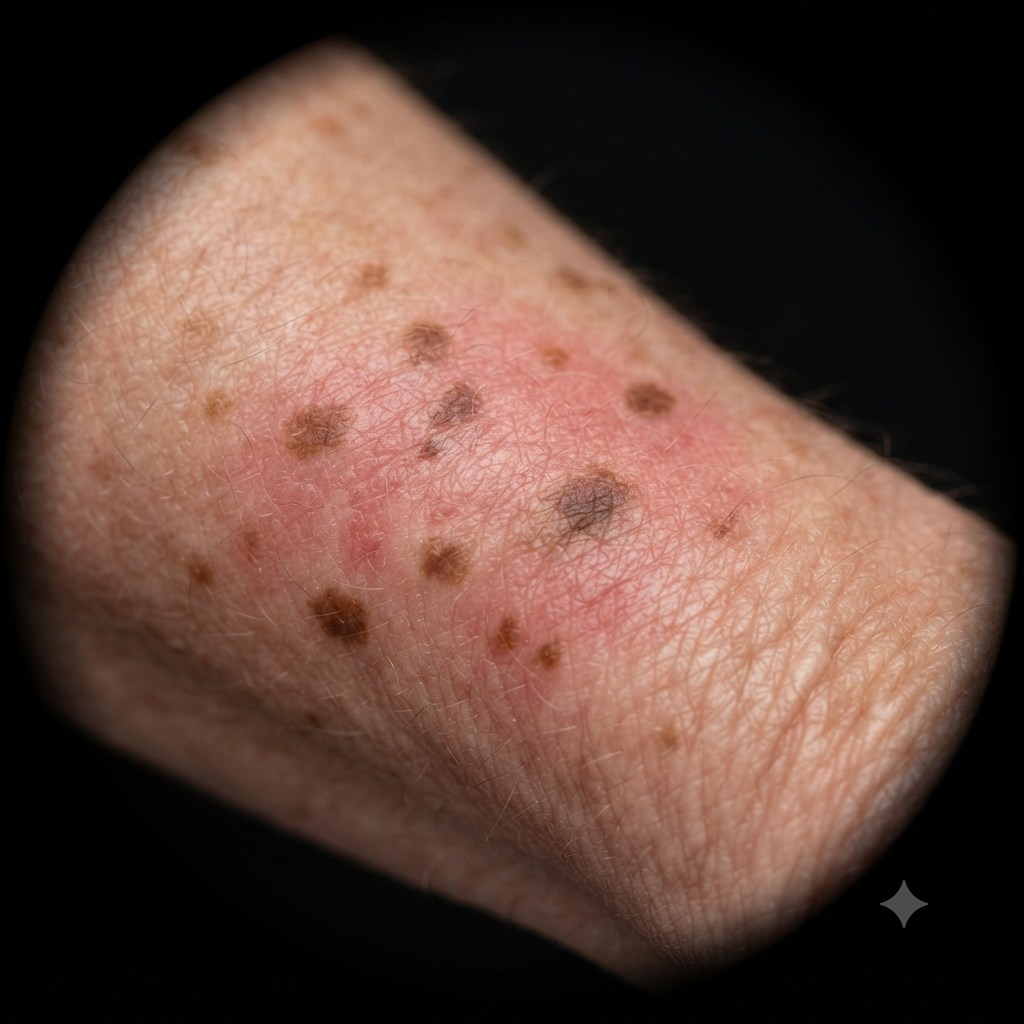
I was told I had "sun damage" at 47. I'm 58 now. Turns out the reason my hands kept getting darker had nothing to do with using the wrong cream. For eleven years, I "treated" a problem that I was actually making worse every single day. Eleven years of rubbing hydroquinone cream into my hands twice a day while my husband waited for me to stop wincing in the bathroom. Eleven years of prescription retinol that burned on contact and left my skin so dry it cracked at the corners of my knuckles. Eleven years of being told to "try a different cream" and "give it another eight weeks" and to "just manage it." I did everything they asked. I used hydroquinone for two years. Then rotated to kojic acid because someone said it targeted the pigment directly. It didn't — it just made me peel for weeks before the spots came right back. I tried azelaic acid. Then glycolic peels. Then a prescription-strength retinol that made my hands paper-thin for two months and then bounced back darker than before I applied it. I tried CeraVe "brightening" moisturizer. Three weeks. "Provided zero relief." I tried SkinCeuticals Discoloration Defense. "Sticky and greasy." One application caused "extreme burning — EXTREME" that woke me up at 2AM. When none of that worked, they added laser therapy. $350 per session. Three sessions per round. Two rounds a year. Spots faded during treatments. Full darkening rebound the moment the pigment signal fired again. "It's just sun damage," my dermatologist said. "Some women have more stubborn pigmentation. Keep rotating the topicals between visits." She handed me a new prescription and told me to try a different rotation schedule. I felt like my body was broken. The creams were supposed to work. No infection. No allergy. Just spots that kept getting darker and spreading across more of my hands every single year no matter what I did. But every single year, it was getting worse. Year 1: A little darkening across both hands. Year 3: Persistent spots. Forearms starting to show patches. Burning after every application. Year 5: Clusters appearing. New patches spreading. Visible dark spots branching across my forearms. Year 7: Upper arms. Décolletage. Skin so reactive I couldn't apply SPF without stinging. Year 11: Full hand and forearm coverage. Paper-thin barrier from topicals. Hair-trigger reactivity. Life shrinking. By noon every day, the spots looked darker. By 3PM, I could see new patches appearing — that stubborn, spreading, deepening discoloration across my hands and forearms. By dinner, I was in the bathroom reapplying cream and checking how dark I looked under the kitchen lights before sitting down at the table. Then I'd wake up at 5AM dreading what I'd see in the mirror and do it all over again. I mapped out every outfit by what it could hide. Every cardigan. Every long-sleeved blouse. Every glove. I needed to know what would cover my hands, my forearms, my arms — all at once. I stopped wearing anything sleeveless. The spots showed through everything shorter than full coverage. I stopped going anywhere without covered arms. The dark patches on my hands and forearms made me look decades older — permanently. I stopped going to the nail salon. Couldn't bear the technician working under those lights, staring at my hands on the table for an hour. My coworker said last month: "Are you okay? Your hands look really dark today." I kept concealer in every purse, every desk drawer, every bathroom. I'd cover my hands before every meeting. Before every conversation. Before every photo. And every dermatologist just nodded. "Your treatment plan is appropriate. Just keep rotating and we'll monitor." I tried an elimination diet. No gluten, no dairy, no alcohol, no spicy food for eight weeks. The darkening slowed slightly. Came right back when I ate normally. I tried cold compresses. Green tea soaks. Niacinamide serums. Zinc oxide paste. I paid $380 for a naturopath consultation. She told me I had "systemic inflammation" and recommended supplements. The same generic supplements that had already done nothing. My bathroom shelf looked like a pharmacy. Hydroquinone. Kojic acid. Azelaic acid. Retinol. Glycolic peels. SkinCeuticals. Three different moisturizers. A full-coverage concealer. Micellar water for the days my skin couldn't tolerate a cleanser. Nothing stopped the spots from getting darker. I started to believe this was just my life now. That I'd spend the rest of my life applying cream twice a day, declining pool invitations, layering long sleeves in July, pulling away every time someone reached for my hand close enough to see the dark patches and clusters under my concealer. My husband stopped commenting on the spots. Not because it didn't bother him. Because every time he mentioned it, I'd flush with embarrassment — and then I'd cry. We stopped being spontaneous. I couldn't. Not until I'd checked my hands, applied concealer, layered coverage, hidden whatever was showing. I felt like I was living a double life. The version people saw — put together, even-toned — and the real me, who spent hours every week applying creams that were destroying her barrier while the spots got darker. Then my daughter said something that changed everything. She's a nurse practitioner. We were at her house, and I was venting about my skin for the hundredth time. "Have you ever thought about why it keeps getting worse?" I laughed. "Because I have age spots. Because my skin is overproducing pigment." "No," she said. "I mean why is it worse now than when it started? Your hands weren't like this eleven years ago. A little darkening on your hands. Now it's your entire forearms and upper arms — hands, knuckles, forearms, décolletage. Why are the spots darker and spreading further every year despite eleven years of treatment?" I didn't have an answer. "I see this with patients all the time. They come in on stronger and stronger topicals. More aggressive rotations. Adding retinol. Adding laser. Adding kojic acid. And I watch their skin get progressively worse. Darker spots. Thinner barrier. More reactive. More body parts." "Because the pigment signal keeps coming back." "That's what everyone thinks. But here's what nobody is explaining to you: it's not just the age spots getting worse. It's what the treatment is doing to your skin." She paused. "Every time you apply a prescription topical to reactive pigmented skin, you're not just suppressing the surface darkening. You're stripping ceramides. Disrupting the lipid barrier. Making your skin thinner, more permeable, and more reactive to everything — water, SPF, wind, your own fingertips." "Isn't that just a side effect?" "No. It's the mechanism. Topicals work by forcing surface pigmentation down temporarily. But the deep pigment signal — the internal switch inside your dermis that's actually driving your spots — stays ON. The cream can't reach it." "So the moment the topical wears off, or you take a break, or you rotate to something milder — the darkening floods back. But now it's flooding into skin that the treatment has made thinner, more permeable, and more vulnerable." "The rebound darkening isn't just the age spots coming back. It's the age spots coming back into a barrier you've weakened." My stomach dropped. "You're telling me the creams have been making the rebounds worse?" "For eleven years. Every rotation. You apply the topical. It suppresses the surface. The deep pigment signal stays ON inside your dermis — driving overproduction through all 7 layers of skin, forcing your skin cells to keep generating dark pigment deposits. Meanwhile the topical strips your ceramides. Thins your barrier. Destroys the lipid mortar holding your skin together." "Then you rotate off. The pigment signal floods back — into skin that has less ceramide, less structural integrity, less barrier function than before you started. The rebound is worse. The spots are darker. They spread to new territory — forearms, upper arms, décolletage." "So you go back. Your dermatologist prescribes a stronger topical. Which strips your barrier faster. Which makes the next rebound worse. Which sends you back for a stronger prescription." "You're not managing age spots. You're stuck in a destruction cycle. The deep pigment signal started it. But topical creams have been accelerating it every day for eleven years." I was sitting at her kitchen table, staring at my hands on the table. The dark patches across my knuckles. The spreading clusters on my forearms. The deep brown spots that no concealer could fully hide. "You're not treating the fire," she said. "You're painting the walls of a burning house — and the paint is dissolving the walls." I Googled the moment I got home. "Does hydroquinone make age spots worse long term." "Does topical rotation cause pigmentation rebound." "Why do age spots spread to new areas after years of treatment." Page after page confirmed it. Topical age spot treatments cause progressive barrier disruption — the skin loses ceramides and structural lipids, becoming thinner and more reactive over time. Rebound darkening upon rotation or discontinuation frequently exceeds pre-treatment severity because the pigment signal returns into a structurally compromised barrier. I found Reddit threads from women whose stories were exactly like mine. Topicals for years. Spots getting darker. Spent thousands. Barrier getting thinner while the pigmentation got worse. Nobody explained the cycle. Then they stopped the topical escalation. Addressed the internal signal instead. The spots started fading. Not rebounding. Fading. I texted my daughter at midnight: "If you're right, what do I do?" She called me the next morning. "You can't just stop the topicals cold turkey — the rebound would be severe. And you can't just take any supplement. Most of them don't address what's actually driving the darkening." "So what does?" "The spots are being driven by a deep pigment signal — an internal switch stuck ON inside your dermis. It drives overproduction through all 7 skin layers, forcing continuous dark pigment deposits that no surface cream can reach. No cream sitting on the outside can reach a signal that lives on the inside." "There's a compound called bakuchiol — from plant extract. When delivered at concentrated form through the skin layers, it blocks the overactive pigment production signal. Actually interrupts the cascade. From inside. Where topicals can't reach." "And a second compound — oil-soluble vitamin C — from stabilized ascorbic acid. It directly neutralizes the oxidative triggers driving the darkening and spreading. And it stimulates your skin to rebuild the ceramide barrier — the structural mortar that holds your skin together. The mortar the topicals have been stripping for eleven years." "But here's the thing — most vitamin C products aren't oil-soluble. They use generic water-soluble extract that can't penetrate the skin layers. The studies showing pigment signal interruption used oil-soluble delivery. That's why people try vitamin C serums from the drugstore and nothing happens." "There's one I've been researching for patients with chronic age spots. Dermiqua. Oil-soluble vitamin C that penetrates all 7 skin layers. Standardized bakuchiol from plant extract. Sea buckthorn and camellia oil that reaches the deep dermis directly." I found it online that night. Checked the formulation. Confirmed the concentration. Read the ingredient data. I ordered it. Four days after I started, I woke up and looked at my hands. Something felt different. The darkness. That relentless, first-thing-in-the-morning, hands-covered-in-spots look I'd woken up with every day for years. Quieter. Not gone. But quieter. Like someone turned the signal down. That hadn't happened with any cream or gel. Ever. By the end of week one, my hands looked calmer in the mornings. The deep, stubborn darkening I'd brace for every time I looked under bright light — softer. Noticeably softer. Week two, I looked at my hands under the bathroom light — the same harsh light I'd used for eleven years to inspect the damage. The spots were lighter. Not concealer-light. Naturally lighter. I could see calmer skin underneath. The deep, dark patches that used to blanket my hands from knuckle to wrist — fading. I touched my forearm. It didn't sting. I cried. For eleven years, dermatologists told me the spots were "chronic." That I needed stronger topicals or longer rotations or to "just manage it." Nobody told me the creams were making it worse. "Keep rotating," they said. "Try retinol," they said. "Some women just have stubborn pigmentation, you can't change it," they said. Nobody explained that the topical cycle was destroying the barrier that was supposed to protect my skin naturally. Over the next three weeks, everything continued improving. The spots kept fading. The clusters on my forearms lightened. The deep brown softened to calm even tone. The reactivity stopped — no more burning after application. By week five, I looked in the mirror and saw what I genuinely thought I'd never see again. Calm. Nearly even-toned. Soft natural skin where dark spots used to cover my entire hands and forearms. I wore a sleeveless top to work for the first time in three years. Checked my reflection out of habit. No dark patches showing. I went to lunch with a friend and sat across a small table under bright lights and didn't check my hands once. My husband held my hand at the grocery store and I didn't pull away. Because the spots were fading. The barrier was rebuilding. The mortar was coming back. I'm still using Dermiqua daily. The deep pigment signal needs to stay OFF — age spots are chronic, and stopping means the signal flips back ON within days. But the spots are gone now. Not managed. Gone. Because I'm not destroying my skin barrier with topicals anymore. I apply two pumps every morning. Fifteen seconds. No more 30-minute coverage routines. No more concealer before every conversation. No more long sleeves in July. No more pulling away when someone reaches for my hand under bright lights. If you've been dealing with age spots… If your spots have gotten progressively worse over years despite topical rotations and every cream and gel they prescribed… If you've spent thousands on treatments and the darkening spread to more of your skin anyway… If your barrier is getting thinner while your spots are getting darker… If you've been rotating for years and nobody told you that the creams might be accelerating the cycle… I'm not saying topicals are evil. But I spent eleven years suppressing the surface while making it worse every single day. While thinning the barrier that was supposed to protect my skin. While the deep pigment signal inside my dermis stayed ON — firing harder every year — and no cream could reach it. Dermiqua uses oil-soluble vitamin C combined with standardized bakuchiol, sea buckthorn, and camellia oil — the specific compounds that penetrate all 7 skin layers, interrupt the deep pigment signal, and stimulate ceramide production to rebuild the barrier from the inside. Right now they have stock. They do sell out periodically. 90-day guarantee. If it doesn't work, full refund. No questions. But if it does? If you wake up four days from now and the spots look quieter? If two weeks from now your hands are visibly lighter and you touch your skin without stinging? If five weeks from now you look in the mirror and see calm, even-toned skin — for the first time in years? You'll wish you'd stopped the cycle eleven years ago. I know I do. You don't have to keep making it worse while trying to make it better.
Where the ad sends people
dermiqua.com
Read If You've Tried Everything For Your Age Spots ☝️
Dermiqua
Learn more: dermiqua.com(opens in a new tab)