
Inactive· since Jun 27, 2026
- 17
- days it ran
- 1
- relaunches
Ad copy
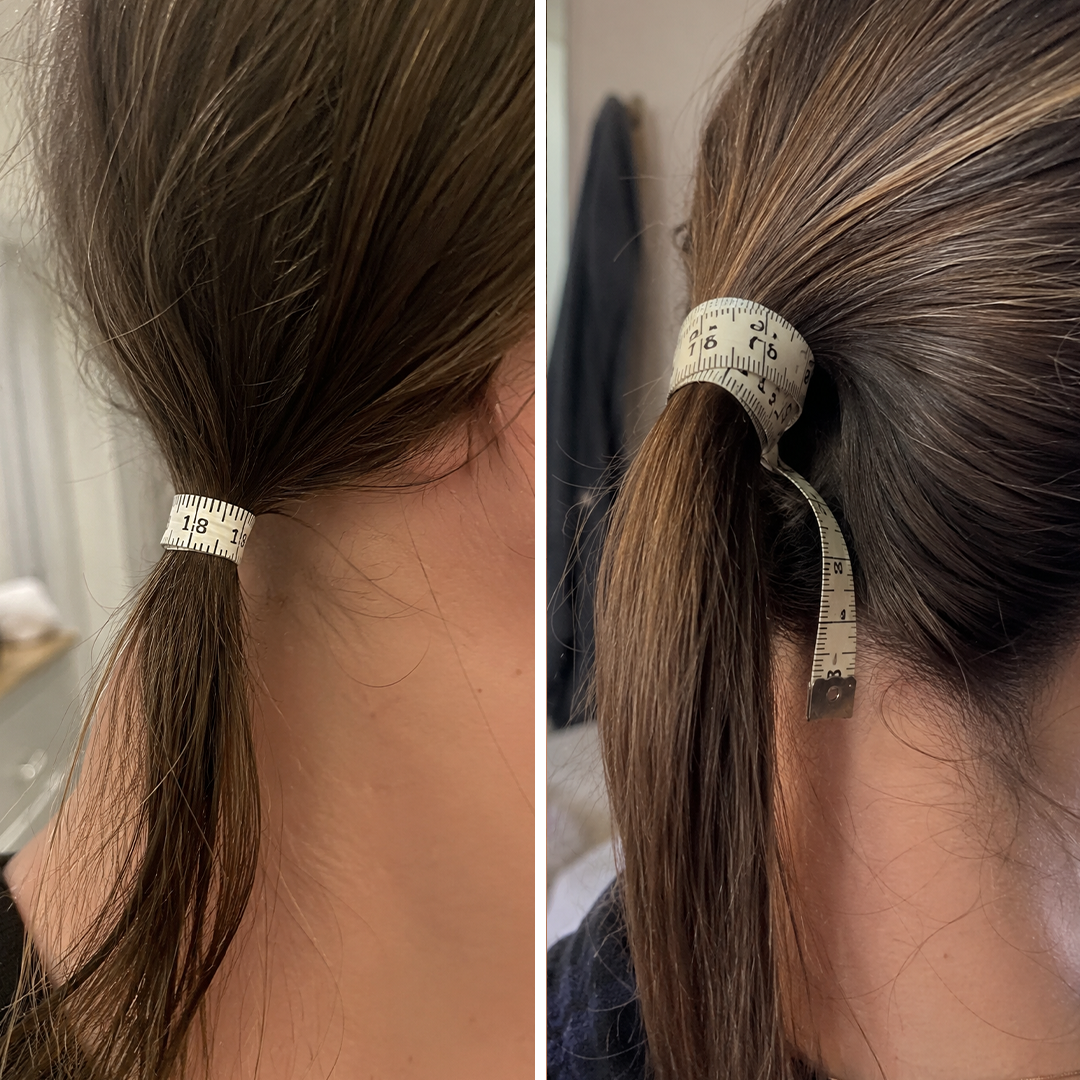
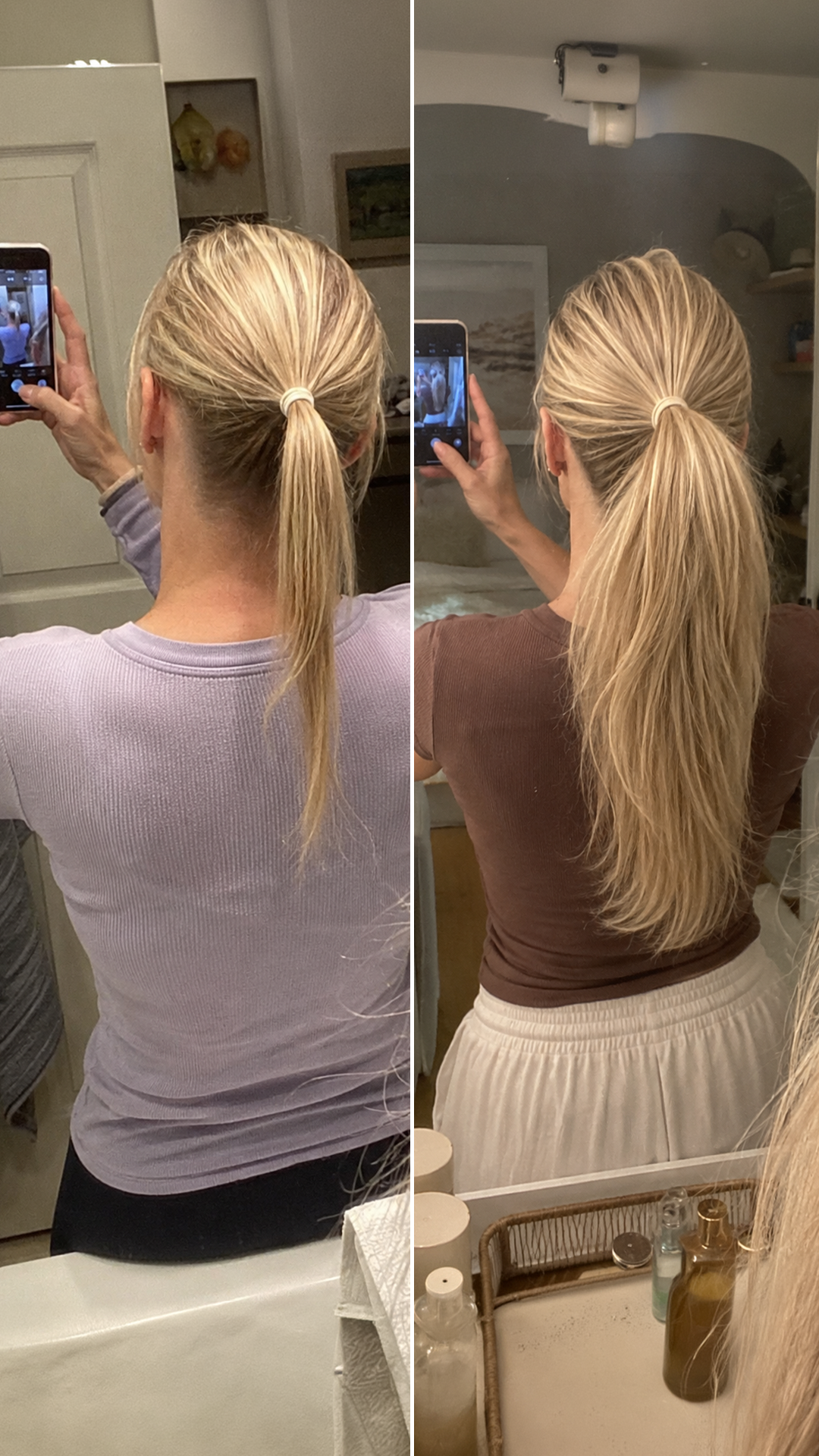
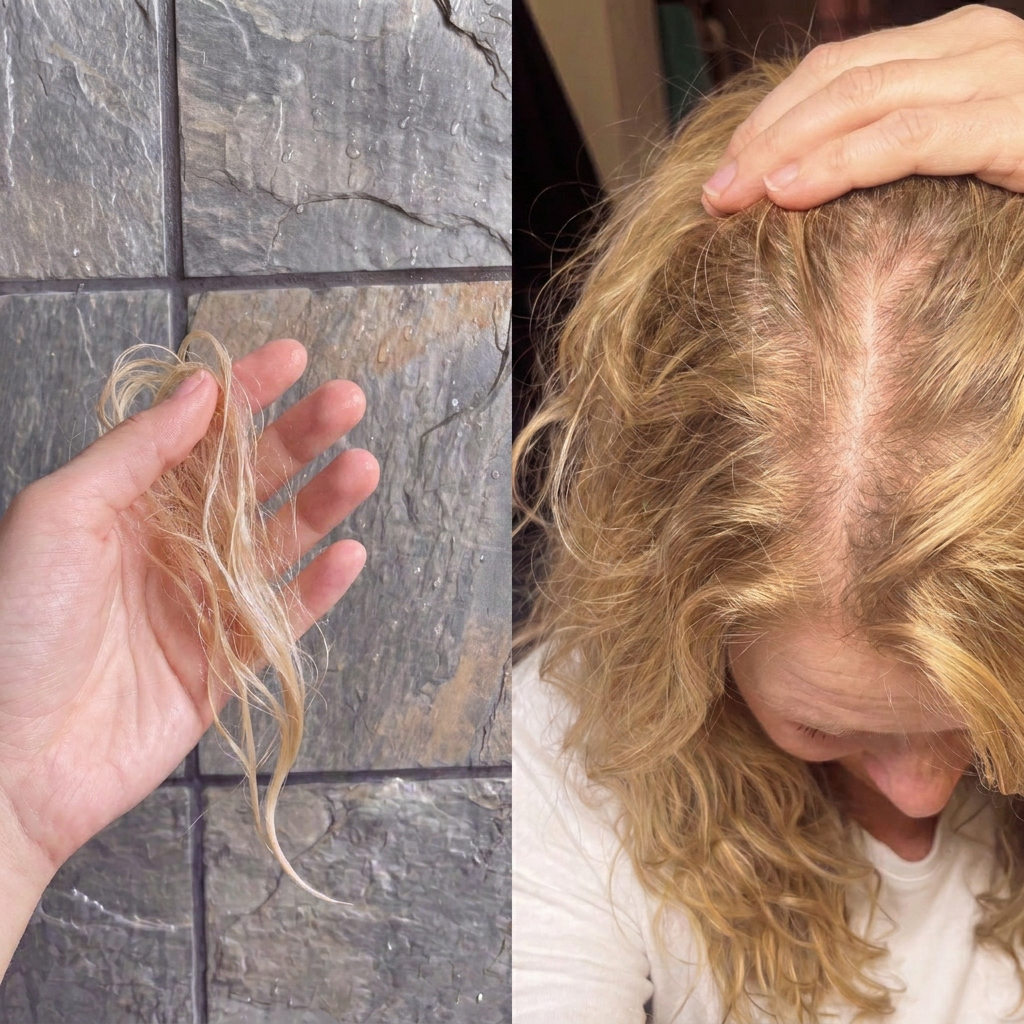
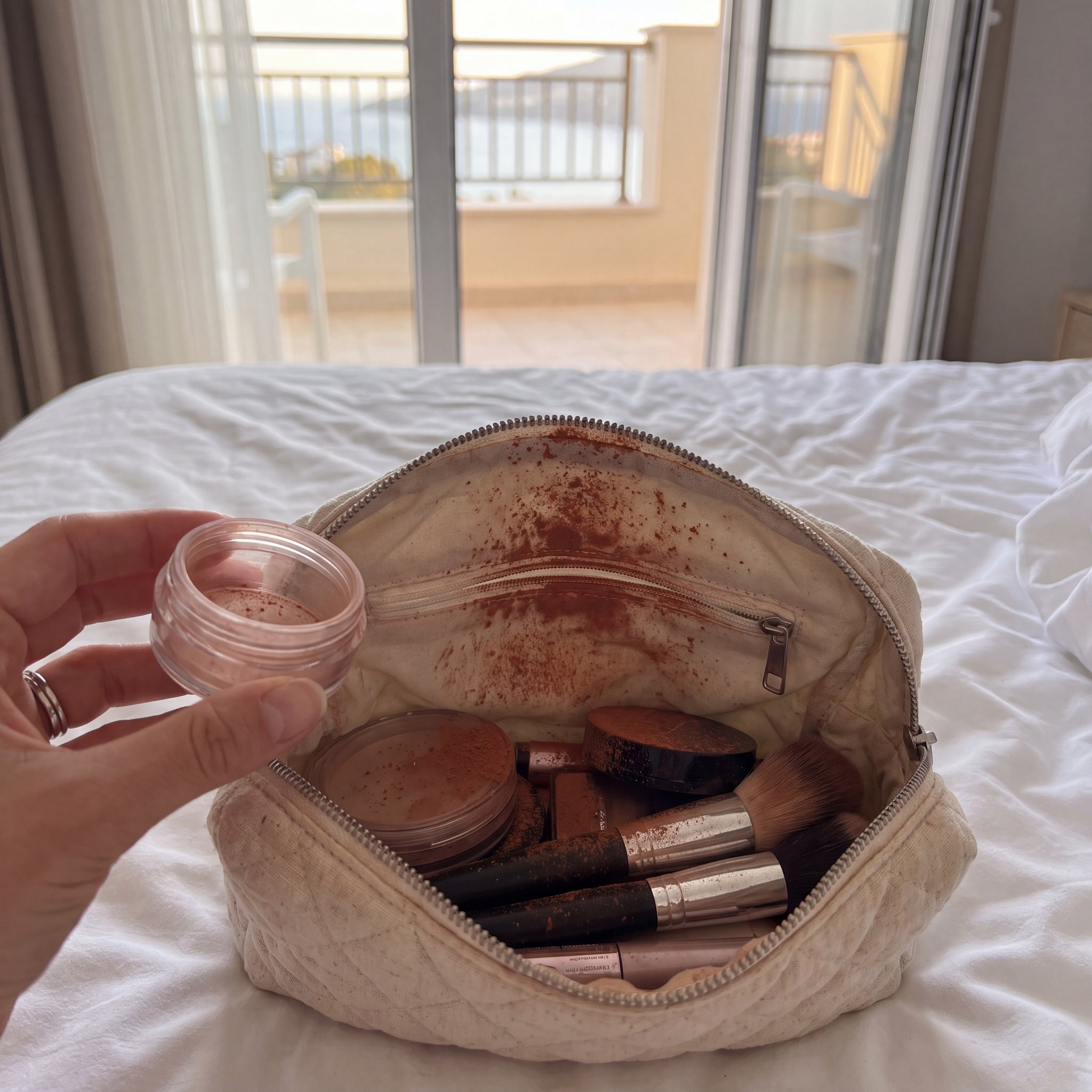
Please stop trying to hide your thinning hair. I know how that sounds. But every morning you spend shaking powder into your part — every jar of fiber, every root concealer, every can of hold spray — you might be covering a problem you could actually fix. I used to be just like you. Standing in the Target aisle reading every biotin label, hoping the 10,000 mcg would somehow do what the 5,000 didn't. Mixing the $47 collagen powder off Amazon into everything even though it made me gag, because the reviews swore it saved their hair. Spending $89 a month on Nutrafol because surely something that expensive had to work. Vegamour, then Divi, then a $40 rosemary oil off TikTok — whatever menopause influencer was selling that week. Watching my bank account drain while my ponytail kept getting thinner. And when none of it worked, I stopped trying to grow it and started trying to hide it. Keratin fibers shaken into the part. A tinted spray for the crown. A hold spray to set it so it wouldn't move. A topper I bought and returned. Twenty minutes every single morning, checked in three mirrors because the light is different in each one and you need to know what everyone else will see. And a whole set of rules to keep it from failing. Don't get caught in the rain — it runs. Don't sweat — it streaks down your temples. No hugs in dark shirts. And whatever you do, no photos from above. And it got worse. Not better. Worse. The part got wider. The ponytail got lighter in my hand every week. I needed more powder every month to cover the same spot. I was 54. My periods had stopped two years before. I'd accepted the hot flashes. I'd accepted the night sweats. I'd accepted the weight that wouldn't move no matter what I ate. I couldn't accept what was happening to my hair. I'd had a thick ponytail my entire life. The kind that made stylists ask if I was sure I wanted to cut that much off. It used to barely fit through the elastic twice. By then it wrapped three times. It wasn't vanity. It was grief. I was watching a piece of myself disappear behind a jar of powder, and I couldn't stop it. And then that jar of powder ruined the trip of my life. My husband and I had saved two years for ten days on the Amalfi coast. The first morning, I unzipped my makeup bag and the fiber jar had burst somewhere over the Atlantic — rust-colored powder packed into every zipper, ground into every brush, dusted over every compact in there. I had no backup. It had never once occurred to me it could fail. So I spent days going pharmacy to pharmacy in a country where I didn't speak the language, my translator app and I, while my husband waited outside. On the third day a tiny shop had a generic powder behind the counter. I couldn't read the label. I just wanted to feel normal. It was a bad one. By dinner it had streaked down both temples in the heat. It stained my hairline a rust color that didn't wash off for two days. And my scalp — which had never given me a moment's trouble — started itching and burning so badly I was scratching at it in my sleep. So I spent the trip I'd waited my whole life for hiding. A scarf in eighty-degree heat. Skipping the boat day because of the wind. Turning my head every time my husband raised the camera. I have four photos of myself from ten days in Italy, and in every one I'm looking away. Before the trip I'd already done the obvious things. The three-month wait for the dermatologist. The $400 consultation. The full workup — thyroid, iron, vitamin D, B12, hormones. All normal. "Your labs look great," she said, smiling. "Whatever you're doing is working." I wanted to scream. She wrote me a prescription for minoxidil. Four months in — burning, the dread shed, no change — I quit. On the flight home, somewhere over the ocean, something came loose in me. I was 54 and a jar of powder had just ruined the trip of my life. And if I didn't do something, it was going to ruin the next one, and every photo for the rest of it. And I realized I didn't want better powder. I didn't want a more reliable jar. I wanted to not need it at all. If it was just aging, why was the hair falling out healthy? If it was hormones, why didn't HRT work for the women in my forum who were on it? If it was nutrition, why were my labs fine? Why did four months of the drug every dermatologist prescribes change nothing? Nothing added up. And I was running out of hope. Then one night, home and jet-lagged — 2:34 AM, I remember the exact time because I'd been awake for hours — I grabbed my phone and typed something different. "Why does menopause hair loss not respond to anything." That's when I found an article by a Stanford-trained dermatologist named Dr. James Kilgour. And it explained something nobody else had. It wasn't about hormones. It wasn't about nutrition. It was about your scalp aging. Your scalp has more estrogen receptors per square inch than almost anywhere else on your body. When estrogen falls, they go quiet — and the scalp starts aging up to ten times faster than your face. By your fifties, your scalp can be closer to a ninety-year-old's than the face in your mirror. An aged scalp can't hold onto hair anymore. Healthy strands get pushed out years early. And the follicles those strands came from? Still there. Still alive. But the aged scalp stopped sending the signal that brings new hair in — so they went to sleep. Up to one in four follicles. Twenty-five thousand hairs on an average head. Already mine. Just paused. Then he wrote about a 2020 Harvard study that nailed it. Researchers took healthy follicles and placed them in aged scalp tissue. Every one of them died. Then they took damaged follicles — the kind every doctor would have given up on — placed them in young scalp tissue, and they came back to life. Grew thick and strong, like menopause had never touched them. It wasn't the hair. It was never the hair. It was the scalp underneath. And everything finally made sense. That's why biotin did nothing — my strands weren't breaking, they were being pushed out intact by aged tissue. That's why minoxidil did nothing — my sleeping follicles weren't waiting on blood, they were waiting on a signal a younger scalp would send. That's why my labs were normal — no blood test measures scalp aging. And that's why the powder was a losing game — I was covering the gap while the scalp underneath kept getting older. I checked him out, because I'd been burned too many times to take anyone's word for it. I looked him up on certificationmatters.org, the official board-certification database — and there he was. Board-certified by the American Board of Dermatology. Stanford-trained. Published in the journals dermatologists actually read. He'd run an independent trial — the first to count shedding by hand. Wash count dropped 68%. Brush count dropped 60%. 95% of women stopped shedding by week six. By week twelve, the women had grown over 10,200 new hairs from sleeping follicles — more than a $15,000 transplant. Peer-reviewed by the Journal of Drugs in Dermatology. The protocol was KilgourMD. Two serums, sixty seconds before bed. One reverses the scalp aging driving the shedding. The other wakes the sleeping follicles back up. Topical. No hormones in your bloodstream. And not minoxidil — no burning, no rebound, nothing you get chained to. I was skeptical. I was also done. Week three, less in the drain — and I caught myself using a little less powder to cover the same spot. Week six, my ponytail felt heavier in my hand. My husband walked in, I said "feel this," and he said "when did that happen?" Week eight, baby hairs along my hairline. Month three, my stylist stopped mid-cut and asked if I was growing it out. By week twelve I did my hair one morning and reached for the jar out of pure habit — and stopped. There was nothing to cover. We went away again this spring. I packed a swimsuit and no jar. I got caught in the rain walking back from dinner one night and didn't think a thing of it until I was already laughing under an awning, soaked. A stranger asked us to squeeze together for a photo and I didn't turn my head. I have a whole camera roll from that trip with my face in it. If your morning belongs to a jar of powder — if you've got rules about rain and wind and photographs — please hear me. You don't need a better way to hide it. The thing underneath can actually come back. If your labs are normal but your hair is still falling out, stop asking whether your hormones are balanced and start asking what's happening to your scalp. Your follicles aren't broken. Your scalp just gave out because of menopause — and the follicles inside it are still waiting for a signal a younger scalp would send. And there's something that may help. Dr. Kilgour put together a short explainer that walks through exactly what's happening and how to tell if it's reversible for you. There's a 90-day money-back guarantee on the protocol — one email, every penny back, you keep the bottles. No way to get burned again.
A jar of powder ruined the trip of my life
Dermatologist-developed, the best hair growth products for thinning hair. Reduce hair fall by 30% in two months, and stimulate hair follicle growth by 200%. No known side effects.
LEARN MORELike this ad? Make it yours.
Crush rebuilds this exact creative around your product — your brand, your colors, your offer — in about a minute.