
Inactive· since Jun 23, 2026
- 55
- days it ran
- 2
- relaunches
Ad copy
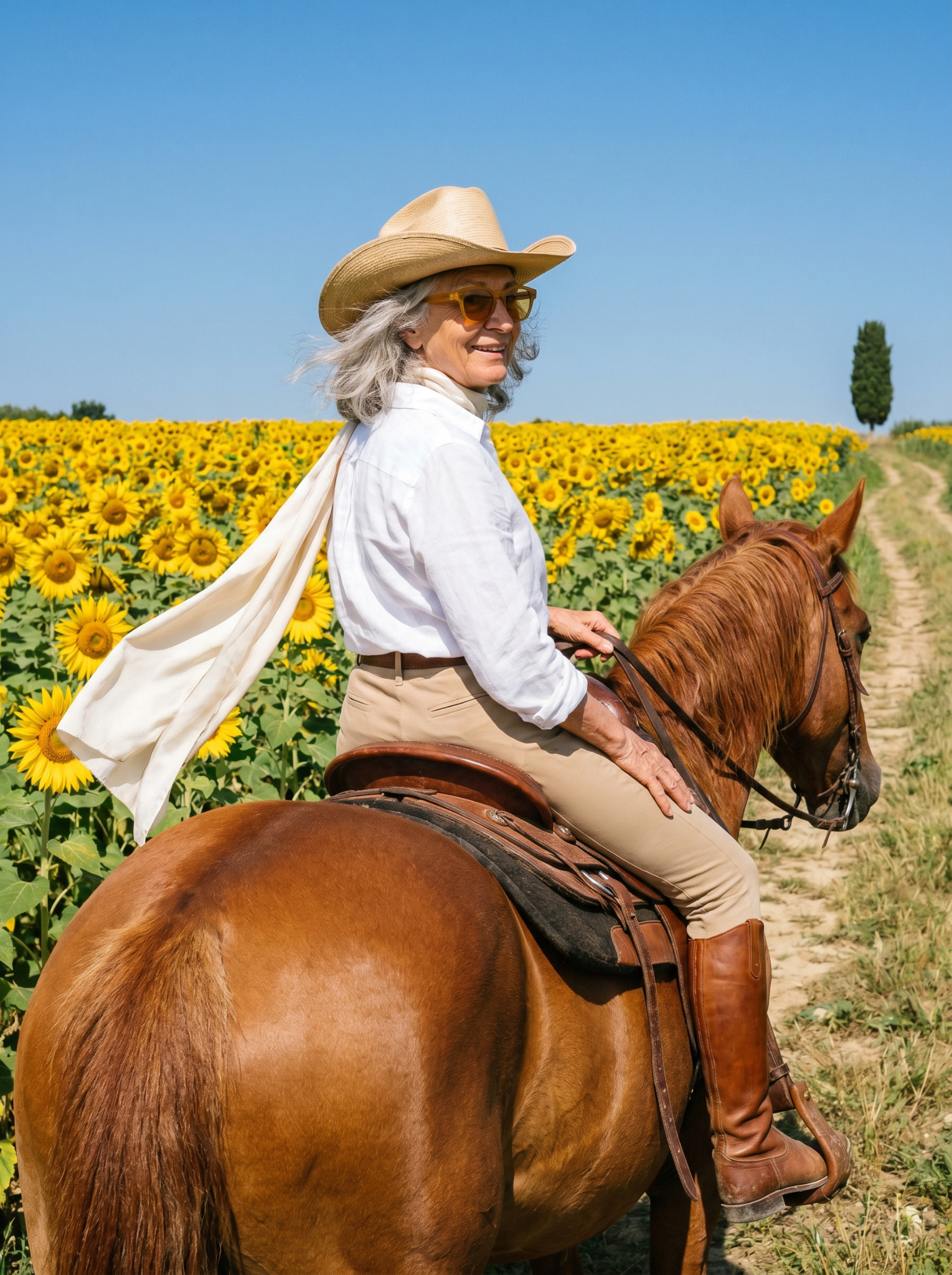
I'm an endocrinologist. I've been an endocrinologist for twelve years. The first thing you learn in my field is that gluten is poison for women with Hashimoto's. Gluten drives the antibodies higher. Gluten is the first food every Hashimoto's diet book in America tells you to throw away. Then I went to Italy. The country where women eat fresh pasta every day. What I found there broke everything I thought I knew. Let me back up. I work at a thyroid clinic in the Northeast. Women come to me when their endocrinologists have run out of answers. They've been on Levothyroxine for years. Their labs are normal but they still feel sick. By the time a patient hits my office, I already know what the chart is going to say. Because it always says the same thing. Patient presents with weight gain that won't move. Doctor's notes: menopause-related. Recommend dietary discipline. Try gluten-free. Patient returns. Exhaustion that sleep doesn't fix. Doctor's notes: chronic fatigue. Blood panel normal. Recommend exercise. Patient returns. Cholesterol creeping up. Doctor's notes: borderline dyslipidemia. Start a statin. Patient returns. Heart pounding on the stairs. Doctor's notes: deconditioning. Likely anxiety. Prescribe a beta blocker. Patient returns. Brain fog. Thinking through molasses. Falling asleep on the couch before the evening news. Doctor's notes: consider cognitive evaluation. Five visits. Five years. Five separate diagnoses. Five separate prescriptions. And by the third visit, somebody has handed her a Hashimoto's diet book and told her the answer is to give up bread. Then someone finally sends her to me. I pull her chart. I look at her labs. And in less than thirty minutes I find what explains every single one of those visits. It is not her thyroid. It is not her gluten either. It is her liver. Your endocrinologist runs your TSH. Your hepatologist runs your liver enzymes. The problem sits between them — and nobody is paid to look there. So when I got invited to a thyroid research conference in Florence last spring, I added two extra weeks to the trip. Because something had been bothering me for years. Italian women eat more wheat per person than almost any other country in Europe. Bread at every meal. Fresh pasta three or four times a week. Pizza. Focaccia. Crackers with the morning coffee. The average Italian woman consumes close to five times the gluten that the average American does. In my field, gluten is the food we tell every Hashimoto's woman to throw away first. But Italian women with Hashimoto's are 17 times less likely to die of a heart attack before 70 than American women with Hashimoto's the same age. Not twice as likely. Not five times. Seventeen. Italian Hashimoto's women live considerably longer than American Hashimoto's women. Fewer heart attacks. Lower cholesterol. Sharper minds well past 80. Based on my training, Italian Hashimoto's women should be the sickest population in Europe. They should have more of what is killing American women like you. Not less. I needed to understand why. After the conference in Florence I drove south, then I caught a ferry to Sardinia. The region is one of the original Blue Zones — the highest concentration of healthy centenarians in the Western world. I arranged a homestay in a small village in the Nuoro region through a longevity research project. The woman I stayed with was named Lucia. She is 87 years old. Lives alone in the same stone house she was born in. Tends her olive trees every morning. Walks to the village square. Cooks all her own meals. She has had Hashimoto's for sixty years. I'm sitting at her kitchen table on day three watching her boil fresh pasta in a copper pot. She drains it, tosses it with olive oil and tomatoes from her garden, sets a plate in front of me, and sits down with the same plate herself. My endocrinologist brain is going haywire. I'm thinking about every patient I've ever told to throw away her bread. Every patient I've put on a strict elimination diet for six months. This woman has been eating pasta every single day for eighty years. Based on everything I know, her Hashimoto's should be raging. Her cholesterol should be off the chart. But she is 87. She is sharp. She has clear eyes. She has more energy than most of my 50-year-old patients back home. I had to ask. Her English was perfect — she had worked as a translator in Florence after the war, and again at the American embassy in Rome in the 1970s. "Lucia, doesn't the gluten make your Hashimoto's worse?" She stops eating. Looks at me. Starts laughing. "Everyone worries about something. American women worry about bread. We worry about something different." She wipes her hands and tells me to sit down properly. "You came here because something is telling you. The exhaustion. The weight that will not move. The heart pounding on the stairs. The labs that are normal while you still feel sick. Yes?" I nodded. She leaned across the table and looked me in the eye. "You are not crazy. You are not lazy. Your body is telling you the truth. The doctors have not been listening." She set her hands flat on the table. "I had a sister. Elena. Three years younger than me. We grew up in this house. She left for America when she was twenty-two to marry a man from New York. She forgot what our mother taught us. My mother begged her. Elena said it was old-fashioned. She had Hashimoto's, the same as me. Her labs were normal her whole life. She died in her kitchen in New Jersey at 64 making coffee on a Tuesday morning. Her doctor told the family she was just getting old." She looked at me. "You are walking my sister's road. Unless you turn now, you will end the same way." She walked to a small wooden cabinet and pulled out a single dark glass bottle with a small wooden dropper resting against it. The bottle was filled with a dark, almost black liquid. Bitter. Earthy. Concentrated. "Your pill gives you only half the hormone." She placed her hand low on her right side, right over her liver. "The other half, the body has to finish. The body finishes it here. In the liver." "After twenty years of Hashimoto's, the liver gets tired. Quiet. And when the liver is quiet, two things stop. The cholesterol is no longer pulled from your blood. And the second half of the hormone is never finished. Your cells starve. Your heart works twice as hard. That is why the cholesterol climbs. That is why the heart pounds on the stairs. That is what is going to kill you. Not the bread." She set the bottle down on the table between us. "This medicine wakes the liver. And it carries the four minerals the liver needs to finish making the hormone, all in the same bottle. One dropper before bed. That is the only road off this road." "My mother taught me this. Her mother taught her. Her mother before her. For seven hundred years the women of this village have made the same medicine. Every woman in our village who lives past 90 with Hashimoto's takes it. Every one of us. We do not worry about the bread. We worry about the liver. So the bread does not matter." I sat there staring at her. I have a medical degree. Twelve years of practice. Hundreds of charts. And this 87-year-old woman had just described in plain language what I had spent fifteen years confirming in journals. Levothyroxine only contains T4. The body converts it to T3 in the liver. Without that conversion, the cells starve and the heart strains. The conversion requires four specific minerals — selenium, zinc, copper, magnesium — that a damaged Hashimoto's gut cannot absorb in capsule form. Lucia had skipped the journals and gone straight to the answer. I spent the rest of that week talking to every elderly woman in the village. Her 92-year-old neighbor takes the medicine every night. Has since she was eighteen. Her cousin Anna, also in her late eighties, also Hashimoto's, also healthy. Same practice. Same bottle made by hand from herbs they grow themselves. These women have had Hashimoto's their entire adult lives and look healthier than every American patient I have ever treated. Then I thought about my patients. Five visits. Five wrong diagnoses. Five prescriptions. A six-month gluten-free elimination diet that didn't move the scale. Cholesterol climbing every visit. Falling asleep on the couch before the evening news. Heart pounding going up a single flight of stairs. Being told it is menopause. Being told it is age. While their livers have been quietly failing for thirty years and no endocrinologist in America has ever once asked. The Italians eat five times more gluten than Americans and live to 100 because they take care of the liver every night. My American patients give up gluten, take their pill, see their doctors every year, and end up dying of heart attacks at 68. The contrast made me sick. When I got back to the States, everything Lucia taught me lined up with the research. The dark liquid she used was silymarin. The active extract from milk thistle. The most studied liver-supporting compound in modern medicine. The Italians call it cardo mariano — Mary's thistle — and they have been growing it on the edges of olive groves for a thousand years. But what stopped me was that Lucia's village was not alone. Traditional Chinese medicine named the liver as the seat of metabolic regulation centuries before the West had a word for the conversion pathway. Ayurvedic practitioners in India prescribed liver-supporting medicines for over 4,000 years. Japanese island grandmothers in Okinawa take the same kind of bitter tincture every night before bed. Amish midwives in Pennsylvania keep milk thistle by the kitchen door. Different cultures. Different continents. No contact with each other. Same understanding. Same medicine. That is not coincidence. In medicine, when independent traditions arrive at the same conclusion without contact, we take that very seriously. Meanwhile, Lucia eats pasta at 87. And American women with Hashimoto's are dying of heart attacks at 68. I started taking the medicine every night before bed when I got home from Italy. Week one. Warmth in my hands within minutes of the dropper. My hands had been cold for six years. I had not noticed how cold until they were not anymore. Week two. Energy at four in the afternoon for the first time in years. Week three. This is the week that matters. Every drugstore supplement I have ever recommended to a patient crashes at week three. Symptoms come roaring back. Often worse. Nothing came back. The warmth held. The energy held. The conversion was actually working. Week four. Down eleven pounds without changing anything else. My resting heart rate, which had crept into the high seventies, came back down into the sixties. A colleague stopped me in the hallway and said, "Did you do something different? You look younger." Week six. LDL down thirty-seven points. Mind sharp through every long clinic day. I had not felt this clear since my thirties. Not because I found some new breakthrough. Because I finally listened to an 87-year-old woman who knew more about the liver-thyroid connection than my entire field has been willing to admit. Before you try sourcing the herbs yourself, do not bother. I tried. Ordered bulk milk thistle. Took the capsules from my pharmacy. Tried mixing my own minerals. Disaster. Drugstore capsules contain barely measurable silymarin. The individual minerals at the wrong ratios stripped my stomach. I gave up after ten days. The brand I use now is a small company called Pureveen. Wild-harvested milk thistle, not cultivated. Cold-extracted, not heat-dried. Clinical strength silymarin, not the token doses at the drugstore. Selenium, zinc, copper, and magnesium already blended in liquid bioavailable form. No iodine, because iodine makes Hashimoto's worse. Third-party tested. One dropper a day. One bottle. It is the modern version of what Lucia's family has been doing for generations. If you are reading this and you have Hashimoto's, I need you to hear something before you do anything else. You keep taking your medication. What I added did not replace my Synthroid. My Synthroid is doing the front half of the job — delivering the hormone to my bloodstream. The back half — the conversion in my liver, the clearance of my cholesterol — is what had been failing. Pureveen does the back half. Your medication does the front half. They work together. You keep taking your Levo. You add one dropper of Pureveen under your tongue every morning. That is it. Try Pureveen for 90 days. Weigh yourself every Sunday morning. Check your resting heart rate before bed. Ask your doctor for a basic cardiac panel at day 60. If the weight isn't moving, if your energy hasn't shifted, if your markers haven't improved — full refund. No questions. Here's what makes me furious. If a 17-times increase in heart attack risk paired with steady weight gain on a working medication were happening to men with a common disease, there would be national campaigns. Insurance would cover yearly liver panels. Cardiology guidelines would be updated annually. But it is happening to women with Hashimoto's. So we get "give up your bread." We get "try AIP for six months." We get "have you tried losing weight." We get "have you considered an antidepressant." We hand our patients a Hashimoto's diet book and tell them to come back in six months while their livers keep failing. There are six pills I can adjust to keep a Hashimoto's woman's TSH in range. There is zero protocol in mainstream endocrinology for what happens to her liver after ten years on Levo. Zero. We don't even look. I am done with that. And if you have been told for the last decade that giving up bread will fix what is wrong with you — and it hasn't — you should be done with that too. If your labs are normal but you still feel sick. If your weight has been climbing no matter what you eat. If you have already given up gluten and dairy and sugar and seven other foods and still feel terrible. If your cholesterol creeps up every annual visit. If your heart pounds going up a single flight of stairs. If your hands have been cold for years. If you have stopped looking at your photos because you do not recognize the woman in them. Listen to me. You are not crazy. You are not lazy. The exhaustion is real. The weight that will not move is real. The heart pounding on the stairs is real. The thinking-through-molasses feeling is real. Your medication has been delivering the hormone, and your liver has not been able to finish the work, and your body has been paying the price every single day for years. Giving up gluten will not fix it. Giving up dairy will not fix it. Giving up sugar will not fix it. Your endocrinologist will not find it. The TSH will not catch it. Drugstore supplements will not finish the job. I have spent twelve years proving that. But an 87-year-old woman in a Sardinian village showed me what actually works. Take care of the liver. One dropper a day. Overnight. You are at a crossroads. One path. Keep taking the levo. Keep giving up foods that were never the problem. Watch the weight climb. Add the statin when your cholesterol goes up. Add the beta blocker when your pulse climbs. Add the antidepressant when the exhaustion breaks you. Spend the next twenty years collecting medications and elimination diets while the real problem never gets touched. End up like Elena. In your kitchen at 64. Making coffee. Another path. Try what I tried. Take care of your liver. Let your medication finally reach the cells it was supposed to reach for the last twenty years. Eat the bread again. Feel like yourself again. Get your life back. Look at yourself again and not hate your eyes. I chose the second path. Your endocrinologist isn't looking at your heart. Your cardiologist isn't looking at your thyroid. Nobody is looking at your liver. Every night you sleep without this is another night your conversion fails. Another night your cholesterol piles up. Another night your heart works harder. Another night closer to the kitchen floor. Lucia is 87 eating pasta every day. She is never going to die of a heart attack at 68. Because she figured out what every grandmother in her village has known for seven hundred years. You can start tonight. But Pureveen is a small company and they sell out constantly. If you click and they are out of stock, sign up for the restock notification. It is worth the wait. Be the woman you were before. P.S. Warmth in my hands within minutes of my first dropper. Down eleven pounds by week four. LDL down thirty-seven points at month two. Your timeline will be different. But you will not know until you try. P.P.S. My patient Patricia started Pureveen four weeks after I did. She is 58, has had Hashimoto's for sixteen years, was about to start a statin. Last visit her LDL was down thirty-three points and she had refused the prescription. She told me, "I am not going to end up on a kitchen floor at 64." Neither am I. Neither should you. P.P.P.S. If your thyroid was surgically removed, this still works. The conversion job still has to happen in your liver, your Levo still has to be activated, and the liver is still the bottleneck. P.P.P.P.S. If you have a husband, father, or brother with hypothyroidism — not just Hashimoto's, any form — this works for him too. My own husband takes one dropper every morning. The mechanism is the same regardless of what is causing the hypothyroidism. P.P.P.P.P.S. I am 53 years old. I am an endocrinologist with twelve years of practice. The face in the mirror this morning is the face I had at 41. If you have spent the last decade giving up foods and watching your body get worse anyway, I am writing to tell you it was never the food.
Like this ad? Make it yours.
Crush rebuilds this exact creative around your product — your brand, your colors, your offer — in about a minute.