
Inactive· since Aug 1, 2026
- 16
- days it ran
- 2
- relaunches
Ad copy
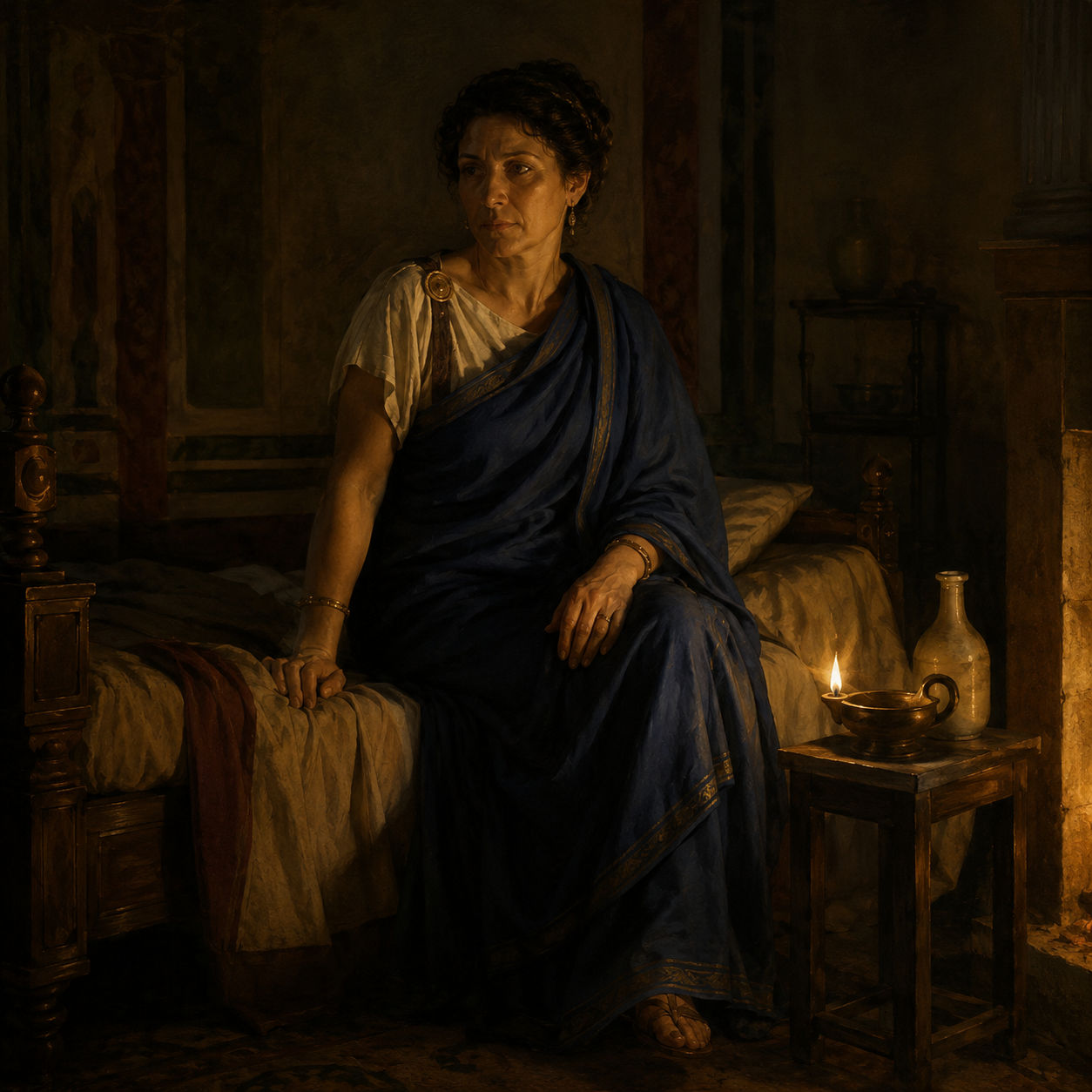
Gluten is poison for women with Hashimoto's. That’s the first thing I learned in the endocrinologist field. I’ve been an endocrinologist for 12 years. Gluten confuses the immune system. Gluten drives the antibodies higher. Gluten is the first food every Hashimoto's diet book in America tells you to throw away. Then I went to Italy. The country where women eat fresh pasta every day of their lives. What I found there made me sick. I work at a thyroid clinic in the Northeast. I am not the first doctor these women see. I am usually the fourth, or the fifth, or the ninth. I am where a woman lands when every other doctor has run out of answers and started giving her that look, the one where he is already half turned toward the door while she is still talking. They come in carrying things. Folders. Plastic grocery bags full of old lab printouts. One woman set a three ring binder on my desk, heavy as a phone book, eleven years of tests, tabbed and highlighted in three colors. Before she said hello she said, "I need you to know I'm not making this up." That is how they arrive. Braced. Already defending themselves against a doctor they have not met yet. They have been on Levothyroxine for years. They take it exactly right. Six in the morning, empty stomach, wait the full hour, no coffee. They never miss. And their labs come back normal, year after year after year, while they get worse. By the time a patient hits my office, I already know what her chart is going to say. In twelve years it has not surprised me once. It reads like the same story typed out by a hundred different hands. Patient presents with weight gain that won't move. Doctor's notes: menopause related. Recommend dietary discipline. Try gluten free. Patient returns. Exhaustion that sleep doesn't fix. Doctor's notes: chronic fatigue. Blood panel normal. Recommend exercise. Patient returns. Cholesterol creeping up the chart. Doctor's notes: borderline. Start a statin. Patient returns. Heart pounding going up her own staircase, the same stairs she has climbed for twenty years. Doctor's notes: deconditioning. Likely anxiety. Prescribe a beta blocker. Patient returns. Brain fog. Thinking through molasses. Losing words in the middle of a sentence. Falling asleep on the couch before the evening news with the plate still in her lap. Doctor's notes: consider cognitive evaluation. Five visits. Five years. Five separate diagnoses. Five separate prescriptions. And by the third visit somebody has handed her a Hashimoto's diet book and told her the answer is to give up bread. So she does it. She stops eating at restaurants. She stops eating at her own daughter's table without bringing a plastic container of her own food. She reads the back of every box in the grocery store under those fluorescent lights while the ice cream sweats in her cart. She apologizes at dinner parties. She turns down her own granddaughter's birthday cake and watches the child's face fall and says she isn't hungry. For years. And the scale never moves an ounce. Then someone finally sends her to me. I pull her chart. I look at her labs. And in less than thirty minutes I find what explains every single one of those five visits. The thing nobody looked for, because nobody in the building is paid to look there. It is not her thyroid. It is not her gluten either. It is her liver. Your endocrinologist runs your TSH. Your hepatologist runs your liver enzymes. The problem sits in the empty hallway between those two rooms, and no one has ever been assigned to walk it. So when I got invited to a thyroid research conference in Florence last spring, I added two extra weeks to the trip. Because a question had been sitting in the back of my mind for years, quietly, the way a stone sits in a shoe. And I had finally decided to go dig it out. Here is the question. Italian women eat more wheat per person than almost any other country in Europe. Bread at every meal, torn off a loaf still warm. Fresh pasta three and four times a week. Pizza. Focaccia. Crackers with the morning coffee. The average Italian woman eats close to five times the gluten the average American does. And Italian women with Hashimoto's are seventeen times less likely to die of a heart attack before 70 than American women with Hashimoto's the same age. Not twice as likely. Not five times. Seventeen. They live longer. Fewer heart attacks. Lower cholesterol. Sharp minds well past 80, still telling stories, still remembering the names of everyone's children. Based on everything I was trained to believe, those women should be the sickest population in Europe. They should have more of what is killing American women. Not less. Not the opposite. I needed to understand why. And I did not think the answer was going to be in a conference hall in Florence. So when it ended I rented a small car and drove south, and then I got on a ferry, and then I drove up into the mountains of Sardinia, on roads that got narrower and older until they were barely wider than the car. Sardinia is one of the original Blue Zones. The highest concentration of healthy hundred year olds in the Western world. I arranged a homestay in a small village in the Nuoro region through a longevity research project. The woman I stayed with was named Lucia. She is 87 years old. She lives alone in the same stone house she was born in, with green shutters and a front step worn into a smooth dip by a hundred years of feet. She tends her olive trees every morning in the cool before the heat comes. She walks down to the village square in the afternoon. She cooks every single meal she eats. She has had Hashimoto's for sixty years. Day three, I am sitting at her kitchen table watching her boil fresh pasta in a copper pot. The window is steamed over. She drains it, tosses it with olive oil and tomatoes she picked that morning, sets a plate in front of me, and then sits down across from me with the exact same plate. And my endocrinologist brain is coming apart at the seams. Because I am doing the arithmetic and it will not add up. I am thinking about every woman I have ever sat across a desk from and told to throw her bread away. Every elimination diet I ever printed out and handed over. The woman with the binder. And the one who cried in my office, a grown woman crying in a plastic chair, because I had just told her to give up her mother's lasagna, the recipe in her mother's own handwriting on a card gone soft and brown at the corners. She did it. Six months. The scale never moved. And she wanted me to tell her what was wrong with her. The woman in front of me has eaten pasta every day for eighty years with the exact disease I treat. Her antibodies should be through the roof. Her cholesterol should be off the chart. Her heart should have quit a decade ago. But she is 87. She is sharp. Her eyes are clear and quick. She has more energy at seven in the morning than most of my 50 year old patients have all day. And when I shook her hand at the door two days earlier, the thing I could not stop noticing was that her hand was warm. I shake the hands of women with this disease all day long, every season of the year, and their hands are always cold. I had stopped noticing it the way you stop hearing a clock in a room you have sat in too long. I had to ask. Her English was perfect. She had worked as a translator in Florence after the war, and again at the American embassy in Rome in the seventies. "Lucia, doesn't the gluten make your Hashimoto's worse?" She stops eating. She looks at me. And she starts laughing at the earnest American doctor at her table. "Everyone worries about something. American women worry about bread. We worry about something different." She wipes her hands on her apron and tells me to sit down properly, and then she looks at me the way I look at patients. Taking my measure. "You did not come all this way for an old woman's pasta," she says. "You came because something is telling you. The tiredness that sleep does not fix. The weight that will not move no matter what you do. The heart that pounds on the stairs. And the tests, always the tests, that come back fine while you know you are not fine. Yes?" I nodded. And here is what I have not told my colleagues, because there is no honest way to tell this story without it. I have Hashimoto's too. Diagnosed at forty six. My labs are perfect. My hands are cold. I had put on nineteen pounds I could not account for and I was asleep in a chair by eight o'clock like a woman twenty years older. And that spring I had started to feel my own heart knock behind my ribs going up a flight of stairs I used to take two at a time. I told nobody. Not my husband. Not my own doctor. Because I know better than almost anyone alive what that knocking means, and I was afraid that saying it out loud would make it true. She leaned across the table and looked me in the eye, and she was not laughing anymore. "You are not crazy," she said. "You are not lazy. Your body is telling you the truth. The doctors have not been listening. And you, dottoressa, you have not been listening to your own." She tapped the middle of her chest with two fingers. "And I will tell you the thing your doctors will not. You will have a heart attack. Maybe in five years. Maybe in two. The road is already under your feet. I have watched women walk it many times. I have washed their faces and buried them." I have said versions of that sentence to patients my whole career. Softened. Hedged. Wrapped in all the careful language we are trained to use so we never quite frighten anybody. I had never once had it said back to me. Plainly. Across a table. By a woman with no reason on earth to soften it. It went through me like cold water poured straight down my spine. She set her hands flat on the table. "I had a sister," she said. "Elena. Three years younger. We were born in this house, in the room over our heads, in the same bed I still sleep in. When we were girls we did everything together. And then she grew up restless. She wanted America. At twenty two she married a man from New York, and she left." She turned her coffee cup a slow quarter turn on the table. "Our mother stood at that door and put a bottle in her bag. This bottle." She touched the dark glass without picking it up. "And Elena took it out and set it back down on the table by the door and said, Mamma, in America there are real doctors. This is old fashioned. Then she kissed her and she went. Sixty five years ago, and I can still see her hand setting that bottle down. "She had the same sickness I have. From our mother, both of us. And in America she did everything her doctors told her, and she was proud of doing it. She took her pill every morning for thirty years and never missed one day. And when a doctor told her the bread was her enemy, she was pleased to be modern about it. She threw out the flour. She gave up the thing she had loved most at every table since she was a child. "And every year she was heavier. And every year she was more tired. And every year they gave her one more pill. And every year the tests said she was fine. "She died in her kitchen in New Jersey at sixty four. Making coffee. On an ordinary Tuesday morning. Her husband was in the next room and heard the cup break. Her doctor told the family she was just getting old." She looked up at me. "She gave up the bread and she kept the disease. She starved herself of one small joy at her own table for thirty years and it bought her nothing. Nothing. Because the bread was never the problem. And you, dottoressa, you are walking my sister's road right now. Unless you turn, you will end where she ended. On the floor. With the coffee still warm on the stove." Then she got up, slowly, one hand on the table, and walked to a small wooden cabinet in the corner. She came back with a single dark glass bottle and a wooden dropper worn smooth from years of hands. The liquid inside was almost black. She uncapped it and I could smell it from across the table. Bitter and green and earthy, like the ground after rain. "Your pill," she said, "gives you only half the hormone." She put her hand low on her own right side, just under the ribs, right over her liver. "The other half, the body has to finish for itself. And it finishes it here. Not in your neck. Not in your blood. Here." She let that sit. "After twenty years of this sickness, the liver gets tired. Quiet. It does not hurt. It does not show on the tests they run. It only slows. And when the liver goes quiet, two things stop at the same time. The cholesterol is no longer pulled out of your blood, so it climbs, and climbs, and settles into the walls of the very heart you are so frightened for. And the second half of your hormone is never finished, so your cells go hungry, and your heart must work twice as hard to keep a hungry body alive. Every hour. Every day. For years. "That is why the cholesterol climbs. That is why the heart pounds on the stairs. That is what kills you. Not the bread. Never the bread." She set the bottle down in the middle of the table between us, the way you place something into someone's hands. "This wakes the liver back up. And it carries with it the four small things the liver needs to finish making the hormone, all in the one bottle. Two drops, with your meal. That is the whole of it. That is the only road off the road you are on." Then she turned and pointed out the kitchen window, up the hillside behind the house, gold in the morning light. "You see the tall thistle there, with the purple crown? It grows all over this island, in the poor ground where nothing else wants to grow. God planted the medicine outside our door. My mother taught me to gather it. Her mother taught her. Her mother before her, further back than anyone can count. For seven hundred years the women of this village have made this same bottle. "Every woman here who lives past ninety with our sickness takes it. Every one of us. We do not worry about the bread. We worry about the liver. So the bread does not matter." I sat there and stared at her. I have a medical degree. Twelve years of practice. Hundreds and hundreds of charts behind me. And a woman who never saw the inside of a university had just described to me, at her own kitchen table, in words a child could follow, the thing it took me fifteen years of journals to half understand. Levothyroxine is T4. That is all it is. T4 is the storage form and it does nothing for a single cell in your body until it gets converted into T3. And that conversion does not happen in your neck. Most of it happens in your liver. A liver carrying an autoimmune disease for twenty years gets sluggish at that job. Slowly. Quietly. It does not hurt. It does not show on a standard panel. And nobody catches it, because the endocrinologist is watching the TSH and the internist is watching the cholesterol and the liver sits right in the middle doing the one job neither of them thought to ask about. So the pill goes in at six every morning. The blood fills with T4. The lab prints normal. And the cells never get the finished hormone at all. That is the whole thing. That is why she is cold. That is why the weight will not move, because burning fat is a T3 job and the T3 never arrives. That is why the cholesterol climbs no matter what she eats, because pulling cholesterol out of the blood is a liver job too and the same tired liver is failing at both at once. That is why her heart pounds on the stairs, because a body that cannot make energy properly makes the heart do the extra work instead. Every hour. For years. Until one ordinary morning it can't. And the conversion itself needs four minerals to happen at all. Selenium. Zinc. Copper. Magnesium. This disease burns through every one of them faster than a normal body does, and every one of them has to come in through a gut lining this disease has been quietly wearing down for years. Which is exactly why the capsules in my patients' cabinets never moved a number on any test I ever ran. And the tall purple thistle on her hillside is milk thistle. Cardo mariano. Mary's thistle. The most studied liver plant in modern medicine, with more published research behind it than half the drugs I prescribe. It had been growing outside her door the whole time. I spent the rest of that week talking to every old woman in that village. Her neighbor is 92 and has taken the medicine every night since she was eighteen. She took me out to see her tomatoes and gripped my forearm going down the step, and her hand was warm. Lucia's cousin Anna, late eighties, same disease, same dark bottle in the same kind of corner cabinet, taken after supper the way you would lock a door before bed. Not one of them on a statin. Not one on a beta blocker. Every one of them eating bread and pasta at every meal of their lives. The healthiest thyroid patients I have examined in twelve years, and I found all of them on one hillside, and not a single one of them has ever heard the word gluten. And Lucia's village is not alone. Traditional Chinese medicine named the liver as the seat of metabolism centuries before the West had a word for the conversion pathway. Ayurvedic practitioners in India were prescribing liver medicines four thousand years ago. Grandmothers on the Japanese island of Okinawa take the same kind of bitter tincture. Amish midwives in Pennsylvania keep milk thistle by the kitchen door. Different continents. Different centuries. No contact with each other. The same answer. In medicine, when separate traditions arrive at the same conclusion with no contact, we take that very seriously. The morning I left, Lucia walked me out to the car. She put a wrapped loaf on the passenger seat, still warm through the cloth. Then she held my hand and did not let go. "Do not be like Elena," she said. "She thought the old thing was a small thing. Two drops, dottoressa. With your food. Every day. And come back and see me." I cried in a rental car on a mountain road in Sardinia, and I am not a woman who cries. I started that night in my own kitchen, still jet lagged. And I started scared, not hopeful. Because I had just spent two weeks being told by an 87 year old woman that my heart was on a clock, and the worst part was that everything I know about medicine said she was right. Week one. Warmth in my hands within minutes of the first dose. Six years of cold hands. Sleeping in socks. Holding a coffee cup in July just to feel something. I sat on my own stairs holding my own fingers like they belonged to someone else. Week two. Energy at four in the afternoon for the first time in years. I unloaded the dishwasher after dinner instead of going straight to the chair. My husband asked me twice if something had happened at work. Week three. This is the week that matters, and I braced for it. Every drugstore supplement I have ever recommended to a patient quits at week three. The small lift fades, the symptoms come roaring back, the bottle goes into the cabinet with all the others. Nothing faded. Nothing came back. The warmth held. The energy held. The conversion was actually working. Week four. Down eleven pounds without changing one thing I eat. Not one. And my resting heart rate, which had been sitting in the high seventies for two years, came back down into the sixties. I took my own pulse standing at the bathroom sink and it did not frighten me. First night in a year I did not lie in the dark listening to my own chest. A colleague stopped me in the hallway and said, "Did you do something different? You look younger." Week six. LDL down thirty seven points. The number I write prescriptions for, moved by two drops at dinner. And my mind stayed sharp through a full clinic day for the first time since my thirties. I sat in my office with my own results on the screen and I thought about the woman with the three ring binder. Before you go trying to put this together yourself, please don't. I tried. I am a doctor with access to everything and I could not do it. The milk thistle in the drugstore capsules is dried with high heat because heat is cheap and fast, and heat destroys the silymarin. What you are swallowing is dust with a label on it. And the loose minerals I ordered came in the wrong forms at the wrong ratios and they fought each other and wrecked my stomach inside ten days. The one I use now is a small company called Pureveen. Wild harvested milk thistle, not cultivated. Cold extracted, never heat dried, so the silymarin actually survives to reach you. Clinical strength, not the token dose on the drugstore shelf. Selenium, zinc, copper and magnesium already in it, already in liquid, already in ratios that work together instead of against each other. Liquid, because a worn down gut cannot be trusted with capsules. No iodine, because iodine makes Hashimoto's worse and half the thyroid products on the shelf still put it in. Third party tested. Two drops with a meal. That is the entire routine. No phases. No protocol. No list. And before you do anything else, hear this part. You keep taking your medication. This did not replace my Levothyroxine and it should not replace yours. Your pill is doing the front half of the job, delivering the hormone into your blood, and it does that job well. The back half, the conversion in your liver and the clearing of your cholesterol, is the half that has been failing. Your pill delivers it. This lets your body finish it. They work together. You keep your Levo. You add two drops with a meal. That is it. Try Pureveen for 90 days. Weigh yourself every Sunday morning. Take your resting heart rate before bed the way I now take mine. Ask your doctor for a basic cardiac panel at day 60 and put it next to your old one. If the weight is not moving, if the energy has not shifted, if the markers have not improved, you get every dollar back. No questions. No fight. They run up to 73% off on the bundles and the 90 days covers all of it. Now here is what makes me furious. If a seventeen times increase in heart attack risk, paired with steady weight gain on a medication that is supposedly working, were happening to men with a common disease, there would be national campaigns. Insurance would cover yearly liver panels. Cardiology guidelines would be rewritten every year. But it is happening to women with Hashimoto's. So instead we get "give up your bread." We get "try the elimination diet for six months." We get "have you tried losing weight." We get "have you considered an antidepressant." We hand a woman a diet book and tell her to come back in six months while her liver keeps going quiet. There are six different pills I can adjust to keep a woman's TSH in range. There is not one protocol anywhere in mainstream endocrinology for what happens to her liver after ten years on Levothyroxine. Not one. We don't even look. I am done with that. And if you have spent a decade being told that giving up bread would fix what is wrong with you, and it hasn't, you should be done with it too. If your labs are normal and you still feel sick. If your weight has been climbing no matter what you eat. If you have already given up gluten and dairy and sugar and seven other things and you still feel terrible. If your cholesterol creeps up every single annual visit. If your heart pounds going up one flight of stairs. If your hands have been cold for years. If you have stopped looking at photographs of yourself. Listen to me. You are not crazy. You are not lazy. The exhaustion is real. The weight that will not move is real. The heart pounding on the stairs is real. The thinking through molasses is real. Your medication has been delivering the hormone this whole time, and your liver has not been able to finish the work, and your body has been paying for it every day for years. Giving up gluten will not fix that. Giving up dairy will not fix it. Giving up sugar will not fix it. Your endocrinologist will not find it and your TSH will not catch it and drugstore capsules will not finish the job. I spent twelve years proving all of that, and I proved the last part on myself. You were doing everything almost right. One step was always missing. You are standing at a crossroads. I have watched hundreds of women stand exactly where you are standing. One road. You keep the pill. You keep giving up foods that were never the problem. You watch the weight climb anyway. Then comes the statin when the cholesterol goes up. Then the beta blocker when the pulse climbs. Then the antidepressant when the exhaustion finally breaks something in you. Twenty years of collecting bottles and food rules while the actual problem never once gets touched, and every test says you are fine, right up until an ordinary morning in your own kitchen with the coffee still on the stove and someone you love in the next room. The other road. You take care of the one organ nobody has been watching. You let the medication you have taken perfectly for years finally reach the cells it was always meant to reach. Warm hands. Stairs that are just stairs. A pulse under your own fingers that does not scare you. Bread on the table again. Photographs you don't flinch at. I chose the second road. Your endocrinologist is not looking at your heart. Your cardiologist is not looking at your thyroid. Nobody is looking at your liver. And every day that goes by without this is another day the conversion fails, another day the cholesterol piles up, another day your heart does the extra work. Lucia is 87 years old. She is boiling pasta this morning in a copper pot in a stone house on a hillside, alone, sharp as a blade, with the same disease you have. She is never going to die of a heart attack at 68, because she takes care of the one thing every grandmother in her village has known about for seven hundred years, and an American doctor had to fly across an ocean to be told it. You do not have to fly anywhere. You just have to stop giving up the bread and start fixing the liver. You can start with tonight's dinner. One last thing. Pureveen is a small company and they sell out constantly. If you click and they are out of stock, put your name on the restock list. It is worth the wait. 👉 https://pureveen.com/products/pureveen™-thyroid-balance-1 P.S. Warmth in my hands within minutes of the first dose, after six years of cold ones. Down eleven pounds by week four without changing a thing I eat. LDL down thirty seven points at week six, the number I write prescriptions for. And a pulse I can finally take without being afraid of it. Your body will run its own timeline. But it cannot start one until you do. P.P.S. My patient Patricia started four weeks after I did. She is 58, sixteen years with Hashimoto's, three years strictly gluten free, and she was scheduled to start a statin the month I got back. At her last visit her LDL was down thirty three points and she turned the prescription down in front of me. She said, "Three years without bread, and it was my liver the whole time." She ate pasta at her granddaughter's birthday last month, first time in three years, and she sent me a picture of the plate. Neither of us is ending up on a kitchen floor at 64. Neither should you. P.P.P.S. If your thyroid was surgically removed, this still applies. The conversion still has to happen in your liver, your Levothyroxine still has to be finished, and the liver is still the bottleneck. P.P.P.P.S. If you have a husband, a father or a brother with an underactive thyroid of any kind, this works the same way for him. My own husband takes his two drops at dinner with me. The mechanism does not care what caused the low thyroid. P.P.P.P.P.S. I am 53 years old. I am an endocrinologist with twelve years of practice and this disease myself. The face in the mirror this morning is the face I had at 41. If you have spent the last decade giving up food after food and watching your body get worse anyway, I am writing to tell you it was never the food.
Like this ad? Make it yours.
Crush rebuilds this exact creative around your product — your brand, your colors, your offer — in about a minute.