Inactive· since Aug 16, 2026
- 19
- days it ran
- 0
- relaunches
Ad copy
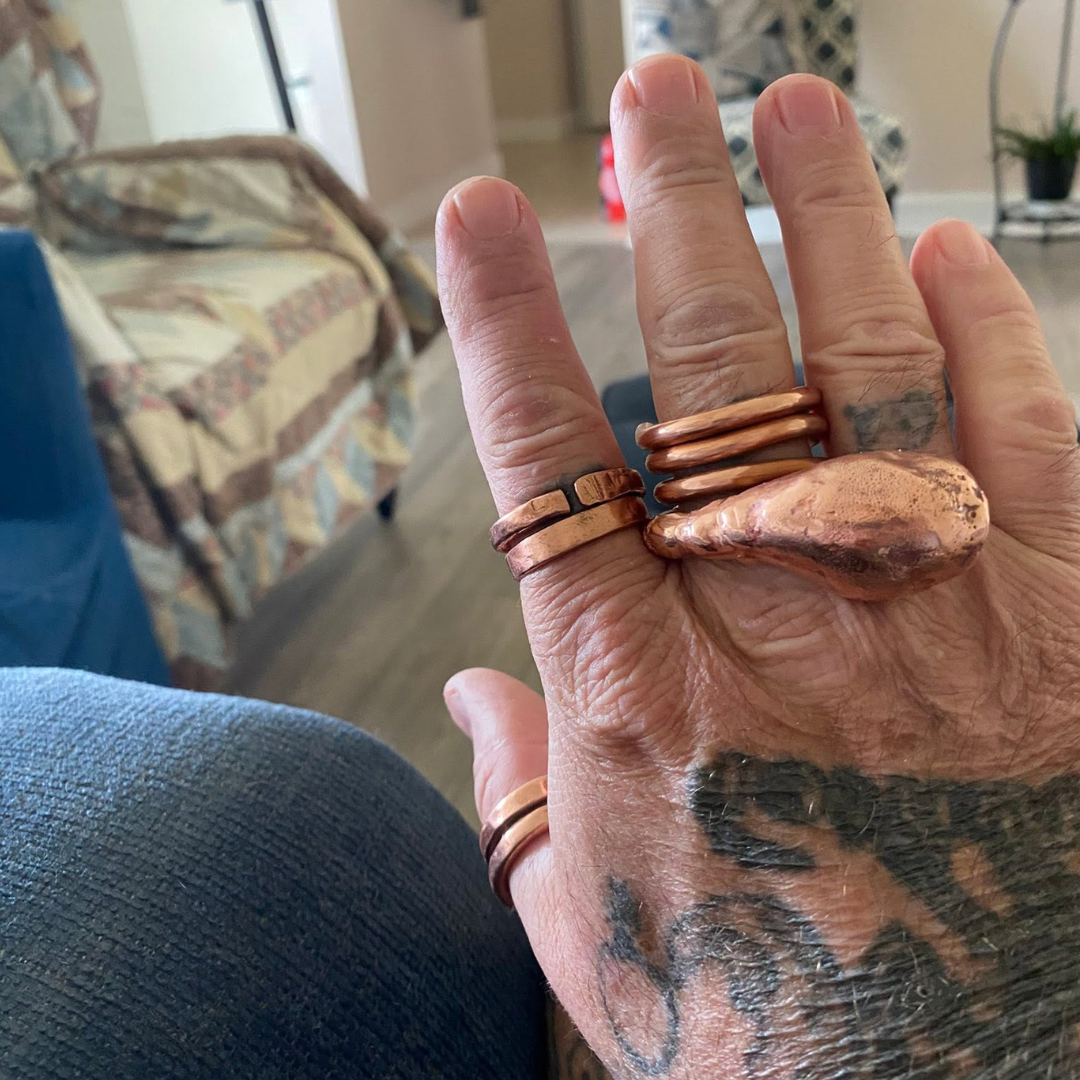
**For two years I thought my wife walked slowly out of kindness to my bad leg. My brother put it right in nine words.** Her name's Pat. She's seventy-two. We have walked the same three miles into town and back on a Sunday morning since 1991, and for two years I have been getting it completely the wrong way round. It isn't a story about a fall, or a diagnosis, or a bad day. Nothing happened. That's what took me so long. And if you're over sixty and reading this, there is a reasonable chance the same arrangement is running in your house right now, and that neither of you has ever said a word about it out loud. It doesn't hurt. Nobody argues. It just quietly becomes how you go out. I broke my ankle in 2011 coming off a ladder and I've had a limp on the left since. Not a bad one. Enough that people notice on stairs. Pat was never the one who needed slowing down for. Pat was the fast one. She walked to the school and back twice a day for nineteen years with a pushchair. She did the Yorkshire Three Peaks at fifty-four. She used to get to the top of Beacon Hill and stand there with her hands on her hips waiting for me and our two boys, and she'd say something about it, every time. For most of our marriage the joke in this family was that you couldn't keep up with their mother. So when our Sunday walk started getting slower, around the spring of 2024, I had exactly one explanation available and I took it. I decided she was doing it for me. I thought my wife had started walking at my speed to spare my feelings about my leg. And here is the part I'd rather not write down. I didn't say thank you. I got irritated about it. I said "you don't have to nurse me, Pat" more than once. I said it in a tone. There was a Sunday in October when I walked twenty yards ahead of her the whole way up Chapel Street to prove a point I have since had to sit and think very carefully about. Now let me tell you what I was actually looking at, in order. Spring 2024. She stopped walking on the outside of the pavement and started walking on the inside, by the walls. That summer, we started stopping at the bench by the war memorial. Her idea. She said it was a nice spot. By autumn we stopped twice. Last spring she started suggesting we drive in and walk back, which meant one leg instead of two. By the winter she'd stopped putting her coat on until I'd got mine on and got out to the gate. And in January she said, out of nowhere, that she liked it better when we didn't rush. Every one of those looked like a preference. Every one of them was a measurement. She saw two doctors about her back. March 2024 and again the following January. Both times she went on her own and both times she came back with a phrase. "Wear and tear." The second one added the bit that finished it off, and he said it kindly, and I'd probably have said the same thing in his chair. "Wear and tear, Pat. We'd all be worried if it wasn't there at your age." She was seventy-one. She had walked over the Three Peaks in one day at fifty-four. There's a woman on one of the forums who wrote the sentence I wish somebody had shown him. "I was told I had 'wear and tear' in my lower spine... the Dr didn't say OA so I'm still in the dark." In the dark. That's where she was. And so was I, and I was standing next to her. Here's how I found out. The fourteenth of March. A Saturday. My brother Alan came over to look at the guttering and afterwards we walked down to the paper shop, which is about six hundred yards. He stopped in the middle of the road. He said, "What are you doing?" I said what. He said, "Why are you walking like that?" I told him about the ankle and he said no. He said he'd known me sixty-eight years and he knew what my ankle looked like, and this wasn't it. He said, "You're walking like a man following somebody." I want to be careful here because it was nine words and it took the top of my head off. I had rebuilt my own stride. Shortened it. Put a little pause in at the end of it. I'd done it over two years, without ever once deciding to, around a woman who had never asked me to. And here's the thing that arrived about four seconds later, standing outside a paper shop at half past ten in the morning. If I had done that without noticing — what had she been doing? I asked her that night. It took me until about eleven o'clock to get it out. She said, "I thought you'd worked it out years ago." She hadn't been slowing down for me. She'd been slowing down, full stop. And she had let me believe it was for me, for two years, because a wife being kind to her husband's bad leg is an ordinary thing and a woman who can't do three miles anymore is not. She said the worst part wasn't the walk. It was that she'd got good at hiding behind it. I wasn't being nursed. I was being used as cover. And I want to be honest about my part in that, because I was very comfortable there. It flattered me. It let me be the one who was managing. So I looked it up. Properly, at two in the morning, on the settee. And I didn't search my wife's back hurts. That gets you nowhere. That gets you exercises. I searched: does everyone around a slow person slow down without noticing. That's when I found her. Not Pat. A stranger, answering a survey question, who had written this: "Nothing really. I've just slowed down. Whoever I'm with they slow down with me." Eleven words, and it's the whole thing. She's not describing pain. She's describing the fact that the world quietly matched her, and therefore nobody — including her — could see how far it had gone. There were hundreds of them. "I can no longer walk far now due to the stiffness- so yes feel older than the hills at the moment." "Recently (I'm now 67) I just kept fit by walking and swimming but this has fallen by the wayside." "I've stopped walking for exercise. I miss it, especially since I've walked at the park every day for 30 years." And one from a man, which stopped me because it was my own voice coming back at me. "Some of that stuff ain't that easy as it used to be, even helping my wife with garden feels hard on my back." Then there was the one that explained me exactly. A woman writing approvingly about her own husband. "DH is perfectly able and willing to do all the lifting and carrying, I would never do anything to endanger them." Read it twice. That's a handover being signed off as a kindness by the person losing something. I was the husband in that sentence. And I'd been feeling rather good about myself. So then I had to find out what was actually going on in her back, and this is where it got simple in a way I didn't expect. A stride isn't a series of steps. It's a spring. Every time your foot comes down, the tissue up the back of you — the tendons, the ligaments, the long connective sheet up the spine — takes the load, stores it, and gives it back to push you into the next one. That give is what makes walking cheap. Take the give out and every single step has to be paid for by muscle instead. Nothing hurts. It just costs more. So you take shorter ones. And then you take fewer. That tissue is not a fixed part. It's being torn down and rebuilt continuously, your whole life, and the rebuild needs raw material. Here are four things about one of those materials. One. Your body cannot make copper. Not a trace. It has to arrive from outside, every day, for as long as you live. Two. After sixty you take up far less of it than you used to. It is one of the hardest minerals for an older body to hold on to, and modern food carries a fraction of what it once did. Three. No standard blood panel measures copper. It isn't on the form. Her tests weren't wrong. They were never looking. Four. Swallowing it barely works. Stomach acid destroys most of it before it reaches connective tissue. Which is exactly why they sell it to you in a capsule. A thing that doesn't quite work is a thing you buy again next month. For three thousand years nobody swallowed it. They wore it. Every civilisation that ever learned to work the metal put it on the wrist. Against warm skin it gives off trace ions that go straight through the skin. And it isn't twenty minutes after breakfast. It's every hour you're alive. Ours is the first generation that took it off. Then I went back over two years with that in my hand. That's why she moved to the inside of the pavement. Walls. Something to touch. That's why the bench appeared, and then the second bench. That's why she wanted to drive in and walk back. One leg instead of two. That's why she waited for me to get out to the gate. She wasn't being polite. She was buying thirty seconds. Not one of those was her being kind to me. Every one was the same thing, showing up in a different bit of the pavement. And you might reasonably ask why, if it's this simple, nobody has ever said it in a surgery. You can't patent a metal. That's the whole answer and it isn't a conspiracy, it's just how money works. Nobody can own copper, so nobody can sell it at forty pounds a month forever, so nobody funds the study, so nobody writes the paper, so it never gets to a GP with eight minutes and a waiting room. Now. Before you go anywhere near a website, read this part. I bought her two copper bracelets before I bought the right one. Fifty-four pounds. Both useless. And the reason is not the reason I assumed. Around nine in ten copper bracelets sold online are brass with copper plating on them. Zinc alloy, dipped, sold at a copper price. So if you have already tried copper and told everybody it did nothing — you are not wrong. You're right. You're just wrong about what was on your wrist. There is nothing in a plated bracelet to come out. The plate is microns thick and the metal underneath is not the metal on the label. And you can check it in four seconds without believing a word I've said. Copper isn't magnetic. Take a magnet off your own fridge and hold it to any bracelet you already own. If it grabs, it's brass. If it does nothing at all, that's copper. We didn't send her a magnet. She used the one holding our grandson's swimming certificate to the fridge door. First week, nothing. I'd like that on the record because I very nearly gave up on it and said I told you so. Day nine there was a faint green mark on the inside of her wrist. That's copper meeting the acids in skin. Plating cannot do it, because there is nothing in it to come out. Week three she walked to the war memorial without stopping at it. Week five she put her own coat on and went out to the gate first, and I don't think she noticed she'd done it. Week eight we did the whole three miles and I got told off on Chapel Street for dawdling. But the proof isn't any of that. The proof is the flask. We've taken the same tartan flask on that walk for thirty years. Two cups of tea, drunk sitting down at the top by the memorial. For about two years that tea has been lukewarm by the time we've sat down, and I never once asked myself why, because it never occurred to me that the reason was how long we'd been taking to get there. Last Sunday I poured it out and it was too hot to drink. I sat on that wall holding a cup I couldn't hold properly and I had to look at the view for a bit. So. You, now, rather than us. Stand up out of the chair you're in without using your hands. Don't get set first. Just stand. If you had to think about it, stay with me. If somebody you walk with has started arriving at the same time as you when they never used to. If you've got a place you stop that you tell people is a nice spot. If you've ever let somebody believe you were being considerate, because it was easier than the other explanation. It might not be your age. And you were never making a fuss. Vera makes them by hand. She's sixty-nine, she's been doing it for forty-one years, one at a time, 99.9% pure copper, no plating, nothing underneath it. Put a fridge magnet on it the day it comes. If it grabs, send it back and she'll refund you, and she'll want to know who sold it to you. Wear it thirty days. Then take it off for a week and see what comes back. That's the only test worth anything, because nobody designed it. She's shutting the workshop, so it's only ever what's left. Nobody's paying me to write this. I'm the man who walked twenty yards ahead of his wife up Chapel Street to make a point. Link's below. https://veras-copper.com/collections/limited-sale
Like this ad? Make it yours.
Crush rebuilds this exact creative around your product — your brand, your colors, your offer — in about a minute.